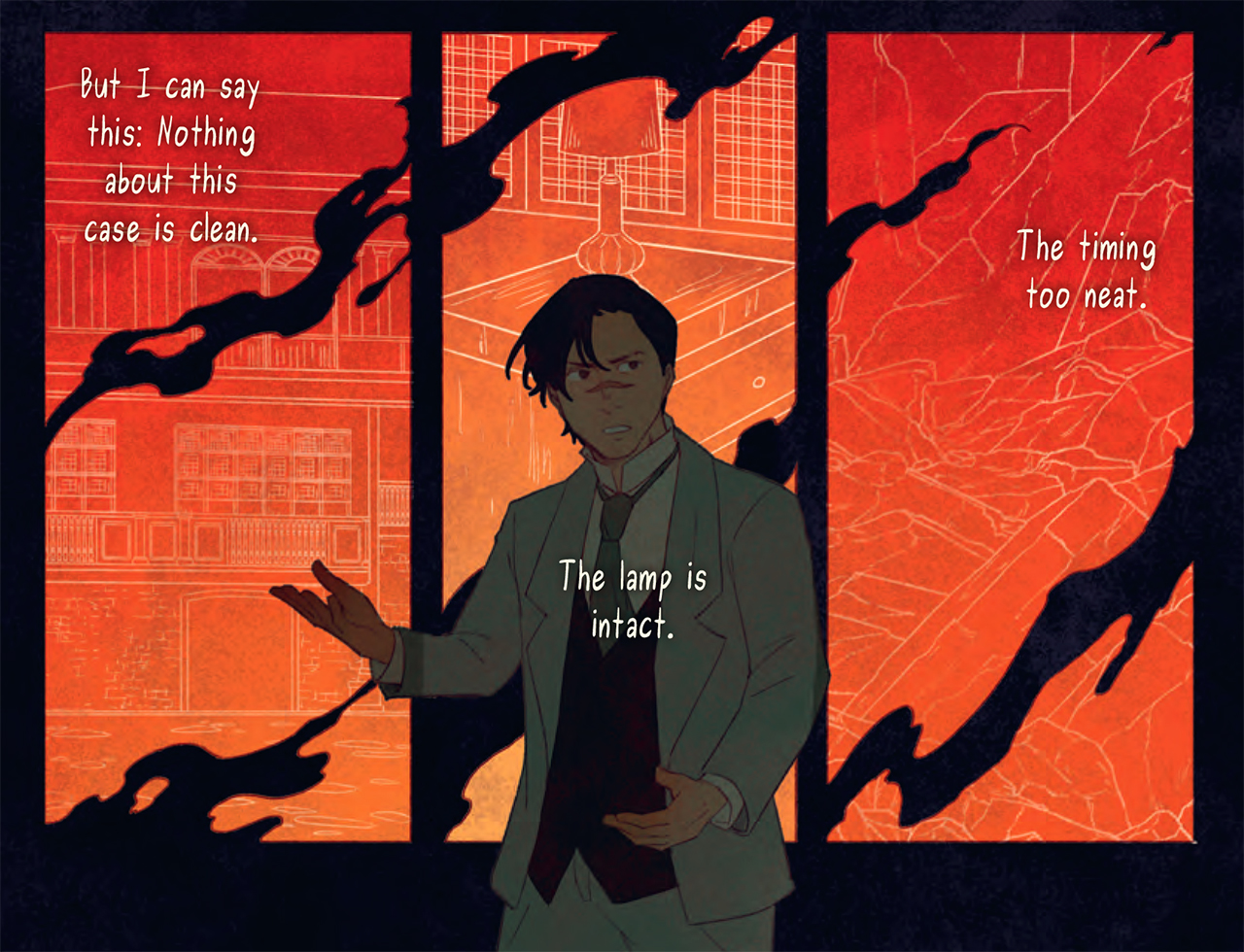
I recently had the honor of writing a review of Strange Cases, the debut graphic novel of the popular illustrator Riotbones. Strange Cases is a historical drama about a law student who investigates supernatural mysteries in a colonial city that’s sinking under the weight of its own Gothic architecture. When I shared a link to the review on social media, I described the story as a cross between Ace Attorney and Bloodborne, but it’s much more than a simple comparison can convey. The writing is just as gorgeous as the art, and Riotbones addresses the uneasy legacy of colonial rule with a subtlety that sharpens the edge of the story’s brilliance.
I didn’t mention this in my review, but Strange Cases is also queer in a way appropriate to the late Victorian period. The queerness is largely subtextual, but this is an expression of one of the primary themes of the story; namely, that some things benefit from not being openly perceived, and many people remain outside of neatly defined categories by choice.
Here’s an excerpt from my review:
As a genre, the gothic lures the reader with the promise of hidden secrets coming to light. In the context of Western Europe, these secrets often lurked in the shadows cast by the industrial revolution. For a person who doesn’t belong to the imperial core, however, shadows have a different meaning. Perhaps, Riotbones suggests, not everything benefits from exposure to an “enlightened” Western gaze. For people who don’t fit neatly into rational, scientific categories, the shadows provide a more comfortable place to exist. Now that Jude finds himself in a position between “colonial” and “native,” he must learn how to navigate the liminal spaces that exist beyond the boundaries of the law.
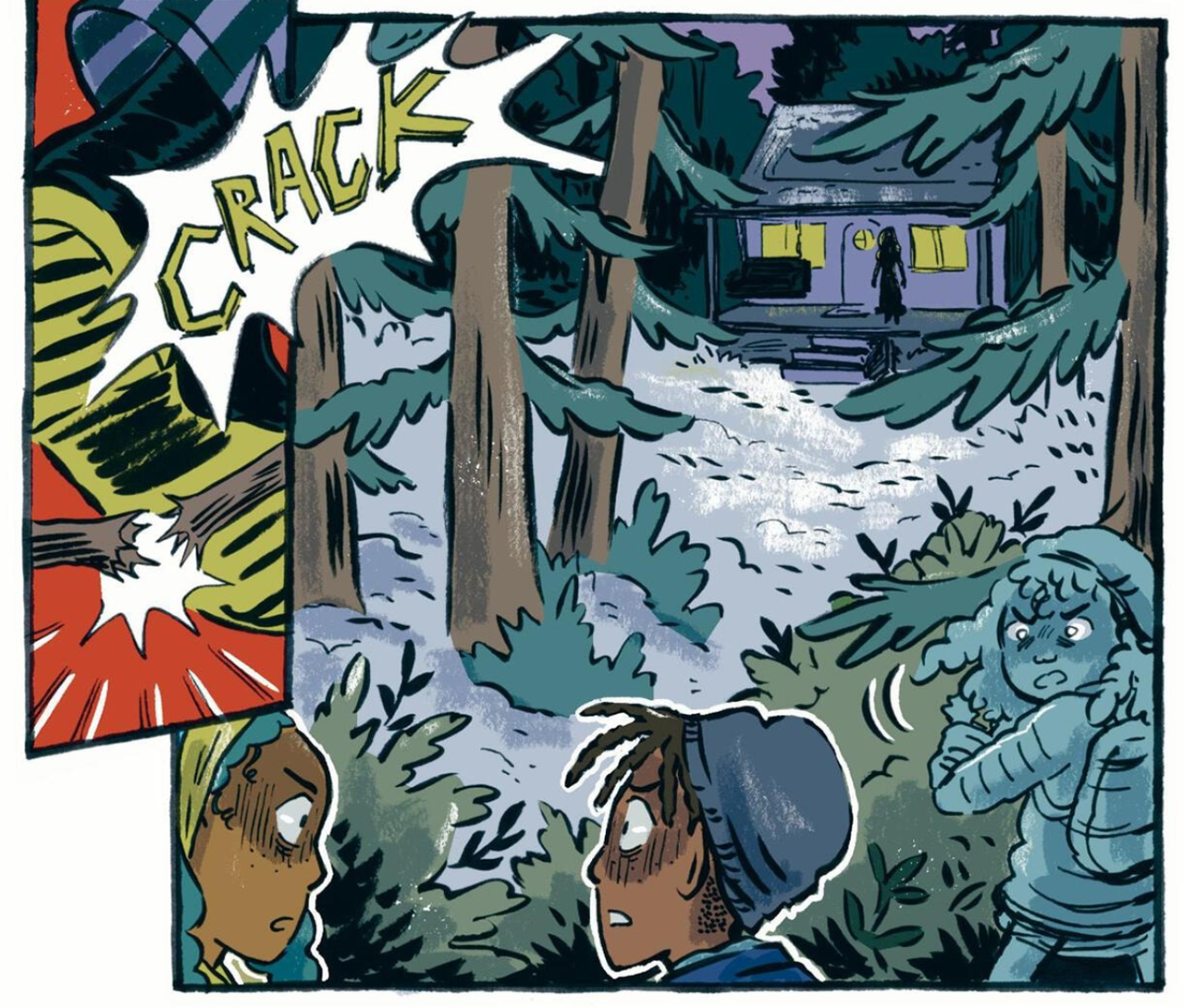
I recently had the pleasure of writing a review for Comics Beat about a middle grade graphic novel called The Girl Who Loved Monsters. This is a fun story that reminds me of the Goosebumps books, with all their campiness and dubious messaging and over-the-top silliness, and I could tell that both the writer and the artist were having a fantastic time. It’s always a pleasure to see new and original spooky stories for younger readers, and this is an especially good one.
Here’s an excerpt from my review:
The Girl Who Loved Monsters feels nostalgically reminiscent of the Goosebumps series of pulp horror novels for children that were popular in the 1990s. Many elements of this graphic novel’s story and art are extremely campy, and the combination of creepiness and humor creates a carnival-like sense of fun. Though the timeworn story of kids on bikes chasing down a monster may seem like a simple treat taken directly from a Halloween candy bucket, Franklin’s dynamic art and Fitzpatrick’s sensitive character writing elevate The Girl Who Loved Monsters to a thrilling and heartwarming horror adventure that young readers will eagerly devour.
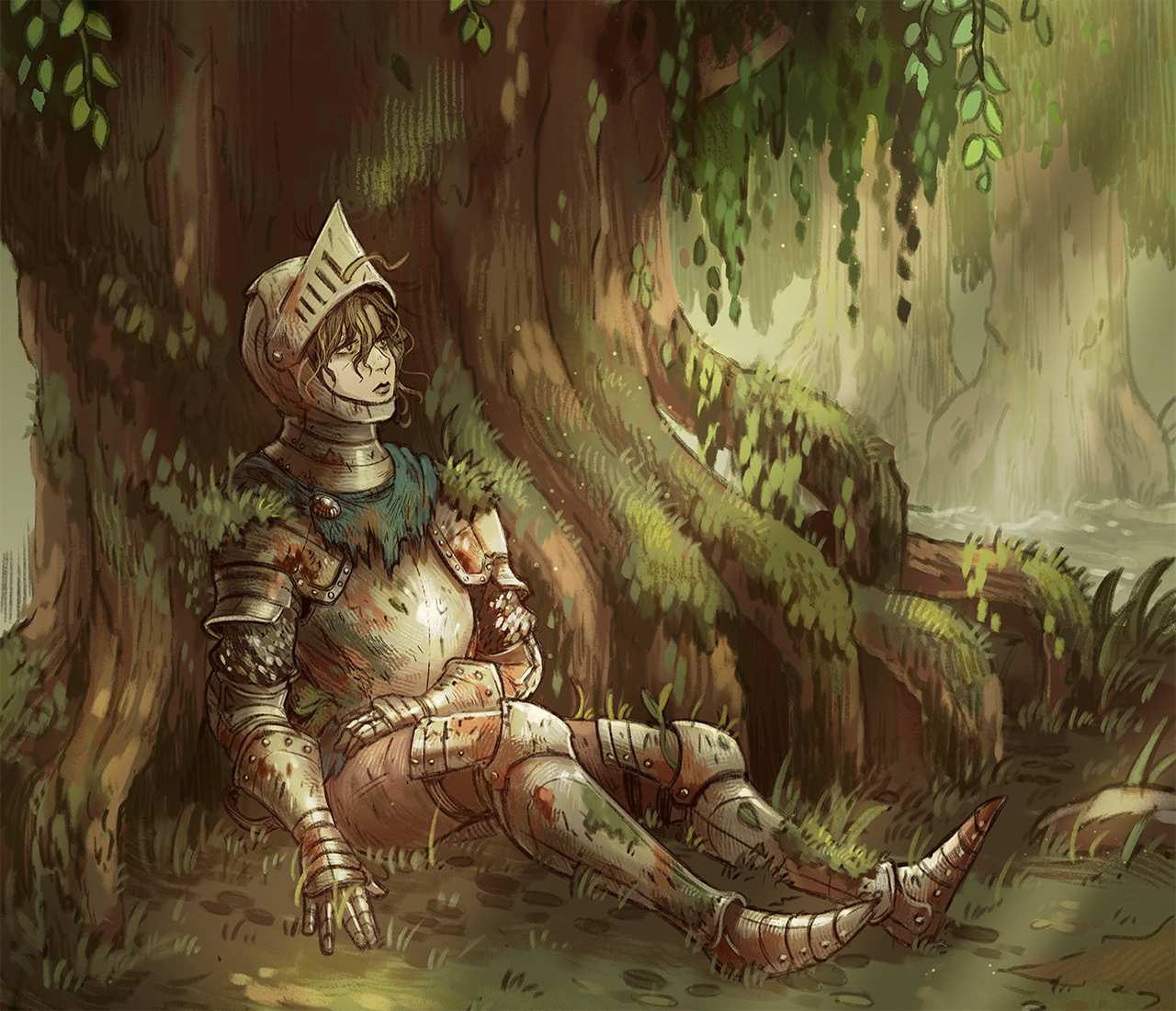
Hollow: Ten Tales of Fallen Knights collects a series of original short stories about knights who have found themselves in unfortunate circumstances. In the shadows cast by crumbling kingdoms, what inspires these knights to keep fighting?
Though the primary genre of the stories in this zine is dark fantasy, their tone is elegiac bordering on hopeful. Just as in my Ruins zine, the underlying theme is “regrowth after disaster,” though a few of these knights’ means of achieving that regrowth is a bit violent. Some dragons really need to die, if you catch my meaning.
All of the knights who appear in this collection happen to be female; but, as in the Dark Souls games that loosely inspired these stories, their gender is the least important thing about them. I just think lady knights are cool.
A free digital version of the zine is available on Itch.io, and paper copies are on Etsy.
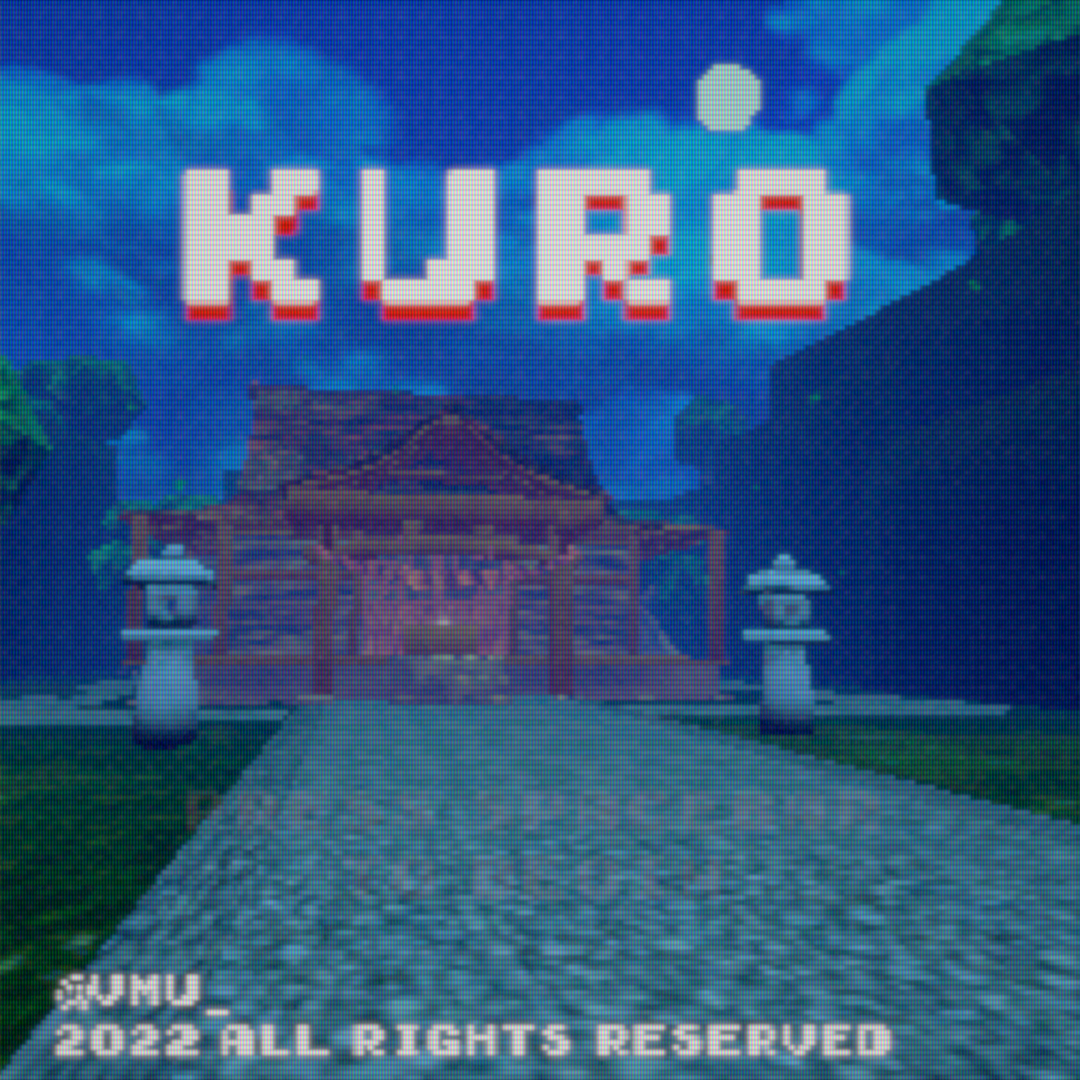
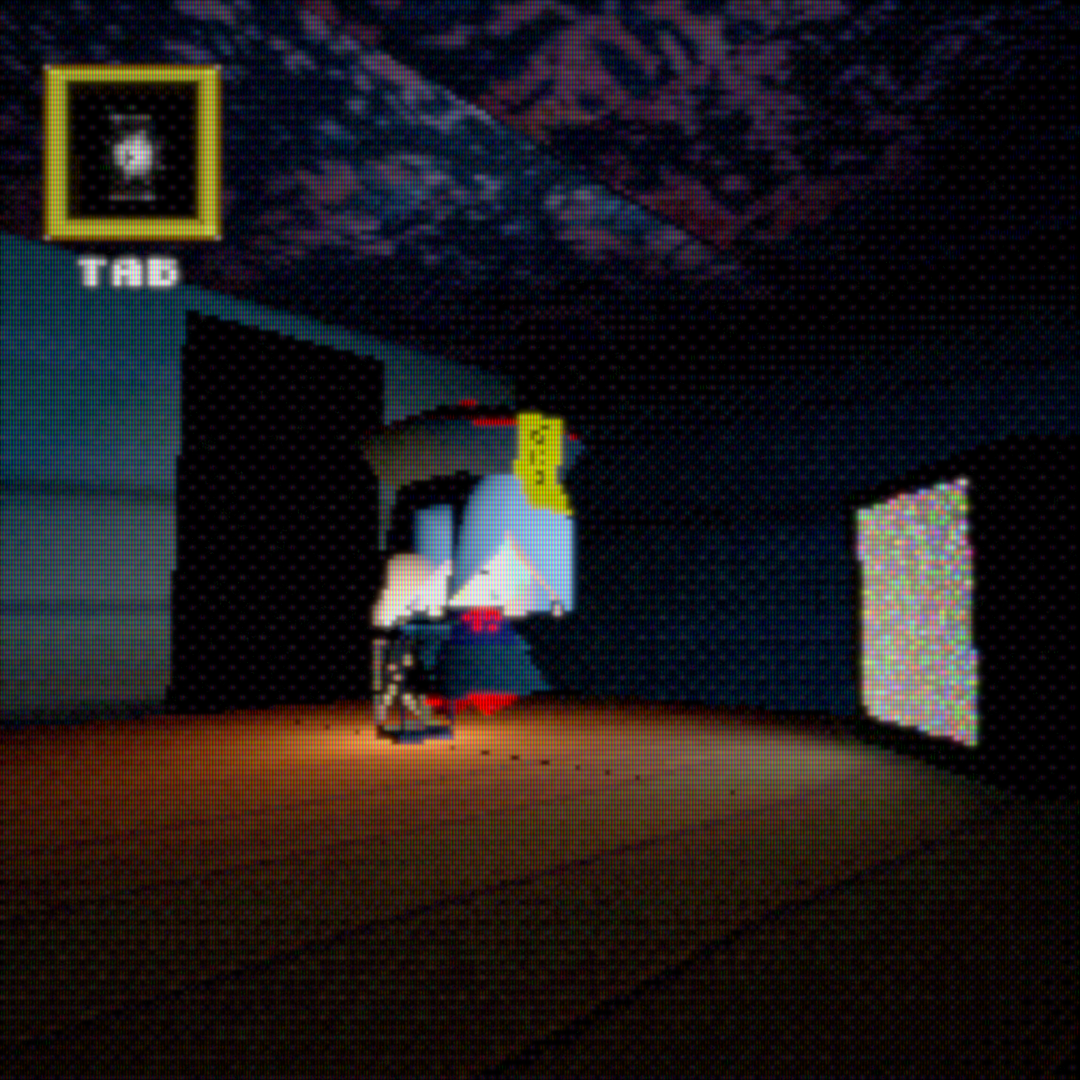
Kuro is a free-to-play homebrew PS1 gothic horror game that takes about twenty minutes to finish. There aren’t any jumpscares, but the story is as dark as the chunky retro polygons are cute.
You play as Kuro, a mysterious visitor to an abandoned Shinto shrine. The moonlit shrine is beautiful and peaceful on the outside, but its interior conceals an underground labyrinth haunted by the ghost of a brutally murdered young woman named Miu. As Kuro, your job is to find and reunite the parts of Miu’s corpse so that her spirit can move on.
Along with Miu’s head and body, Kuro must acquire the means to open three locked doors. Though the game’s map isn’t overly large, Kuro moves slowly (with tank controls) across spaces presented to the player from dramatic angles. It’s unlikely that you’ll become lost, but the game does an excellent job of conveying the disorientation of wandering through a dark basement.
For me, the standout scene is when Kuro enters a locked room that’s completely empty except for an old television whose screen is filled with static. When Kuro interacts with the television, she’s transported to an otherworldly landscape where she meets the man who killed Miu. He explains what happened, but this isn’t the end of the story. Once Kuro returns to the shrine and begins to dig deeper, the player learns that murder is probably the most wholesome thing that happened here.
I genuinely appreciate the developer’s commitment to including every gothic trope they could think of. One might argue that the writing is somewhat clumsy, and that the game’s twenty-minute playtime isn’t sufficient to allow ample space for its horrors, but I’m of the opinion that the writing is just as integral to the retro aesthetic as the graphics. I feel like there’s a tendency to remember games like Final Fantasy VII and Resident Evil 2 as “well-written,” but PS1-era games had a tendency to hit you with a cascade of revelations in the most basic and matter-of-fact prose. Kuro matches the tone of this style of video game writing perfectly.
I also love to see this kind of gothic story in a setting that isn’t European, and I’m fascinated by the idea that a Shinto shrine would have a basement. Perhaps a shrine constructed overseas (in British Columbia, for instance) might have an underground level, but this would be unthinkable in Japan, where shrine buildings are always elevated above the ground in the traditional Polynesian architectural style.
The reason for this is 100% practical in a wet and humid climate, where various types of unpleasant things (primarily mold, fungus, and insects) would quickly infest the ground level of a building. Also, the water table is generally so close to the surface that it would be difficult to prevent underground rooms from flooding. There’s also a spiritual component to the architecture, as Shinto belief systems tend to associate anything inside the earth with an otherworld of rot and impurity. This otherworld is a necessary space for the cycle of life, but it’s not a good place for humans to be under any circumstances. In terms of its spiritual utility, one of the purposes of a shrine is to demarcate the boundaries between worlds.
So a Shinto shrine would not have a basement. But if it did. The horrors of Kuro would definitely happen there.
I admire how Kuro explores the idea of transgressing an extremely powerful taboo. Between the lost-media stylization of the game’s retro graphics and the grotesque quality of its writing, the player definitely gets a sense of wandering through a place they’re not supposed to be. Kuro is a short and simple game, but it’s very well-observed and surprisingly effective.
I’ve got a review of a minicomic zine appearing in Issue 4 of The Comics Courier, which is crowdfunding until July 1 on Kickstarter (here)!
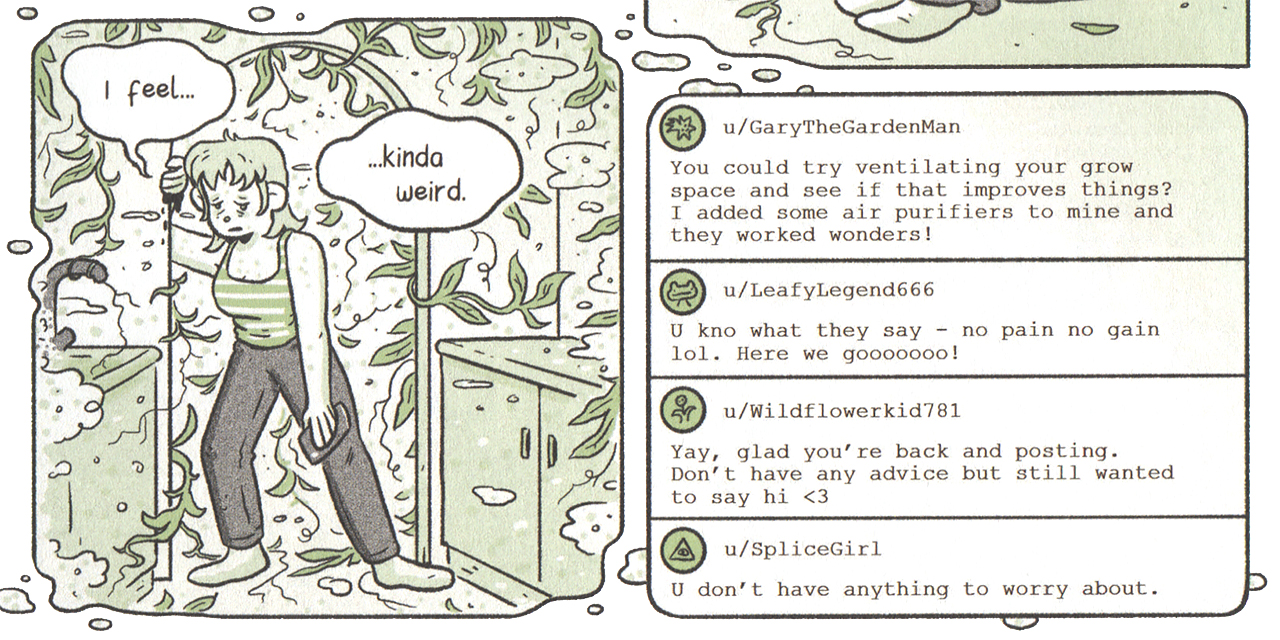
I wrote about My New Hobby Craves Violence, a botanical horror story that’s also about becoming trapped in an addiction to receiving positive feedback online. Kristyna Baczynski is famous for her wholesome nature illustrations, so seeing her take on botanical horror mixed with toxic positivity is a lot of fun.
Here’s an excerpt from my review:
Pip’s situation is all too relatable as she ignores the warning signs of an unhealthy obsession while devoting her attention to the uncanny plant that serves as a consistent source of new content. Still, the analogy of “unhealthy growth” doesn’t work if the botanical horror doesn’t operate on a visceral level, and Baczynski’s horrible little houseplant is amazingly creepy. Its thickly veined leaves twist and squirm across the pages as the comic panels become increasingly crowded and claustrophobic. Text message bubbles pop up between scenes of Pip’s collapsing life, competing for the reader’s attention and engendering a palpable sense of urgency as Pip grabs a pair of pruning shears and struggles to disentangle herself from the clutching vines.
The Kickstarter project has already met its funding goal, so the issue should be out soon. The Comics Courier is a fantastic publication – I really enjoyed the first three issues – and I’m very happy to see it loved and supported.
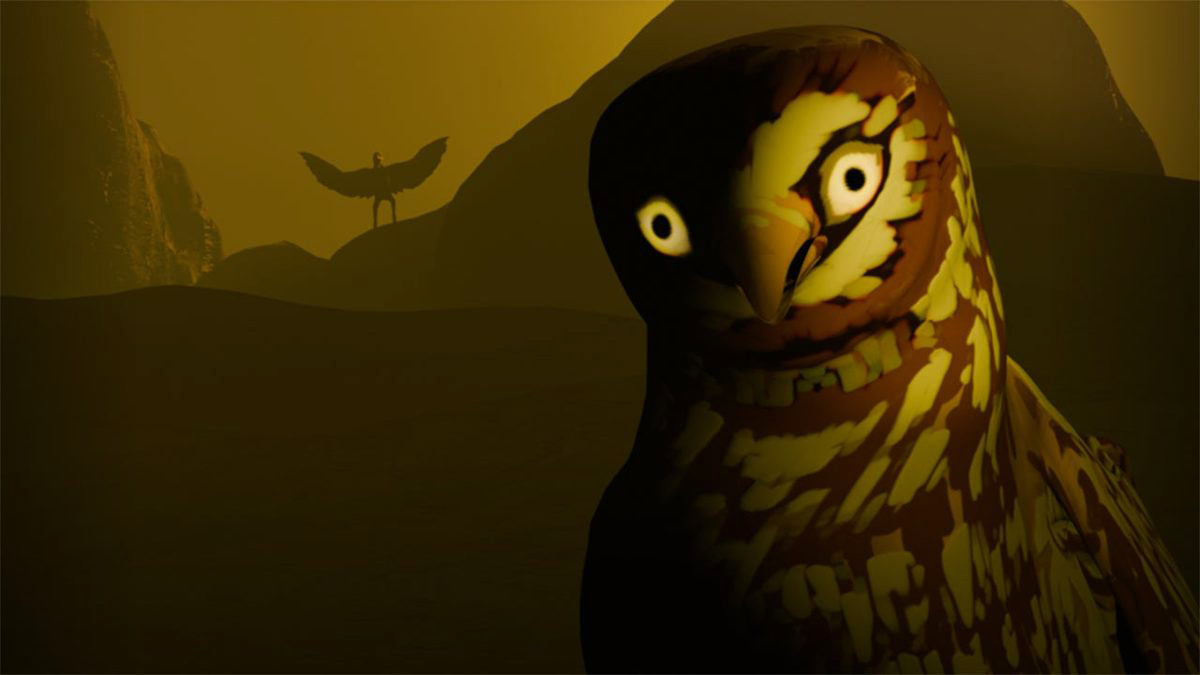
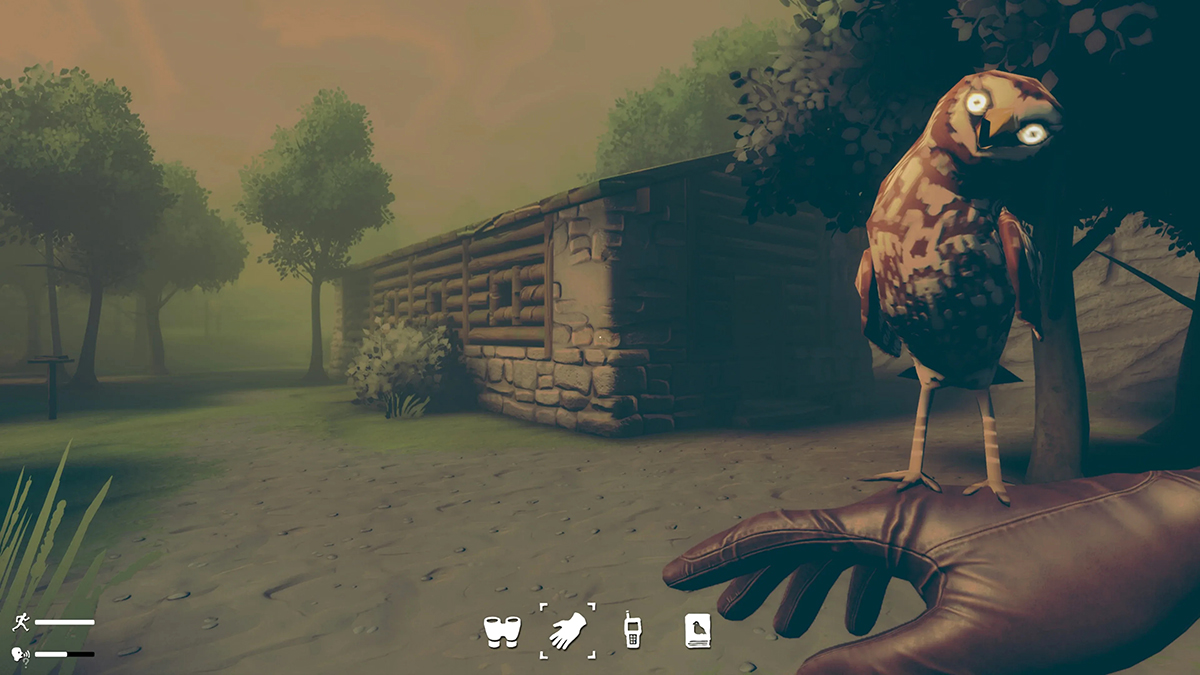
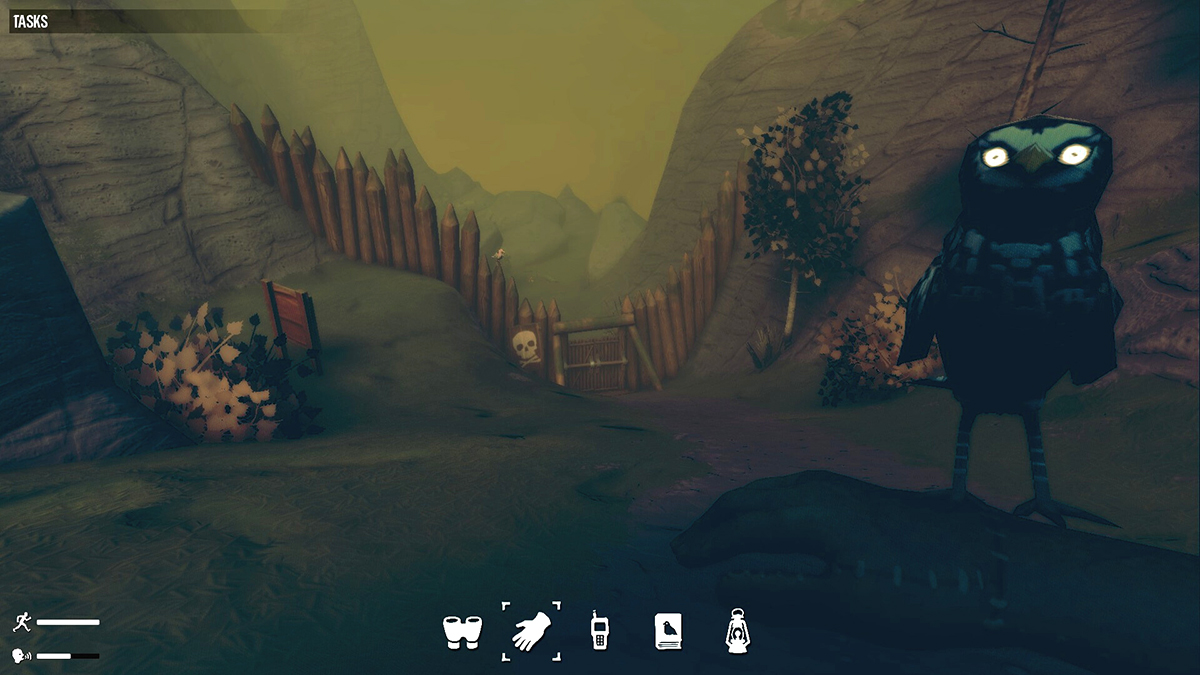
Birds Watching(on Steam here) is a one-hour walking sim about a man who talks to birds while an apocalyptic disaster unfolds around him.
As an unending fire engulfs the world, a lone man takes refuge at the top of a mountain. For all he knows, he’s the only human left alive on earth, so he makes the best of a bad situation and does his best to survive in the company of the birds who have fled to the last unburned peak.
The man’s solitude is alleviated by an owl who not only befriends him but begins speaking with him. Birds can speak and understand human languages, the owl explains, and the man only needs to share a special password to initiate conversations. If he can observe and talk with the other birds on the mountain, something good will surely come of it.
The man realizes that he’ll need more concrete support when he receives a transmission on his portable radio. It turns out that other humans have survived the fire, violent and mutated though they may be. Their warlord has learned of the sanctuary on the mountain, and he’s on his way. The man can prepare to welcome him by surrendering his house and food, or he can expect to be swiftly killed.
The birds might indeed be able to help repel the warlord’s invasion, but they hate you. And they aren’t shy about telling you this. Though it’s not a challenge to discover new birds and observe them through your binoculars, it will be difficult to get them to trust you. Your companion owl helpfully suggests that you prove your sincerity by making yourself more like a bird. This process begins (relatively) innocuously when you eat a handful of the worms that you use to attract birds to the various feeders scattered across the mountain, but it escalates into genuine body horror if you follow it through to its conclusion.
Even without the humiliation rituals, there’s plenty of dread in the environment, which is filled with smoke and ash from the fire burning below. Though the forest scenery seems pleasant enough, the air is never clear, and it’s easy to imagine any number of things lurking at the edges of your visibility.
These vague fears are realized when the promised invasion of the mountain actually occurs. The appearance of the humans who have survived the fire is an unpleasant surprise, to say the least. It doesn’t help that these encounters occur in tense situations when your stamina meter is already depleted.
And then, on top of all that, you’ll eventually notice something else through the smoke haze: while you’ve been watching birds, something terrible has been watching you.
There are three possible endings to the game, and they’re all deeply upsetting. These endings follow naturally from your dialogue choices – whether you resist or capitulate to the warlord, and how far you’re willing to go to satisfy the birds.
Thankfully, nothing is dependent on being a completionist about filling in your bird watching notebook. You’ll probably want to find as many birds as possible, though, simply because your conversations with them are so unapologetically horrible and bitchy that they’re kind of funny. Once you figure out what the password you use to talk with the birds actually means, this knowledge adds a deeper level of psychological horror that’s fun to explore.
Since a leisurely run through the game only takes a little less than an hour, I went back and played it twice. Though the slightly murky lo-fi graphics caused a bit of trouble during my first playthrough, I appreciated the unique texture of the visual atmosphere more the second time around, when I was able to find significantly more birds to talk with. The alternate reading of the game suggested by a reveal toward the end casts all the conversations in an interesting new light that’s worth a second playthrough to appreciate.
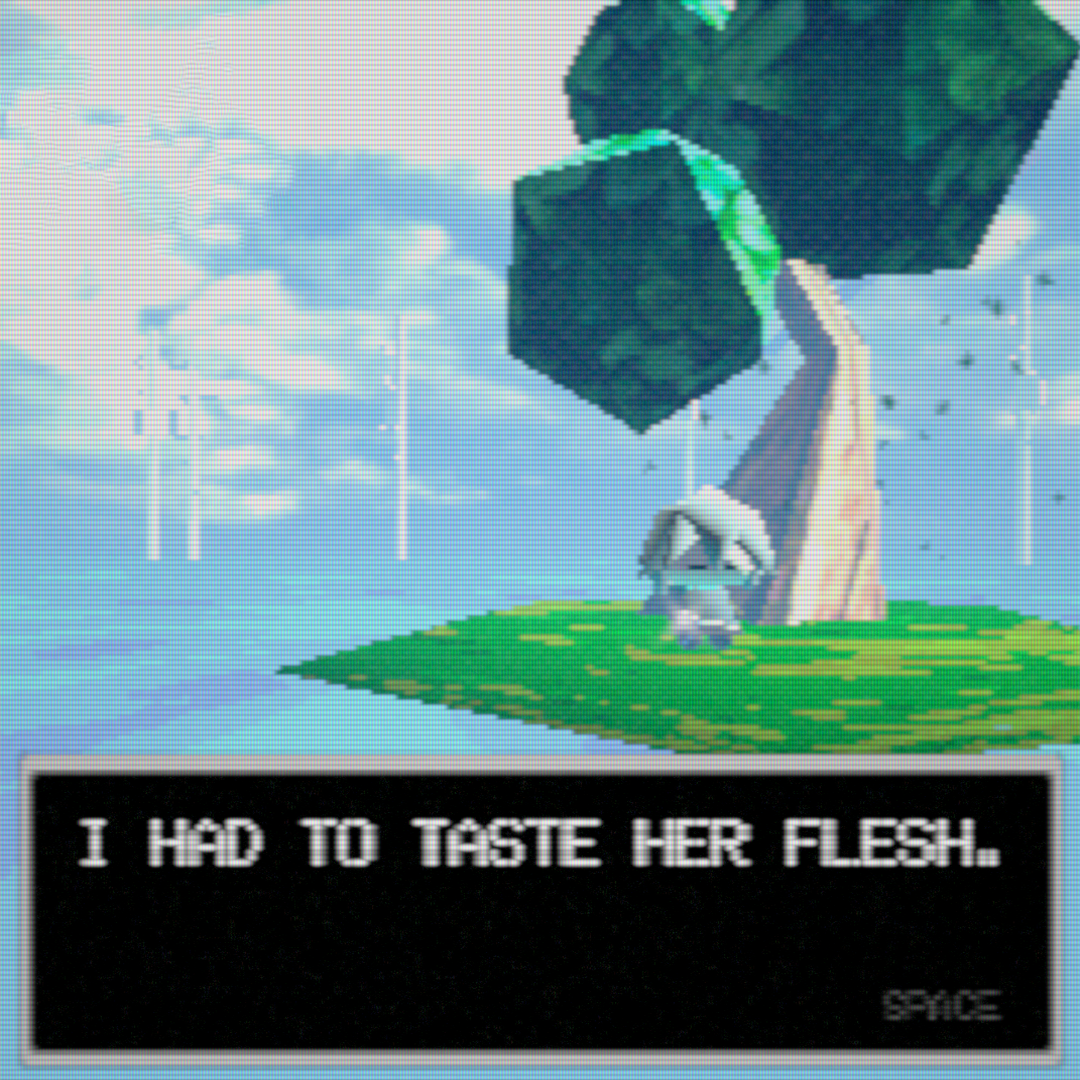
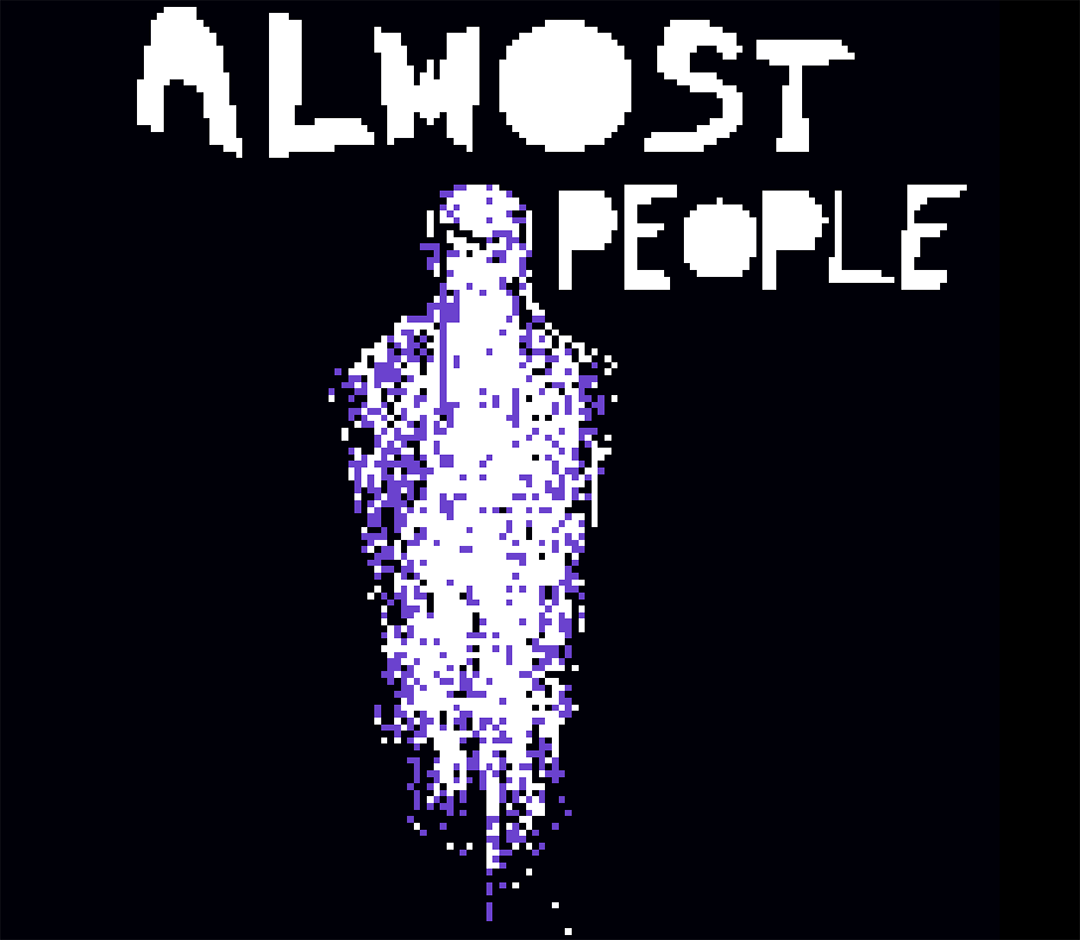
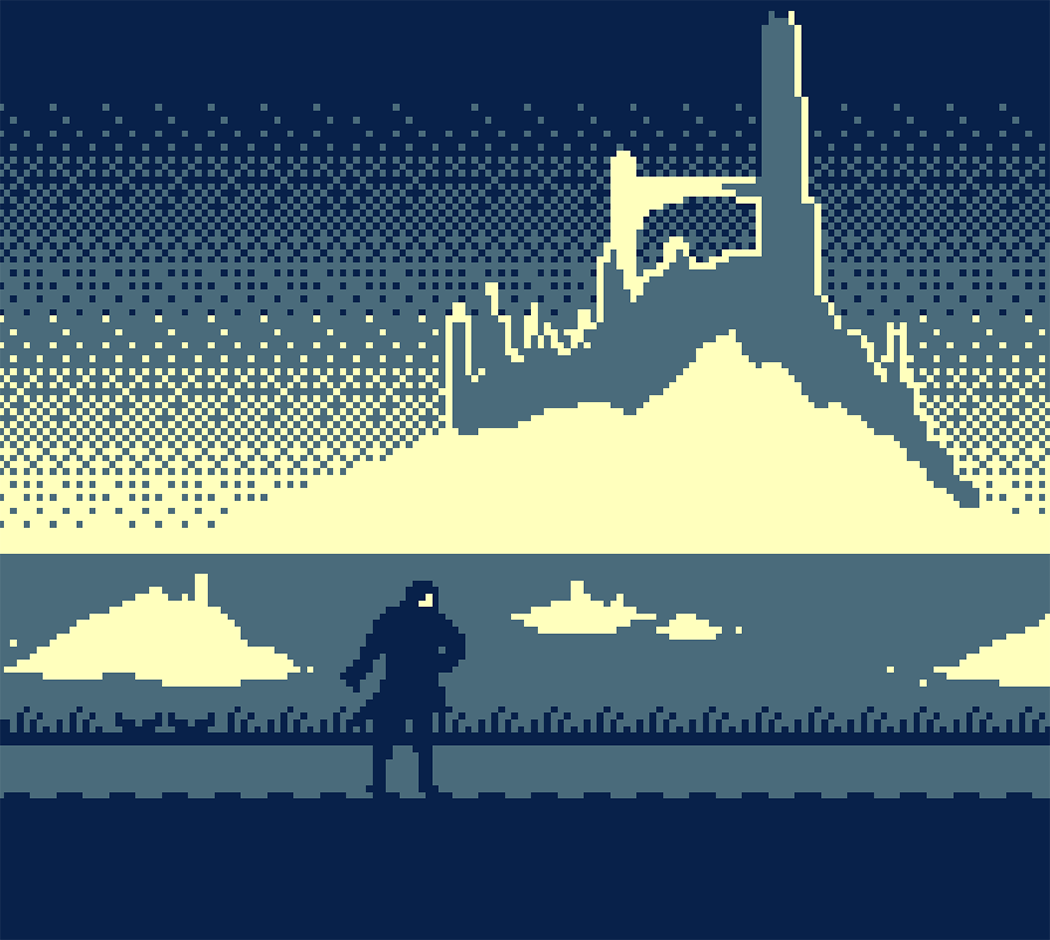
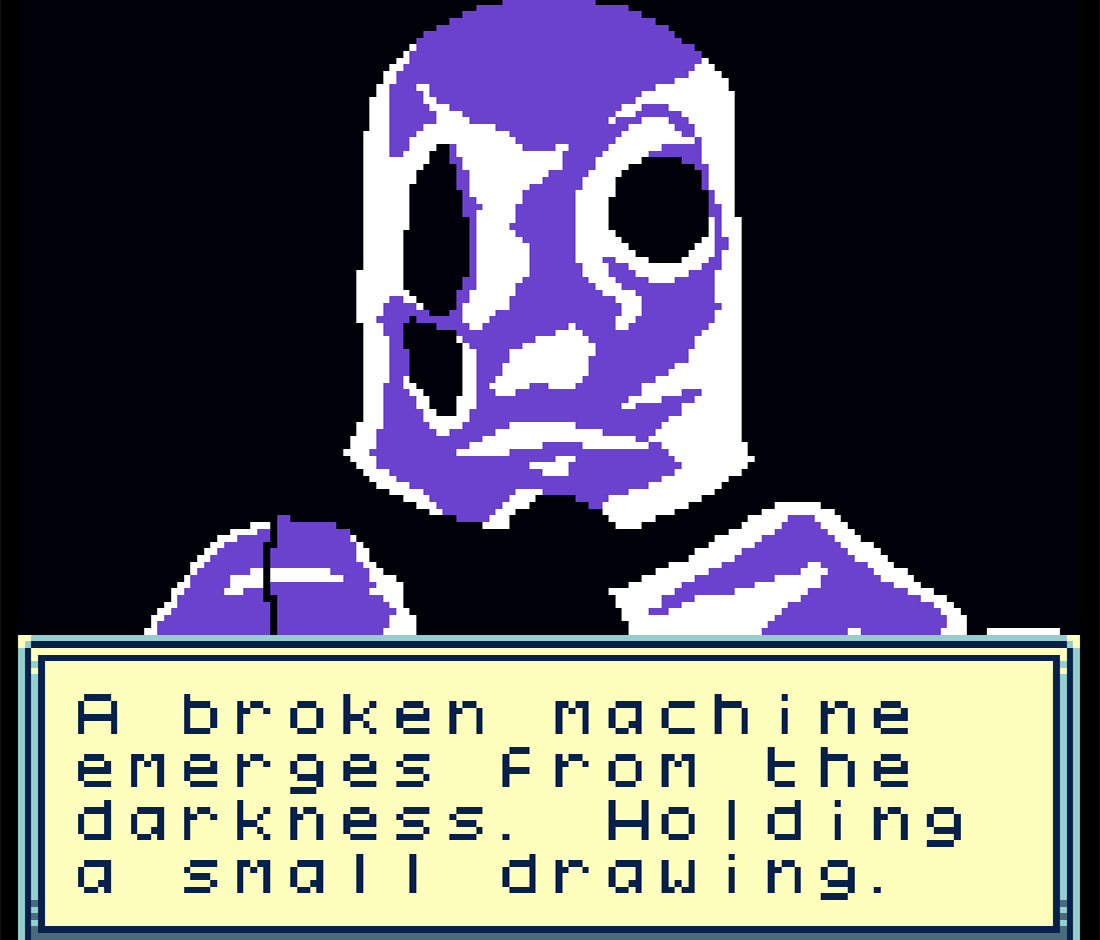
Almost People is a narrative dark fantasy Game Boy game that’s free to play and takes about 8-10 minutes to finish.
You play as an alchemist who has created several types of artificial beings. After setting them free and leaving them to their own devices for an unspecified amount of time, you must decide what to do with them. Should they be allowed to continue as they are, or do you end their lives?
Before each conversation, the alchemist walks across a 2D screen that shows the creature (or creatures) in the lair it’s constructed for itself. Despite the limitations of the Game Boy graphics, the art is bold, striking, and very creepy.
The conversations with the creatures are subtly disturbing as well. I don’t get the feeling that the artist who made this game is coming from a well-defined philosophical perspective, but the choices the player is asked to make are interesting. If you want to get the good ending, the alchemist is going to have to take responsibility for what they’ve created. Specifically, you’re going to have to kill at least one of the creatures.
Though the game works well as a Frankenstein story, I also understood it as an allegory for creativity. As upsetting as it is to consider killing an actual living creature, I tend to think that it’s healthy to end projects that have outlived their original purpose. This allegory isn’t immediately apparent, and I’m not entirely sure that it was intended. I suppose that the themes of “creation” and “death” are broad enough to accommodate any number of readings.
Almost People is a weird and unsettling little game, and I appreciate the experience of playing as a character with dubious morality. I’m getting a little tired of the “surprise! the heroes are bad actually” trope, so it’s cool to take on the role of a wizard who openly engages in dark deeds. A teenager with a magical sword should really put an end to this asshole, but I guess that’s another game entirely.
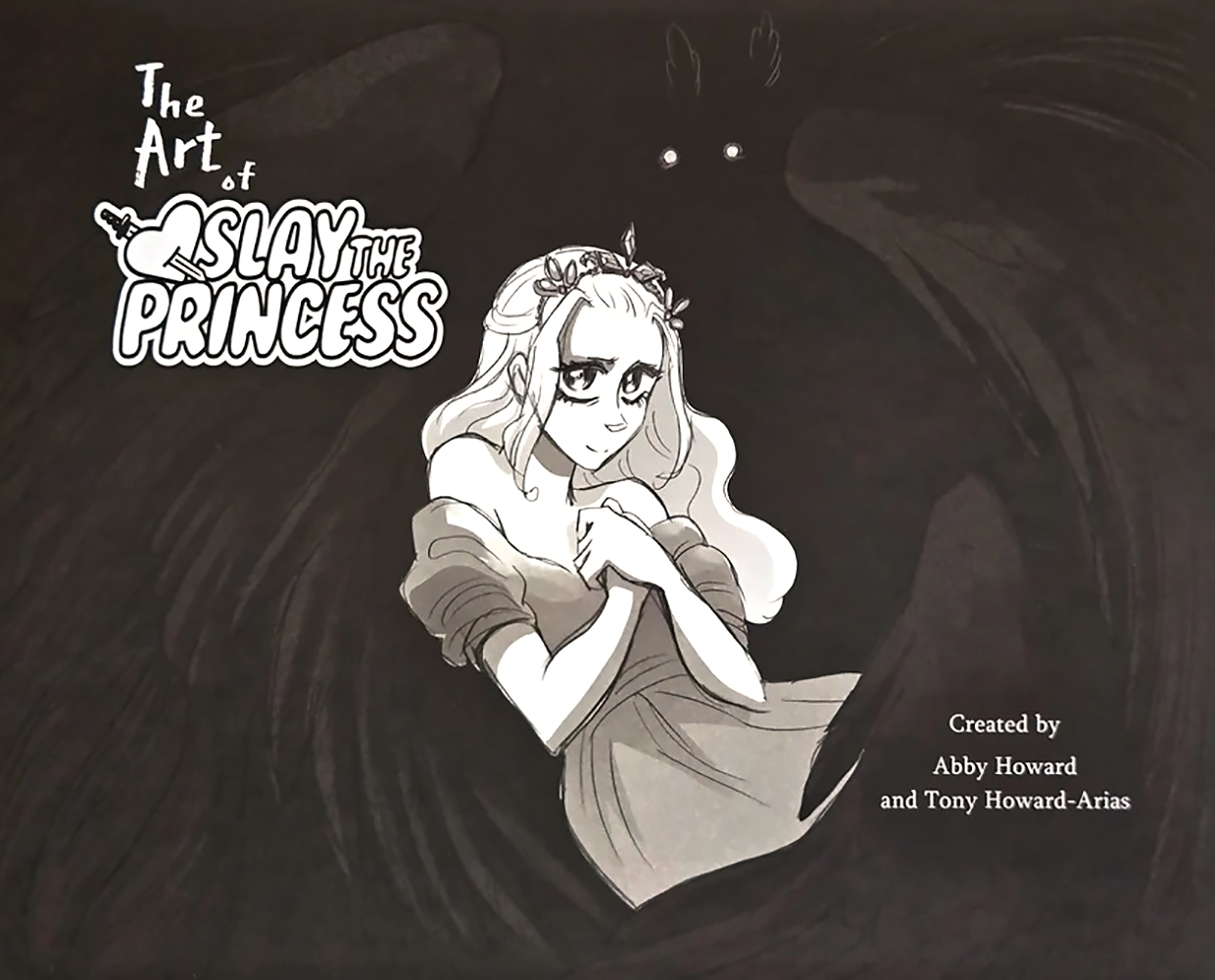
Although this book came out back in October 2025, Comics Beat offered me the opportunity to write a review of The Art of Slay the Princess, which is something like a graphic novel adaptation of the horror game (on Steam here).
It’s difficult to summarize the story of Slay the Princess, and a serious discussion could easily turn into a substantial essay. What I therefore ended up doing in my review was discussing the success of the cross-media adaptation. You might wonder how a print book would be able to convey the multiplicity of the game’s branching storylines, and the answer is that it does so in a remarkably artful way.
Here’s an excerpt from my review:
In order to function as a book, The Art of Slay the Princess omits a substantial amount of text from the game’s script. By necessity, many of the game’s multimedia horror elements, including its viscerally upsetting soundscapes, are also missing. Regardless, Howard’s illustration work is sufficiently disturbing even in a montage of static frames, and the page layout is utilized to showcase the various forms of the Princess in their full uncanny glory. Though it’s not a traditionally linear reading experience, The Art of Slay the Princess is still more than capable of immersing the reader in its dark and labyrinthine world.
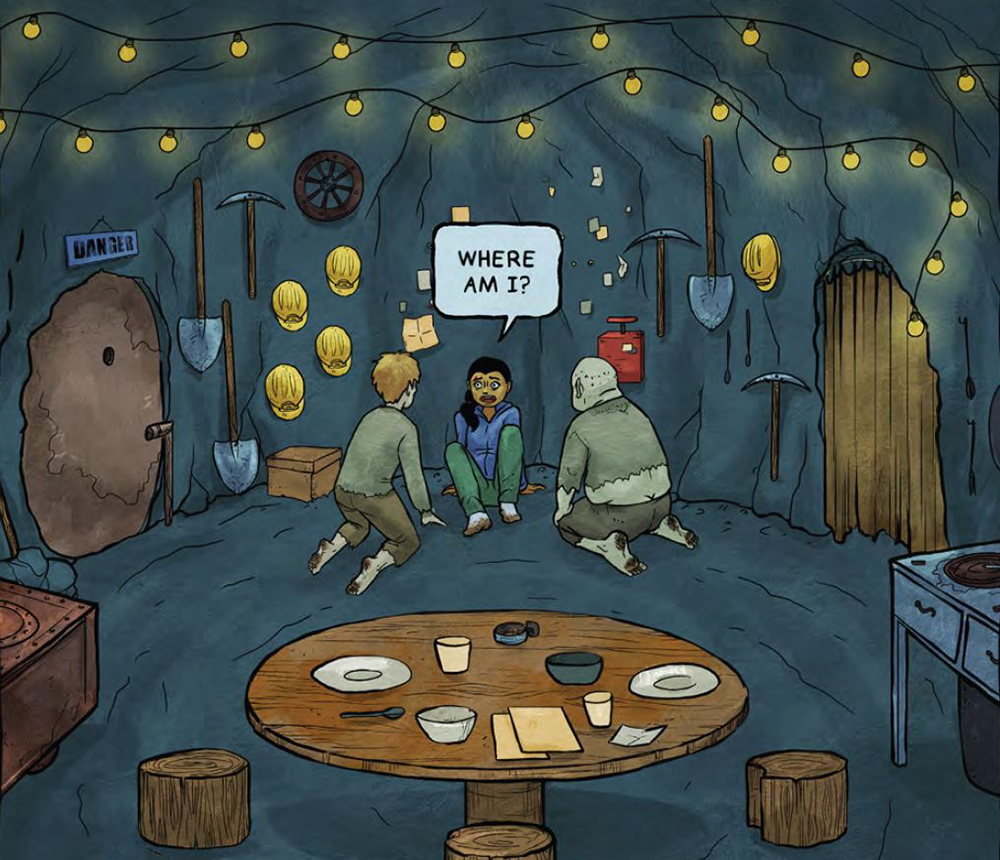
I recently had the immense pleasure of writing a review for Comics Beat about Pig Wife, a massive graphic novel drawn by Abbey Luck, a Hollywood animator who specializes in Adult Swim style bizarro art. Pig Wife is definitely Hollywood, and it’s definitely got a Gen-X style “alternative” edge to it. Neither of these things is to my taste, usually, but I love Pig Wife for what it is: namely, a gothic “weird girl” coming-of-age story set in a not-quite abandoned labyrinth of mine tunnels in rural Pennsyltucky.
I say in my review that it’s easy to read this 500-page book in one sitting, and I mean it. Pig Wife tells an incredibly entertaining story; but, appropriately enough, there’s a lot going on below the surface. Here’s an excerpt from my review:
By forgoing the nuances of character, Pig Wife can focus entirely on plot, and the plot is a well-oiled machine that grabs the reader and aggressively drags them down into the tunnels. Moreover, by virtue of the broad strokes of its characterization, Pig Wife is also able to convey the allegorical elements of its scenario.
The coming-of-age story in which a young hero embarks on a journey has a universal appeal, but teenage girls (and slightly older girls, if they’re trans) often undergo a separate ascent from innocence to experience that I think of as “climbing out of the pit.” By “the pit,” I mean the everpresent tarpit of internalized sexism and misogyny, and the mine tunnels of Pig Wife are as good of a visualization of this pit as any.
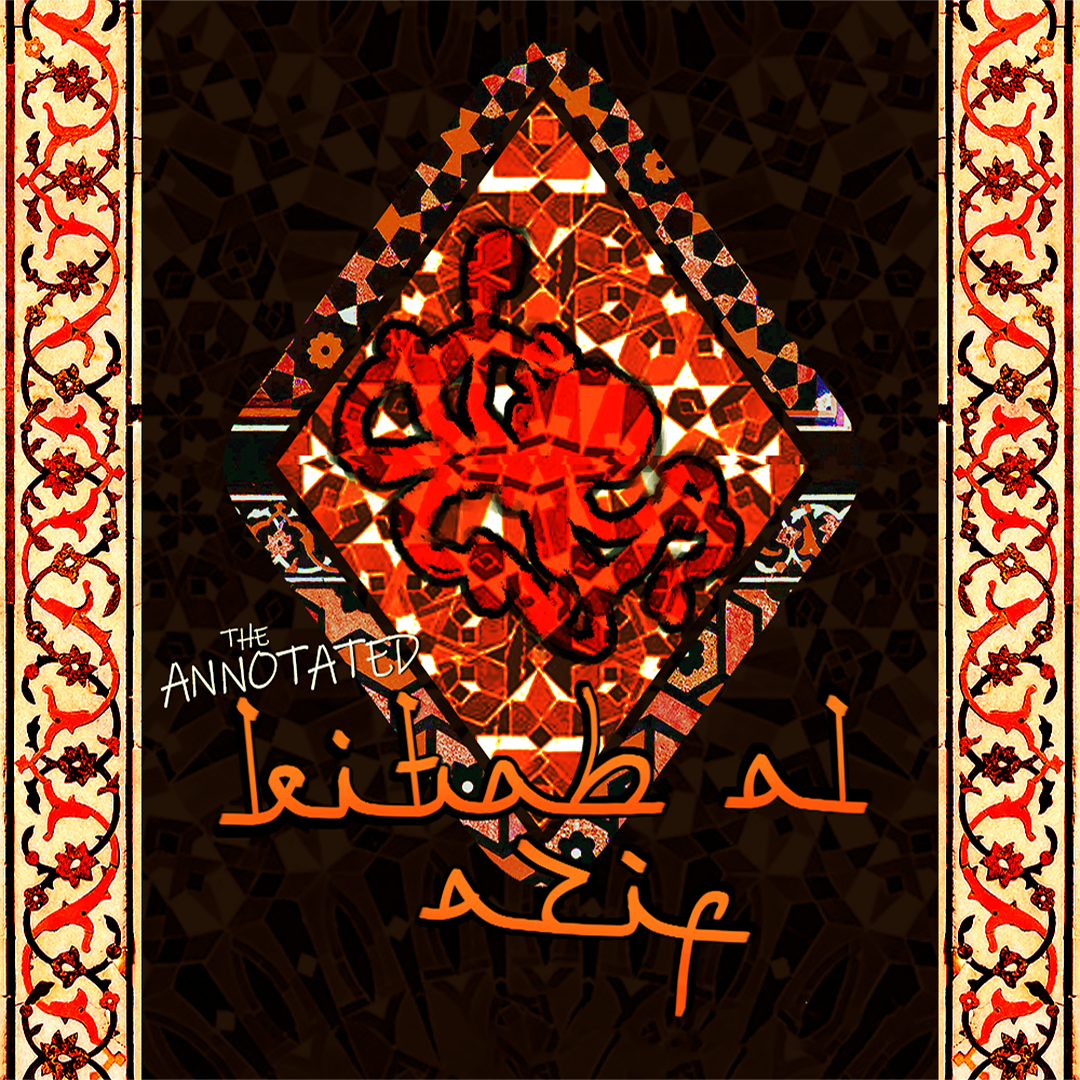
“The Annotated Kitab al-Azif” is a queer Lovecraftian romance about the slow decline of American academia and the supernatural perils of translation. In this story, a burnt-out Millennial podcaster flees the high rent of Boston and accepts a position as a departmental admin assistant in the suburban Miskatonic University, which is suffering from budget cuts and declining enrollments. During the lull of his first summer on the job, the podcaster meets a grad student working on the Gnostic religious traditions of the southern Mediterranean while attempting a translation of the Kitab al-Azif, more popularly known as the Necronomicon.
As you might imagine, this area of study has consequences for the grad student. The podcaster isn’t too concerned, however. He’s already seen all manner of awful things while doing research online, and why let something as trivial as ageless extradimensional horrors get in the way of a budding relationship?
Though I’ve never accidentally summoned an eldritch abomination, the setting of “The Annotated Kitab al-Azif” is partially based on my own experience as a grad student at the University of Pennsylvania. The “horror” part of this experience is the constant scramble for funding, the awkward negotiations with libraries for access to research material, and the unspoken expectation that you’ll work in decaying buildings that haven’t been maintained since the early twentieth century.
Meanwhile, the “romance” part is the opportunity to share space with people from all over the world. When you use the same office (and the same refrigerator and bathroom) with other people, pre-existing differences in culture, language, and nationality quickly become secondary to the warmth of the personal relationships that form between you. Universities aren’t cultural melting pots by any means, but they’re as good of a place as any to realize that cultural differences really don’t matter all that much in the face of genuine friendship.
Though I’ve largely set aside my ambitions to become a translator, one of the reasons I got into academia was to model the positive change I wanted to see in the broader field of literary studies, especially with regards to de-mystifying stories written by authors from “non-Western” countries. Even when it’s done respectfully, the academic tendency to treat these stories as “subaltern” and “marginalized” is frustrating. To begin with, nobody thinks of their own language and culture as “other”; but, more importantly, people are just people.
The Necronomicon is an interesting base for an exploration of this theme. In my understanding of the lore of the Cthulhu mythos, the Necronomicon is essentially an expression of popular turn-of-the-century Spiritualism, which was in turn inspired by the various strands of medieval Gnostic thought that sprung up along the Silk Road.
Though this sort of spiritually inclusive worldview may have seemed “mystical” to people living in Christian-majority cultures in the late nineteenth century, it’s completely normal to someone coming from a Buddhist or a Hindu tradition. All things considered, the cyclical view of time and the multidimensional view of space suggested by the Necronomicon are completely normal for many people who weren’t raised as Christian, and it’s interesting to consider the real-world foundations of this infamous fictional text without the narrative trappings of Orientalism.
But also…… What if magic were genuinely real? What then?
I’m grateful to The New Absurdist for taking a chance on this odd piece of weird fiction. I also want to express my appreciation to the story’s cover artists, Katie Rejto and Wally Tigerland, for creating such a unique and intriguing illustration.
If your curiosity is piqued by the prospect of true-to-life dark academia haunted by a touch of cosmic horror, please check out my story on The New Absurdist (here).