The Annotated Kitab al-Azif

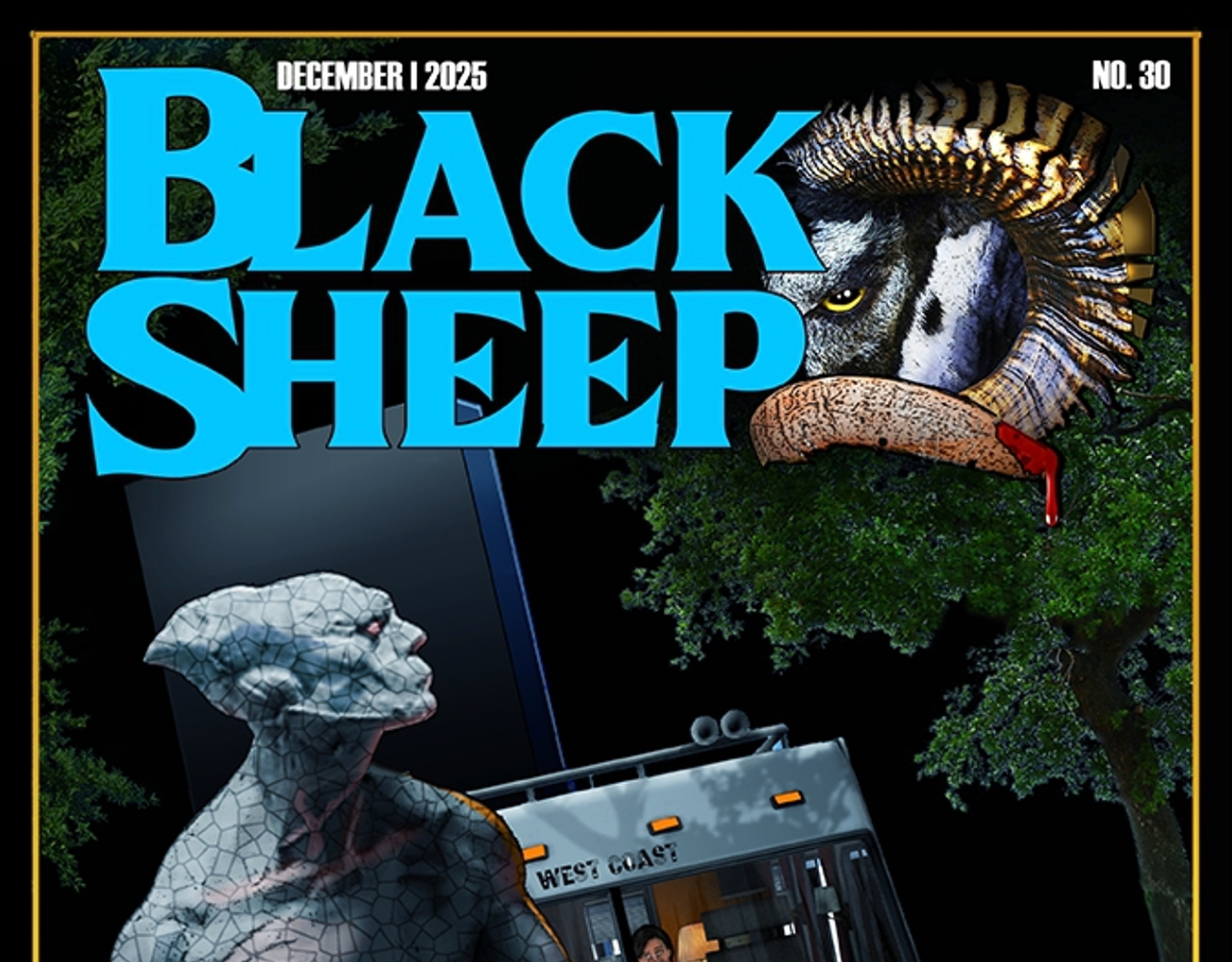
My queer Lovecraftian romance, “The Annotated Kitab al-Azif,” was just published in the latest issue of Black Sheep, a magazine for weird fiction. This story treats the gnostic origins of the Necronomicon with respect while being slightly silly about grad students.

You can order a copy of the issue with my story here:

🐙📖 www.amazon.com/dp/B0G25R82TY

It’s very cool to have the opportunity to publish a Lovecraft pastiche in an honest-to-god pulp magazine, which seems appropriate. At the same time, I definitely feel the friction of using Lovecraft’s own tropes to push back against the ugly Orientalism surrounding the Necronomicon.

The truth is that, while I admire Lovecraft, but I wouldn’t consider myself a fan. Rather, I spent a formative part of my childhood in a small town in the Deep South whose public library was severely limited by budget constraints. The only thing remotely close to fantasy fiction they had on their shelves was Stephen King, the lone second volume of Lord of the Rings, and a handful of ancient paperback collections of H.P. Lovecraft.

I didn’t really have the cultural context to understand Stephen King, and I wouldn’t recommend The Two Towers as the place to start reading Tolkien. Lovecraft grabbed me, though. Even as a kid, I understood the xenophobia expressed in Lovecraft’s stories. Believe me, I understood all too well. Still, I guess I was young enough that this wasn’t a dealbreaker, especially since there was nothing else to read during the summer where I practically lived at this tiny little library.

I had more resources the following year, when I started attending an international school in Atlanta and began to read more widely. But Lovecraft stuck with me, and a small but significant goal of my writing now is to try to capture and explain why that is.

I sincerely believe that people should write whatever they want, but a part of me still questions the value of aligning myself with the work of such a problematic author. The truth remains, though, that these Lovecraft stories only occupy a small closet in the house I’m trying to build with my writing. What I want to do is expand the scope of the small rural library that only had room for Stephen King and H.P. Lovecraft, as well as to create space for original work that dismantles the toxic feedback loop of preset responses to human difference.

Much love to Black Sheep magazine for giving a home to this story. 

Dorotea

Dorotea
https://pasquiindustry.itch.io/Dorotea

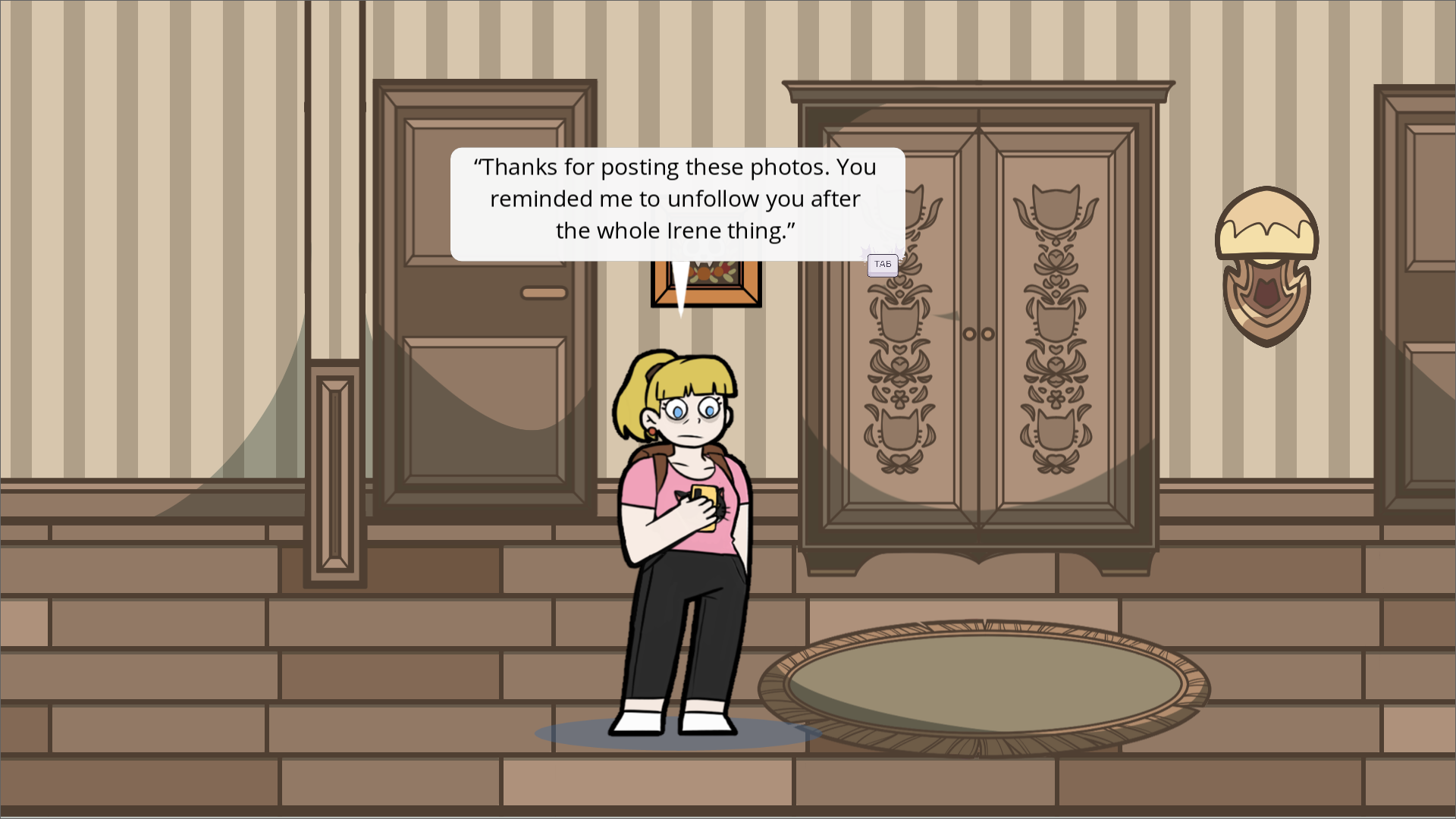
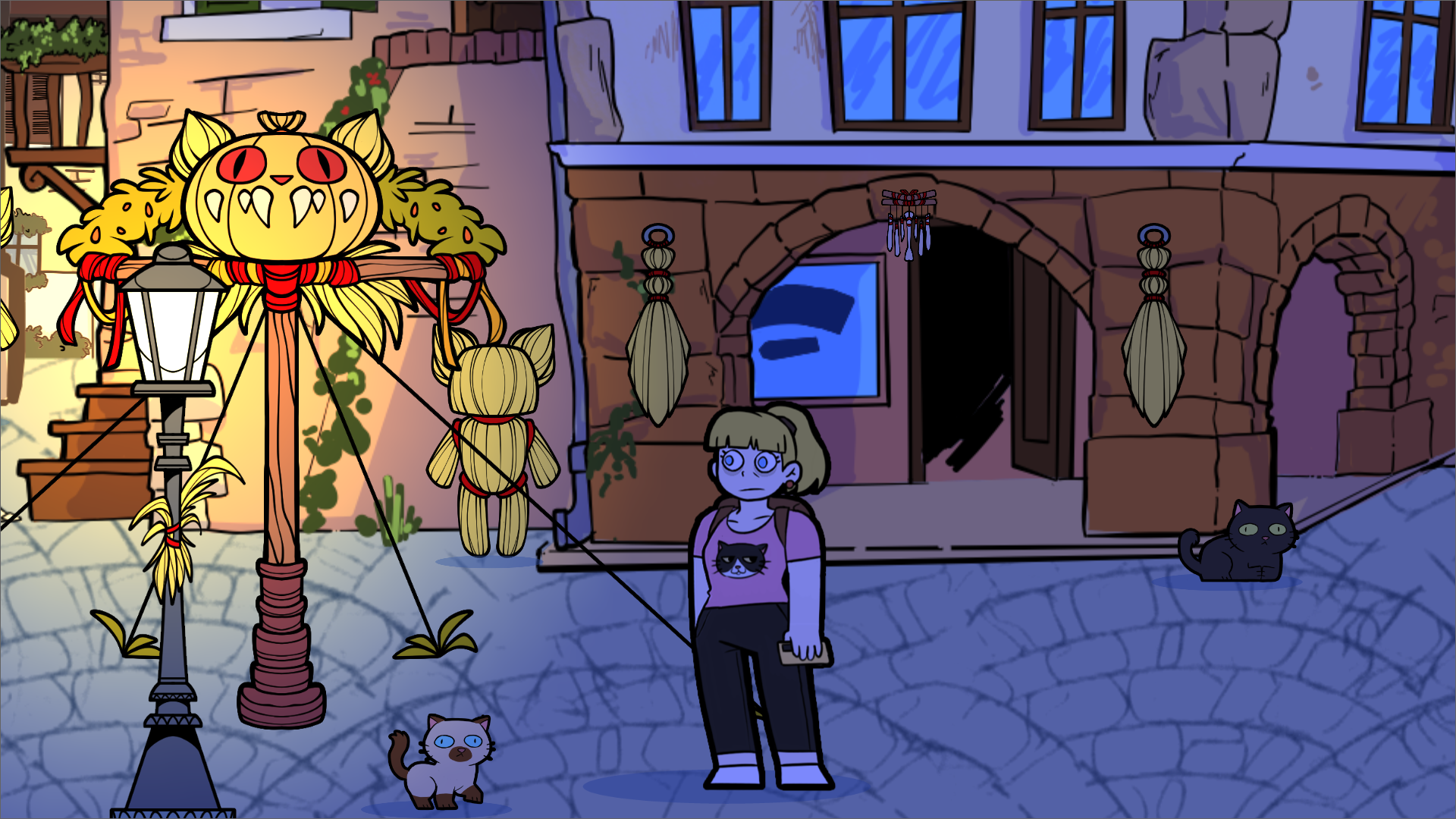
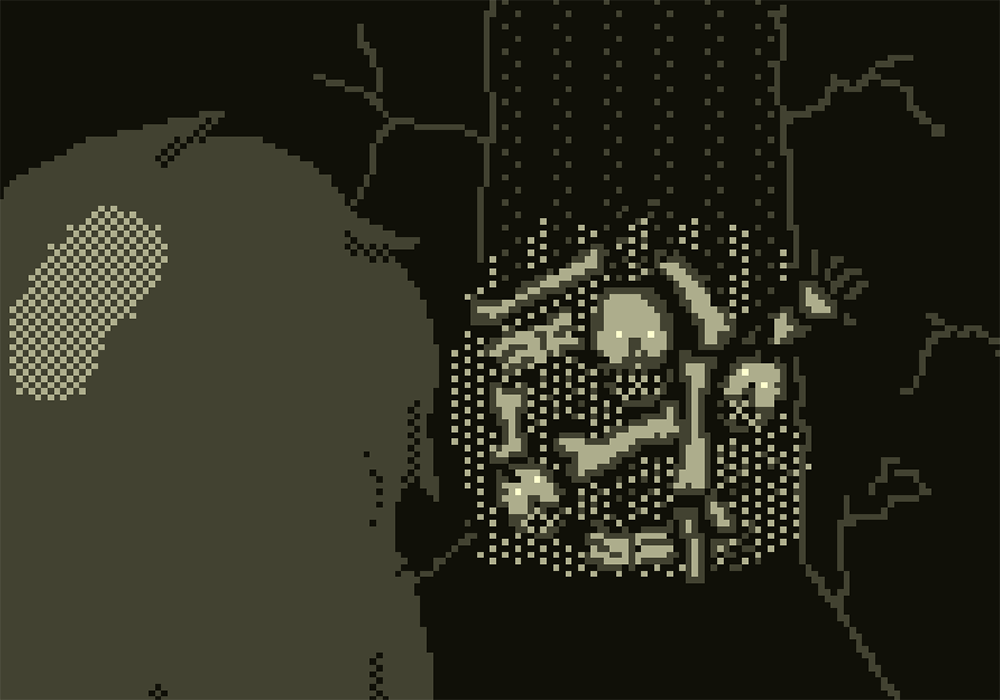
Dorotea is a spooky ten-minute narrative adventure game made in Game Boy Studio and set in the medieval castle town of Conversano in southeast Italy.

You play as Dorotea, a researcher who has been hired by a local museum to catalog the books, manuscripts, and art objects in a neglected storage room housing a collection dating from the 1600s. Upon opening and passing through a strange door at the back of the room, Dorotea finds herself transported to the medieval era, when the museum was still a convent.

Thankfully, Dorotea is intercepted by a nun before she can land herself in trouble, but she’s not entirely out of danger. The lord of the castle on the hill isn’t a good person, and there also seem to be monsters of a more literal sort in the vicinity.

Dorotea features a suspenseful (but no-penalty) chase sequence, but its horror is largely atmospheric. The game’s uncanny pixel-art insert illustrations contribute to the feeling of something being terribly amiss, as do the ghosts and monsters, but the game also explores the anxiety generated by the prospect of being trapped in the past. As much as we might like to romanticize the medieval period, the culture shock experienced by most people – especially women – would likely be atrocious.

Putting its supernatural elements aside, Dorotea dwells in what might be called “archive horror,” or the morbid claustrophobia of a closed room filled with the relics of people long dead. There’s the dankness of the space itself, as well as the fear of the door swinging closed behind you, trapping you inside with nothing but dust. Then there’s the very real possibility that, in all the detritus of the past, you might find something deeply disturbing that you wish you hadn’t seen – or that someone very much wanted to hide. With its retro graphics and creepy pixel illustrations, Dorotea is a fantastic vehicle for conveying a sense of unease.

Dorotea is a short game, but it nevertheless manages to pull off a gut punch of a twist ending while indulging in a few interesting experiments with the ludic medium. The game was created for Italocurso Game Jam 2025, which is themed on folk horror specific to regional cultures in Italy. The 33 entries include a number of games offered in English, and all of them look amazing.

Dreaming Mary

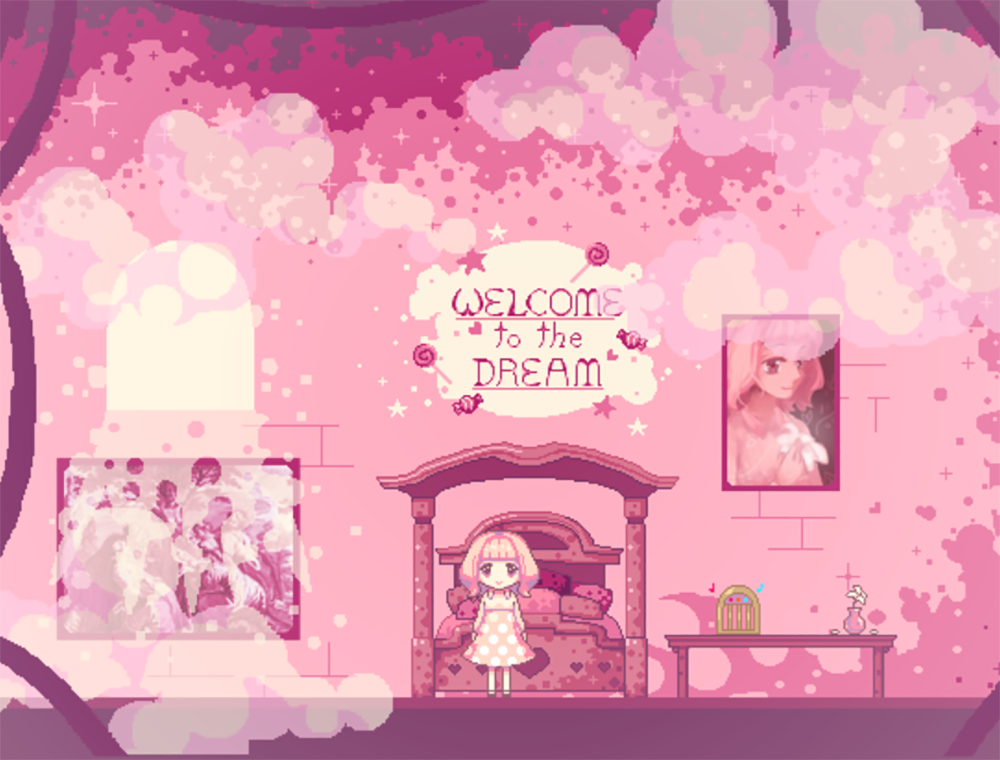
Dreaming Mary (available via the RPG Maker forums here) is a 2D narrative adventure game developed in RPG Maker by Dreaming Games. The opening of the game is super cute, but its pastel pink exterior hides a terrible secret. 

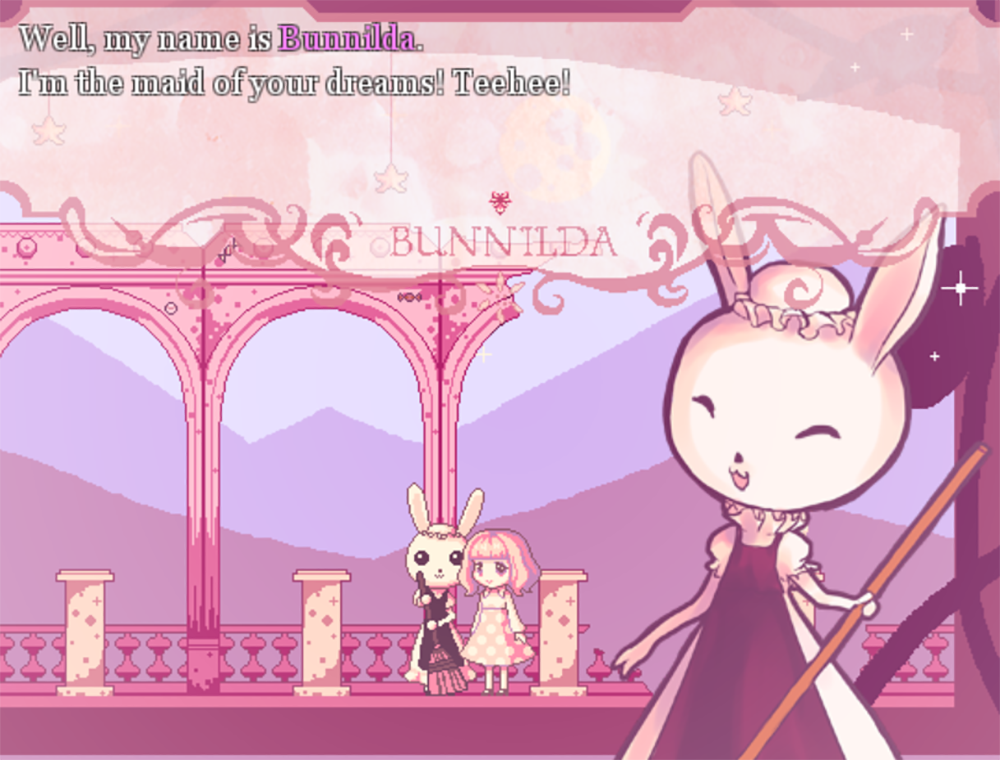
You play as the eponymous Mary, who begins the game in the bedroom of her dream world. She emerges into a lovely hallway with three rooms: a garden modeled on a Greek temple, an aristocratic library with floor-to-ceiling shelves, and a swank but cozy jazz bar. Each room is home to an anthropomorphic animal, each of whom wants to play a simple game. The friendly bunny needs advice on how to arrange her statues, while the flirty fox wants to play a round of hide-and-seek. The gentle owl asks a few questions about the books on his shelves.  

At the end of the corridor is a beautiful tree guarded by a burly boar. If Mary wishes to progress further into the dream, this is her gateway, but she’ll need to collect the blessing of each animal first.

If you play through the game normally, you’ll arrive at a sweet but somewhat ambiguous ending after around 15-20 minutes. If you follow a walkthrough – I recommend this one – to discover the game’s secrets and see the full story, you’ll find your way to a far darker but more satisfying ending in around 30-35 minutes.

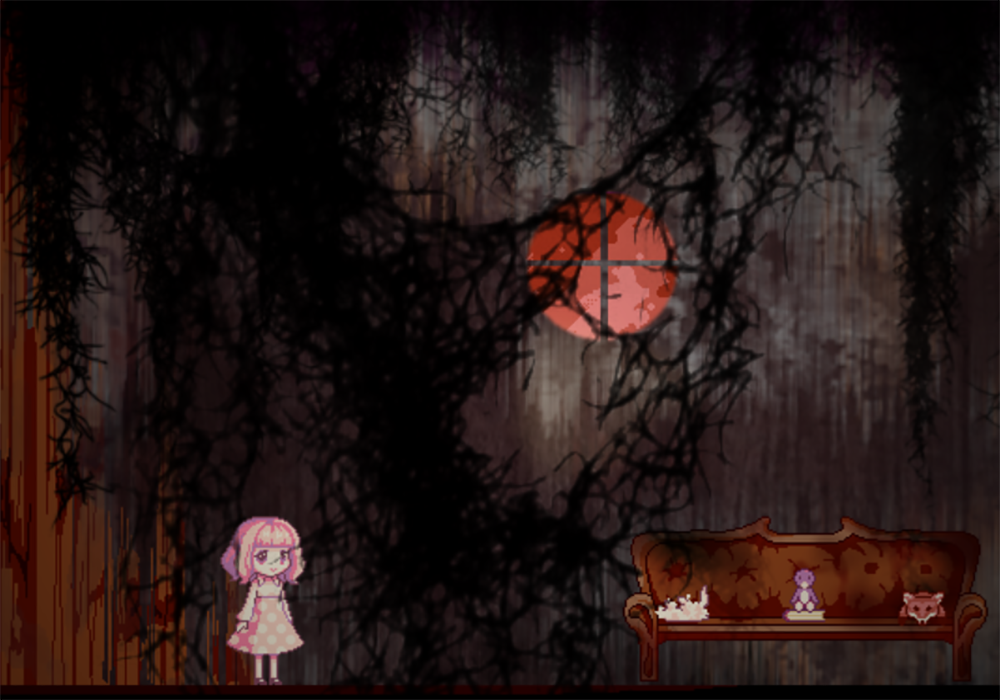
According to the developer’s notes, Dreaming Mary was inspired by the 2011 magical girl anime Madoka Magica, which similarly begins as a cute slice-of-life story before evolving into something much more complicated. Mary’s dream is as lushly pink and pastel as Madoka’s fantasies of becoming a magical girl, which makes the hidden nightmare segments all the more shocking.

Should Mary actually figure out how to wake up… That’s when the story becomes truly grim.

To give a fair warning, many of the puzzle solutions don’t make much sense, and I’m not sure how possible it would be to get the game’s true ending without a walkthrough. Still, it’s worth the extra effort, because the contrast between the sunny opening of the game and its sinister conclusion is something special.  

Dreaming Mary was released in 2014. It seems the devs have gone quiet since then, which is a shame. While Dreaming Mary isn’t perfect, it’s promising, and I would have loved to see this prototype expanded into a more polished game. Still, Dreaming Mary stands well enough on its own as a short but intriguing indie horror story in the surreal lineage of Yume Nikki.

Vartio

Vartio
https://store.steampowered.com/app/3639120/Vartio/

Vartio, a short and atmospheric horror game about walking through the woods at night, was developed by Pepperbox Studios and released on Steam in August 2025.

You play as a medieval soldier sent to an isolated fortress in the middle of a dense forest. As soon as you arrive, the guard captain explains your duty: you must patrol the woods by moonlight. Your job, as the player, is to follow a first-person circular path through the trees. You’ll complete three loops that result in a playtime of around 20 minutes. 

Though Vartio has a bit of a twist ending, there’s nothing explicitly scary in the game. Aside from an owl flying in your direction toward the beginning of the second loop, there’s nothing resembling a jump scare. The graphics are well-designed but primitive and repetitive, and nothing much happens, truth be told. There’s no pathfinding or puzzle-solving; you just follow the road. You can leave the trail to explore a bit if you like, but there’s not much you can see in the darkness.

Precisely because the walk through the woods is so boring, it’s likely that your imagination will begin to work overtime as you navigate the sounds of the forest. The first loop is fairly normal. During the second loop, however, you become more sensitive to any break from the regular noises. And the third loop… Well, it’s a surprise.

Vartio is creepy, but it’s also oddly relaxing, like ambient lo-fi beats for forest goths. If you’re a fan of atmospheric horror that gives you space to make up a story as you go along, Vartio is an intriguing combination of retro graphics and precision sound design that allows you to immerse yourself in the spookiness of a starlit sea of trees.

Retro Horror Games on Sidequest

My annual roundup of free-to-play retro horror games on Itch.io is now on Sidequest. There’s a gritty mix of fresh blood and decayed favorites in this year’s creepypixel harvest, from the recent haunted forest simulator Bloodbark to the Tumblr-favorite Flesh, Blood, & Concrete to the first game created by Deltarune artist Temmie Chang, Escaped Chasm.

You can check out the post here:
https://sidequest.zone/2025/10/15/retro-horror-games-on-itchio/

And there’s also my lists from October 2024 and October 2023, which are somehow even more liminal and retro.

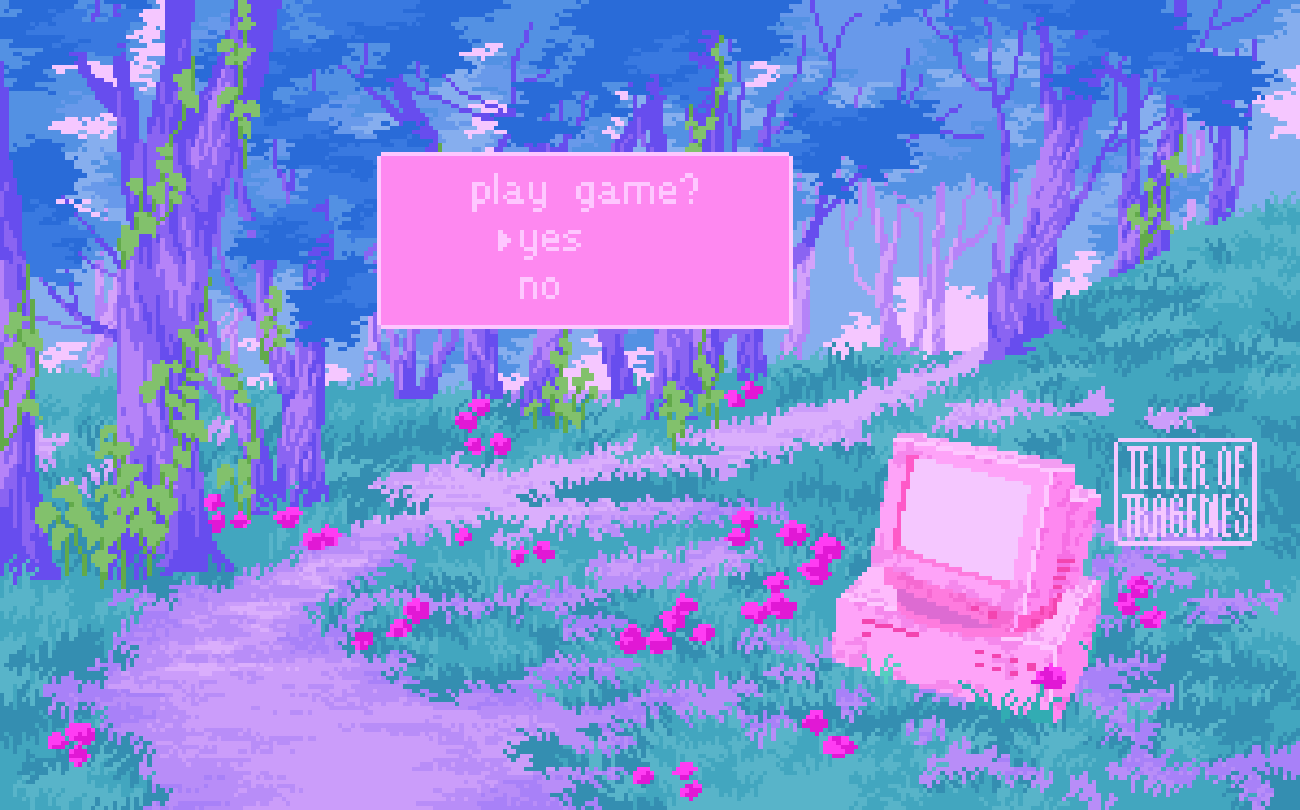
I’m overjoyed to have commissioned a banner illustration from the shining Teller-of-Tragedies, who shares gorgeous and immersive dreamcore pixel art on Tumblr (here) and on Instagram (here).

Review of Witchcraft on Comics Beat

My most recent review for Comics Beat is about Witchcraft, a graphic novel by Sole Otero, an internationally famous Argentinian comic artist whose style has developed in a cool and unique way during the past decade. Witchcraft is a massive book, but it’s an incredible page turner. The writing is brilliant, and the art is both extremely stylized and exactly what it needs to be to tell the story, a gothic cautionary tale that jumps between the present day and various periods in the history of Buenos Aires. And the story is indeed about witches and magic and power. This book is so goddamn good, and I feel very honored to have been able to write about it. Here’s an excerpt:

Witchcraft is primarily set in Buenos Aires, and the narrative jumps between historical periods when the witches were active and the present day, when the gender politics of their activities are far more complicated. It would be easy to see the witches as feminist saviors as they run women’s clinics and shelter members of the local indigenous population, but their benevolence is called into question by the nature of their magic, which requires the victimization of men and the silent complicity of their fellow women. Instead of a feminist message, what Witchcraft offers is a fast-paced and high-stakes story about cycles of abuse and the human cost of the sacrifices necessary for the marginalized to survive.

You can read the full review on Comics Beat here:
https://www.comicsbeat.com/graphic-novel-review-witchcraft/

Strange Tales and Modern Legends

My zine Strange Tales and Modern Legends collects three illustrated short stories based on demonic Japanese folklore.

When I was an undergrad, I had the honor of taking a class called “Demonic Women in Japanese Fiction” with a professor I truly admire. This course was a foundational experience, and I ended up writing a lengthy senior thesis with the same title. The project served as an introduction to literary theory and feminist thought; but, more than anything, I really enjoyed stories about women behaving badly.

I taught my own “Demonic Women” class at the University of Pennsylvania for the first time in Spring 2024, and it was a resounding success. Everyone in this class was just as fascinated by the stories as I was, which was a minor miracle. In all fairness – demonic women are a lot of fun.

Though I teach and publish (and blog) about Japanese literature, and though I’ve spent a significant amount of time living in and around Tokyo, I generally don’t write original fiction set in Japan. Still, I love demonic folklore so much that I couldn’t help but be inspired by the literature in my “Demonic Women” class. I therefore put together a short zine that collects two previously published stories and one original piece of flash fiction, and I commissioned a coven of talented artists to create illustrations.

In the zine’s opening story, “The Smile of a Mountain Demon,” a 21st century yamauba entraps a YouTube influencer with Buddhist pretensions by using Airbnb and the language of New Age spirituality. The young man is looking for a scenic “spiritual retreat” to use as a source of content, and the yamauba is looking for a tasty snack. I was inspired by the medieval Adachigahara folktales in which a cunning yamauba entraps a less-than-devout Buddhist priest, as well as Minako Ohba’s beautiful and heartbreaking short story “The Smile of a Mountain Witch.”

The zine’s main story, “The Kumo Diary,” is set in the Meiji period, the era of Japan’s industrial revolution. As Japan established itself as a nation that could compete with Western powers, its intelligentsia were motivated to create a unified sense of “Japanese culture.” Scholars were therefore tasked with making The Tale of Genji a respectable classic to be held in esteem by a modern nation. While I was studying the history of The Tale of Genji, I couldn’t help but wonder about all the apocryphal chapters that never made it into the canonical version, and I created a few fragments of a medieval text to be discovered by a reader who dwells in the shadows cast by the light of modernity.

The final story, “Hanahaki,” is about a neglected cat who vows revenge on the small child that has monopolized his beloved human’s attention. The title comes from a trope in underground manga and fancomics of the late 2000s and early 2010s. In these stories, someone suffering from unrequited love painfully coughs up (haki) delicate flower petals (hana) in lieu of the words they can’t say. The cat in this story is unable to communicate in human language, but he still finds a way to make his displeasure clear. If nothing else, the child must go.

Strange Tales and Modern Legends explores themes that have fascinated me for years, specifically the intersections of folklore, feminism, and the unruly joy of problematic characters. I hope readers find these stories as delightfully unsettling as I did when I wrote them.

If you’re interested, you can order a paper copy of the zine from Etsy or download a free digital version from Itch.io.

👹 https://digitalterrarium.itch.io/strange-tales
👹 https://www.etsy.com/listing/4299187840/strange-tales-horror-fiction-zine

The art at the top of this post, which is one of the illustrations featured in the zine, was created by Le Soldat Mort, a dark fantasy artist who shares their work on Bluesky (here) and on Instagram (here).

Review of Bramble on Comics Beat

My review of Hollow Press’s newest publication, Bramble, was posted on Comics Beat!

Hollow Press is an Italian micropress that publishes strategy guides for dark fantasy adventure games that don’t exist. Their most well-known book is Vermis (which I wrote about here), but I think Bramble is probably more accessible to a wider readership. It’s very weird and creative, and the art style is a lot of fun. Here’s an excerpt from my review…

Bramble is a worthy successor to Vermis, and the book proudly stands on its own as an accessible introduction to the emerging genre of original strategy guides. Its story is driven by the forward momentum of a traditional graphic novel and augmented by the intriguingly fragmented worldbuilding presented by digital RPGs. As a physical object, Bramble also suggests the nostalgic mystery of forgotten media, and the reader can easily imagine coming across this book hidden in the back of a closet or buried at the bottom of a box at a flea market. 

You can read the full review on Comics Beat here:
https://www.comicsbeat.com/graphic-novel-review-bramble/

Symbiosis

Symbiosis
https://spicaze.itch.io/symbiosis

Symbiosis is a free-to-play RPG Maker horror game about a murderous mad scientist living in a house in the woods with an adorable child. The story has two endings, and it takes about 25 minutes to play through the game once.

You play as Magnolia, a geneticist who left her university post after a mysterious fire broke out in her lab when her research came under public scrutiny. She now lives in isolation with Mint, a curious and precociously intelligent young boy whom she’s raising as her son. According to local rumors, Magnolia is a witch. It doesn’t help that hikers have a tendency to disappear in the forest surrounding her property.

The game begins as Magnolia carves up the corpse of someone she caught sneaking into her house. She’s interrupted by Mint, who can’t sleep and wants a bedtime story. Unfortunately, there are three more intruders in the house, and Mint won’t stay in his room. Your job as the player is to turn the remaining intruders into corpses – for science! – while ensuring that Mint remains out of harm’s way. 

Magnolia’s house isn’t too terribly large, but it’s big enough to have all sorts of nooks and crannies to poke around, as well as various journals and research notes to find. The player can use these clues to figure out who Magnolia is and where Mint came from, although you’ll have to make your own decision regarding Magnolia’s feelings toward Mint and what the fate of the pair will be. The game’s creator has posted a guide for the two endings (here), and this short devlog also contains their thoughts on the story and characters.

What sets Symbiosis apart from the crowd of RPG Maker horror games is the creator’s gleeful willingness to allow Magnolia to be messy and problematic. She initially seems to be a complete sociopath, and her bad behavior is a joy to watch. As you witness her interactions with Mint unfold, however, her character becomes more complicated. Why Magnolia feels affection for Mint is open to interpretation, but I think it’s fair to say that her attachment is genuine.

The way I interpret this relationship is that it’s an analogy for the process of artistic creation (or scientific discovery, as the case may be). In order to create something meaningful, an artist has to be unpleasant, selfish, and more than a little antisocial. Gradually the art comes to take on a life of its own, and it’s up to the artist to decide whether to let it go or to keep it firmly in the orbit of their own dysfunctional personality.

Lest you think I’m spoiling the story, fear not – there’s all sorts of nasty business in Magnolia’s past for the player to discover. This woman is a legitimately horrible person, and her crimes are fantastic fun.

Symbiosis tells a short but grisly story through simple narrative adventure gameplay intercut with stylishly illustrated cutscenes, and I enjoyed it enough to go back and see both endings. I definitely recommend this game to fans of gothic horror, demonic women, and questionable scientific ethics.

Review of The Harrowing Game on Comics Beat

I consider myself extremely fortunate to have been an early reader of Antoine Revoy’s newest graphic novel, The Harrowing Game. I love this book, which is strongly inspired by Junji Ito but still very much its own thing. I’m also lucky to have gotten an opportunity to write a review for Comics Beat. Here’s an excerpt…

The Harrowing Game will delight fans of Junji Ito and H.P. Lovecraft, to be sure, and connoisseurs of horror will appreciate Revoy’s intriguing interpretations of familiar tropes. Revoy twists gothic stories into broken reflections of cultural anxieties, and the storytelling is no less dramatic for the subtlety of its social commentary. If nothing else, it’s a pleasure to get lost in the details of Revoy’s spectacular illustrations. Whether you’ll be able to find your way out untouched and undisturbed is another story.

You can read the full review on Comics Beat here:
https://www.comicsbeat.com/graphic-novel-review-the-harrowing-game/