A Legend of Shadows, Part Three

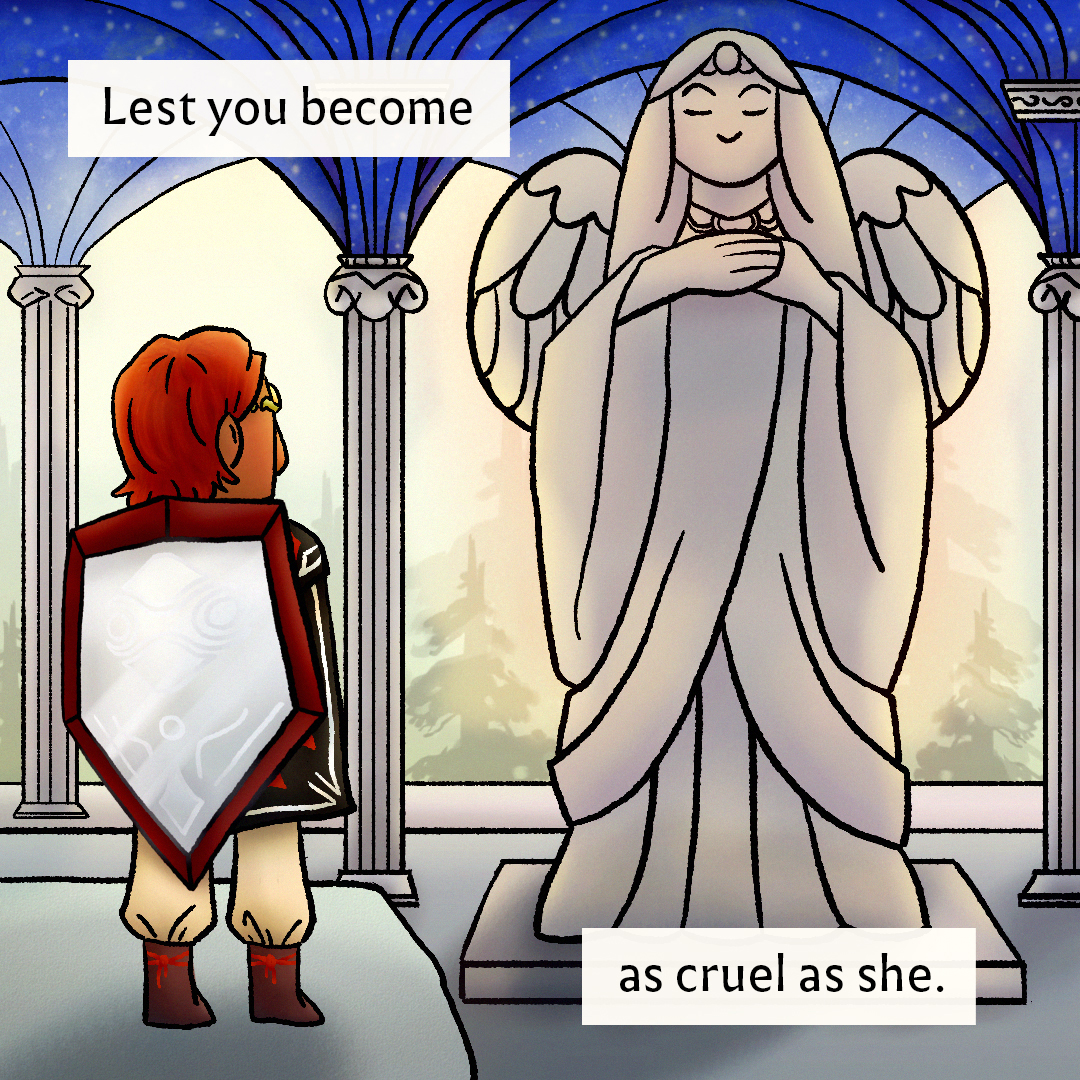
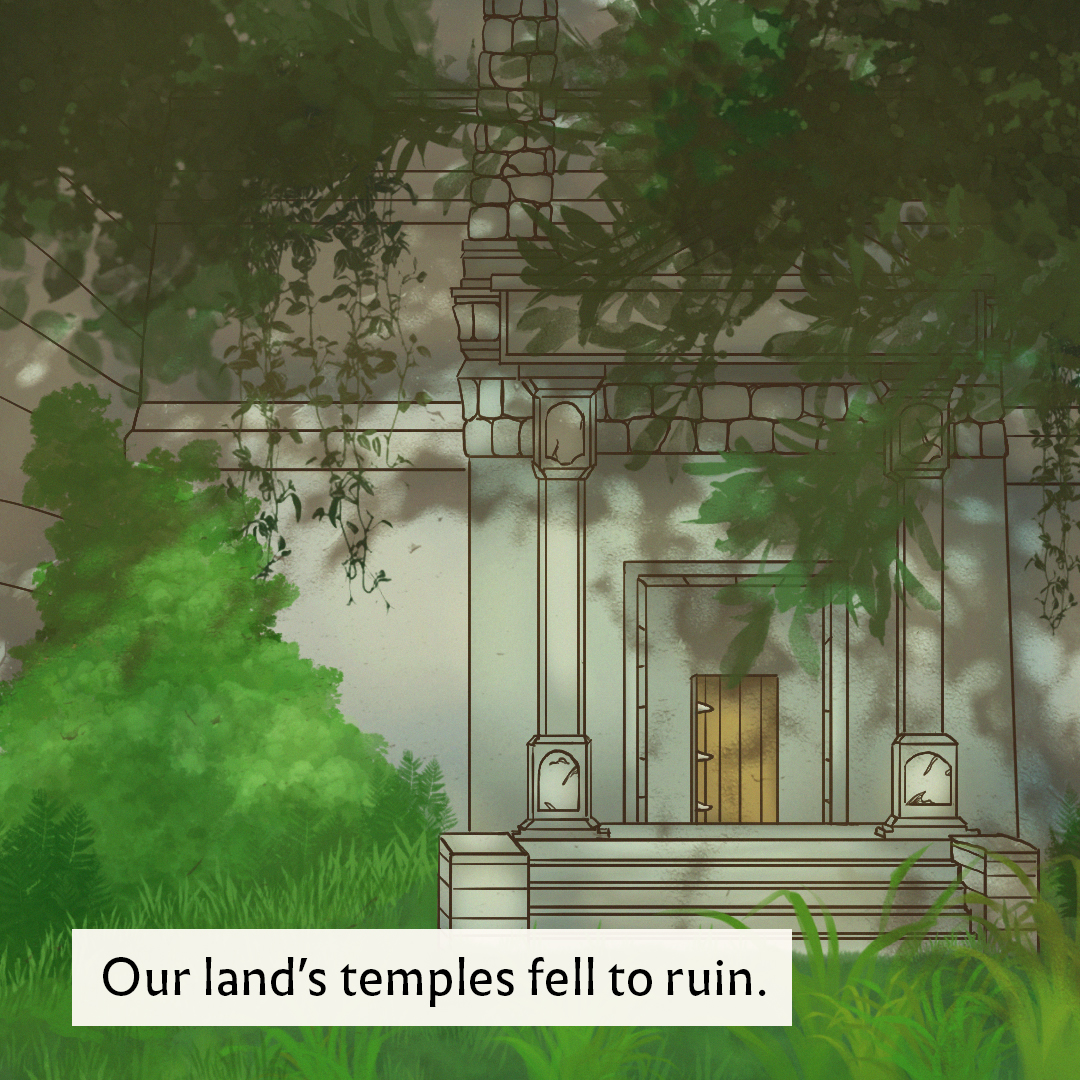
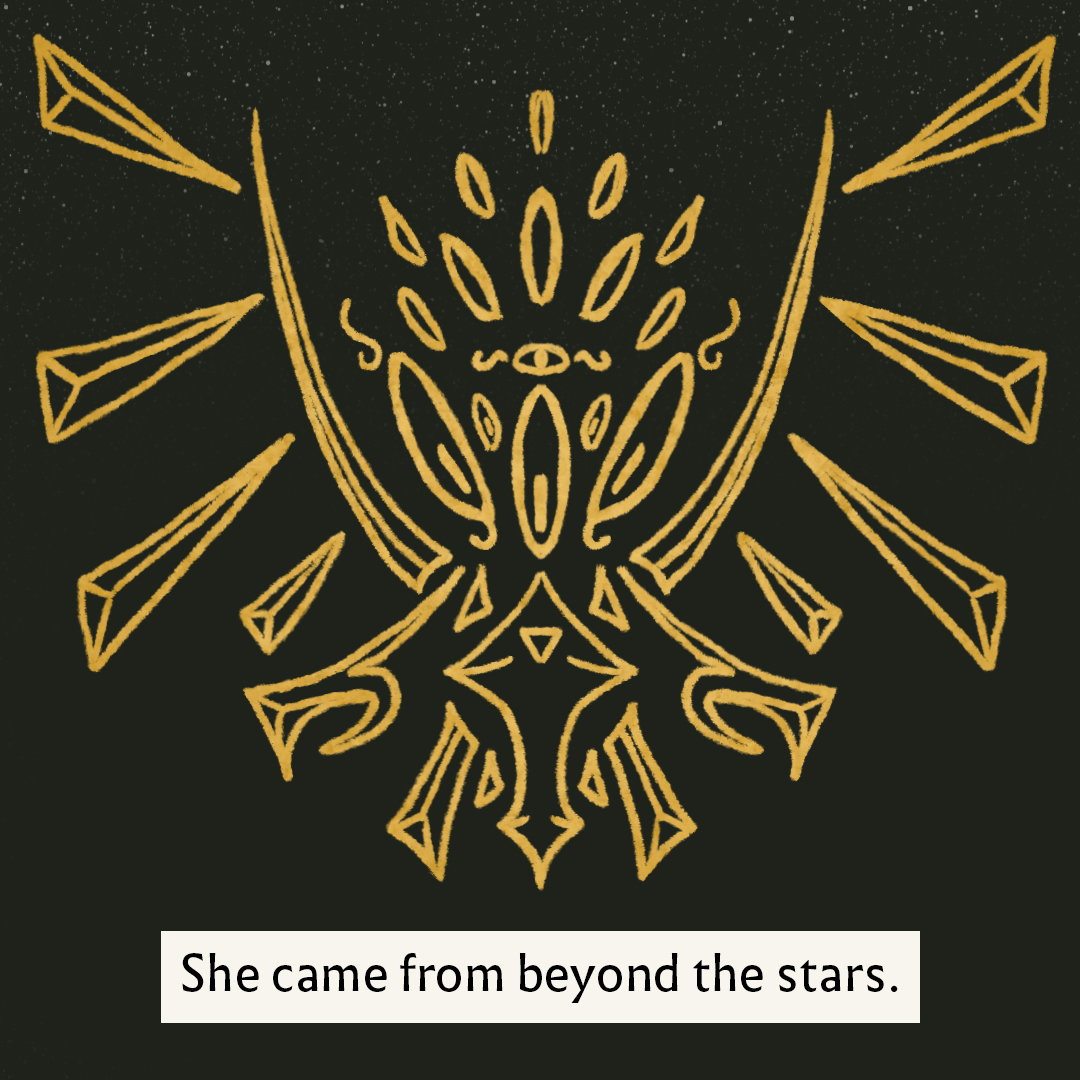
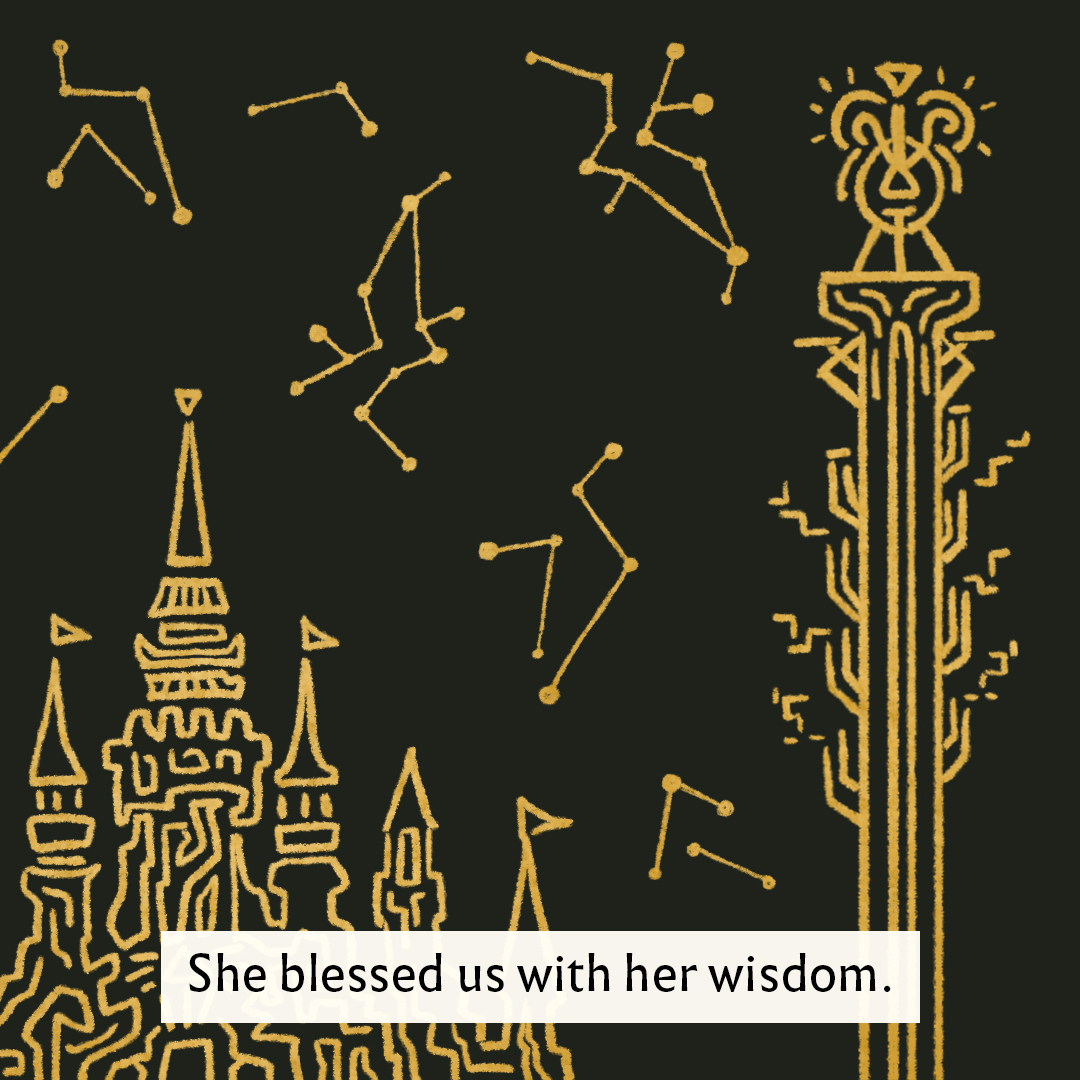
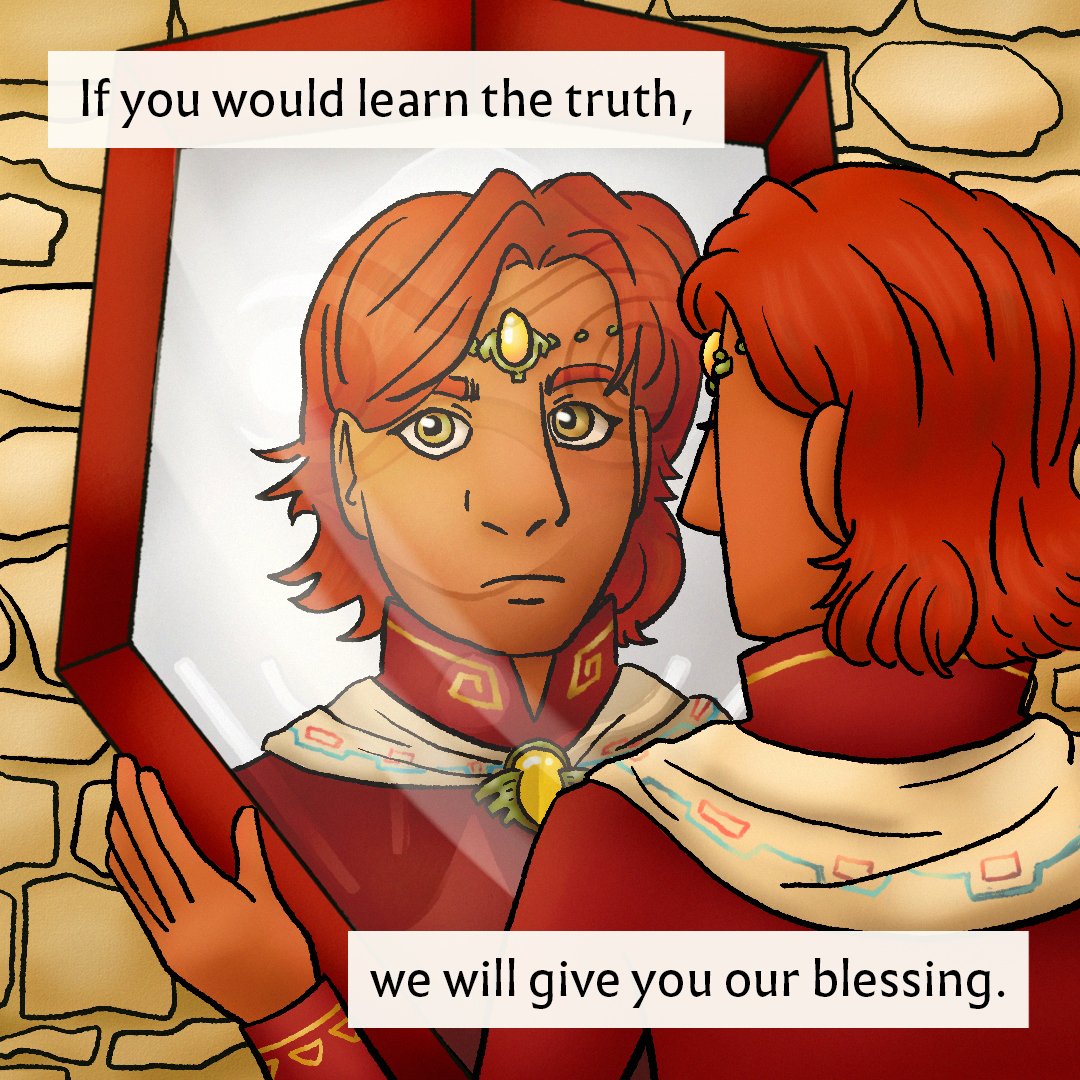
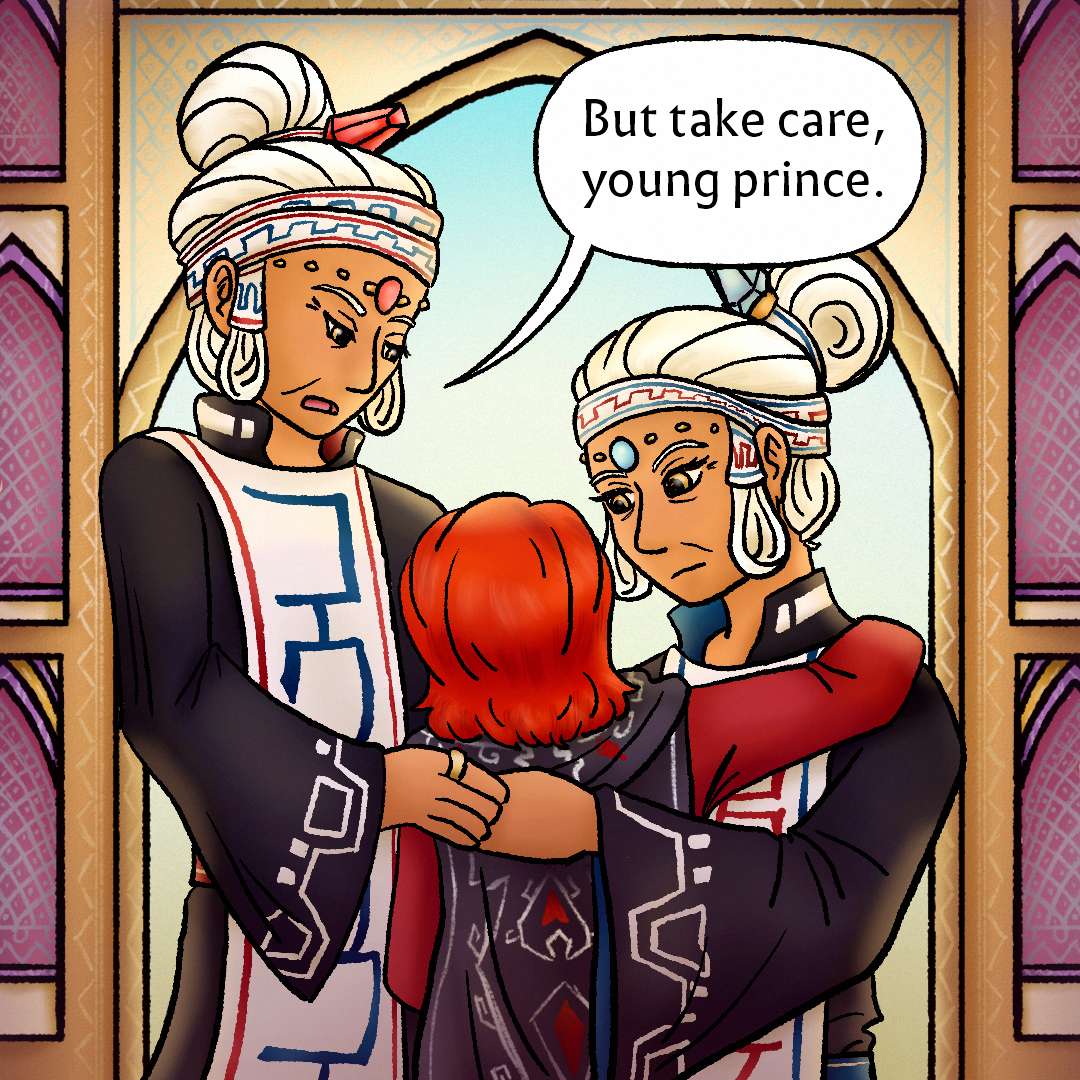
This is the third and final section of a speculative comic about gods and mortals in Legend of Zelda lore and mythology. The first part is (here), and the second part is (here). This is a continuation of the ideas I expressed in a short collaboration comic called Hylia’s Chosen Knight.

The goddess Hylia is more than a little scary, and it’s interesting to think of Ganondorf as being the hero of another story. I’m fascinated by the theme of “the failed or corrupted hero,” and I think it would be interesting if Ganondorf went on a quest that paralleled Link’s journey. Maybe young Ganondorf saw Hylia as the villain, but the power he needed to stand against Hyrule ended up overwhelming him. To me, that’s much more compelling than the idea of power only being “good” when it’s wielded by the “chosen” person.

Japanese Ghost Stories

This fall, I’m teaching a new class called “Japanese Ghost Stories.” Here’s the course description…

This course offers a survey of the numinous and supernatural through Japanese fiction, drama, comics, animation, and video games from the Heian period to the present day. Students will assemble a foundational knowledge of Japanese religion and folklore while studying popular narrative traditions representative of their historical eras.

By peering into the liminal spaces connecting the living with the dead, students will develop critical thinking and media literacy through careful investigation into the matters that people of different times and places have perceived as monstrous, alien, and unspeakable. Issues of gender, sexuality, and ethnic minority status will receive special attention as we navigate theories relating to the cultural role and social relevance of ghosts. By the end of the semester, students will possess a broad perspective on Japanese narrative traditions and popular culture, as well as an understanding of how fantastic stories of the dead reflect the tangible experiences of the living.  

You can download a copy of the syllabus (here).
I’ve collected PDF files of the course readings on Dropbox (here).
If you’re interested, a copy of the course assignments handout is (here).
You can check out the work of artist who drew the banner image (here).

I’d like to acknowledge that this course was inspired by Professor Naomi Fukumori’s class “The Monstrous in Japanese Literature and Culture,” and I encourage anyone who is interested to check out the course syllabus (here).

Gothic Horror Story Elements

In order for a story to be considered “Gothic,” I think it needs to include…

– A house. This “house” can be a castle or a space station or an abandoned medical research facility or what have you, but it needs to be a place where people live and eat and sleep.

– It has to be a big house. In addition to being big on the outside, it should be larger than it appears. The house should have something along the lines of a secret sub-basement, hidden rooms, tunnels in the walls, a House of Leaves style portal to another dimension, or something along those lines. The house needs to be large enough to be considered a labyrinth.

– The house has to be old and in a state of decay or disrepair. In addition, the house needs to be isolated and surrounded by wilderness. Over the course of the story, the natural environment should intrude on the interior of the house. This should still be the case even if the environment is not technically “natural,” as in the case of Suburban Gothic.

– The house needs to be associated with and occupied by a family.

– The family needs to have a dark secret, preferably one hidden within the house.

– At least one member of the family should still live in the house. “Family” can be loosely defined, but the concept of “family” as such is key.

– If there’s no family living in the house, then the story is a “haunted house” story, not a “Gothic” story. This is also the case if the people living in the house aren’t alive or aren’t human (or whatever passes for “a normative person” in the world of the story). This is important, as “Gothic” is just as much of a narrative structure as it is a collection of tropes. For example…

– The point-of-view character should be a member of the family in some way. Often this character will come into the house through marriage or inheritance. Sometimes they won’t initially know they’re related to the family. In the case of servants and governesses and so on, the point-of-view character will either be secretly related to the family, or they’ll be a parent or spouse in all but name. If the point-of-view character isn’t related to the family, they will gradually fall under the delusion that they are.

– The point-of-view character will obviously be privileged, as they live in a large house and are associated with a wealthy family, but they also need to be disadvantaged in some way. The way in which they’re disadvantaged should have some thematic relevance to the dark secret hidden by the house.

– The point-of-view character must be forbidden from certain behavior by an arcane rule or system of rules. The forbidden behavior will generally involve the navigation of space in or around the house: Don’t go into the forest, don’t go into the cellar, don’t leave your room at night, etc.

– The disadvantage of the point-of-view character will compel them to accept the family rules even though they can intuitively feel that something is horribly wrong. This traps them within the house.

– The goal of the point-of-view character is to escape the maze of the house. The only way to navigate this labyrinth is by breaking the rules, engaging in forbidden behavior, and bringing the dark secret to light.

– The primary antagonist should be a living person in the family, related to the family, or emotionally invested in the family in some way. Although supernatural elements are not out of the question, it’s often the case that the phenomena presumed to be supernatural have a rational (albeit psychologically deranged) explanation. That being said, there’s often a Todorovian elision between “natural” and “supernatural,” with the distinction being left to the reader.

– When the point-of-view character reveals the family’s secret, this destroys the house. This destruction is usually literal. The family almost always dies as well. If the point-of-view character is too closely tied to the family, they may die too. Regardless, the reader will understand that the collapse of the house and the demise of the family is a good thing that needed to happen.

– The house and family should represent an older social system responsible for the disadvantage of a group of people represented by the point-of-view character. This system usually concerns oppression on the basis of class or gender, but it can sometimes be about race, nationality, or colonial heritage.

– The Gothic genre is not conservative, because it’s essentially about how outdated systems of privilege that still continue to oppress people are deeply fucked up and unhealthy and need to be destroyed. “Haunted house” stories are often conservative, but I would argue that Gothic stories advocate for radical systemic change and the self-realization of freedom from social expectations.

– At the same time, Gothic stories are not didactic. The lure of the forbidden goes both ways, after all, and the reader should be able to understand why the point-of-view character allows themselves to become trapped in the house. The old castle is majestic. The beast-husband is attractive. The spoils of ill-gotten wealth are luxurious and comfortable. The ruins are delightfully mysterious. The poison apple looks delicious. The story is queer and problematic, and that’s precisely why it’s appealing.

There are numerous cross-genres and sub-genres of Gothic that have their own specific conventions, like Gothic Romance and Boarding School Gothic. I didn’t address the visual language of the Gothic, or how tropes and conventions vary between times and cultures. Still, I think this is the core of the genre.
Hylia’s Chosen Knight

I had a horrible thought about the Legend of the Zelda mythology the other day. Demise’s curse supposedly follows the bloodline of the goddess Hylia, so all she needs to do to release Hyrule from an endless cycle of destruction is to stop reincarnating as a mortal. Why she insists on being reincarnated isn’t clear, but Skyward Sword strongly suggests that it’s because she loves Link so much. This is a little creepy…

…but I have nothing but unironic respect for ancient deities who behave like teenage girls!

Once I started thinking about Hylia being creepy, all sorts of interesting possibilities presented themselves. What if Hylia isn’t just a “goddess,” but also completely inhuman? What if she isn’t a sky goddess, but a being from beyond the sky? And what if it’s not necessarily Link she loved, but Hyrule? The idea of an eldritch cosmic entity who wants to become human because she loves the earth is beautiful. It’s also romantic, sort of like The Little Mermaid but endlessly apocalyptic.

Then I started thinking about the Sheikah, the group of people who have historically served Hyrule’s royal family from the shadows. In Breath of the Wild, the ancient Sheikah built incredibly sophisticated technology that is completely at odds with the otherwise medieval world of the game. In addition, their technology also features cosmic and sidereal motifs. What if the Sheikah always knew what Hylia was?

I was partially inspired by (this) comic about how potentially creepy Hylia is in Skyward Sword, and by (this) illustration of Zelda as subtly but undeniably monstrous. I’m fascinated by darker interpretations of the Legend of Zelda universe, and I would love to see more horror-themed Zelda art in the world. While I’m waiting for the sequel to Breath of the Wild to be released, I figured that I might as well create some myself.

Frankiesbugs is one of my all-time favorite horror artists, and I was beyond thrilled when she accepted my commission to draw this comic. She had the brilliant idea to model Hylia on Ebrietas from Bloodborne, who bears the sobriquet “Daughter of the Cosmos” and is theorized to have enabled the dystopian world of the game because of her desire to coexist with humans. Frankiesbugs also drew a connection between the iconic eye motif of the Sheikah and the possibility of Hylia having multiple eyes as someone who watches the earth from the skies – or as someone who always keeps watch over her chosen hero.

Frankiesbugs posts original horror art and video game fan art on Instagram, on Tumblr, and on Twitter, as well as on Teepublic and on Redbubble if you’re interested in wearing some creepy-cute graphic design.

A Time for Giving

A Time for Giving by CobGoblin
https://cobgoblin.itch.io/a-time-for-giving

A Time for Giving is a free Game Boy “dark cottagecore” horror game about being a human sacrifice. It takes five to ten minutes to play, and it’s divided into three main areas: your protagonist’s cozy family cabin, an isolated village preparing for its winter festival, and the haunted snow-covered woods. The overworld graphics remind me of the cute rounded style of A Link to the Past, and the character artwork that appears during the dialog screens is delightfully eerie and upsetting. The dialog is well-written and communicates the themes of the game without pulling any punches.

A Time for Giving was created for a winter solstice-themed game jam, and the creator apologizes that there’s no sound because they ran out of time. I’m of the opinion that the lack of music is actually quite lovely, as it creates an environment reminiscent of a silent forest blanketed by snow so heavy that it muffles all sound.

A Time for Giving is very short and very simple, but the writing and visual style are exactly what I want from a handmade Game Boy game. It’s also a perfect combination of nostalgia and “what the fuck did I just play,” which is a major component of what makes these games so fun.

I played A Time for Giving a few times and made varying choices in an attempt to get a different ending, but alas. I wonder if there’s a way for this poor kid to make it out of the forest…?

Waking Nightmare

Waking Nightmare by Polyducks
https://polyducks.itch.io/waking-nightmare

Waking Nightmare is a free homebrew Game Boy horror game in which you navigate a short and simple maze. Every dead end presents you with a nightmare scenario and the notification that you’ve woken up, thus restarting the maze. The game moves very quickly, and each dead end is creative and worth the trouble of discovering. The game also marks every dead end that you’ve already seen twice in order to minimize frustration.

When you make it through the maze, you’re presented with a series of dialog choices that determine one of three endings. The maze layout doesn’t change, so it’s easy to finish the game and see all three endings in about fifteen minutes. The maze screens look like something a kid would build on a graphing calculator, and the gritty lo-fi pixel art is great, especially for the three closing screens. Apparently this is all text art, or “textmode” art, which the creator explains on their website (here). This website is just as interesting as the game itself, and I recommend checking it out if you’re interested in internet art history.

I was never a big fan of first-person maze games, but I’m glad I gave Waking Nightmare a chance. It’s visually distinctive, it makes excellent use of its medium, and the music will definitely get stuck in your head.

Opossum Country

Opossum Country by Ben Jelter
https://benjelter.itch.io/opossum-country

Opossum Country is a free ten-minute lo-fi horror game about a rural pizza delivery driver who finds himself stranded in an isolated trailer park where something isn’t quite right. If you’re worried that the game is poking fun at the sort of low-income and mentally unbalanced of people who might live in a trailer park, there’s definitely an element of that, but the story goes in a direction that I wasn’t expecting. In the end, the moral of Opossum Country is that you shouldn’t jump to conclusions about a community you don’t understand. I mean, if the game can be said to have a moral. Which it arguably doesn’t. Regardless, the ending is fantastic.

Ben Jelter also made another free ten-minute Game Boy game called The Last Employee, which definitely has a moral: fuck capitalism. This being the case, I’m guessing that Opossum Country was created from a place of deep sympathy for people on the margins of society. This narrative viewpoint is refreshing in its unapologetic portrayal of difference, but Jelter’s sympathy for these characters doesn’t stop the game from being creepy as fuck. The overworld pixel graphics are creative and unsettling, as are the more detailed character portraits.

Opossum Country was made with a program called GB Studio. Not only is it free, but there are also a ton of pay-what-you-want graphics asset packs floating around Itchio, as well as collections of free-to-use chiptunes music that’s compatible with the Game Boy engine. I also found a few pixel art resources for Clip Studio Paint in the form of brushes, templates, and filters. I’m not sure that “just anyone” can make a game as unique and interesting as Opossum Country, but it’s nice to know that there’s nothing stopping you from trying.

A Dark Winter Wander

A Dark Winter Wander by Red Skald
https://redskald.itch.io/a-dark-winter-wander

A Dark Winter Wander is a free horror-themed narrative adventure game created with GB Studio, a game creator that replicates the look and feel of retro handheld games. The game’s story is about a girl chasing her sister through a (mostly linear) maze of underground tunnels filled with monsters. Although it’s deliberately unclear what’s going on, I think the protagonist’s sister might have an eating disorder, while she herself is depressed. This isn’t important to the gameplay, but those elements are there from the beginning of the game if you’re sensitive and need to watch out for them.

In any case, you see your sister run off into the woods and decide to go after her. While chasing her, you fall into a hole filled with monsters. You talk to the monsters instead of fighting them, and the game is entirely driven by exploration and dialog. This invites a comparison to Undertale, but all of the monsters in A Dark Winter Wander absolutely wish you harm. The creature designs are great, and the lo-fi sound and graphics contribute to the unsettling atmosphere.

If you don’t follow your sister into the woods, you can actually finish the game in about ten minutes and watch a depressing indie game ending. I did this inadvertently, and it was a downer. I then reset the game, did what it wanted me to do, and played for about an hour. Exploring the monster tunnels is a lot of fun, and you can easily spend more than an hour poking around if you’re interested in seeing everything this game has to offer. The creator has offered free downloads, and I’d recommend downloading a Game Boy emulator so that you can play the game offline and create save states.

The unskippable cut scenes at the beginning of the game feel unnecessarily long, and the writing is a bit clunky at times. I also find the lack of specificity regarding what’s going on with the narrator’s family frustrating. You probably already know if a text-heavy Game Boy horror game that’s a metaphor for depression is for you, so I won’t try to sell it. Still, A Dark Winter Wander is one of the most interesting and engaging GB Studio projects that I’ve found on Itchio, and it’s inspired me to check out more work in this weird little subgenre.