One Night, Hot Springs

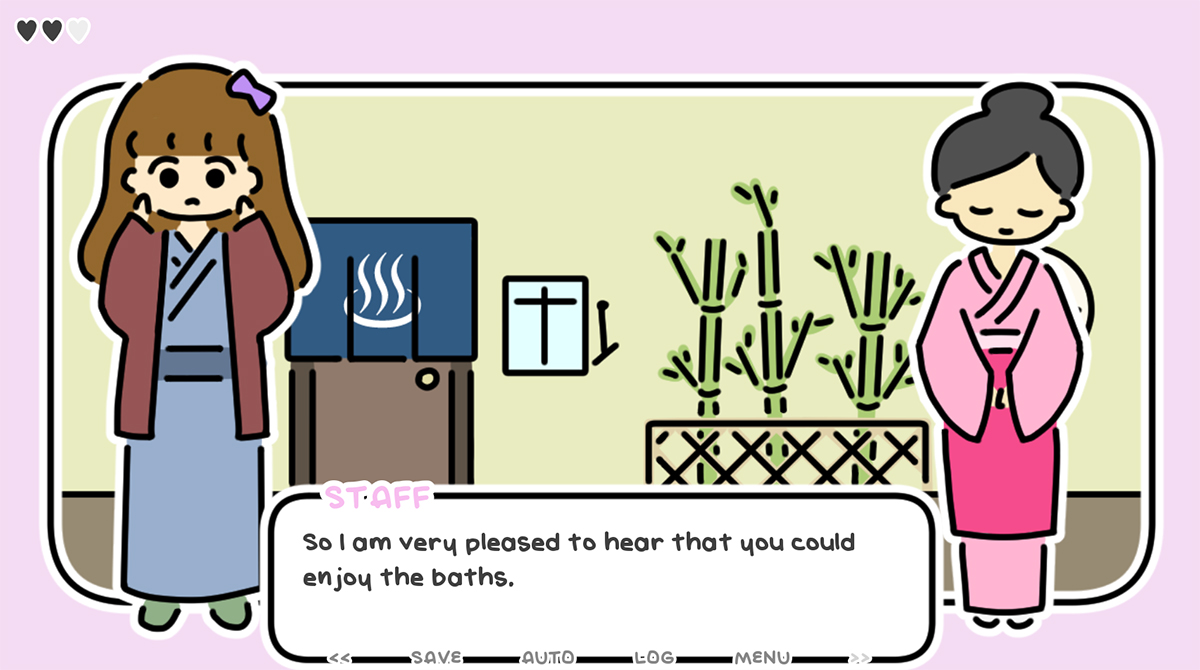
One Night, Hot Springs (here on Itchio) a short visual novel that takes about twenty minutes to play. It’s the free-to-download first chapter of A Year of Springs, which is available for $5 on various platforms, including Nintendo Switch. The story is about a 19-year-old girl named Haru who spends the night at a fancy onsen hotel with her childhood friend Minami and Minami’s friend Erika. Everything seems set up for a fun girls’ night out, but Haru is worried that being trans might make getting into a public bath tricky.

Minami and Erika are both a bit clueless about what it means to be transgender, but each is kind and supportive of Haru in her own way. The onsen staff are kind and supportive as well. No one particularly cares that Haru is trans, but they still go out of their way to make sure she feels comfortable, just as they would for any other guest. Haru is shy and doesn’t want to cause trouble, but a staff member assures her that plenty of people need (and deserve!) a bit of extra attention, and that trans guests aren’t actually as uncommon as one might think.   

There’s a big pink banner with a content warning for transphobia hovering over the game’s page on Itchio, which is why I didn’t take the plunge and buy the full game. I got seriously burned by The House in Fata Morgana, and I don’t want to play another visual novel about a trans character being abused or harassed. It turns out that I need not have worried, thankfully. If you’re honest to everyone about your character being trans, the ending you’ll get is called “The World Can Be Kind, Too.”

There’s an educational element to the game, and this can be something of a bummer, as the social and legal realities of being LGBTQ+ in Japan aren’t great. Still, One Night, Hot Springs is mostly about simulating the experience of spending a relaxing evening in the company of good friends at a beautiful onsen hotel. The artwork is cute yet polished and offers the player lovely visions of traditional architecture, delicious food, and screenshot-worthy outdoor vistas.

One Night, Hot Springs is just as wholesome as its artwork is adorable, and I really enjoyed the story. I was inspired to get the full game, A Year of Springs, and I’m looking forward to playing it soon.

The Academy of Raya Lucaria

This is how I imagine Sellen and Rennala celebrating the end of the semester at the Academy of Raya Lucaria.

The postapocalyptic world of Elden Ring isn’t a great place to live, and good people usually end up dead. The Academy of Raya Lucaria seems as though it was dangerous even before the world ended, as very few of the wizards who studied there had even the slightest hint of ethics regarding the otherworldly powers they were attempting to harness. As much as I would love to study magic myself, I’m fairly certain that I would die – or even worse, become undead – within the first semester of wizard school.

Also, multiple people have commented to me that Elden Ring contains the most accurate portrayal of academia they’ve seen in a video game. As a professor, I think it’s best that I keep my comments to myself, but damn if that isn’t the truth.

Dear Friend

If you want to fight your way into the spotlight, it always helps to have a dear friend with sharp teeth.

This is a fan illustration of an original short story written by a fandom friend, Runicmagitek on AO3. Their story is called “Dear Friend,” and it’s about a sinister shadow who follows an aspiring chanteuse from a dark corner of the forest into the bright lights of the city.

Runic is an incredible prose stylist, and it was a lot of fun to draw their characters! For more monster girls and murder friends, please check out their writing here:

🥂 AO3: https://archiveofourown.org/users/runicmagitek/
🔪 Twitter: https://twitter.com/runic_magitek
✨ Tumblr: https://runicmagitek.tumblr.com/

Hoa

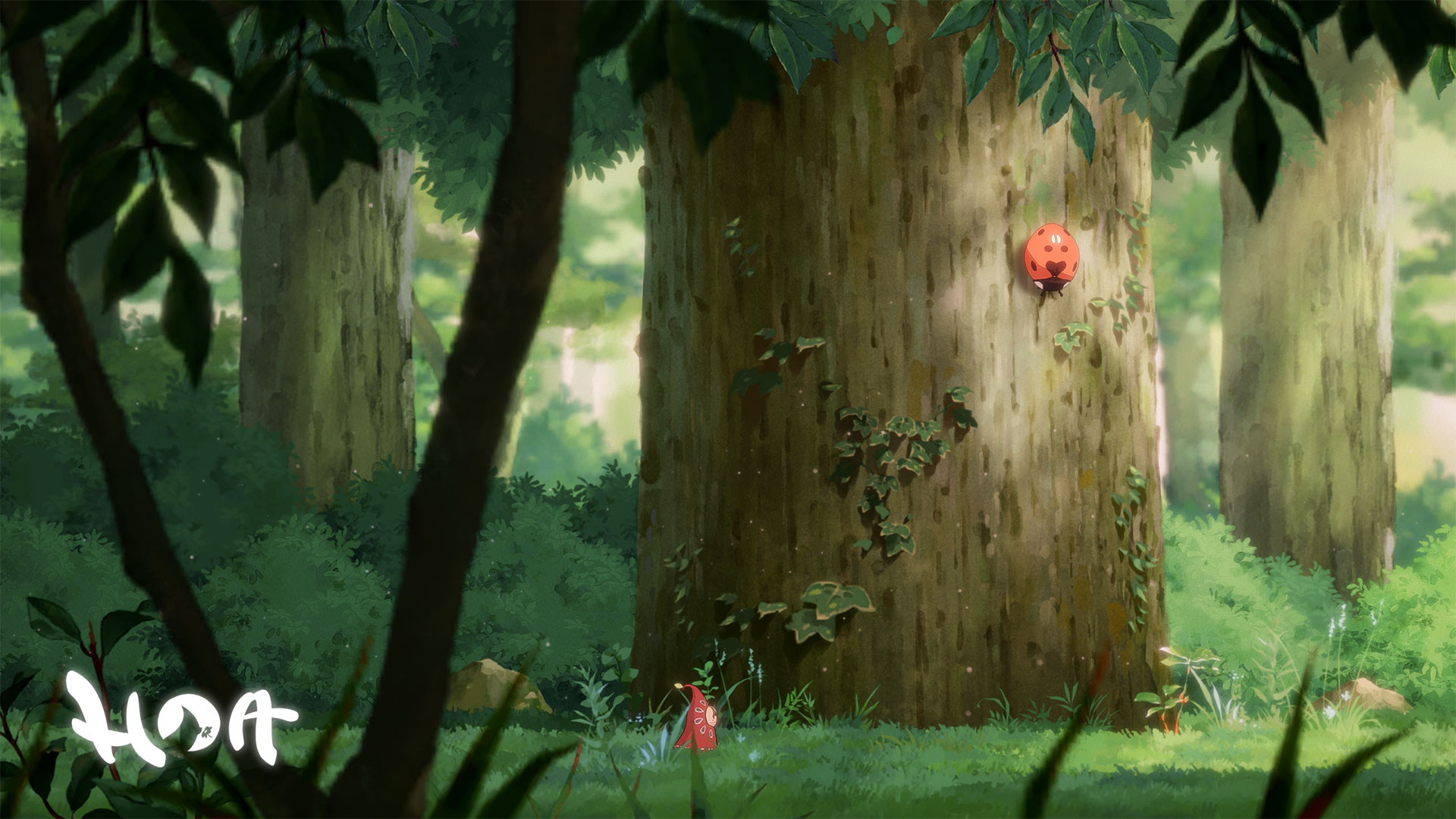
Hoa is a short and nonviolent 2D puzzle platformer set in a gorgeous green world of hand-painted art. If you’ve ever watched a Studio Ghibli movie and wanted to spend more time exploring the backgrounds, Hoa was made for you. The game’s gentle piano music is reminiscent of a Joe Hisaishi score, and Hoa gave me strong My Neighbor Totoro vibes in all the best ways.

You play as a tiny fairy who has returned to the forest after a mysterious trip across a body of water. Your motivation is unclear, but your character seems to want to make her way back to her home. Along the way, you navigate eight levels organized according to simple themed platforming puzzles. Your goal in each level is to wake the level “boss” by restoring light to their sigils, and the boss will give you a new navigation ability once you collect all the golden butterflies scattered throughout the level.

There is no combat or hostility in Hoa, and successful navigation of each level requires the cooperation of its denizens, which include snails, ladybugs, jellyfish, and tiny little robots. As your character walks, flowers bloom and leaves unfurl to help her on her way, and she double jumps in a swirl of sparkling pixie dust. All of this magic is understated and feels like a natural part of the world, and every new level is filled with pleasant surprises.

Unfortunately, there are parts of Hoa that are somewhat unintuitive, especially toward the beginning.

In the first area, your character is taught that she can break horizontal branches if she jumps on them with sufficient force. In the next area, she’s presented with a vertical branch blocking her way. On a higher level, a bug repeatedly rams into another vertical branch, eventually breaking it. It seems the message is clear: If you ram into the vertical branch on your own level enough times, it will eventually break.

This is not what the game is trying to teach you, however. What the game wants you to do is leave the room and walk all the way around the area so you can enter the room from the opposite side, where the branch that the bug knocked down now forms a bridge to another room. Hoa is trying to teach you that all of the rooms in an area are interconnected, and that sometimes you’ll need to approach a puzzle from a different direction. This makes sense, of course, but it’s counterintuitive. When I tried to search for a walkthrough, I found dozens of people asking the same question: How do you break the vertical branch?

In other words, it’s easy to understand what the level design seems to be suggesting, but it’s harder to understand whether that’s the solution the designers intended. I won’t lie – this can be frustrating.    

Once you get deeper into Hoa, you’ll begin to understand how the designers constructed these puzzles, but the game’s combined lack of precision and flexibility still creates unnecessary moments of tension. Although Hoa seems to be aimed at young children, I feel like it demands an unusually high level of patience and forgiveness, as well as an ability to read the abstract intentions of the designers instead of the concrete environment of the game. I would say that Hoa may indeed be a good game to play with a kid, but you probably want to play it all the way through by yourself first.

I should also mention that there’s a gameplay twist in the final level. It’s very good, but it’s also legitimately challenging in a way that the game hasn’t prepared you for. The basic gameplay loop is significantly disrupted, and there’s a certain tricky sequence about halfway through the level that I imagine might cause many players to quit the game without finishing it. Still, even if Hoa doesn’t perfectly execute what it’s trying to do here, it offers the player an interesting concept presented with a surprising degree of style and creativity.

I don’t want to suggest that these moments of frustration break the game. Once I was able to get past the idea that Hoa is supposed to be easy and intuitive, I was able to have a lot of fun with it. After you get a better sense of what the game wants you to do, you can make your way through the later areas with minimal hassles as you enjoy the art and music, both of which are well worth the experience.

My first playthrough of Hoa took about two and a half hours, which includes the time I spent searching for puzzle solutions online. My second playthrough was a smooth one hour, and it was a chill and peaceful experience. I’d say that Hoa is a solid “7/10 game” in the best sense of what that generally means, with the more unpolished elements serving to endow the game with a unique sense of character. All things considered, I’m happy that Hoa is a piece of hand-crafted art that exists in this world.  

Later Daters

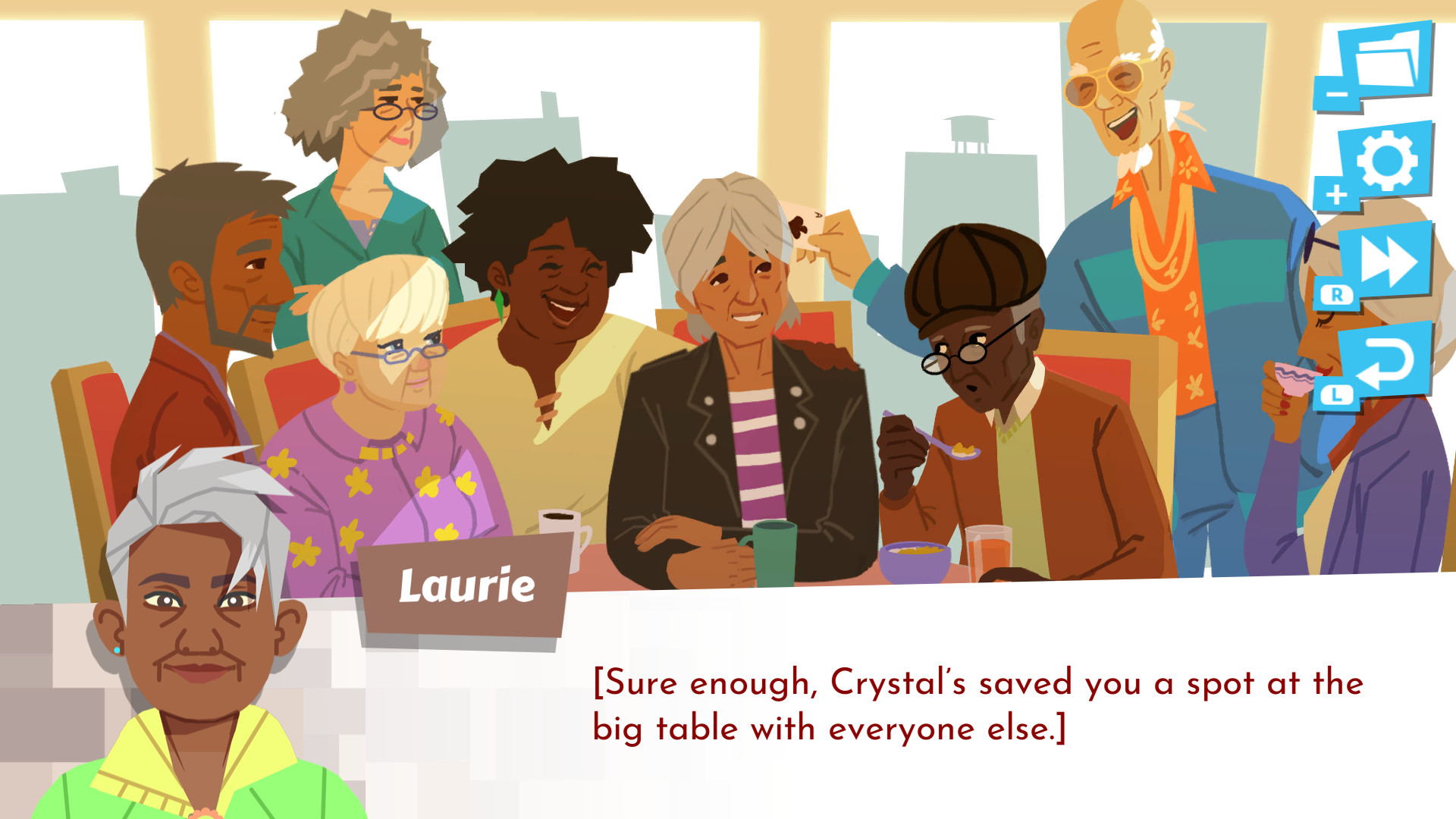
Later Daters is a cute and clever queer dating sim set in a retirement community. It’s divided into seven chapters, each of which takes about ten minutes to read. I enjoyed this game so much that I played it three times. There’s a fair amount of repetition, but also enough potential for variation to keep each replay interesting.

Each of the characters in Later Daters is distinctly attractive in their own way, but perhaps it’s important to say that not a single one of them looks a day past 65 years old. In fact, most of them seem to be in their mid-to-late 50s. I’m not sure if this is a failure of imagination or simply a concession to the player, but everyone is healthy and hearty. All of the characters have good hair and good skin and good teeth and good posture, and they all have the minds and progressive views and sex drives of college students.

Not that I’m complaining, of course! I just want to make it clear that, as in any dating sim, there’s a strong element of fantasy involved.

Your character, who looks maybe 50 years old, is supposed to be 80. (You can choose their gender, but I’m going to stick with “they.”) They’re an artist who lived in a big house out in the country, but their doctor recommended that they move to a retirement community after they developed vertigo and took a fall. The player can choose how positive they feel about this; regardless, everyone in the community is friendly and welcoming.

The retirement community itself is beautiful, with lovely apartments, grass-covered lawns, and a gorgeous greenhouse filled with marijuana plants. The community also has sufficient funding for various clubs and activities, and it’s managed by the residents with no outside interference. It feels like paradise, to be honest.  

The main goal of the game is to choose an NPC to romance, which you can do at your leisure and to whatever degree of steaminess you prefer. The first time I played the game, I was so enchanted by the characters that all I wanted to do was to make friends. I therefore played the game as aro-ace, which ended up being a lot of fun. Unfortunately, I made some questionable decisions regarding a few of the characters, overstepping the boundaries of some while not being attentive enough to others. I therefore played the game again to get to know them better, and along the way I ended up starting a relationship with my cute neighbor.

On my third playthrough, I was like, “Fuck it, we ball,” and I ended up seducing a rock star. The bed scenes were very silly, and there was more than enough humor to create a bridge above any potential cringe. I don’t think most people are going to feel compelled to crank it to Later Daters, but the quality of its dick jokes is extremely high.

Despite the number of excellent (but mercifully non-obtrusive) one-liners, the underlying purpose of the game is to help the player explore scenarios related to aging and death that aren’t often addressed in pop culture or entertainment media.

To give an example, a minor character suddenly dies of a heart attack in the second chapter. Although you can choose not to participate, your character is invited to a group therapy session that has moments of humor but legit made me cry the first time because it was so heartfelt and honest. No one preaches or lectures, but the session does manage to sneak in some real talk about issues such as the importance of creating a will when you get older.

Another example is the person who is (or seems to be?) the sole exception to my earlier statement that “every character is healthy.” A man named Haroun is suffering from Alzheimer’s. This understandably causes trouble for his wife Salema, who doesn’t want to move him to an intensive-care residence.

If you become friends with Salema, you’ll be introduced to her fourteen-year-old grandson Marcel, a sweet kid who tries to help with Haroun but can’t really manage his care on his own. Putting Salema and Haroun’s issues aside, it’s lovely to see how everyone reacts to Marcel with love and kindness. If you’re a queer person who’s ever felt anxiety regarding the judgment of older people, this portrayal of friendliness and acceptance is a godsend.  

Given that Later Daters is so warm-hearted, I didn’t have the courage to do a genocide run, but I’m curious about what that would look like. From the very first dialogue option, you can choose to be extremely negative about moving to a retirement community, and you can also actively choose not to spend time with anyone.

I’m the sort of person who needs a lot of alone time and has never taken well to communal living. If I were to play this game realistically, as myself, I think this would probably be tantamount to a genocide run. Still, I get the feeling that Later Daters might be a safe space to explore these fears and anxieties.

I think it’s especially for people like me that the fourth chapter of the game is a sci-fi themed “and it was all a dream” style mini-story that serves as an icebreaker, allowing you to explore your relationships with the characters without there being any long-term consequences. This chapter is a marvelously clever storytelling device, and it’s a lot of fun.

Even if you’re not especially into older-looking characters, Later Daters is about an hour of good art and excellent writing that can easily be played in one sitting and rewards multiple playthroughs. And again, the dick jokes are great, but you don’t have to date anyone if you’re just interested in the story. If you do happen to be up for romance, Later Daters gives you all the queer options you could hope for while allowing you to set your own pace at every step of the way.

There are several ways to download Later Daters, including paying for each chapter at a time, but I’m happy that I went ahead and got the full game, “Later Daters Part One and Two.”

The House in Fata Morgana

The House in Fata Morgana describes itself as “a gothic suspense tale set in a cursed mansion,” but I would describe this visual novel as 500k+ words of torture porn. It’s so bad. It is so so bad.

The premise of the game is that you wake up in an abandoned mansion with no memories. A creepy maid guides you through the house while telling you the tragic stories of the people who once lived there. It turns out that the maid was present in all eras of history, and that you were too – albeit not in the form you expect. Along the way there are a lot of silly and juvenile anime tropes, as well as a seriously awful mistreatment of transgender issues. And did I mention torture? There’s a lot of torture.

The remainder of this post includes discussion of torture, including sexual assault, so please take care.

One of the reasons I shy away from away from amateur writing communities is because they tend to have at least one person who will go through a manic phase and then won’t shut up about how they wrote 10k words in one night, and how these words are the most brilliant thing that’s ever been written, and how every single one of these words are perfect and should never be edited.

The House in Fata Morgana wrote 10k words in one night, and it shows. The ideas behind the individual character stories and the overarching plot aren’t bad, but the writing is godawful. There was clearly no editing, and the pacing is a miserable mess. Characters repeat themselves endlessly in a way that goes far beyond “demonstrating the theme of a cycle of abuse.” Each of the sub-stories drags on forever before ending in a bloodbath of screams that go “AaAAAAggHHH” and “NnnGGggGG uuuUrrhhh” and “hehehHEHEHehehe” for literally dozens of minutes of the player clicking through meaningless text.

(I don’t mean to suggest that the translation is bad, by the way. It’s actually very polished. Still, I feel horrible that the translator had to wade through this mess, and I hope they got to take a long vacation afterward.)

The art is pretty but extremely limited, and the character designs fail to convey any sort of personality or mood. The game offers almost no horror art, or even any interesting visual imagery. The giant gothic mansion has maybe ten rooms, and they’re all bog-standard stock photos run through different filters. The player is asked to make a few decisions, but they’re few and far between. These choices are binary, with the wrong decision being crystal clear and resulting in an obviously premature end to the game. In other words, there’s no real gameplay to speak of, nor any real payoff for making your way through the text.

About two-thirds of the way through the game, I got to the point where I was holding down the skip button to speed-read through the text as quickly as possible. I gave up at some point during the penultimate chapter. Towards the end, the story’s pace slows down instead of quickens, making the game feel even more tedious as it offers revelations that might have been surprising if the writing weren’t so mind-numbingly boring.

The House in Fata Morgana could have had the potential to be unique and interesting if its writing had been properly edited. At perhaps 250k words, the player would still have been able to spend a significant amount of time in this creepy mansion with these unfortunate characters, and the writer still would have been able to convey the sense of feeling trapped in a web of words. I’m willing to grant a creator sufficient room to explore the world of their story, but I think it’s safe to say that three entire novels’ worth of extra words will try anyone’s patience.  

There’s also the game’s severe mistreatment of transgender issues.

By this point I have enough exposure to Japanese otaku media to understand that the representation of queer identity and sexuality is complicated. For example, is a work of fiction seemingly intended for a straight male audience secretly LGBTQ+ friendly, or is it actually homophobic? And, if it is borderline homophobic, how much energy do you need to expend to reinterpret the plot and characters into something that can be read as queer-positive? Is it worth the trouble?

Even with the benefit of the doubt, however, the second-to-last chapter of The House in Fata Morgana hit me especially hard.

This chapter is about a transgender (and possibly intersex) character quietly coming out as gay and then being tortured by his family. It’s intense, and it lasts for more than an hour of gameplay time. I don’t use the word “problematic” lightly, but the way this torture and misgendering resonates with the rest of the story is deeply upsetting.

Maybe this is all resolved and everyone gets a happy ending, who knows. For me, I’m not sure any ending is worth having to sit through hours of a transgender character being imprisoned and starved and beaten and tortured and being told, in line after line after line of text, that he would be happy if only he weren’t gay.

I feel like this goes beyond “horror” and enters the realm of something else entirely. Either the writer has an intense fetish, or it’s sincere homophobia. I don’t think every piece of media needs to be ideologically pure or written for me specifically, but the way this element of the story casts a different light on the plot of the entire game (for complicated spoiler reasons) is extremely weird and fucked up.

I think most players will eventually run up against the question of “why don’t the characters just get up and leave the house,” and the same frustration applies to The House in Fata Morgana in a meta sense. Namely, you don’t need to be trapped by this poorly-written and poorly-edited and poorly-paced game. You can just quit playing! So that’s what I did.

If you’re wondering whether you should spend $40 to check out The House in Fata Morgana and just play until you get bored, it’s worth keeping in mind that there’s a strong psychosexual element to the story presented by each chapter, with sexual assault and torture being the dominant themes. This is par for the course for gothic horror, but the player’s enjoyment of this game is going to be strongly dependent on how many hundreds of thousands of words of explicit descriptions of non-erotic yet still sexualized torture they’re willing to tolerate. Also, the very first chapter is about incest.

I love horror, and I’m not judging anyone who uses fiction to explore the darker sides of human experience. Still, considering how highly rated The House in Fata Morgana is on Steam, I think it’s important to say that this game definitely isn’t for everyone.

Strange Tales and Modern Legends

This semester I taught a seminar called “Japanese Ghost Stories.” (You can find links to the syllabus and course materials here.) A major element of this class was our study of how folkloric traditions have influenced literature. My specialty is contemporary fiction, so we spent a good amount of time talking about what urban legends are and how they work.

I believe that urban legends have the following three characteristics:

First, these stories are specific to a time and place, and they’re generally tied to a specific person as well. This person is someone known to the storyteller, and they’re either a reliable source of information or a direct witness to the event or phenomenon in question.

Second, the story is understood to be “real” and therefore nonfiction. In fact, it often isn’t much of a story at all. Unlike creepypasta, which is shortform fiction, the characters in an urban legend don’t have interiority, and they’re often not attributed with motivation. Rather, the story is stated as a simple fact. At the core of these stories is a statement like “you’ll die if you eat [a certain type of candy] mixed with soda” or “a child was once murdered in [a certain department store] bathroom.” The purpose of additional details is to add authenticity.

Third, urban legends almost always have a cautionary element, and the unfortunate events of the story are related to social and cultural anxieties. These fears tend to be politically sensitive and thus can’t be discussed openly, so urban legends function as a sort of pressure release valve. In the United States, for example, a lot of urban legends reflect racial tensions, while there are a lot of urban legends about bullying and social ostracization in Japan.  

This isn’t really a defining characteristic, but I find it interesting that an urban legend need not necessarily be untrue. Rather, the act of making something into a “story” adds an element of speculation. This means that, even though the story is stated as fact, both the teller and listener understand that the veracity of this fact is debatable. In other words, the story could be true, but both parties acknowledge that there’s no way to prove it.

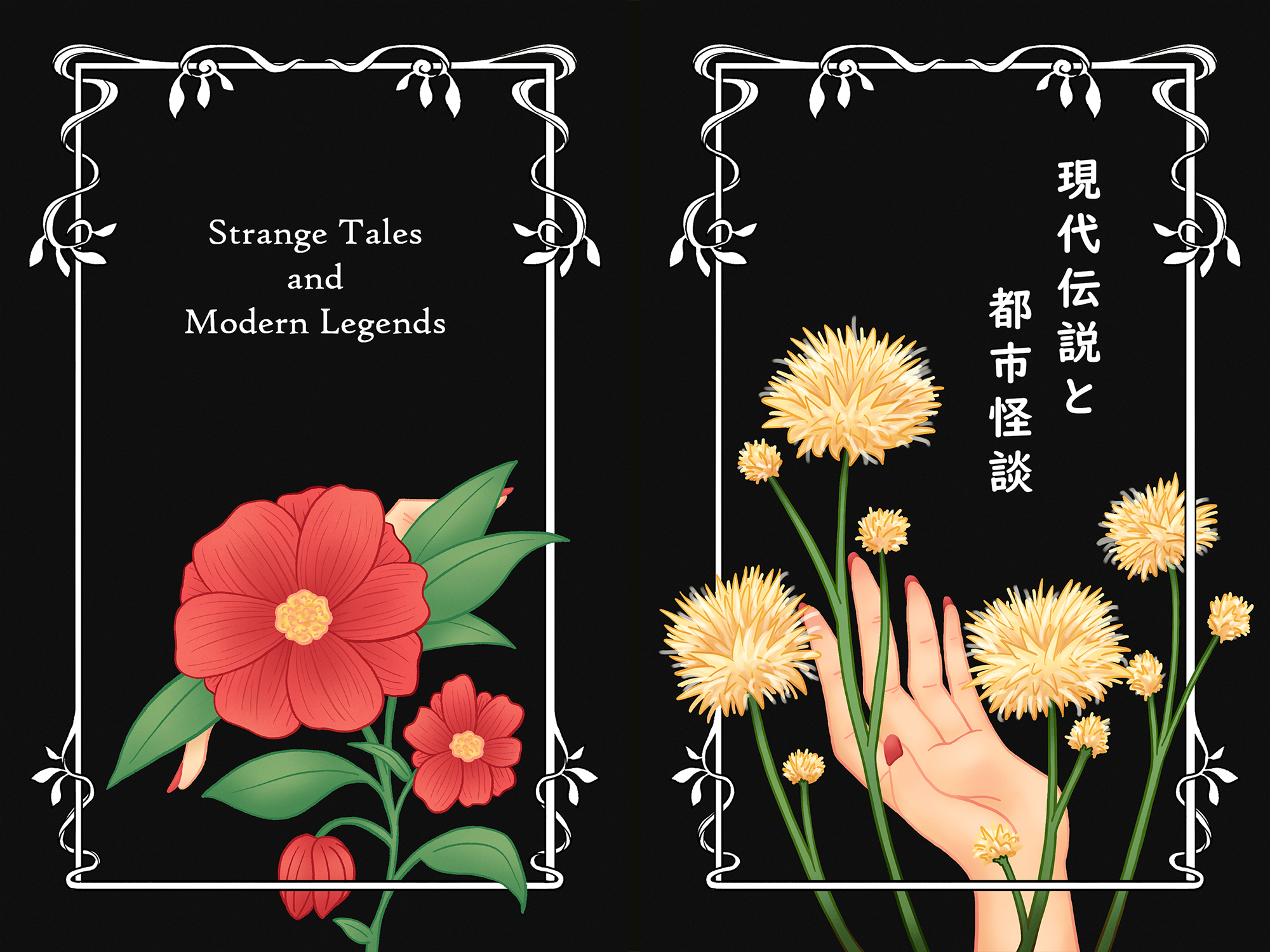
Having provided the students with these criteria and a number of examples to use as potential templates, I asked them to write their own urban legends. I was absolutely blown away by the work they submitted. I promised that I wouldn’t spread their stories outside of class, but I decided to make a class zine so that they could share their work with each other. The image at the top of this post is the cover I created for the zine, which ended up being a 76-page book.

I like to think that Alvin Schwartz and Stephen Gammell would be proud.

You Died Anthology Review on WWAC

My review of the Eisner Award winning comic anthology You Died: An Anthology of the Afterlife has just been published on the website Women Write About Comics. Here’s an excerpt…

Despite the success of the death positivity movement, death remains a difficult subject for many people. You Died: An Anthology of the Afterlife understands this tension and respects both the critical importance of the topic and the feelings of the reader. As befits the theme of positivity, the anthology’s tone is gentle and uplifting. With its range of unique and beautiful art styles and its entertaining yet contemplative stories, You Died celebrates a diversity of lives in its embrace of a fascinating array of afterlives.

You can read the full review (here). Although my review ended up being entirely positive, there were a few aspects of certain pieces in the anthology that didn’t initially land with me. As always, I extend my thanks to my brilliant editor, who helped me see these comics and this fantastic anthology in a different light.

Ender Lilies: Quietus of the Knights

Ender Lilies: Quietus of the Knights is a fantasy-themed 2D adventure-platformer with moderate elements of horror and a moderately high level of difficulty. Unlike many modern Metroidvania games, there is nothing retro about the graphics. The backgrounds are gorgeous works of HD digital art filled with stunning details, and the characters and enemies are all beautifully animated. Both the combat and exploration are a lot of fun, and it’s a joy to move through this ruined world.

You play as a young unnamed priestess (referred to by the user interface as Lily) who wakes in the catacombs beneath a cathedral filled with monsters. You’re greeted by an adult knight (initially called “the Umbral Knight” but later revealed to be named Ferin) who accompanies Lily outside, where the landscape is dark and dripping with the water of a poisonous rain. Everything touched by the rain becomes “blighted,” or monstrous and undead. Lily has the ability to purify monsters by removing the blight from their bodies, thereby allowing them to die. Although the game has no quest-givers to explain what’s going on, it’s easy enough to make the assumption that Lily’s job is to find the source of the blight and purify it.   

Lily is a small child who is physically fragile, and she cannot defend herself on her own. Your attacks are therefore performed by the Umbral Knight, who is gradually joined by other spirits. The Umbral Knight performs a basic sword attack, but Lily meets spirits who can perform heavy attacks, ranged attacks, area-of-effect attacks, and so on. You can equip two sets of three spirits at a time and map them onto whatever buttons you wish in order to create different combos and skill sets appropriate to different bosses and exploration challenges. This is much less complicated that it sounds, and the Umbral Knight is strong and versatile enough to carry you through the game.

You can upgrade these spirits using different types of limited resources that you find through exploration. Aside from Lily, everyone in the world of the game is either dead or undead, and there is no “economy” to speak of – only the relics and resources that Lily can scavenge from corpses. Spirits are acquired by defeating boss monsters, many of which are optional and must also be found by exploration. I really love this system of fighting a powered-up version of a regular monster in order to acquire its abilities, especially since the player should already be familiar with these abilities from having faced a number of such creatures in combat.

The optional minibosses are tricky but fun, but the mandatory zone bosses are legitimately challenging. This challenge is mitigated by the game’s leveling system, in which defeating enemies gives Lily experience points that allow her to gain levels. Health and attack upgrades must be acquired elsewhere, but each new level grants Lily ever-so-slightly better defense and a tiny boost to the power of the Umbral Knight. There is always a save point right before a zone boss fight, as well as an enemy-dense screen on the other side of the save point that provides a good opportunity to level up if needed. The only real way to defeat these bosses is to learn their attack patterns while optimizing your own set of attacks, but the zone leading to each boss does a good job of teaching you the skills you need to survive.

You can also find various relics in the world that grant enhanced abilities, such as giving you more healing charges, increasing the amount healed with each charge, increasing your defense, strengthening certain types of attacks, and so on. In addition, you’ll find items that allow you to equip more relics, as well as items that permanently increase your health bar. Some of these items are hidden behind illusory walls, but these “secrets” are never unmarked, and the game teaches you how to read the environment fairly early on. If you pay attention and don’t mind an occasional bit of backtracking – which you’ll need to do anyway to find a path forward through the interconnected zones – you should be able to strengthen Lily just enough to keep going without having to grind for levels.

Ender Lilies is clearly inspired by Dark Souls and Hollow Knight. It’s not easy, but I would say it’s more “challenging” than “punishing.” The combat is a lot of fun, but the true emphasis is on exploration and paying close attention to the environment. Each screen of the game has its own unique design and artwork, meaning that you’ll be inspired to explore just to see what’s around the next corner. In addition, each relic and spirit and upgrade material you find is valuable, as is every zone boss spirit, all of which grant you an additional exploration ability. I found the gameplay loop of Ender Lilies to be extremely satisfying.

Given that everyone in the world of the game is dead, careful exploration also allows you to find bits and pieces of the story in the form of Fallout-style journals and missives that have been left lying around. Like the gameplay, the story is inspired by Dark Souls and Hollow Knight, and the overarching plot is similar – a morally ambiguous king has made a difficult choice involving arcane forces that were poorly understood by hubristic scientist-wizards. Ender Lilies adds a few interesting twists to this formula, especially towards the end, and the abject tragedy of what happened in this kingdom feels earned, narratively speaking.

What I love about the story is that every textual object you find has a distinct narrative voice. It goes without saying that the presentation of information is not linear, and it’s always a fun surprise to find something written by a blighted monster you encountered much earlier in the game. Some of these characters are much more important than others, but the gradual accumulation of their stories leads the player to the dawning realization that, despite the horror of the situation, the kingdom was filled with flawed but deeply human people who were doing the best they could.

It’s easy to dismiss Ender Lilies as “2D anime Dark Souls for casuals” at a glance, but I ended up being genuinely moved by the story and characters. The horror themes are expressed with creativity and style, and Ender Lilies is nothing if not atmospheric. In terms of gameplay, I think Ender Lilies may be a perfect Metroidvania, and the game features various ease-of-life concessions that help make it more accessible without diminishing the thrill or challenge of the gameplay.

And finally, I appreciate how the spirits Lily has purified hang out with you at save points. There’s nothing I love more than the image of a cute girl sitting amongst weathered ruins surrounded by grotesque monsters as rain falls in the background. That’s the good stuff right there.  

At the End of Everything: A Night in the Woods Fanzine

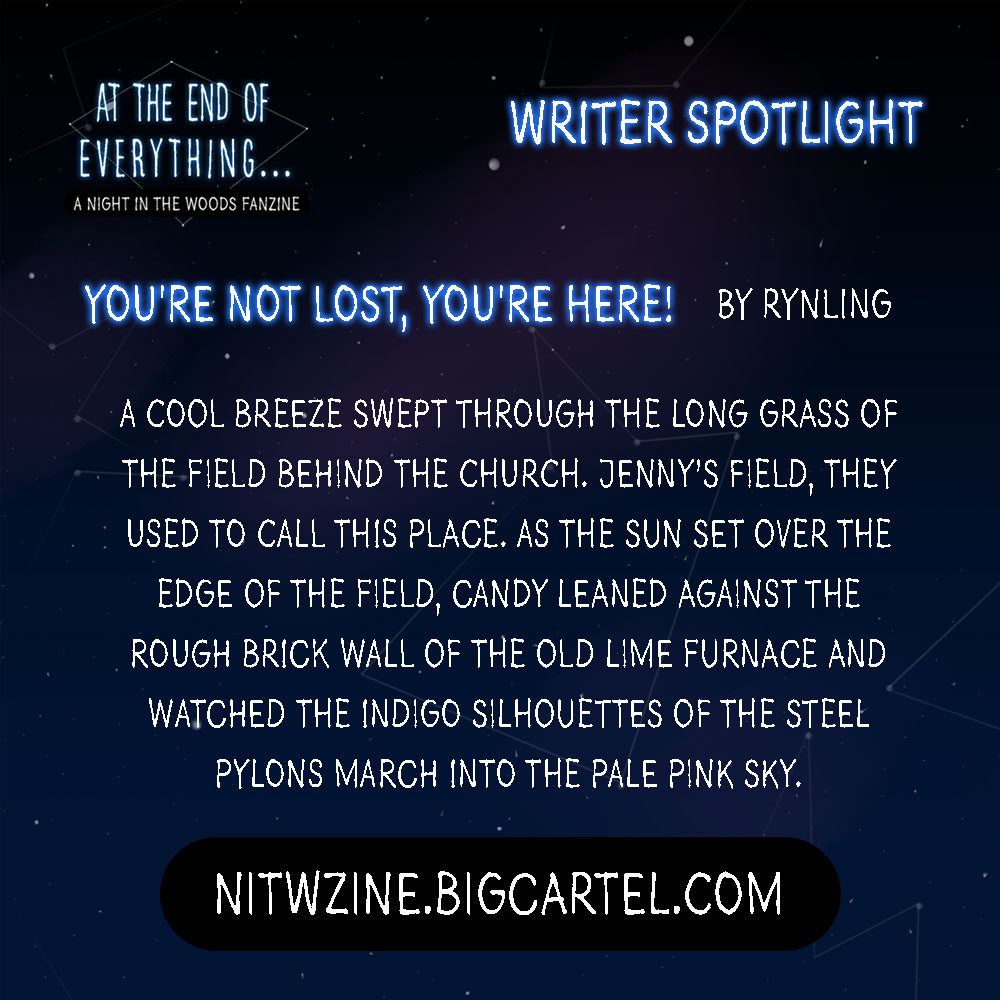
I’m excited to have a story in At the End of Everything, a fanzine celebrating Night in the Woods. My piece is a series of connected vignettes about the subtle uncanniness of daily (and nightly) life in Possum Springs, and the atmosphere is pure Rust Belt Gothic heavily based on my own experiences in rural West Pennsylvania. Preorders for the zine are open until November 30. In the meantime, please feel free to check out the free wallpapers available on the zine’s Carrd site. 

🍂 https://nitwzine.bigcartel.com/
🍂 https://nightinthewoodszine.carrd.co/