It’s Not Me, It’s My Basement

It’s Not Me, It’s My Basement
https://arcadekitten.itch.io/its-not-me-its-my-basement

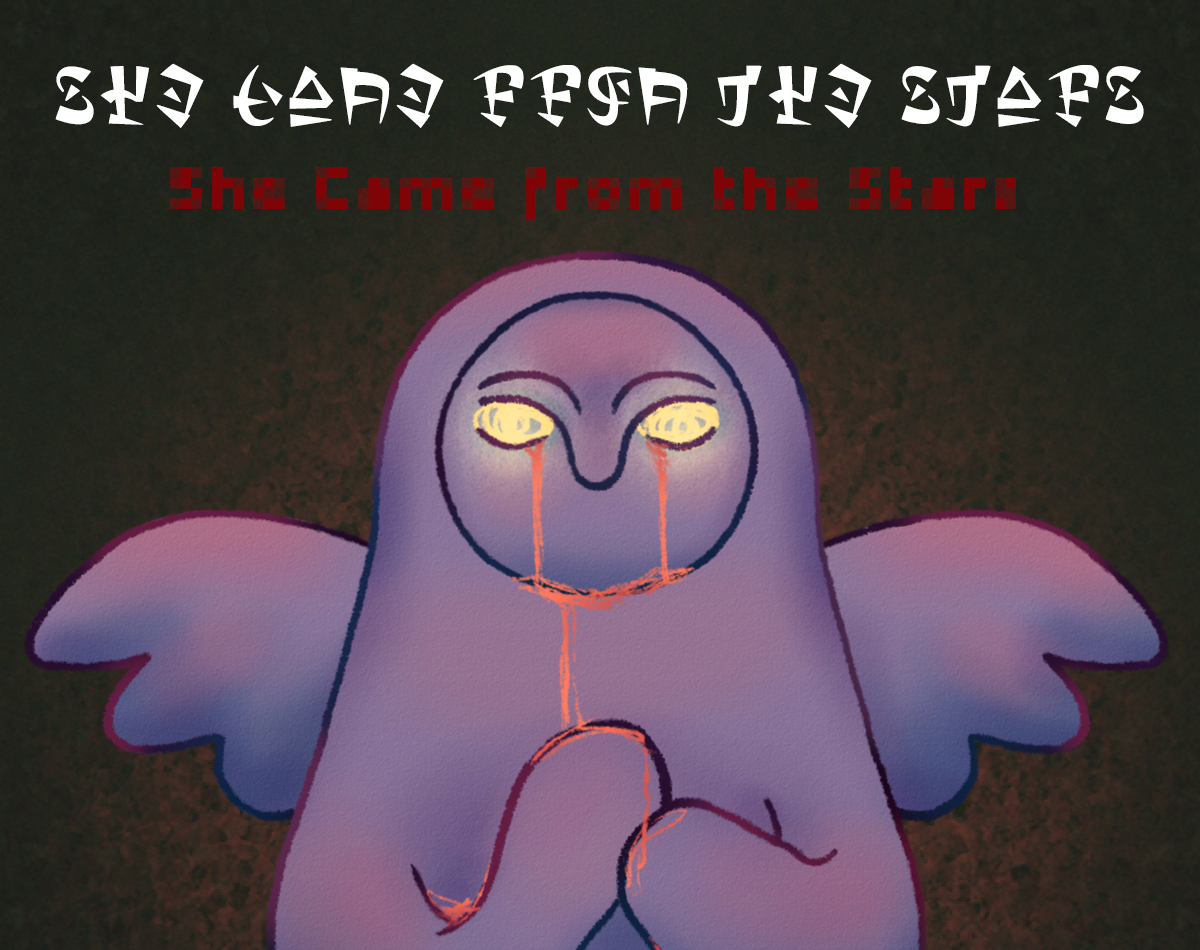
It’s Not Me, It’s My Basement is an RPG Maker gothic horror game from 2021 along the lines of The Witch’s House and Mad Father. It takes about 35 minutes to finish, and it’s free to download from Itchio.

You play as a kid named Embry whose parents have been eaten by monsters. Embry has managed to padlock the basement door, but the monsters are constantly hungry. The player is therefore tasked with feeding the monsters so they don’t escape and eat Embry. The game consists of navigating between Embry’s kitchen and the town market while stopping at the basement door a few times along the way.

The story is divided into three days, during which food becomes progressively scarce and the monsters become increasingly hungry. Each night, after feeding the monsters, Embry has a dream. All three dreams end with an extremely mild jumpscare, but the game is more concerned with creating an oppressive atmosphere than it is with trying to shock you.

What I appreciate is that it’s unclear what the monsters are or where they came from, just as it’s occasionally unclear what Embry is feeding them. Although you have the choice to enter the basement in one of Embry’s dreams, you never learn exactly what’s going on down there, and sometimes not knowing is worse.

If you’re worried that I just spoiled the game, please don’t be. There’s a lot going on here.

The creator has a few shorter games available on Itchio, some of which are loosely connected through a shared universe. The reason I chose to play It’s Not Me, It’s My Basement is because this game has a surprisingly large online fandom. Seriously, it even has its own page on TV Tropes (here).

It’s Not Me, It’s My Basement feels a bit like Homestuck run through a few filters. Everything about this game is catnip for edgy tweens. Even if that doesn’t sound appealing to you, It’s Not Me, It’s My Basement presents an interesting and open-ended story, and the game is a fun experience that doesn’t bother the player with any puzzle elements that impede the flow – or the steadily mounting creepiness – of the delivery.

An Autumn With You

An Autumn With You
https://leafthief.itch.io/autumn

An Autumn With You is a short and nonviolent Game Boy adventure game that you can play for free in your browser window. You are Daynese, who is five and three quarters years old, and you’ve just moved with your parents from the city to your nana’s house in the country.

On the game’s Itchio page, the creator says An Autumn With You was inspired by My Neighbor Totoro, and I can see the influence. The forest around your nana’s house is home to magical creatures called Wichu that are attracted to acts of kindness. As her parents deal with their own issues, Daynese explores the beautiful area around her new house and makes a friend.

The interesting pull from My Neighbor Totoro isn’t the forest creatures, however; it’s the way Daynese creatively engages with her environment in to help her process what’s going on with her parents. Like Mei and Satsuki’s father, Daynese’s mother is a scholar working on a manuscript, and her writing schedule is intense. Meanwhile, Daynese’s father seems to have lost his job, and the family couldn’t afford to stay in the city on an academic salary.

I imagine this situation will be spookily relatable to the many Millennial parents who had to move back in with their own parents during the pandemic, or perhaps during the prolonged economic depression preceding it. Daynese is five (and three quarters) years old, and she just wants to play outside. Meanwhile, her parents aren’t doing well. In between Daynese’s jaunts into the forest, the player watches her parents gradually break down while her grandmother stands outside and waits for the storm to pass.

The main narrative drive of An Autumn With You is figuring out whether Daynese’s parents are going to be okay. It’s a short game that should take about ten to fifteen minutes to play, but I nevertheless managed to become extremely invested the story.

Unfortunately, a few of gameplay elements toward the end of the game are somewhat opaque. To give an example, I had to consult a video playthrough (here) in order to figure out the next-to-last action necessary to finish the game. You know you have to fetch food for Daynese’s forest creature friend, but there are no clues to indicate that the game expects you to go fishing with the fishing rod in the back of the car parked outside the house. If your family just moved from the city, why would there be a fishing rod in their car? I spent a solid ten minutes searching for something to interact with in and around the house before I finally gave up and went online.

If you’ve just read the above paragraph, however, then you already know about the fishing rod, and rest of the game shouldn’t be too tricky. In fact, I’d say that An Autumn With You is a perfect game for its length, not to mention a wonderful use of the medium to tell a story. The art is lovely, and An Autumn With You is filled with small but significant grace notes that add color and depth to its world.

Lily’s Well

Lily’s Well
https://pureiceblue.itch.io/lilys-well

Lily’s Well is a lo-fi horror adventure game with a charming top-down NES aesthetic. You play as an anime girl named Lily who hears a voice calling for help from the well by her isolated cabin in the woods. Your job is to explore the house and its surroundings while collecting materials to make a rope. Depending on how many materials you assemble, you’ll be able to descend to a different level of the well. Each of the ten levels is its own horrible ending.

There are ten “good” materials and another five “bad” materials that you can find. If you incorporate a bad material into your rope, it will break. Lily will die, and you’ll have to start over again from the beginning. The game doesn’t signpost which materials are good or bad, so you have to go through them one by one and figure this out for yourself using the process of elimination. I got very frustrated very quickly, but this could have just been me being impatient.

I found the guide (here) to be extremely useful. This isn’t so much a walkthrough as it is a list of materials and a FAQ, and you’ll still have to put the pieces of the game together yourself. While using the guide, it took me about three hours to get all of the endings.

If you use the guide judiciously, you can finish the game in about 45 minutes. This involves spending 25 minutes to get to the bottom of the well, and another 20 minutes to explore what’s down there. Every other ending is an instant gruesome death for Lily, while the bottom of the well is essentially the second half of the game. In all fairness, the game’s true ending has a much better payoff if you die a few times first, and there are all sorts of fun little secrets to play with between runs, including certain events that only trigger on multiple playthroughs.

I said at the beginning that Lily’s Well has an NES aesthetic, but it’s really more of an early 1990s MS DOS game. The graphics are primitive, but the game uses them extremely well and puts a lot of care into the adventure elements. There’s all sorts of text for anything you care to interact with; and, if you’re patient, it’s possible to figure everything out on your own without using a guide.

The adventure game elements of Lily’s Well were hit-or-miss for me, and what I really enjoyed was the game’s dark humor. It was fun to see this cute anime girl die in all sorts of fun and creative ways, and I loved how over-the-top gruesome each ending is. I kept playing to dig deeper into the lore and see just how gleefully horrible Lily’s world could get under its placid surface, and I was not disappointed.

Leftovers

Leftovers
https://realmpact.itch.io/leftovers

Leftovers is a free narrative horror game that takes about 20 to 25 minutes to play. Your mother has ten servings of leftover food, and she wants you to deliver them to the other tenants of your rundown apartment building. As you might imagine, each of these tenants is super creepy.

You can answer the tenants’ questions by nodding or shaking your head, and “failing” the interaction will cause you to run home to the top floor. Your mother will get progressively angrier each time you return, and you’ll have to walk down all the flights of stairs again. My recommendation would be to set the camera at max speed before starting the game, as this can potentially save several minutes of stair climbing.   

The concept of Leftovers is great; but, as this was created for a game jam, it was made under time constraints. The 3D space of the apartment building is about as basic as it could be. There’s no background music, and there are only two or three instances of sound effects. Since you have to start over from the beginning so often, I wish there had been a few changes to the environment between runs.

Still, I had a lot of fun with Leftovers. The hand-drawn 2D character designs are great, as is the writing. I was impressed by how much story fit into just a few lines of dialogue, and I really enjoyed how the individual tenant stories gradually begin to fit together into a cohesive narrative. It’s definitely worth playing the game a second time in order to appreciate the story details and foreshadowing.

Leftovers stands well enough on its own as an experimental prototype, but I would love to see the developers return to the game and polish it into something stranger and gorier and even more disturbing.  

See You Soon

See You Soon
https://not-jacob.itch.io/see-you-soon

See You Soon is a free narrative horror game on Itchio that takes about seven minutes to play. You wake up in the middle of the night because the phone won’t stop ringing, a classic setup that takes an interesting turn. I can’t say much more without spoiling the surprise, but there’s a fun twist in the middle.

See You Soon has 2D graphics with very simple controls, and there are only four screens to navigate. There are two endings, and one of them results in a special surprise if you the launch the game again. That was delightful. Also, if you decide to let one of the monsters catch you, you get a fun little jump scare.

There’s a brief moment of tension when something starts (very slowly) chasing you, but I felt that See You Soon is more silly than spooky. The writing is a little awkward, but I found its earnestness to be almost wholesome. The simplistic pixel art is charming, and the monsters are kind of cute.

To me, See You Soon has the vibe of a chihuahua going aggro. Sure, it’s doing its best to be nasty and unpleasant, but it’s just a little guy. See You Soon is definitely a horror game and probably won’t appeal to people who aren’t fans of the genre, but it made me smile from start to finish.

As a sidenote: See You Soon opens with a content warning about flashing lights. I’m generally sensitive to such things, but nothing in this game gave me any trouble. There are no strobe effects, only quick jump cuts.

There’s Nothing To Do In This Town

There’s Nothing To Do In This Town
https://donotrunwithpixels.itch.io/theres-nothing-to-do-in-this-town

There’s Nothing To Do In This Town is a nonviolent Game Boy adventure game that takes about ten minutes to play. The story set on a section of high street in a town in Wales and seems to be vaguely contemporary, although it gives me a strong early 2000s vibes. You play as a young man who has no money and nothing to do. Also there are some zombies having an office party.

The game is essentially a trading sequence. You talk to people on the street, and you can go in several of the buildings and talk to people there. Your alcoholic father lives in an apartment under the zombie office, and he’s annoyed by the loud music. You therefore need to convince the town’s secret zombie slayer to take care of them.

The graphics are quite good for a Game Boy game, and the trading sequence fits together nicely. The character interactions have big Scott Pilgrim energy, meaning that your character is a loser but means well, thus encouraging all sorts of weird people to open to him. Along with the retro graphics, the various nods to late 1990s grunge culture give the story a lovely sense of nostalgia, and I really enjoyed the experience of playing a game that’s essentially indie alt comix come to life.

The music is great, and it totally got stuck in my head. The game creator also makes short albums of Game Boy chiptunes, and the songs from There’s Nothing To Do In This Town are the last three tracks of this one: https://donotrunwithpixels.bandcamp.com/album/the-outside

Tokyo Stories in Contemporary Japanese Fiction

This spring, I taught a new class called “Tokyo Stories in Contemporary Japanese Fiction.” Here’s the course description…

Tokyo is one of the largest and most vibrant cities in the world. It’s also one of the most storied, laying claim to centuries of history and countless colorful districts and neighborhoods. In this class we will explore Tokyo by delving into a collection of stories set in and around the great metropolis. We will work our way forward in time, beginning with the city’s roots as the samurai capital of Edo. Along the way, we will investigate contemporary themes such as demographic crisis, social stratification, gender trouble, and the ruins of neoliberal capitalism.

Through the study of representative works of contemporary Japanese fiction, this course gives students the opportunity to learn about Japanese values from a diversity of perspectives as we investigate how social and cultural organizations are mapped onto physical space. Our study will incorporate visual media such as films, animation, music videos, fine art, architectural photography, and fashion. Various methods of critical cultural analysis will be modeled in class lectures and practiced during class discussions, and students will be asked to perform their own critical analysis in their written assignments.

By the end of the semester, students will have been exposed to a diverse range of representative authors and cultural concerns that will help them develop a nuanced understanding of Japanese literature, history, and society.

You can download a copy of the course syllabus (here).
I’ve collected PDF copies of the course readings on Dropbox (here).

The Environmental Horror of Elden Ring

Thanks to the kind editors at Unwinnable Magazine, I got to write my dream essay about Elden Ring.

In “The Environmental Horror of Elden Ring,” I discuss how the ongoing disaster of the hellish Caelid region provides an interesting counterpoint to the common characterization of postapocalyptic spaces as green and beautiful. For me, Caelid was a gateway into an exploration of how and why the aftermaths of environmental catastrophes are often presented as utopian in digital spaces, and I think Elden Ring subtly reflects the frustration that many of us feel toward power structures that remove us from direct stewardship of the nature that surrounds us in real life.

If you’re interested, you can find the full essay in the March 2023 issue of Unwinnable, and you can check out a substantial excerpt on the magazine’s website (here). I’ve also archived a PDF of the article (here).

Ocean’s Heart

Ocean’s Heart is a top-down 16-bit adventure game in the style of A Link to the Past or The Minish Cap. You play as Tilia, the daughter of a former soldier who manages a tavern on a small island. After the island is attacked by pirates, Tilia’s father sails away to chase them down. He doesn’t return, so Tilia leaves the village to look for him.  

Ocean’s Heart is set on an archipelago of interconnected islands. Most of the map can be navigated on foot, while sailing serves as a form of fast travel. The archipelago is densely populated, with multiple large cities and smaller towns, but it’s also filled with beautiful green spaces. The primary biome of the islands is “forest,” but there’s an incredible amount of diversity within this biome, from alpine pine forests to leafy old-growth oak forests to swampy mangrove forests.

The green spaces of Ocean’s Heart are gorgeous, and the pixel art is a true feast for the eyes.

When I was a kid, I remember being disappointed by the 3D graphics of the N64 and the PlayStation. Now I find the visual style of games like Ocarina of Time and Final Fantasy VII to be charming, but for a long time (until there were better alternatives) I thought the blocky polygons and difficult-to-read environments of “next gen” games looked like garbage. I kept thinking that what I really wanted was for developers to use next-gen technology to make pixel art more polished, intricate, and interactive.

Ocean’s Heart is exactly the sort of game I wanted. Flowers and grass rustle in the wind, falling leaves drift across the screen, and birds take flight as you approach. The overworld map is dense with interaction points, all of which are visually signaled without being obtrusive. The landscape is also dense with scenery that does nothing but add magic and wonder to the environment. Towns and cities are filled with uniquely designed stores and characters, and each center of population has its own distinct visual character.

Even aside from the graphics, Ocean’s Heart is a lovely game. Although it doesn’t disrupt the basic Legend of Zelda gameplay formula, the way Ocean’s Heart structures and populates its world is extremely well executed. Unlike many Zelda-style games, Ocean’s Heart features an excellent balance between gameplay and written text. The dialog offered by the NPCs is substantial, and the player can interact with all manner of books, bookshelves, maps, paintings, documents lying on desks, and so on. Very little of this text is necessary to understanding the game’s story, but it makes the world feel like a living place that exists independently of Tilia and her quest.

The menu screen of Ocean’s Heart offers modern ease-of-use concessions, from the option to save the game at any time to a labeled map to a list of sidequests. Many titles seeking to capture a retro feel – Tunic springs immediately to mind – seem to expect the player to engage with the game through the medium of an online walkthrough, but Ocean’s Heart is entirely self-contained. The player has a great deal of freedom to move across the archipelago, but it’s difficult to become lost. The confidence derived from such a well-curated experience makes exploration all the more enjoyable.

As in any Zelda-style game, Ocean’s Heart contains about half a dozen mandatory dungeons. These dungeons have no maps, but they’re laid out in a way that feels easy to navigate and speaks to thoughtful game design. Careful exploration of the world will reveal another dozen optional dungeons with more specialized themes. My favorite of these optional “dungeons” was an entire Mediterranean-themed island with its own fully populated town of cafés and street musicians and people sitting on terraces while drinking and enjoying the sea breeze.

Ocean’s Heart comes equipped with an optional hard mode that you can trigger early on and reverse any time you want, but the default level of difficulty is well balanced. You don’t have much health at first, and healing items are extremely limited. More than anything else, this early-game difficulty seems intended to keep players on the critical path. As you power up Tilia and her sword through various collectables scattered throughout the world, exploration becomes more comfortable. Many players may have to resign themselves to dying several times at the beginning of Ocean’s Heart, but the difficulty curve balances out about an hour or two into the game’s playtime, which is roughly eight to ten hours.  

I haven’t encountered any discussion of Ocean’s Heart in the Legend of Zelda fan community, so I was surprised to learn that it was originally released in January 2021. I’m amazed that I hadn’t heard of it before I saw it on sale on the Nintendo Switch store, because this game is really good. The gameplay is solid, the writing is fun, and the beautiful pixel art is everything I ever wanted. Ocean’s Heart is also inexpensive and accessible to players of all skill levels, and I’d recommend it to anyone who’s up for a chill and rewarding island adventure.

Good Reads from 2022

Big Press Graphic Novel:
Squire by Sara Alfageeh and Nadia Shammas (HarperCollins Publishers)

Sara Alfageeh and Nadia Shammas’s graphic novel Squire is a low fantasy coming-of-age story about teenage recruits to an imperial army supposedly intent on “preserving the peace” of an arid land inhabited by different ethnic groups. We see this world through the eyes of Aiza, a fourteen-year-old from a minority ethnicity who intends to become a knight in order to gain citizenship and thereby ameliorate the poverty of her marginalized community.

Aiza’s fellow knights-in-training are a fascinating cast of characters, especially her friend Husni, who would much prefer to be a historian than a soldier and occasionally threatens to steal the show with his witty sense of humor and expressive body language. When Aiza begins training with the grizzled retired knight Doruk, the delicate layers of the story begin to unpeel as Aiza’s dream of assimilation is shattered by the realities of a collapsing empire.

Nadia Shammas’s writing is powerful and nuanced, and Sara Alfageeh’s art builds a world beautifully inspired by our own. Adrienne Resha’s review of Squire on Women Write About Comics unpacks the historical and contemporary cultural references behind the Middle Eastern and Arab-American inspirations of the graphic novel, and you can check out a few preview pages on the artist’s website.

Small Press Comic Anthology:
Shades of Fear, edited by Ashanti Fortson & Allison O’Toole (Balustrade Press)

Ashanti Fortson and Allison O’Toole’s Shades of Fear anthology collects ten short horror comics themed according to the strong use of a single color. The artwork is nothing short of spectacular, offering the reader both dazzling beauty and horrific imagery. As befitting the rich banquets of color, many of the stories share the theme of being devoured, either metaphorically through toxic relationships and generational trauma – or quite literally.

My favorite piece is Mar Julia’s “Bellies,” a work of poetic yet intense body horror about an order of immortal priestesses who dine well so that they may endow themselves with the fortitude necessary to make appropriate sacrifices to a (mercifully) unseen deity. The narrative depth of every short comic in the anthology recalls the gothic masterpieces of Emily Carroll, and I’ve often found myself returning to Shades of Fear to dig deeper for creative inspiration and visceral chills.

Manga:
Robo Sapiens: Tales of Tomorrow by Toranosuke Shimada (Seven Seas)

Toranosuke Shimada’s Robo Sapiens: Tales of Tomorrow is a one-volume graphic novel that begins in the near future and spans many hundreds of years of cosmic time. The manga’s ambitious narrative is pieced together from smaller and more intimate stories about the lives of individual robots and their human companions. Shimada is not concerned with whether robots have sapience; rather, these stories take the dignity and legal rights of artificial intelligence for granted in order to ask questions about what personal happiness might look like should “humanity” be separated from its current embodiment.

Shimada’s artwork is deceptively simple and allows the reader ample space to appreciate the timelessness of each character’s story even as the world around them changes. Despite the gaps between chapters, I found it profoundly moving when the narrative threads began to connect toward the end of the manga. Robo Sapiens contains a number of subtle references to the pioneering work of Osamu Tezuka, but Shimada’s speculation on a posthuman future brings a fresh and nuanced perspective to familiar tropes.

Fiction:
Idol, Burning by Rin Usami (HarperCollins Publishers)

Rin Usami’s Idol, Burning is only 115 pages long, but it’s a whirlwind ride through the psychology of boy band fandom. The narrator is failing out of high school because the Japanese education system refuses to accommodate her learning style, and her world begins to fall apart when the pop star she idolizes becomes the target of social media discourse. Usami is unflinching in her portrayal of online fandom cultures, and she’s refreshingly honest about the adverse effects that flamewars can have on vulnerable people seeking support in fandom communities. It’s not always easy to read Idol, Burning, but I couldn’t put it down. 

The English translation of the book includes short essays by the author and her translator, as well as statements from the cover designer (surrealist photographer Delaney Allen) and the illustrator (comic artist Leslie Hung). The novel’s story stands on its own, but it’s a treat to read about the inspirations of the writers and artists who brought it to life.

Zine:
Haunts by Kaylee Rowena

I recently had the pleasure of flipping through Kaylee Rowena’s zine Haunts, which collects the American comic artist’s illustrations of haunted houses. I especially appreciate the epilogue, which takes the form of a short essay about houses and hauntings and memory. It’s a fantastic piece of writing, and Rowena acknowledges the influence of a YouTube video called “Control, Anatomy, and the Legacy of the Haunted House” by the video game critic Jacob Geller

This video discusses the trope of the haunted house through the two games mentioned in the title, but it has deeper cultural resonance and doesn’t require any prior knowledge. It’s also my favorite type of video essay: it’s only twenty minutes long, it has subtitles, and it’s not necessary to watch the video footage if you just want to listen to the audio. I’ve been feeling a bit more homebound since the weather has gotten colder, and the combination of Rowena’s colorful art and Geller’s video essay have helped me appreciate the magic and mystery of walls that continue upright and doors that remain sensibly shut.

Video Game:
Stray, developed by BlueTwelve Studio and published by Annapurna Interactive

You may have seen your favorite artists posting tributes to the game Stray, which was released in July by Annapurna Interactive, a publisher that specializes in unique and stylish narrative games. The game’s website describes it as “a third-person cat adventure game set amidst the detailed, neon-lit alleys of a decaying cybercity,” but really it’s about hope and friendship. The story is divided into twelve chapters that alternate between nonviolent 3D platforming segments and more text-based exploration segments, the combination of which provide a fun and interesting mix of narrative elements. Stray is accessible to a diverse range of gamers, and the rich and detailed visual splendor of the posthuman cityscape will be a delight to fans of cyberpunk comics and manga.

. . . . . . . . . . . . . . .

All of these mini-reviews were originally published as part of the monthly “WWACommendations” roundtables on the website Women Write About Comics. You can find these posts on the WWAC website (here) and follow WWAC on Twitter (here).