Seeded Ground

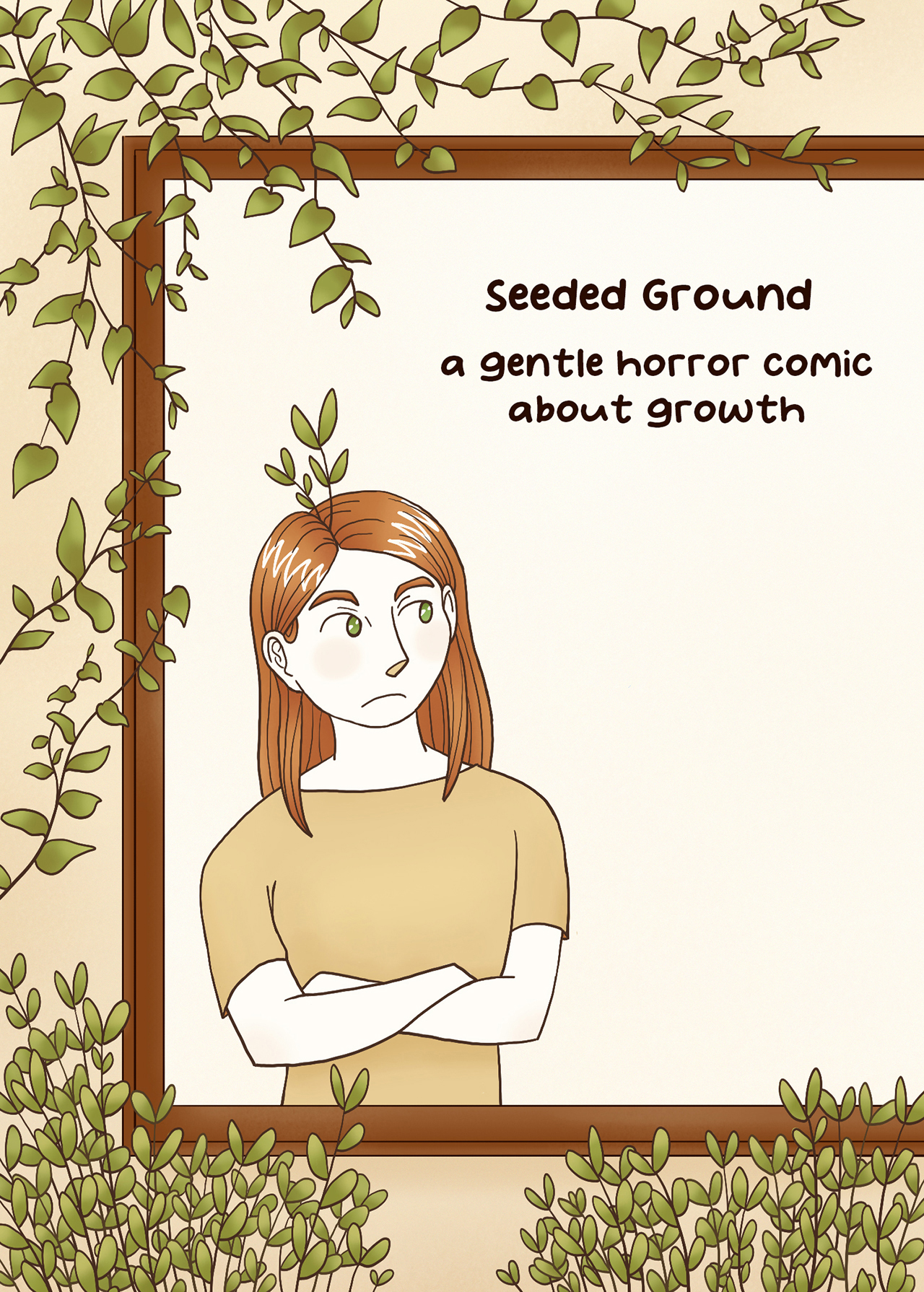
Seeded Ground is a twelve-page botanical horror comic about growth. It reads a bit like a supervillain origin story, but I created it as a statement of resistance against the oppressive ideologies of neoliberalism that have lured so many people in my generation into the trap of self-optimization.

You can download a free digital copy of the comic from Itch.io here:
https://digitalterrarium.itch.io/seeded-ground

I was inspired to draw this comic by a tweet written by a respected senior scholar. They argued that assigning at least five pages of writing every week is necessary to maintain “a certain standard of quality” in the undergraduate students who register for their classes.

This tweet inspired me to reflect on an unfortunate aspect of education in the United States. Namely, it’s an unstated but almost universally accepted goal of the formal education system to monopolize students’ time in order to train them to become the sort of adult workers who are willing to devote their lives to their career. An employee at a “good” job is expected to wake up early, commute, spend the entire day at work, and then go home and finish the tasks they didn’t have time to complete at the office. Meanwhile, freelance and part-time workers are expected to be available at any hour of the day, every day of the week, and at short notice. This is messed up, and I hate it.

My own experience as a professional working adult has essentially been the equivalent of that professor’s tweet. Namely, I’ve felt compelled to engage in meaningless work that no one will ever see in order to maintain the pretense of “a certain standard of quality.” Around the time of the pandemic, I got fed up. Was I really supposed to feel guilty about not replying to emails within 24 hours while I was sick with Covid? Fuck that.

These days I’m much more aggressive about enforcing boundaries concerning how much work I’m willing to do, and I can’t even begin to express how much the quality of my life has improved. I have no regrets.

As an epilogue to Seeded Ground, I illustrated a quote from the radical social theorist Herbert Marcuse’s 1964 book One-Dimensional Man: Studies in the Ideology of Advanced Industrial Society:

“If the individual were no longer compelled to prove himself on the market, as a free economic subject, the disappearance of this compulsion would be one of the greatest achievements of civilization.”

And he’s not wrong! I know it’s a twee Millennial stereotype to hate capitalism, but I really do believe that the point of life is not to optimize your performance as an employee. People need room to grow.

And if that growth is impeded? All sorts of bad things can happen. 🌿
Haunted Houses

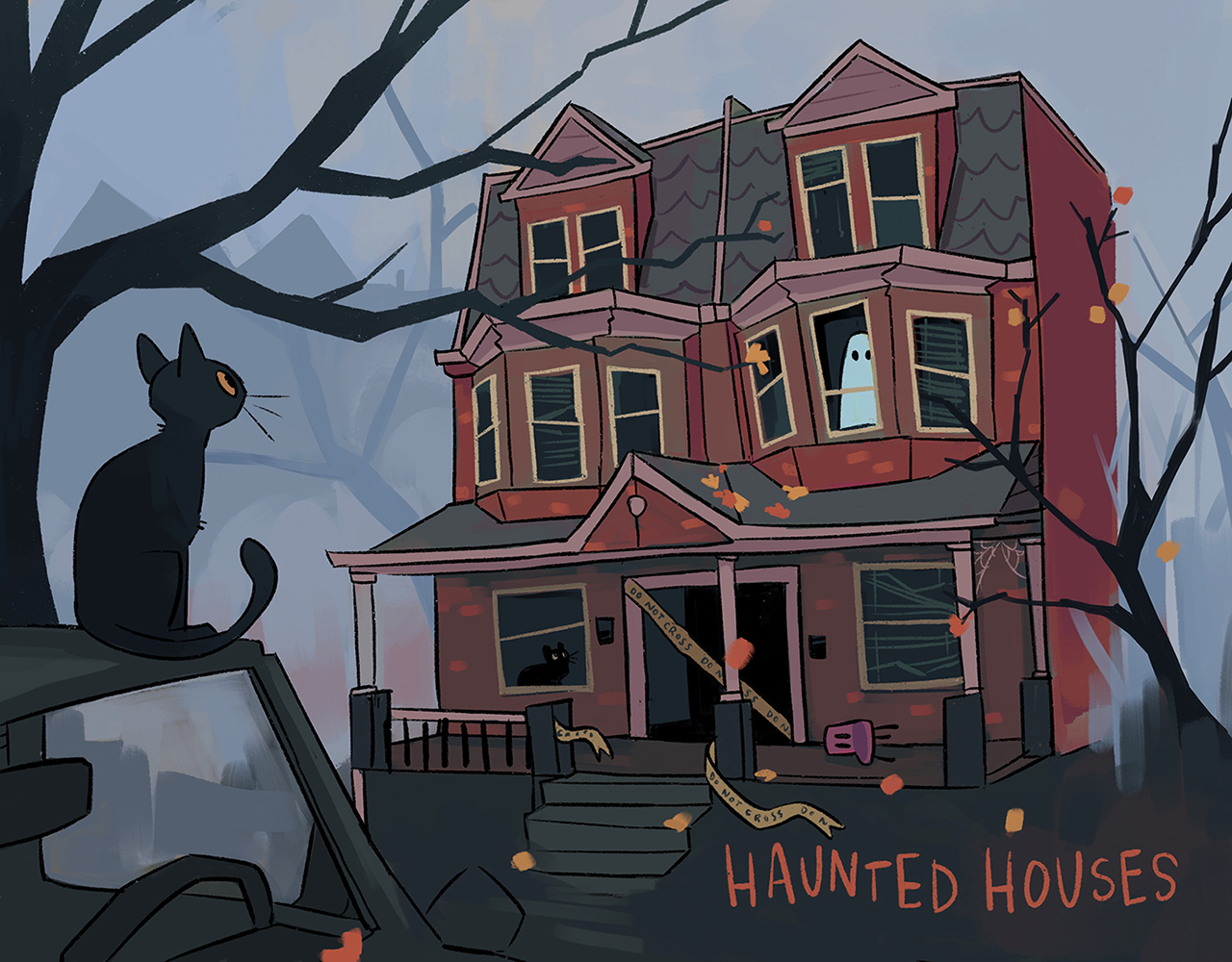
I recently published a new edition of my horror fiction zine Haunted Houses!

Haunted Houses collects seventeen pieces of surreal flash fiction about haunted spaces and the terrible people who inhabit them. This edition of the zine includes several new stories and illustrations, as well as a gorgeous cover illustration by Megan Crow, who was able to channel the everyday spookiness of West Philadelphia. Although the stories in this zine fit firmly into the mode of magical realism, I wanted to use the medium of fiction to explore a truly terrifying set of real-life themes relating to housing, from gentrification to rent spikes to urban depopulation.

If you’re interested, physical copies of the zine are available on Etsy:
https://www.etsy.com/listing/890744799/haunted-houses-fiction-zine

I’ve also started to host free digital editions of my older zines on Itchio:
https://digitalterrarium.itch.io/

Horror Fiction Zines at Common Meter Press

I’m honored to have three of my zines in stock at Common Meter, a new zine distro and poetry micropress!

These three zines – Ghost Stories, Haunted Houses, and Haunted Haiku – are only available through Common Meter. They’ve done a fantastic job with the listings, which you can find on their website (here). It’s incredible to see my creative work presented in such a cool and stylish way, and I’m beyond impressed by how Common Meter supports the writers and poets they work with. I understand that the press is currently creating a series of original, hand-printed chapbooks, so please check them out if you’re interested in reading (and perhaps publishing) cutting-edge writing.

I also want to recommend Common Meter’s Instagram (here), where they’ve started to post gorgeous photos featuring zines ranging from bright and colorful minicomics to letterpress poetry chapbooks. They’re just getting off the ground, and I can’t wait to see where the wind takes them.

Hyrule Apocrypha Zine Preorders

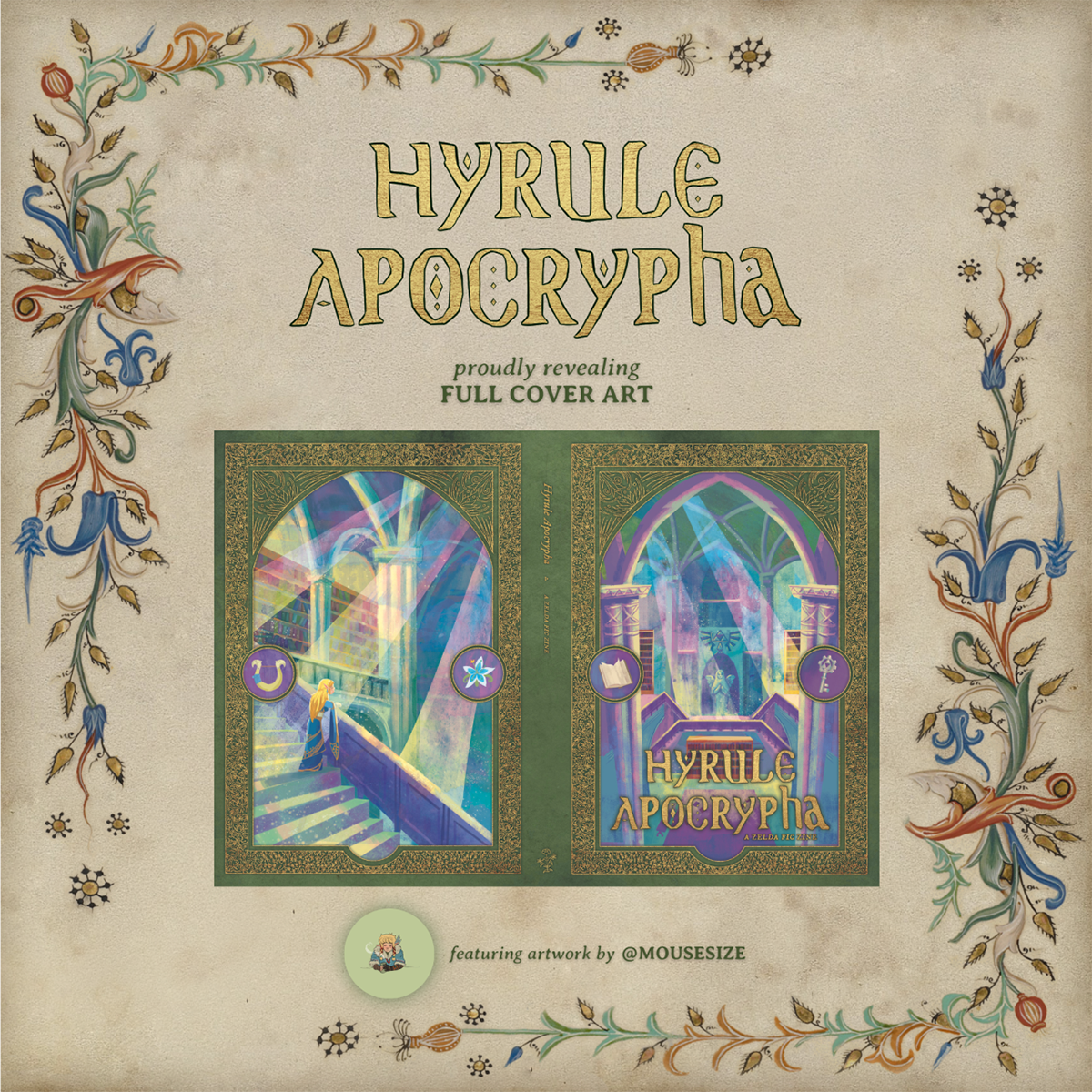
I’m excited to share the premise of the piece I wrote for Hyrule Apocrypha, an illustrated fiction anthology exploring the myth and lore of the Legend of Zelda series. Everyone knows the tale of Hylia’s chosen hero, but myriad other stories hide in the shadows…

Hyrule Apocrypha is a substantial full-color book that weighs in at 120 pages, and preorders are open until June 11.

🌿 Preorder page on BigCartel: https://zeldaficzine.bigcartel.com
🌿 Hyrule Apocrypha on Twitter: https://twitter.com/ZeldaFicZine

She Came from the Stars

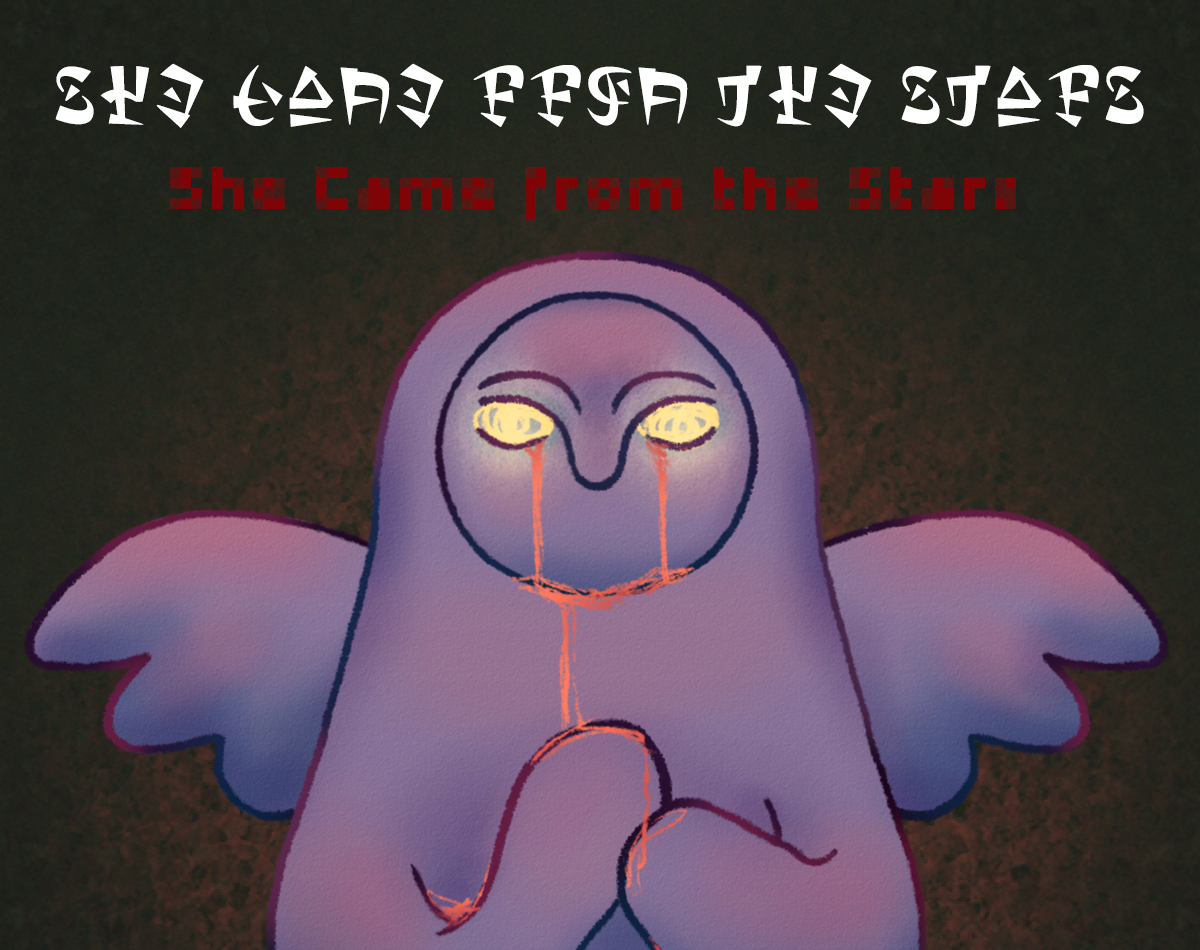
She Came from the Stars is a speculative minicomic fanzine that reimagines the myths and lore surrounding gods and mortals in the Legend of Zelda games.

Hyrule is dystopian, and its goddess Hylia is more than a little scary. In a country ruled by a hierophant queen, what does it mean to be an outsider? Perhaps, before he became a demon, Ganondorf may have once seen himself as a hero…

The digital zine is free to download from Itchio:
https://digitalterrarium.itch.io/cosmic-horror-zelda

The Eyes of Hyrule Zine Preview

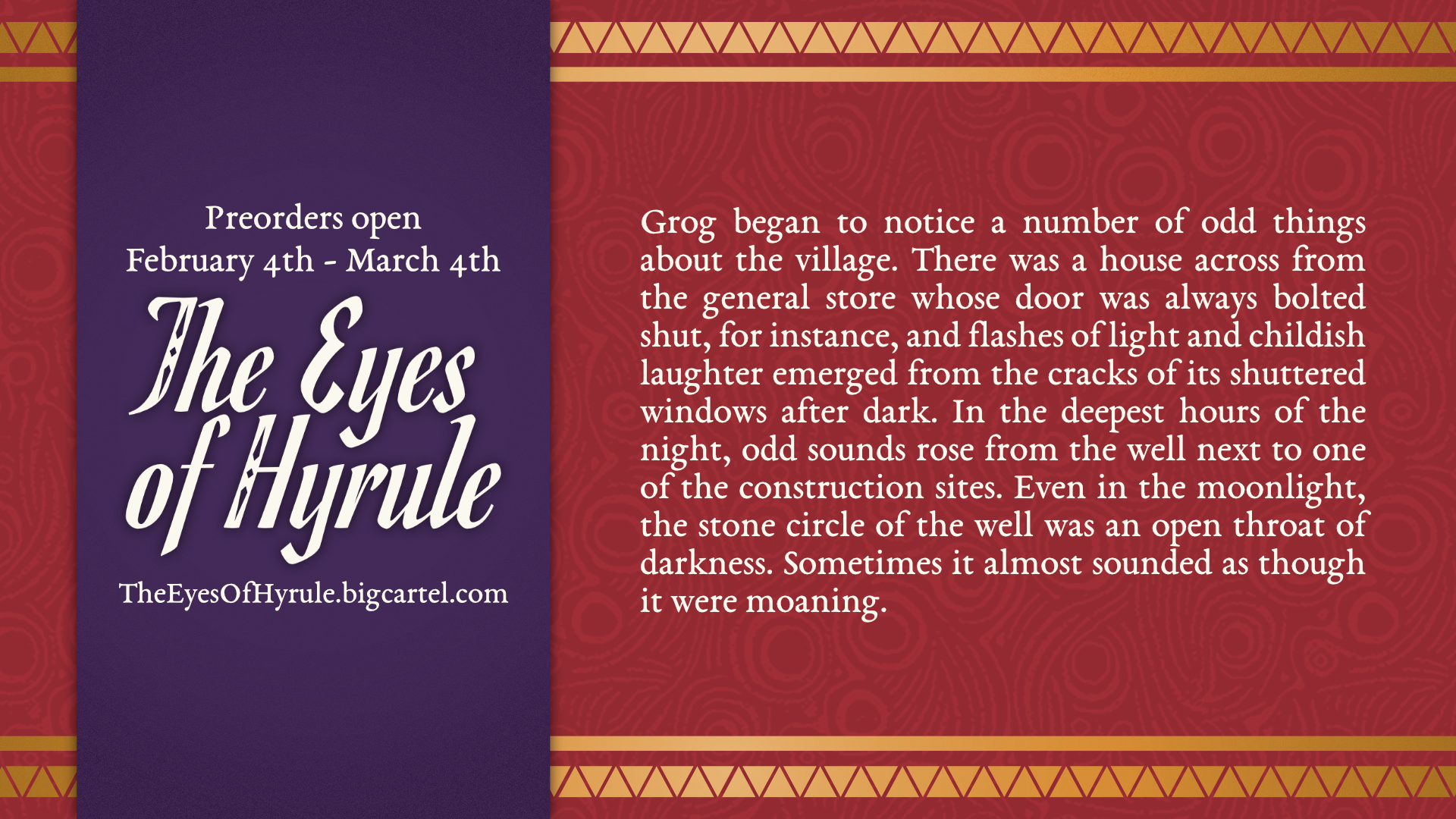
I’m excited to announce that preorders are open for The Eyes of Hyrule, a Legend of Zelda fanzine devoted to the Sheikah. The zine’s Carrd is (here), and you can check out more previews on its Twitter account (here).

There’s a lot of talent involved in this project, and the mods have been totally on the ball at keeping everything organized for the zine, which is expected to ship out this summer. It’s always a pleasure to be part of a project where everything clicks and comes together so well. Also, I might be biased, but I think the stories (and comics!) in this zine are especially interesting and unique.  

My own piece, “The Only Come Out at Night,” is a soft horror story about Kakariko Village in Ocarina of Time. It’s narrated from the perspective of Grog, the punk kid who hangs out near the entrance of the village at night. During the trading sequence necessary to acquire Biggoron’s Sword, the player can pick up hints that Grog’s story is much darker and more complicated than his initial appearance would suggest. I therefore wanted to use this character to explore the darker side of the Sheikah through the medium of a Stephen King style “peculiar little town” story. I had a lot of fun writing this piece, and I can’t wait to share it.

If you’re interested, you can preorder a copy of The Eyes of Hyrule via Bigcartel (here).

Strange Tales and Modern Legends

This semester I taught a seminar called “Japanese Ghost Stories.” (You can find links to the syllabus and course materials here.) A major element of this class was our study of how folkloric traditions have influenced literature. My specialty is contemporary fiction, so we spent a good amount of time talking about what urban legends are and how they work.

I believe that urban legends have the following three characteristics:

First, these stories are specific to a time and place, and they’re generally tied to a specific person as well. This person is someone known to the storyteller, and they’re either a reliable source of information or a direct witness to the event or phenomenon in question.

Second, the story is understood to be “real” and therefore nonfiction. In fact, it often isn’t much of a story at all. Unlike creepypasta, which is shortform fiction, the characters in an urban legend don’t have interiority, and they’re often not attributed with motivation. Rather, the story is stated as a simple fact. At the core of these stories is a statement like “you’ll die if you eat [a certain type of candy] mixed with soda” or “a child was once murdered in [a certain department store] bathroom.” The purpose of additional details is to add authenticity.

Third, urban legends almost always have a cautionary element, and the unfortunate events of the story are related to social and cultural anxieties. These fears tend to be politically sensitive and thus can’t be discussed openly, so urban legends function as a sort of pressure release valve. In the United States, for example, a lot of urban legends reflect racial tensions, while there are a lot of urban legends about bullying and social ostracization in Japan.  

This isn’t really a defining characteristic, but I find it interesting that an urban legend need not necessarily be untrue. Rather, the act of making something into a “story” adds an element of speculation. This means that, even though the story is stated as fact, both the teller and listener understand that the veracity of this fact is debatable. In other words, the story could be true, but both parties acknowledge that there’s no way to prove it.

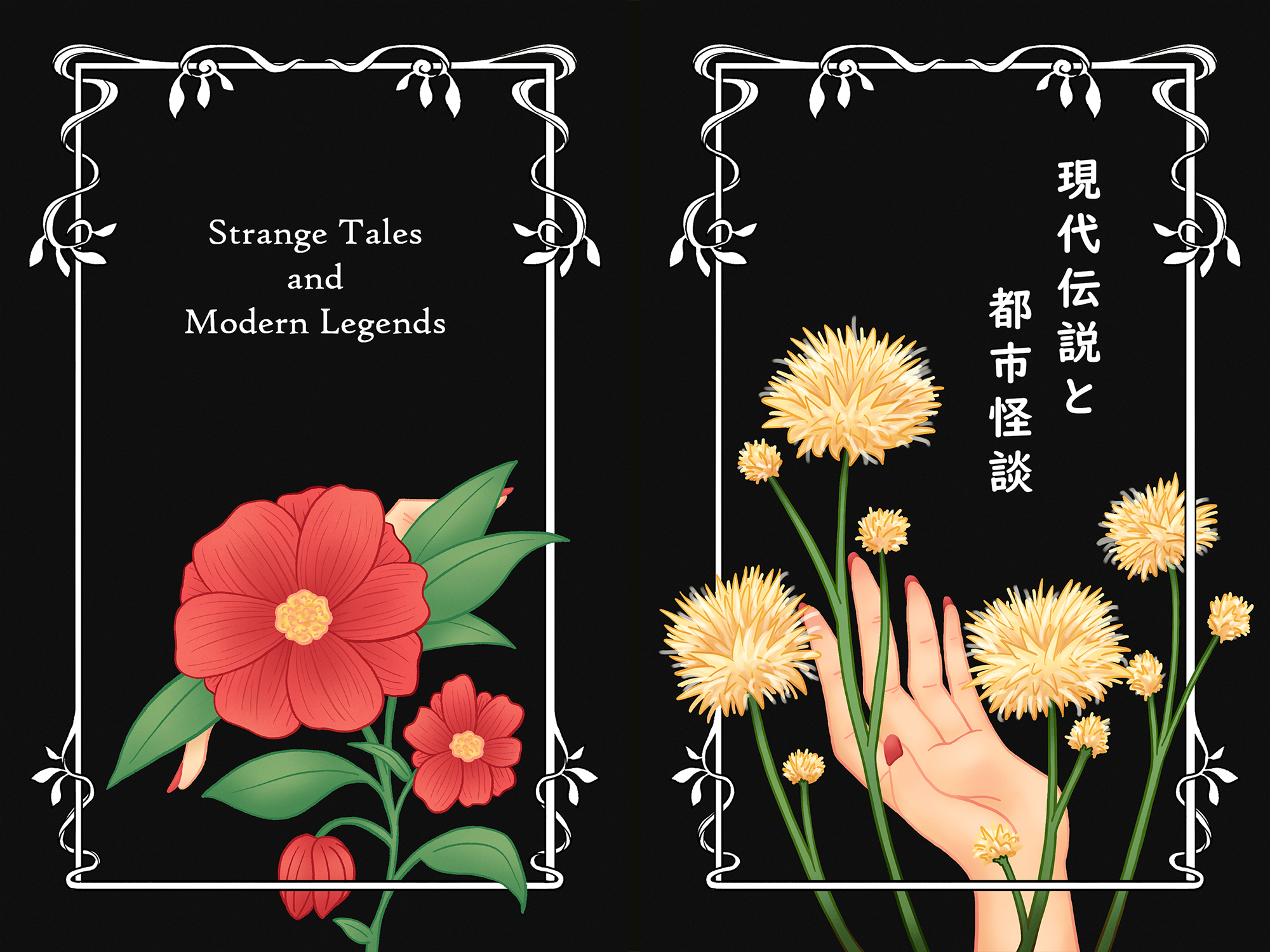
Having provided the students with these criteria and a number of examples to use as potential templates, I asked them to write their own urban legends. I was absolutely blown away by the work they submitted. I promised that I wouldn’t spread their stories outside of class, but I decided to make a class zine so that they could share their work with each other. The image at the top of this post is the cover I created for the zine, which ended up being a 76-page book.

I like to think that Alvin Schwartz and Stephen Gammell would be proud.

At the End of Everything: A Night in the Woods Fanzine

I’m excited to have a story in At the End of Everything, a fanzine celebrating Night in the Woods. My piece is a series of connected vignettes about the subtle uncanniness of daily (and nightly) life in Possum Springs, and the atmosphere is pure Rust Belt Gothic heavily based on my own experiences in rural West Pennsylvania. Preorders for the zine are open until November 30. In the meantime, please feel free to check out the free wallpapers available on the zine’s Carrd site. 

🍂 https://nitwzine.bigcartel.com/
🍂 https://nightinthewoodszine.carrd.co/

Quiet Haunting

I moved to South Philadelphia toward the end of the pandemic. My landlord raised the rent, and it was cheaper just to buy a house. Granted, it’s not a big house, nor is it particularly nice. The floors are uneven, and the ceiling sags. The kitchen is like the set of an old movie, and the basement is infested with centipedes. But it’s affordable, and it’s quiet, especially since no one lives next door.

I’ve recently started to hear things moving on the other side of the townhouse wall. The noises aren’t loud, nor are they frequent. It’s mostly soft shuffling and light tapping, usually right before dawn and just after dusk. To make matters even more curious, someone has been watering the plants in the house’s back yard. Two leafy fig trees have grown from small sprouts to extraordinary heights over the summer.

Earlier this evening, I noticed that the house’s back door was open. It was just a crack, as if someone had forgotten to close it. The opossums that live in the alleyway will come inside and eat your trash if you let them, so I figured I’d be doing someone a favor if I closed the door. I climbed over the crumbling cinderblock wall and maneuvered through the foliage. When I put my hand on the knob, the door surprised me by swinging open.  

There was nothing inside, just uneven floors and sagging ceilings like my own, but I could hear a beeping sound emerging from the basement. I peeked down the stairs, where I saw an older man in a colorless cardigan sweater sitting on a metal folding chair. He was flipping through an issue of National Geographic that he’d taken from a cardboard box filled with old magazines.

I froze in alarm, but he looked up and met my eyes before I could back away. “I’m sorry to bother you,” I apologized. “I live next door, and I heard the beeping. I was worried something was going to explode.”

“It’s fine.” He shrugged. “It’s just an oven timer. I figured I’d give it a few more minutes, but I might as well turn it off.”

I felt awkward, like I couldn’t just leave, so I asked him why he was sitting in the basement with an oven timer.

“They pay me to look after the place,” he answered. “You know, rattle a few chains, make some thumping noises in the night. Feed the spiders, maybe put a bloody handprint on the window. That sort of thing. It keeps the property values down.”

I realized that I could see the back of the chair through the man’s sweater. This didn’t bother me as much as you’d think it would. I’d seen stranger things in the neighborhood, and the man seemed nice enough.

“I haven’t really heard anything from next door,” I admitted. “Do you want me to be more scared?”

“Don’t sweat it. They’re not paying me much, and I haven’t gotten a raise in years. My heart’s just not in it these days.” With a sigh, he closed the magazine and tossed it back into the box before disappearing in a thin wisp of smoke.

I left the basement, closing and locking the door behind me before returning to my own house. I guess the post-pandemic economy has been tough for everyone. All things considered, I don’t mind living next door to a haunted house. Like I said, it’s affordable, and it’s quiet.

. . . . . . . . . . . . . . . . . . . .

This illustrated short story was originally published in the Philly Zine Fest 2022 Anthology. This year’s Philly Zine Fest was held at Temple University on Saturday, November 5. Despite a giant political rally happening right across the street that afternoon, it was a very chill and relaxed event with lots of good vibes and creative energy. It’s been my dream to table at the Philly Zine Fest for years, and it was just as amazing as I hoped it would be. Here’s to many more celebrations of independent artists and writers in years to come! If you’re interested, you can find the Philly Zine Fest website (here), and it’s definitely worth checking out their parent organization, The Soapbox Community Print Shop & Zine Library.

Spooktober Fifteen Day Challenge

I’m thrilled that my work has been published in The Oracle‘s first issue, an anthology of horror-themed flash fiction and art. My piece, “Spooktober Fifteen Day Challenge,” is a creepy little story told in the form of a cursed social media game.

I recently read an article in Rolling Stone (this one right here) about the Momo Challenge, and this Halloween-themed story is inspired by the idea that a monster might prey on children through a series of social media challenge prompts. Although the format is nontraditional, my goal is for the reader to gradually get a sense of the loneliness and anxiety of the “you” to whom the prompts are addressed. 

The “Fright Flash” issue of the zine is very short, but it’s lovely to look at and quite spooky. If you’re interested, The Oracle is (here) on Twitter, and you can download a free digital copy of the “Fright Flash” issue via Google Drive (here).