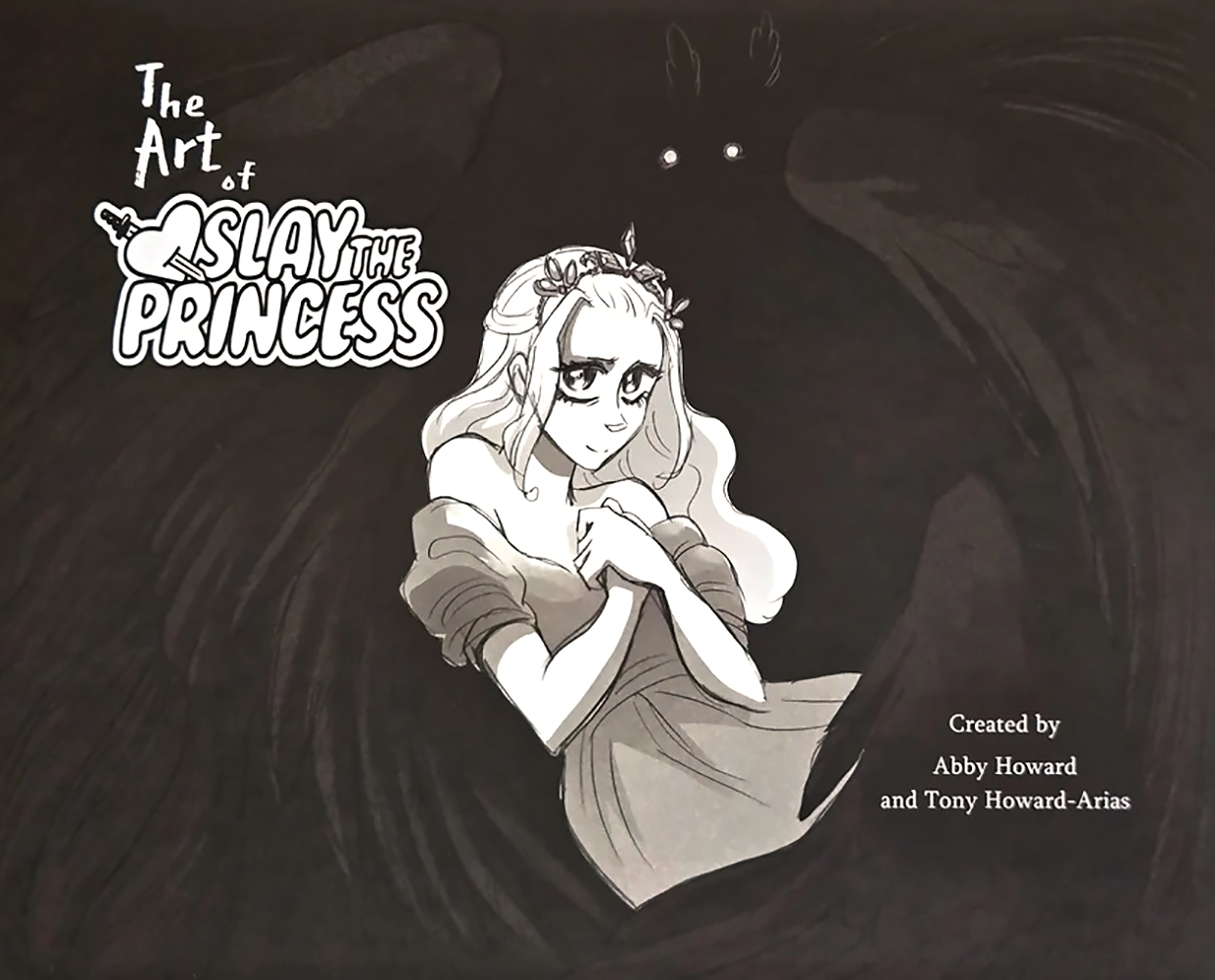
Although this book came out back in October 2025, Comics Beat offered me the opportunity to write a review of The Art of Slay the Princess, which is something like a graphic novel adaptation of the horror game (on Steam here).
It’s difficult to summarize the story of Slay the Princess, and a serious discussion could easily turn into a substantial essay. What I therefore ended up doing in my review was discussing the success of the cross-media adaptation. You might wonder how a print book would be able to convey the multiplicity of the game’s branching storylines, and the answer is that it does so in a remarkably artful way.
Here’s an excerpt from my review:
In order to function as a book, The Art of Slay the Princess omits a substantial amount of text from the game’s script. By necessity, many of the game’s multimedia horror elements, including its viscerally upsetting soundscapes, are also missing. Regardless, Howard’s illustration work is sufficiently disturbing even in a montage of static frames, and the page layout is utilized to showcase the various forms of the Princess in their full uncanny glory. Though it’s not a traditionally linear reading experience, The Art of Slay the Princess is still more than capable of immersing the reader in its dark and labyrinthine world.
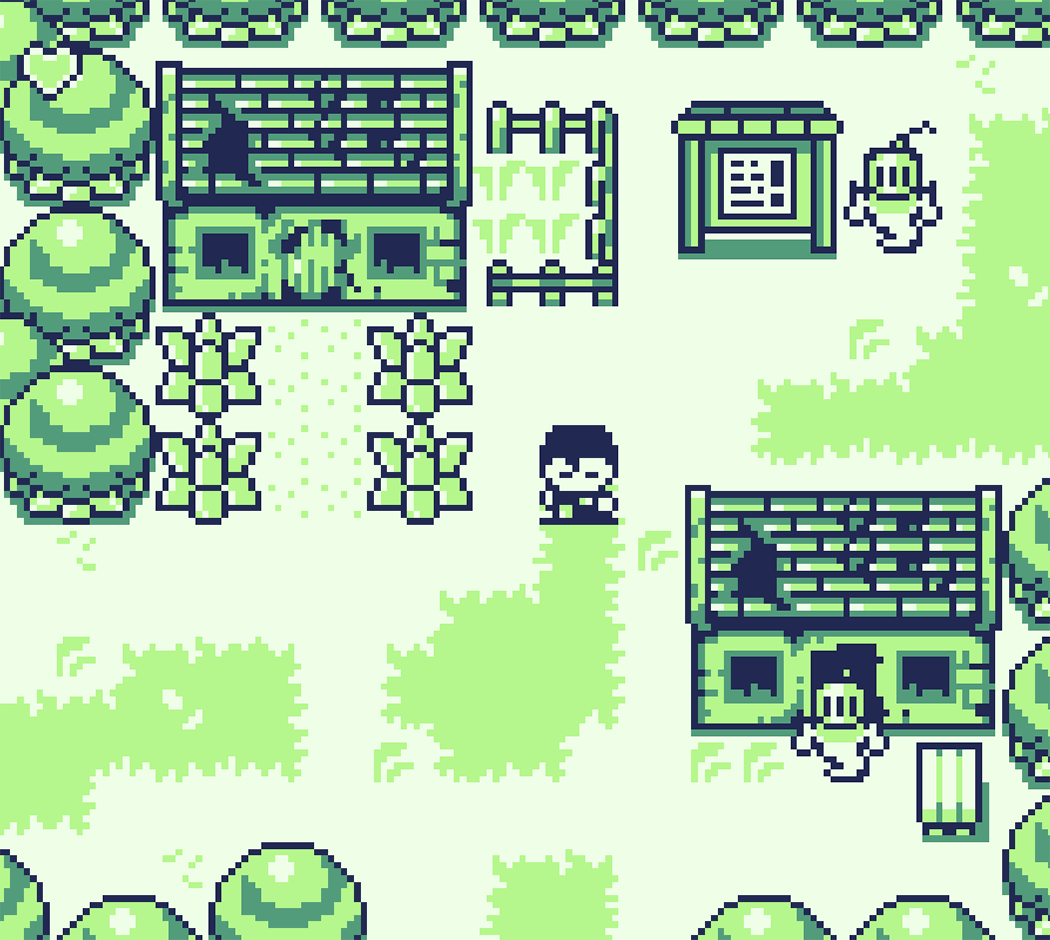
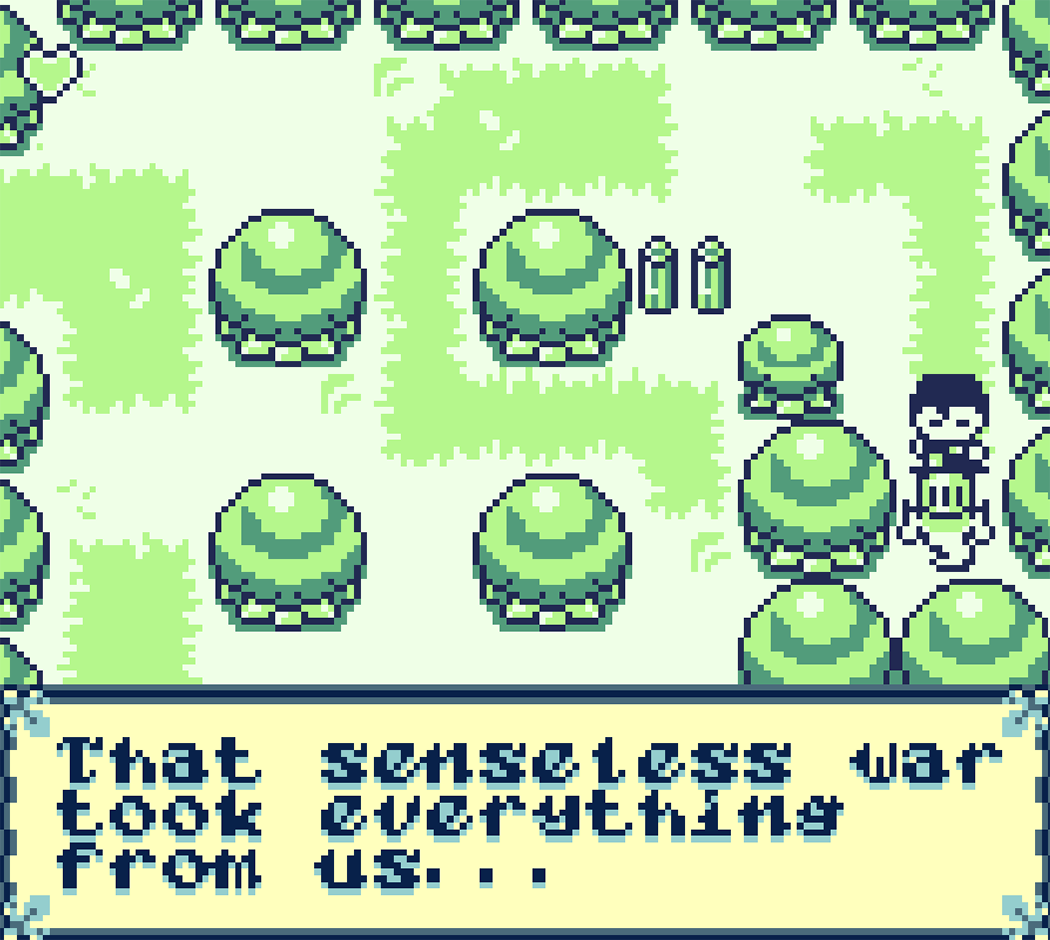
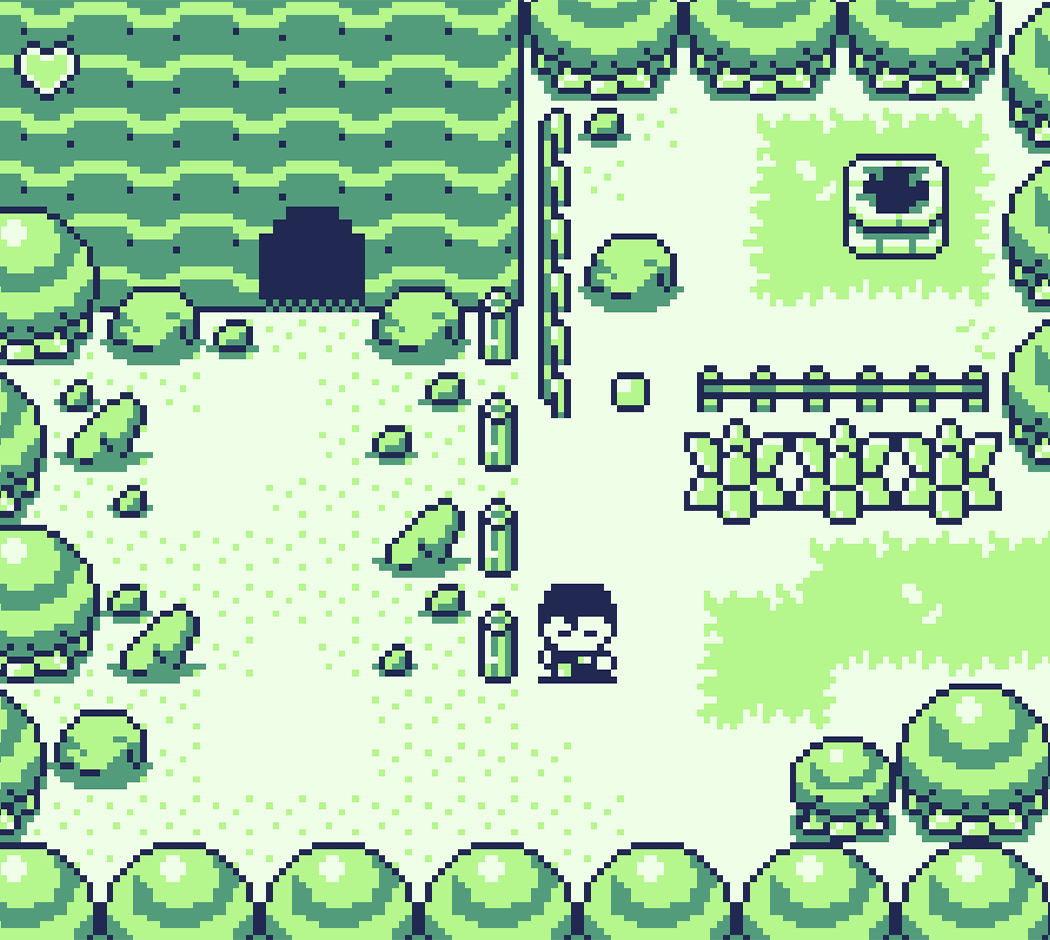
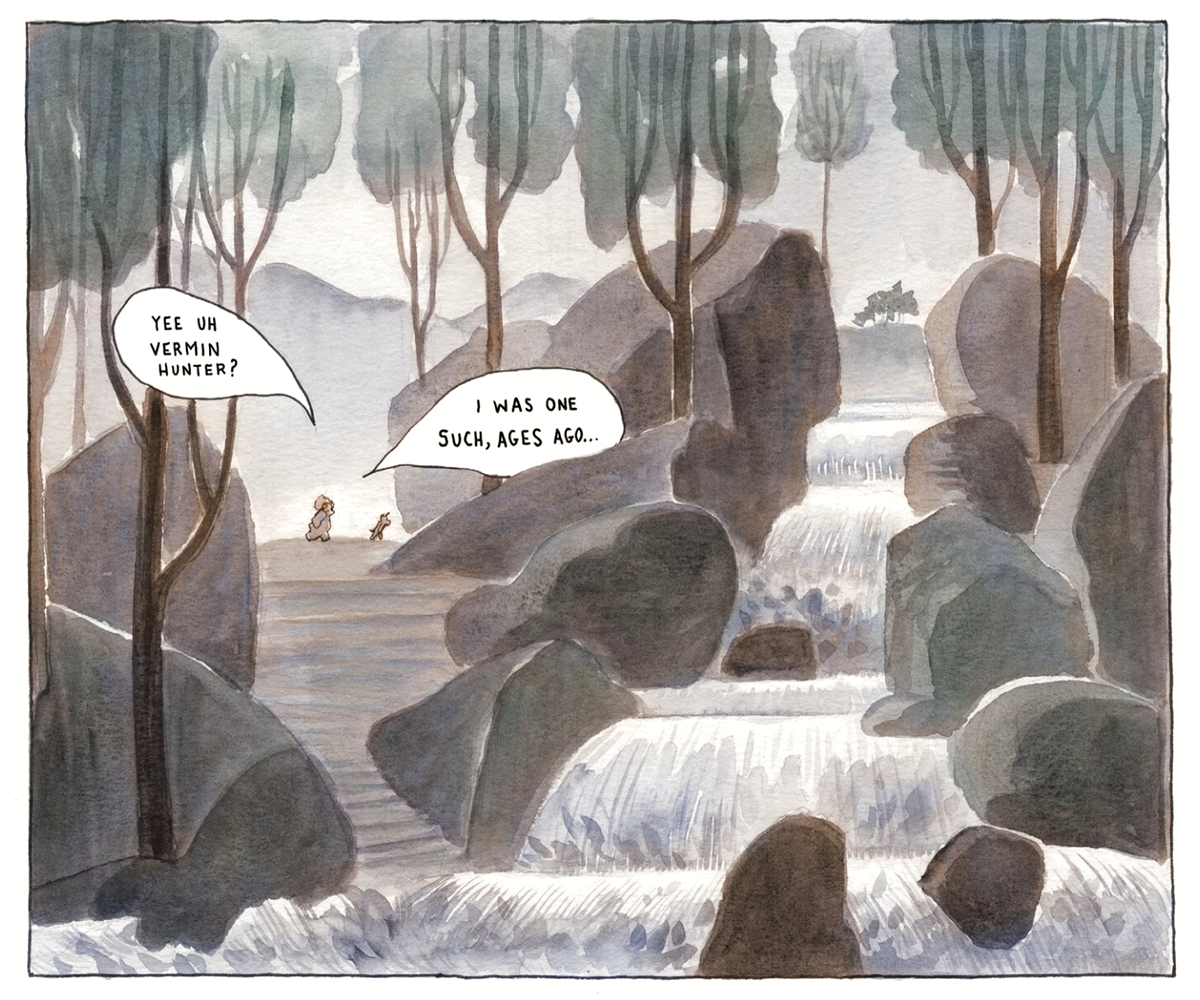
Forest of Fallen Knights is a free-to-play Game Boy narrative adventure game that takes about 30-40 minutes to finish. Though the game is visually modeled after Link’s Awakening, its setting and story are a homage to Dark Souls.
You play as a nameless adventurer who’s found himself alone and unarmed at the bottom of a cave. After the ghost of a knight offers him a sword, the adventurer emerges into a dense forest dotted with ruined houses that were once inhabited by the knights who fled from a devastating war. Though no longer alive, neither can the knights die. Your job, as the still-living adventurer, is to help them make peace with their regrets.
Admittedly, it’s unclear what purpose your good deeds will serve in the long run, given that the knights are eternally unable to pass on. Perhaps the adventurer should take care that their curse doesn’t pass to him as well…
Forest of Fallen Knights consists of about twenty overworld screens, as well as an additional dozen screens inside caves and houses. The gameplay involves walking around, talking to everyone, and taking on simple fetch quests. There’s some (very) basic combat, as well as a small dungeon that requires a moderate level of pattern memorization and dexterity. Save crystals are generously scattered throughout the forest, so you won’t lose much progress if you happen to die. For the most part, the swordplay serves to add texture to what is largely an exploration-based adventure.
The game’s writing is simple but effective. Now that everything they once fought for is gone, the undead knights are attempting to maintain their hold on what was most important to them in life. Any one of their fetch quests might come off as sentimental on its own; but, in aggregate, the player gets a strong sense of how pathetic and regrettable the situation truly is.
There are a few secrets to find in the game, though they aren’t too terribly well-hidden. If the player is moderately observant, perhaps the adventurer might reveal his reason for venturing into the forest, and perhaps he might even find a means to release the fallen knights from their curse. If not, the default ending is more than sufficiently satisfying.
As a fan of both Link’s Awakening and Dark Souls, I feel like Forest of Fallen Knights was made for me specifically, and the time I spent with this game coalesced into a pocket of unadulterated joy. It’s therefore difficult for me to be objective, but I still think it’s fair to say that Forest of Fallen Knights is well-crafted, thoughtfully considered, and at the top of the pile of homebrew Game Boy adventure games.
Many kudos to the developer, NeroGames (who is on Bluesky here). I’m always here for indie artists who use the retro gaming medium to share strange and haunting stories.
Return to Grace (on Steam here) is an atmospheric sci-fi walking sim that takes about an hour and a half to finish.
You play as Adie, a space archaeologist who’s searching for a legendary AI named Grace on the Ganymede moon of Jupiter. Inside the immaculately preserved ruins of a structure built to worship Grace, Adie encounters various aspects of Grace’s personality, who communicate through her digital wristband. As she explores the beautifully appointed space station, Adie searches for the answer to a mystery that’s gone unsolved for more than a hundred years: why did Grace suddenly disappear?
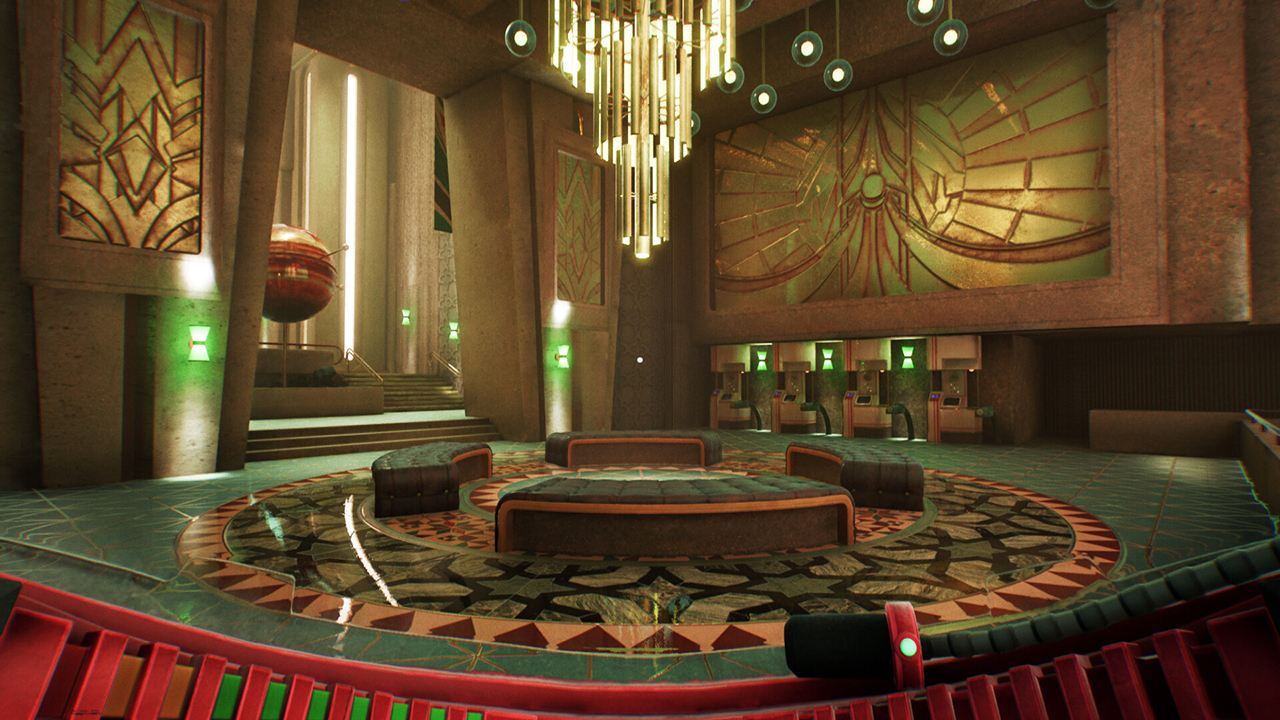
The game’s story is well-paced and engaging, and the voice acting is excellent. Return to Grace also showcases one of the most visually striking examples of retro futurism I’ve encountered. The references to everyday 1960s architecture and interior design fit the world and its themes perfectly, as do the more elevated hints of Art Deco.
What I’d like to do in this review is analyze and criticize how the game goes about telling its story, but please understand that this is more about me solidifying some general thoughts about storytelling in video games and less of an actual negative assessment of the game itself.
Essentially, while I have no problem with a game rewarding completionism, I don’t think developers should expect this sort of behavior from the player by default.
More specifically, I feel that some of the more “interactive” elements of Return to Grace don’t work the way they’re supposed to, and this diminishes the effectiveness of the game’s storytelling.
To begin with, the opening twenty minutes of Return to Grace are rough. Adie crashes on Ganymede, wanders through a snowstorm, and navigates a series of anonymous techno-corridors as she attempts to enter Grace’s station. The game doesn’t signpost objectives, and the low visibility and featureless visual landscape make it easy for the player to get lost.
I can understand why this initial difficulty exists on a thematic level. Without AI guidance, the developers suggest, the outer reaches of space are ugly and hostile. Still, while this sort of introduction would work in a movie, it’s perhaps not the best choice for a video game.
It’s not fun to be immediately hit with frustration that delivers no narrative reward, and I feel like the developers aren’t respecting the law of conservation of detail. In a shorter work, each detail matters more, and there’s no narrative reason to have a full 20+ minutes of the player wandering around aimlessly at the very beginning of the story. This section of the game could have been shorter, or at least “easier” in the sense of offering more guidance.
Thankfully, everything changes once Adie enters the station proper. The visual environment is beautiful, and the aspects of Grace’s personalities begin to have amusing and enlightening conversations with Adie and with each other. One of these aspects, “Logic,” suspects that there might have been a good reason for Grace to shut herself down, and she starts to put artificial barriers in the way of Adie’s ascension to the peak of the station.
To summarize, Logic essentially requests that Adie locate and listen to a collection of voice recordings left behind by the station’s last residents. Navigating a gorgeous 3D space to piece together a lore puzzle sounds like it would be great fun; and, for the most part, it is.
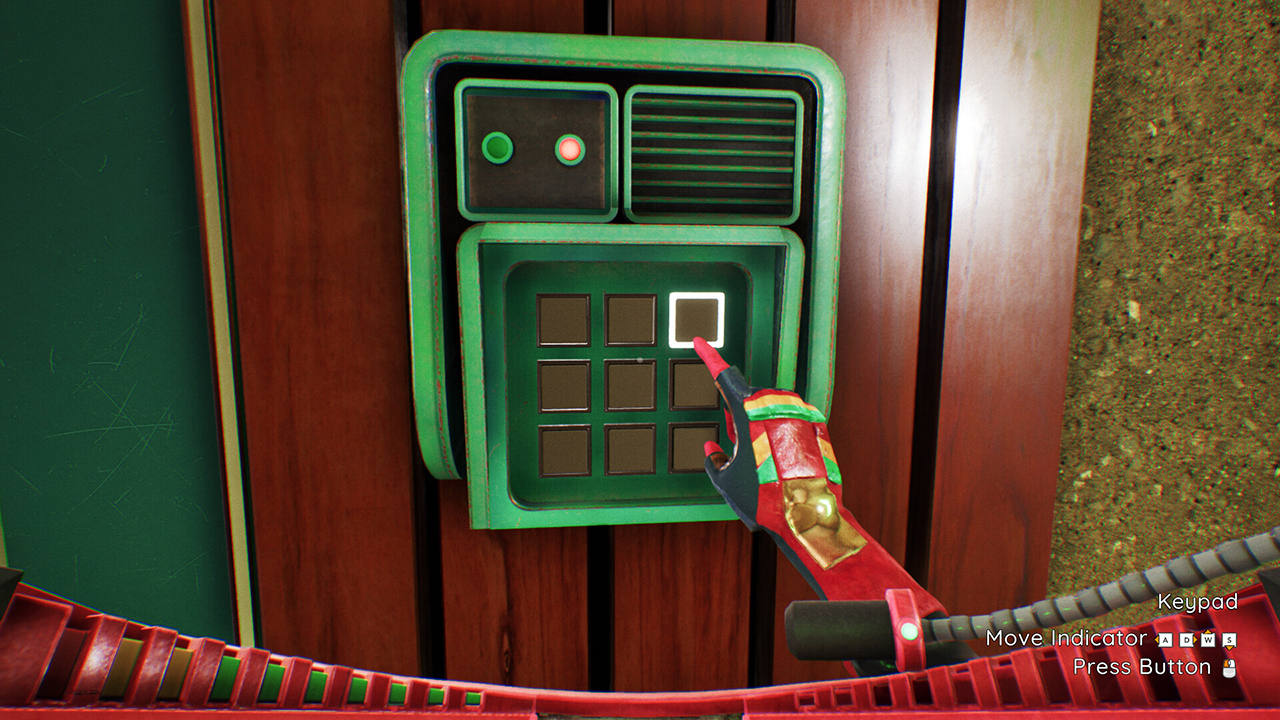
Unfortunately, the game puts two artificial points of friction in front of each discovery. First, the player must complete a simple but annoying memory puzzle in order to unlock each residential unit in the station; and second, each recording can only be accessed after completing a short but annoying spatial puzzle on Adie’s wristband. This isn’t necessarily a problem the first few times, but it gets very stale very quickly.
Eventually, an aspect of Grace’s personality called “Control” offers to complete these puzzles for you, thus removing the friction. Control is a weird asshole, to be sure, but it’s difficult to overemphasize how immersion-breaking and repetitive the puzzles are.
While roleplaying as Adie, my thought process was that perhaps Control might be less of an asshole if he had something to do. We all want to feel useful, after all, and “wanting to feel useful” seemed to be a throughline across the various aspects of Grace’s personality. Meanwhile, as the person playing Return to Grace, I was invested in the game’s story and interested in learning more details while exploring, and I didn’t like my flow state being interrupted by meaningless tasks.
It turns out, however, that allowing Control to do even one of these puzzles locks you out of the most satisfying ending, which is the ending in which you get to meet Grace.
In other words, the default ending is a “bad” ending that answers no questions and offers no narrative resolution. In addition, Control kills Adie in a decision that has zero foreshadowing. I don’t even consider this death a spoiler, as it comes out of nowhere and makes very little sense. The default ending isn’t really an “ending,” but rather a punishment dealt to the player for not finding all of the voice records while manually completing all of the puzzles.
This leads me back to the point I started with, which is that I don’t think games should expect completionist behavior from the player. Some players might come to a narrative adventure game like Return to Grace for pointless busy work, sure. It’s not beyond the realm of possibility. Still, I’m guessing that most of us don’t play cinematic story games for the purpose of ticking boxes off a spreadsheet, and that most of us aren’t going to want to play the entire game through a second time after seeing such a pointless and upsetting ending the first time.
What I would like to see in Return to Grace (and other narrative-driven games) is a default ending that respects an organic style of progress through the story and doesn’t assume that the player will have a walkthrough constantly open on a second screen. There’s no need to penalize casual players! Let the default ending be satisfying.
In the case of Return to Grace, Adie’s meeting with Grace really should have been the natural conclusion to the story. For players intrigued by the fictional world, a satisfying “default” ending will trigger curiosity concerning different possibilities. I’m all for different endings dependent on more attention and devotion to the gameplay, but I think these endings should be weirder and more interesting than the natural default ending.
In Return to Grace, the “Control kills Adie” ending would make far more sense if the player’s completionist behavior were perhaps framed as Adie resisting Control by refusing to allow him to help her, for instance. Also, I tend to think this “bad” ending with Control is far more emotionally compelling if the player has already talked with Grace in the “good” ending.
Again, I’m all for developers rewarding completionism, but it shouldn’t be taken for granted. This is especially true in games whose mechanics serve to break the flow of the story, even if this interruption is thematically intentional.
I’m using Return to Grace as an illustration of a general argument not because I dislike it. I actually really enjoyed this game! 90% of Return to Grace is very good, but I thought it might be worthwhile to explore the 10% in which the ludic medium is something of an uncomfortable fit for the message.
Putting my concerns regardings its endings aside, Return to Grace is a thought-provoking narrative adventure filled with uniquely stylized artistic flourishes, and I’d definitely recommend checking it out if you’re a fan of What Remains of Edith Finch and Outer Wilds.
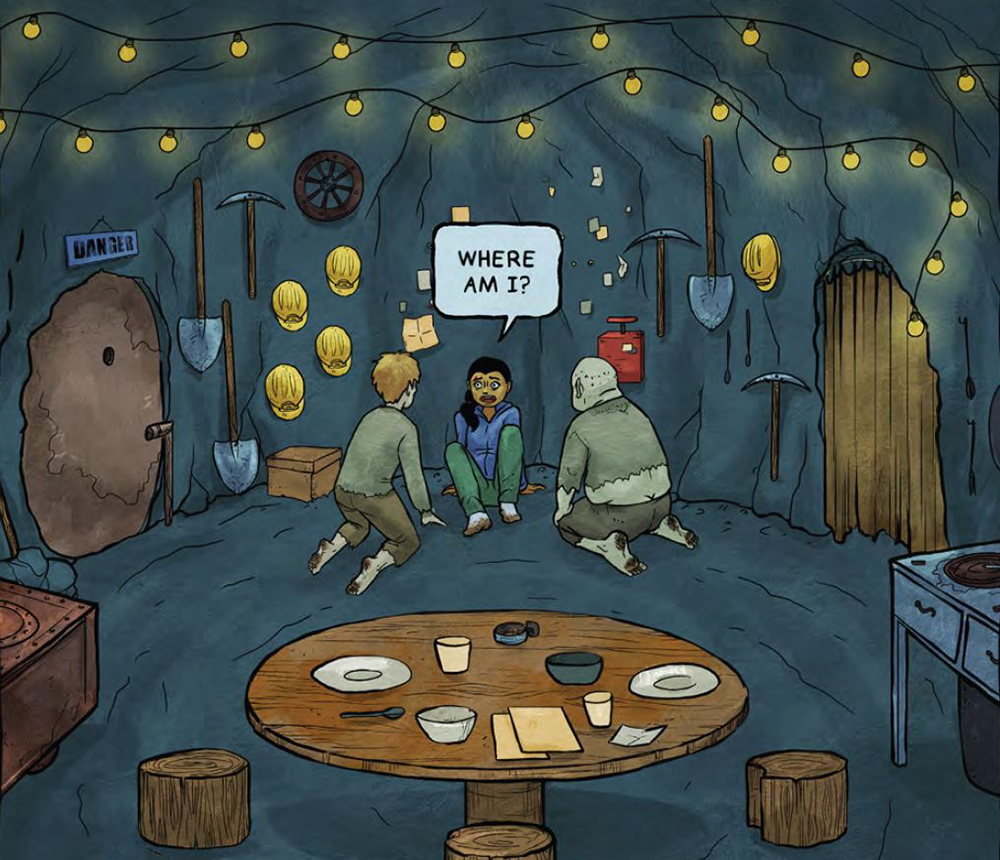
I recently had the immense pleasure of writing a review for Comics Beat about Pig Wife, a massive graphic novel drawn by Abbey Luck, a Hollywood animator who specializes in Adult Swim style bizarro art. Pig Wife is definitely Hollywood, and it’s definitely got a Gen-X style “alternative” edge to it. Neither of these things is to my taste, usually, but I love Pig Wife for what it is: namely, a gothic “weird girl” coming-of-age story set in a not-quite abandoned labyrinth of mine tunnels in rural Pennsyltucky.
I say in my review that it’s easy to read this 500-page book in one sitting, and I mean it. Pig Wife tells an incredibly entertaining story; but, appropriately enough, there’s a lot going on below the surface. Here’s an excerpt from my review:
By forgoing the nuances of character, Pig Wife can focus entirely on plot, and the plot is a well-oiled machine that grabs the reader and aggressively drags them down into the tunnels. Moreover, by virtue of the broad strokes of its characterization, Pig Wife is also able to convey the allegorical elements of its scenario.
The coming-of-age story in which a young hero embarks on a journey has a universal appeal, but teenage girls (and slightly older girls, if they’re trans) often undergo a separate ascent from innocence to experience that I think of as “climbing out of the pit.” By “the pit,” I mean the everpresent tarpit of internalized sexism and misogyny, and the mine tunnels of Pig Wife are as good of a visualization of this pit as any.
I had the immense honor of writing a short review of James Welker’s monograph Transfiguring Women in Late Twentieth-Century Japan for the online academic journal Studies on Asia. I have to admit that I love this book beyond reason. As a queer artist myself, this is something I’ve wanted since I first entered grad school – a serious and careful reading of classic shōjo manga that takes the actual lives and politics of the creators into account. Welker’s book is so smart, and so kind, and such a pleasure to read, honestly. Here’s an excerpt from my review:
Transfiguring Women in Late Twentieth-Century Japan is especially admirable in its clear and cogent demonstration that queer and feminist histories remain vitally relevant for our understanding of contemporary transcultural media flows. Welker is writing against the backdrop of intense (and often discursively violent) conversations on social media regarding the appropriation of queer and racialized identity among international fans of anime and manga. By demonstrating that both fictional stories and real-life communities in Japan have always engaged in a process of creatively transfiguring identity, Welker encourages the redirection of energy to an appreciation of the history and complexity of feminism and queer identity.
This monograph also serves as an important critical resource for the study of transcultural Japanese media cultures and a welcome reminder that, while the settings of manga may be fantastic, the concerns of their creators are grounded in social and political realities. Through the depth of Welker’s archival research and the insight of the interviews that illuminate the spaces between printed words, Transfiguring Women in Late Twentieth-Century Japan stands as a proud contribution to feminist scholarship on Japan’s intellectual history.
Project Kat is a short narrative horror game that’s free to play on Itch.io (here) and on Steam (here). A playthrough culminating in the game’s “true ending” will take about half an hour, but adventurous players might spend another fifteen minutes experimenting with paths leading to a premature death.
You play as a high school student named Kat who stays late at school one night to undertake an occult ritual of unknown origin and with unknown consequences. Kat has attempted a number of similar rituals, all to no avail. She claims not to believe in the supernatural and seems to be performing these rituals as a hobby. Unfortunately for Kat, this ritual is different.
As Kat, you have the run of three empty classrooms, a meeting room currently being used by the school’s Occult Club, and the Drama Club’s storage closet. Your job is to collect the materials needed for the ritual, such as chalk and candles, and then to perform the various steps of the ritual itself.
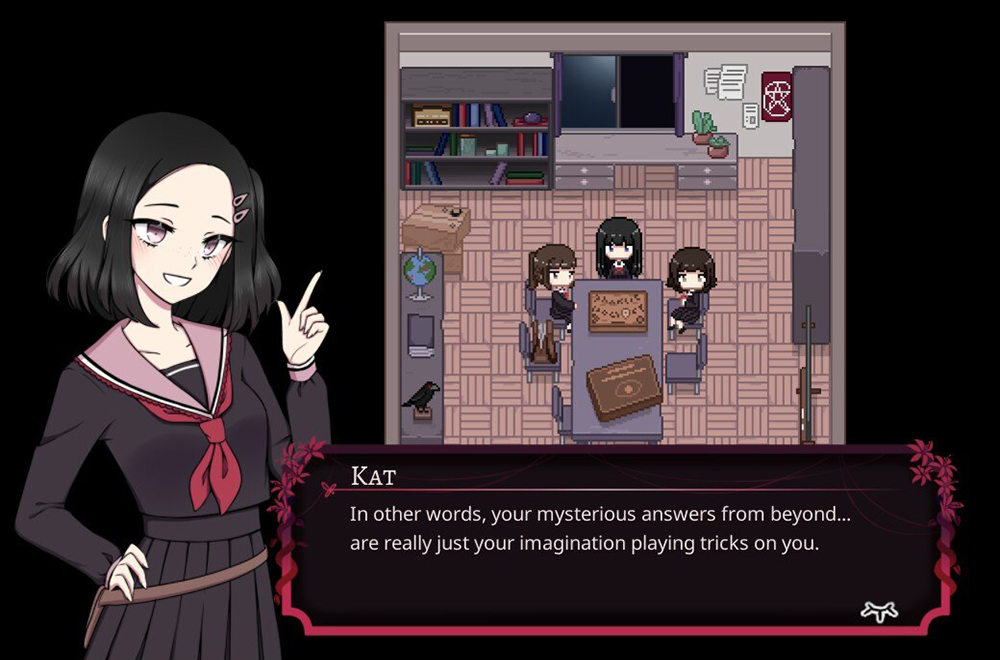
Coincidentally, the three members of the Occult Club are also spending the night at school. Kat taunts them as they experiment with a Ouija Board, saying that they’re deluding themselves. Despite getting the night off on the wrong foot, Kat can continue to talk with the three girls, and she can even recruit them to participate in the ritual with her.
This might be a mistake, however, as the instructions for the ritual state clearly that it must be performed alone.
Should Kat manage to complete the ritual successfully, the game ventures into a surreal space reminiscent of Yume Nikki. This is when the story stops pulling its punches, and the player begins to understand why Kat has started performing occult rituals – and also that her odds of surviving this one are very low. I was impressed by the visual creativity of the final section of the game, and also by the darkness of the ending it leads to.
I’m a fan of the Japanese tradition of occult “solo games” like One-Person Hide and Seek and Satoru-kun. While many of these rituals are meant to summon a spirit, the purpose of others is to create a gateway to a different dimension. If the dimension-linking ritual is performed correctly, what happens then? No one ever says, and Project Kat offers as good of an explanation as any regarding why this might be.
Since it’s a relatively short game, Project Kat leaves a number of questions unanswered. Still, I really enjoyed the story, which has good pacing and a nice tonal creep from camp into horror. Project Kat is a neat little game to play in one sitting, and the creators have released a longer story set in the same world, Paper Lily, which is free to play on Itch.io (here) and on Steam (here).
I recently had the privilege of writing a review for Comics Beat about Cathy Malkasian’s new graphic novel, Shadows of the Sea. I have to admit that I struggled with Malkasian’s previous books, which are brilliant but tonally dark and emotionally devastating. Shadows of the Sea is just as strange and heartbreaking as the artist’s earlier work, but it ends on a gloriously high note that gives me hope for the future. I was prepared to write a review about the value of portraying despair in dark times, but man. Hope is good too.
Here’s an excerpt:
In his review on The Beat, John Seven assesses Malkasian’s 2017 graphic novel Eartha as one of the artist’s characteristic “gloomy, apocalyptic parables that don’t make you feel so great about humankind.” It’s difficult to disagree, as Eartha is deeply disquieting. In contrast, Shadows of the Sea feels like a gentler turn of the same thematic wheel, presenting a story that’s smaller in scope but richer in emotional immediacy. The fantastic world Malkasian has painted is cruel and strange, to be sure, but it still affords the possibility of healing. Shadows of the Sea lingers not because of its darkness, but because of the hope that emerges after a brave confrontation with bitter truths.
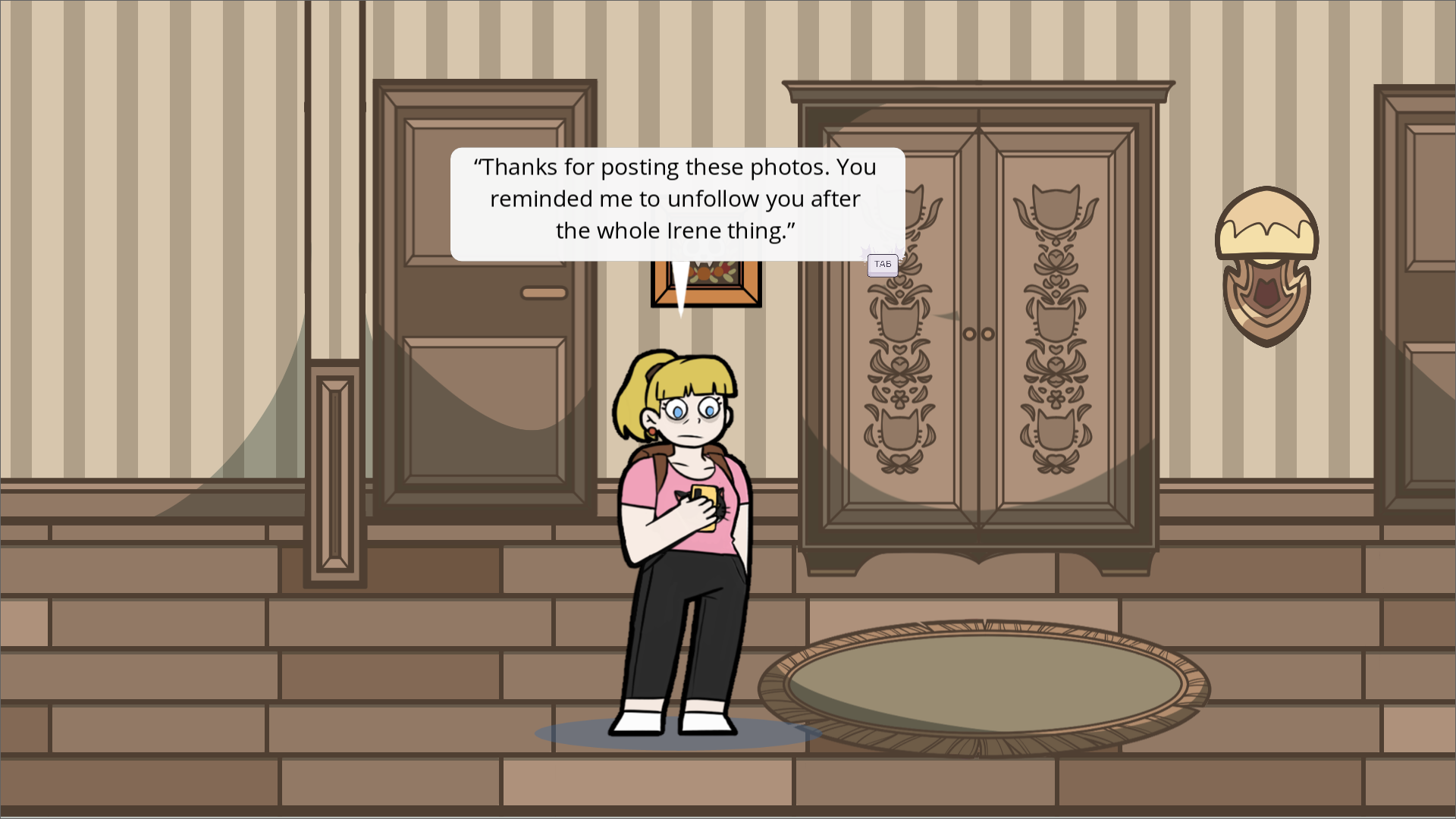
Il Mistero di Felina (The Mystery of Felina) is a free-to-play 2D narrative horror game that takes about twenty minutes to finish. The story follows Lara Lorenzi, a travel influencer who’s been invited to the small island of Felina to participate in a festival that celebrates the island’s cats.
Unfortunately for Lara, there is weirdness afoot. The island’s sheep have been dying, and there seems to be blood on the walls of the local church. In the downstairs tavern of the inn where Lara spends the night, a group of older men have gathered in a somber toast to their friend, who will be “leaving the island” soon. The young man who invited Lara to the island is awkward and sweaty, and he seems to be uncomfortably nervous about something.
Meanwhile, Lara’s been getting strange comments online, presumably about a nasty bit of drama with a fellow influencer. Though she’s picking up bad vibes from the island, Lara is in dire need of positive content, and she can’t afford to waste the opportunity.
As Lara, the player walks around the small town, enjoys the scenery, and advances the story through conversation. There’s also an optional but fun smartphone menu that allows the player to take pictures and upload them for Lara’s followers to enjoy.
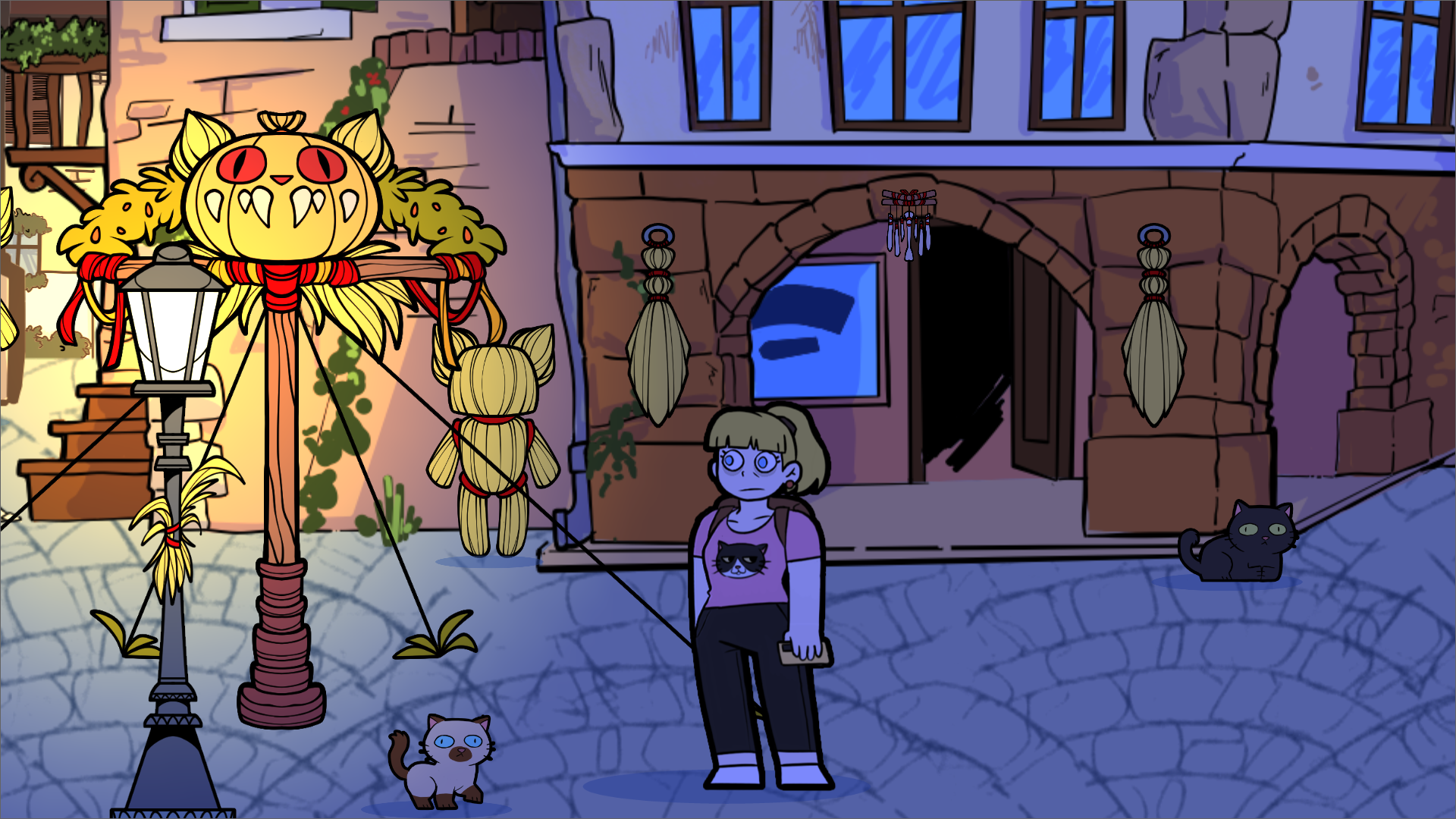
You’ll almost certainly want to take pictures, because the art in this game is wonderful. The architecture is shabby yet quaint, while the interiors are filled with interesting details. The people on the island are all colorful characters, and the festival decorations are very cute yet deeply sinister.
I also appreciate the character animations. The way Lara walks around the island is well-observed, especially in relation to her character design. Later, when Lara crouches while wearing a costume in order to pass herself off as a child, her walking animation is even more artistic. There are a number of cats roaming around the island, and it’s a treat to stand still for a moment and observe their behaviors.
Il Mistero di Felina echoes with hints of classic gothic folk horror like The Wicker Man and The Shadow Over Innsmouth, and it also recalls more contemporary spooky stories like Oxenfree, Night in the Woods, and… Neko Atsume. Still, this unnerving little game is uniquely its own thing, and I would have gladly spent more time on Felina basking in the Mediterranean sunlight while picking apart the dysfunctional personalities of the island’s residents.
The game has a convenient autosave function, but you can easily play Il Mistero di Felina in one sitting. The story is enjoyably campy but also legitimately creepy, with excellent pacing and a tidy conservation of detail. I’m a fan of the unique aesthetic, whose bright colors work brilliantly to enhance the horror. I love every indie horror game I play, but this one is something special.
I can’t resist closing this without at least one cat pun, so here you go: Il Mistero di Felina is a purrfectly spooky cautionary tale that knows exactly how to sink its claws into contemporary anxieties.
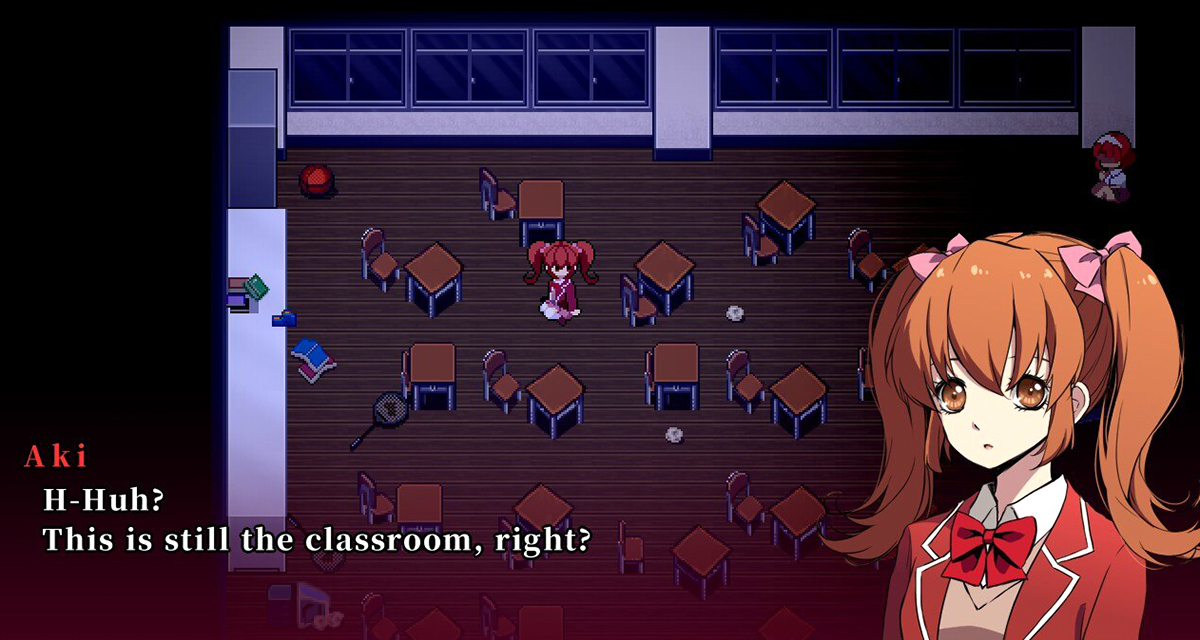
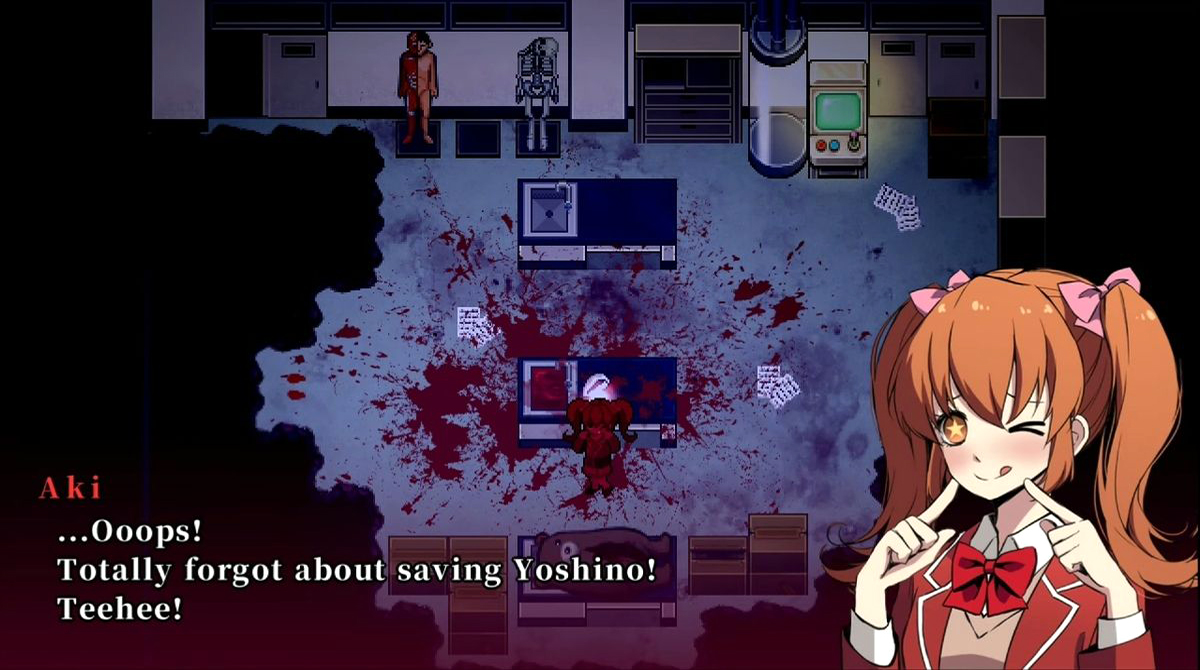
Misao is a short 16-bit indie survival horror game originally released in 2011 and then published on Steam (here) as a remastered edition in 2024. The game is set in a high school that’s been transported to a demonic realm by the vengeful spirit of the eponymous Misao, a beautiful but quiet girl who mysteriously disappeared three months prior to the opening of the story.
You play as a girl (or optionally as a boy, in the HD version) named Aki who suddenly hears Misao’s voice in the middle of class, asking someone to “find me.” The classroom is cloaked in darkness, an earthquake hits, and the school begins to fall apart in the aftershocks. As Aki explores the mostly abandoned building, she learns that four of her classmates were bullying Misao with the compliance of their homeroom teacher. Despite the intensity of the bullying, Misao didn’t kill herself – but someone else did.
The gameplay consists of navigating the school while collecting six objects necessary to piece together Misao’s story. There’s no set order to acquiring these items, meaning that the game starts off as somewhat confounding but gradually comes to make more sense. Once you get your bearings, what you need to do becomes fairly self-evident, but a walkthrough is recommended for players (such as myself) who might find themselves overwhelmed at first. There are several excellent guides posted to Steam, but I recommend (this one) on account of its helpful division into sections.
Like Mad Father (reviewed here), which was also published by Miscreant’s Room, Misao is essentially a haunted house simulator in which your player-character can die in dozens of delightfully gruesome ways. Thanks to a handy quicksave function, there’s no penalty for dying, and the player is encouraged to get into all sorts of trouble for the sole purpose of seeing what will happen. Aside from two short chase sequences, very little skill is needed to survive, just a bit of trial and error.
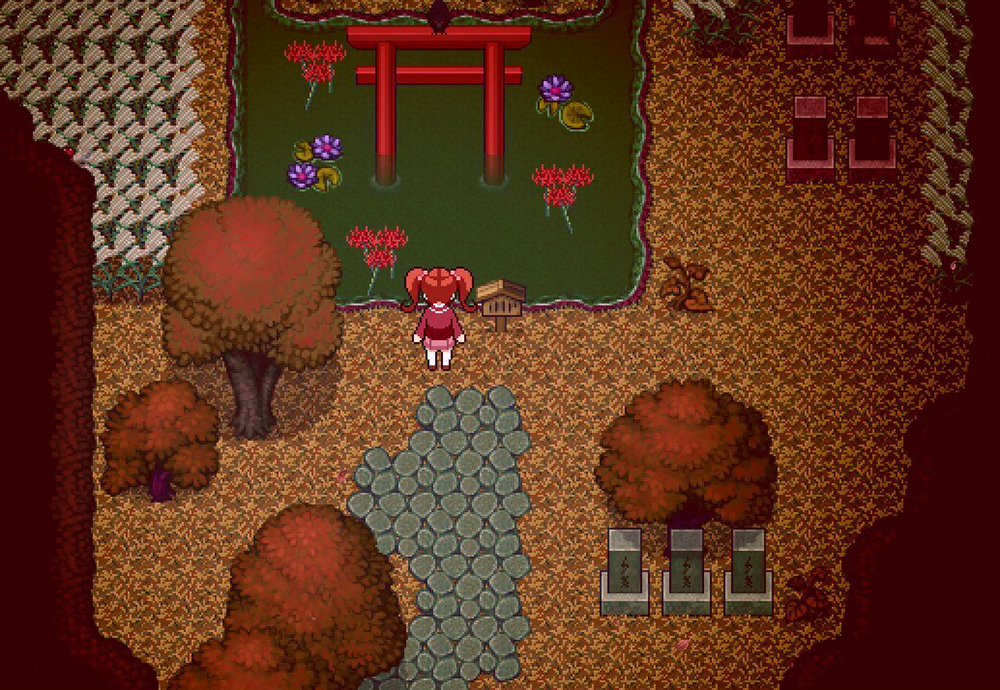
What I love about Misao is how much fun this game has with the tropes and imagery of a haunted high school. The laboratory is staffed by a mad scientist who has a chainsaw and will take advantage of any excuse to use it. The hamburgers in the cafeteria are made of unspeakable meat, and the seating area in front of the open kitchen is filthy with blood and entrails. The toilets haven’t been cleaned for a very long time, nor has the secret zombie cave under the school. The Shinto shrine in the courtyard is beautiful, but the rituals performed there are anything but.
Misao’s story mixes high school bullying and friendship drama with a mystery surrounding a twisted serial killer, and everyone gets exactly what they deserve. Still, for players who think high school kids shouldn’t be condemned to eternal damnation, Aki can rescue her classmates from their personal hells in a short epilogue. A few of the characters Aki encounters are native to the demon realm, and they’re all having the time of their lives. My favorite is the student librarian, who’s fully aware of the bloodshed surrounding her but just wants to make friends. She is a treasure.
If you’re not a completionist, Misao takes about two hours to finish, allowing the story to make an impact without testing the player’s patience through needless puzzles or gameplay challenges. The haunted high school setting is creatively rendered and a lot of fun to explore, even if the open-world structure is a bit overwhelming at the beginning.
The deaths are all creative and disturbing, but the retro graphics allow the game to feel campy instead of creepy, so much so that Misao sometimes feels more like a comedy than a horror story. I grew to feel a begrudging sort of affection for the characters, but I can’t deny that I had a huge smile on my face as I watched them get picked off – and really, good for Misao. I support her.
I really enjoyed writing a review of Karenza Sparks’s debut graphic novel, The Corus Wave, for Comics Beat.
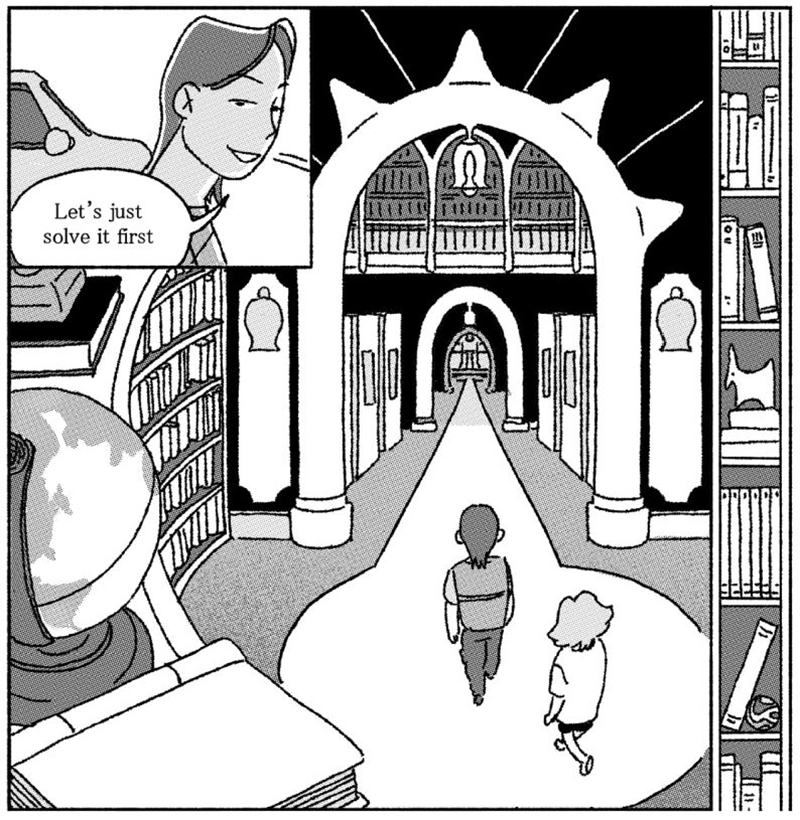
The Corus Wave is a cozy science mystery about a grad student who inadvertently tumbles down a research rabbit hole while writing her thesis about an unusual (and potentially supernatural) fossil. The story quickly becomes a low-stakes Da Vinci Code adventure with a lot of local color borrowed from the artist’s home in Cornwall, and it’s super charming. I really love this book.
Here’s an excerpt from my review:
The Corus Wave is a celebration of the joys of research. The hunt for Corus’ manuscripts begins with a footnote that becomes a rabbit hole, but the story evolves in a more practical direction as the two students find friendship and support in a scholarly community. Their fieldwork provides opportunities to appreciate the human stories behind a built environment whose unique design flourishes might otherwise be taken for granted. The Corus Wave is about going offline and touching grass, the pleasure of which is conveyed through gentle and attractive art that presents lively and expressive characters navigating interior spaces that only reveal their secrets under close observation.