Evelyn: A Gothic Tale

Evelyn: A Gothic Tale
https://frankiesbugs.itch.io/evelyn-a-gothic-tale

Evelyn: A Gothic Tale is an atmospheric 2D puzzle platformer currently being created as a solo project by the Italian artist and game developer Frankiesbugs. The demo for Evelyn, which is free to download from Itch.io, features full Xbox controller support and takes about ten to fifteen minutes to finish, though you’ll likely want to spend more time exploring.

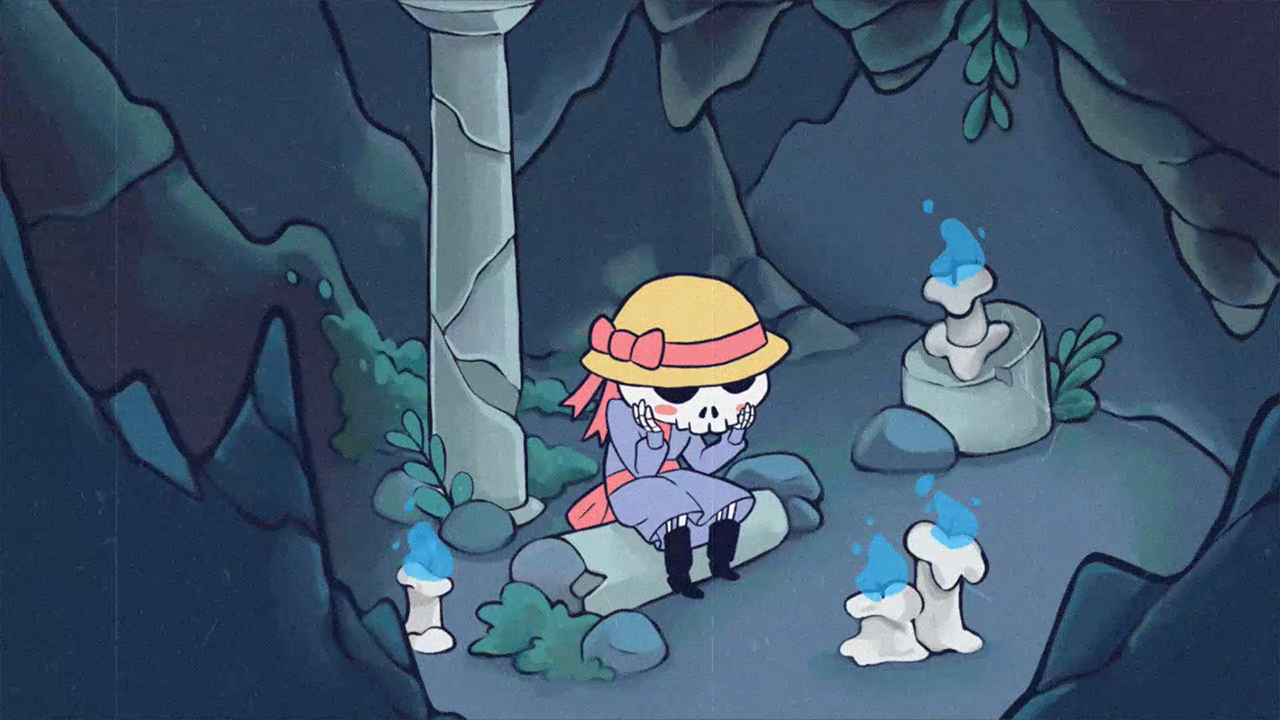
You play as the eponymous Evelyn, a small skeleton in a jaunty blue dress who’s become bored in her underworld crypt and wants to return to the world of the living. Getting there will be no easy task, however, as the way is obstructed by numerous gates and barriers. In addition, Evelyn will need to collect enough flames to light her way forward through the final stretch of darkness between worlds. If she manages to get her bony fingers on enough flames, she might even be able to secure an additional passage for her charmingly pathetic friend Rupert.
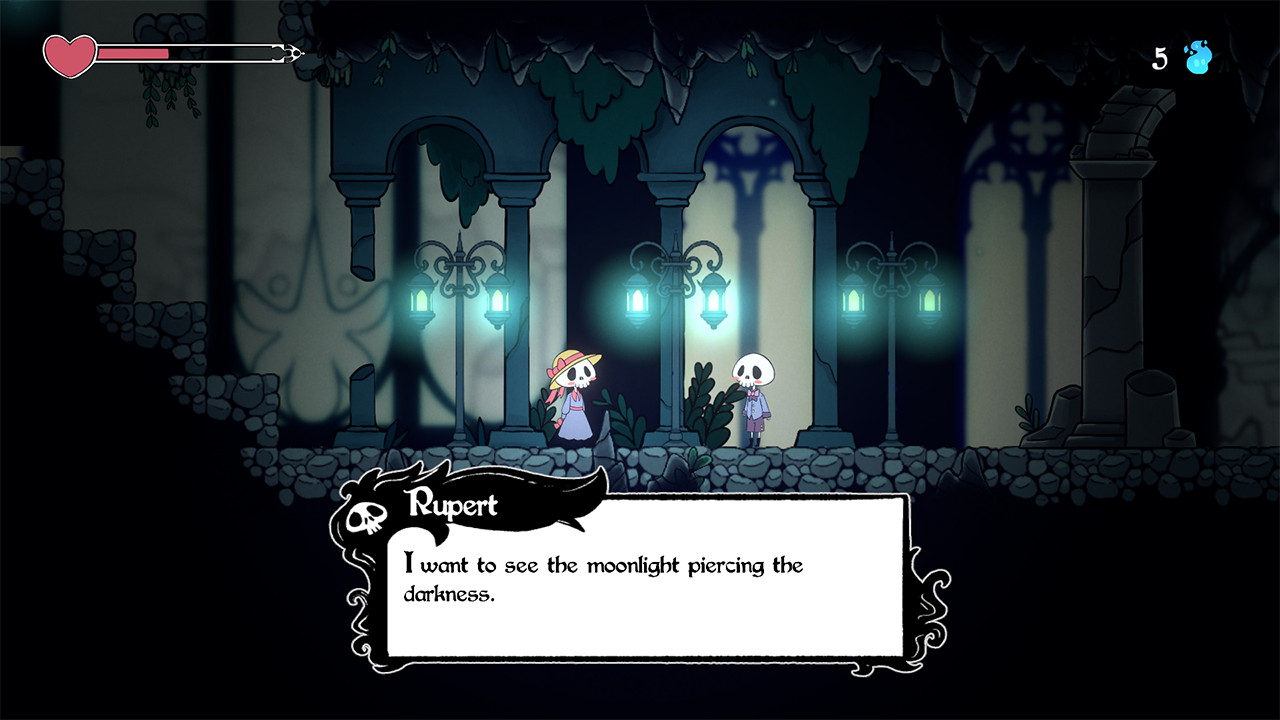
There’s no combat in Evelyn, but environmental hazards will hinder the player’s progress. In the demo, these hazards primarily consist of pits and spikes that Evelyn must jump over in classic 2D platformer style. The twist that Evelyn brings to this formula are its light-based puzzles, which involve obstructing or redirecting beams of light in order to trigger changes in the world and thereby grant Evelyn the keys she needs to pass through a series of grand stone gates.

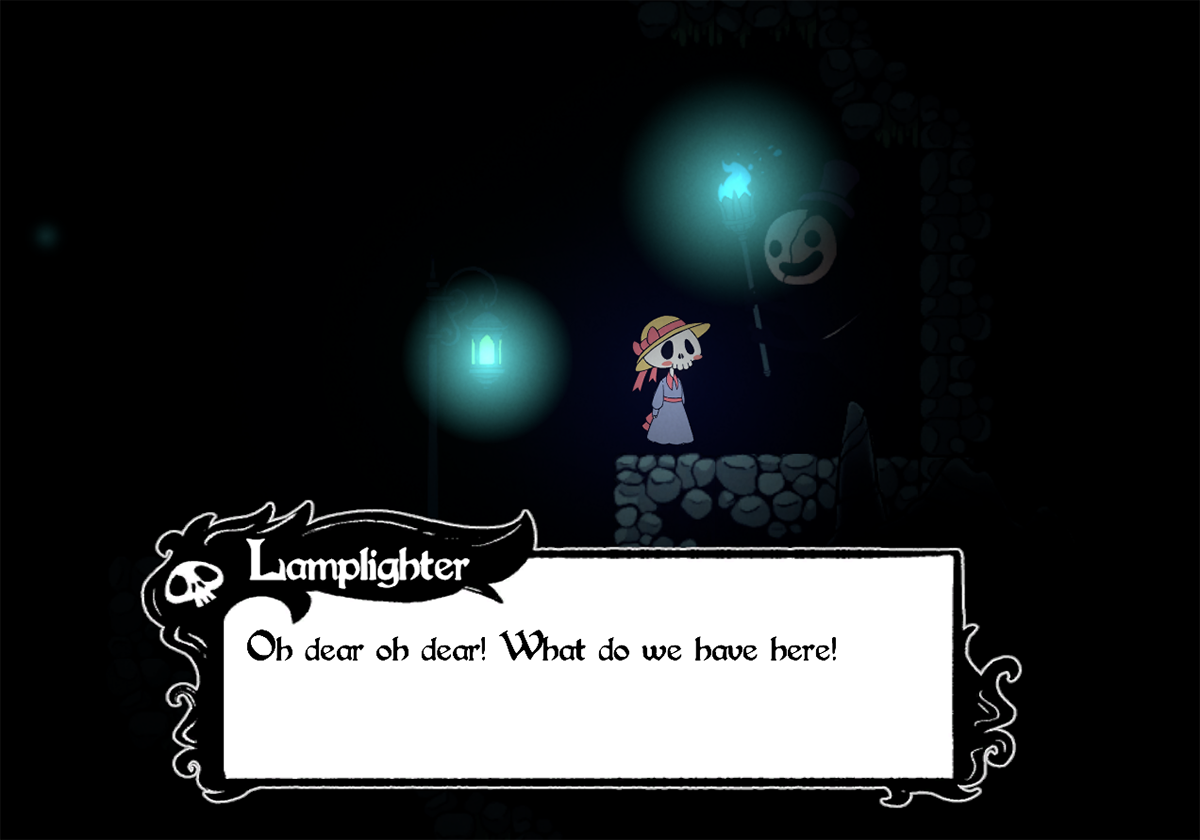
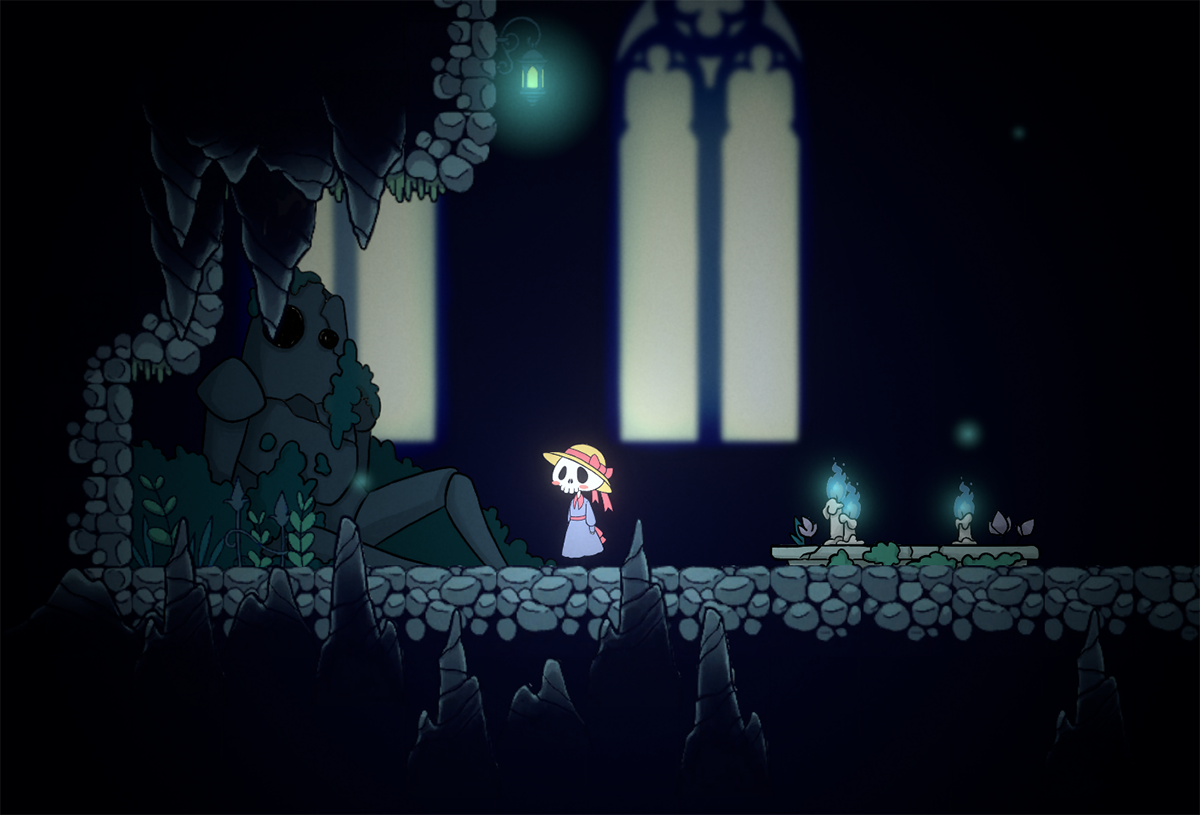
The game mechanics involving light also carry over to the platforming. While most of the map is rendered in a vibrantly colorful style that still manages to convey the atmosphere of an underground crypt, a few of the side paths are shrouded in actual darkness broken only by strategically placed lamps. In order to navigate these dark sections, the player must rely on the instincts developed in previous sections while paying close attention to the lamp placement. The interplay between light and dark sections is perfectly balanced. I was always excited to venture into the darkness of a shadowy side path, but I always felt relieved to return to the well-lit areas. 
Evelyn features full controller support, and I played with an Xbox controller with no problem at all. Evelyn’s movement speed is perfect in relation to the size of the map, as is her jump height. Though I suspect this game might be classified as “casual” in terms of difficulty, its gameplay is enhanced by a nice balance between freedom of movement and the small areas of friction impeding progress. Evelyn’s health bar contributes an additional element of challenge, as you can only fall into so many pits or spike traps before you have to start over. I will admit that I died a few times while exploring, but experience and familiarity with the map compressed the time I needed to navigate back to the point I died, resulting in a pleasantly smooth learning curve.

When I think about what makes a good Metroidvania, it’s not just the level design and gameplay, but also the sense of exploration and discovery that (more than anything, I think) distinguishes the genre from an action platformer like the Super Mario games. The hand-drawn characters and environment of Evelyn inspire a sense of moving through an actual world, especially in the details of the background art that caused me to wonder how a particular creature might have come to be tucked away in a particular dark corner.
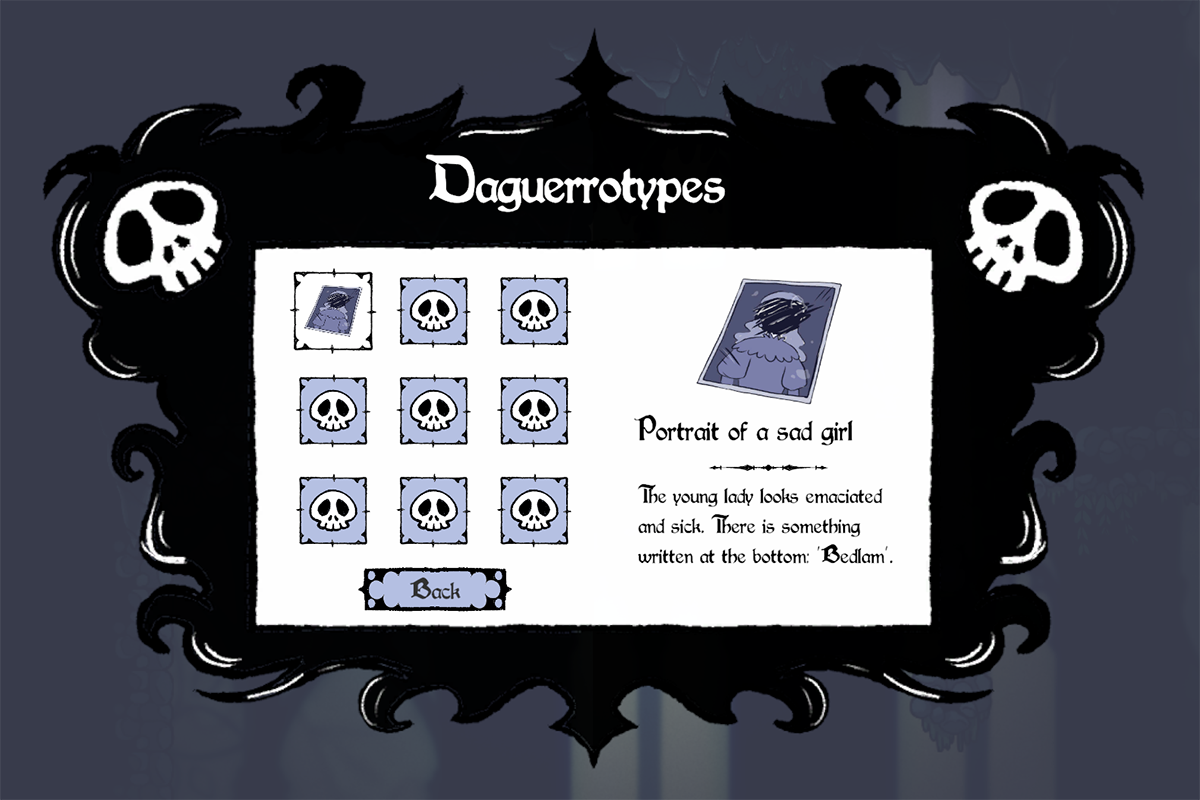
The icing on the cake of any standout Metroidvania is the writing. Balance is important in this aspect of game design, as the text needs to walk a fine line between being too sparse and too voluble while simultaneously offering intriguing information without indulging in exposition. The writing in Evelyn is fantastic, from the dialogue to the text on the collectible daguerreotypes, and each character has a distinct voice (and there’s one character in particular that really surprised me, bless his heart). Evelyn herself is a silent protagonist, but her in-game animations express a great deal of character, as does the narrative animation that opens the game in the style of a silent film from the 1920s.

I’m amazed by how well-polished this demo is, and I’m curious to uncover more about the story behind this crypt and its restless inhabitants, which seems just as disturbing as the character art is cute. Everything about this spooky little game works in concert to lure the player deeper into its underground world, and I’m looking forward to spending more time in the company of these strange skeleton children. For the time being, I’m cheering Evelyn on as she makes her way out into the world.
Kuro

Kuro
https://visualmemoryunit.itch.io/kuro

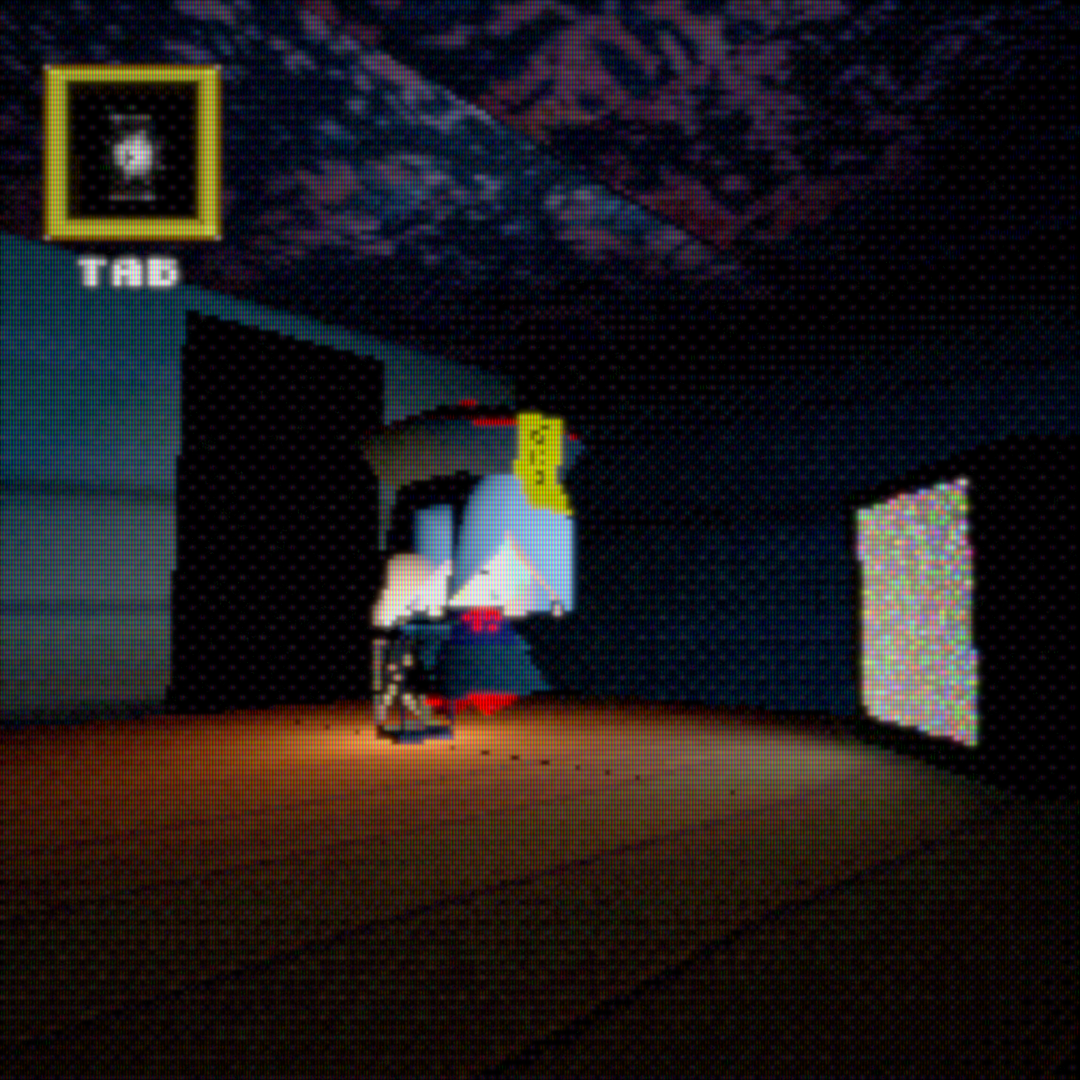
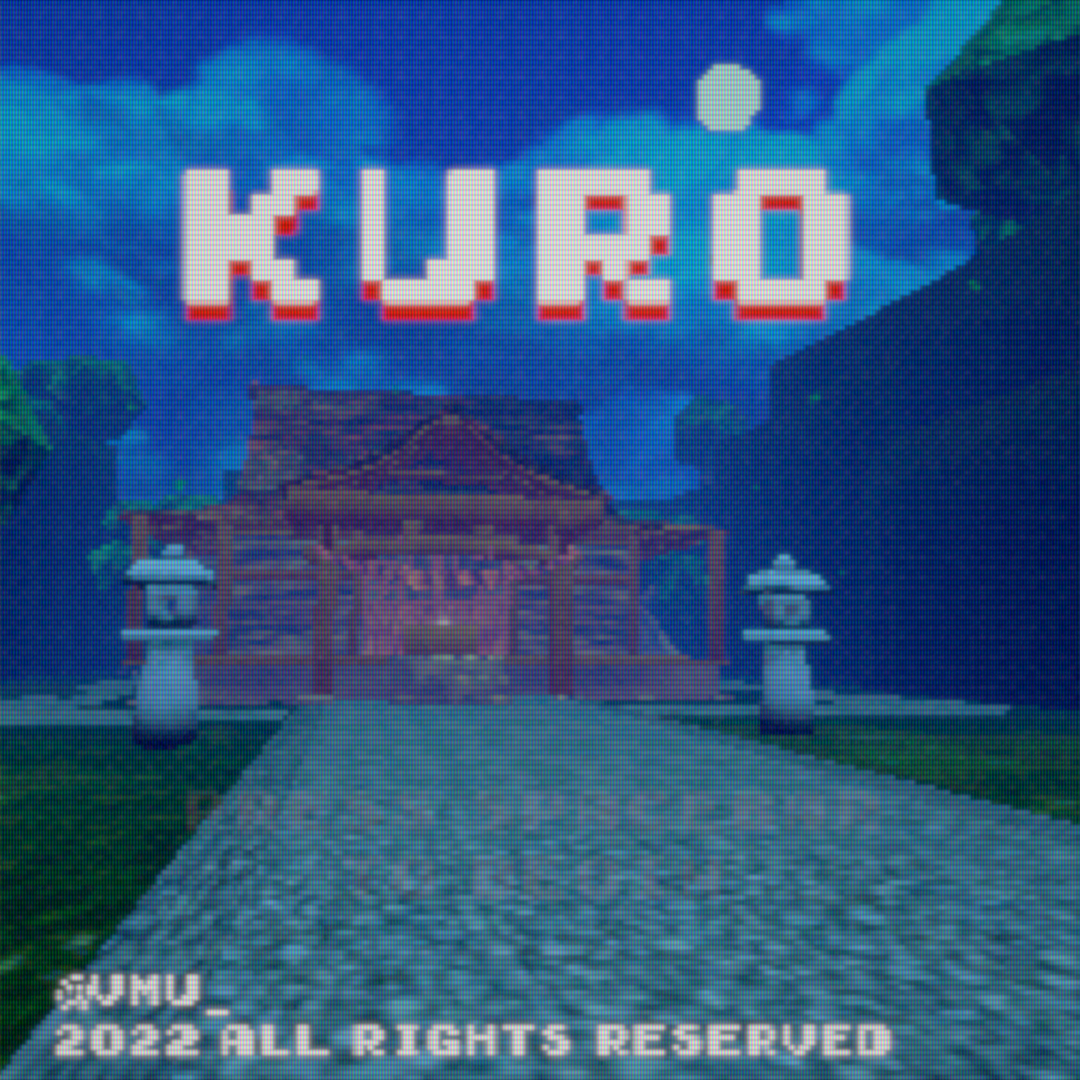
Kuro is a free-to-play homebrew PS1 gothic horror game that takes about twenty minutes to finish. There aren’t any jumpscares, but the story is as dark as the chunky retro polygons are cute.

You play as Kuro, a mysterious visitor to an abandoned Shinto shrine. The moonlit shrine is beautiful and peaceful on the outside, but its interior conceals an underground labyrinth haunted by the ghost of a brutally murdered young woman named Miu. As Kuro, your job is to find and reunite the parts of Miu’s corpse so that her spirit can move on.

Along with Miu’s head and body, Kuro must acquire the means to open three locked doors. Though the game’s map isn’t overly large, Kuro moves slowly (with tank controls) across spaces presented to the player from dramatic angles. It’s unlikely that you’ll become lost, but the game does an excellent job of conveying the disorientation of wandering through a dark basement.

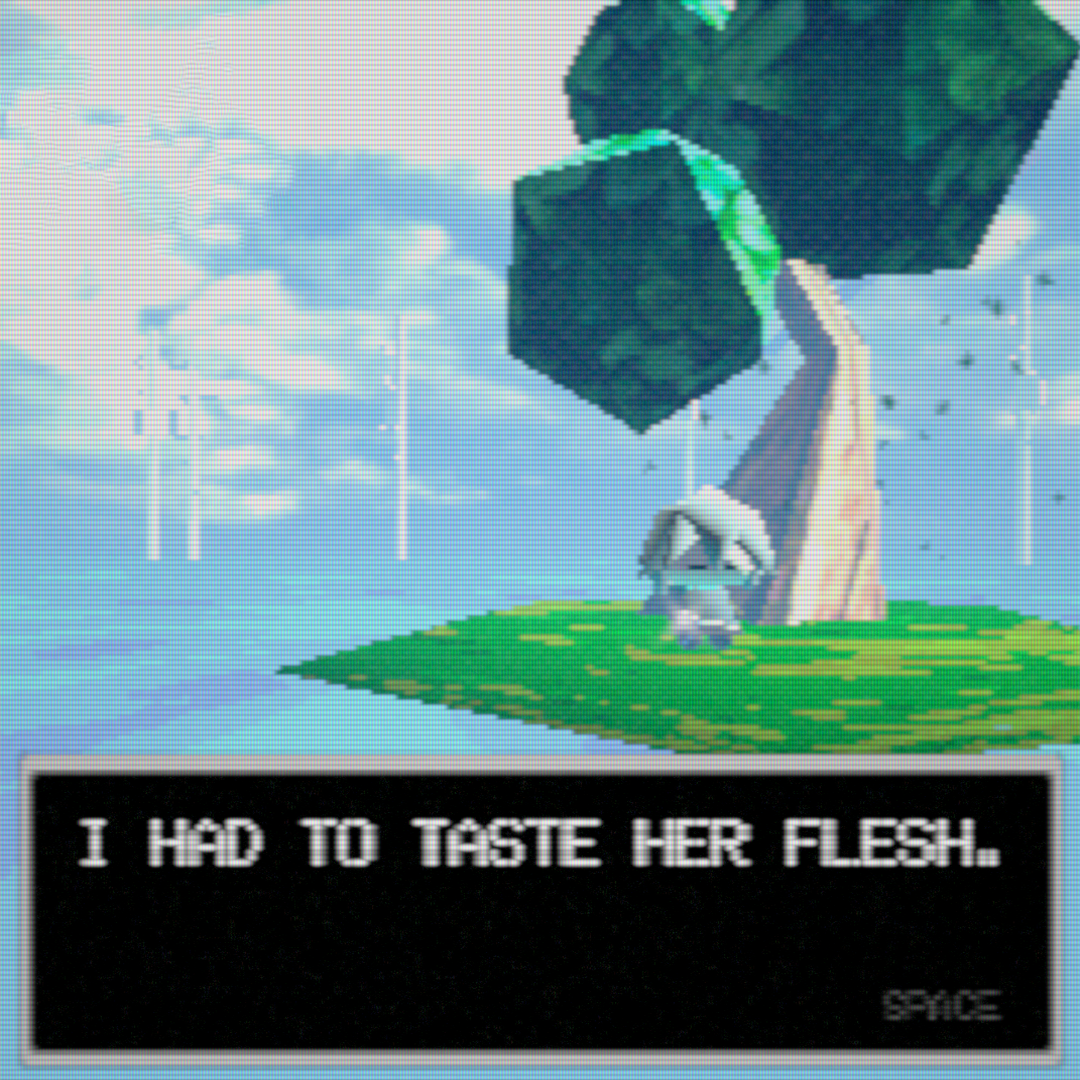
For me, the standout scene is when Kuro enters a locked room that’s completely empty except for an old television whose screen is filled with static. When Kuro interacts with the television, she’s transported to an otherworldly landscape where she meets the man who killed Miu. He explains what happened, but this isn’t the end of the story. Once Kuro returns to the shrine and begins to dig deeper, the player learns that murder is probably the most wholesome thing that happened here. 

I genuinely appreciate the developer’s commitment to including every gothic trope they could think of. One might argue that the writing is somewhat clumsy, and that the game’s twenty-minute playtime isn’t sufficient to allow ample space for its horrors, but I’m of the opinion that the writing is just as integral to the retro aesthetic as the graphics. I feel like there’s a tendency to remember games like Final Fantasy VII and Resident Evil 2 as “well-written,” but PS1-era games had a tendency to hit you with a cascade of revelations in the most basic and matter-of-fact prose. Kuro matches the tone of this style of video game writing perfectly.

I also love to see this kind of gothic story in a setting that isn’t European, and I’m fascinated by the idea that a Shinto shrine would have a basement. Perhaps a shrine constructed overseas (in British Columbia, for instance) might have an underground level, but this would be unthinkable in Japan, where shrine buildings are always elevated above the ground in the traditional Polynesian architectural style.

The reason for this is 100% practical in a wet and humid climate, where various types of unpleasant things (primarily mold, fungus, and insects) would quickly infest the ground level of a building. Also, the water table is generally so close to the surface that it would be difficult to prevent underground rooms from flooding. There’s also a spiritual component to the architecture, as Shinto belief systems tend to associate anything inside the earth with an otherworld of rot and impurity. This otherworld is a necessary space for the cycle of life, but it’s not a good place for humans to be under any circumstances. In terms of its spiritual utility, one of the purposes of a shrine is to demarcate the boundaries between worlds.

So a Shinto shrine would not have a basement. But if it did. The horrors of Kuro would definitely happen there.

I admire how Kuro explores the idea of transgressing an extremely powerful taboo. Between the lost-media stylization of the game’s retro graphics and the grotesque quality of its writing, the player definitely gets a sense of wandering through a place they’re not supposed to be. Kuro is a short and simple game, but it’s very well-observed and surprisingly effective.

Birds Watching

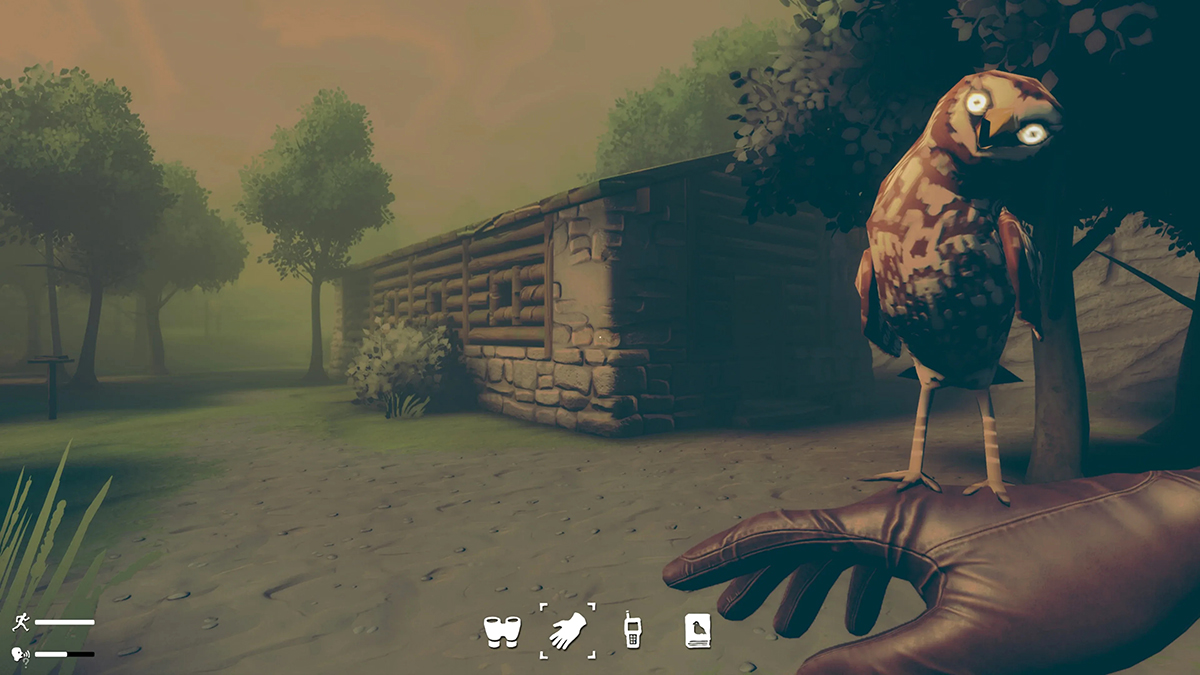
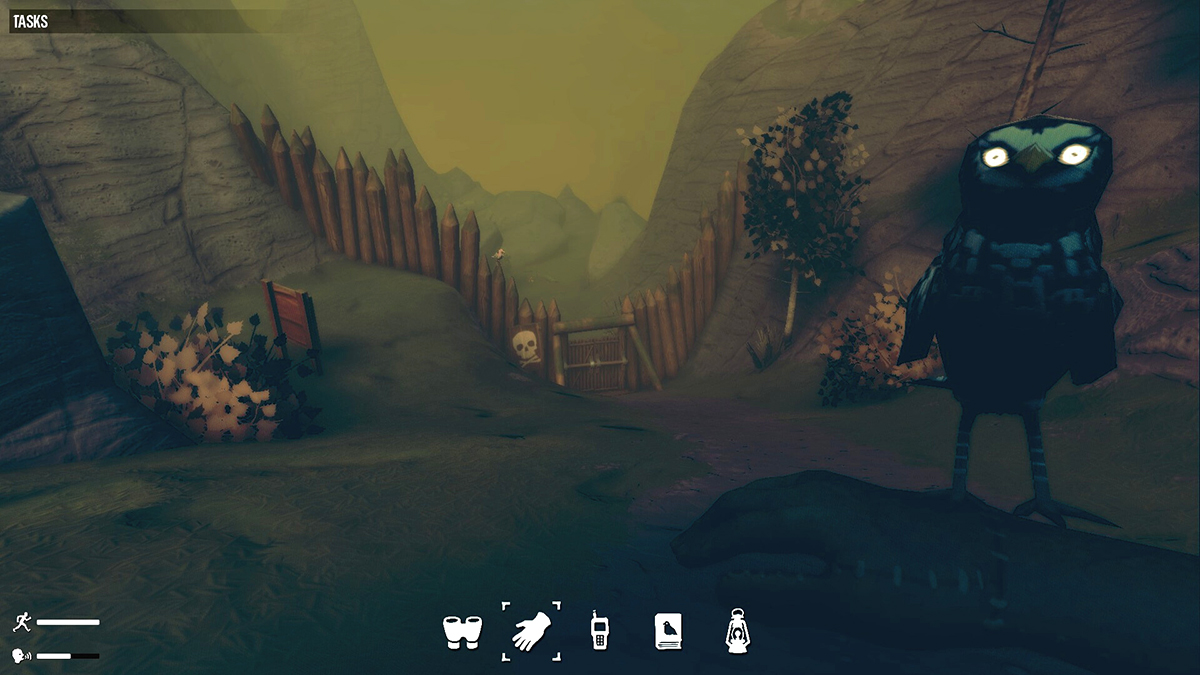
Birds Watching (on Steam here) is a one-hour walking sim about a man who talks to birds while an apocalyptic disaster unfolds around him.

As an unending fire engulfs the world, a lone man takes refuge at the top of a mountain. For all he knows, he’s the only human left alive on earth, so he makes the best of a bad situation and does his best to survive in the company of the birds who have fled to the last unburned peak.

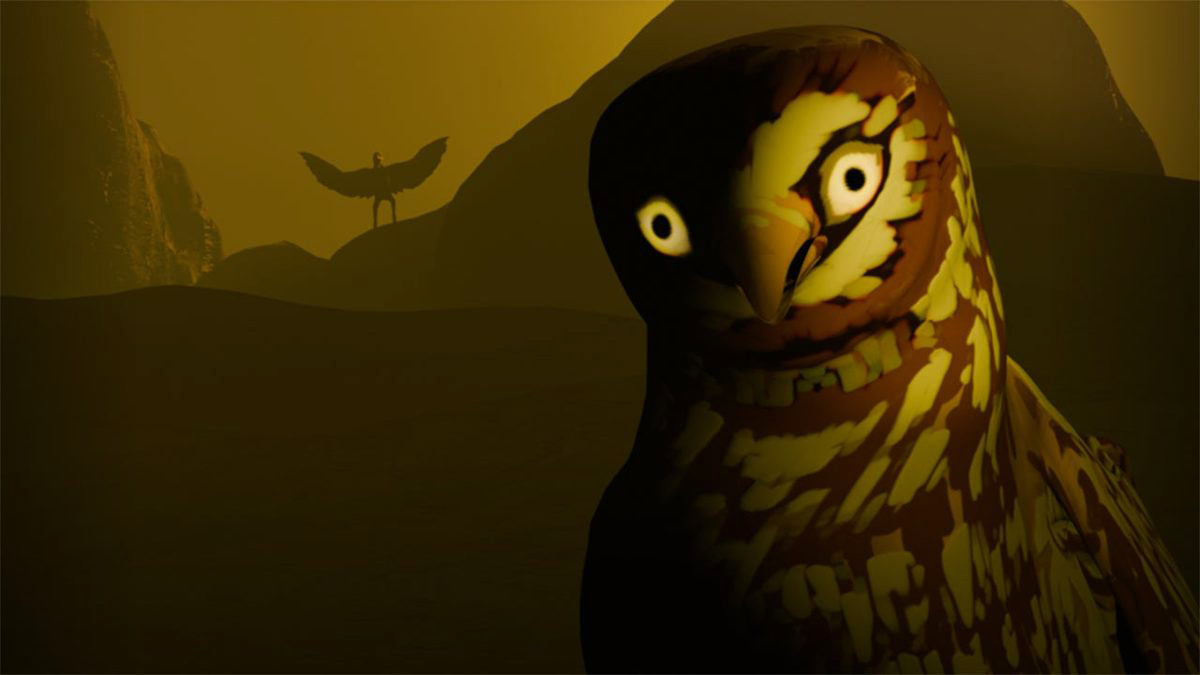
The man’s solitude is alleviated by an owl who not only befriends him but begins speaking with him. Birds can speak and understand human languages, the owl explains, and the man only needs to share a special password to initiate conversations. If he can observe and talk with the other birds on the mountain, something good will surely come of it.

The man realizes that he’ll need more concrete support when he receives a transmission on his portable radio. It turns out that other humans have survived the fire, violent and mutated though they may be. Their warlord has learned of the sanctuary on the mountain, and he’s on his way. The man can prepare to welcome him by surrendering his house and food, or he can expect to be swiftly killed.

The birds might indeed be able to help repel the warlord’s invasion, but they hate you. And they aren’t shy about telling you this. Though it’s not a challenge to discover new birds and observe them through your binoculars, it will be difficult to get them to trust you. Your companion owl helpfully suggests that you prove your sincerity by making yourself more like a bird. This process begins (relatively) innocuously when you eat a handful of the worms that you use to attract birds to the various feeders scattered across the mountain, but it escalates into genuine body horror if you follow it through to its conclusion.

Even without the humiliation rituals, there’s plenty of dread in the environment, which is filled with smoke and ash from the fire burning below. Though the forest scenery seems pleasant enough, the air is never clear, and it’s easy to imagine any number of things lurking at the edges of your visibility.

These vague fears are realized when the promised invasion of the mountain actually occurs. The appearance of the humans who have survived the fire is an unpleasant surprise, to say the least. It doesn’t help that these encounters occur in tense situations when your stamina meter is already depleted.

And then, on top of all that, you’ll eventually notice something else through the smoke haze: while you’ve been watching birds, something terrible has been watching you.

There are three possible endings to the game, and they’re all deeply upsetting. These endings follow naturally from your dialogue choices – whether you resist or capitulate to the warlord, and how far you’re willing to go to satisfy the birds.

Thankfully, nothing is dependent on being a completionist about filling in your bird watching notebook. You’ll probably want to find as many birds as possible, though, simply because your conversations with them are so unapologetically horrible and bitchy that they’re kind of funny. Once you figure out what the password you use to talk with the birds actually means, this knowledge adds a deeper level of psychological horror that’s fun to explore.

Since a leisurely run through the game only takes a little less than an hour, I went back and played it twice. Though the slightly murky lo-fi graphics caused a bit of trouble during my first playthrough, I appreciated the unique texture of the visual atmosphere more the second time around, when I was able to find significantly more birds to talk with. The alternate reading of the game suggested by a reveal toward the end casts all the conversations in an interesting new light that’s worth a second playthrough to appreciate.

Almost People

Almost People
https://evan-megel.itch.io/almost-people

Almost People is a narrative dark fantasy Game Boy game that’s free to play and takes about 8-10 minutes to finish.

You play as an alchemist who has created several types of artificial beings. After setting them free and leaving them to their own devices for an unspecified amount of time, you must decide what to do with them. Should they be allowed to continue as they are, or do you end their lives?

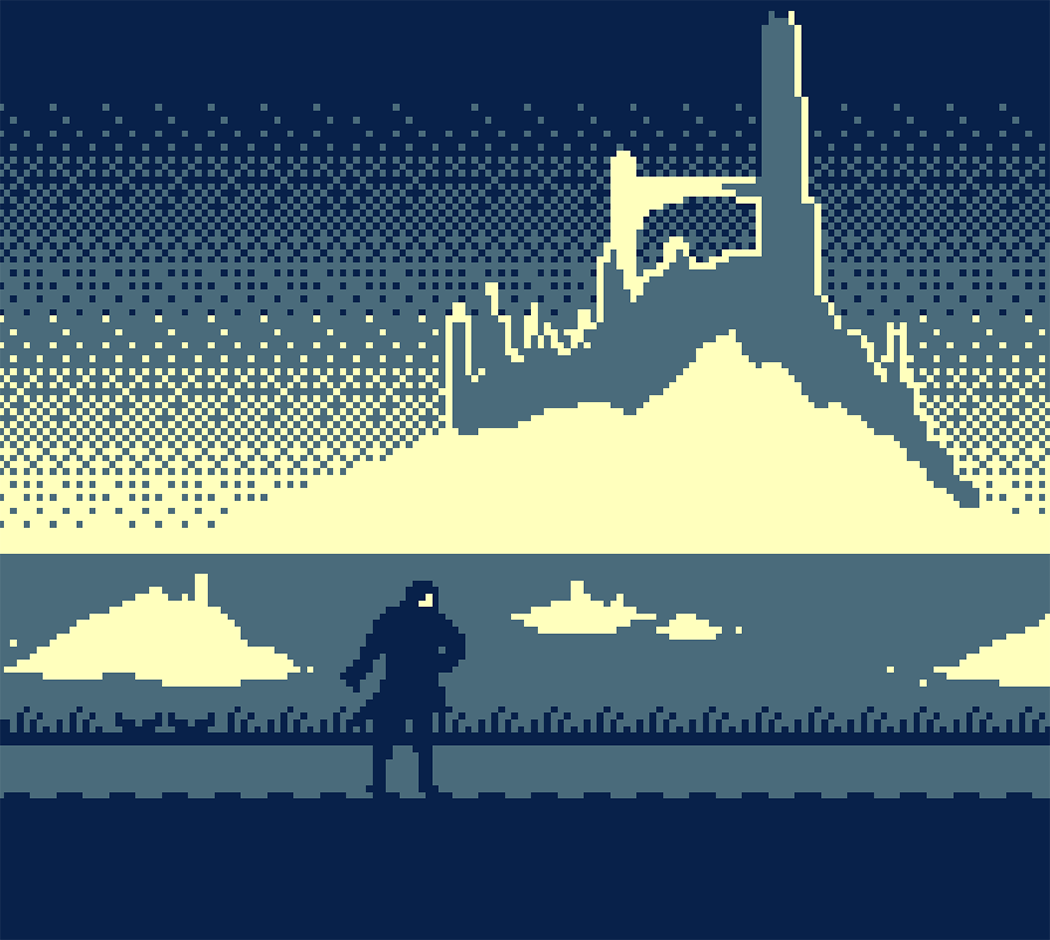
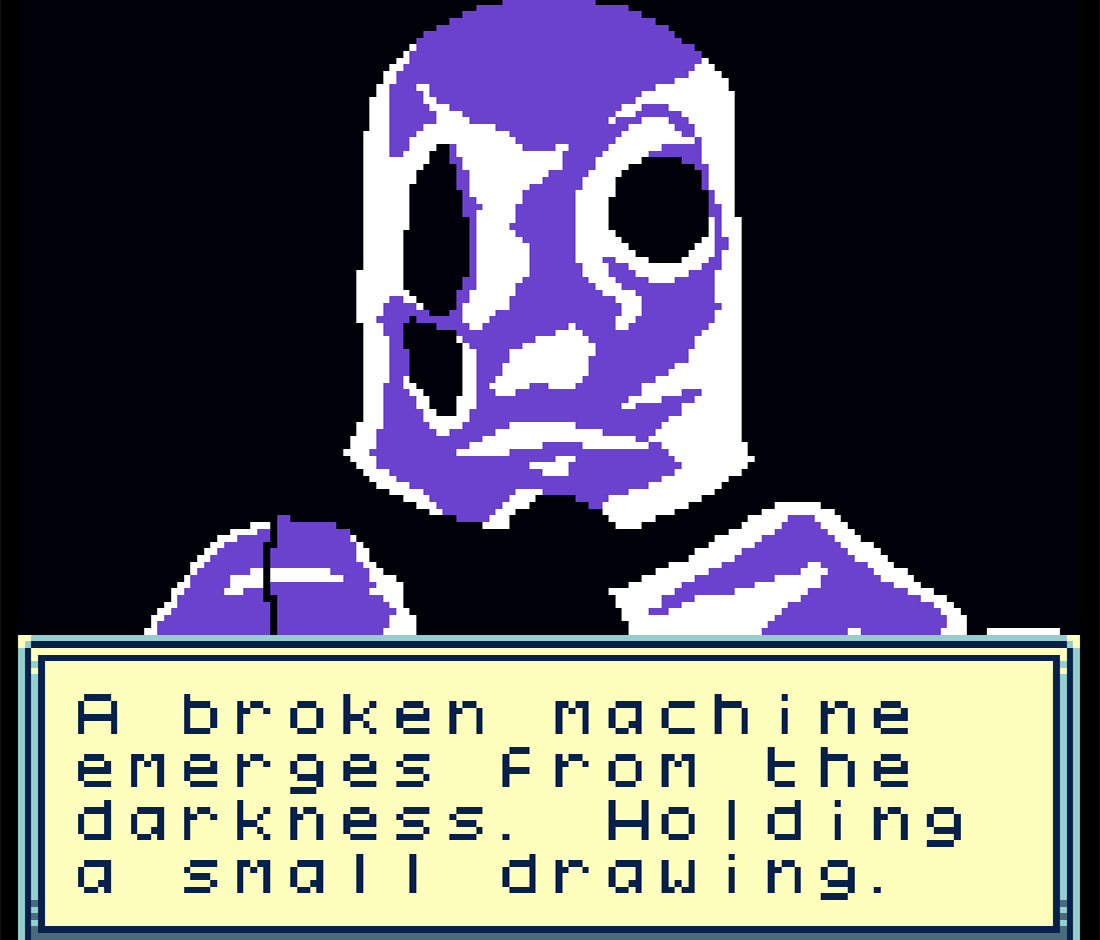
Before each conversation, the alchemist walks across a 2D screen that shows the creature (or creatures) in the lair it’s constructed for itself. Despite the limitations of the Game Boy graphics, the art is bold, striking, and very creepy.

The conversations with the creatures are subtly disturbing as well. I don’t get the feeling that the artist who made this game is coming from a well-defined philosophical perspective, but the choices the player is asked to make are interesting. If you want to get the good ending, the alchemist is going to have to take responsibility for what they’ve created. Specifically, you’re going to have to kill at least one of the creatures.

Though the game works well as a Frankenstein story, I also understood it as an allegory for creativity. As upsetting as it is to consider killing an actual living creature, I tend to think that it’s healthy to end projects that have outlived their original purpose. This allegory isn’t immediately apparent, and I’m not entirely sure that it was intended. I suppose that the themes of “creation” and “death” are broad enough to accommodate any number of readings.

Almost People is a weird and unsettling little game, and I appreciate the experience of playing as a character with dubious morality. I’m getting a little tired of the “surprise! the heroes are bad actually” trope, so it’s cool to take on the role of a wizard who openly engages in dark deeds. A teenager with a magical sword should really put an end to this asshole, but I guess that’s another game entirely.

Review of The Art of Slay the Princess on Comics Beat

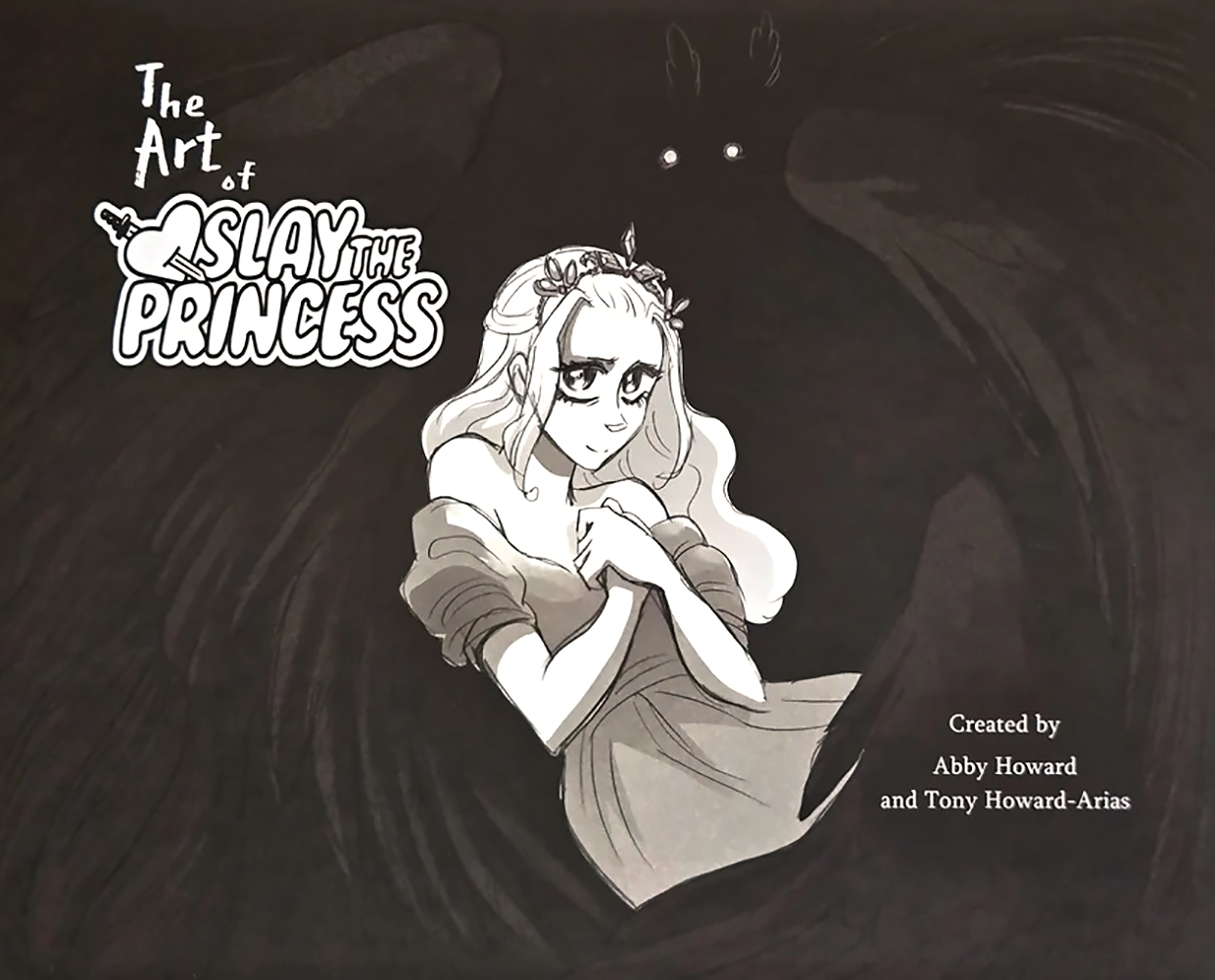
Although this book came out back in October 2025, Comics Beat offered me the opportunity to write a review of The Art of Slay the Princess, which is something like a graphic novel adaptation of the horror game (on Steam here).

It’s difficult to summarize the story of Slay the Princess, and a serious discussion could easily turn into a substantial essay. What I therefore ended up doing in my review was discussing the success of the cross-media adaptation. You might wonder how a print book would be able to convey the multiplicity of the game’s branching storylines, and the answer is that it does so in a remarkably artful way.

Here’s an excerpt from my review:

In order to function as a book, The Art of Slay the Princess omits a substantial amount of text from the game’s script. By necessity, many of the game’s multimedia horror elements, including its viscerally upsetting soundscapes, are also missing. Regardless, Howard’s illustration work is sufficiently disturbing even in a montage of static frames, and the page layout is utilized to showcase the various forms of the Princess in their full uncanny glory. Though it’s not a traditionally linear reading experience, The Art of Slay the Princess is still more than capable of immersing the reader in its dark and labyrinthine world.

You can read the review on Comics Beat here:
https://www.comicsbeat.com/the-art-of-slay-the-princess-review/

Project Kat

Project Kat is a short narrative horror game that’s free to play on Itch.io (here) and on Steam (here). A playthrough culminating in the game’s “true ending” will take about half an hour, but adventurous players might spend another fifteen minutes experimenting with paths leading to a premature death.

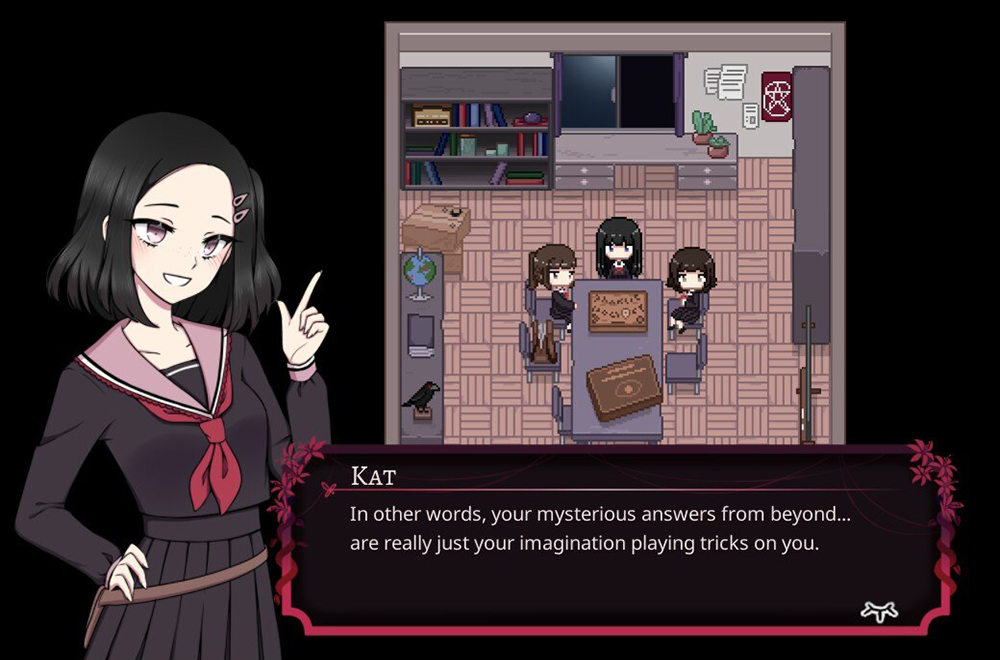
You play as a high school student named Kat who stays late at school one night to undertake an occult ritual of unknown origin and with unknown consequences. Kat has attempted a number of similar rituals, all to no avail. She claims not to believe in the supernatural and seems to be performing these rituals as a hobby. Unfortunately for Kat, this ritual is different.

As Kat, you have the run of three empty classrooms, a meeting room currently being used by the school’s Occult Club, and the Drama Club’s storage closet. Your job is to collect the materials needed for the ritual, such as chalk and candles, and then to perform the various steps of the ritual itself.

Coincidentally, the three members of the Occult Club are also spending the night at school. Kat taunts them as they experiment with a Ouija Board, saying that they’re deluding themselves. Despite getting the night off on the wrong foot, Kat can continue to talk with the three girls, and she can even recruit them to participate in the ritual with her.

This might be a mistake, however, as the instructions for the ritual state clearly that it must be performed alone.

Should Kat manage to complete the ritual successfully, the game ventures into a surreal space reminiscent of Yume Nikki. This is when the story stops pulling its punches, and the player begins to understand why Kat has started performing occult rituals – and also that her odds of surviving this one are very low. I was impressed by the visual creativity of the final section of the game, and also by the darkness of the ending it leads to.  

I’m a fan of the Japanese tradition of occult “solo games” like One-Person Hide and Seek and Satoru-kun. While many of these rituals are meant to summon a spirit, the purpose of others is to create a gateway to a different dimension. If the dimension-linking ritual is performed correctly, what happens then? No one ever says, and Project Kat offers as good of an explanation as any regarding why this might be.

Since it’s a relatively short game, Project Kat leaves a number of questions unanswered. Still, I really enjoyed the story, which has good pacing and a nice tonal creep from camp into horror. Project Kat is a neat little game to play in one sitting, and the creators have released a longer story set in the same world, Paper Lily, which is free to play on Itch.io (here) and on Steam (here).

Il Mistero di Felina

Il Mistero di Felina
https://spesknight.itch.io/felina

Il Mistero di Felina (The Mystery of Felina) is a free-to-play 2D narrative horror game that takes about twenty minutes to finish. The story follows Lara Lorenzi, a travel influencer who’s been invited to the small island of Felina to participate in a festival that celebrates the island’s cats.

Unfortunately for Lara, there is weirdness afoot. The island’s sheep have been dying, and there seems to be blood on the walls of the local church. In the downstairs tavern of the inn where Lara spends the night, a group of older men have gathered in a somber toast to their friend, who will be “leaving the island” soon. The young man who invited Lara to the island is awkward and sweaty, and he seems to be uncomfortably nervous about something.

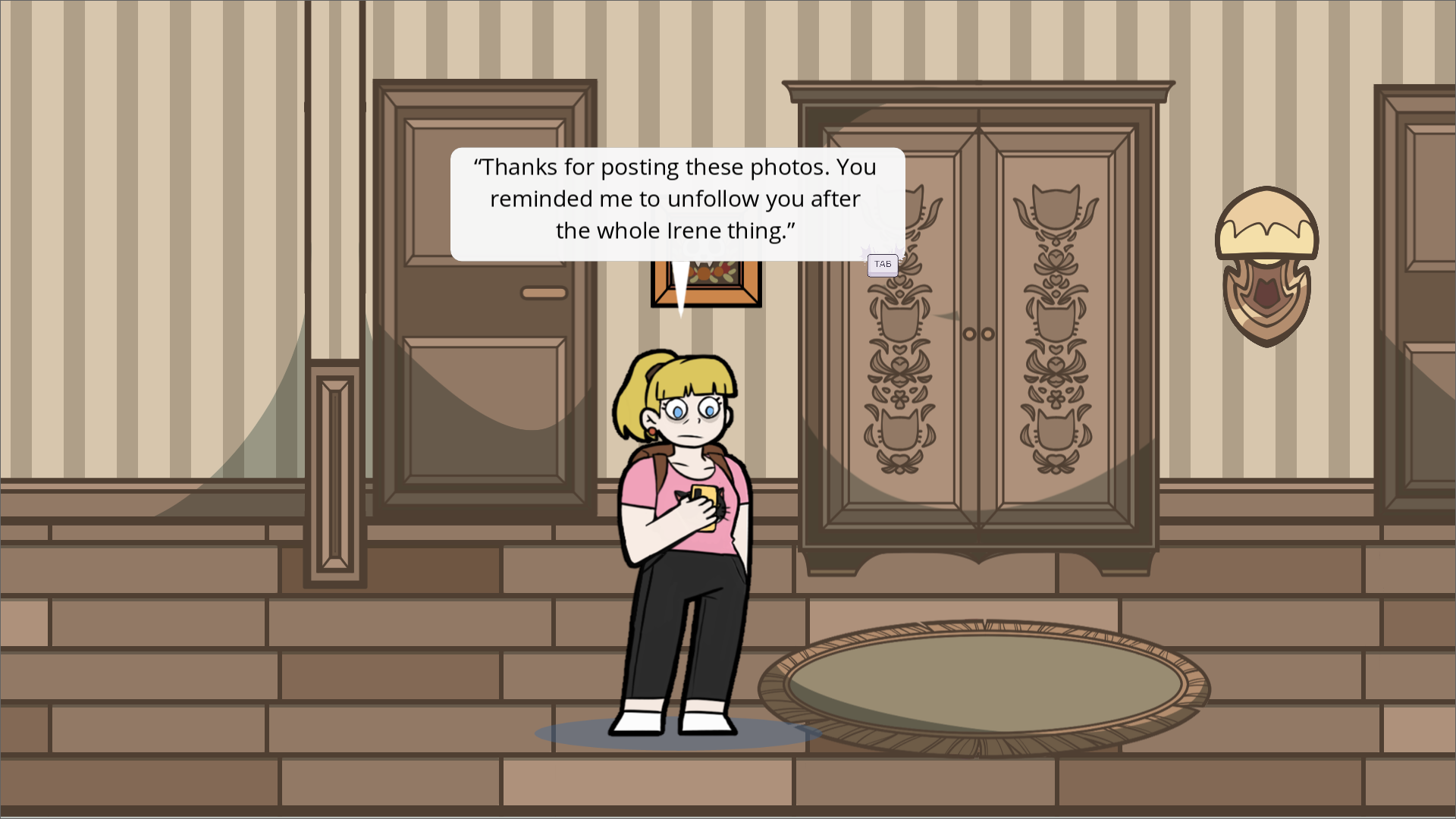
Meanwhile, Lara’s been getting strange comments online, presumably about a nasty bit of drama with a fellow influencer. Though she’s picking up bad vibes from the island, Lara is in dire need of positive content, and she can’t afford to waste the opportunity.

As Lara, the player walks around the small town, enjoys the scenery, and advances the story through conversation. There’s also an optional but fun smartphone menu that allows the player to take pictures and upload them for Lara’s followers to enjoy.

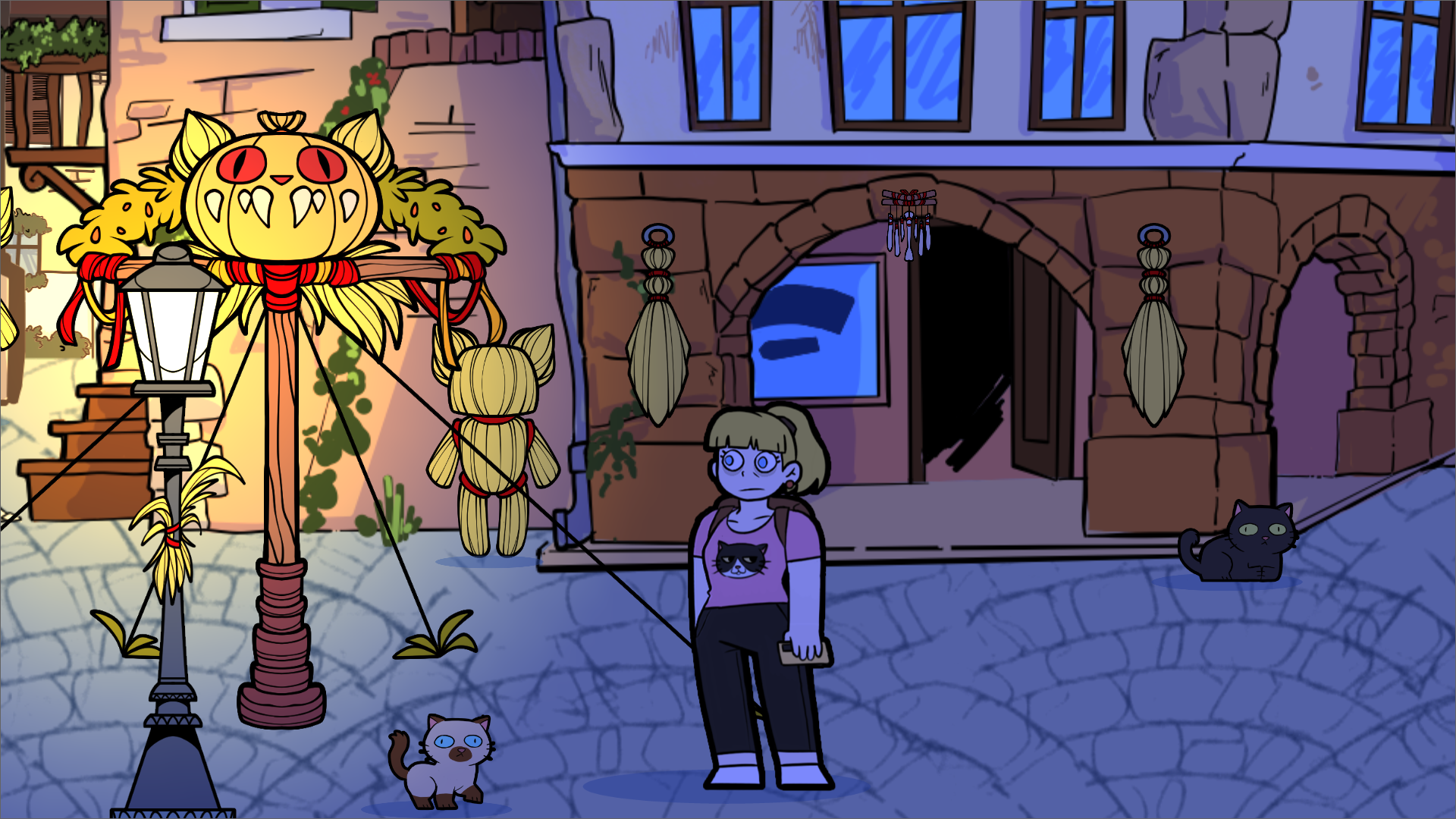
You’ll almost certainly want to take pictures, because the art in this game is wonderful. The architecture is shabby yet quaint, while the interiors are filled with interesting details. The people on the island are all colorful characters, and the festival decorations are very cute yet deeply sinister.

I also appreciate the character animations. The way Lara walks around the island is well-observed, especially in relation to her character design. Later, when Lara crouches while wearing a costume in order to pass herself off as a child, her walking animation is even more artistic. There are a number of cats roaming around the island, and it’s a treat to stand still for a moment and observe their behaviors.

Il Mistero di Felina echoes with hints of classic gothic folk horror like The Wicker Man and The Shadow Over Innsmouth, and it also recalls more contemporary spooky stories like Oxenfree, Night in the Woods, and… Neko Atsume. Still, this unnerving little game is uniquely its own thing, and I would have gladly spent more time on Felina basking in the Mediterranean sunlight while picking apart the dysfunctional personalities of the island’s residents.  

The game has a convenient autosave function, but you can easily play Il Mistero di Felina in one sitting. The story is enjoyably campy but also legitimately creepy, with excellent pacing and a tidy conservation of detail. I’m a fan of the unique aesthetic, whose bright colors work brilliantly to enhance the horror. I love every indie horror game I play, but this one is something special.

I can’t resist closing this without at least one cat pun, so here you go: Il Mistero di Felina is a purrfectly spooky cautionary tale that knows exactly how to sink its claws into contemporary anxieties.

Misao

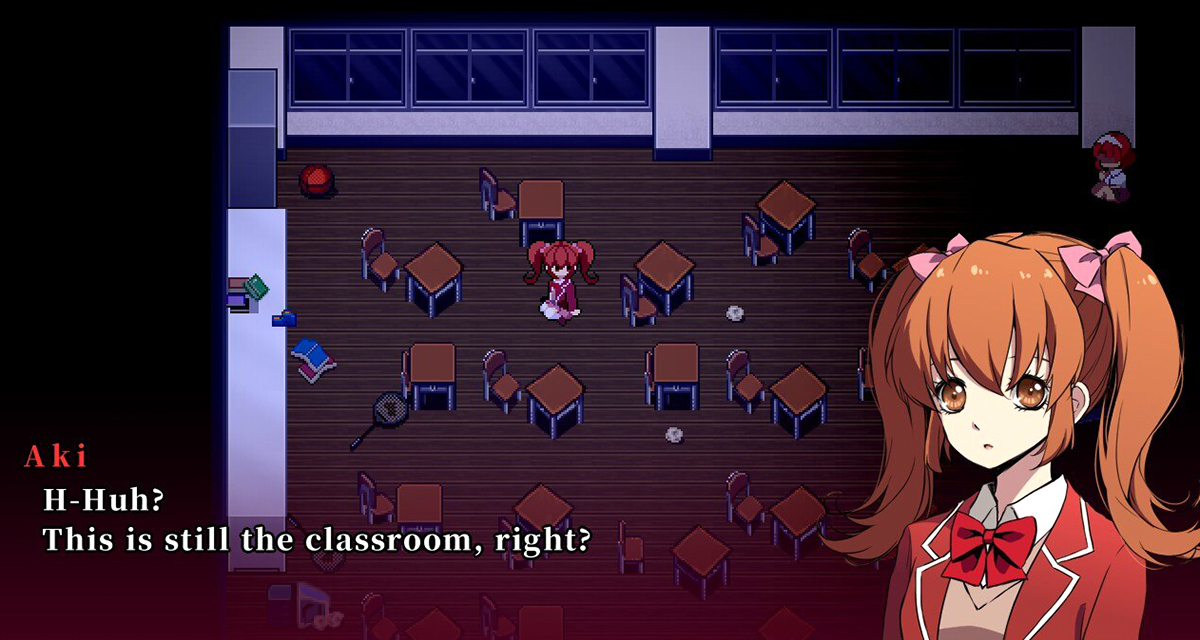
Misao is a short 16-bit indie survival horror game originally released in 2011 and then published on Steam (here) as a remastered edition in 2024. The game is set in a high school that’s been transported to a demonic realm by the vengeful spirit of the eponymous Misao, a beautiful but quiet girl who mysteriously disappeared three months prior to the opening of the story. 

You play as a girl (or optionally as a boy, in the HD version) named Aki who suddenly hears Misao’s voice in the middle of class, asking someone to “find me.” The classroom is cloaked in darkness, an earthquake hits, and the school begins to fall apart in the aftershocks. As Aki explores the mostly abandoned building, she learns that four of her classmates were bullying Misao with the compliance of their homeroom teacher. Despite the intensity of the bullying, Misao didn’t kill herself – but someone else did.

The gameplay consists of navigating the school while collecting six objects necessary to piece together Misao’s story. There’s no set order to acquiring these items, meaning that the game starts off as somewhat confounding but gradually comes to make more sense. Once you get your bearings, what you need to do becomes fairly self-evident, but a walkthrough is recommended for players (such as myself) who might find themselves overwhelmed at first. There are several excellent guides posted to Steam, but I recommend (this one) on account of its helpful division into sections.

Like Mad Father (reviewed here), which was also published by Miscreant’s Room, Misao is essentially a haunted house simulator in which your player-character can die in dozens of delightfully gruesome ways. Thanks to a handy quicksave function, there’s no penalty for dying, and the player is encouraged to get into all sorts of trouble for the sole purpose of seeing what will happen. Aside from two short chase sequences, very little skill is needed to survive, just a bit of trial and error.

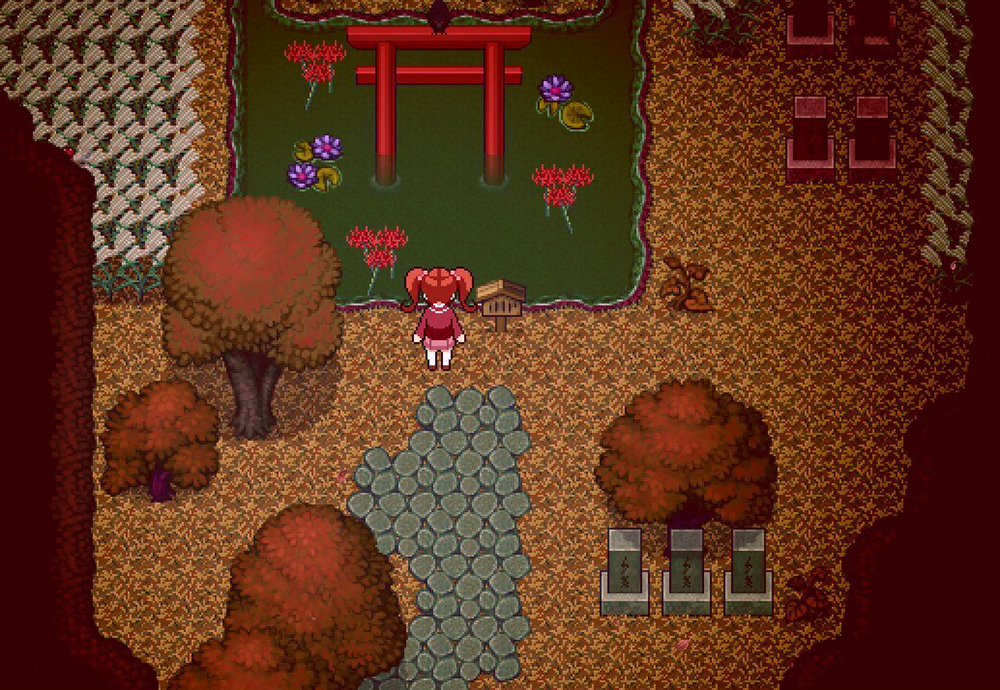
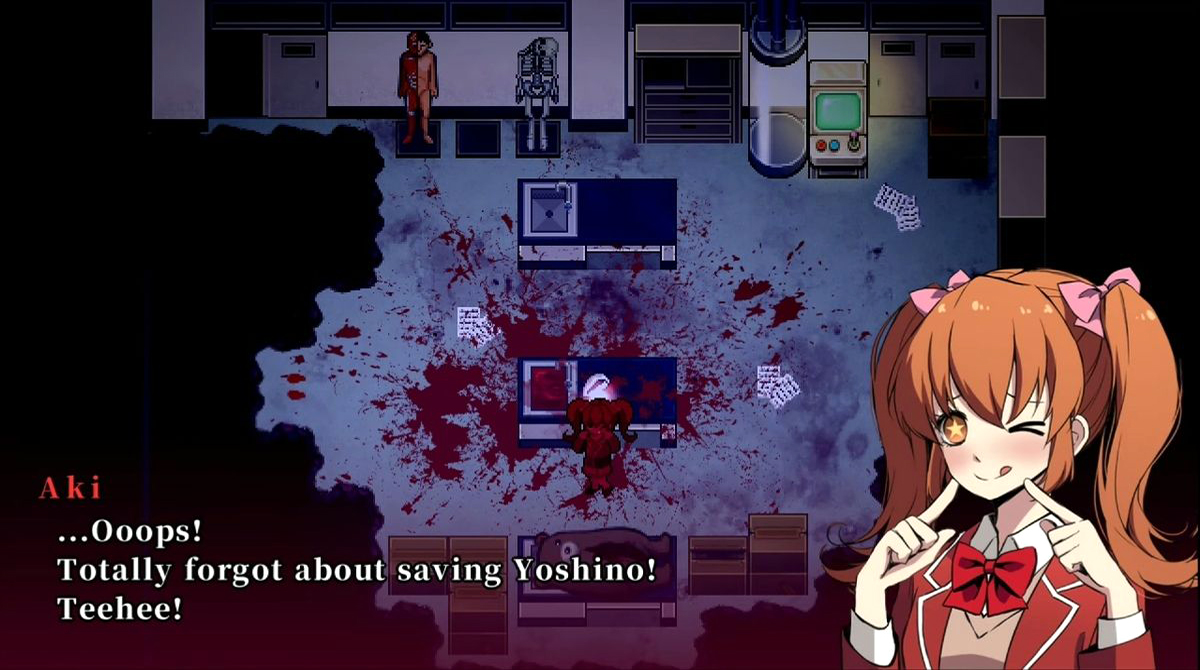
What I love about Misao is how much fun this game has with the tropes and imagery of a haunted high school. The laboratory is staffed by a mad scientist who has a chainsaw and will take advantage of any excuse to use it. The hamburgers in the cafeteria are made of unspeakable meat, and the seating area in front of the open kitchen is filthy with blood and entrails. The toilets haven’t been cleaned for a very long time, nor has the secret zombie cave under the school. The Shinto shrine in the courtyard is beautiful, but the rituals performed there are anything but.

Misao’s story mixes high school bullying and friendship drama with a mystery surrounding a twisted serial killer, and everyone gets exactly what they deserve. Still, for players who think high school kids shouldn’t be condemned to eternal damnation, Aki can rescue her classmates from their personal hells in a short epilogue. A few of the characters Aki encounters are native to the demon realm, and they’re all having the time of their lives. My favorite is the student librarian, who’s fully aware of the bloodshed surrounding her but just wants to make friends. She is a treasure.

If you’re not a completionist, Misao takes about two hours to finish, allowing the story to make an impact without testing the player’s patience through needless puzzles or gameplay challenges. The haunted high school setting is creatively rendered and a lot of fun to explore, even if the open-world structure is a bit overwhelming at the beginning.

The deaths are all creative and disturbing, but the retro graphics allow the game to feel campy instead of creepy, so much so that Misao sometimes feels more like a comedy than a horror story. I grew to feel a begrudging sort of affection for the characters, but I can’t deny that I had a huge smile on my face as I watched them get picked off – and really, good for Misao. I support her.

Dorotea

Dorotea
https://pasquiindustry.itch.io/Dorotea

Dorotea is a spooky ten-minute narrative adventure game made in Game Boy Studio and set in the medieval castle town of Conversano in southeast Italy.

You play as Dorotea, a researcher who has been hired by a local museum to catalog the books, manuscripts, and art objects in a neglected storage room housing a collection dating from the 1600s. Upon opening and passing through a strange door at the back of the room, Dorotea finds herself transported to the medieval era, when the museum was still a convent.

Thankfully, Dorotea is intercepted by a nun before she can land herself in trouble, but she’s not entirely out of danger. The lord of the castle on the hill isn’t a good person, and there also seem to be monsters of a more literal sort in the vicinity.

Dorotea features a suspenseful (but no-penalty) chase sequence, but its horror is largely atmospheric. The game’s uncanny pixel-art insert illustrations contribute to the feeling of something being terribly amiss, as do the ghosts and monsters, but the game also explores the anxiety generated by the prospect of being trapped in the past. As much as we might like to romanticize the medieval period, the culture shock experienced by most people – especially women – would likely be atrocious.

Putting its supernatural elements aside, Dorotea dwells in what might be called “archive horror,” or the morbid claustrophobia of a closed room filled with the relics of people long dead. There’s the dankness of the space itself, as well as the fear of the door swinging closed behind you, trapping you inside with nothing but dust. Then there’s the very real possibility that, in all the detritus of the past, you might find something deeply disturbing that you wish you hadn’t seen – or that someone very much wanted to hide. With its retro graphics and creepy pixel illustrations, Dorotea is a fantastic vehicle for conveying a sense of unease.

Dorotea is a short game, but it nevertheless manages to pull off a gut punch of a twist ending while indulging in a few interesting experiments with the ludic medium. The game was created for Italocurso Game Jam 2025, which is themed on folk horror specific to regional cultures in Italy. The 33 entries include a number of games offered in English, and all of them look amazing.

Dreaming Mary

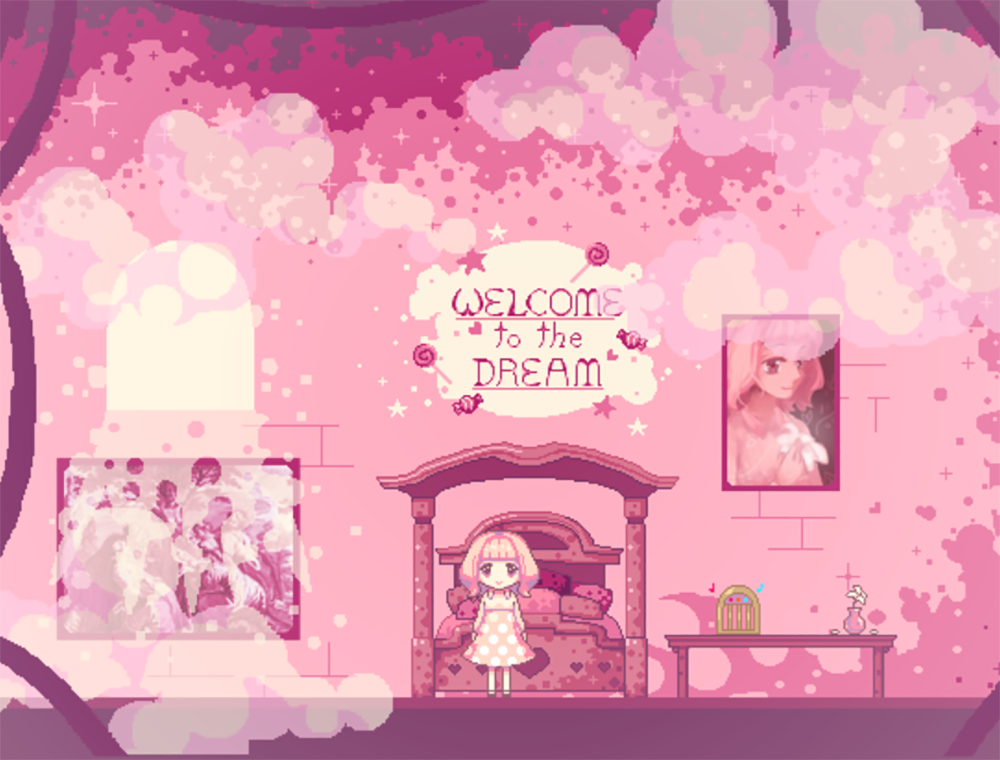
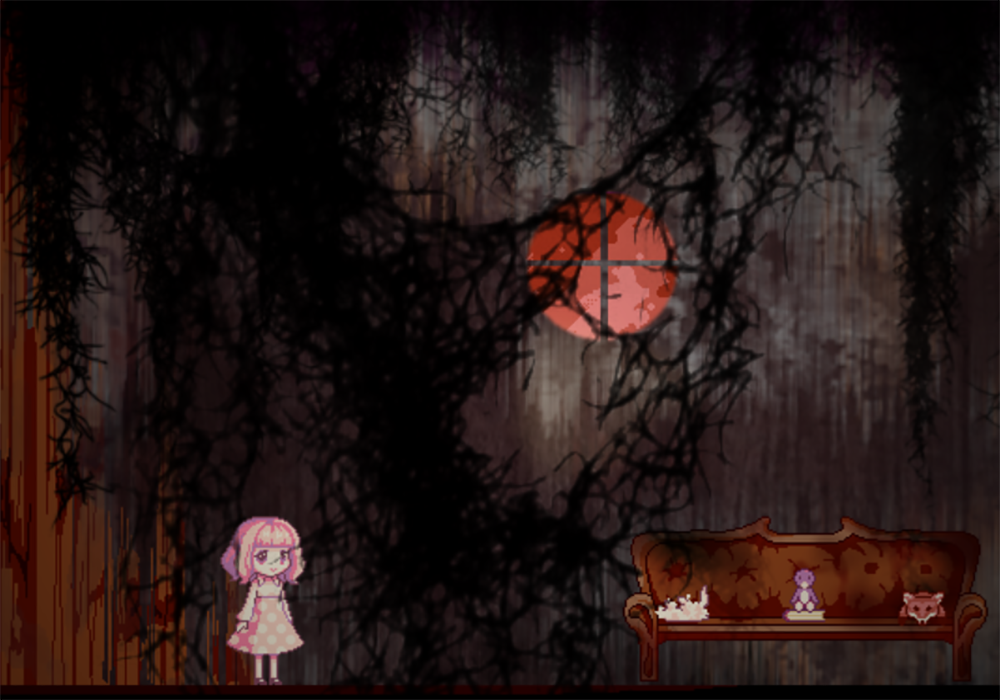
Dreaming Mary (available via the RPG Maker forums here) is a 2D narrative adventure game developed in RPG Maker by Dreaming Games. The opening of the game is super cute, but its pastel pink exterior hides a terrible secret. 

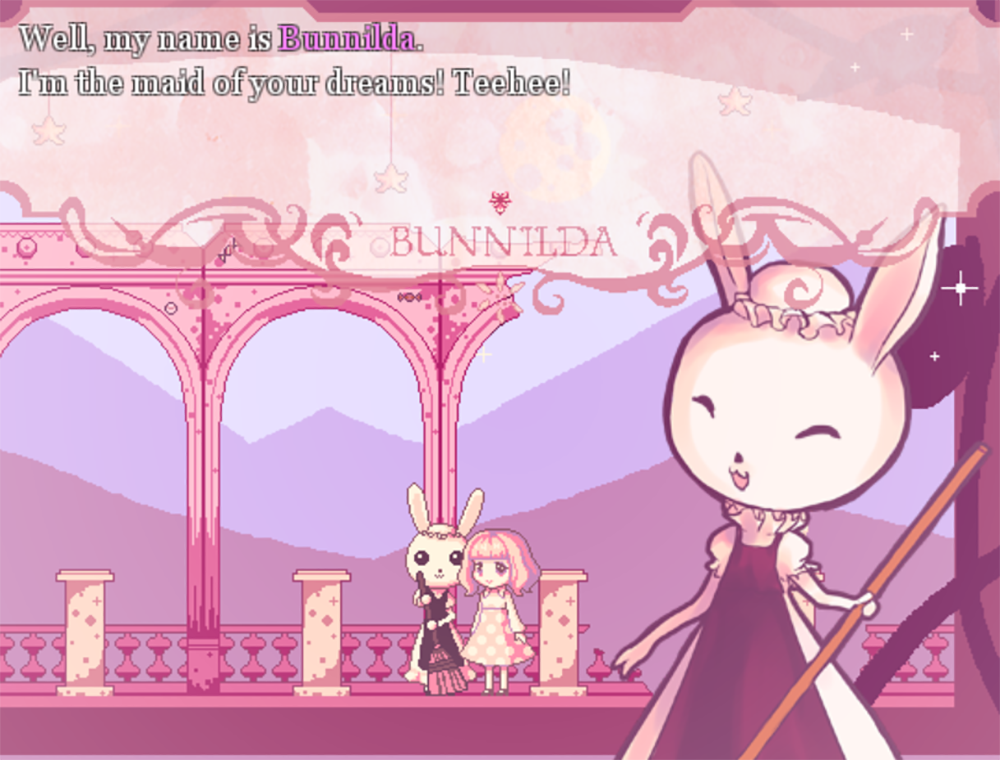
You play as the eponymous Mary, who begins the game in the bedroom of her dream world. She emerges into a lovely hallway with three rooms: a garden modeled on a Greek temple, an aristocratic library with floor-to-ceiling shelves, and a swank but cozy jazz bar. Each room is home to an anthropomorphic animal, each of whom wants to play a simple game. The friendly bunny needs advice on how to arrange her statues, while the flirty fox wants to play a round of hide-and-seek. The gentle owl asks a few questions about the books on his shelves.  

At the end of the corridor is a beautiful tree guarded by a burly boar. If Mary wishes to progress further into the dream, this is her gateway, but she’ll need to collect the blessing of each animal first.

If you play through the game normally, you’ll arrive at a sweet but somewhat ambiguous ending after around 15-20 minutes. If you follow a walkthrough – I recommend this one – to discover the game’s secrets and see the full story, you’ll find your way to a far darker but more satisfying ending in around 30-35 minutes.

According to the developer’s notes, Dreaming Mary was inspired by the 2011 magical girl anime Madoka Magica, which similarly begins as a cute slice-of-life story before evolving into something much more complicated. Mary’s dream is as lushly pink and pastel as Madoka’s fantasies of becoming a magical girl, which makes the hidden nightmare segments all the more shocking.

Should Mary actually figure out how to wake up… That’s when the story becomes truly grim.

To give a fair warning, many of the puzzle solutions don’t make much sense, and I’m not sure how possible it would be to get the game’s true ending without a walkthrough. Still, it’s worth the extra effort, because the contrast between the sunny opening of the game and its sinister conclusion is something special.  

Dreaming Mary was released in 2014. It seems the devs have gone quiet since then, which is a shame. While Dreaming Mary isn’t perfect, it’s promising, and I would have loved to see this prototype expanded into a more polished game. Still, Dreaming Mary stands well enough on its own as a short but intriguing indie horror story in the surreal lineage of Yume Nikki.