Radiant Princess of Dawn

Gin and cranberry juice is a healthy way to start a magical day.

Ceres is my take on magical video game princesses, and it is my headcanon that all of these ladies are consummate day drinkers. I think you’d probably have to be in order to summon the emotional fortitude to deal with the shenanigans of heroes and villains on top of the everyday business of running a moderately large kingdom.

American Dream, New Jersey

True to my ambition to visit abandoned malls in New Jersey once I got vaccinated, I went to the American Dream mall in East Rutherford.

The mall is located across the river from Manhattan on a gargantuan plot of land that’s been in development since 2003, and you can get a good eyeful of the massive scale of complex while driving on I-95 towards the entrance of the Lincoln Tunnel. From what I understand, the state of New Jersey has been working with various developers to create an attraction that will draw consumer spending money from the city and convince out-of-town tourists to spend the night in a hotel in New Jersey instead of New York, and the amount of money invested is in the billions of dollars. Chris Christie, the former governor of New Jersey, allocated hundreds of millions of dollars of yearly subsidies into the seeing the development completed, which allowed it to project an opening in early 2020… and then the pandemic hit.

Parts of the mall are still under construction, and not all of its retail spaces are occupied, but it’s now open to the public. It is very new and very shiny. The pure white walls and floors gleam under soft white light, and there are fresh-cut flowers and public art everywhere. The empty storefronts and closed-off corridors are hidden by paneling covered in unique and gorgeous graphics, and there are all sorts of interesting pieces of modern furniture in the atrium areas. The soap in the literally sparkling-clean bathrooms is high-quality foam that smells like a garden in springtime.

The shopping seems to be relatively upscale, and the anchor stores are European chains like Primark and H&M. It’s not open yet, but there’s going to be an H-Mart in the basement, which I think is probably a nod to the East Asian retail strategy of having fancy grocery stores in shopping centers. It seems that the mall is also going to have a “luxury wing,” but it hasn’t yet been completed. They’re probably going to charge for parking in the future, but right now it’s free.

What makes this mall unique is that it also has a snowboarding hill, an ice skating rink, two mini golf courses, a Nickelodeon-branded theme park for little kids, and a huge and beautiful DreamWorks-branded water park in a huge and beautiful tropical biodome. There are a few other attractions that are still getting set up, like an aquarium that looks like it’s going to fit the aesthetic of being huge and beautiful and heavily themed in an offbeat artistic way that appeals to younger kids. If I understand the map correctly, the aquarium will have a giant ocean tunnel that will let you walk through a fantasy of a postapocalyptic underwater New York City, which is a bit morbid but still pretty cool.

And this entire place is completely empty. Just, completely empty. Except for a skeleton crew of retail employees at the stores and a few maintenance staff tending to the plants and flowers, there’s no one in the mall. American Dream looks like the international terminal of an airport if humans were to suddenly disappear from the face of the earth – very shiny and modern and clean, but deserted.

Anyway, now I’m wondering how you get the job of being a member of the gardening staff at a high-end abandoned mall that was a ruin before it even opened, because the people I saw tending to the plants and misting the flowers looked very peaceful and happy. It was some next-level Studio Ghibli magic, like Castle in the Sky except real.

If anyone asks, being a gardener in the ruins of capitalism is very much where I would like to see myself in five years.

Ceres’s Story Arc

I’m going to start writing my query letter for The Demon King soon, so I’ve been thinking about how to describe the story, which has two parallel threads that unspool in alternating chapters. The eponymous “demon king” Balthazar (he’s not really a demon king) is the main point-of-view character, as it’s his actions that push the larger narrative forward, but the role of his “nemesis” Princess Ceres (she’s not really his nemesis) as a deuteragonist is equally important and will only become more important as the story progresses.  

Balthazar’s plot arc in the first novella is simple: he says he will go to a temple and find a magical artifact, and he goes to a temple and finds a magical artifact.

Meanwhile, what’s going on with Ceres is more complicated and can’t be succinctly summarized.

Ceres opens the story by sending a hero to fight Balthazar. This “hero” is actually a convict whom she has effectively exiled, and she intends for Balthazar to dispose of him. He does so, but not before the hero kills two people and injures a third.

Back in Whitespire, Ceres grants a private audience to a viscount from an outlying territory who essentially asks to stop paying taxes. Ceres dismisses him, but she allows herself to be seduced by his daughter, who wants the viscount to step down so that she can manage her family’s estate. While engaging in an openly sexual relationship with the viscount’s daughter, Ceres realizes that the viscount is being manipulated by a shadowy anti-monarchist political faction. In an attempt to provoke the members of the faction to reveal themselves, Ceres orders the head of her intelligence staff to direct a covert attack on the viscount’s estate.

Members of a separate anti-monarchist faction, fearing that they will be blamed for this attack, offer a scapegoat in the form of an advanced student of magic – a grad student, basically – who has been distributing seditious tracts. Ceres has actually discussed the matter beforehand with one of the leaders of the grad student’s faction, who is her close friend (and happens to be the author of the ongoing series of romance novels that Balthazar is addicted to). She therefore exiles the student, ostensibly to die at the hands of the demon king but actually to study with his friend Melchior, a wizard from a foreign kingdom who has strong anti-monarchist leanings of his own.

Ceres has grown fond of the viscount’s daughter, and she doesn’t want her or her father to become pawns of court politics in the way that the grad student did. She therefore engineers a minor scandal involving the viscount, which serves as the excuse the daughter needs to transfer power away from her father.

At the end of the first story arc, the viscount and his daughter leave the castle alive and unharmed. Ceres hasn’t been able to figure out who was manipulating the viscount at court, but she’s content to have secured an ally in the viscount’s daughter, who will almost certainly manage her family’s estate better than her father.

All’s well that ends well, but the reader is left with the dangling thread of why Ceres is so amenable to the idea of deposing herself from her own throne. In addition, how does she know Balthazar, and why is she so friendly with him? There’s also the matter of Ceres having sent Balthazar a “hero” that he was given no choice but to murder. Balthazar alludes to the fact that this isn’t the first time Ceres has done this, which is even more disturbing.

At the beginning of the second story arc, probably at the end of the second chapter, Ceres is going to address this matter directly and reflect the main theme of the story back on Balthazar by saying that these “heroes” have a choice. What she means is that no one is forcing them to attack the people they see as their enemies, but this raises the question of whether Ceres is giving Balthazar a choice in how he handles the circumstances she has created. This digs even deeper into the story’s theme by suggesting that some choices aren’t so simple, and that people suffer when they try to deal with making these choices on their own.

Also I intend for Ceres to make a lot of jokes about oral sex in her second story arc.

This summary is much more complicated than the story itself, hopefully. Ceres is not an unreliable viewpoint character, and none of these plot elements are supposed to be confusing or mysterious to the reader.

In the end, the goal of all this political intrigue is to set up Ceres’s kingdom as a battleground while establishing that it is primarily a battleground of relationships and feelings.

If Balthazar is a means to look at high fantasy heroic quest narratives from a different perspective, then Ceres is my take on the traditional “pure-hearted princess” trope. Ceres is in her early thirties, and I don’t think a princess can survive that long in a position of near-absolute power without being extremely clever and at least a little evil.

The above illustration of Ceres was created by the stylish and magical Fernanda V. (@artesiants on Instagram and on Twitter + @artesiant on Tumblr), who draws bold and fashionable designs of witchy characters. The prompt I gave her was “an elven princess who is beautiful and ethereal but delights in destroying her enemies,” and I love how she’s mixed diaphanous skirts and delicate jewelry with a lightly armored Amazonian halter that leaves Ceres’s arms free and ready to handle any conflict that comes her way.

It’s so interesting to see how various artists interpret this character, and every illustration of her makes me even more committed to telling her story despite the occasionally stress-inducing intricacies of its twists and turns.

We Should Improve Society Somewhat

This is my take on the viral Matt Bors comic. Though Bors is depicting a caricature of obnoxious reply guys on Twitter, a surprisingly large collection of random people on Tumblr actually said this to me recently in response to an offhand post that the world wouldn’t end any faster if I didn’t reply to work emails on Saturday evening. Their reasoning seemed to be that it was hypocritical of me to push back against the neoliberal demands of constant work from the “privileged” position of someone who actually has a job.

Since then, their comments have been living in my head rent-free. With this comic I hereby evict that unpleasantness and release it back into the wild.

As I drew this comic, however, I made a decision to limit the negativity I post on social media, which includes this very comic itself. To be honest, most of the experiences that have had a major impact on my life during the pandemic have been negative, but I’m not sure there’s any real use or meaning in representing them directly through autobiographical essays and comics. Instead, I’ve found much more satisfaction in constructing analogies through the medium of fiction.

In addition, I get the feeling that there are many people in the world (including the “yet you participate in society” commenters I encountered on Tumblr) who will aggressively seek out and latch onto negativity specifically in order to make bad-faith arguments about topics that could benefit from more nuance. Now that I’m at a stage of my life where I’ve started to work on more collaborative creative projects, I’d prefer to keep that sort of socially networked negativity out of my space.

Still, even though I do in fact have a job, I’m not wrong. Fuck capitalism.

The Legend of Haiku

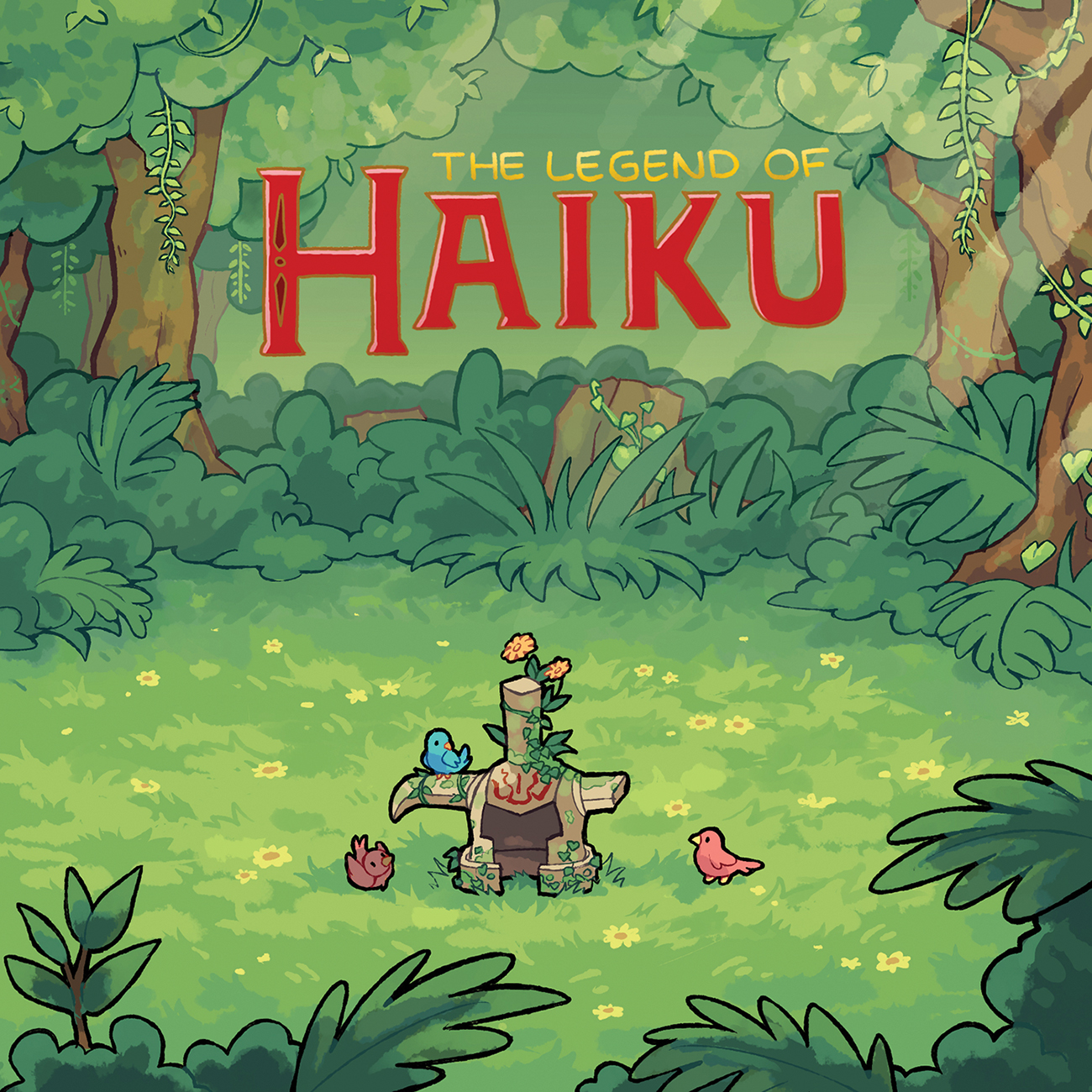
The Legend of Haiku celebrates the natural environments and quiet moments of the games in the Legend of Zelda series. This 46-page zine collects the work of 28 poets and artists from around the world who have pooled their talents to create a gentle adventure into a beautiful green world filled with mystery and discovery.

🌿 You can download a free digital copy on Gumroad (here).
🌿 There are a handful of physical copies available on Etsy (here).
🌿 You can download the digital zine directly from Google Drive (here).

This project was a journey. I had initially planned to release the zine in November shortly after the end of the submission period, but I received such an incredible diversity of submissions from such a large number of people that I found myself at a loss regarding the best way to move forward. In addition, the pandemic resulted in severe delays with the United States Postal Service, and I actually had to close my store on Etsy because nothing was getting where it was supposed to go. I therefore had to put the project on hiatus for three months, and I was only able to resume work in March.  

If I learned anything from this process, it’s that most people are lovely and patient and kind. I was expecting to encounter more frustration, but everyone was very chill and nice.

I also learned that it’s good to take a big project like this in baby steps until I reach a sense of critical mass and can work for longer periods as I get a better sense of what needs to be done and how best to do it. I wasn’t prepared for the incredible response I got concerning this project, but I’m very grateful for the support of the contributors as I muddled my way through.

Thankfully, the zine turned out to be gorgeous, so it was all worth it in the end.  

I want to give a special shout-out to the cover artist, who goes by @flyingcucco on Twitter and @acro_bike on Instagram. Trina was an absolute pleasure to work with, and she put an extraordinary level of thought and attention into creating a design that captures the themes of the project. The full, unedited wrap-around cover illustration was awarded the honor of being a Daily Deviation on the portfolio hosting site DeviantArt, and I highly encourage you to check it out (here) if you’d like to read Trina’s concise but insightful artist statement.

The Demon King Editing Notes

Starting in April, I’m going to begin putting together a formal query letter for The Demon King. I’d like to participate in the #PitMad event on Twitter at the beginning of June, and I’d also like to finish up this portion of the project so that I can go ahead and get started on the next novella in the series.

If you’re interested, this is my fifty-word Twitter pitch:

The Demon King is a high fantasy adventure comedy about a garbage wizard named Balthazar who seeks to claim a magical relic sleeping within the castle of a powerful and devious princess. Until then, he would prefer to be left alone so he can read trashy romance novels in peace.

I’m going to put the first novella through another round of intense editing in May, but I just wrapped up the initial set of major edits. I’ve been fixing typos and other minor second-draft awkwardness, but I’ve also been thinking about tone and structure, as well as how I relate to the genre of fantasy in general.

Although this will change as the story progresses, the beginning of The Demon King is largely an episodic comedy that plays with tropes from epic fantasy novels and video games. Instead of exaggerating or subverting these tropes, I’m interested in looking at them from the perspective of rational adult characters who fit their assigned archetypes poorly at best.

Each chapter is prefaced by a short introductory section modeled on the sort of “lore” or “flavor text” that a player can unlock in a video game by defeating a certain number of enemies, collecting a certain number of items, and so on. This isn’t made explicitly clear in the first novella, but these intro sections are written by Balthazar, the eponymous Demon King, who is addicted to romance novels and secretly aspires to be a writer himself.

I’ve been putting a lot of work into crafting an appropriately epic language for these sections. What I’m aiming for is a needlessly fancy style that borders on purple prose without being actually poorly written or obnoxious. In addition, I’d like for readers who come back to these passages after they know more about the world of the story to be able to see where Balthazar is being ironic, where he’s being sincere, and where he’s flat-out lying.

I had initially rendered these sections in italics, but I think we can all collectively agree that italics are difficult to read. I therefore reformatted the text to remove all the italics on the chapter intro sections. I might put them back in to demonstrate that these are excerpts from “found sources” and not part of the main body of narration, but I think the character-specific perspectives of the chapters are clear enough that third-person omniscient narration stands out strongly on its own.

I also decided is that everyone is going to be represented as speaking English. If the viewpoint character – usually Balthazar – can understand what someone is saying, it won’t be accented with italics. Perhaps other characters might comment on the fact that he understands speech they don’t, but I don’t want to play games with fantasy languages. Along the same lines, I deleted all mentions of fantasy language names. Nobody needs that.

One of my most hated of all sci-fi and fantasy tropes is when a story gluts itself on constructed terminology, especially in lieu of meaningful worldbuilding. I therefore tried to keep fantasy words at an absolute minimum. The crow people (called starags, after the Gaelic word for “crow”) have their own name because it would be silly to call them “crow people,” and the concept of a “gaesh” (a type of semi-telepathic soul bond that facilitates magic sharing) is something that I want to feel strange and alien to the reader, but I think that’s it.

I leaned into this by using common words for elements that are native to the story. For example, Balthazar is not a “demon” in the usual sense of the word, the “gargoyles” who appear about halfway through the story are actually bat people, the “artifact” Balthazar is seeking is something highly unusual and specific, and the creatures that Balthazar calls “dogs” and “horses” are not dogs and horses, not by a long shot.

As the story continues, I think it’s going to be fun to play with the disconnect between what various characters take for granted as common knowledge, but I want this to remain comfortably in the realm of comedy and not venture into the territory of “who knows what secrets at what point in the story.” If anyone asks, you didn’t hear this from me, but plot is overrated. The plot of The Demon King is going to become more interesting and intricate as more layers of the story are revealed, but I want the reader to care about the characters before the plot ever becomes a concern.

That being said, there are major conflicts between the characters that have no easy resolutions, so I took care in my edits to make sure that each of the main characters states their goals clearly. Figuring out why these characters insist on pursuing these goals is the story’s primary source of forward momentum, so I’m doing my best to set up these mysteries while also providing ample clues and a healthy dose of foreshadowing.   

Hopefully the process of writing a query letter will help me clarify the themes and narrative structure so that I can continue to hone the story when I return to it in May for another set of edits.

For the time being, I’m hosting the first novella in The Demon King on AO3, and you can find it (here).

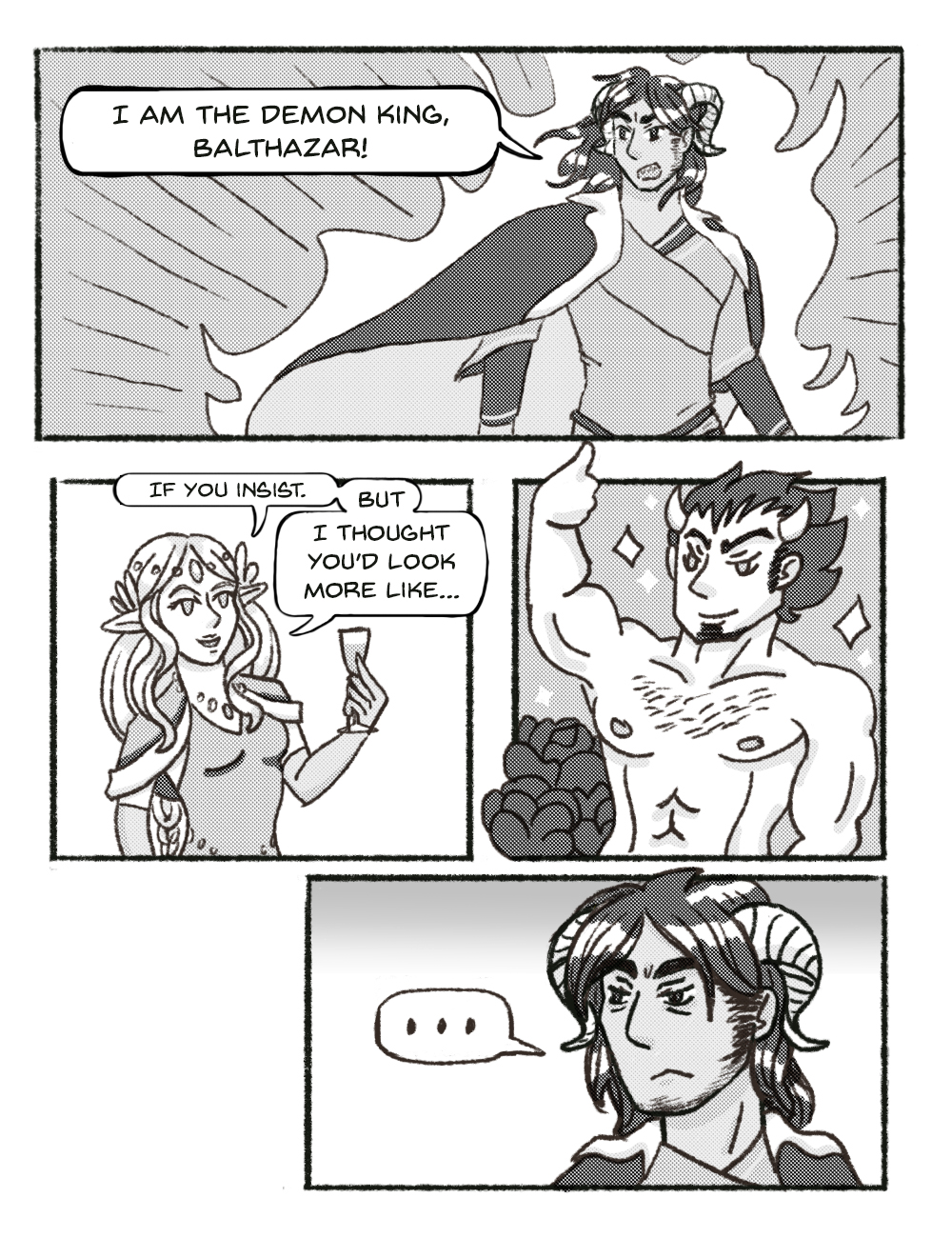
This post’s illustration of Balthazar is by the lovely @Lemonscribs on Instagram, who was kind enough to compare the character’s aesthetic to Katie O’Neill’s fantasy slice-of-life comic The Tea Dragon Society. What an apt observation, and what an incredible compliment!


Different

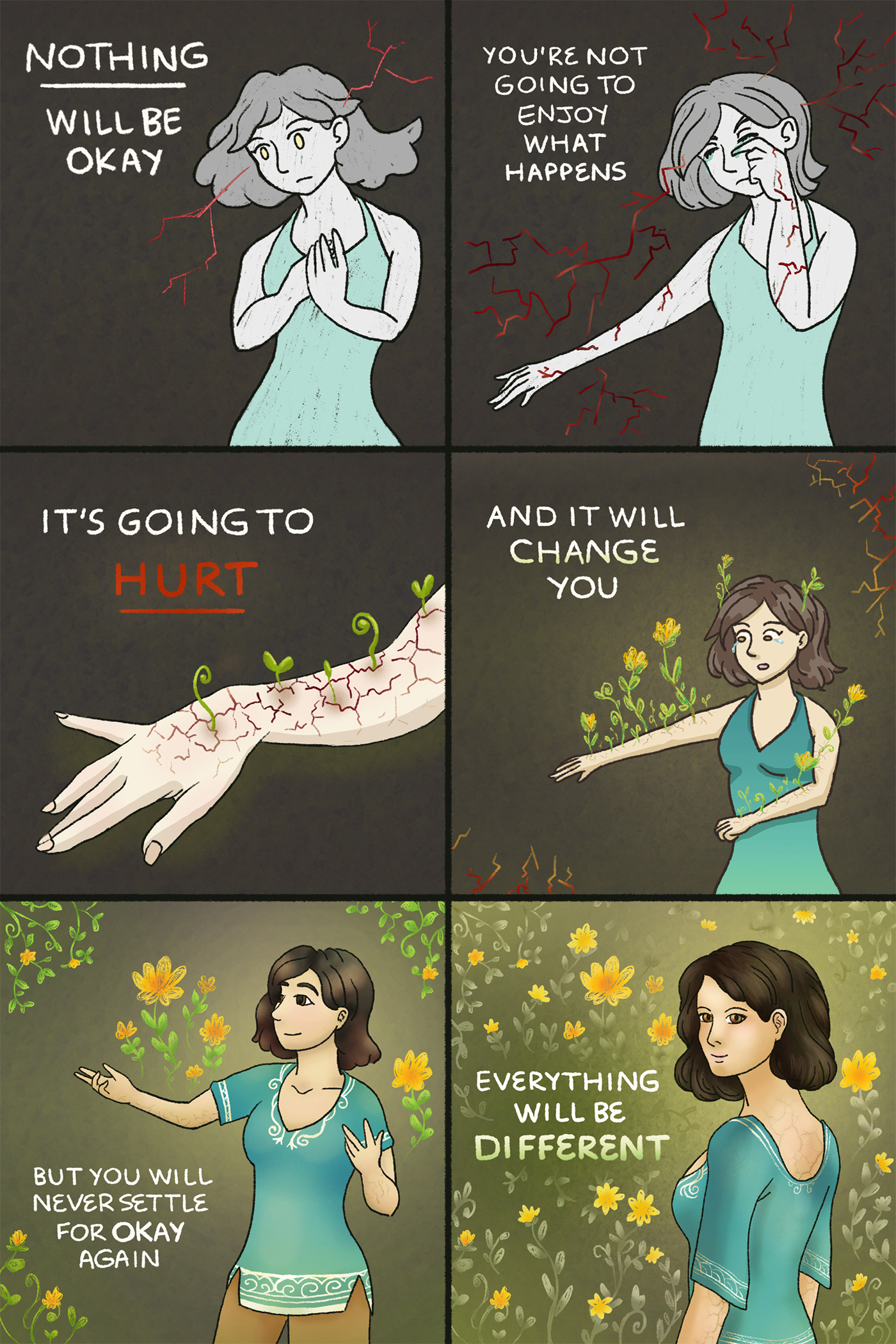
This comic is about how trauma isn’t just something that someone “overcomes” on the road to personal character development, but rather a significantly transformative experience with lingering aftereffects.

This comic is also about how significantly my art style has changed during the year after I left a traumatic workplace environment. It was an extremely difficult transition, but it’s important to create room to grow.

Memorabilia Zine

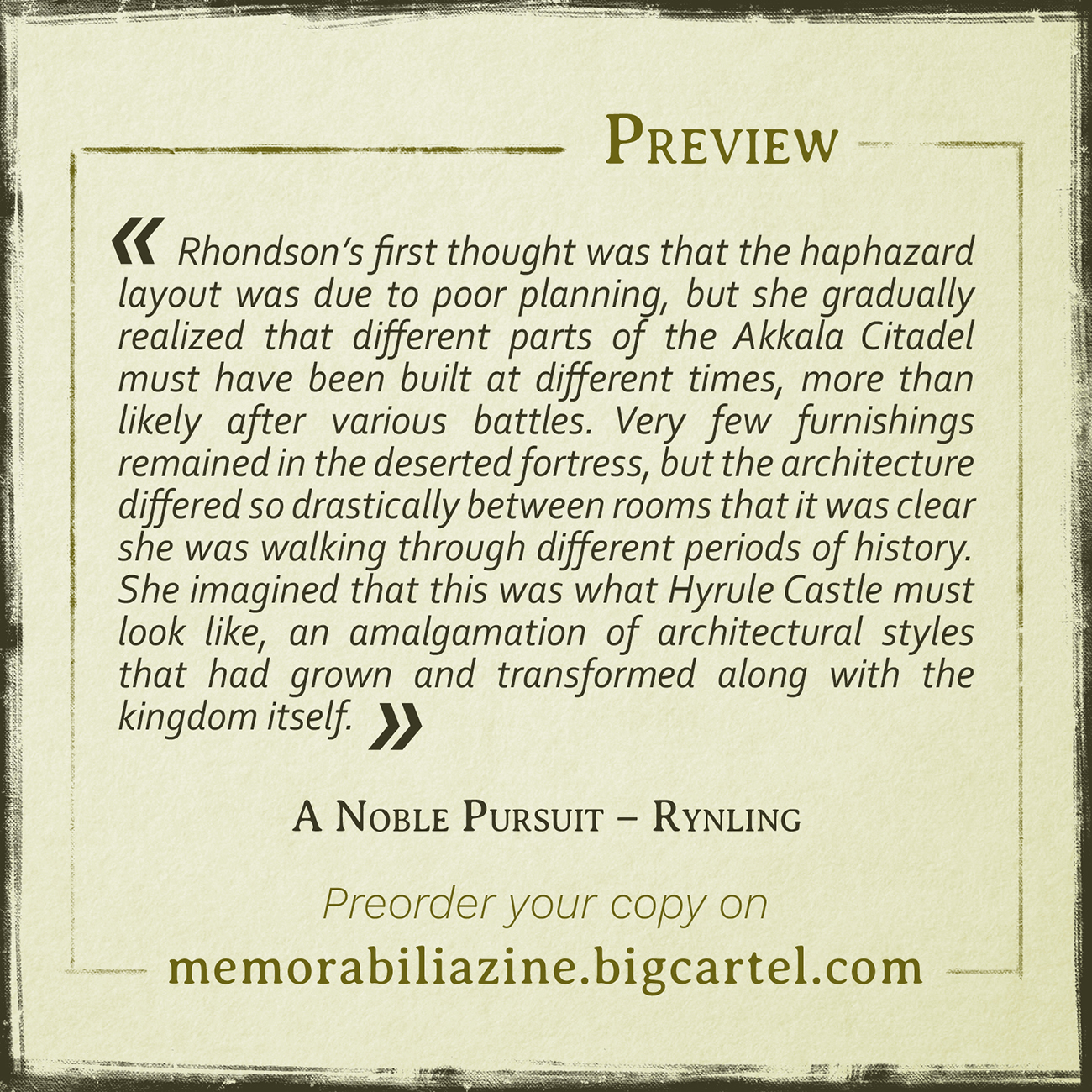
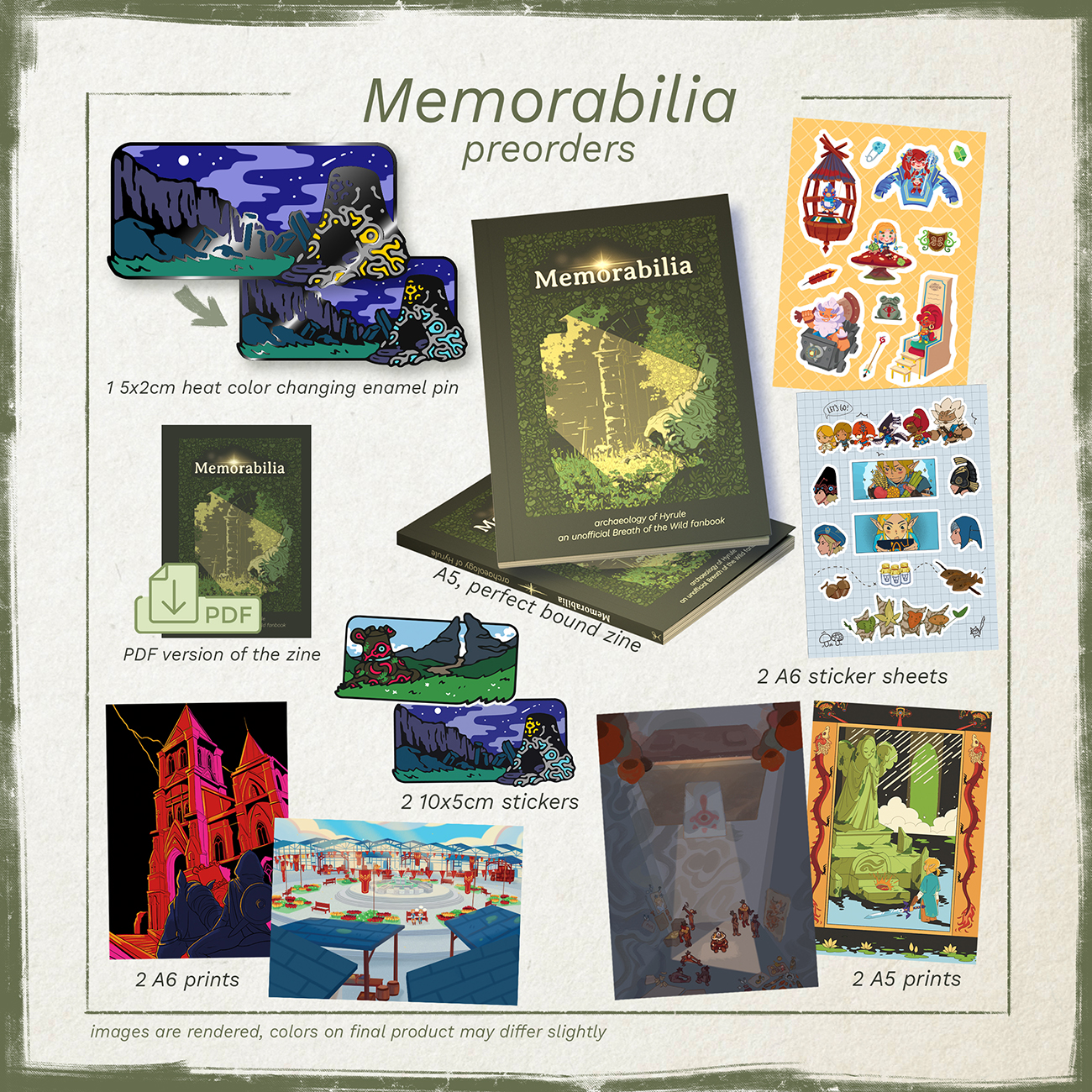
This is a preview of the short story I contributed to Memorabilia, a Legend of Zelda fanzine devoted to the archaeology and architecture of Breath of the Wild.

“A Noble Pursuit” is about Rhondson, the Gerudo tailor who moves to Tarrey Town, embarking on a husband hunt to the Akkala Citadel Ruins after Hudson goes missing. It’s a story about exploration and discovery, as well as different views of the past and hopes for the future that awaits Hyrule beyond “happily ever after.”

Pre-orders are open (here) until Sunday, March 14. This zine contains more than a hundred pages of brilliant writing and awe-inspiring art. It’s certain to be a treasure to anyone who enjoyed exploring the ruins and history of Breath of the Wild – and to anyone fascinated by the lore and environmental design in Creating a Champion.

You can check out more previews of the zine on its Twitter account, @MemorabiliaZine, and on its Tumblr account, @memorabiliazine.

Balthazar as Antagonist

The Demon King has ten chapters, and I’m a little more than halfway done with the first round of edits. I should be able to meet my projection of finishing by March 15, a month after I completed the first draft. The draft is only about 30k words, but progress is slow. The psychic damage I’m taking from finding typos and inconsistencies and unintended repetitions cannot be exaggerated.

This is only the first of five story arcs, so one of my main goals during this round of editing is to ensure that the central conflict is presented clearly and makes sense according to the somewhat limited information available to the reader. This is a short summary:

A powerful wizard named Balthazar wants to find a magical artifact hidden somewhere in the mountains between the kingdom of Whitespire and the ocean, which is highly poisonous. This artifact probably has something to do with the pure water coming down from the mountains and ensuring the prosperity of the kingdom. Balthazar doesn’t mention this artifact to his confidant Ceres, the reigning princess of Whitespire, who is presumably either unaware of its existence or unwilling to discuss it. If Balthazar does manage to find this artifact, the way he plans to use it will result in the downfall of Whitespire.

Balthazar is open with Ceres about his intentions to destroy Whitespire, but he makes no move to attack the kingdom, choosing instead to seek other magical artifacts elsewhere. It’s unclear why Balthazar is taking such a circuitous route toward his goal, but I hope the reader is able to get the sense that he’s not really the sort of person who would harm anyone if he could avoid it. He specifically doesn’t want to harm Ceres, mainly because he likes her.

There’s no significant antagonist in the story aside from Balthazar himself, as he’s going to have to do terrible things and hurt the people he cares about if he insists on achieving his goal. Unfortunately, he’s deadly serious about what he aims to do, so much so that it’s at the core of his sense of identity.

It’s embarrassing to admit this, but I’m inspired by the narrative structure of Homestuck, in which everything seems very silly and trope-driven until the reader gains a better understanding of what’s going on with the world of the story. I think it’s probably a fool’s errand to ask any given writer what themes they’re trying to express, but Balthazar has a line to the effect of “you always have a choice” that’s probably the closest thing to a statement of purpose I have regarding issues of individual freedom and dignity in the face of overwhelmingly horrible circumstances.

Also there are dick jokes, which symbolizes the fact that I like dick jokes.

In any case, once I finish this round of edits, I’m going to let the story sit for another month before writing a formal query. I’ll then do another round of edits before participating in several pitch events starting in late May. I’ll more than likely take the story offline at that point, but you can still read the draft as I edit it on AO3 (here).