Kuro

Kuro
https://visualmemoryunit.itch.io/kuro

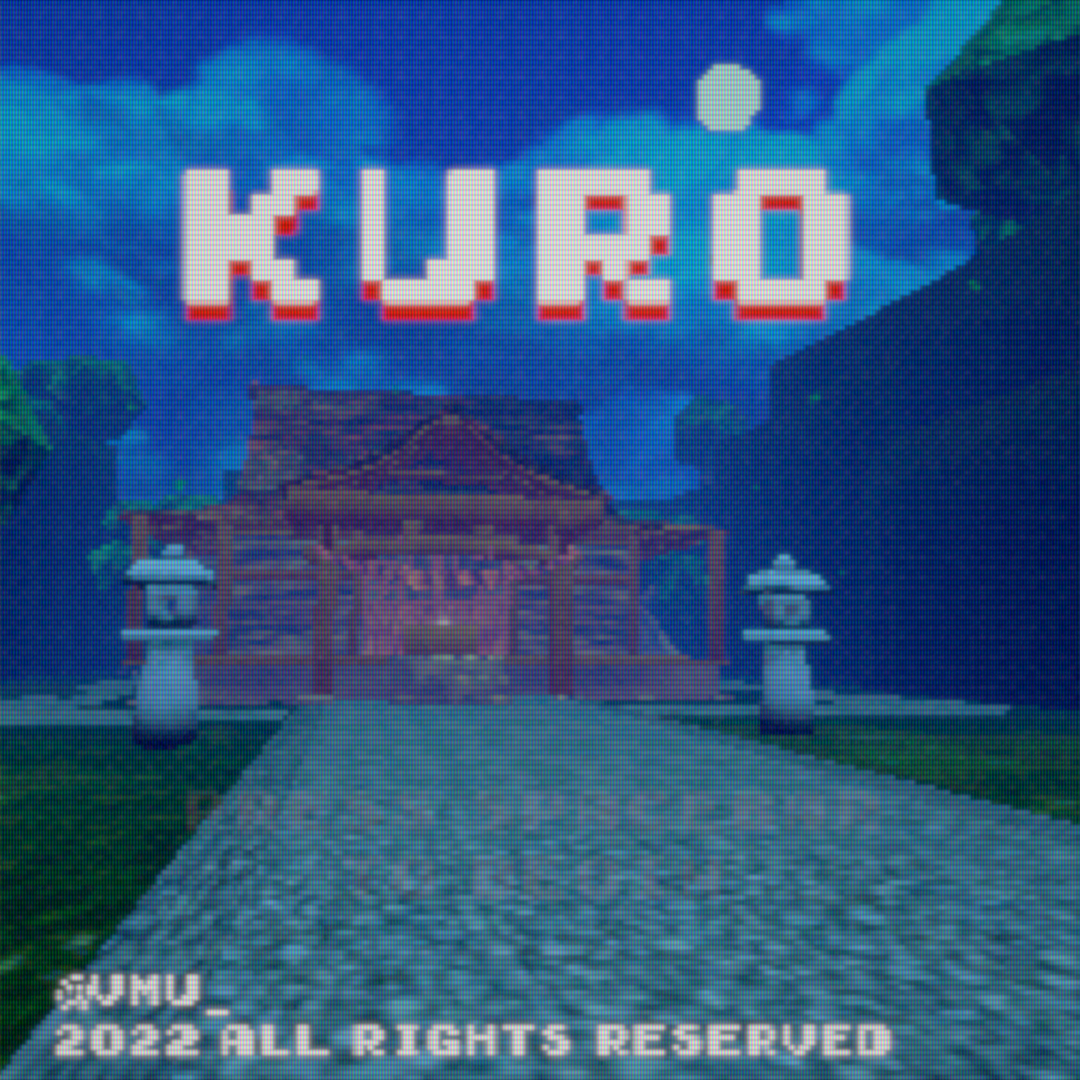
Kuro is a free-to-play homebrew PS1 gothic horror game that takes about twenty minutes to finish. There aren’t any jumpscares, but the story is as dark as the chunky retro polygons are cute.

You play as Kuro, a mysterious visitor to an abandoned Shinto shrine. The moonlit shrine is beautiful and peaceful on the outside, but its interior conceals an underground labyrinth haunted by the ghost of a brutally murdered young woman named Miu. As Kuro, your job is to find and reunite the parts of Miu’s corpse so that her spirit can move on.

Along with Miu’s head and body, Kuro must acquire the means to open three locked doors. Though the game’s map isn’t overly large, Kuro moves slowly (with tank controls) across spaces presented to the player from dramatic angles. It’s unlikely that you’ll become lost, but the game does an excellent job of conveying the disorientation of wandering through a dark basement.

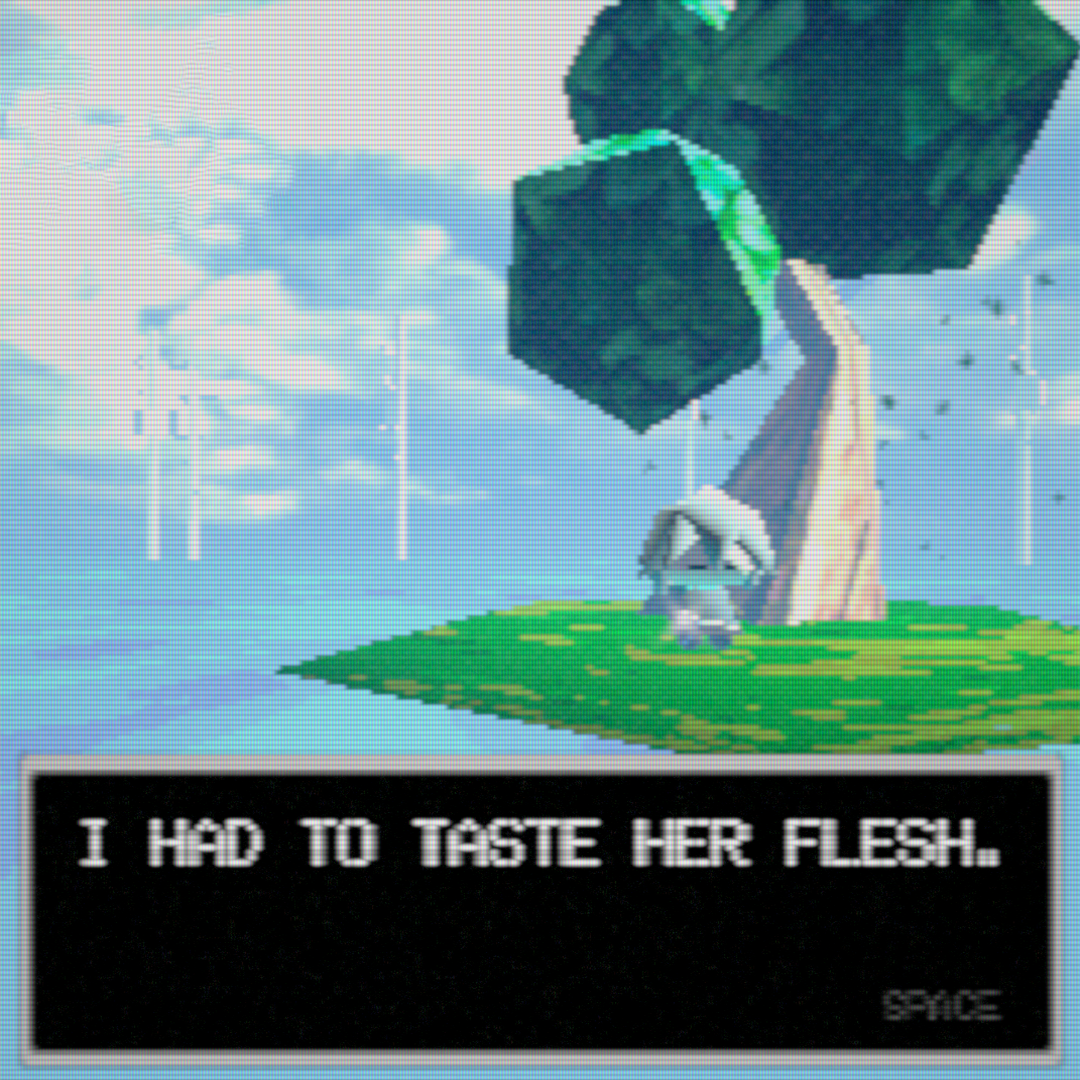
For me, the standout scene is when Kuro enters a locked room that’s completely empty except for an old television whose screen is filled with static. When Kuro interacts with the television, she’s transported to an otherworldly landscape where she meets the man who killed Miu. He explains what happened, but this isn’t the end of the story. Once Kuro returns to the shrine and begins to dig deeper, the player learns that murder is probably the most wholesome thing that happened here. 
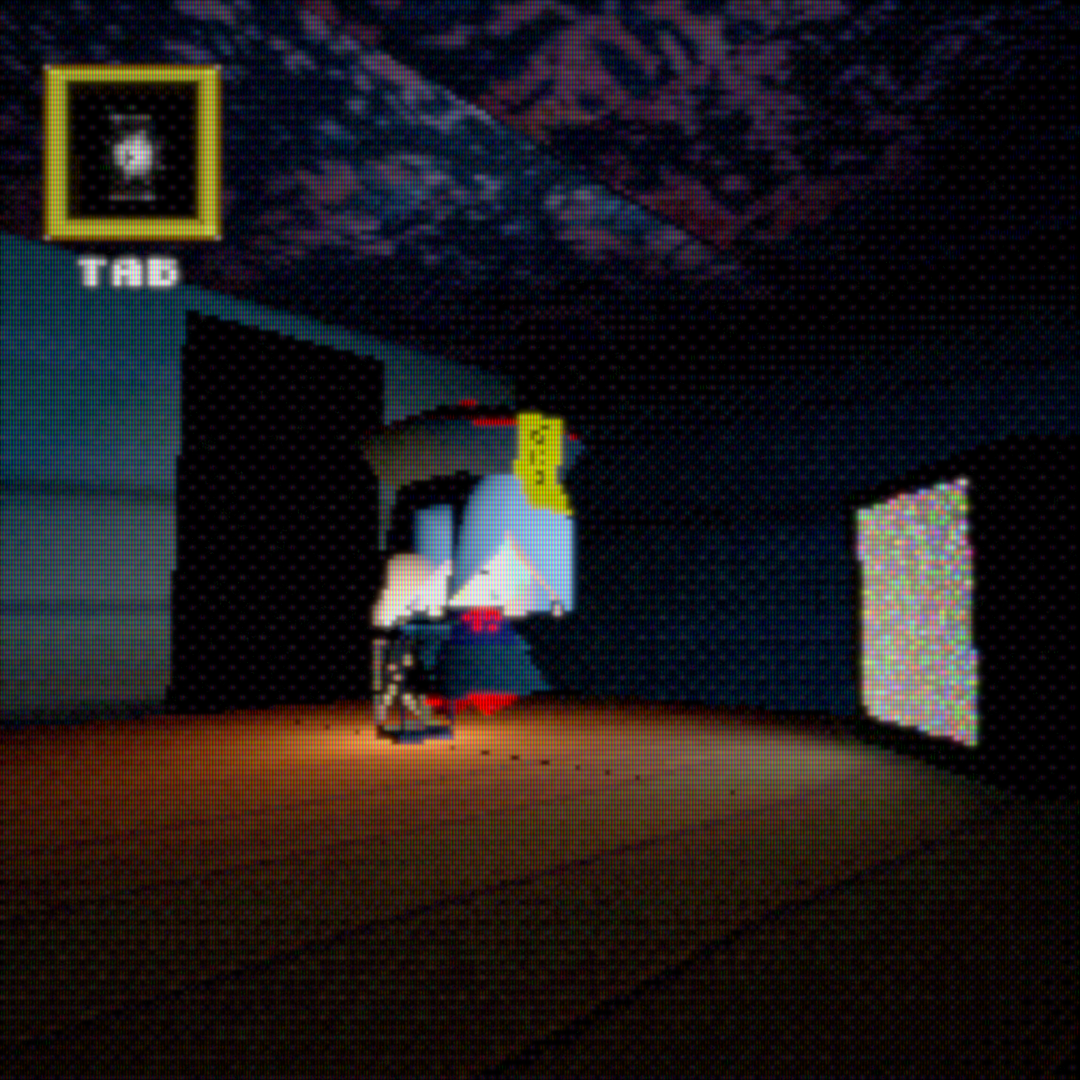
I genuinely appreciate the developer’s commitment to including every gothic trope they could think of. One might argue that the writing is somewhat clumsy, and that the game’s twenty-minute playtime isn’t sufficient to allow ample space for its horrors, but I’m of the opinion that the writing is just as integral to the retro aesthetic as the graphics. I feel like there’s a tendency to remember games like Final Fantasy VII and Resident Evil 2 as “well-written,” but PS1-era games had a tendency to hit you with a cascade of revelations in the most basic and matter-of-fact prose. Kuro matches the tone of this style of video game writing perfectly.

I also love to see this kind of gothic story in a setting that isn’t European, and I’m fascinated by the idea that a Shinto shrine would have a basement. Perhaps a shrine constructed overseas (in British Columbia, for instance) might have an underground level, but this would be unthinkable in Japan, where shrine buildings are always elevated above the ground in the traditional Polynesian architectural style.

The reason for this is 100% practical in a wet and humid climate, where various types of unpleasant things (primarily mold, fungus, and insects) would quickly infest the ground level of a building. Also, the water table is generally so close to the surface that it would be difficult to prevent underground rooms from flooding. There’s also a spiritual component to the architecture, as Shinto belief systems tend to associate anything inside the earth with an otherworld of rot and impurity. This otherworld is a necessary space for the cycle of life, but it’s not a good place for humans to be under any circumstances. In terms of its spiritual utility, one of the purposes of a shrine is to demarcate the boundaries between worlds.

So a Shinto shrine would not have a basement. But if it did. The horrors of Kuro would definitely happen there.

I admire how Kuro explores the idea of transgressing an extremely powerful taboo. Between the lost-media stylization of the game’s retro graphics and the grotesque quality of its writing, the player definitely gets a sense of wandering through a place they’re not supposed to be. Kuro is a short and simple game, but it’s very well-observed and surprisingly effective.
Under the Temple

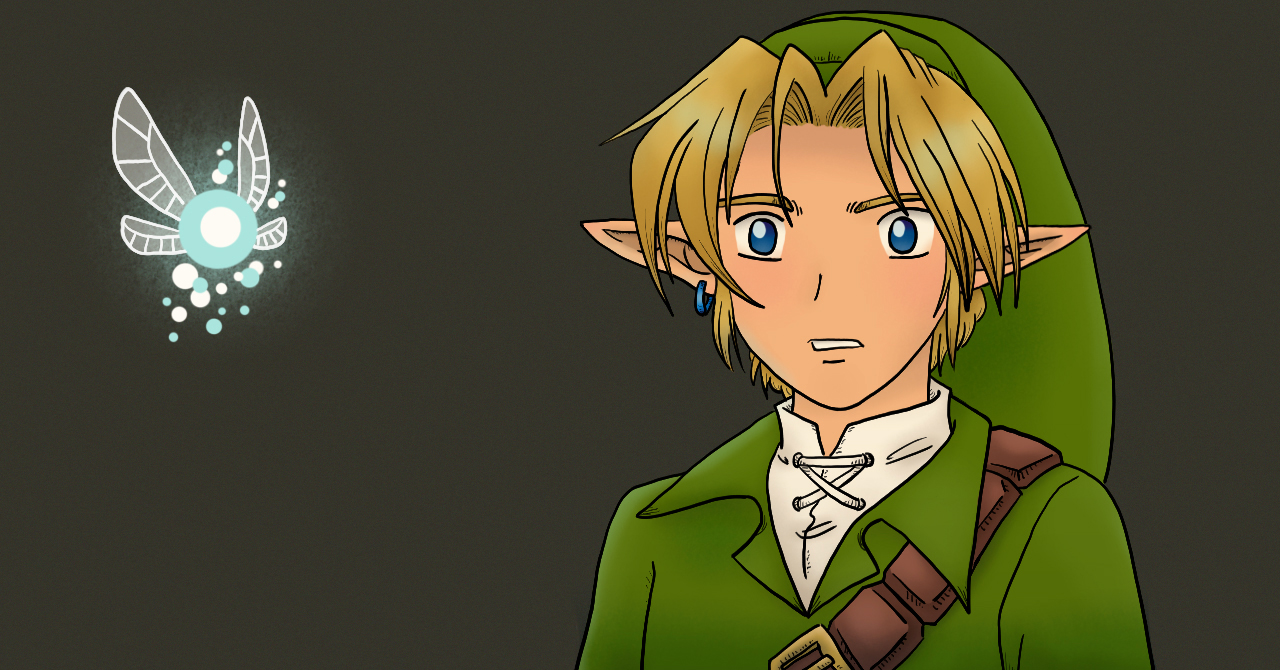
The Forest Temple in Ocarina of Time is one of the most intriguing dungeons in the Zelda series. It’s so beautiful and full of mystery! One of my favorite areas of the temple is the peaceful underground waterway connecting the two courtyards on either side of the main hall. This is not in the least because the upper walkway provides healing hearts that are extremely welcome after Link’s first battle against a Stalfos. If Link grabs all three hearts the first time through the sewer, there will only be one heart on his return through the passage.

Where did that additional heart come from? Where do any of these hearts come from? Perhaps it’s best not to think about it too hard.

I have very little experience drawing architecture, but hopefully this works to my benefit in conveying the brutalism of the building lines in early 3D games. The primitive perspective scaling isn’t an issue in open spaces with organic shapes like the Kokiri Forest, but it feels somewhat uncanny in confined interior spaces. I get the sense that the game developers understood this, as the slightly off-kilter straight lines of the sewer tunnel are a nice foil against the luxurious twisting corridors of the temple’s upper levels, which are equally confounding to the eye. Poor Link… that kid has seen some shit.

Flesh, Blood, & Concrete

Flesh, Blood, & Concrete
https://waxwing0.itch.io/fbc

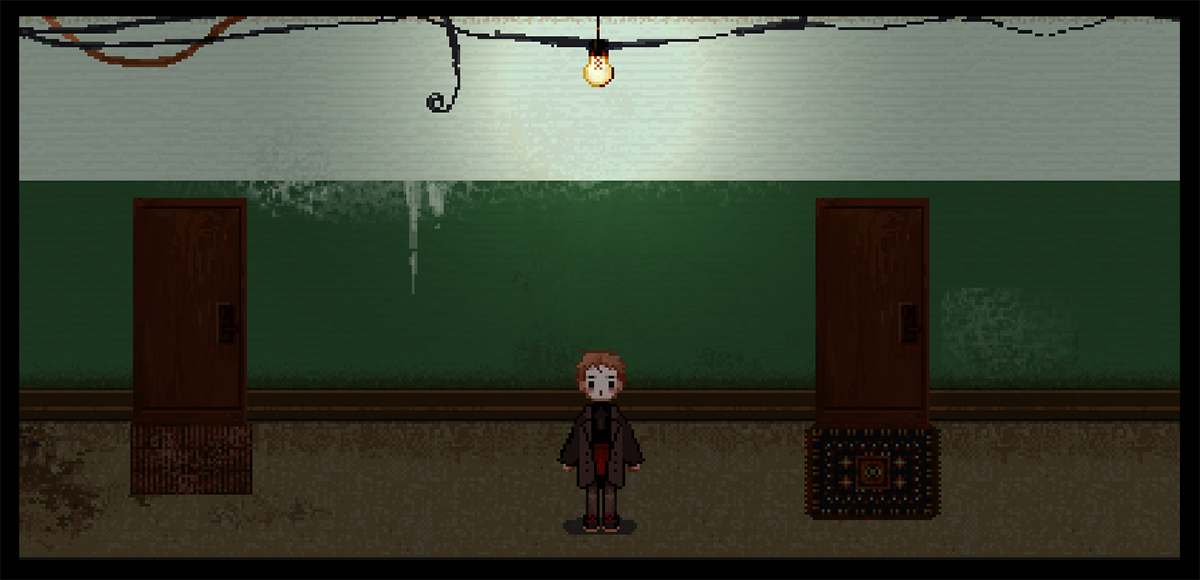
Flesh, Blood, & Concrete is a free-to-play RPG Maker adventure game that bills itself as “an apartment building exploration simulator.” During its 45-minute playtime, the game delves into themes of isolation, mental illness, and existential dread within the confines of a decaying apartment complex.

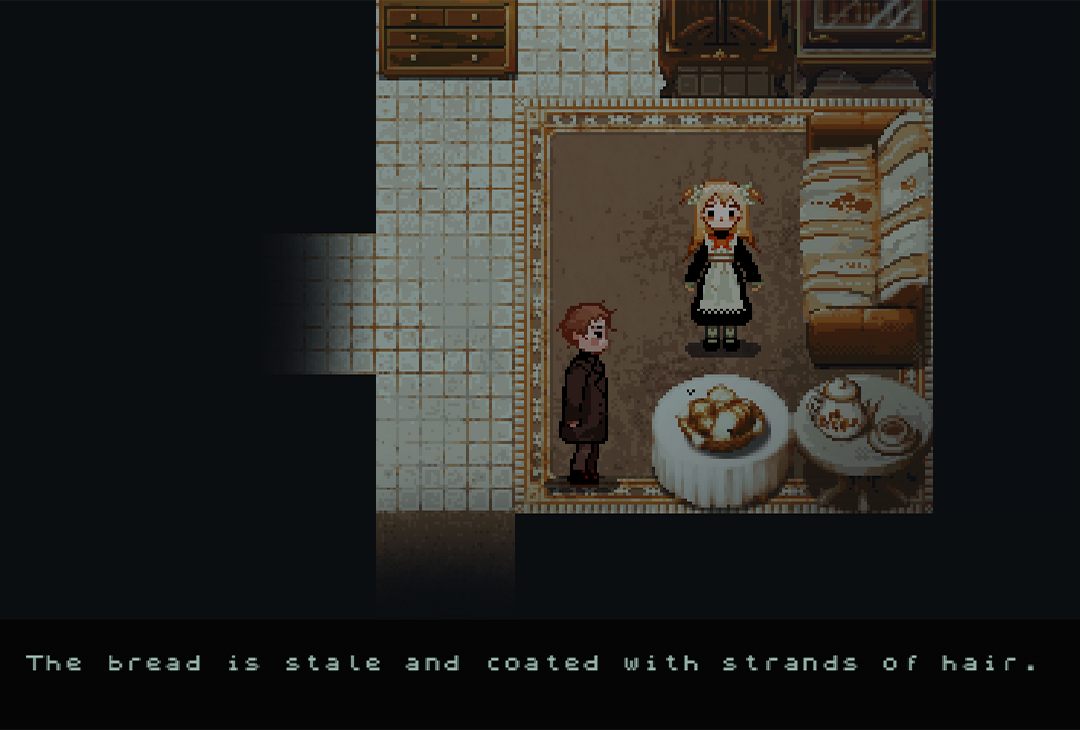
Players take on the role of Lera, a 28yo architect whose car breaks down in the snow. While seeking refuge from the cold, Lera meets a girl named Nika who, inexplicably, is dressed like an anime maid. Nika invites Lera to warm up inside her “house,” a giant abandoned apartment block at the edge of an unnamed town. As Lera, the player is given free rein to explore the building. The deeper inside you get, the stranger the architecture becomes, and it turns out that the “flesh and blood” of the title are not merely symbolic.

Flesh, Blood, & Concrete has no combat or puzzles. Instead, players explore the building and interact with the environment. In essence, your job is to collect items, which you can examine in the game’s small menu screen at your leisure. As you move from floor to floor and poke around all the vacant units, you gradually piece together Lera’s backstory through environmental storytelling and occasional conversations with Nika.

While the game’s pacing might feel a bit slow, the deliberate sense of space between incidents gives the player time to reflect on what exactly is going on with Lera. In my interpretation, Lera’s interactions with Nika hint at her desire to flee from the adult world, and I don’t think it’s a stretch to suggest that the dilapidated building is a manifestation of the intensity of Lera’s depression. At the end of the game, the player is confronted with a symbolic choice (the mechanics of which are explained in the creator’s spoiler-free guide), and what constitutes the “good” ending is open to interpretation.

In keeping with the bleakness of the game’s themes, its pixel art is rendered in muted tones. The corridors are desolate stretches of flickering lights and peeling wallpaper, and the individual apartment interiors start off as charming and cozy but gradually descend deeper into the uncanny. The game’s soundtrack complements its visuals, with a blend of ambient sounds and minimalist synth piano pieces working to create a melancholic mood. Any sense of nostalgic coziness won’t last, however – some of the game’s visuals are sublimely gory. 

As an aside, I recently played the indie narrative adventure game Indika, and I was thinking that I’d love to see more games set in Eastern Europe. Flesh, Blood, & Concrete is a universal story, but the specificity of the game’s Russian setting adds a unique and interesting flavor to its narrative and visuals. I also appreciate that this “apartment exploration simulator” takes the darker aspects of mental illness seriously but still delights in the playfulness of its morbid style of creative expression. It’s one of the more intriguing RPG Maker horror games I’ve encountered, and I’d recommend giving it a shot if you can handle the (literal) viscerality of its imagery.