Birds Watching

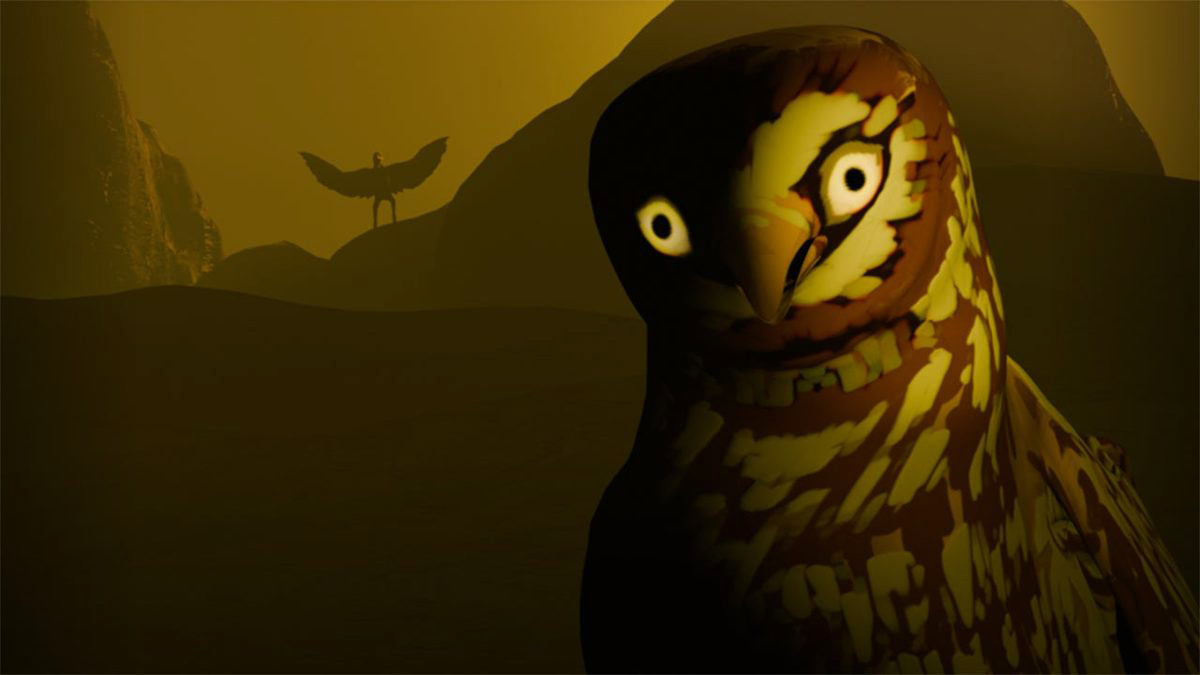
Birds Watching (on Steam here) is a one-hour walking sim about a man who talks to birds while an apocalyptic disaster unfolds around him.

As an unending fire engulfs the world, a lone man takes refuge at the top of a mountain. For all he knows, he’s the only human left alive on earth, so he makes the best of a bad situation and does his best to survive in the company of the birds who have fled to the last unburned peak.

The man’s solitude is alleviated by an owl who not only befriends him but begins speaking with him. Birds can speak and understand human languages, the owl explains, and the man only needs to share a special password to initiate conversations. If he can observe and talk with the other birds on the mountain, something good will surely come of it.

The man realizes that he’ll need more concrete support when he receives a transmission on his portable radio. It turns out that other humans have survived the fire, violent and mutated though they may be. Their warlord has learned of the sanctuary on the mountain, and he’s on his way. The man can prepare to welcome him by surrendering his house and food, or he can expect to be swiftly killed.
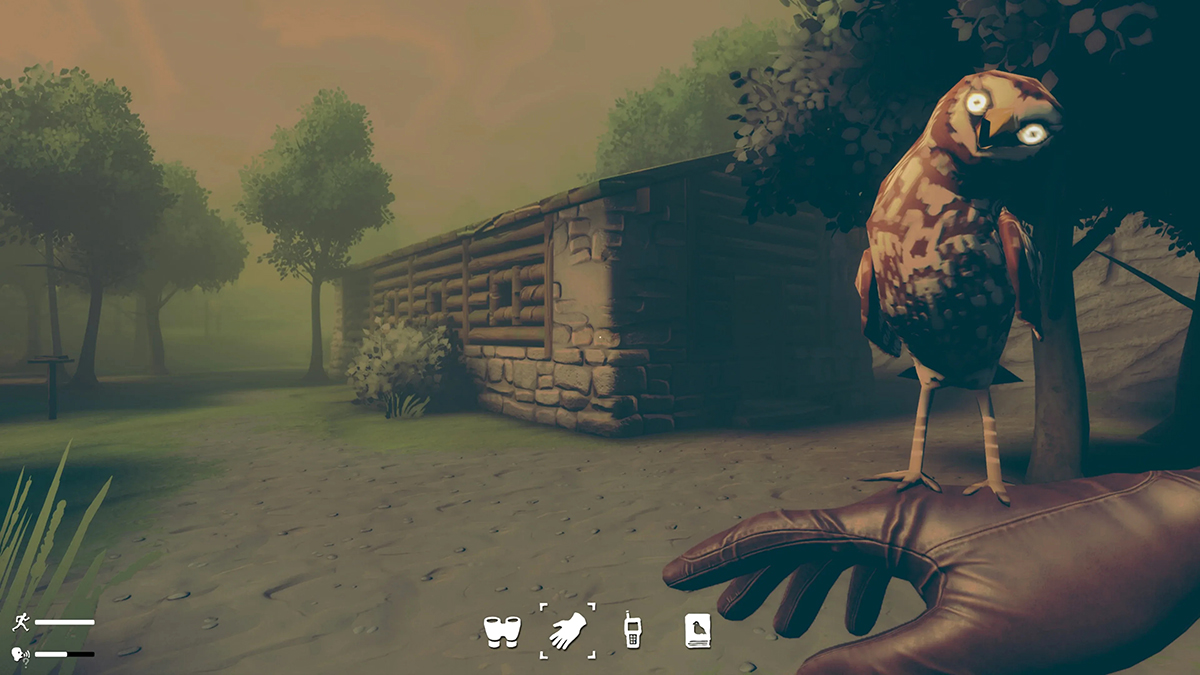
The birds might indeed be able to help repel the warlord’s invasion, but they hate you. And they aren’t shy about telling you this. Though it’s not a challenge to discover new birds and observe them through your binoculars, it will be difficult to get them to trust you. Your companion owl helpfully suggests that you prove your sincerity by making yourself more like a bird. This process begins (relatively) innocuously when you eat a handful of the worms that you use to attract birds to the various feeders scattered across the mountain, but it escalates into genuine body horror if you follow it through to its conclusion.

Even without the humiliation rituals, there’s plenty of dread in the environment, which is filled with smoke and ash from the fire burning below. Though the forest scenery seems pleasant enough, the air is never clear, and it’s easy to imagine any number of things lurking at the edges of your visibility.

These vague fears are realized when the promised invasion of the mountain actually occurs. The appearance of the humans who have survived the fire is an unpleasant surprise, to say the least. It doesn’t help that these encounters occur in tense situations when your stamina meter is already depleted.

And then, on top of all that, you’ll eventually notice something else through the smoke haze: while you’ve been watching birds, something terrible has been watching you.
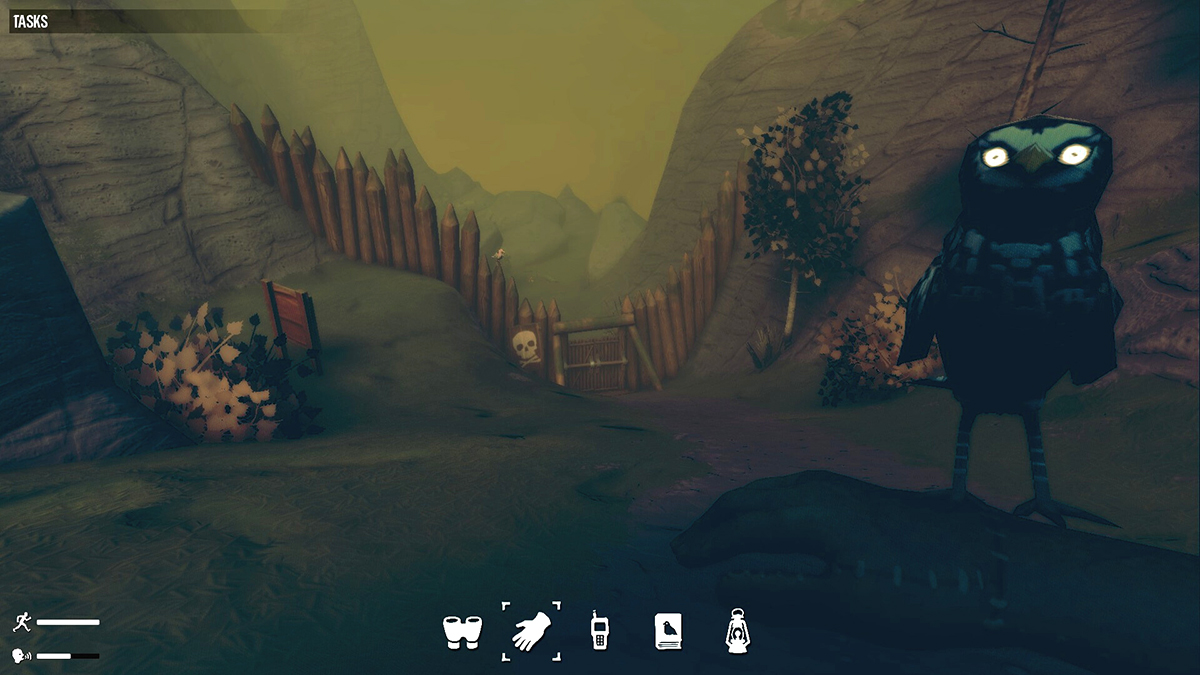
There are three possible endings to the game, and they’re all deeply upsetting. These endings follow naturally from your dialogue choices – whether you resist or capitulate to the warlord, and how far you’re willing to go to satisfy the birds.

Thankfully, nothing is dependent on being a completionist about filling in your bird watching notebook. You’ll probably want to find as many birds as possible, though, simply because your conversations with them are so unapologetically horrible and bitchy that they’re kind of funny. Once you figure out what the password you use to talk with the birds actually means, this knowledge adds a deeper level of psychological horror that’s fun to explore.

Since a leisurely run through the game only takes a little less than an hour, I went back and played it twice. Though the slightly murky lo-fi graphics caused a bit of trouble during my first playthrough, I appreciated the unique texture of the visual atmosphere more the second time around, when I was able to find significantly more birds to talk with. The alternate reading of the game suggested by a reveal toward the end casts all the conversations in an interesting new light that’s worth a second playthrough to appreciate.
Almost People

Almost People
https://evan-megel.itch.io/almost-people

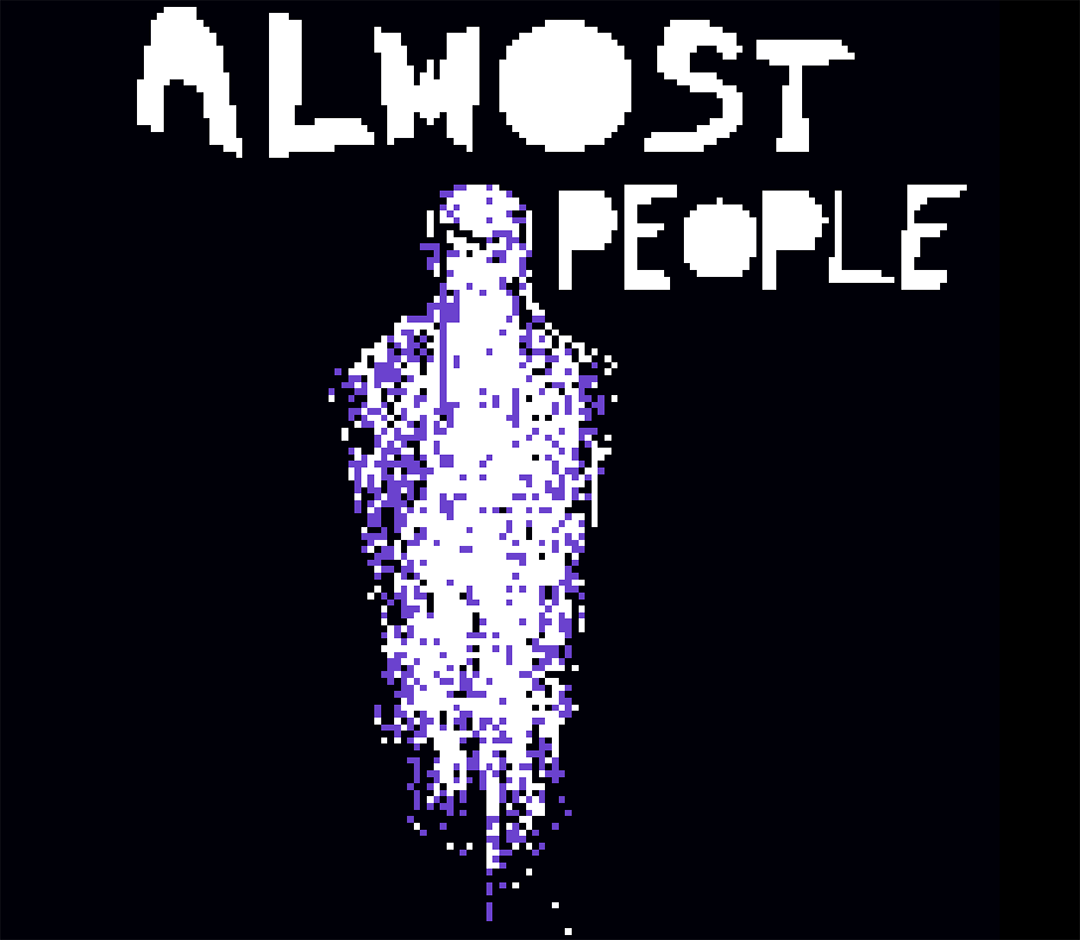
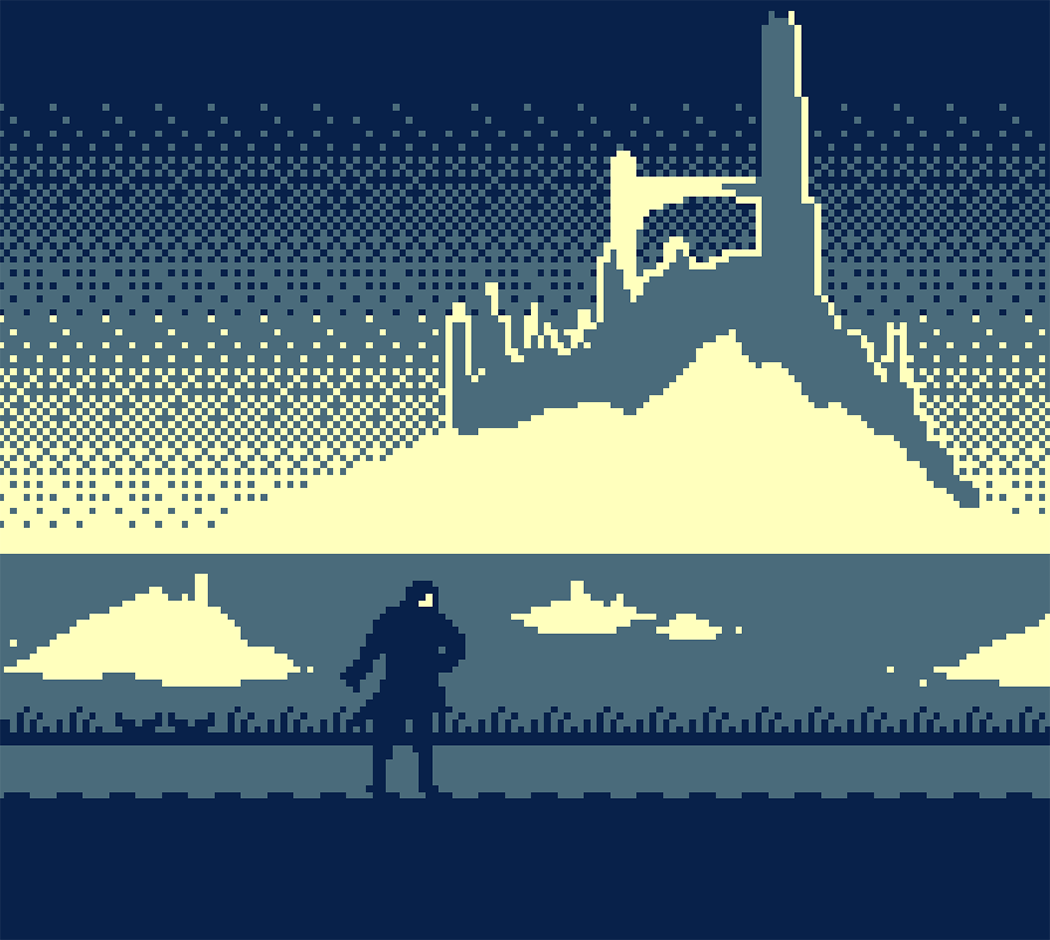
Almost People is a narrative dark fantasy Game Boy game that’s free to play and takes about 8-10 minutes to finish.

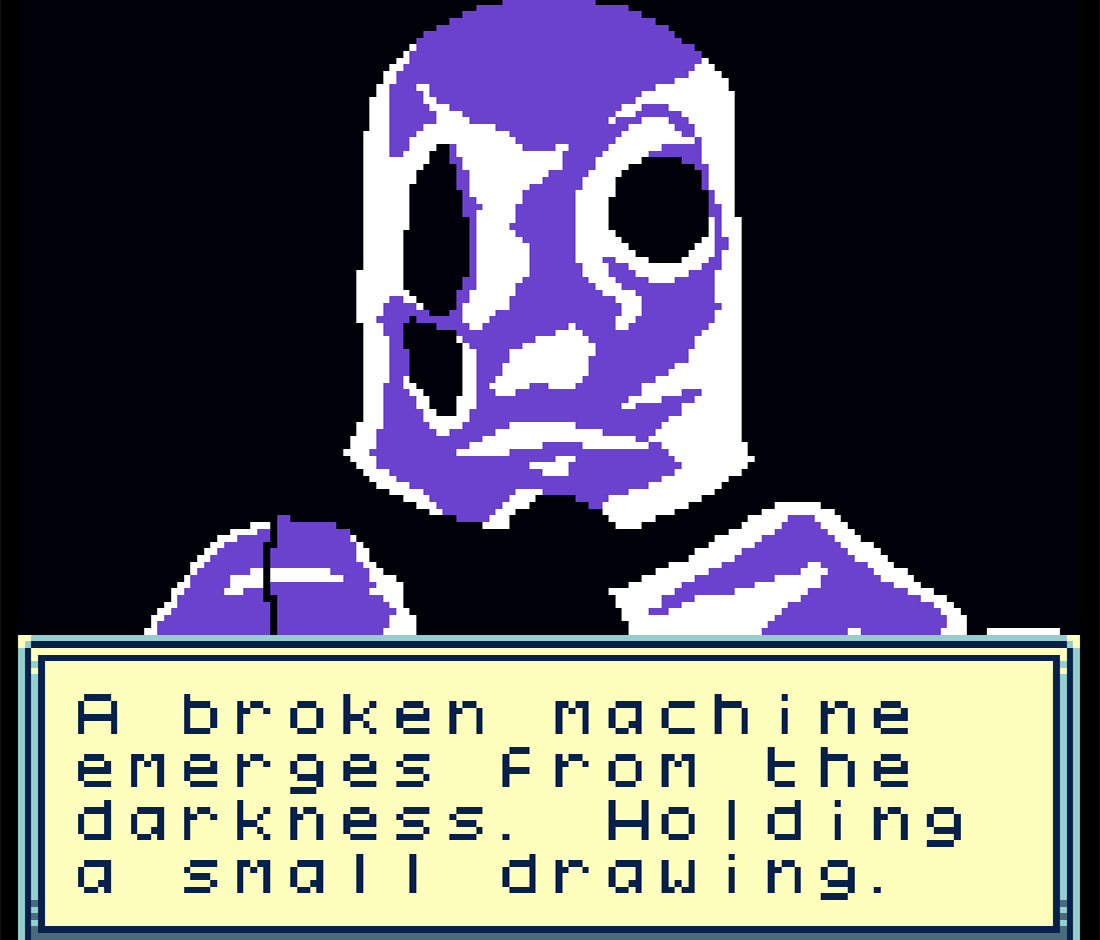
You play as an alchemist who has created several types of artificial beings. After setting them free and leaving them to their own devices for an unspecified amount of time, you must decide what to do with them. Should they be allowed to continue as they are, or do you end their lives?

Before each conversation, the alchemist walks across a 2D screen that shows the creature (or creatures) in the lair it’s constructed for itself. Despite the limitations of the Game Boy graphics, the art is bold, striking, and very creepy.

The conversations with the creatures are subtly disturbing as well. I don’t get the feeling that the artist who made this game is coming from a well-defined philosophical perspective, but the choices the player is asked to make are interesting. If you want to get the good ending, the alchemist is going to have to take responsibility for what they’ve created. Specifically, you’re going to have to kill at least one of the creatures.

Though the game works well as a Frankenstein story, I also understood it as an allegory for creativity. As upsetting as it is to consider killing an actual living creature, I tend to think that it’s healthy to end projects that have outlived their original purpose. This allegory isn’t immediately apparent, and I’m not entirely sure that it was intended. I suppose that the themes of “creation” and “death” are broad enough to accommodate any number of readings.

Almost People is a weird and unsettling little game, and I appreciate the experience of playing as a character with dubious morality. I’m getting a little tired of the “surprise! the heroes are bad actually” trope, so it’s cool to take on the role of a wizard who openly engages in dark deeds. A teenager with a magical sword should really put an end to this asshole, but I guess that’s another game entirely.

Project Kat

Project Kat is a short narrative horror game that’s free to play on Itch.io (here) and on Steam (here). A playthrough culminating in the game’s “true ending” will take about half an hour, but adventurous players might spend another fifteen minutes experimenting with paths leading to a premature death.

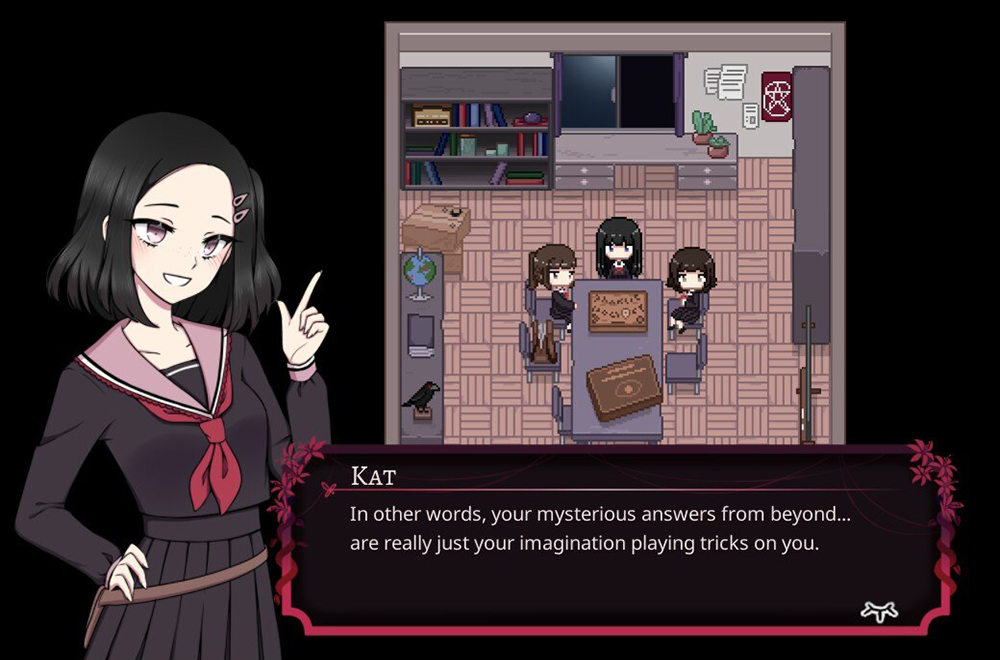
You play as a high school student named Kat who stays late at school one night to undertake an occult ritual of unknown origin and with unknown consequences. Kat has attempted a number of similar rituals, all to no avail. She claims not to believe in the supernatural and seems to be performing these rituals as a hobby. Unfortunately for Kat, this ritual is different.

As Kat, you have the run of three empty classrooms, a meeting room currently being used by the school’s Occult Club, and the Drama Club’s storage closet. Your job is to collect the materials needed for the ritual, such as chalk and candles, and then to perform the various steps of the ritual itself.

Coincidentally, the three members of the Occult Club are also spending the night at school. Kat taunts them as they experiment with a Ouija Board, saying that they’re deluding themselves. Despite getting the night off on the wrong foot, Kat can continue to talk with the three girls, and she can even recruit them to participate in the ritual with her.

This might be a mistake, however, as the instructions for the ritual state clearly that it must be performed alone.

Should Kat manage to complete the ritual successfully, the game ventures into a surreal space reminiscent of Yume Nikki. This is when the story stops pulling its punches, and the player begins to understand why Kat has started performing occult rituals – and also that her odds of surviving this one are very low. I was impressed by the visual creativity of the final section of the game, and also by the darkness of the ending it leads to.  

I’m a fan of the Japanese tradition of occult “solo games” like One-Person Hide and Seek and Satoru-kun. While many of these rituals are meant to summon a spirit, the purpose of others is to create a gateway to a different dimension. If the dimension-linking ritual is performed correctly, what happens then? No one ever says, and Project Kat offers as good of an explanation as any regarding why this might be.

Since it’s a relatively short game, Project Kat leaves a number of questions unanswered. Still, I really enjoyed the story, which has good pacing and a nice tonal creep from camp into horror. Project Kat is a neat little game to play in one sitting, and the creators have released a longer story set in the same world, Paper Lily, which is free to play on Itch.io (here) and on Steam (here).

Dorotea

Dorotea
https://pasquiindustry.itch.io/Dorotea

Dorotea is a spooky ten-minute narrative adventure game made in Game Boy Studio and set in the medieval castle town of Conversano in southeast Italy.

You play as Dorotea, a researcher who has been hired by a local museum to catalog the books, manuscripts, and art objects in a neglected storage room housing a collection dating from the 1600s. Upon opening and passing through a strange door at the back of the room, Dorotea finds herself transported to the medieval era, when the museum was still a convent.

Thankfully, Dorotea is intercepted by a nun before she can land herself in trouble, but she’s not entirely out of danger. The lord of the castle on the hill isn’t a good person, and there also seem to be monsters of a more literal sort in the vicinity.

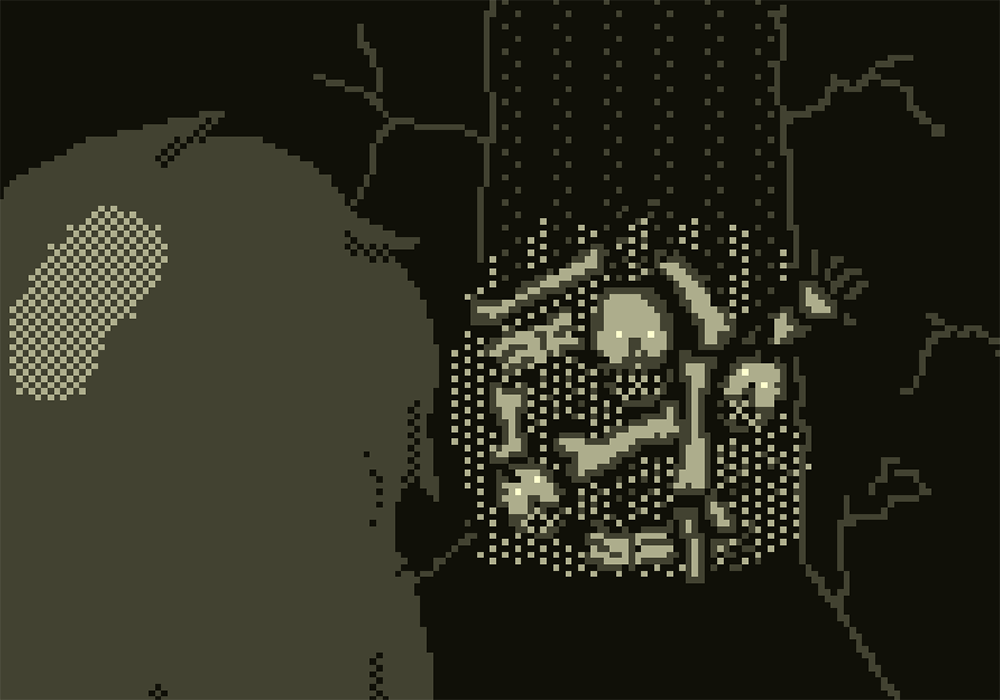
Dorotea features a suspenseful (but no-penalty) chase sequence, but its horror is largely atmospheric. The game’s uncanny pixel-art insert illustrations contribute to the feeling of something being terribly amiss, as do the ghosts and monsters, but the game also explores the anxiety generated by the prospect of being trapped in the past. As much as we might like to romanticize the medieval period, the culture shock experienced by most people – especially women – would likely be atrocious.

Putting its supernatural elements aside, Dorotea dwells in what might be called “archive horror,” or the morbid claustrophobia of a closed room filled with the relics of people long dead. There’s the dankness of the space itself, as well as the fear of the door swinging closed behind you, trapping you inside with nothing but dust. Then there’s the very real possibility that, in all the detritus of the past, you might find something deeply disturbing that you wish you hadn’t seen – or that someone very much wanted to hide. With its retro graphics and creepy pixel illustrations, Dorotea is a fantastic vehicle for conveying a sense of unease.

Dorotea is a short game, but it nevertheless manages to pull off a gut punch of a twist ending while indulging in a few interesting experiments with the ludic medium. The game was created for Italocurso Game Jam 2025, which is themed on folk horror specific to regional cultures in Italy. The 33 entries include a number of games offered in English, and all of them look amazing.

Bloodbark

Bloodbark
https://sirtartarus.itch.io/bloodbark

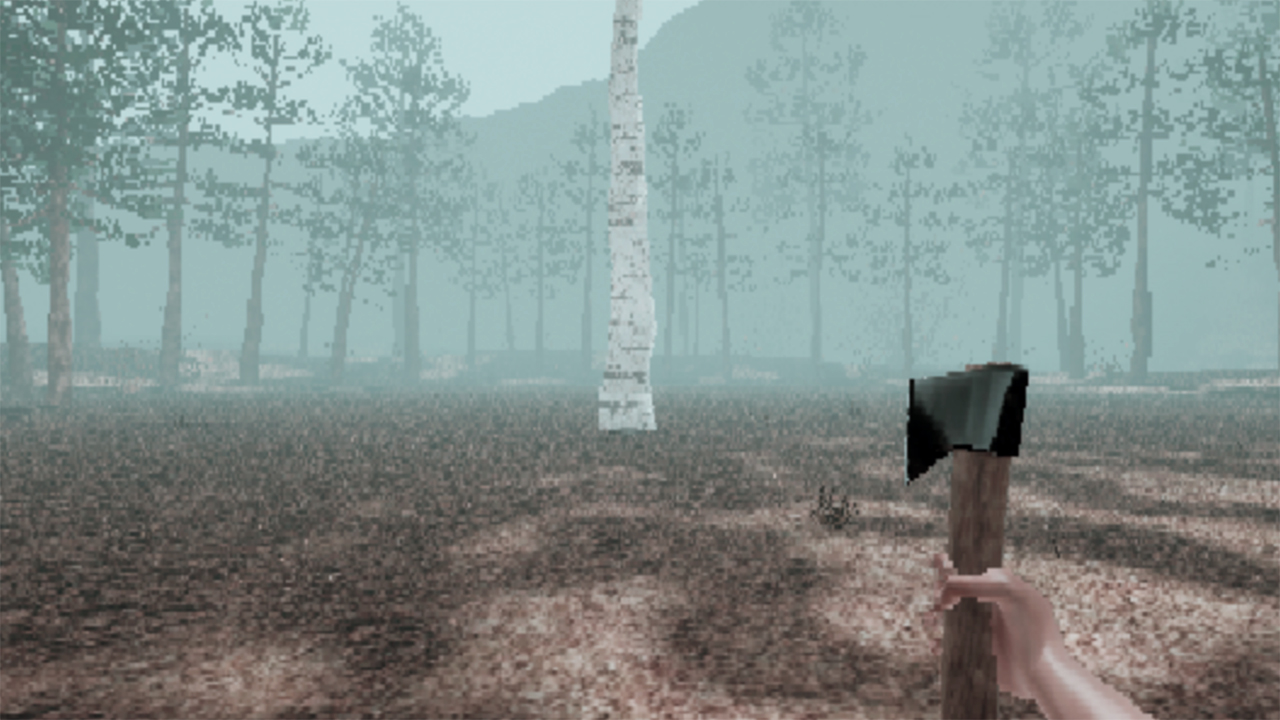
Bloodbark is a forest horror game based on the art of Eduardo Valdés-Hevia that’s free to download and takes about half an hour to play. You play as a lumberjack camping out in a small cabin next to a state park where a new type of tree has been discovered. Although these trees look like normal birches on the outside, their wood is bright red and fetches a high price. The lumberjack’s job is simple – he needs to find the special trees on his employer’s fenced-in property, cut them down, and return the timber to his cabin.

Still, given how much blood is involved… Are you really sure that it’s trees you’re chopping?

The gameplay of Bloodbark is limited to wandering around (with tank controls) and striking various objects with your axe. As you walk, your character’s thoughts automatically appear on the screen as text overlay. The lumberjack is somewhat unwell at the beginning of the game, and he becomes progressively more unhinged as the days pass. Fun times!

The standard route of progression through Bloodbark is fairly well signposted and easy to follow. If you like, however, you can wander to your heart’s content, and the game features a number of achievements and collectibles. Though it won’t have any effect in most circumstances, you can also hack at anything you like. My favorite surprise in the game is a large cocoon suspended from a pole on a dock at the lake. If you manage to find it and get it open, you’re in for an odd little treat.

Although the twist to the story is nothing you wouldn’t expect, the writing leaves a number of interesting questions open to the player’s interpretation. I am not unsympathetic to the lumberjack, who has reasonable doubts about the job he’s been paid to do, and I’m just as annoyed as he is by the car alarms and other annoyances from the neighboring state park. I also think it’s telling that the lumberjack won’t cut down any tree he’s not paid for, no matter how hard the player tries.

My only issue with Bloodbark is that it conveys “darkness” by turning the visual contrast down to zero. Unless you play the game in a sealed room with no external light, the screen appears to be almost solid black. Depending on the quality of your monitor, the parts of the game that take place at night can range from needlessly annoying to impossible to see. It’s a shame, but I’m afraid that this flaw in the game’s visual design may make it inaccessible to many players.

Thankfully, when you can see the game’s graphics, they’re quite lovely. I’m a fan of this sort of lo-fi crispiness to begin with, and I think it creates an interesting contrast with the visual style of many of the secrets you can encounter. To give an example, interacting with three roadside crosses will trigger the brief appearance of a Biblically accurate angel, and the fluidity of this manifestation is a sight to behold against the pixelated mountains and treetops.

If you’re unable to play Bloodbark yourself due to accessibility issues, I’d recommend (this video), which has no voiceover and allows you to watch a streamlined yet still thorough run of the game. Whether you’re watching the game or playing it yourself, Bloodbark is an oddly relaxing game about losing your sanity in the woods, and I’d recommend it to anyone who enjoys the themes and imagery of horror but is happy to dispense with the tension and jumpscares.

Apartment Complex

Apartment Complex
https://kinerus.itch.io/apartment-complex

Apartment Complex is a short and free-to-download narrative exploration game set in a mostly abandoned apartment building. The only human occupants of this building are its two landlords. You play as one of the owners, who is middle-aged, jobless, and depressed. In an effort to do something with his life, your character takes it upon himself to check in with the tenants, who are not even remotely human.

The game only takes about twenty minutes to play, and the gameplay consists of walking through the three-story building and talking to the tenants. Just to put this out on front street, Apartment Complex has a message, and that message is that landlords are bad. I don’t disagree, but the game isn’t shy about being didactic. Putting the armchair Marxism aside, the writing is a lot of fun.

Each of the eight tenants (inasmuch as they can be counted) is a Lovecraftian monstrosity that defies Euclidean logic but still needs a place to stay on this particular plane of reality. Perhaps because of his depression, your character isn’t the least bit bothered by the ontology of these beings. Regardless of whether he’s talking to the fungus-infested remains of the former co-landlord, a divorced dad with multiple alligator mouths, or a colossal all-seeing eye of the abyss, this guy takes each of these conversations in stride.

And honestly, this is such a mood. I get it. Sanity-altering cosmic abnormalities are a dime a dozen, but you know what’s really fucked up? The unequal distribution of wealth across class lines. Again, Apartment Complex has a message, but it’s not wrong.

Also, given that the creator is only twenty years old, I admire the accuracy of the game’s portrayal of the jaded middle-aged mindset. Like does it really matter that your neighbor is an eldritch abomination who exists in the shadows of reality? Does it even matter.

Where Apartment Complex shines is the boldness and creativity of its 16-bit pixel art. The floorplan and room layouts of the building are bog-standard, but the way each tenant occupies the space has to be seen to be believed. If you’ve ever wondered just how weird Earthbound-style graphics can get, this game is for you. The character portraits displayed during conversations are incredible.

From its eye-catching color palette to the dry tone of its absurdist humor, Apartment Complex makes me nostalgic for Welcome to Night Vale in the best possible way. This is a chill and fantastically creative game about monster friends and postmodern malaise, and honestly? It’s super relatable.