Deepwell

Deepwell is an Undertale-style narrative adventure game that takes about two hours to finish. You play as a blank slate character called “the Cartographer” who has recently arrived in the small forest town of Deepwell, which clings to the southern rim of a massive hole in the ground. Oddly enough, anyone who descends into the hole beyond a certain point gets “blipped,” meaning that they appear at the top of the hole as if nothing had happened. Generations of mystery hunters have sought the solution to this puzzle, but perhaps you might be the one to finally figure it out.

Deepwell is only about two dozen screens large, and there are five main characters to talk to. Most of the game involves engaging in long and meandering conversations with these characters in order to learn their stories. Sokolov manages the town library, and Evan runs the general store. Pierre has created something resembling an art gallery on one side of town, while Lily lives in a field of flowers on the other. At the intersection next to the highway, a robot named Bing helpfully provides information to visitors.  

It stands to reason that everyone living in such an isolated town would be a little weird. Aside from Bing, who is essentially a tutorial robot, each character is a self-contained short story that gradually unfolds as you talk with them. Thankfully, there are no wrong conversation choices, nor is there any missable content. The player is free to walk where they like and talk with the characters as they wish while unlocking a few extra conversation topics by interacting with each character’s environment.

On the eastern edge of town is a waterfall that hides a secret cave. Glyphs drawn onto the wall of this cave indicate whether a character’s dialogue has been exhausted. Once the Cartographer has sufficiently spoken with each of the town’s residents, a new path will open deeper into the forest to reveal a sixth character, who tempts the player with the possibility of an alternate (and much darker) ending.  

You can actually end the game any time you want by simply heading back to the highway and leaving town. You can also choose to wrap up the story at any point by taking a boat across the lake to see what’s on the north side of the giant hole. Although you’re given a choice in the final section of the game that affects the ending, I think Deepwell ties up its thematic threads quite nicely. This is a story about personal purpose and fulfillment, and about why we need art and mystery. How you approach these themes within the context of the game is up to you.

The graphics are primitive yet charming. I was put off by the crunchiness at first, but the lo-fi aesthetic grew on me. Deepwell contains a surprising number of insert illustrations and cutscenes, some of which are extremely well done. This is especially the case with Pierre, whose gallery of art installations closes with a remarkable set piece. I get the feeling that some players may find Pierre pretentious, but I appreciate his sincerity. And he’s not wrong about how visual glossiness is often a disguise for mediocrity. 

Deepwell is akin to a short story anthology that’s easy to pick up for twenty minutes at a time, but I ended up being so fascinated by the overarching narrative that I played the whole game in one sitting. The writing is exceptionally good. It gives me immense joy to know that something like Deepwell exists in the world, and I honestly feel that I’m a better person for having spent time with it.

Deepwell is free to play on Steam here:
https://store.steampowered.com/app/2803660/Deepwell/

Games like Echoes of Wisdom

Are you excited about Echoes of Wisdom and can’t wait to play it? Thankfully, there’s a wealth of excellent Zelda-style games with female and nonbinary protagonists made by small studios that you can jump into right now on Nintendo Switch. These are eight of my favorites…

Do you wish Zelda got to fight with a sword?
Check out: Ocean’s Heart

Are you nostalgic for the gameplay and dungeons of A Link to the Past?
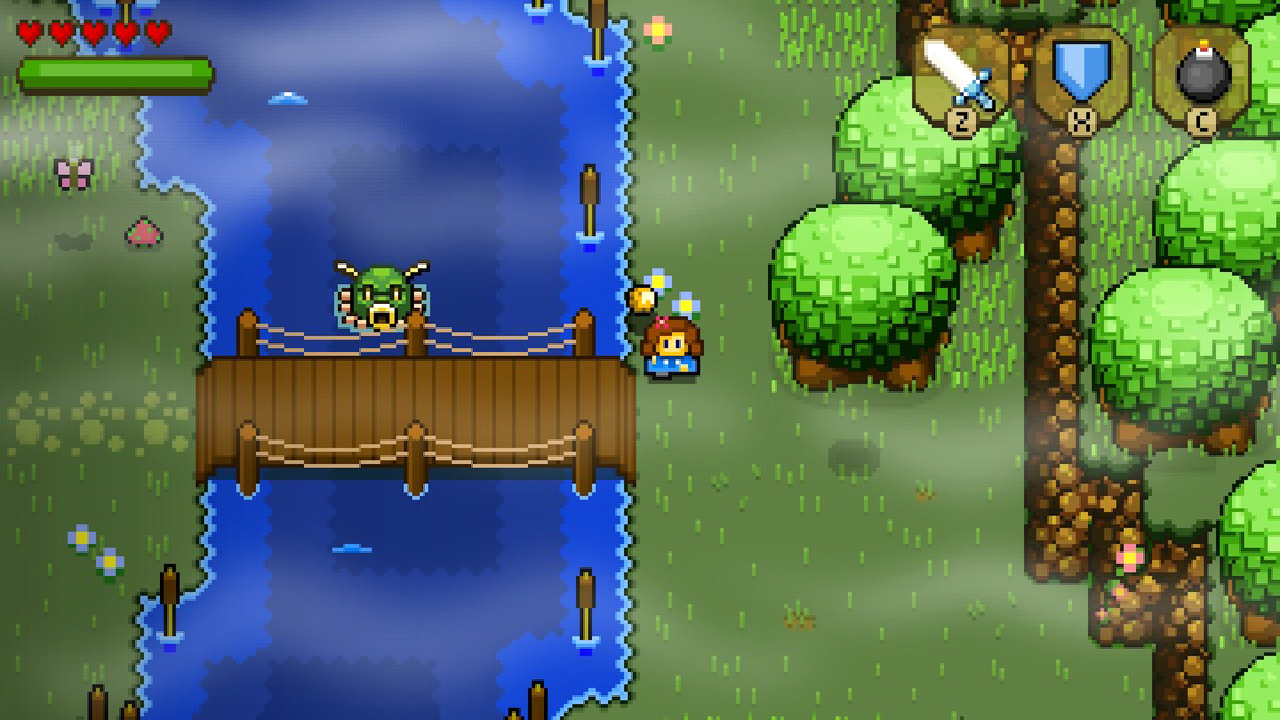
Check out: Blossom Tales: The Sleeping King

Are you hungry for more rock-tossing action?
Check out: Lila’s Sky Ark

Are you looking for cute graphics and a nonbinary protagonist?
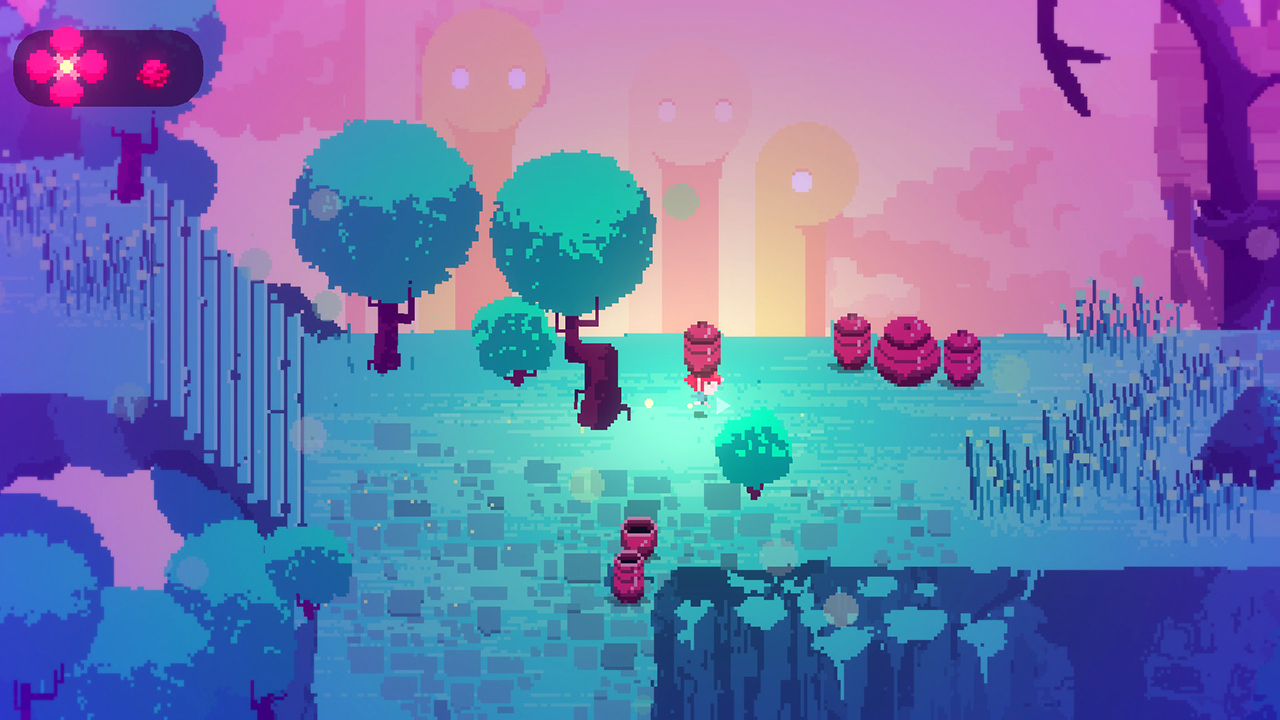
Check out: Frogsong

Would you like a simple and easy game to share with kids?
Check out: Arietta of Spirits

Would you like a challenging game with accessibility options?
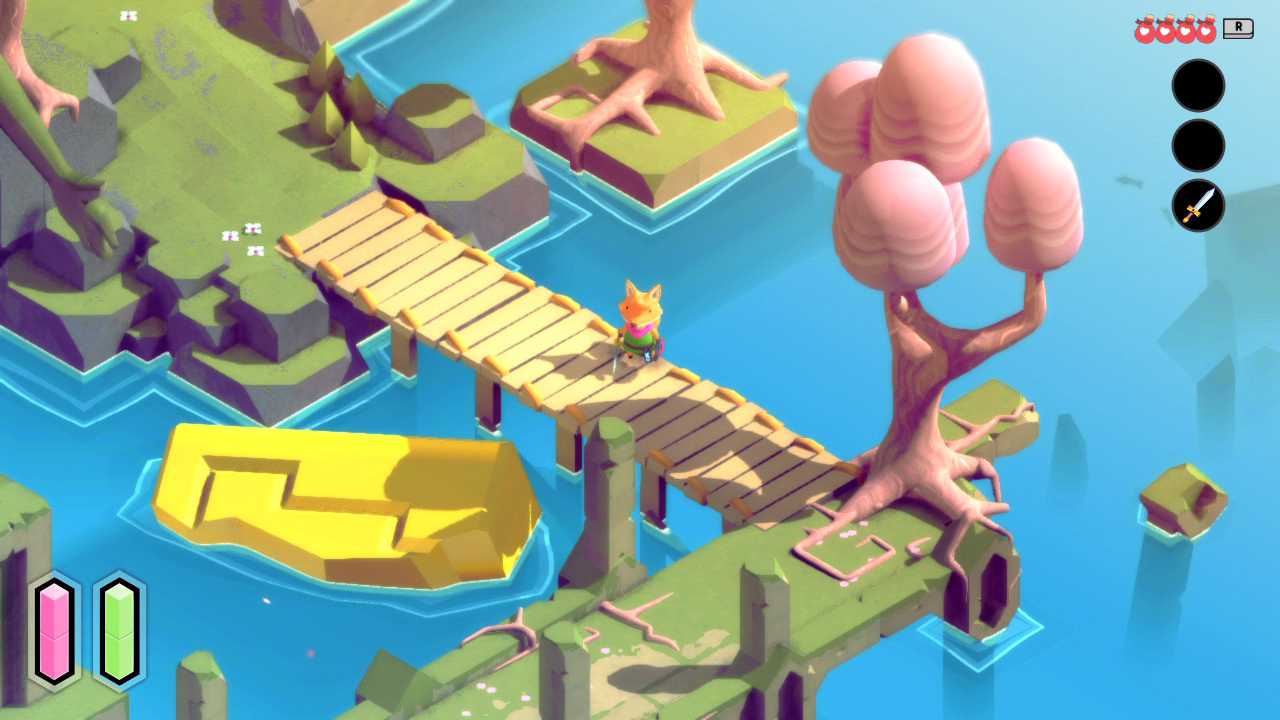
Check out: Tunic

Do you prefer the game to be super difficult and have deep lore?
Check out: Hyper Light Drifter

Do you want your female character to wield both a sword and magic, and will you be satisfied with nothing less than complex and multilayered combat in an exploration-rich dark fantasy world that hides a tragic story about the suffering implicit in the rise and fall of empires? 
Check out, unironically: Dark Souls

Neko Can Dream Review on Sidequest

I’m excited to have published a review of the indie narrative adventure game Neko Can Dream on Sidequest. Neko Can Dream was created by the Japanese yuri manga artist Nekobungi Sumire, who captures a complex and beautiful world inside the simple Game Boy graphics.

Here’s an excerpt from my review:

Neko Can Dream will take most players about two and a half hours to finish. Even though the narrative tone is gentle, the pace is quite brisk, and the excellent game design ensures that the player never becomes lost or confused. Certain elements of the individual character stories will resonate strongly with players interested in themes relating to queer identity; however, at its core, Neko Can Dream is about how the dream worlds of video games can help people at all stages of life recover from trauma and reach out for connection.

If you’re interested, you can read the full review on Sidequest here:
https://sidequest.zone/2024/05/27/neko-can-dream-bittersweet-nostalgic-treat/

Rental

Rental
https://smarto-club.itch.io/rental

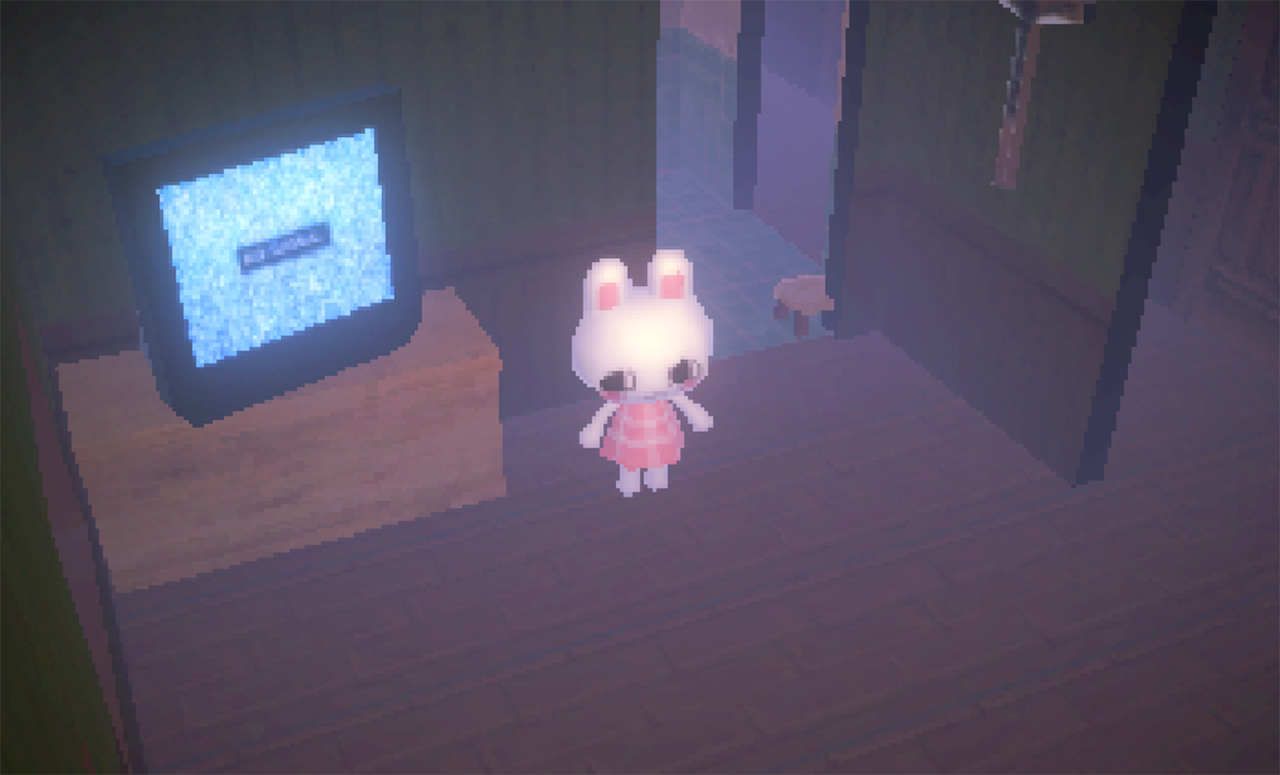
With the spooky season upon us, Smarto Club decided to take a break from being wholesome and turned spooky with Rental, an eerie game about the risks of renting beach houses.

Rental is a 32-bit game about a family of cute bunnies who rent a vacation house in the woods. This isn’t a horror game, necessarily, but it’s strange and lowkey creepy. It takes about fifteen minutes to finish, although it might take slightly longer for people who are out of practice with PlayStation One style 3D spatial navigation.

As the daughter of the bunny family, your job is to walk through the house and collect objects. The twist is that there are House of Leaves shenanigans going on. The first half of the game takes place aboveground, while the second half is more of an adventure. There’s a shadow monster in the house with you, but its appearance seems to be random. I only saw it once, briefly, during my second playthrough, and it wasn’t a big deal. Rental is much more atmospheric than scary, and most of the atmosphere has to do with the ambient music and the oddness of the scenario.

Rental works well as analog horror. The graphics and gameplay and washed-out colors feel super outdated, as do the Hello Kitty character designs. There’s also the combination of the nostalgic childhood experience of going on vacation with the childhood discomfort of trying to settle into an unknown place. The house you’re exploring has a standard layout and floorplan, and the girl often comments on how normal and unremarkable everything is, which adds to the sense of the uncanny.

The Christian religious icons the girl has to gather are also totally normal. For me, this created an extra layer of resonance in the sense of going to a mundane place with a lot of Christian art and imagery and feeling that everything is slightly weird about the oddly suffering men and oddly beatific women and oddly mature babies. I appreciate the girl’s no-nonsense attitude toward everything in the house, which makes the ending all the more amusing.

There are no jumpscares in this game, and it’s not challenging. Rental is a simple but spooky fifteen-minute treat for connoisseurs of perfectly normal houses that are ever so slightly larger on the inside.

List of Free Short Horror Games on Sidequest

I’m excited to share a project I’ve been working on for several months: an annotated list of ten retro horror games that are free to play on Itchio. I posted reviews of many of these games here on this blog over the summer, and I’m grateful to the amazing editors at Sidequest for allowing me to refine my thoughts and present everything in one article.

To me, one of the fun things about indie retro horror games is that many of them deliver their central idea with as much concision and impact as possible, allowing the player to become thoroughly spooked in one sitting. So that readers can get a decent idea of what to expect, I organized my list according to roughly how long each game takes to play.

If you’re interested, you can check out the article here:
https://sidequest.zone/2023/10/23/ten-short-horror-games-on-itchio/

I really enjoyed putting this list together, and I’m looking forward to making another one next year!

Momodora: Reverie Under The Moonlight

Momodora: Reverie Under The Moonlight is a 2D fantasy Metroidvania with adorable 16-bit pixel graphics and an emphasis on cute magical girls. It has an Easy Mode that’s genuinely chill, and it took me about seven hours to get 100% completion. Momodora features a lot of nods to the Dark Souls games in general and Bloodborne in particular, but I think a more accurate comparison (at least on Easy Mode) is the mellow Nintendo DS adventure-platformer Super Princess Peach.

I came to Momodora not knowing what to expect, and I was pleasantly surprised to find that it’s absolutely delightful. The game is relatively simple, but that’s okay, because it’s very good at what it does.

You play as Kaho, a cute girl wearing a white mage hood over a black miniskirt dress and thigh-high stockings. I get the feeling that her theme is supposed to be “sexy Shintō shrine maiden,” and she uses a giant red maple leaf as a sword. She also has a bow with unlimited arrows whose attack can be charged, an adorable dodge roll, and the ability to double-jump right out of the box. Her animations are lovely, and she’s a lot of fun.

Kaho is a silent protagonist, but what you pick up from other characters is that she’s come from abroad to talk to the Queen of Karst about a curse that has spread from the castle city into her small village. You begin the game on the border of a beautiful and vibrant 16-bit pixel forest before entering Karst, which is what the gothic Victorian city of Yharnam (from Bloodborne) would look like if it were rendered in Chrono Trigger style graphics. Whatever curse is threatening Kaho’s village has subsumed Karst in full force, and Kaho has to fight all manner of cute imps, cute witches, cute sorceresses, and cute devils, all of whom have colorful and interesting anime designs.  

Before you can go into Karst Castle proper, you need to find four seals that unlock its gate. This quest sends you into a maze of interconnected areas that include a flooded graveyard, an overgrown garden, a giant crematorium, and the rafters of a ruined cathedral. All of these areas are beautifully rendered and a joy to explore, and along the way Kaho meets a handful of cute NPCs and picks up a limited arsenal of items whose flavor text provides a hint of worldbuilding in classic Dark Souls fashion. Kaho gains a few more abilities – one in particular is a true blessing and a miracle on this earth, but I won’t spoil it – but Momodora sticks to its core gameplay and never gets too complicated.

In addition, you can find and collect 17 health upgrades, as well as 20 silver bugs to trade to a garden rabbit for prizes. About half of these collectables require minor exploration and backtracking, and the other half are hidden in ridiculous ways that I don’t think most players would be able to find without a walkthrough. Thankfully, if you’re playing on Easy Mode, it’s totally fine not to worry about the collectables you don’t find naturally.

You also pick up currency from defeated enemies that you can use to buy relics (which are essentially magic spells) from various merchants, but none of these items are necessary. Since Kaho doesn’t otherwise gain levels or become more powerful, I can imagine that some of the boss fights might be challenging and require a bit of an extra advantage, but this isn’t an issue in Easy Mode, in which Kaho begins the game with two powerful relics that will carry the player through the entire game.

In conclusion, Momodora is a chill and beautiful Metroidvania style action-exploration game that’s like Bloodborne for people who want to enjoy the gothic story and atmosphere without having to spend dozens of hours slamming their head against a wall to git gud. Also, since almost every character and enemy is a super cute magical girl or sexy adult witch-demon, I guess you could say that Momodora is like Bloodborne for lesbians.

I mean, Bloodborne itself is very much “Bloodborne for lesbians,” but you get what I’m saying.

Sumire

Sumire is a short nonviolent story game in which you play as the eponymous Sumire, a young girl who lives in a small town in rural Japan. Sumire’s grandmother recently died, and her father has left home. To make matters worse, Sumire’s childhood friend has progressed from ignoring her to outright bullying her. One morning, a magical talking flower (who is not evil, thank goodness) shows up at Sumire’s house and tells her that he has the power to help her experience one perfect day, at the end of which she might be able to see her grandmother again.

Sumire makes a checklist of what would constitute “a perfect day” and then sets out with her flower companion to achieve all of her goals, which include making peace with her former friend and confessing her feelings to a boy she likes. Along the way, you’re free to explore Sumire’s hometown, which is divided into about half a dozen small and manageable sections. The flower’s magic allows Sumire to speak with animals, plants, and a few inanimate objects, and each section of the town is filled with interesting characters and conversations.

At several points in the story, your character is asked to make a binary choice. One of these choices is always “be a decent human being,” while the other is “I wonder if this game has a genocide route.” Reviews of this game tend to make this seem far more complicated than it actually is, like…

Reviews: The game asks you to make difficult choices.

The game: A cute baby frog asks you to carry him to the river, which requires no effort on your part. Do you happily agree, or do you tell him that he’s disgusting and that you wouldn’t touch him even if he paid you? If you agree, you get a tangible reward and some extra dialog; and if you don’t, he doesn’t talk to you again.

Reviews: The game forces you to think about the consequences of your actions.

The game: Are you friendly to the slightly nerdy kid who’s friends with the boy you like, or do you tell him that he’s a fat fuck who deserves to be bullied? If you’re friendly, this unlocks a fun but entirely optional minigame; and if you’re not, he doesn’t talk to you again.

To me, it was always crystal clear what choices Sumire should make in order to achieve her goals, which are written in the form of a checklist on a piece of paper that you can access from the menu screen. For example, one of your goals is basically “tell Mom I love her.” So, when you trigger a scene in which you have an option to tell your mom you love her… You should probably do that!

The joy of this game is being able to roleplay what it feels like to be friendly and kind and have your kindness acknowledged and rewarded. There are no trick questions, and there are no decisions that don’t turn out the way you expect. For example, if you tell your mother that you love her, she doesn’t respond by accusing you of being emotionally manipulative for demanding attention when she clearly wants to be alone; this just isn’t that sort of game.

When I say “that sort of game,” I’m specifically thinking of Spiritfarer, which is written about adults for an intended audience of other adults. Spiritfarer is about as wholesome as a game can be, but it acknowledges that not everyone is going respond to kindness with gratitude. Meanwhile, I’m pretty sure that Sumire is intended for a younger audience, or at least an older audience that wants to feel nostalgia for a childhood that isn’t complicated by a more mature understanding of human behavior.

That being said, I’m curious about what would happen if you were to consistently choose the antisocial dialog options. Does the game get dark and creepy? Because that would be interesting. I couldn’t find anything about this online, so perhaps it might be worth experimenting with in the future.

Aside from the (probably?) limited satisfaction of trying out different dialog choices, I’m not sure if Sumire has any replay value in the traditional sense, as you can experience everything the game has to offer during a single two-hour playthrough. Regardless, the world of the game is so beautiful and charming that I’m already looking forward to returning to it in the future. Sumire is the video game equivalent of comfort food, and it’s perfect for a rainy afternoon when you need some flowers and sunshine in your life.