Evelyn: A Gothic Tale

Evelyn: A Gothic Tale
https://frankiesbugs.itch.io/evelyn-a-gothic-tale

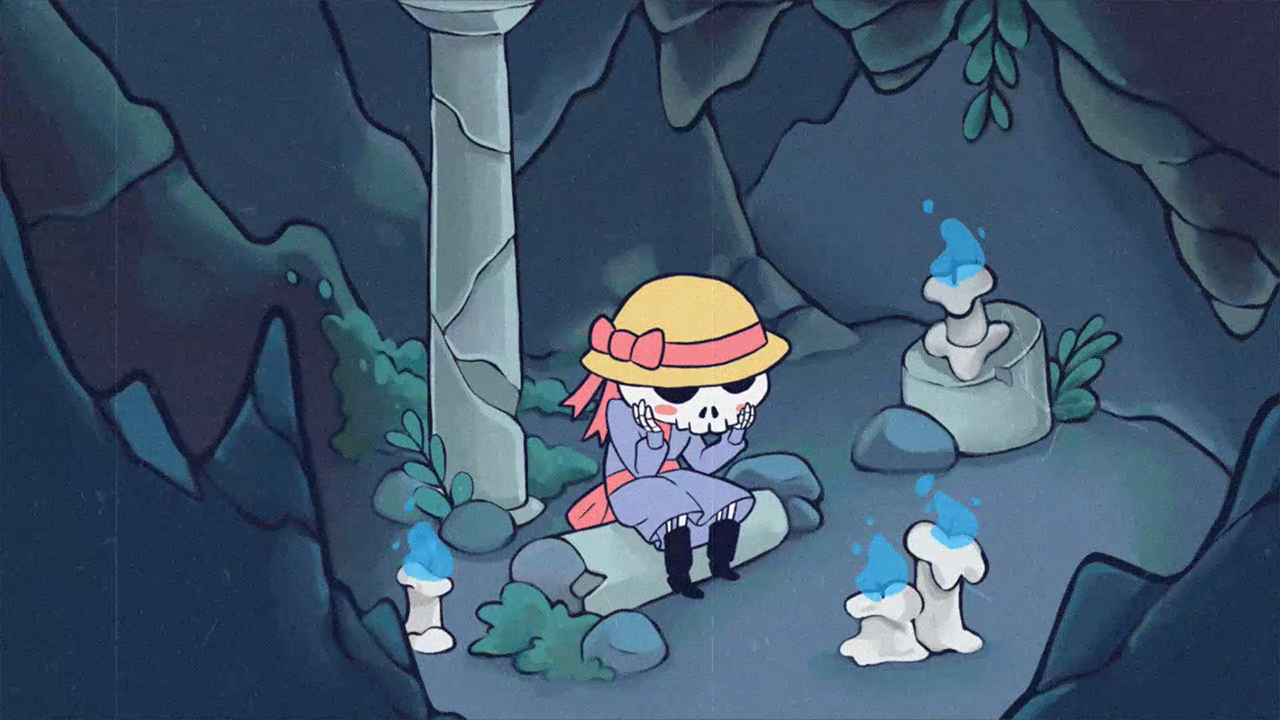
Evelyn: A Gothic Tale is an atmospheric 2D puzzle platformer currently being created as a solo project by the Italian artist and game developer Frankiesbugs. The demo for Evelyn, which is free to download from Itch.io, features full Xbox controller support and takes about ten to fifteen minutes to finish, though you’ll likely want to spend more time exploring.

You play as the eponymous Evelyn, a small skeleton in a jaunty blue dress who’s become bored in her underworld crypt and wants to return to the world of the living. Getting there will be no easy task, however, as the way is obstructed by numerous gates and barriers. In addition, Evelyn will need to collect enough flames to light her way forward through the final stretch of darkness between worlds. If she manages to get her bony fingers on enough flames, she might even be able to secure an additional passage for her charmingly pathetic friend Rupert.
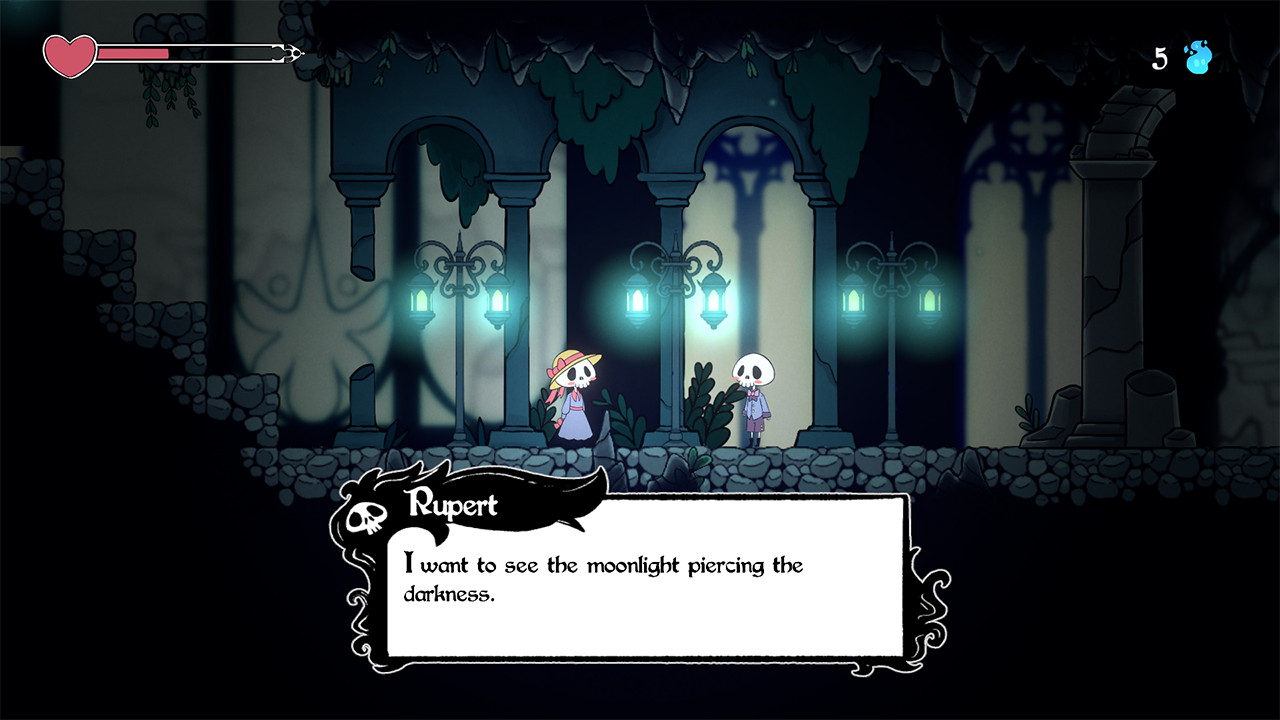
There’s no combat in Evelyn, but environmental hazards will hinder the player’s progress. In the demo, these hazards primarily consist of pits and spikes that Evelyn must jump over in classic 2D platformer style. The twist that Evelyn brings to this formula are its light-based puzzles, which involve obstructing or redirecting beams of light in order to trigger changes in the world and thereby grant Evelyn the keys she needs to pass through a series of grand stone gates.

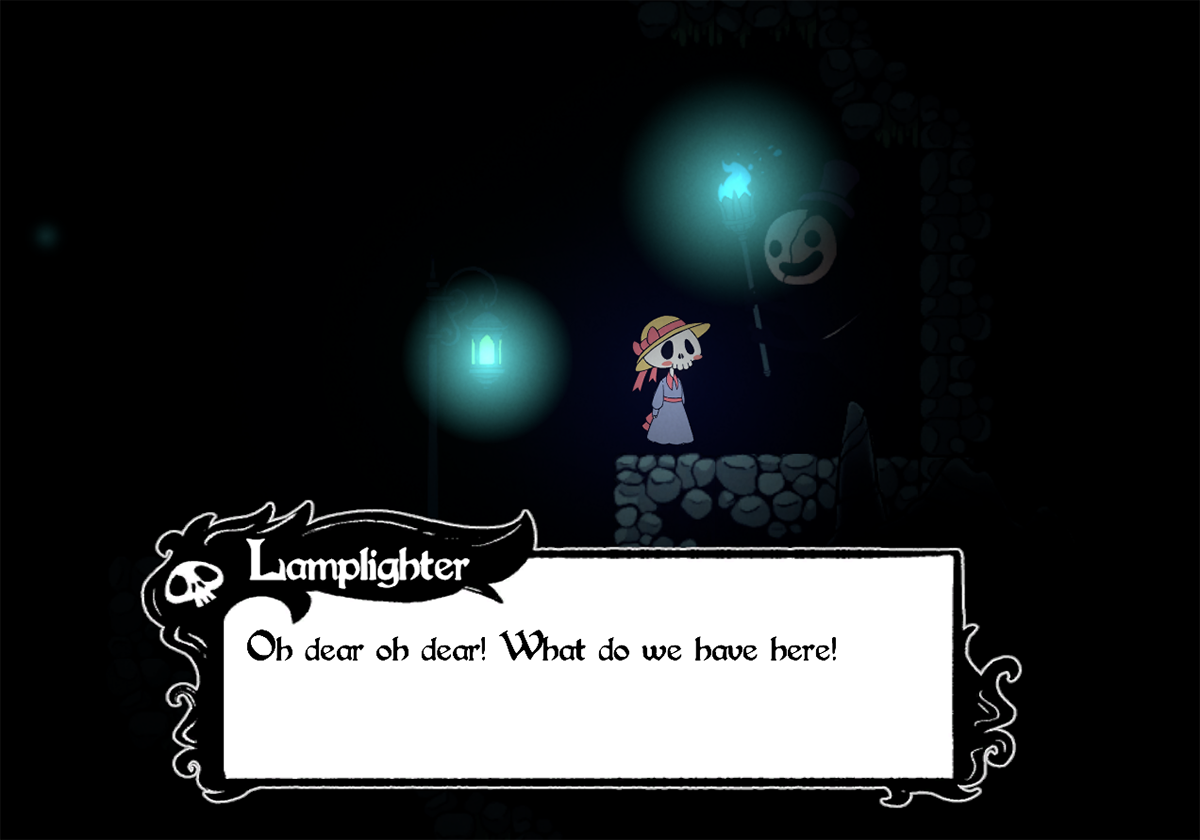
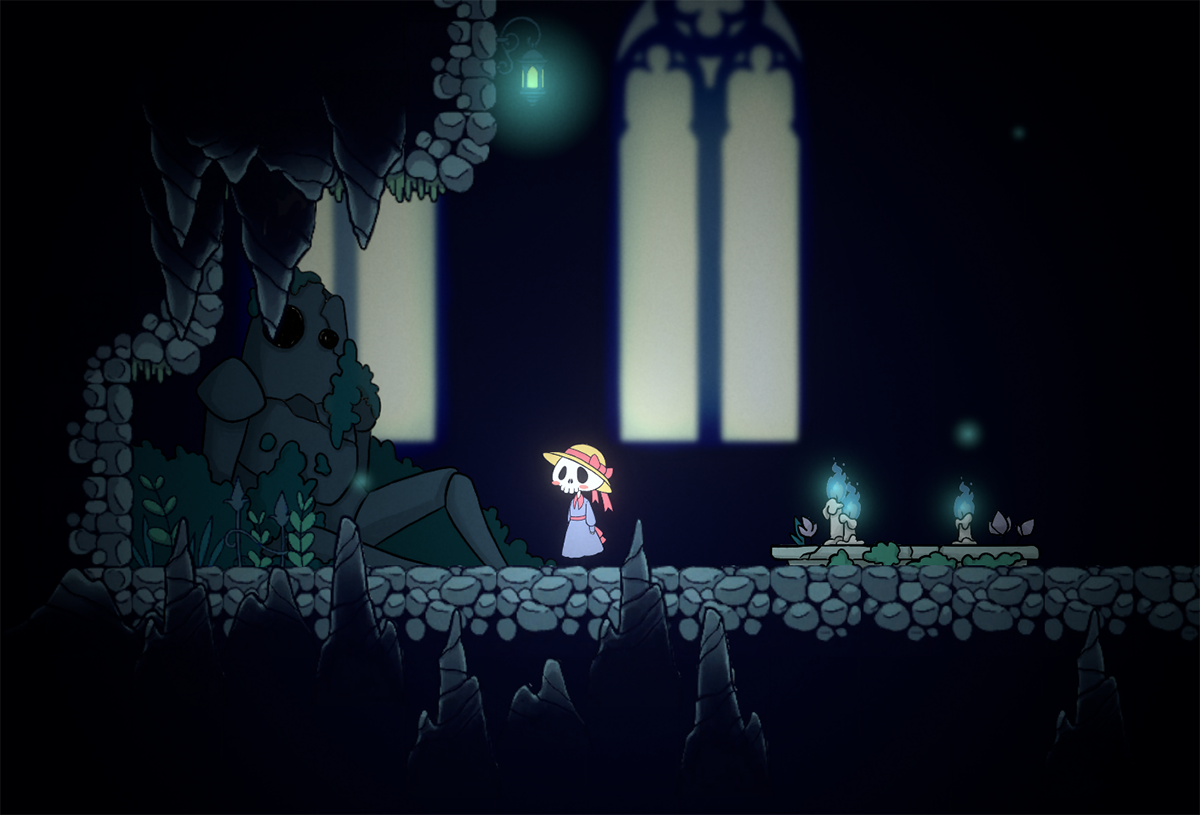
The game mechanics involving light also carry over to the platforming. While most of the map is rendered in a vibrantly colorful style that still manages to convey the atmosphere of an underground crypt, a few of the side paths are shrouded in actual darkness broken only by strategically placed lamps. In order to navigate these dark sections, the player must rely on the instincts developed in previous sections while paying close attention to the lamp placement. The interplay between light and dark sections is perfectly balanced. I was always excited to venture into the darkness of a shadowy side path, but I always felt relieved to return to the well-lit areas. 
Evelyn features full controller support, and I played with an Xbox controller with no problem at all. Evelyn’s movement speed is perfect in relation to the size of the map, as is her jump height. Though I suspect this game might be classified as “casual” in terms of difficulty, its gameplay is enhanced by a nice balance between freedom of movement and the small areas of friction impeding progress. Evelyn’s health bar contributes an additional element of challenge, as you can only fall into so many pits or spike traps before you have to start over. I will admit that I died a few times while exploring, but experience and familiarity with the map compressed the time I needed to navigate back to the point I died, resulting in a pleasantly smooth learning curve.

When I think about what makes a good Metroidvania, it’s not just the level design and gameplay, but also the sense of exploration and discovery that (more than anything, I think) distinguishes the genre from an action platformer like the Super Mario games. The hand-drawn characters and environment of Evelyn inspire a sense of moving through an actual world, especially in the details of the background art that caused me to wonder how a particular creature might have come to be tucked away in a particular dark corner.
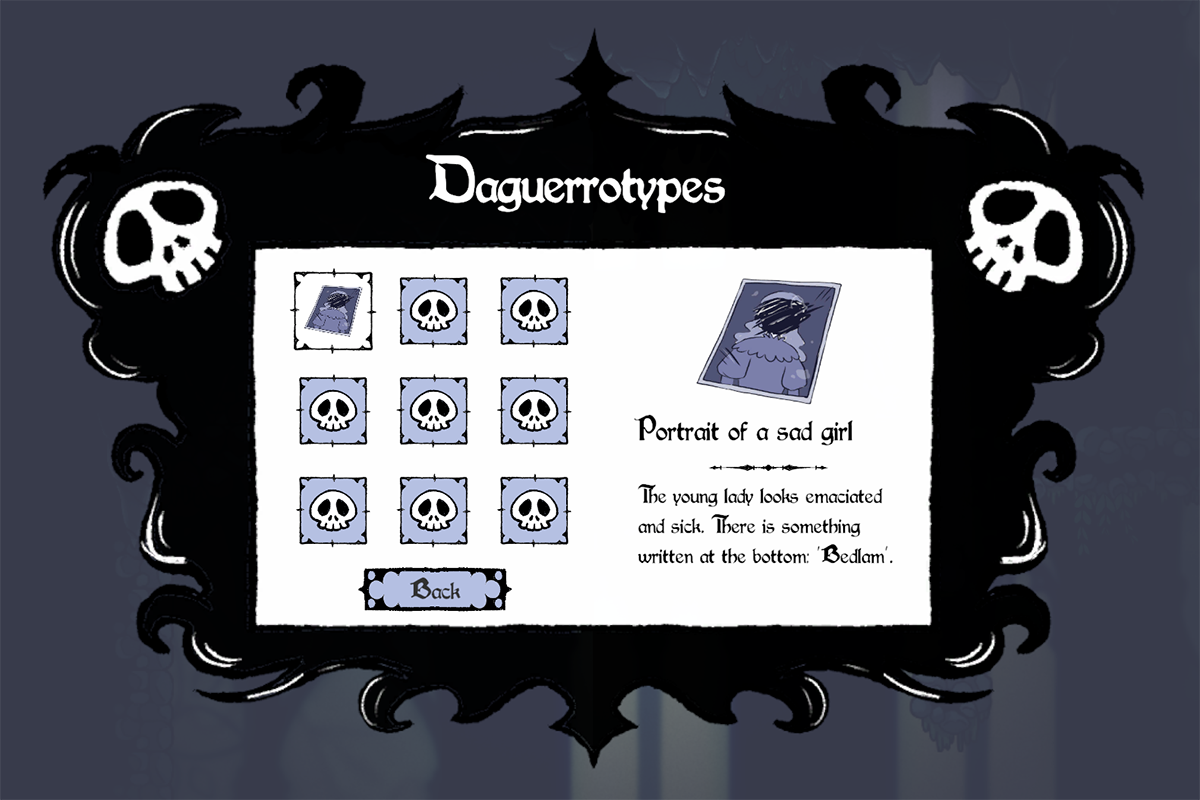
The icing on the cake of any standout Metroidvania is the writing. Balance is important in this aspect of game design, as the text needs to walk a fine line between being too sparse and too voluble while simultaneously offering intriguing information without indulging in exposition. The writing in Evelyn is fantastic, from the dialogue to the text on the collectible daguerreotypes, and each character has a distinct voice (and there’s one character in particular that really surprised me, bless his heart). Evelyn herself is a silent protagonist, but her in-game animations express a great deal of character, as does the narrative animation that opens the game in the style of a silent film from the 1920s.

I’m amazed by how well-polished this demo is, and I’m curious to uncover more about the story behind this crypt and its restless inhabitants, which seems just as disturbing as the character art is cute. Everything about this spooky little game works in concert to lure the player deeper into its underground world, and I’m looking forward to spending more time in the company of these strange skeleton children. For the time being, I’m cheering Evelyn on as she makes her way out into the world.
Project Kat

Project Kat is a short narrative horror game that’s free to play on Itch.io (here) and on Steam (here). A playthrough culminating in the game’s “true ending” will take about half an hour, but adventurous players might spend another fifteen minutes experimenting with paths leading to a premature death.

You play as a high school student named Kat who stays late at school one night to undertake an occult ritual of unknown origin and with unknown consequences. Kat has attempted a number of similar rituals, all to no avail. She claims not to believe in the supernatural and seems to be performing these rituals as a hobby. Unfortunately for Kat, this ritual is different.

As Kat, you have the run of three empty classrooms, a meeting room currently being used by the school’s Occult Club, and the Drama Club’s storage closet. Your job is to collect the materials needed for the ritual, such as chalk and candles, and then to perform the various steps of the ritual itself.

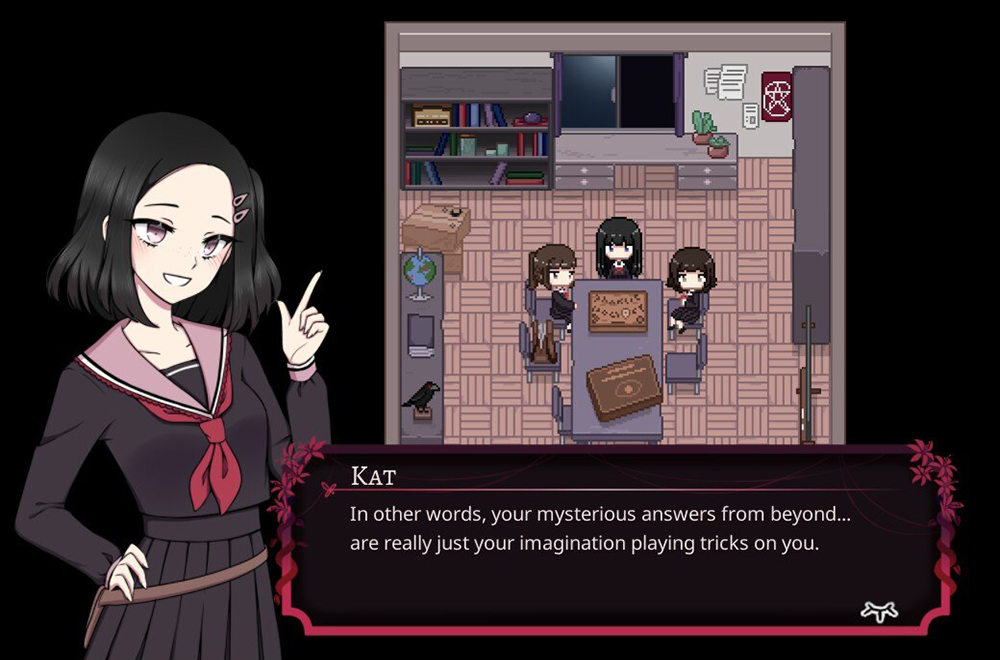
Coincidentally, the three members of the Occult Club are also spending the night at school. Kat taunts them as they experiment with a Ouija Board, saying that they’re deluding themselves. Despite getting the night off on the wrong foot, Kat can continue to talk with the three girls, and she can even recruit them to participate in the ritual with her.

This might be a mistake, however, as the instructions for the ritual state clearly that it must be performed alone.

Should Kat manage to complete the ritual successfully, the game ventures into a surreal space reminiscent of Yume Nikki. This is when the story stops pulling its punches, and the player begins to understand why Kat has started performing occult rituals – and also that her odds of surviving this one are very low. I was impressed by the visual creativity of the final section of the game, and also by the darkness of the ending it leads to.  

I’m a fan of the Japanese tradition of occult “solo games” like One-Person Hide and Seek and Satoru-kun. While many of these rituals are meant to summon a spirit, the purpose of others is to create a gateway to a different dimension. If the dimension-linking ritual is performed correctly, what happens then? No one ever says, and Project Kat offers as good of an explanation as any regarding why this might be.

Since it’s a relatively short game, Project Kat leaves a number of questions unanswered. Still, I really enjoyed the story, which has good pacing and a nice tonal creep from camp into horror. Project Kat is a neat little game to play in one sitting, and the creators have released a longer story set in the same world, Paper Lily, which is free to play on Itch.io (here) and on Steam (here).

Il Mistero di Felina

Il Mistero di Felina
https://spesknight.itch.io/felina

Il Mistero di Felina (The Mystery of Felina) is a free-to-play 2D narrative horror game that takes about twenty minutes to finish. The story follows Lara Lorenzi, a travel influencer who’s been invited to the small island of Felina to participate in a festival that celebrates the island’s cats.

Unfortunately for Lara, there is weirdness afoot. The island’s sheep have been dying, and there seems to be blood on the walls of the local church. In the downstairs tavern of the inn where Lara spends the night, a group of older men have gathered in a somber toast to their friend, who will be “leaving the island” soon. The young man who invited Lara to the island is awkward and sweaty, and he seems to be uncomfortably nervous about something.

Meanwhile, Lara’s been getting strange comments online, presumably about a nasty bit of drama with a fellow influencer. Though she’s picking up bad vibes from the island, Lara is in dire need of positive content, and she can’t afford to waste the opportunity.

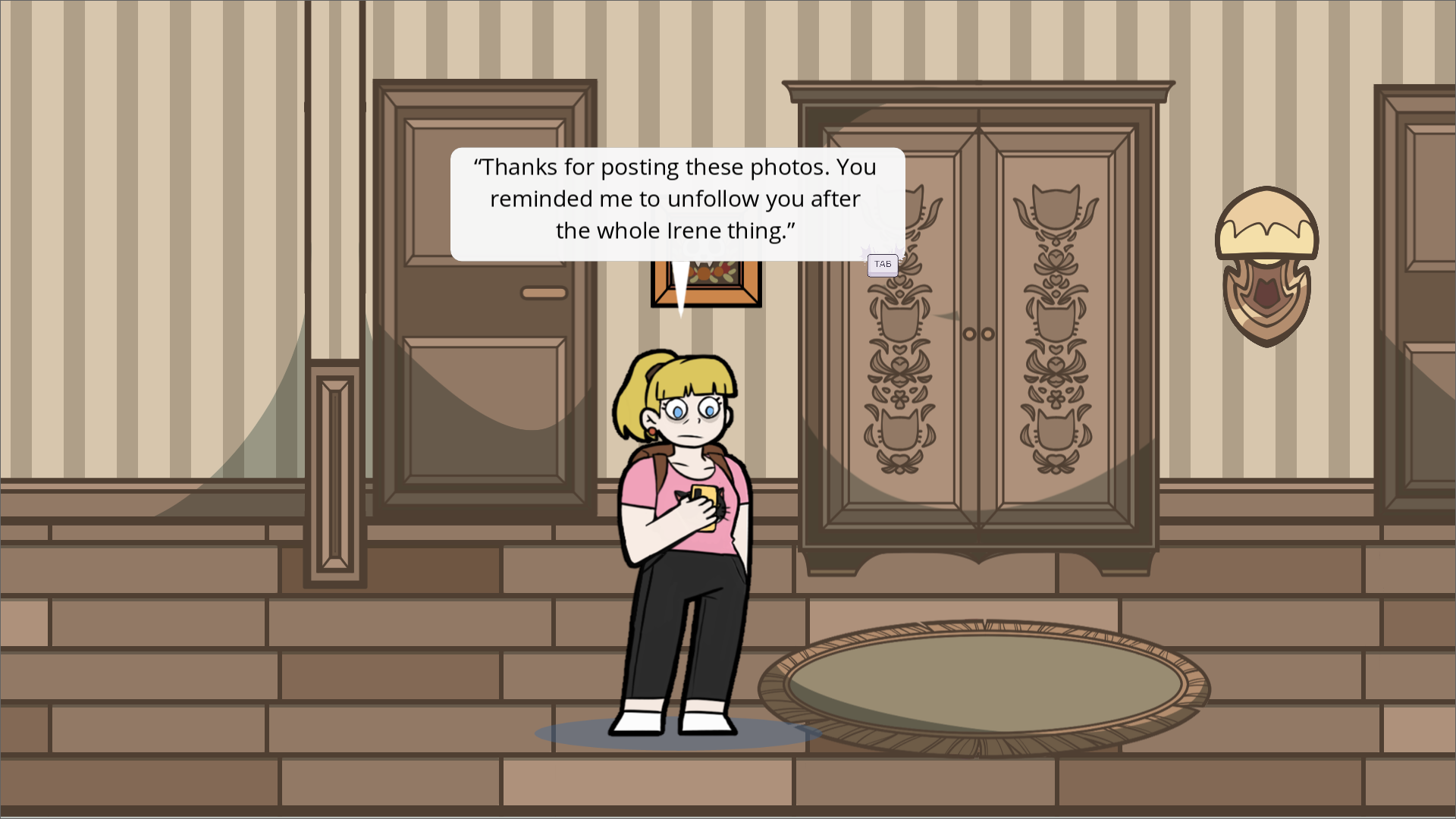
As Lara, the player walks around the small town, enjoys the scenery, and advances the story through conversation. There’s also an optional but fun smartphone menu that allows the player to take pictures and upload them for Lara’s followers to enjoy.

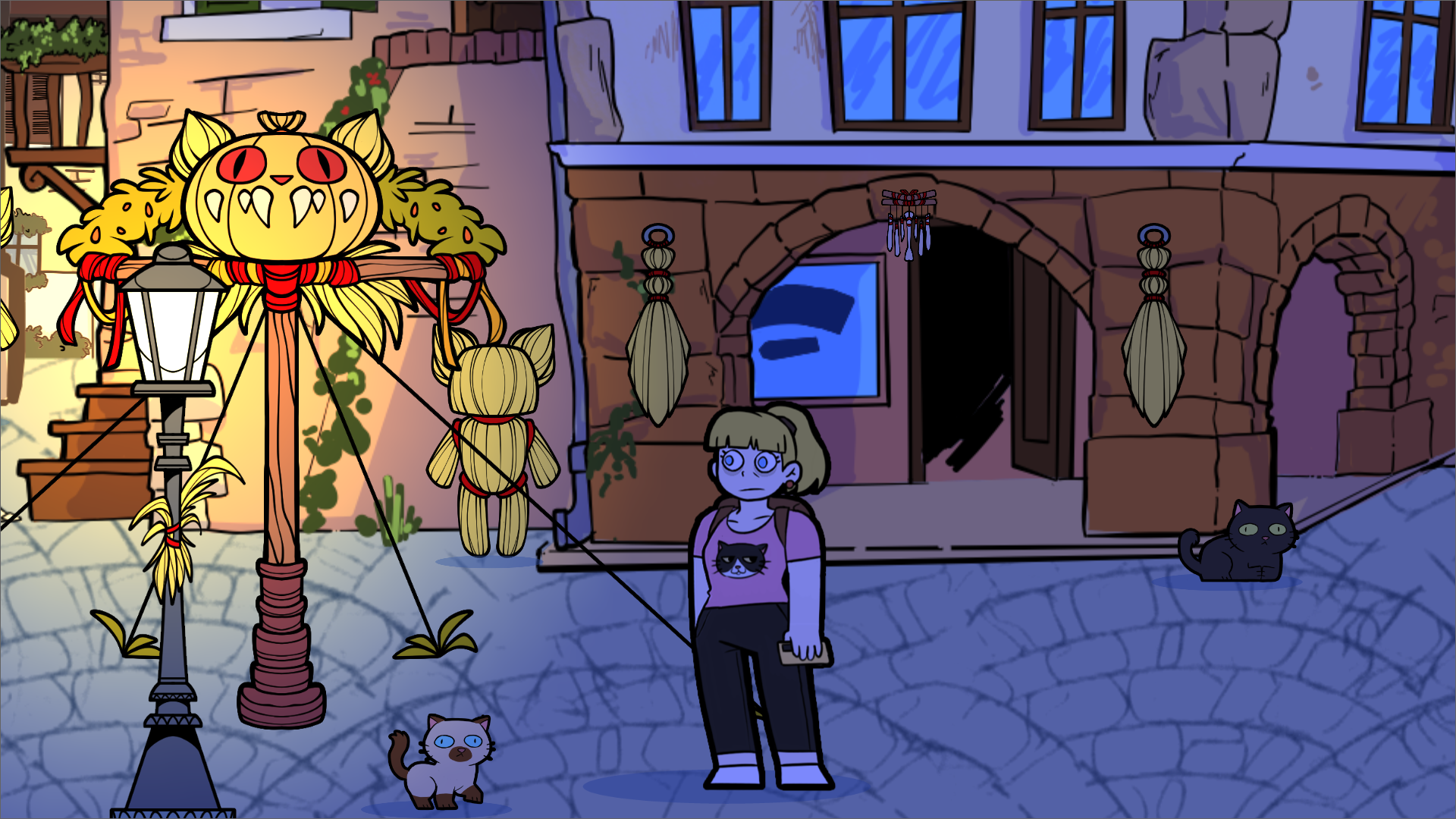
You’ll almost certainly want to take pictures, because the art in this game is wonderful. The architecture is shabby yet quaint, while the interiors are filled with interesting details. The people on the island are all colorful characters, and the festival decorations are very cute yet deeply sinister.

I also appreciate the character animations. The way Lara walks around the island is well-observed, especially in relation to her character design. Later, when Lara crouches while wearing a costume in order to pass herself off as a child, her walking animation is even more artistic. There are a number of cats roaming around the island, and it’s a treat to stand still for a moment and observe their behaviors.

Il Mistero di Felina echoes with hints of classic gothic folk horror like The Wicker Man and The Shadow Over Innsmouth, and it also recalls more contemporary spooky stories like Oxenfree, Night in the Woods, and… Neko Atsume. Still, this unnerving little game is uniquely its own thing, and I would have gladly spent more time on Felina basking in the Mediterranean sunlight while picking apart the dysfunctional personalities of the island’s residents.  

The game has a convenient autosave function, but you can easily play Il Mistero di Felina in one sitting. The story is enjoyably campy but also legitimately creepy, with excellent pacing and a tidy conservation of detail. I’m a fan of the unique aesthetic, whose bright colors work brilliantly to enhance the horror. I love every indie horror game I play, but this one is something special.

I can’t resist closing this without at least one cat pun, so here you go: Il Mistero di Felina is a purrfectly spooky cautionary tale that knows exactly how to sink its claws into contemporary anxieties.

Dorotea

Dorotea
https://pasquiindustry.itch.io/Dorotea

Dorotea is a spooky ten-minute narrative adventure game made in Game Boy Studio and set in the medieval castle town of Conversano in southeast Italy.

You play as Dorotea, a researcher who has been hired by a local museum to catalog the books, manuscripts, and art objects in a neglected storage room housing a collection dating from the 1600s. Upon opening and passing through a strange door at the back of the room, Dorotea finds herself transported to the medieval era, when the museum was still a convent.

Thankfully, Dorotea is intercepted by a nun before she can land herself in trouble, but she’s not entirely out of danger. The lord of the castle on the hill isn’t a good person, and there also seem to be monsters of a more literal sort in the vicinity.

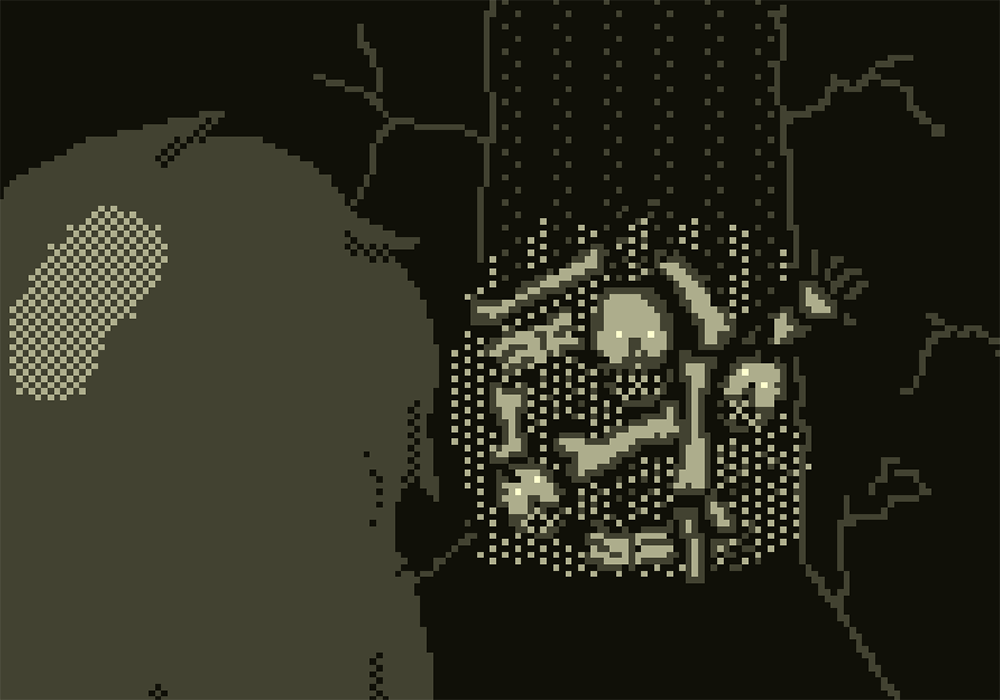
Dorotea features a suspenseful (but no-penalty) chase sequence, but its horror is largely atmospheric. The game’s uncanny pixel-art insert illustrations contribute to the feeling of something being terribly amiss, as do the ghosts and monsters, but the game also explores the anxiety generated by the prospect of being trapped in the past. As much as we might like to romanticize the medieval period, the culture shock experienced by most people – especially women – would likely be atrocious.

Putting its supernatural elements aside, Dorotea dwells in what might be called “archive horror,” or the morbid claustrophobia of a closed room filled with the relics of people long dead. There’s the dankness of the space itself, as well as the fear of the door swinging closed behind you, trapping you inside with nothing but dust. Then there’s the very real possibility that, in all the detritus of the past, you might find something deeply disturbing that you wish you hadn’t seen – or that someone very much wanted to hide. With its retro graphics and creepy pixel illustrations, Dorotea is a fantastic vehicle for conveying a sense of unease.

Dorotea is a short game, but it nevertheless manages to pull off a gut punch of a twist ending while indulging in a few interesting experiments with the ludic medium. The game was created for Italocurso Game Jam 2025, which is themed on folk horror specific to regional cultures in Italy. The 33 entries include a number of games offered in English, and all of them look amazing.

Dreaming Mary

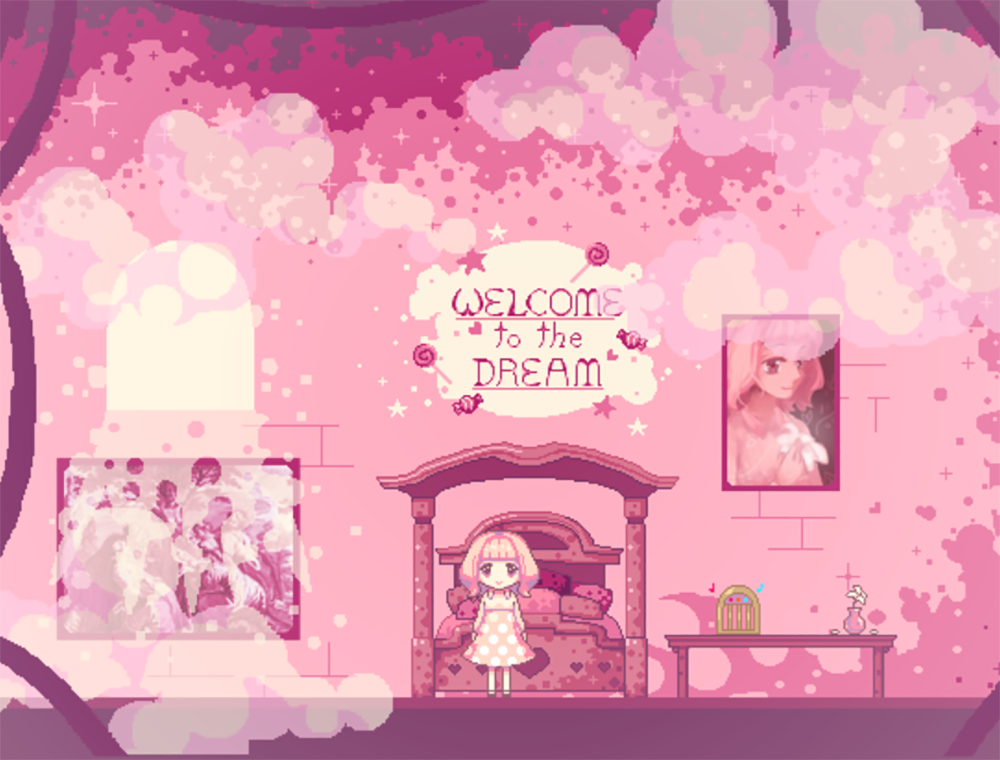
Dreaming Mary (available via the RPG Maker forums here) is a 2D narrative adventure game developed in RPG Maker by Dreaming Games. The opening of the game is super cute, but its pastel pink exterior hides a terrible secret. 

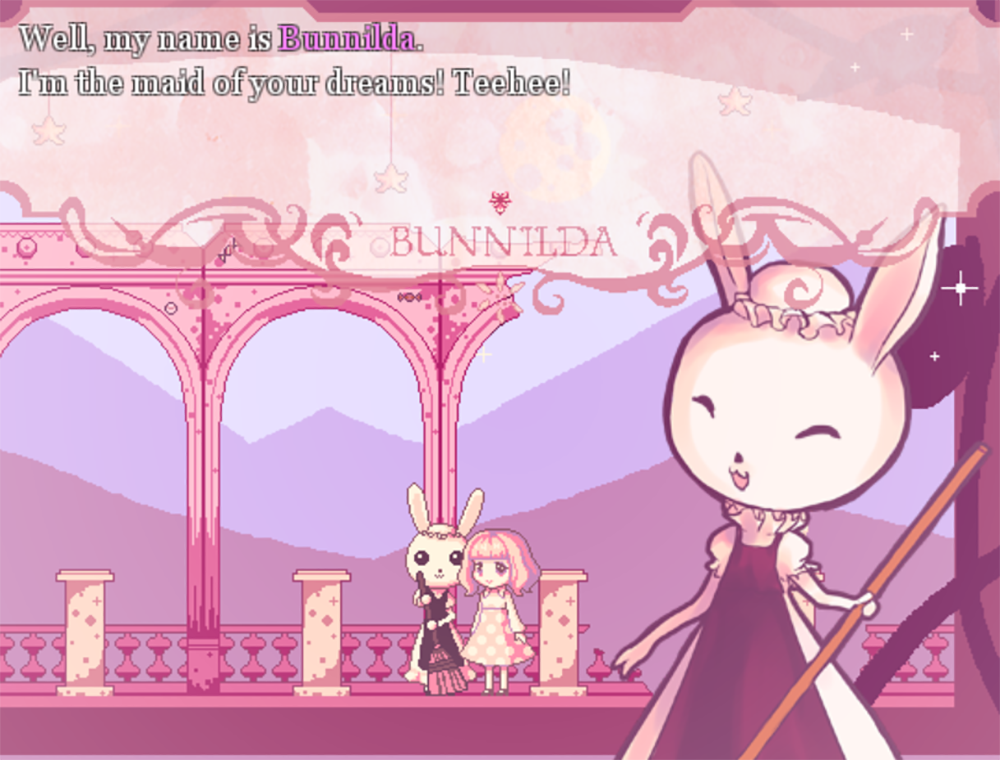
You play as the eponymous Mary, who begins the game in the bedroom of her dream world. She emerges into a lovely hallway with three rooms: a garden modeled on a Greek temple, an aristocratic library with floor-to-ceiling shelves, and a swank but cozy jazz bar. Each room is home to an anthropomorphic animal, each of whom wants to play a simple game. The friendly bunny needs advice on how to arrange her statues, while the flirty fox wants to play a round of hide-and-seek. The gentle owl asks a few questions about the books on his shelves.  

At the end of the corridor is a beautiful tree guarded by a burly boar. If Mary wishes to progress further into the dream, this is her gateway, but she’ll need to collect the blessing of each animal first.

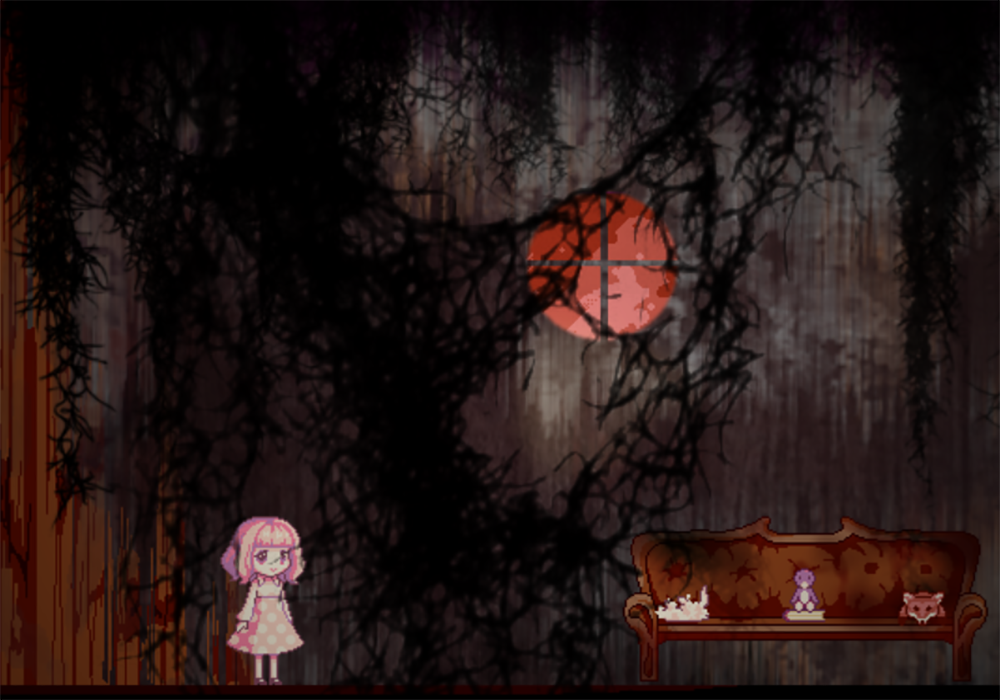
If you play through the game normally, you’ll arrive at a sweet but somewhat ambiguous ending after around 15-20 minutes. If you follow a walkthrough – I recommend this one – to discover the game’s secrets and see the full story, you’ll find your way to a far darker but more satisfying ending in around 30-35 minutes.

According to the developer’s notes, Dreaming Mary was inspired by the 2011 magical girl anime Madoka Magica, which similarly begins as a cute slice-of-life story before evolving into something much more complicated. Mary’s dream is as lushly pink and pastel as Madoka’s fantasies of becoming a magical girl, which makes the hidden nightmare segments all the more shocking.

Should Mary actually figure out how to wake up… That’s when the story becomes truly grim.

To give a fair warning, many of the puzzle solutions don’t make much sense, and I’m not sure how possible it would be to get the game’s true ending without a walkthrough. Still, it’s worth the extra effort, because the contrast between the sunny opening of the game and its sinister conclusion is something special.  

Dreaming Mary was released in 2014. It seems the devs have gone quiet since then, which is a shame. While Dreaming Mary isn’t perfect, it’s promising, and I would have loved to see this prototype expanded into a more polished game. Still, Dreaming Mary stands well enough on its own as a short but intriguing indie horror story in the surreal lineage of Yume Nikki.

Retro Horror Games on Sidequest

My annual roundup of free-to-play retro horror games on Itch.io is now on Sidequest. There’s a gritty mix of fresh blood and decayed favorites in this year’s creepypixel harvest, from the recent haunted forest simulator Bloodbark to the Tumblr-favorite Flesh, Blood, & Concrete to the first game created by Deltarune artist Temmie Chang, Escaped Chasm.

You can check out the post here:
https://sidequest.zone/2025/10/15/retro-horror-games-on-itchio/

And there’s also my lists from October 2024 and October 2023, which are somehow even more liminal and retro.

I’m overjoyed to have commissioned a banner illustration from the shining Teller-of-Tragedies, who shares gorgeous and immersive dreamcore pixel art on Tumblr (here) and on Instagram (here).

Escaped Chasm

Escaped Chasm
https://tuyoki.itch.io/escaped-chasm

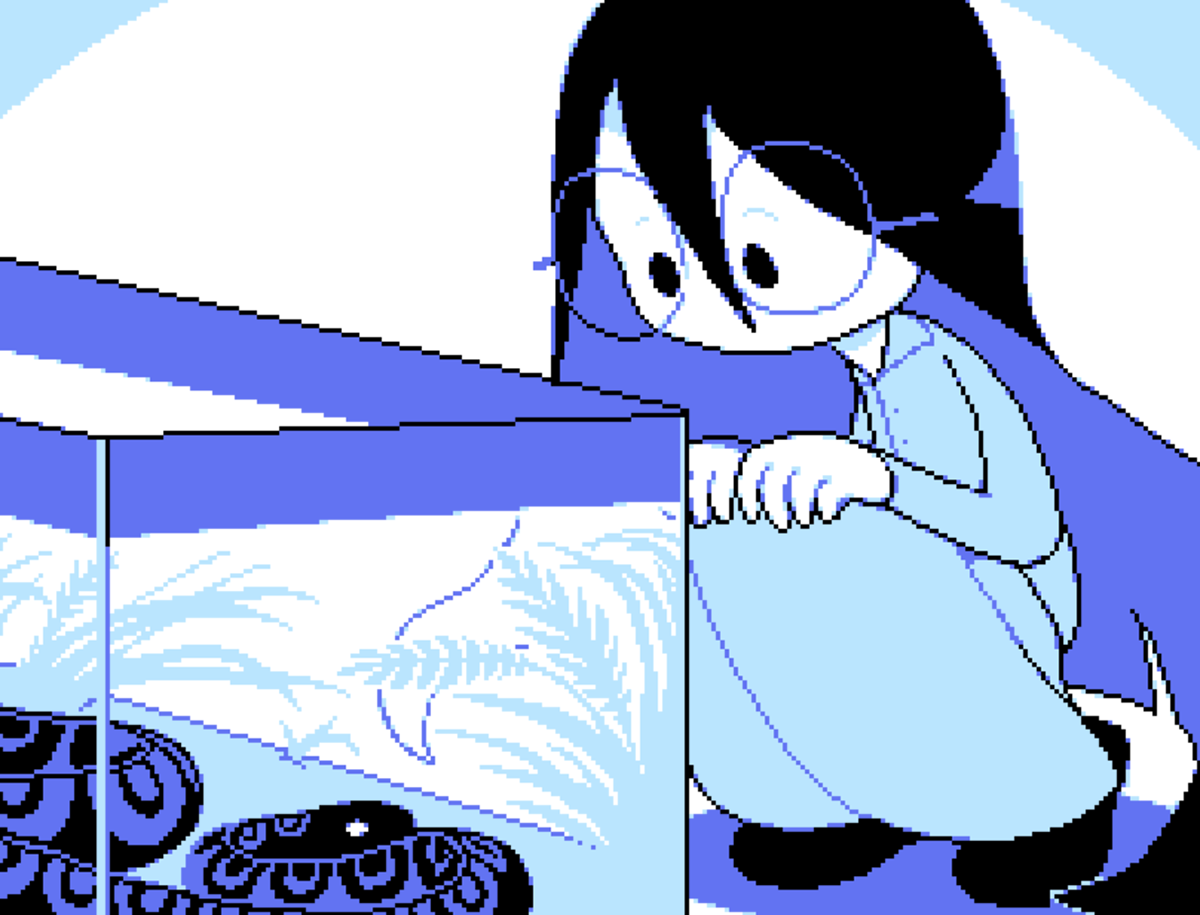
Escaped Chasm is a 25-minute dark fantasy adventure game created in RPG Maker with a mix of retro Game Boy graphics and anime-style cutscenes. Originally released in 2019, it’s the first stand-alone project of Temmie Chang, a longtime collaborator of Toby Fox who contributed character designs and graphics to Undertale and Deltarune.

You play as a young teenage “Lonely Girl” who doesn’t leave the house and lives vicariously through her dreams and art. Her parents appear to have gone missing, and she doesn’t know what to do. To make matters worse, she’s tired all the time, and a strange man has started appearing in her house.

Something is seriously wrong, and the Lonely Girl has four days to figure it out and escape. If leaving the house isn’t an option, where can she go? And how can she find the courage to leave?

Escaped Chasm is free to download, and the zip file contains an illustrated guide to the game’s four endings. I get the feeling that most players will probably see the good ending simply by playing the game naturally, but it’s nice to have grimdark alternatives. After unlocking the good ending, the player is able to enter and explore a bonus “developer’s room” that I love with all my heart. It’s fascinating to read Chang’s thoughts about making the game while checking out extra material that fills out a few gaps in the story.

Both Toby Fox and Temmie Chang were fans of and contributors to Homestuck, and it’s possible to see its influence on Escaped Chasm. It’s difficult to summarize Homestuck, but the webcomic begins as a story about four young teenagers who can’t leave their houses because they’re the last remaining survivors of a universe that’s unraveling around them. I get the sense that the Lonely Girl in Escaped Chasm is based on one of the four teenagers in Homestuck, Jade Harley, and it’s probably not a coincidence that she’s found herself in a remarkably similar situation.

Escaped Chasm is like a bridge between Homestuck and Deltarune in its theme of “using art and imagination to escape into another world,” but it’s also very much its own thing. I love Chang’s illustration style and narrative voice, and I admire how she pushes the boundaries of the medium to create a palpable sense of liminality and dread – and of catharsis and joy. Escaped Chasm is atmospheric horror with a (potentially) happy ending, and it’s idiosyncratic and self-indulgent in interesting ways that elevate it above the level of mere pastiche.

Escaped Chasm is a short test project made in preparation for Dweller’s Empty Path (on Itch.io here), a more extensive Game Boy style narrative adventure game. I really enjoyed Escaped Chasm, and I’m looking forward to jumping into Dweller’s Empty Path.

Aviary Attorney

Aviary Attorney is a four-hour visual novel modeled on the Phoenix Wright series and set in Paris in 1848, right on the cusp of the revolution that ushered in the Second Republic.

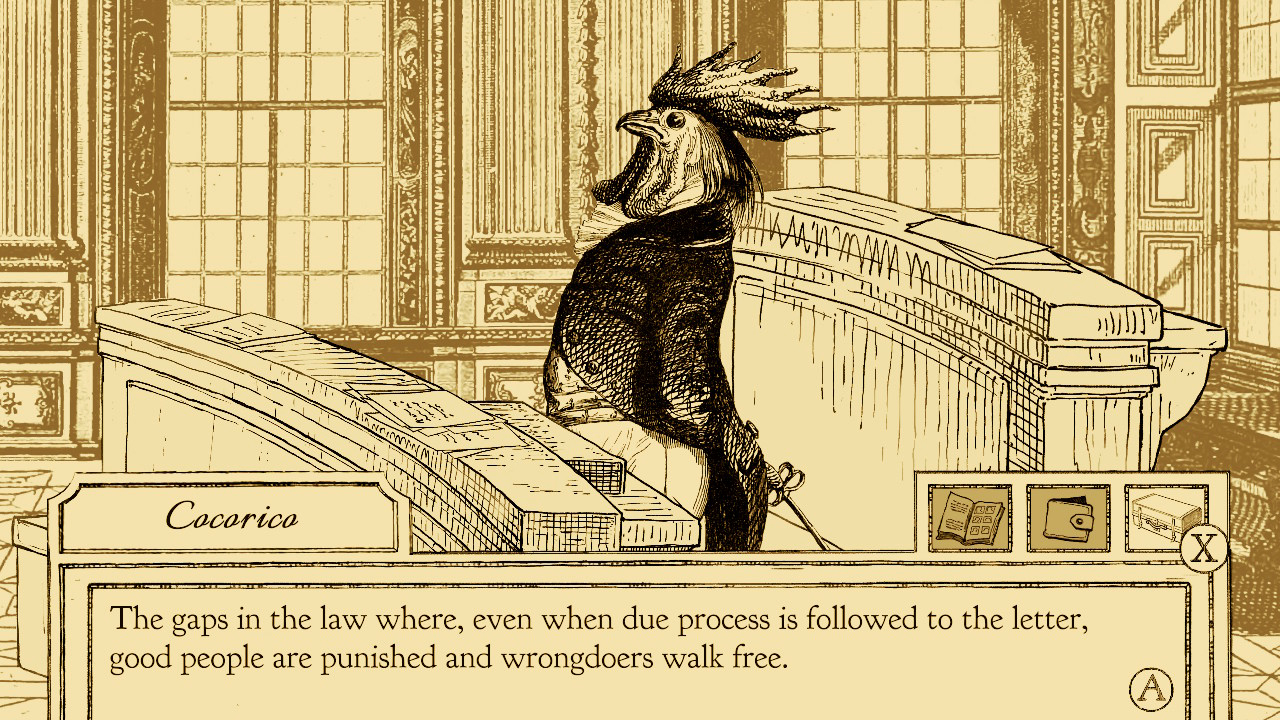
You take on the role of Jayjay Falcon, a private defense attorney. Jayjay is shadowed by his apprentice Sparrowson, who provides comic relief, and he often butts heads with his rival, the brilliant but arrogant prosecutor Cocorico. The game’s story plays out across four trials. In the days leading to the trial, Jayjay has the opportunity to collect evidence and testimonies by investigating various locations in Paris. During the trial, Jayjay is given the opportunity to present relevant evidence and cross-examine a key witness.

The characters are styled as animal-headed caricatures lifted directly from the line illustrations of J. J. Grandville, an illustrator active in the first half of the nineteenth century known for his detailed line art and his razor-sharp political commentary. As explained in the game’s credits, all of the artwork in Aviary Attorney was taken from Wikipedia and the Internet Archive, and Allison Meier’s article on Hyperallergic (here) presents Granville’s illustrations in their original context. Given how seamlessly all of the game’s assets are integrated, however, a player might be forgiven for assuming that they were custom made. This is a very good-looking game.

Although the story doesn’t strive for realism, the writing is excellent. Each trial has a dramatic twist at the end, and I thought these developments were great fun. If you enjoy ladies doing murder, I think you’ll have a good time too. Even more than the crime, however, what I love is the opportunity to explore Paris while speaking to people from all walks of life and gradually coming to understand why the February Revolution happened.

I also appreciate that, unlike the Phoenix Wright games, the focus of the trials in Aviary Attorney isn’t on catching the culprit or assigning guilt, but rather on ensuring that the accused receives due process under law. Revolution is all well and good, but I admire the characters’ commitment to upholding the practice of civil society. If you manage to achieve the game’s best ending (which I did by using this guide), you’ll learn that Jayjay Falcon is the grandson of Robespierre, the great eighteenth-century French legal theorist. This isn’t a political game, but it’s always a pleasure to see writing that devotes careful attention to historical details while putting itself in conversation with the philosophies of the time.

Aviary Attorney is an interesting exercise in how public domain works can be transformatively reconfigured into contemporary media, but it’s also a great game. Obviously I’d recommend Aviary Attorney to fans of Phoenix Wright and to connoisseurs of visual novels in general, but I really want to encourage anyone who enjoyed the themes and message of Pentiment to give this game a chance. It’s got excellent writing, a unique visual appeal, and a satisfying sense of historical specificity.

Crow Country Essay on Sidequest

I’m excited to share “Crow Country Is a Game about Climate Change,” an ecocritical analysis of one of my favorite indie games of 2024. This essay also serves as a kind of “Ending Explained” story breakdown that was inspired by a few Reddit discussion threads that missed the point of what (to me at least) is a clear, powerful, and compelling artistic statement. How do we process the reality of climate change, and how can we face the challenges of the future?

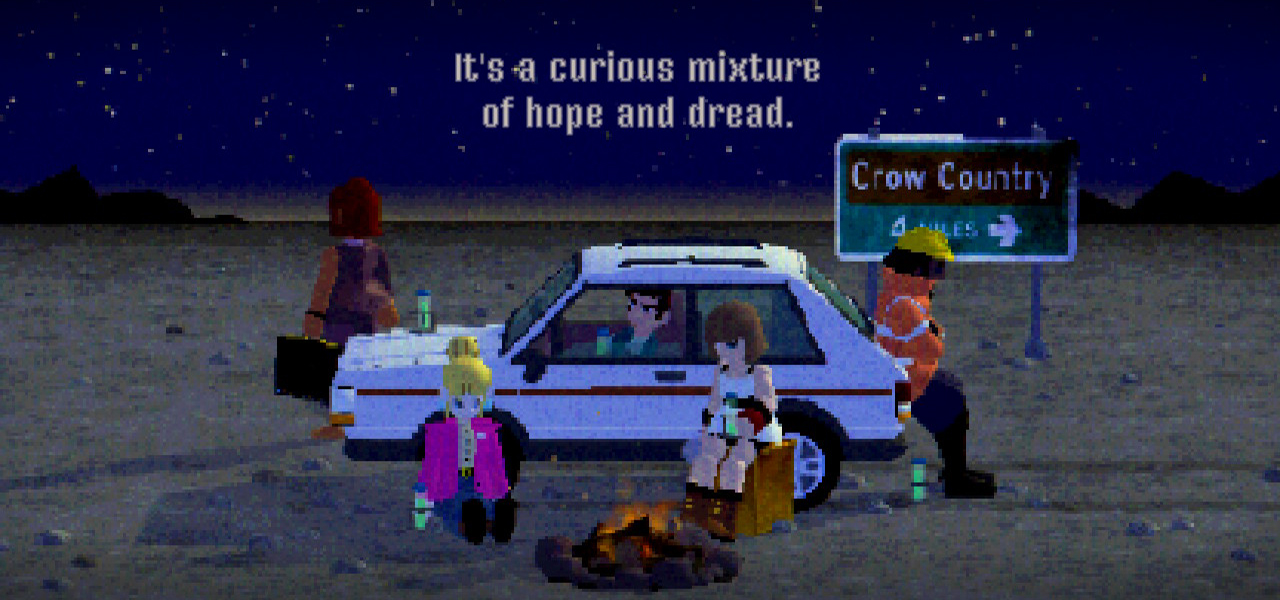
Crow Country borrows heavily from the visual design of Resident Evil and Final Fantasy VII, and I argue that it provides an interesting meta-commentary on their themes as well. Specifically, I think Crow Country uses its retro aesthetics to remind players of the political climate of the late 1980s and early 1990s, when environmentalism was considered an important bipartisan issue in the United States.

In my essay, I put Crow Country in conversation with two books, Colette Shade’s Y2K: How the 2000s Became Everything (2025) and David Wallace-Wells’s The Uninhabitable Earth: Life After Warming (2017). I believe that Shade’s discussion of the “lost environmentalism” of 1990s media like Captain Planet and FernGully can be expanded to video games, and I explain how Crow Country plays on that cultural nostalgia. Meanwhile, Wallace-Wells discusses a “crisis in storytelling” about climate change that positions its victims as cute animals instead of actual human beings, but Crow Country subverts this narrative impulse by demonstrating that its “zombie” climate refugees are none other than ourselves.

You can read the essay on Sidequest here:
https://sidequest.zone/2025/04/22/crow-country-climate-change/

Crow Country (on Steam here) is an incredible game, by the way. I enjoyed writing about it, and I enjoyed playing it as well. It takes about four hours to finish, and there’s an optional “no combat” mode that allows players to focus on exploring the space while engaging with the story and puzzles. If you’re interested, I posted a no-spoiler review of the game ( here ).

ETA: This essay was featured on Critical Distance (here). What an honor! I hope a wider audience gets a chance to read this piece, if only so that more people can appreciate the nuanced but powerful message of this incredible game.

Whispering Willows

Whispering Willows (on Steam here) is a 2D adventure game set in a haunted mansion. There’s no combat, and the game takes about three hours to finish. It’s a small indie game made in 2014, and it’s not perfect. Still, I enjoyed the time I spent in Willows Mansion, and I’d recommend giving this game a shot if you’re into spooky gothic stories.

You play as Elena Elkhorn, a teenage girl whose father works as the groundskeeper at the derelict and abandoned Willows Mansion. Elena’s father doesn’t return one night, and she has a bad feeling about the mansion. Hoping to bring her father home, Elena sneaks onto the property and immediately falls headlong into an underground crypt. There she meets the ghost of her ancestor, who teaches her how to use the power of her magical pendant to leave her body to go spiritwalking. In a cursed mansion filled with phantoms, this is an extremely useful ability to have.  

Before I jump into the many things I love about this game, let me be upfront about its flaws:

– There’s not much actual gameplay.
– The hand-drawn cutscene art is unpolished.
– The writing is good but a bit uneven.
– The background music is limited.
– Your character walks very slowly.
– There’s no map to help you navigate.

Essentially, this is a small indie game that indeed looks and feels like a small indie game. I’m not complaining about the rough edges of Whispering Willows; I just want to make it clear that it’s a game made ten years ago on a tiny budget earned from a Kickstarter campaign. Still, I found its simplicity and amateurish aspects charming, and it has many strong points.

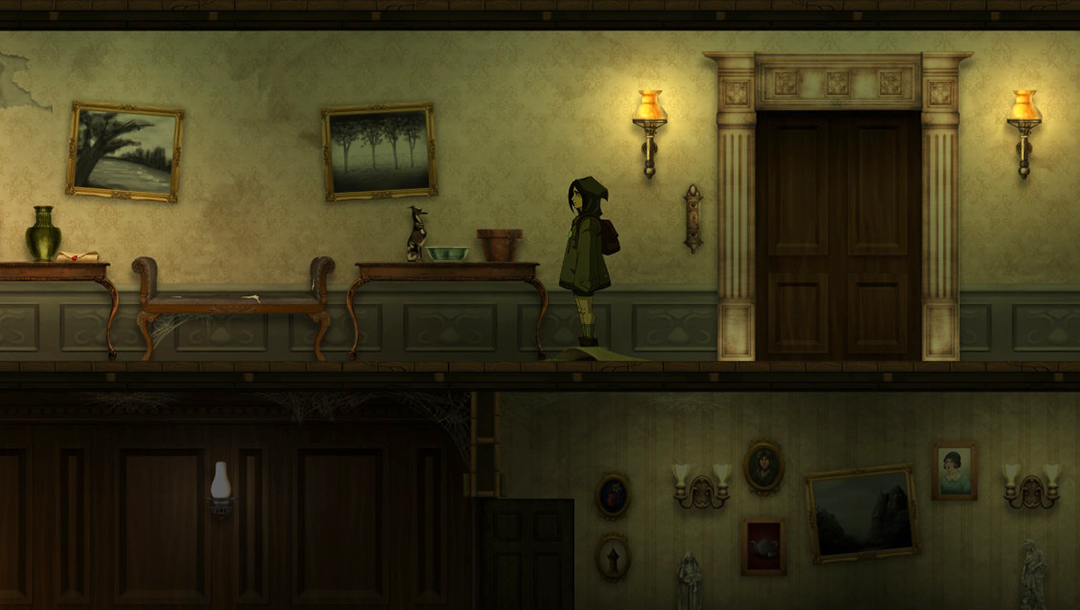
To begin with, the map is surprisingly large, and there’s a lot of space to navigate. You’ll explore the mansion’s crypt, its garden, and various outbuildings; but mainly you’re going to be walking around the house itself. The mansion is impossibly large and includes all the standard gothic flourishes: locked doors, grisly kitchens, moldy bathrooms, crooked paintings, peeling wallpaper, taxidermied hunting trophies, creepy dolls, and all the secret passageways you could ever want.

Of course there are all manner of notes lying around, and these notes collectively tell a suitably gothic story about the very wealthy but very evil man who built the mansion. This story never quite comes together in terms of plot or themes, and the character motivations are ridiculous. Still, all the individual bits and pieces are gothic catnip, from a lover kept in a secret room to a murdered best friend to a servant driven mad by what he’s seen.

This all takes place in California during the Wild West days, meaning that the land occupied by the mansion had to be taken from someone. It turns out that it was forcibly wrested from Elena’s own ancestors. Alongside his more intimate crimes, then, the mansion’s owner became the mayor of a frontier town by means of enacting war and genocide on First Nations people.

We tend to think of gothic mansions as being located in Europe, or perhaps New England. There are definitely nineteenth-century mansions in California, though (like the Carson Mansion), and they’re built on land soaked in blood.

Importantly, the First Nations people in Whispering Willows aren’t all ghosts. Elena and her father are very much alive, and they’re not tempted by the faded pseudo-grandeur of the former colonists. At the end of the game, it’s extremely satisfying to see Elena essentially say “fuck all this” as she walks away from the mansion with her father.  

This is an interesting perspective on classic gothic story tropes that I love to see. And honestly, Whispering Willows isn’t such a bad game. The puzzles are easy, but the lack of difficulty is a selling point for me. Also, the gameplay mechanic of Elena spiritwalking to interact with the numinous aspects of the environment is used in clever ways, and it’s a lot of fun.  

Aside from Elena’s slow walking speed, my only real complaint is that this game would benefit immensely from a map. Even though navigation isn’t particularly complicated, I got lost a few times and had to resort to a walkthrough (this one here) a few times, which wouldn’t have been necessary if the player could just pull up a subscreen.

Whispering Willows definitely feels like an indie game, but it’s got a delightfully grisly story and an excellent sense of atmosphere, and it’s worth checking out if you’re interested in Wild West Gothic from an indigenous perspective.

As a side note, this was apparently the game that launched Akupara Games, a publisher that specializes in quirky indie games with a strong sense of style and setting. Two of my favorite titles they’ve helped get off the ground are Rain World and Mutazione, and it’s cool to know that this was where they started.