Kuro

Kuro
https://visualmemoryunit.itch.io/kuro

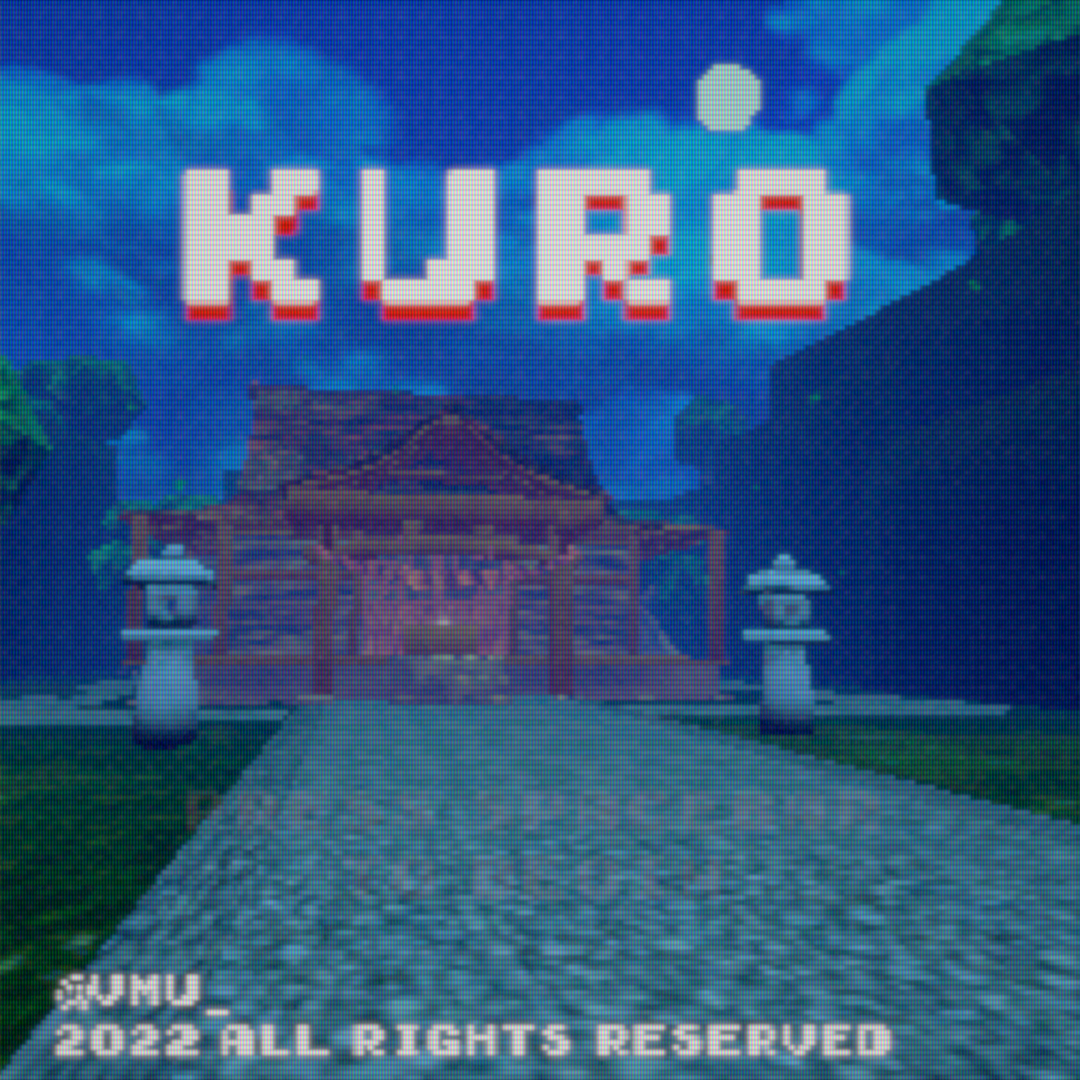
Kuro is a free-to-play homebrew PS1 gothic horror game that takes about twenty minutes to finish. There aren’t any jumpscares, but the story is as dark as the chunky retro polygons are cute.

You play as Kuro, a mysterious visitor to an abandoned Shinto shrine. The moonlit shrine is beautiful and peaceful on the outside, but its interior conceals an underground labyrinth haunted by the ghost of a brutally murdered young woman named Miu. As Kuro, your job is to find and reunite the parts of Miu’s corpse so that her spirit can move on.

Along with Miu’s head and body, Kuro must acquire the means to open three locked doors. Though the game’s map isn’t overly large, Kuro moves slowly (with tank controls) across spaces presented to the player from dramatic angles. It’s unlikely that you’ll become lost, but the game does an excellent job of conveying the disorientation of wandering through a dark basement.

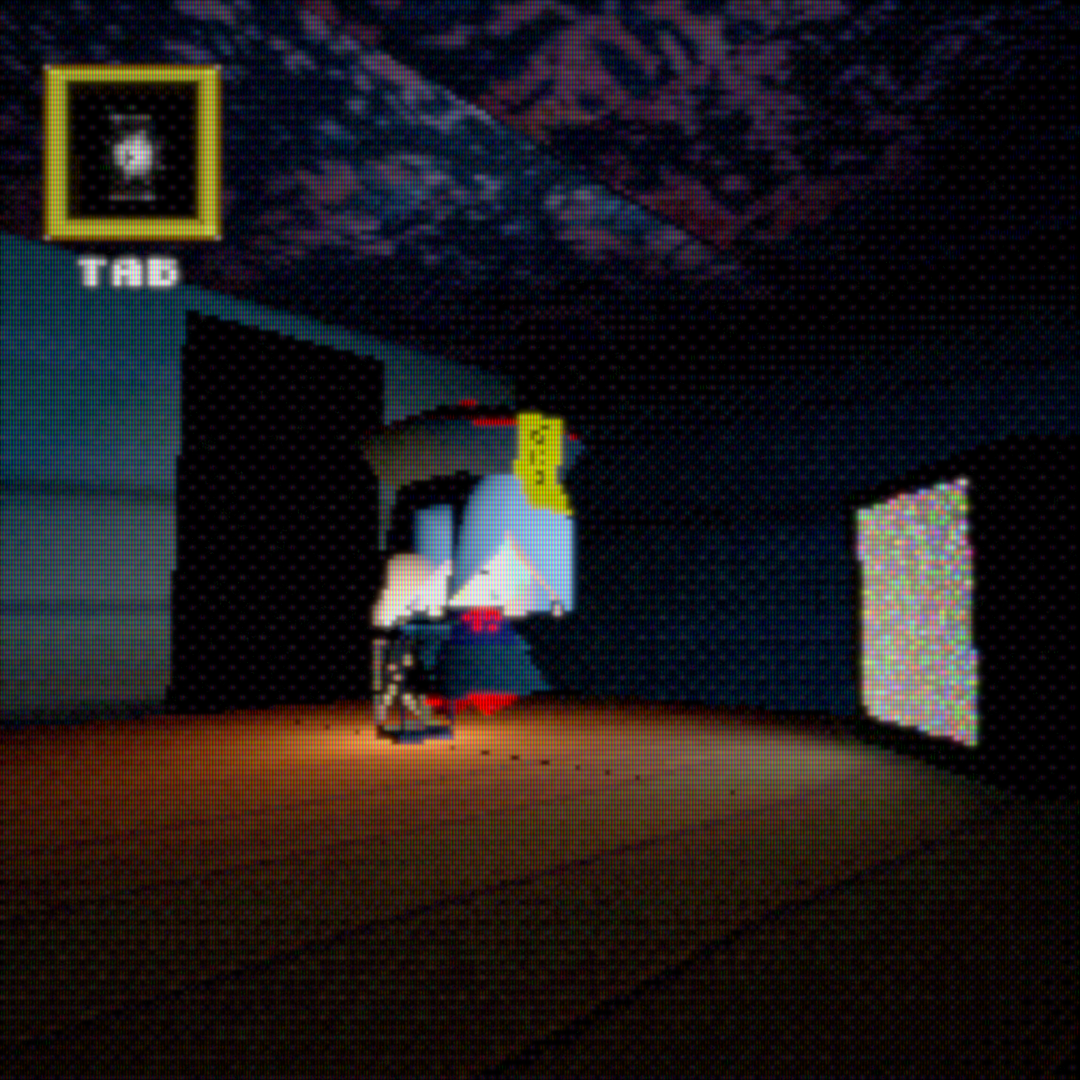
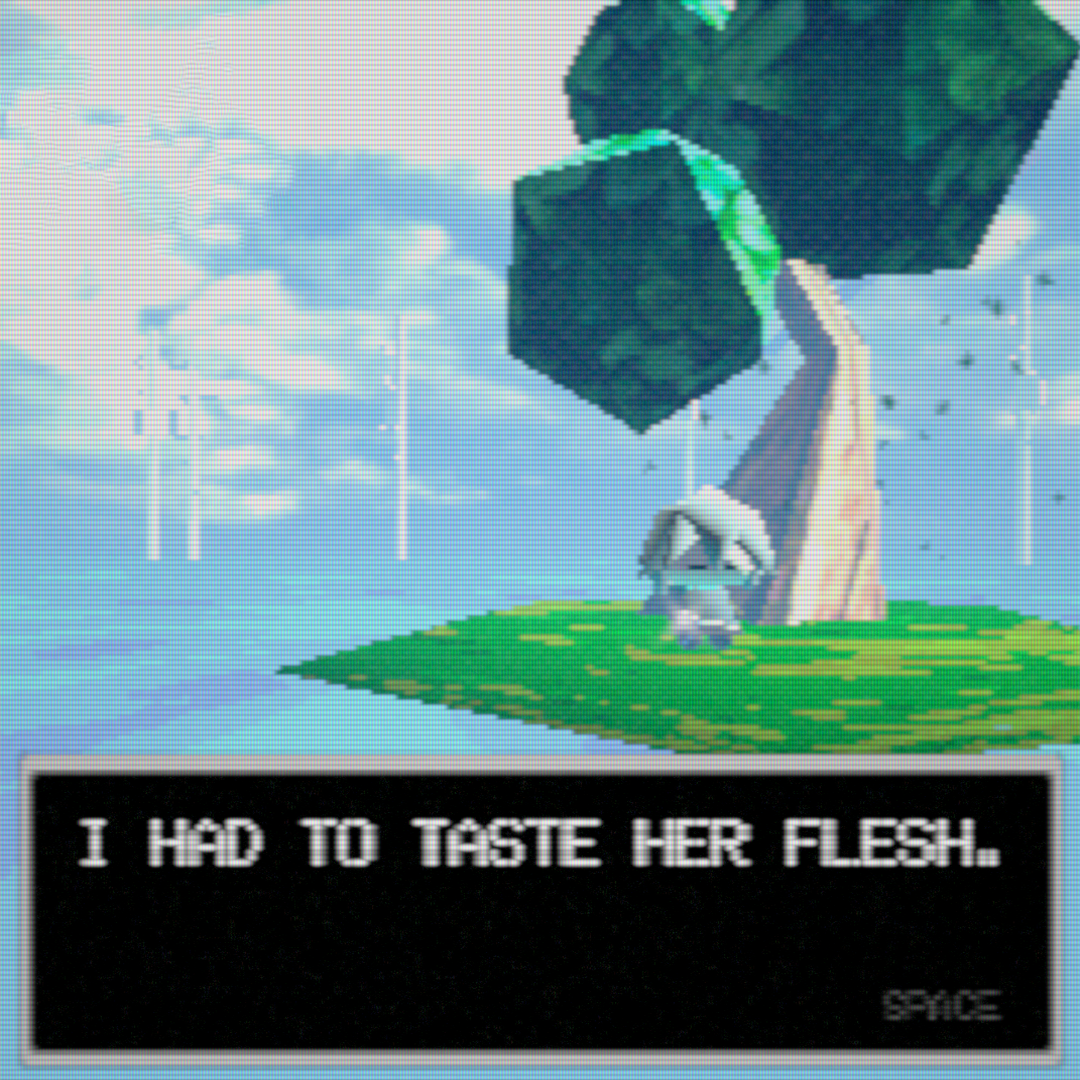
For me, the standout scene is when Kuro enters a locked room that’s completely empty except for an old television whose screen is filled with static. When Kuro interacts with the television, she’s transported to an otherworldly landscape where she meets the man who killed Miu. He explains what happened, but this isn’t the end of the story. Once Kuro returns to the shrine and begins to dig deeper, the player learns that murder is probably the most wholesome thing that happened here. 

I genuinely appreciate the developer’s commitment to including every gothic trope they could think of. One might argue that the writing is somewhat clumsy, and that the game’s twenty-minute playtime isn’t sufficient to allow ample space for its horrors, but I’m of the opinion that the writing is just as integral to the retro aesthetic as the graphics. I feel like there’s a tendency to remember games like Final Fantasy VII and Resident Evil 2 as “well-written,” but PS1-era games had a tendency to hit you with a cascade of revelations in the most basic and matter-of-fact prose. Kuro matches the tone of this style of video game writing perfectly.

I also love to see this kind of gothic story in a setting that isn’t European, and I’m fascinated by the idea that a Shinto shrine would have a basement. Perhaps a shrine constructed overseas (in British Columbia, for instance) might have an underground level, but this would be unthinkable in Japan, where shrine buildings are always elevated above the ground in the traditional Polynesian architectural style.

The reason for this is 100% practical in a wet and humid climate, where various types of unpleasant things (primarily mold, fungus, and insects) would quickly infest the ground level of a building. Also, the water table is generally so close to the surface that it would be difficult to prevent underground rooms from flooding. There’s also a spiritual component to the architecture, as Shinto belief systems tend to associate anything inside the earth with an otherworld of rot and impurity. This otherworld is a necessary space for the cycle of life, but it’s not a good place for humans to be under any circumstances. In terms of its spiritual utility, one of the purposes of a shrine is to demarcate the boundaries between worlds.

So a Shinto shrine would not have a basement. But if it did. The horrors of Kuro would definitely happen there.

I admire how Kuro explores the idea of transgressing an extremely powerful taboo. Between the lost-media stylization of the game’s retro graphics and the grotesque quality of its writing, the player definitely gets a sense of wandering through a place they’re not supposed to be. Kuro is a short and simple game, but it’s very well-observed and surprisingly effective.

Dreaming Mary

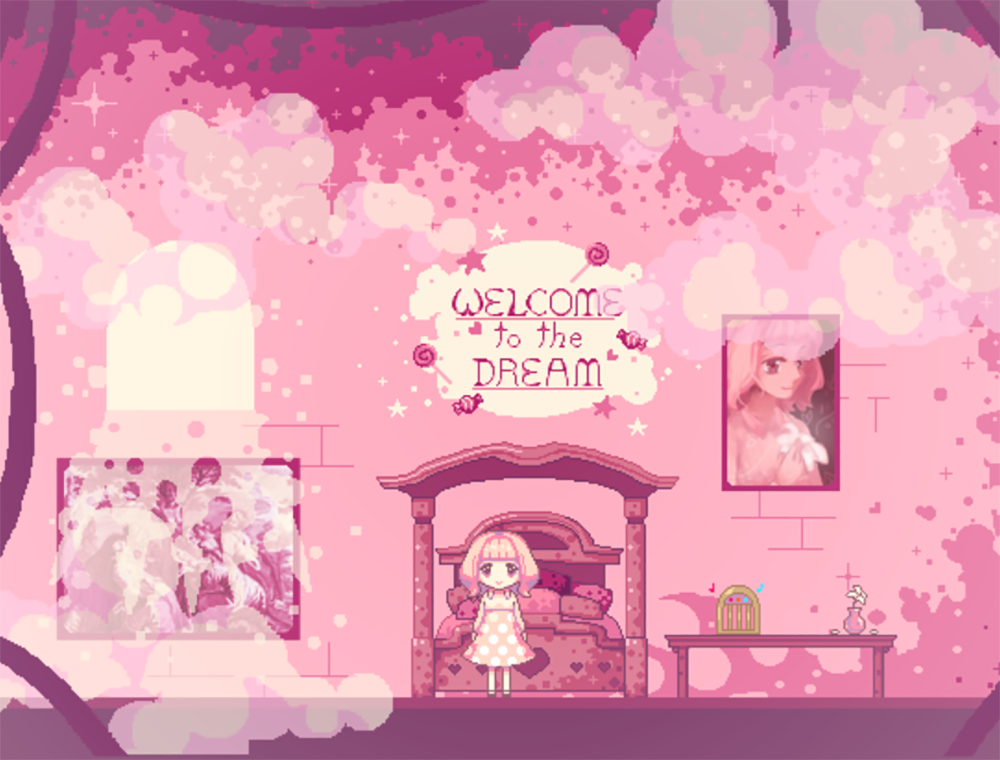
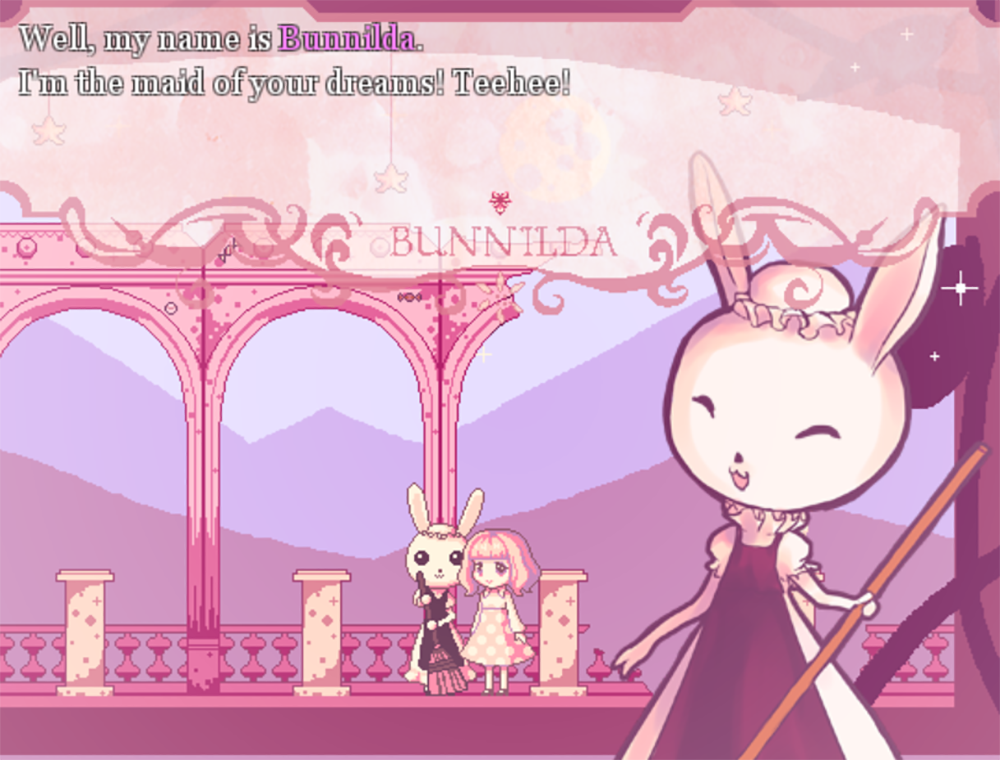
Dreaming Mary (available via the RPG Maker forums here) is a 2D narrative adventure game developed in RPG Maker by Dreaming Games. The opening of the game is super cute, but its pastel pink exterior hides a terrible secret. 

You play as the eponymous Mary, who begins the game in the bedroom of her dream world. She emerges into a lovely hallway with three rooms: a garden modeled on a Greek temple, an aristocratic library with floor-to-ceiling shelves, and a swank but cozy jazz bar. Each room is home to an anthropomorphic animal, each of whom wants to play a simple game. The friendly bunny needs advice on how to arrange her statues, while the flirty fox wants to play a round of hide-and-seek. The gentle owl asks a few questions about the books on his shelves.  

At the end of the corridor is a beautiful tree guarded by a burly boar. If Mary wishes to progress further into the dream, this is her gateway, but she’ll need to collect the blessing of each animal first.

If you play through the game normally, you’ll arrive at a sweet but somewhat ambiguous ending after around 15-20 minutes. If you follow a walkthrough – I recommend this one – to discover the game’s secrets and see the full story, you’ll find your way to a far darker but more satisfying ending in around 30-35 minutes.

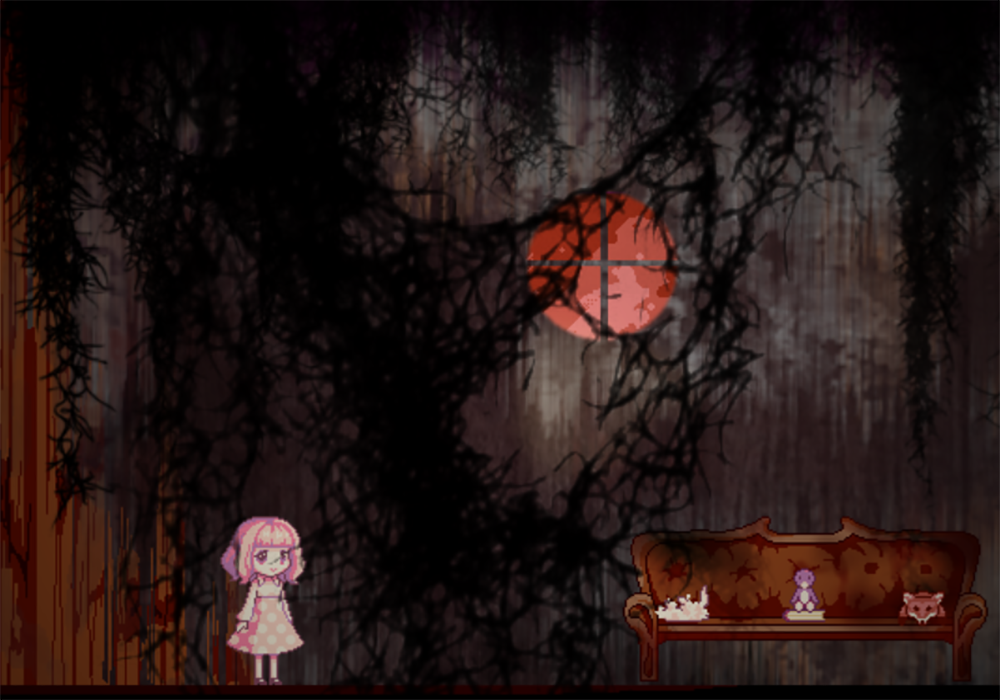
According to the developer’s notes, Dreaming Mary was inspired by the 2011 magical girl anime Madoka Magica, which similarly begins as a cute slice-of-life story before evolving into something much more complicated. Mary’s dream is as lushly pink and pastel as Madoka’s fantasies of becoming a magical girl, which makes the hidden nightmare segments all the more shocking.

Should Mary actually figure out how to wake up… That’s when the story becomes truly grim.

To give a fair warning, many of the puzzle solutions don’t make much sense, and I’m not sure how possible it would be to get the game’s true ending without a walkthrough. Still, it’s worth the extra effort, because the contrast between the sunny opening of the game and its sinister conclusion is something special.  

Dreaming Mary was released in 2014. It seems the devs have gone quiet since then, which is a shame. While Dreaming Mary isn’t perfect, it’s promising, and I would have loved to see this prototype expanded into a more polished game. Still, Dreaming Mary stands well enough on its own as a short but intriguing indie horror story in the surreal lineage of Yume Nikki.

Symbiosis

Symbiosis
https://spicaze.itch.io/symbiosis

Symbiosis is a free-to-play RPG Maker horror game about a murderous mad scientist living in a house in the woods with an adorable child. The story has two endings, and it takes about 25 minutes to play through the game once.

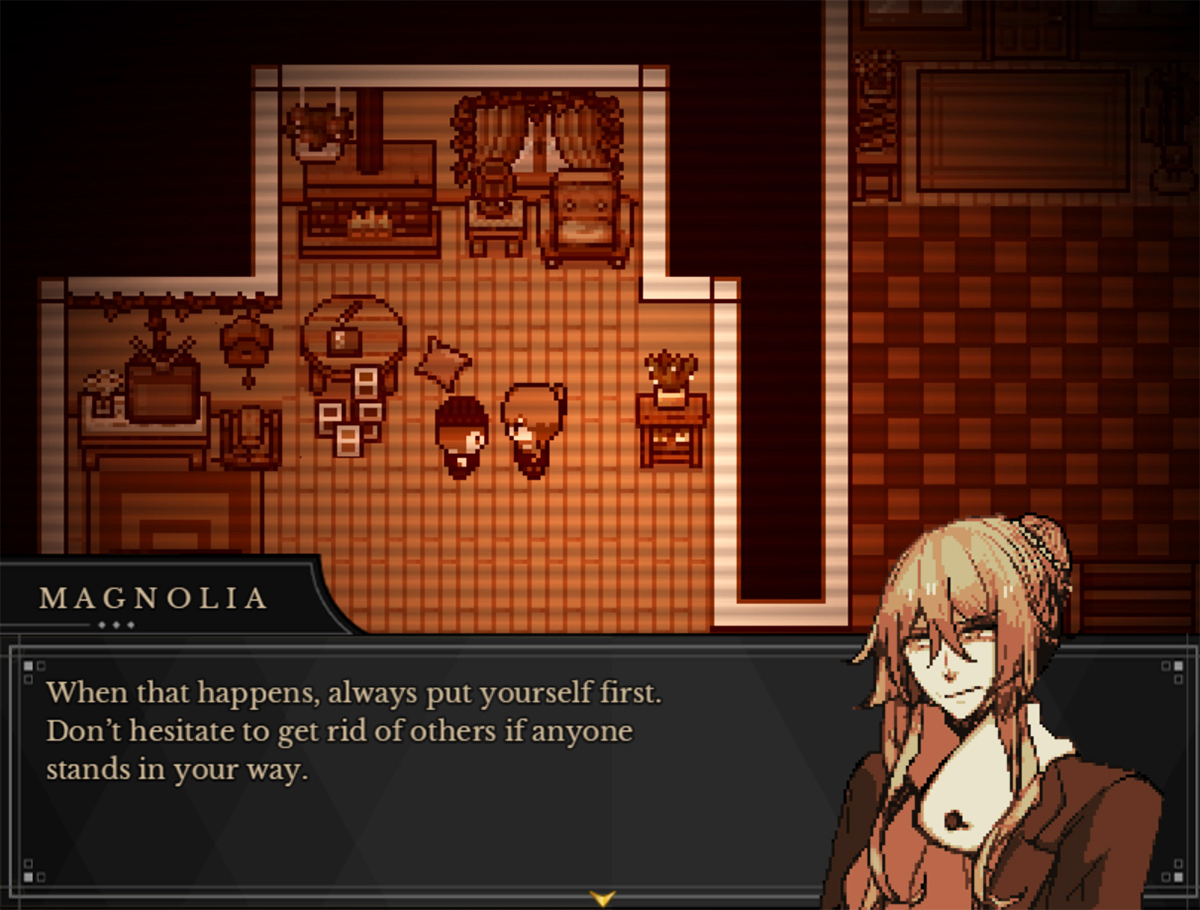
You play as Magnolia, a geneticist who left her university post after a mysterious fire broke out in her lab when her research came under public scrutiny. She now lives in isolation with Mint, a curious and precociously intelligent young boy whom she’s raising as her son. According to local rumors, Magnolia is a witch. It doesn’t help that hikers have a tendency to disappear in the forest surrounding her property.

The game begins as Magnolia carves up the corpse of someone she caught sneaking into her house. She’s interrupted by Mint, who can’t sleep and wants a bedtime story. Unfortunately, there are three more intruders in the house, and Mint won’t stay in his room. Your job as the player is to turn the remaining intruders into corpses – for science! – while ensuring that Mint remains out of harm’s way. 

Magnolia’s house isn’t too terribly large, but it’s big enough to have all sorts of nooks and crannies to poke around, as well as various journals and research notes to find. The player can use these clues to figure out who Magnolia is and where Mint came from, although you’ll have to make your own decision regarding Magnolia’s feelings toward Mint and what the fate of the pair will be. The game’s creator has posted a guide for the two endings (here), and this short devlog also contains their thoughts on the story and characters.

What sets Symbiosis apart from the crowd of RPG Maker horror games is the creator’s gleeful willingness to allow Magnolia to be messy and problematic. She initially seems to be a complete sociopath, and her bad behavior is a joy to watch. As you witness her interactions with Mint unfold, however, her character becomes more complicated. Why Magnolia feels affection for Mint is open to interpretation, but I think it’s fair to say that her attachment is genuine.

The way I interpret this relationship is that it’s an analogy for the process of artistic creation (or scientific discovery, as the case may be). In order to create something meaningful, an artist has to be unpleasant, selfish, and more than a little antisocial. Gradually the art comes to take on a life of its own, and it’s up to the artist to decide whether to let it go or to keep it firmly in the orbit of their own dysfunctional personality.

Lest you think I’m spoiling the story, fear not – there’s all sorts of nasty business in Magnolia’s past for the player to discover. This woman is a legitimately horrible person, and her crimes are fantastic fun.

Symbiosis tells a short but grisly story through simple narrative adventure gameplay intercut with stylishly illustrated cutscenes, and I enjoyed it enough to go back and see both endings. I definitely recommend this game to fans of gothic horror, demonic women, and questionable scientific ethics.

Deepwell

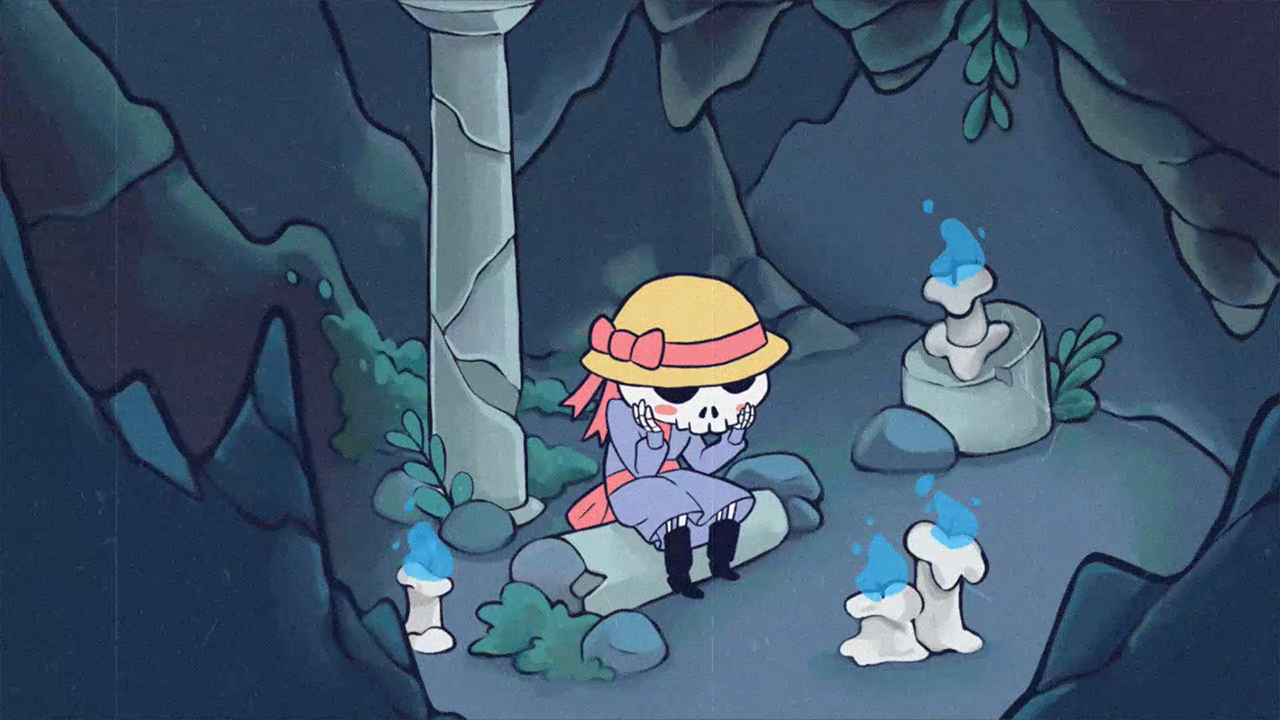
Deepwell is an Undertale-style narrative adventure game that takes about two hours to finish. You play as a blank slate character called “the Cartographer” who has recently arrived in the small forest town of Deepwell, which clings to the southern rim of a massive hole in the ground. Oddly enough, anyone who descends into the hole beyond a certain point gets “blipped,” meaning that they appear at the top of the hole as if nothing had happened. Generations of mystery hunters have sought the solution to this puzzle, but perhaps you might be the one to finally figure it out.

Deepwell is only about two dozen screens large, and there are five main characters to talk to. Most of the game involves engaging in long and meandering conversations with these characters in order to learn their stories. Sokolov manages the town library, and Evan runs the general store. Pierre has created something resembling an art gallery on one side of town, while Lily lives in a field of flowers on the other. At the intersection next to the highway, a robot named Bing helpfully provides information to visitors.  

It stands to reason that everyone living in such an isolated town would be a little weird. Aside from Bing, who is essentially a tutorial robot, each character is a self-contained short story that gradually unfolds as you talk with them. Thankfully, there are no wrong conversation choices, nor is there any missable content. The player is free to walk where they like and talk with the characters as they wish while unlocking a few extra conversation topics by interacting with each character’s environment.

On the eastern edge of town is a waterfall that hides a secret cave. Glyphs drawn onto the wall of this cave indicate whether a character’s dialogue has been exhausted. Once the Cartographer has sufficiently spoken with each of the town’s residents, a new path will open deeper into the forest to reveal a sixth character, who tempts the player with the possibility of an alternate (and much darker) ending.  

You can actually end the game any time you want by simply heading back to the highway and leaving town. You can also choose to wrap up the story at any point by taking a boat across the lake to see what’s on the north side of the giant hole. Although you’re given a choice in the final section of the game that affects the ending, I think Deepwell ties up its thematic threads quite nicely. This is a story about personal purpose and fulfillment, and about why we need art and mystery. How you approach these themes within the context of the game is up to you.

The graphics are primitive yet charming. I was put off by the crunchiness at first, but the lo-fi aesthetic grew on me. Deepwell contains a surprising number of insert illustrations and cutscenes, some of which are extremely well done. This is especially the case with Pierre, whose gallery of art installations closes with a remarkable set piece. I get the feeling that some players may find Pierre pretentious, but I appreciate his sincerity. And he’s not wrong about how visual glossiness is often a disguise for mediocrity. 

Deepwell is akin to a short story anthology that’s easy to pick up for twenty minutes at a time, but I ended up being so fascinated by the overarching narrative that I played the whole game in one sitting. The writing is exceptionally good. It gives me immense joy to know that something like Deepwell exists in the world, and I honestly feel that I’m a better person for having spent time with it.

Deepwell is free to play on Steam here:
https://store.steampowered.com/app/2803660/Deepwell/