Agnes and Zidan from An Unfound Door

An Unfound Door is a Gothic mystery set in a decaying castle. Agnes, the princess of Faloren, hopes to save her crumbling kingdom by recovering a long-lost relic, but she must find it before it’s discovered by Zidan, a foreign prince with mysterious motives. As their paths repeatedly cross in the twisting corridors and hidden passages, Agnes and Zidan realize that they must descend into the shadows of the past together if they hope to bring light to the future.

While I’ve been planning this story, I’ve also been working on character designs. This is what I’ve come up with…

Agnes is in her early twenties. Her palette is fairly monochromatic, making her look somewhat ghostly. She’s not used to interacting with people, and she’s aloof and serious to a fault. Her floral motif is the moonflower. I was aiming for something like a “dark academia” aesthetic.

Zidan is also in his early twenties. His palette is warm with accents in brighter colors. He’s charming and polite, but he’s too proud to conceal the sharp edges under his smooth exterior. His floral motif is the Chinese lantern flower. I was inspired by the work of the artist Emily Cheeseman in creating his design.

Carpe Noctem

Carpe Noctem: Vampires Through the Ages is an anthology of original art, comics, and historical fiction about vampires around the world. The backer campaign lasts until Saturday, December 11, and you can read about the project and order a copy of the book on Kickstarter (here). Carpe Noctem was fully funded in three days, and four stretch goals have been unlocked since then. You can check out contributor bios, merch illustrations, and previews of art and writing on the project’s Twitter account (here).

I’m contributing a short story about a Heian-period vampire titled “The Kumo Diary,” which follows a Meiji-era scholar’s assistant who discovers an old manuscript that she initially mistakes as a lost chapter from The Tale of Genji. Along with The Tale of Genji, I’ve drawn inspiration from Ryunosuke Akutagawa’s short story “Rashomon” and Fumiko Enchi’s eerie postwar novel Masks. In the excerpt above, you can see my homage to a fictional essay in Masks called “An Account of the Shrine in the Fields.” It was a lot of fun to write about Heian-period demonic women, and I also enjoyed doing research in order to put together the Meiji-period frame story. I’m very proud of the ending, and I hope readers will get a pleasant chill from the gradual transformation of the two narrators’ distinctive voices.

Carpe Noctem is scheduled to be published in August 2022. You can back the Kickstarter campaign to pre-order a copy of the anthology along with a collection of the dark and stylish merch created as a promotion. There’s a special NSFW zine and a bonus story told through a collection of physical documents that are exclusive to the Kickstarer campaign, so please check it out if you’re interested!

Free Real Estate

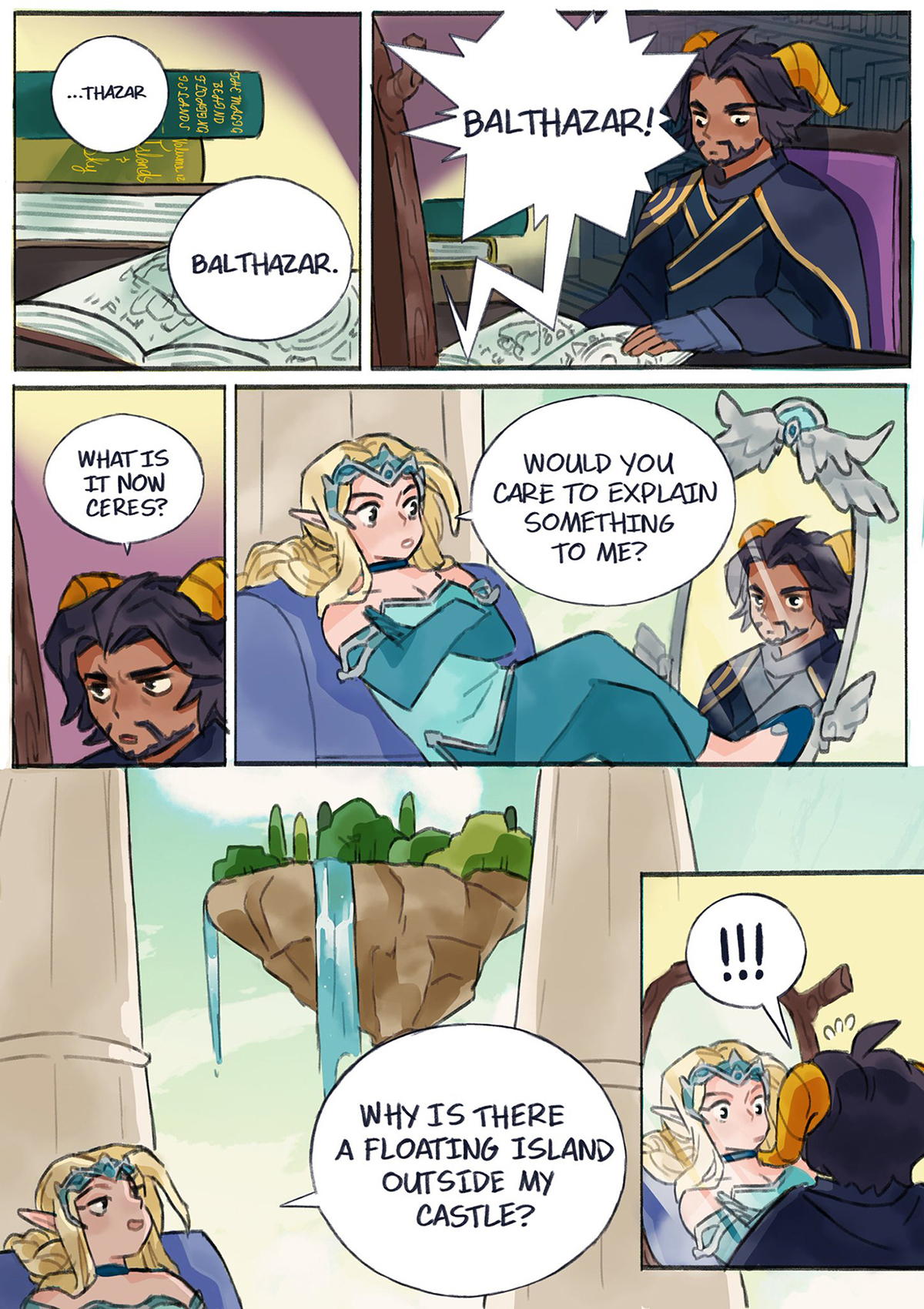
Just another day in the life of a powerful but clueless wizard and the princess who (barely) tolerates him.

This scene takes place at the end of the second arc of my original fantasy novel, The Demon King. In this segment of the story, Balthazar attempts to learn how to control the weather and ends up harnessing ancient forces at the limits of human comprehension. He uses his newfound power for silly nonsense that does not benefit him or anyone else, but you have to admit that floating islands are cool. And, as Ceres says, it’s free real estate.

This comic was written by me and illustrated by Mjoyart on Twitter (and elsewhere). I wrote the script and sketched a set of rough thumbnails, and Meghan was able to turn my stupid joke into something truly magical. Meghan posts Pokémon and Legend of Zelda comics and fan art on Twitter, and I highly recommend checking out her online portfolio (here) to see her original storyboards and animation projects. Her art is fantastic and never ceases to amaze me, and I’m very lucky to have been able to work with her!

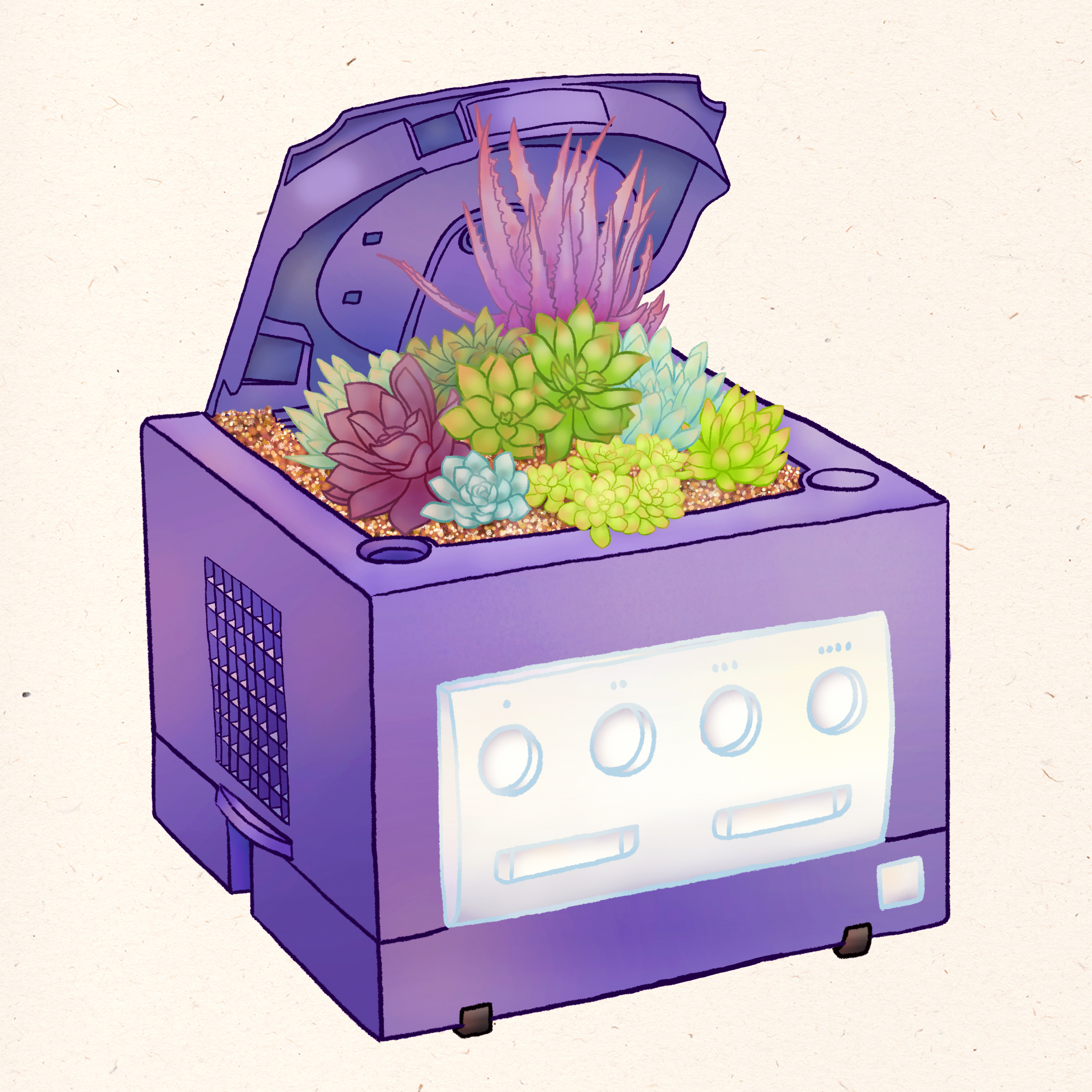
Tsuboniwa

Shigeru Miyamoto has famously said that he envisions video games as small gardens. He uses the Japanese word tsuboniwa, which refers to the tiny courtyard gardens of traditional Kyoto machiya townhouses that are narrow but long enough to have a private garden in the middle. This is how video games have always felt to me. When I enter one of these virtual worlds, I can explore the green space at my leisure while taking a quiet moment to rest and reflect.

. . . . . . . . . .

I created this piece to include in the Philly Zine Fest 2021 Anthology. You can check out this year’s event on their Instagram account (here) and their website (here).

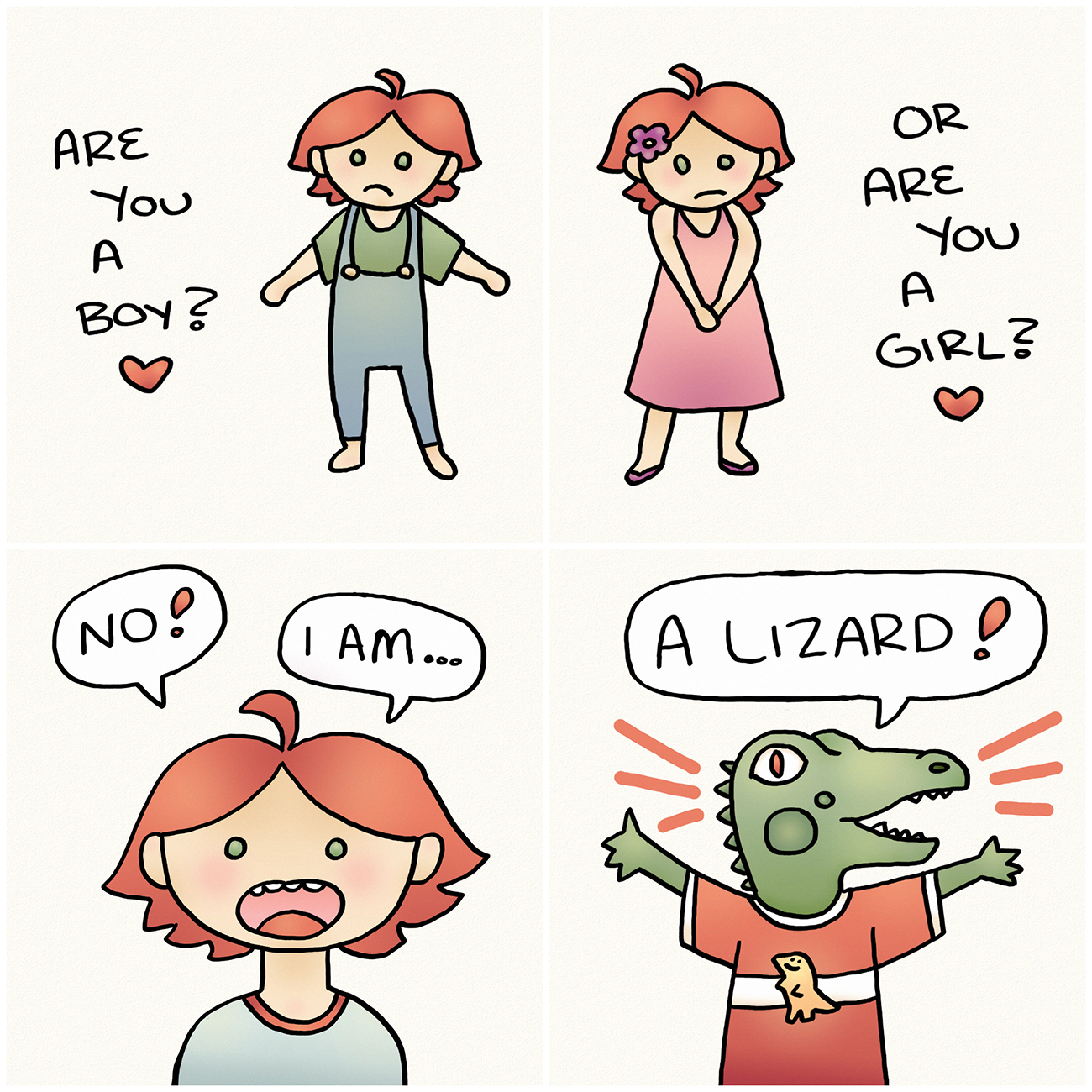
Today’s gender is…

…lizard! 🦎

I used to have a pet iguana, and I never learned whether it was a girl or a boy. It was fascinating to me that this beautiful and handsome creature could exist in the world without a gender and be perfectly fine, and I still think that’s neat. I was a weird kid, but I knew what I was about.

My Great Outdoors

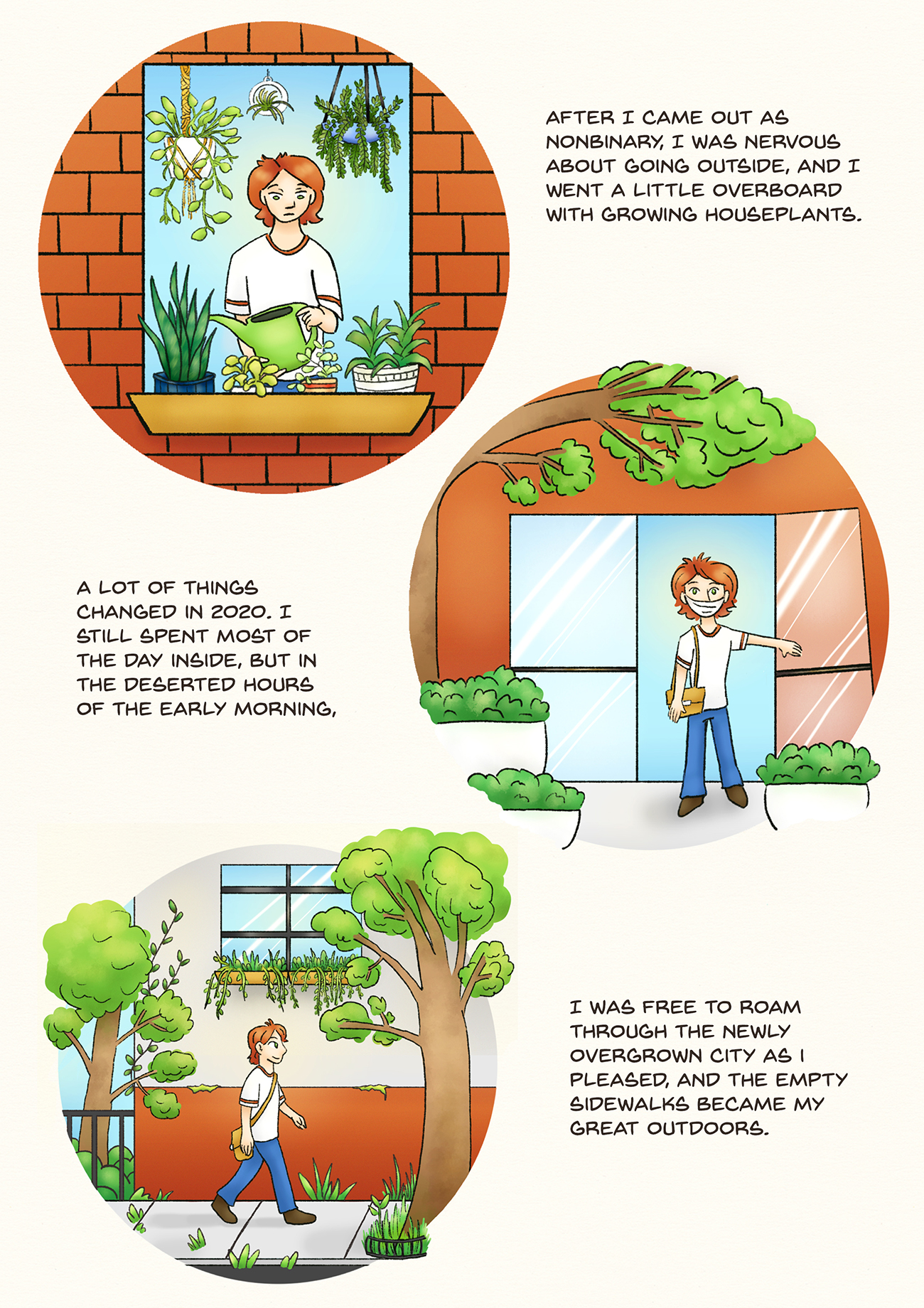
When I moved to West Philadelphia at the beginning of the pandemic, the neighborhood was a mess. The city sanitation workers were on strike (good for them!!), and trash was everywhere. No one had trimmed the vegetation growing along the sidewalks, and there were all sorts of weeds and flowers pushing their way up from underneath the piles of loose rubbish. Most of the university students and faculty had evacuated the city, and no one was walking around outside to begin with, so the crows and opossums had gotten bold. It was quite nice, actually.

I don’t intend to suggest that there was anything “good” about the pandemic, which was and continues to be a nightmare, but I have to admit that it was still a welcome relief to be able to walk around outside while feeling like I was just another part of nature.

. . . . . . . . . . . . . . .

This is a comic I created for the third issue of Nature Held Me Close, a zine about “gender dysphoria and the great outdoors.” Free digital copies of all three issues of the zine are available on its website (here).

Flowerblight Ganon

I posted a short story on AO3 (here) about a minor character in Breath of the Wild named Magda, who is affectionately known by the fandom as “Flowerblight Ganon.”

In Breath of the Wild, Malice is a tangible substance that infests objects and locations controlled by Ganon, including the four Divine Beasts, Hyrule Castle, and the Akkala Citadel Ruins. It also infects the dragon spirit Lanayru who guards the Spring of Wisdom.

While writing this story, I wondered if it were possible for Malice to infect regular people. If so, the woman who zealously guards the garden of flowers surrounding Hila Rao Shrine is as good of a candidate as anyone.

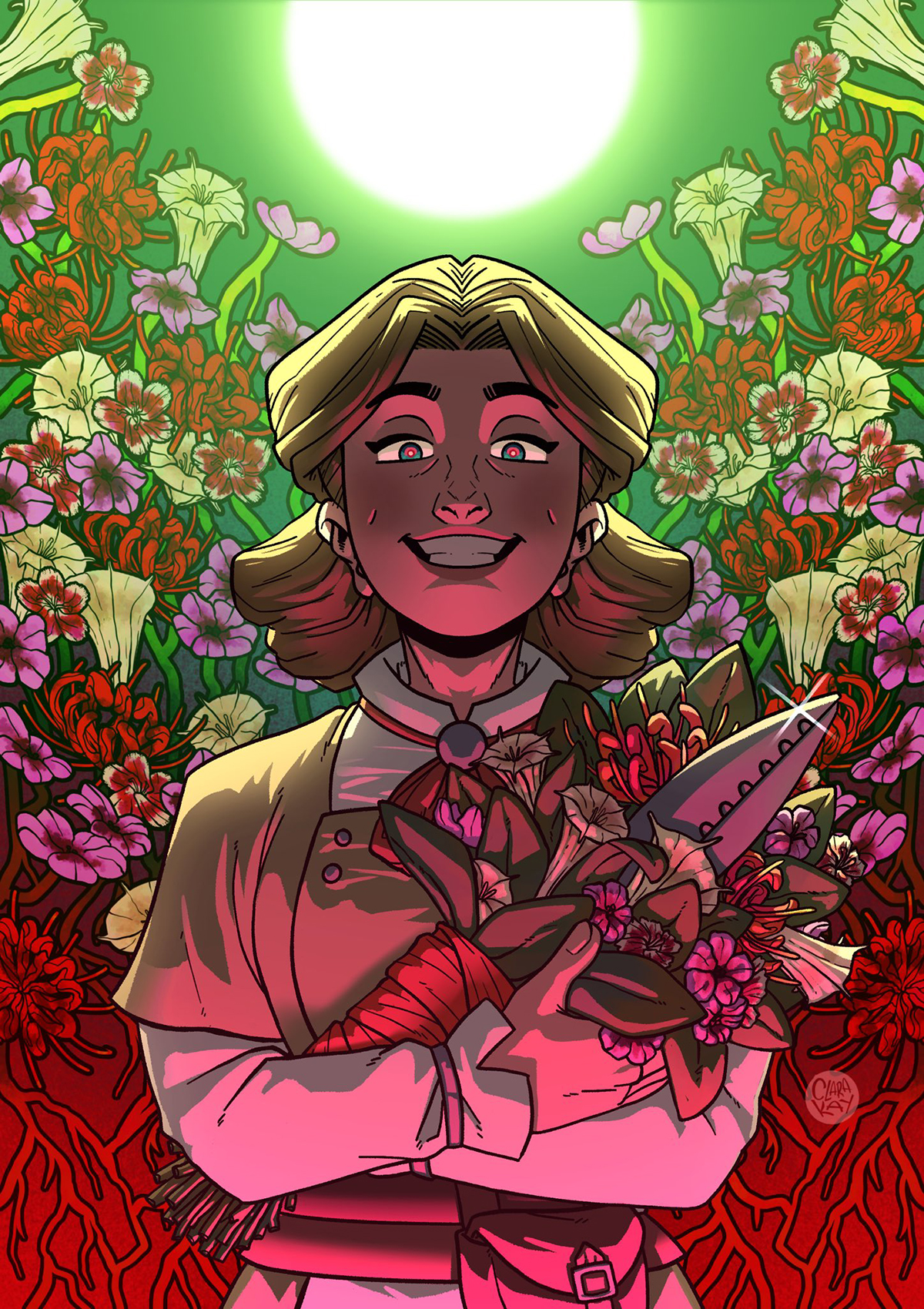
The story illustration is by Clara Kay, whose gorgeously monstrous horror art can be found on Twitter (here) and on Instagram (here). I really enjoyed working with Clara, and I also want to give a shout-out to her store (here), which has all sorts of cool Legend of Zelda merch!

I’d like to share a bit of the artist’s description of this piece, because it’s fascinating:

There’s a lot of symbolism packed into the flowers here. The petunias (pink) represent anger and resentment, the devil’s trumpet (the tall white one) represents power and caution, the spider lily (big spiny red one) represents death and reincarnation, and the carnation (white with red ring) is considered the ‘flower of the gods’ and represents admiration, passion, and love.

Carnations represent “passion and love” because they’re thought to be white flowers dyed red with blood, which is entirely appropriate for this story. “Flowerblight Ganon” is my first foray into botanical horror, and I don’t think it’s necessary to be familiar with Breath of the Wild to understand what’s going on. Magda is a regular woman enjoying gardening, quiet living, and occasional tea with friends in a dying postapocalyptic world, and if she lives her best life by indulging in murder every once in a while, then at least her flowers are well fertilized.

Felis Decapoda

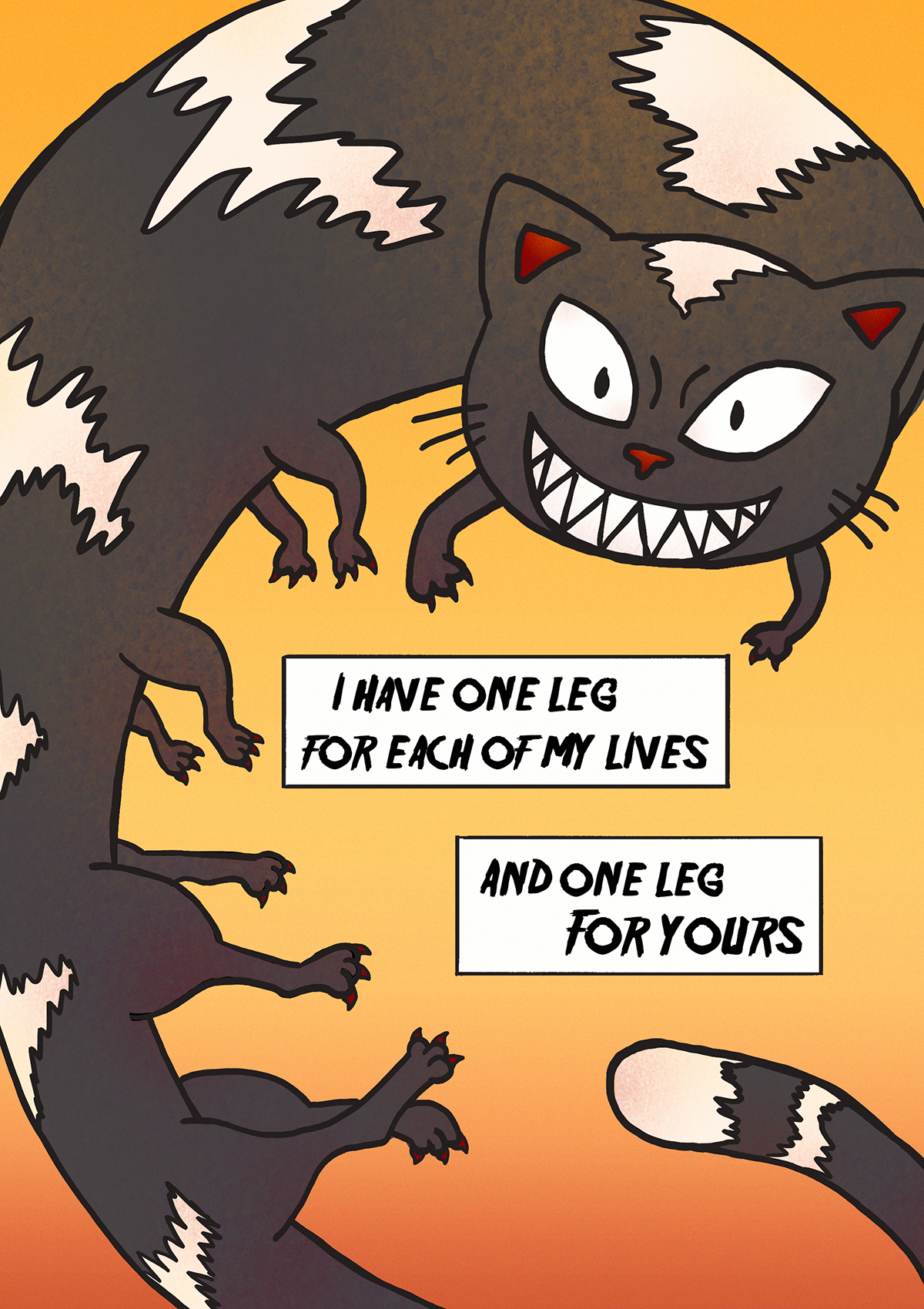
I spent part of my childhood in rural Georgia in an old farmhouse that my mother went into bankruptcy to refurbish and remodel. Along with antique furniture, my mother collected stray cats, and at several points we had more than two dozen roaming around the house and yard.

I know that living in an historic farmhouse filled with expensive furniture and cats sounds like a dream come true for many people, and presumably this was the case for my mother. For me, however, it was extremely uncomfortable. I could never sleep properly, and I used to have nightmares about the cats eating each other and merging into giant mega-cats with far too many legs.

I don’t have anything against cats, and I’d like to adopt one of my own one day, but for the time being I’m happy being a dog person.

The Ghost Shop

I just posted a short story about the Poe Collector in Ocarina of Time on AO3. It’s a spooky fandom treat for Halloween, and you can read it (here).

This story is about what it might have been like to live in Hyrule after the castle fell to Ganondorf, and I really enjoyed exploring the postapocalyptic environment. The story is also about standing up to power and the abuse of authority, even when it won’t benefit you in any way. Grand acts of heroism are all well and good, but it’s also nice to be too weird to care about what people think of you.

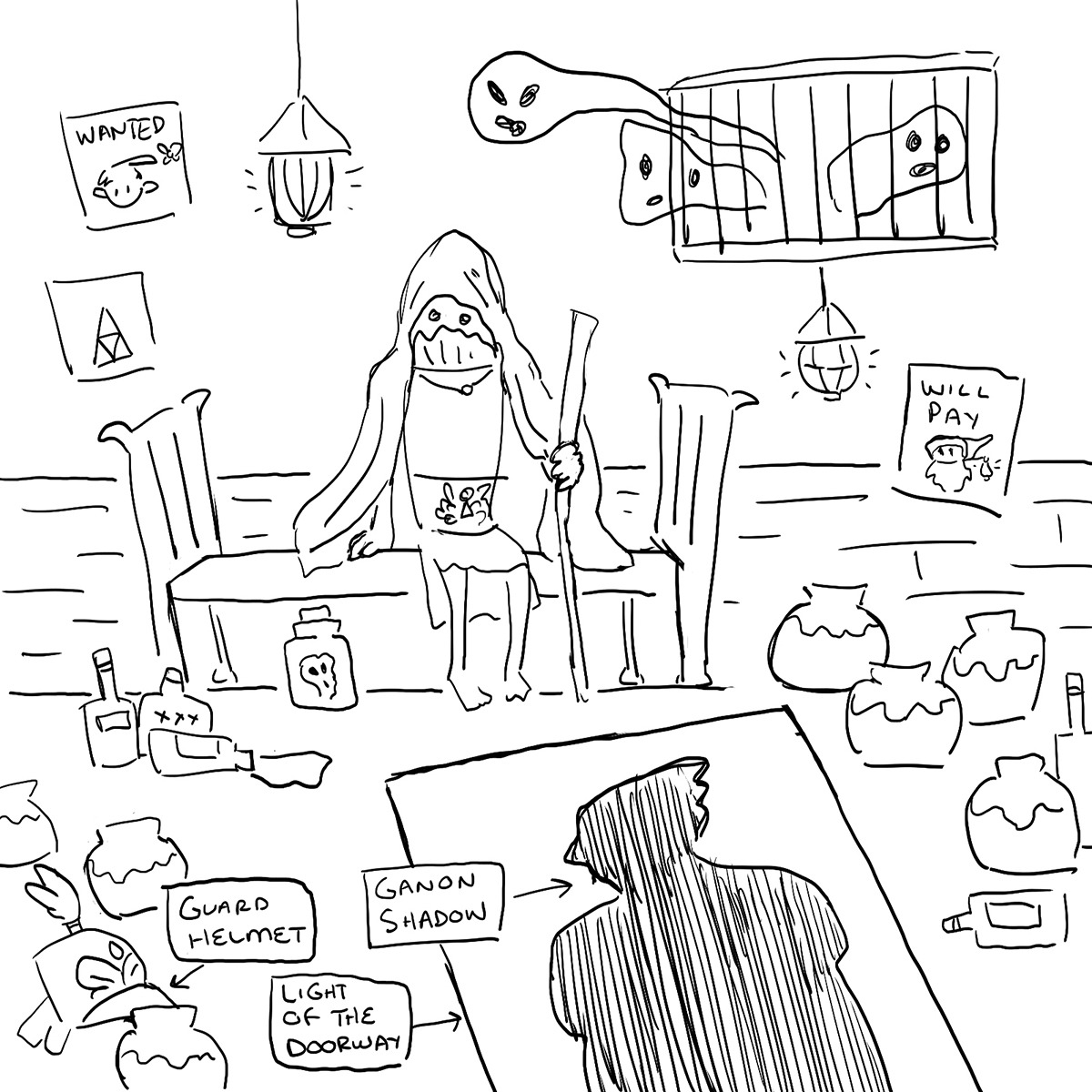
The illustration is by Frankiesbugs, whose creepy-cute art you can find on Instagram (here) and on Tumblr (here). They actually created two color variations, the one with the Halloween-inspired palette that I posted above, and a more Film Noir style version that I posted along with the fic on AO3 – and that they posted on Tumblr (here). It was difficult to choose between such gorgeous and stylish pieces! If you’d like to get a better understanding of just how brilliant Frankiesbugs is, you can check out the concept sketch I sent them (here). This artist’s illustrations have been one of my primary inspirations in writing Legend of Zelda horror stories, and it’s always a pleasure to work with them. You can read some of the horror-themed comics we’ve created together (here) and (here).