An Unfound Door, Chapter Two

Agnes wakes to find that the boar demon has transformed into a man who identifies himself as Fhiad of Erdbhein, a notorious criminal who was accused of high treason after attacking Faloren a hundred years in the past. He is cultured and well-spoken, but he doesn’t hide his frustration with Agnes, who refuses to free him from the silver chain that bound him as a demon. Fhiad tells Agnes that he never had any intention of attacking Faloren, and he claims to have had no interest in her kingdom at all. Rather, he was only serving as an emissary because he was called back from his studies and ordered to do so. Agnes doesn’t know what to make of this, but she’s exhausted and decides to stop for the night.

. . . . . . . . . . . . . . . . . . . . .

The second chapter of An Unfound Door is about two tired people snapping at each other. Nothing much happens aside from the reveal that the demon Agnes encountered in the first chapter is a person suffering from a curse, but I do my best to establish the geography of the world and a bit of its history without dumping exposition on the reader.

This is what I want the reader to take away from this conversation: Agnes is from a kingdom called Faloren, Fhiad is from a neighboring kingdom called Erdbhein, and there is someplace called Cretia far to the south. Fhiad, who has no concept of how much time has passed since he was cursed, is under the impression that he only recently called back from his studies at a university in Cretia. This establishes him as being in his late twenties while introducing the idea of Cretia being a center of culture in contrast to the forest, which is all we’ve seen of Faloren. According to Agnes, Erdbhein attacked Faloren roughly a hundred years ago, and Fhiad supposedly instigated this attack. Fhiad denies this, but he won’t be forthcoming with more details until the next chapter, as he hasn’t yet had an opportunity to process what Agnes is telling him.

In other words, this chapter establishes the broader conflict of the story through the smaller immediate conflict between Agnes and Fhiad. This conversation sets up a dynamic of Agnes as a character who’s pragmatic and grounded, while Fhiad is well-spoken but emotionally unstable. These two characters have trouble communicating, but each of them gets a “save the cat” moment during this chapter. Despite their petty bickering, their first instinct is to be kind to one another when it counts.

“Petty bickering” may seem like an inappropriate response to the gravity of the situation, and it is. In the next chapter, Fhiad will finally have an opportunity to reflect on his circumstances, and he and Agnes will discuss how they plan to move forward in a more appropriate tone.

As an aside, there are a lot of regrettable aspects of being in your twenties, but it’s nice to be physically fit by default and walk for miles without thinking too much about it. For me in my thirties, I can only walk through the woods for so long before I need to sit down. I wouldn’t turn down an adventure of my own, of course, but it’s so much more pleasant to experience this sort of thing vicariously through fictional characters.

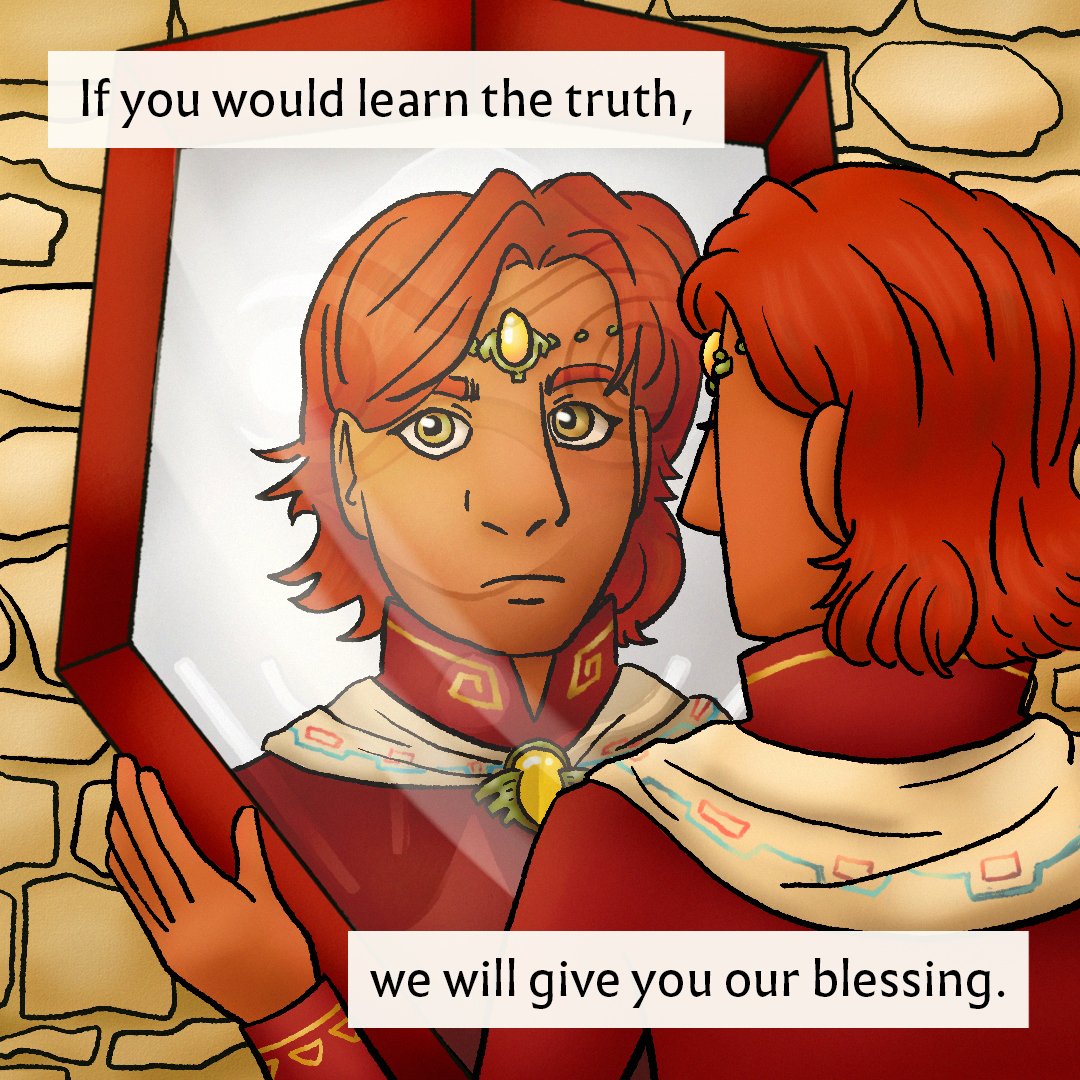
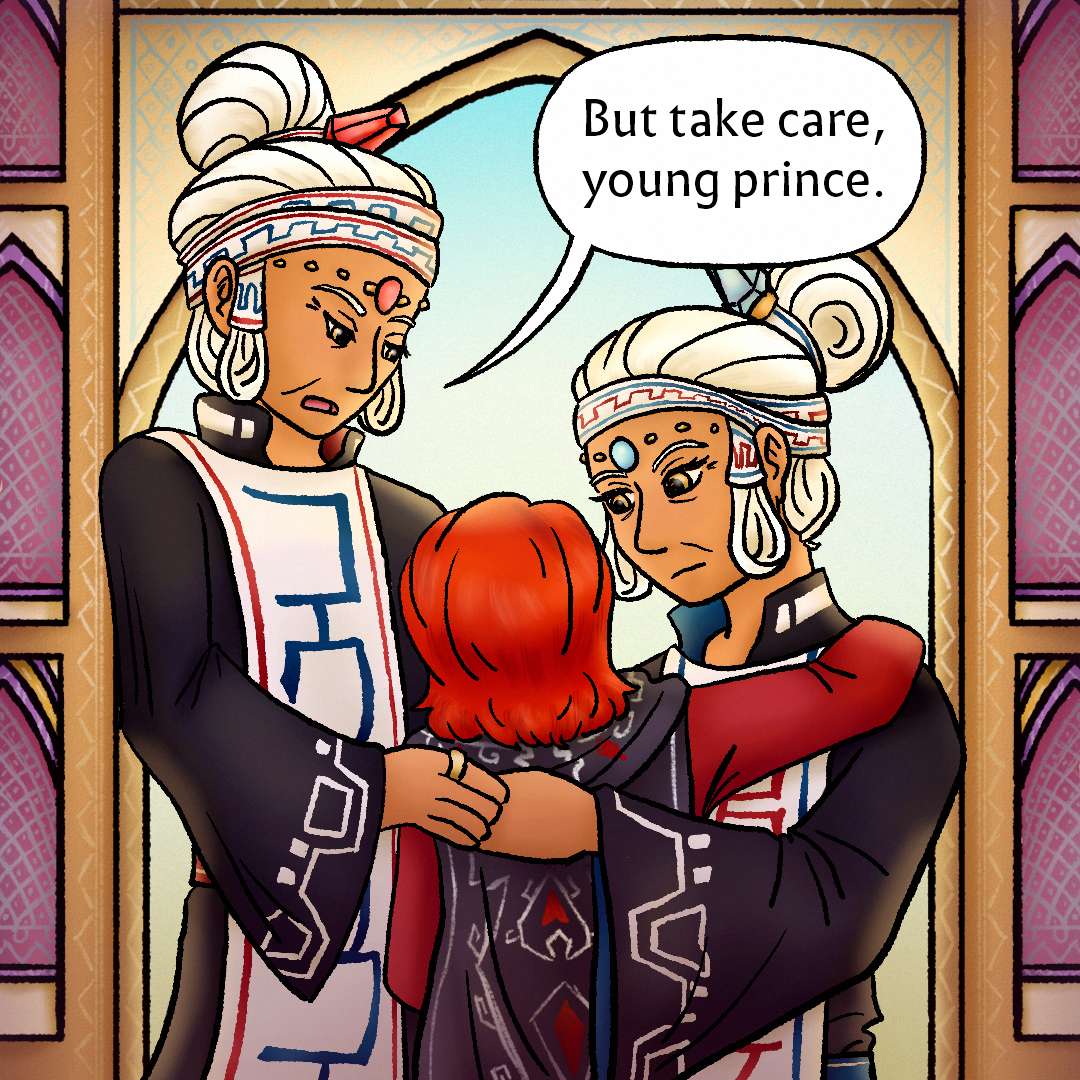
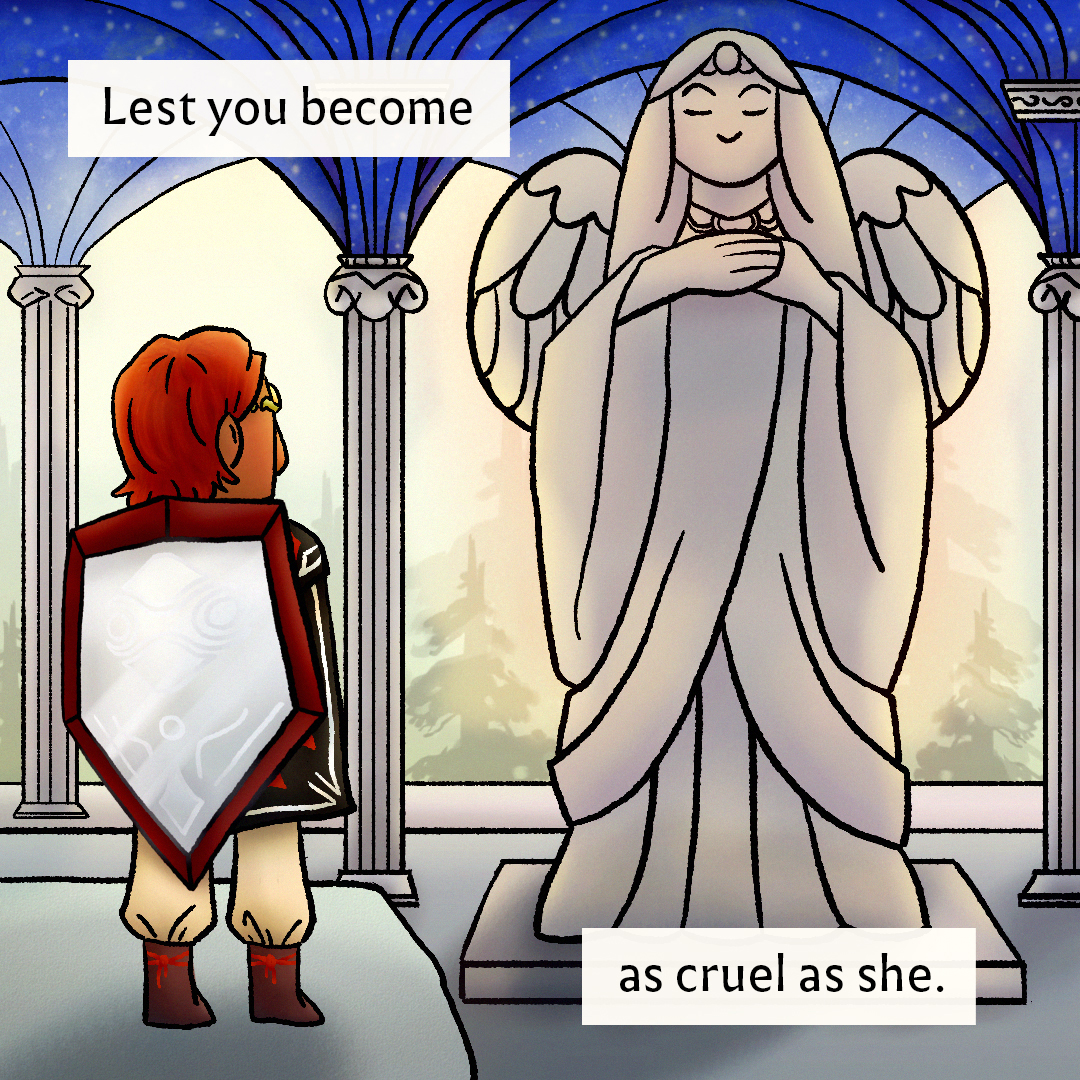
The illustration that accompanies the chapter preview was created by the bold and brilliant Samijen, who paints fantastic character illustrations that practically jump from the screen with life. You can follow their work on Instagram (here), on Twitter (here), and on Bluesky (here).

What Should We Do With Your Body?

I contributed a story called “What Sadie Didn’t See” to What Should We Do With Your Body?, an original collaborative murder mystery zine that’s free to download on Itchio (here).

“What Sadie Didn’t See” is a story about the things people throw away. Sadie is the manager of a custodial agency in the isolated town of Rosewater, where the body of a young man named Gabriel has been discovered in an abandoned mining tunnel. Gabriel was the son of the wealthiest family in town, and Sadie’s agency services their manor, just as they handle many of the other notable buildings in town. It’s possible that Sadie may have an important clue concerning what happened to Gabriel, but she has a longstanding habit of remaining silent about what the town residents don’t want to be seen.

I worked for a custodial agency in Atlanta during my first two years of college, and Sadie is based on my manager, a cheerful but no-nonsense woman who liked to say that the most important element of the job is discretion. My manager was kind and supportive to everyone who worked with her, so it was important to me to establish Sadie as a respected member of her community with ties to just about everyone. Although Sadie’s decision at the end of the story may be questionable, I hope it makes sense to the reader why she values the wellbeing of the living and the dignity of the dead over the success of the ongoing police investigation into Gabriel’s disappearance and probable murder.

I’m honored that my story opens the zine, and I hope it provides an intriguing introduction to the town of Rosewater and the secrets of its inhabitants. I’m equally honored to have received a character illustration by ZombieGaby, as well as a story spot illustration by Taymets. The focus of the zine is on the stories told by the characters, but the pages are filled with gorgeous art and graphic design. If you’re a murder mystery fan, or perhaps a connoisseur of Stephen King style peculiar little towns, please consider checking out the What Should We Do With Your Body? zine.

🟠 You can download the zine for free on Itchio (here).
🟠 You can follow Vinegar Zines on Twitter (here).
🟠 You can follow ZombieGaby on Instagram (here).
🟠 You can follow Taymets on Twitter (here).

The Cruel King and the Great Hero

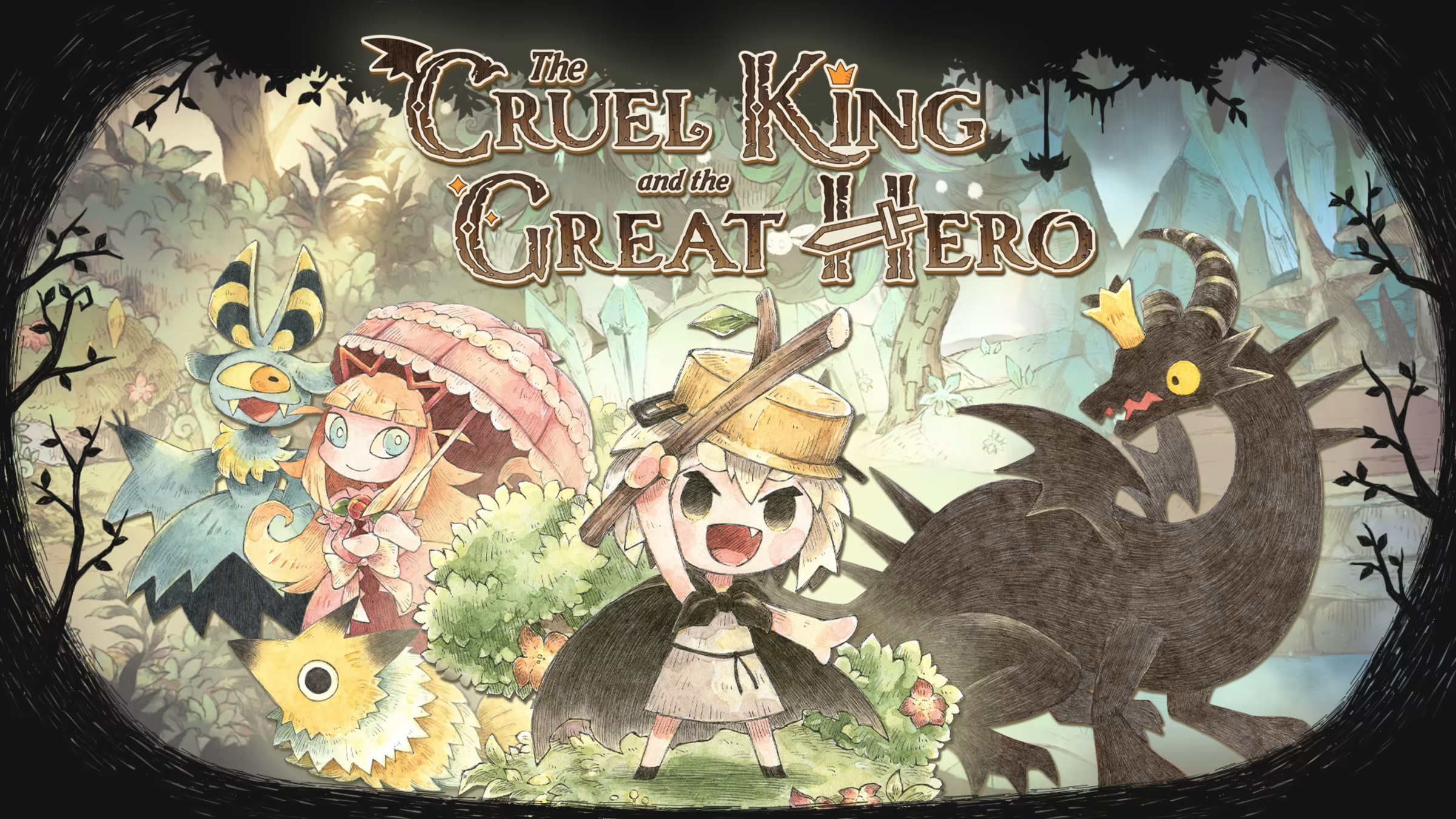
The Cruel King and the Great Hero was developed and published by Nippon Ichi Software, and it’s the spiritual successor to the studio’s 2018 title The Liar Princess and the Blind Prince. Just as The Liar Princess is a simplistic puzzle-platformer set apart by its distinctive manga art style, The Cruel King is a JRPG that’s so traditional it would probably be considered retro were it not so visually gorgeous and beautifully animated.  

When I say that The Cruel King is “traditional,” what I mean is that there are a lot of random encounters. The battles are turn-based and controlled solely through text menus. There’s a bit of strategy involved, but not much. Your character walks slowly, and there’s a not-insignificant amount of backtracking. If you suspect that you’ll find this frustrating, then The Cruel King probably isn’t for you.

If you’re looking for a more relaxed gameplay experience, however, The Cruel King is a delightful way to spend about 20 to 25 hours. Personally speaking, it took a few play sessions for me to readjust my expectations of how quickly the battles should progress, but I became hooked on the gameplay once I got used to the pace.

You play as Yuu, a young human girl who has been adopted by The Cruel Dragon King as his daughter. Every night before bed, the Dragon King tells the girl about her “real” father, a great hero who defeated an evil demon king. The girl wants to become a hero like her father, so the Dragon King decides to make her dream come true by coming up with little quests for her to undertake. These quests are in service to the various monsters who live in the Dragon King’s territory, and the girl becomes involved in a series of adorable sidequests.

Most of these sidequests are optional. Because the game isn’t difficult, the sidequest rewards aren’t strictly necessary. Rather, the real reward is the friendship you find along the way. In less cliché terms, the reward for playing the game is being able to experience more of the game.

The environment is not quite 2D and not quite isometric, and it reminds me a lot of the style of the Paper Mario games. There are no puzzles and no platforming, but your character gradually gains abilities that allow her to bypass environmental obstacles and thereby gain access to more of the map. Like most of the sidequests, exploration isn’t strictly necessary. Still, if you want to poke around a bit, the map screen is annotated in a way that’s easy to understand and keep track of, and there will never be any need to consult an online walkthrough. The player has access to a quest log that visually signposts the objectives for each quest, and you can instantly return to the central village hub whenever you wish.

Your adventuring party only has two characters at a time, Yuu and another character specific to each chapter of the game. This can occasionally cause difficulties when a group of enemies is designed to take advantage of an earlier companion’s special abilities, but most players will never experience anything beyond mild inconvenience. Your characters’ skill points are limited but naturally renew after each turn of battle, and it’s fun to play around with different skills and strategies without having to worry about conserving resources.  

The chill and low-stress gameplay allows the player to appreciate the most notable feature of The Cruel King, which is its gorgeous artwork. Playing the game feels like walking through the pages of a storybook, albeit one that’s beautifully animated. All of the characters and environments are hand-drawn, and each screen is filled with unique details. The illustrated bestiary that you can gradually complete as you find and defeat enemies is a treasure.

I’ve gotten used to ambient background noise in contemporary video games, so it was a treat to realize that each area of The Cruel King has its own theme music. I thought this music was nothing special at first, but over time I found that I enjoyed the fantasy flavor it adds to each section of the game. None of the character lines are voiced, but the actress who narrates the storybook-style cutscenes in Japanese gives a lovely performance (although you can silence her voice and fast-forward through these scenes if you like).

The translation is of uneven quality, but this didn’t bother me. Most of the dialog is cute and quirky but still feels natural, and many of the characters have distinctive ways of speaking that are fun without being annoying. The translation for the third-person narrative cutscenes tends to be a bit shaky, both in terms of style and grammar. I don’t think the errors were intentional (especially since the original Japanese text is relatively polished), but I still appreciate them, as the amateurish writing style made the storybook sections feel more intimate. It reminded me of Super Nintendo JRPGs, whose imperfect translations were a significant part of their charm.

Without spoiling anything, I think it’s fair to say that The Liar Princess and the Blind Prince was a horror game that got especially dark toward the end. The Cruel King and the Great Hero doesn’t have any nasty tricks up its sleeves, but the story ends up being much more interesting and nuanced than you might expect. If nothing else, you get to be friends with all sorts of monsters, and who doesn’t want a kind and supportive Dragon King for a dad?

A Legend of Shadows, Part Three

This is the third and final section of a speculative comic about gods and mortals in Legend of Zelda lore and mythology. The first part is (here), and the second part is (here). This is a continuation of the ideas I expressed in a short collaboration comic called Hylia’s Chosen Knight.

The goddess Hylia is more than a little scary, and it’s interesting to think of Ganondorf as being the hero of another story. I’m fascinated by the theme of “the failed or corrupted hero,” and I think it would be interesting if Ganondorf went on a quest that paralleled Link’s journey. Maybe young Ganondorf saw Hylia as the villain, but the power he needed to stand against Hyrule ended up overwhelming him. To me, that’s much more compelling than the idea of power only being “good” when it’s wielded by the “chosen” person.

An Unfound Door, Chapter One

Agnes walks along an old road through a mountain forest while leading a demonic boar on a magical silver chain. To keep herself awake, she talks to the creature, confessing that she wants to study its magic in an effort to revitalize the fortunes of her dying kingdom. The demon eventually begins to reply in garbled human speech. It responds strongly when Agnes asks about a golden medallion that she found on the battlefield after she asked the hero who saved her to spare the monster’s life. The demon, who is clearly in pain, asks Agnes to place the medallion against a scar on its forehead. She feels compelled by something larger than herself to do as it asks, only to be overwhelmed by magic.

. . . . . . . . . . . . . . . . . . . . .

An Unfound Door is a gothic mystery set in a decaying castle. Agnes, the princess of Faloren, hopes to save her crumbling kingdom by unlocking the secrets of long-lost relic, but she must conceal it from Fhiad, a mysterious emissary with sinister motives. As their paths cross in twisting corridors and hidden passages, Agnes and Fhiad realize that they must descend into the shadows of the past together if they hope to bring light to the future.

This story summary needs some work, but I’ll keep editing it as I write.

In terms of “Save the Cat” story structure, this initial chapter provides the opening image: A young woman leading a demonic boar through the darkness of a mountain forest.

The closing image, which will mirror the opening image, will be Agnes and the now-human demon sitting in the shade of a lone tree as they watch the sun set. In both cases, Agnes will be leaving the scene of a battle with the demon to return to civilization. What Agnes considers to be “civilization” will have changed, as will her understanding of herself and her relation to the magic she’s trying to harness. And obviously she and the demon will have kissed.

The opening chapter sets the gothic tone of the story by introducing a brave but somewhat naive young woman not-quite lost in a dark and sinister place. It also presents what I hope is an intriguing mystery. What is the demon, and where did it come from? Why is Agnes’s kingdom in decline, and why is she alone in the forest with a demon?

To establish Agnes’s character as the protagonist, she has literally “saved the cat” here, except the “cat” in this case is a giant horrible boar demon. I assume the “hero saves the princess from the evil demon” narrative pattern will be familiar to most readers, who will hopefully be intrigued by the element of Agnes’s character that leads her to capture the demon instead of killing it. She perceives her need of the demon’s magic to be worth the risk, but she’s also curious and looking for trouble, even if she can’t yet admit that to herself.

Agnes is going to start wearing a series of masks once the story gets going, so I think it’s useful for the reader to see her true face at the beginning. As corny as this sounds, the way that Agnes needs to change over the course of the story is to learn to follow her heart, by which I mean she needs to recognize her own face underneath her masks. Also, I want to use the story to explore the beauty of decay, and I’d like to use Agnes to make an argument that some kingdoms should be allowed to crumble.

The illustration accompanying the chapter preview graphic was created by the marvelous Ilya Rawan, who posts magical artwork on Twitter (here) and on Instagram (here).

Japanese Ghost Stories

This fall, I’m teaching a new class called “Japanese Ghost Stories.” Here’s the course description…

This course offers a survey of the numinous and supernatural through Japanese fiction, drama, comics, animation, and video games from the Heian period to the present day. Students will assemble a foundational knowledge of Japanese religion and folklore while studying popular narrative traditions representative of their historical eras.

By peering into the liminal spaces connecting the living with the dead, students will develop critical thinking and media literacy through careful investigation into the matters that people of different times and places have perceived as monstrous, alien, and unspeakable. Issues of gender, sexuality, and ethnic minority status will receive special attention as we navigate theories relating to the cultural role and social relevance of ghosts. By the end of the semester, students will possess a broad perspective on Japanese narrative traditions and popular culture, as well as an understanding of how fantastic stories of the dead reflect the tangible experiences of the living.  

You can download a copy of the syllabus (here).
I’ve collected PDF files of the course readings on Dropbox (here).
If you’re interested, a copy of the course assignments handout is (here).
You can check out the work of artist who drew the banner image (here).

I’d like to acknowledge that this course was inspired by Professor Naomi Fukumori’s class “The Monstrous in Japanese Literature and Culture,” and I encourage anyone who is interested to check out the course syllabus (here).

Gothic Horror Story Elements

In order for a story to be considered “Gothic,” I think it needs to include…

– A house. This “house” can be a castle or a space station or an abandoned medical research facility or what have you, but it needs to be a place where people live and eat and sleep.

– It has to be a big house. In addition to being big on the outside, it should be larger than it appears. The house should have something along the lines of a secret sub-basement, hidden rooms, tunnels in the walls, a House of Leaves style portal to another dimension, or something along those lines. The house needs to be large enough to be considered a labyrinth.

– The house has to be old and in a state of decay or disrepair. In addition, the house needs to be isolated and surrounded by wilderness. Over the course of the story, the natural environment should intrude on the interior of the house. This should still be the case even if the environment is not technically “natural,” as in the case of Suburban Gothic.

– The house needs to be associated with and occupied by a family.

– The family needs to have a dark secret, preferably one hidden within the house.

– At least one member of the family should still live in the house. “Family” can be loosely defined, but the concept of “family” as such is key.

– If there’s no family living in the house, then the story is a “haunted house” story, not a “Gothic” story. This is also the case if the people living in the house aren’t alive or aren’t human (or whatever passes for “a normative person” in the world of the story). This is important, as “Gothic” is just as much of a narrative structure as it is a collection of tropes. For example…

– The point-of-view character should be a member of the family in some way. Often this character will come into the house through marriage or inheritance. Sometimes they won’t initially know they’re related to the family. In the case of servants and governesses and so on, the point-of-view character will either be secretly related to the family, or they’ll be a parent or spouse in all but name. If the point-of-view character isn’t related to the family, they will gradually fall under the delusion that they are.

– The point-of-view character will obviously be privileged, as they live in a large house and are associated with a wealthy family, but they also need to be disadvantaged in some way. The way in which they’re disadvantaged should have some thematic relevance to the dark secret hidden by the house.

– The point-of-view character must be forbidden from certain behavior by an arcane rule or system of rules. The forbidden behavior will generally involve the navigation of space in or around the house: Don’t go into the forest, don’t go into the cellar, don’t leave your room at night, etc.

– The disadvantage of the point-of-view character will compel them to accept the family rules even though they can intuitively feel that something is horribly wrong. This traps them within the house.

– The goal of the point-of-view character is to escape the maze of the house. The only way to navigate this labyrinth is by breaking the rules, engaging in forbidden behavior, and bringing the dark secret to light.

– The primary antagonist should be a living person in the family, related to the family, or emotionally invested in the family in some way. Although supernatural elements are not out of the question, it’s often the case that the phenomena presumed to be supernatural have a rational (albeit psychologically deranged) explanation. That being said, there’s often a Todorovian elision between “natural” and “supernatural,” with the distinction being left to the reader.

– When the point-of-view character reveals the family’s secret, this destroys the house. This destruction is usually literal. The family almost always dies as well. If the point-of-view character is too closely tied to the family, they may die too. Regardless, the reader will understand that the collapse of the house and the demise of the family is a good thing that needed to happen.

– The house and family should represent an older social system responsible for the disadvantage of a group of people represented by the point-of-view character. This system usually concerns oppression on the basis of class or gender, but it can sometimes be about race, nationality, or colonial heritage.

– The Gothic genre is not conservative, because it’s essentially about how outdated systems of privilege that still continue to oppress people are deeply fucked up and unhealthy and need to be destroyed. “Haunted house” stories are often conservative, but I would argue that Gothic stories advocate for radical systemic change and the self-realization of freedom from social expectations.

– At the same time, Gothic stories are not didactic. The lure of the forbidden goes both ways, after all, and the reader should be able to understand why the point-of-view character allows themselves to become trapped in the house. The old castle is majestic. The beast-husband is attractive. The spoils of ill-gotten wealth are luxurious and comfortable. The ruins are delightfully mysterious. The poison apple looks delicious. The story is queer and problematic, and that’s precisely why it’s appealing.

There are numerous cross-genres and sub-genres of Gothic that have their own specific conventions, like Gothic Romance and Boarding School Gothic. I didn’t address the visual language of the Gothic, or how tropes and conventions vary between times and cultures. Still, I think this is the core of the genre.

Eight Quick Editing Hacks

It’s always a good idea to take time with editing. Giving your manuscript time to rest and breathe before returning to it with a critical eye can work wonders. Deadlines will not wait, however, and sufficient time may not always be available. That’s when editing hacks come in handy!

This post lists eight of my favorite editing hacks, four for deleting extraneous words and four for catching typos. Each of these editing hacks is painless and intended to help you apply a final layer of polish to your writing before you send it out into the world.

Four Quick Style Hacks with Ctrl+F

Find + delete quantitative adverbs.

This especially applies to Americans, who tend to use quantitative adverbs to add color and rhythm to their speech. Unfortunately, these adverbs don’t often translate well into writing, and they can usually be deleted without affecting the meaning of the sentence. “A lot” and “a bit” are common, as are “only” and “very.”

Crtl+f + ly.

This will help you catch quantitative adverbs like “really” and “completely” and “extremely.” I’m a big fan of adverbs, which add texture and flavor to writing, but many writers tend to have a few specific adverbs they overuse in their initial drafts. Searching for all instances of “ly” in your manuscript is a great way to rein them in.

Find + delete words for facial expressions.

“Smile,” “smirk,” “chuckle,” and “sigh” are some of the common ones. There’s nothing wrong with these words, of course, but many younger writers tend to overuse them. Instead of describing what’s happening on someone’s face, it’s often more effective to convey emotion through action or dialog. You can usually delete words that describe facial expressions or tone of voice without hindering the reader’s understanding of the situation.

Find + delete academic transition words.

I’m referring to words like “therefore,” “moreover,” “conversely,” and so on. Although these words can help you structure your ideas as you write, few people use them outside the context of academic papers. This applies to fiction, obviously, but it’s also relevant to nonfiction that you’re pitching or submitting to an editor at a website, newspaper, or magazine. Many people cultivate a habit of using formal transition words while learning to write in high school and college, and unlearning this habit is a process. In the meantime, ctrl+f can help you weed out any holdovers from academic writing.

Four Editing Hacks for Catching Typos

Apply a different font.

This is common advice, as changing the font of your text can trick your eyes into seeing typos that you would have glossed over otherwise. I have to admit that this has never been effective for me. This is what works instead…

Copy and paste your work into a different word processing program.

If changing the font is too superficial, it may be more effective to change the entire text field. I write in MS Word and Scrivener, but I like to copy and paste my manuscripts into Google Docs for two reasons. First, it’s free; and second, it doesn’t mess with the text formatting. As an added bonus, Google’s grammar check has become remarkably sophisticated during the past two years. Sometimes it’s dead wrong, but sometimes it will surprise you with an excellent suggestion. Free grammar check websites such as Slick Write can also be useful. You may not need help with grammar, but a “copy and paste your writing into the text field” site like Slick Write can point out passive voice, frequently occurring words, and other stylistic issues that it can be easy to miss if you’re on a deadline.

Send the text of your writing to yourself in the body of an email or post it onto a private blog.

Some people swear by the email method, which allows you to read your writing with fresh eyes on a different screen. Unfortunately, there are times when my own email inbox gives me anxiety, and I’m sure this experience is relatable to anyone dealing with deadlines or a high volume of correspondence. Instead of using email, you can set up a private blog (on Dreamwidth, for example) and post your writing as an entry. If it helps to maintain separate spaces for different writing projects, you can set up as many journals as you want and delete them when you’re ready to move on. A few of my nonfiction writer friends tell me that they do this with wiki software, but your mileage may vary.

Use a free text reader tool like NaturalReader or Voice Dream.

Many writers read their text aloud to check for typos, but this is time-consuming and not feasible for people who write in shared spaces. Although text readers are still far from perfect, they’ve gotten much better over the past few years. Commercial text readers offer a range of natural voices, but my own experience is that listening to a slightly mechanical voice read your writing makes typos stand out more than they would in a human voice. NaturalReader is easy to use and works well in a desktop browser window, while the Voice Dream app is good if you prefer to listen from your phone.

All of these hacks are designed for spot checks once you already have an edited manuscript. I’m curious if anyone has any quick and easy strategies that they use to edit manuscripts (fiction or nonfiction) at an earlier stage. Also, if you’ve created a short list of “find and delete” filler words that you’d be willing to share, I’d love to see it!

. . . . . . . . . . .

This post originally appeared on Get Your Words Out, a community of writers aiming to maintain healthy creative habits and writing productivity. Membership to the community opens at the beginning of the calendar year. Its content is limited to members who maintain their writing pledges, but the GYWO Twitter account is accessible to everyone and posts encouragement, prompts, and writing resources at a steady but manageable pace.

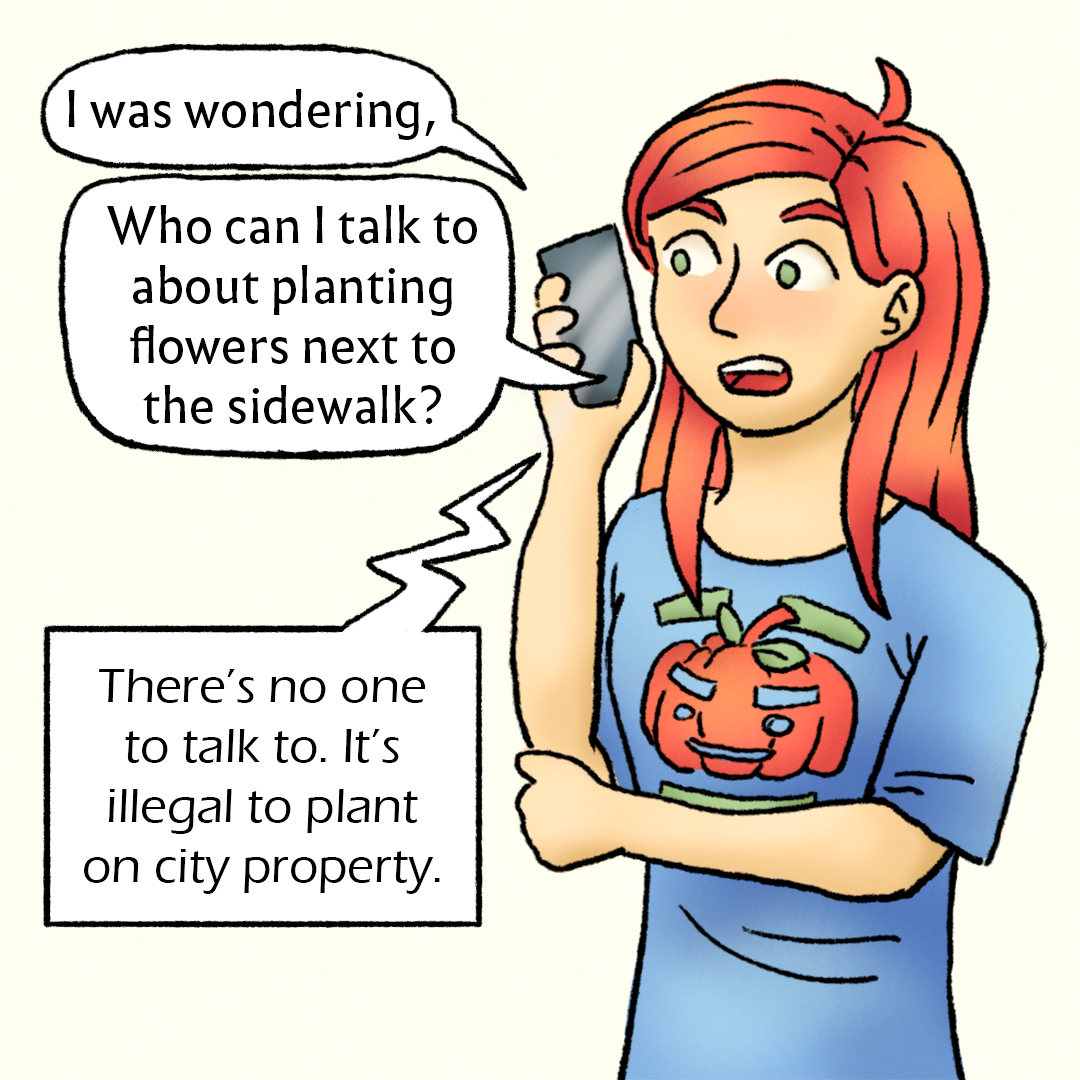
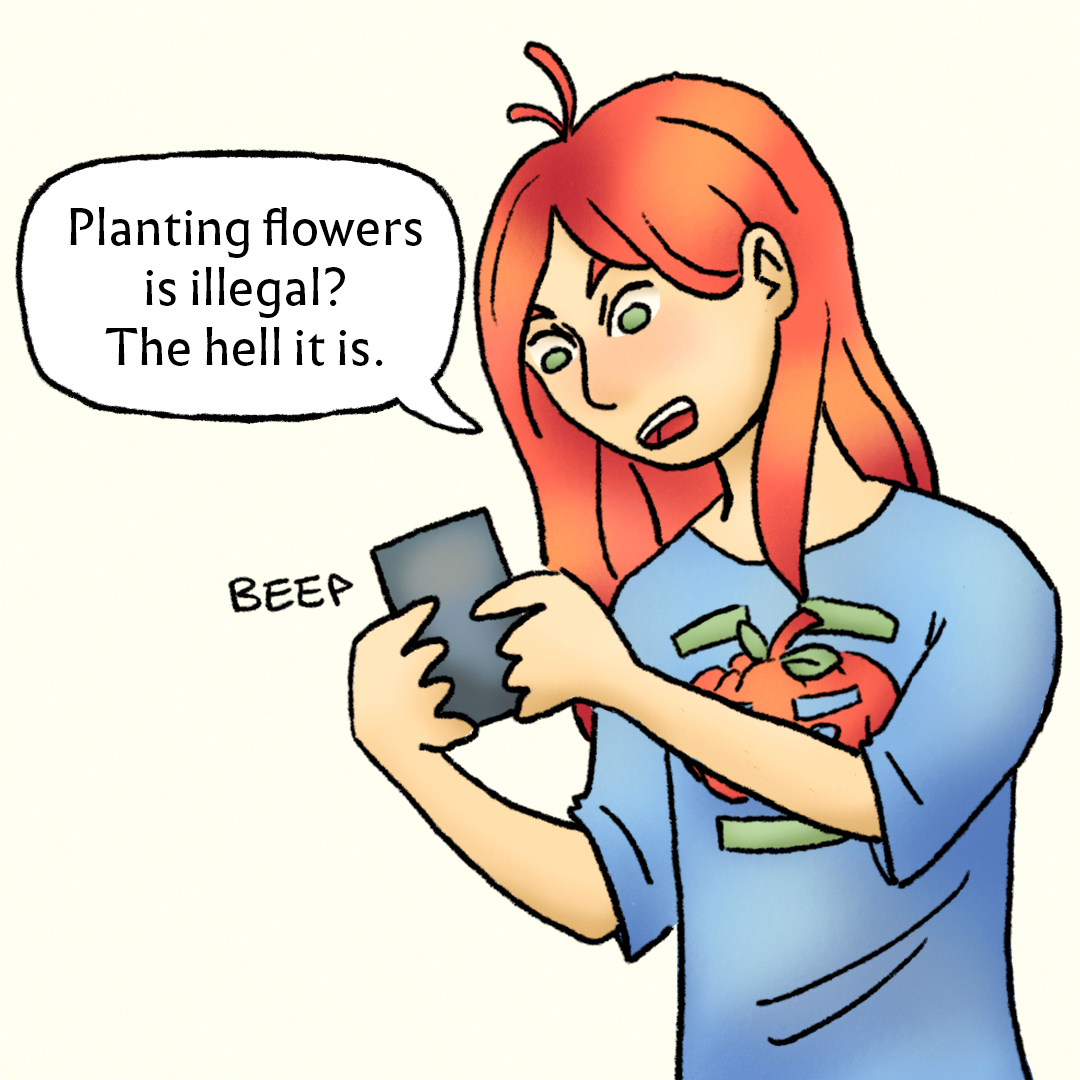
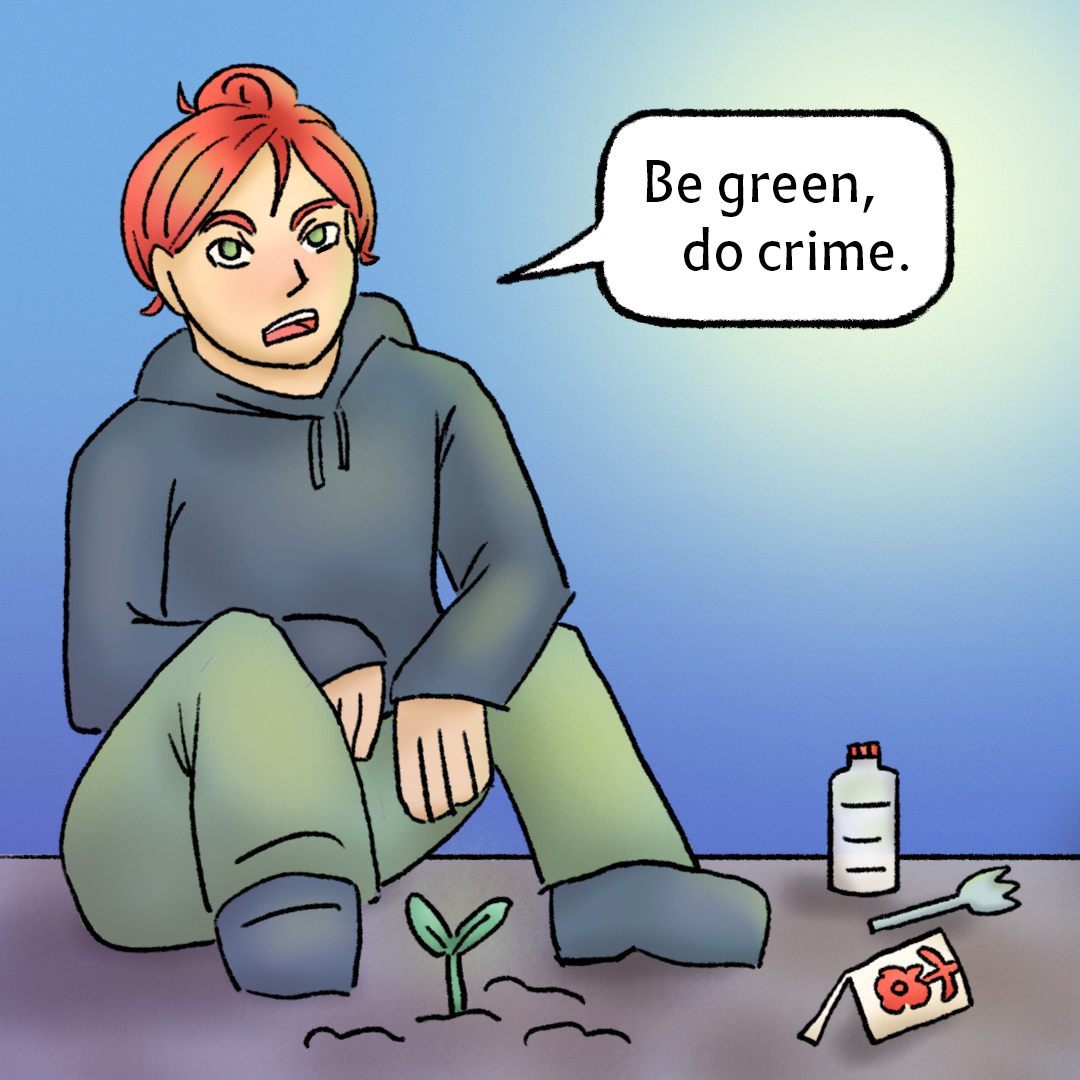
Be Green, Do Crime

Despite my interest in horror and dark fantasy, I’m very normcore in real life. Still, I am willing to engage in civil disobedience in order to touch grass. If I can’t afford to live in a neighborhood with flowers, then I’m just going to have to plant them myself.

This comic received a lot of support when I posted it on Tumblr, by the way. (This) is one of my favorite responses. Kudos to my fellow urban gardener for the addition!

The Greatest Thing Review on WWAC

I recently had the immense pleasure of writing a review of Sarah Winifred Searle’s graphic novel The Greatest Thing for the website Women Write About Comics. Here’s an excerpt:

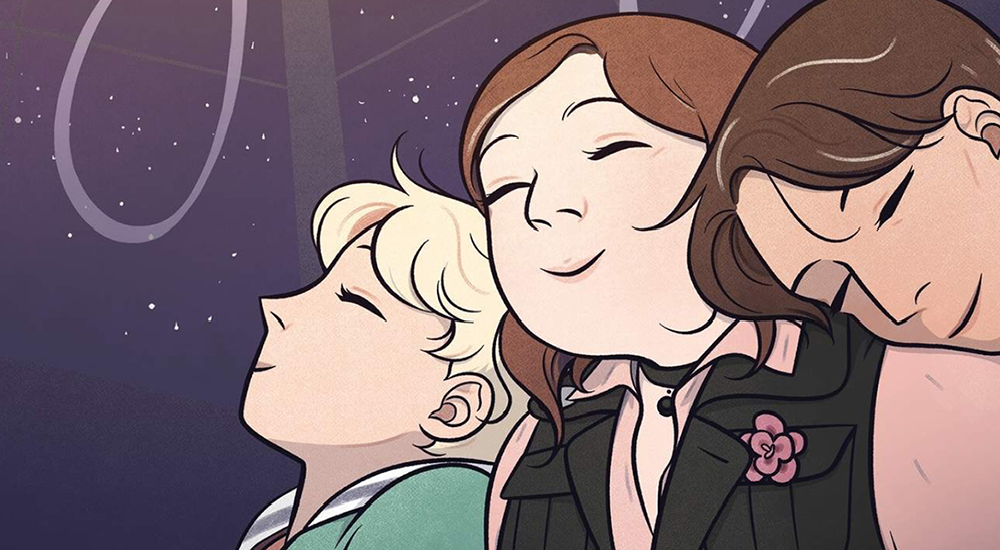
Searle paints a soft pastel portrait of what it was like to grow up in the 2000s before smartphones and social media. Relatively few people talked about what it means to be gay, but the queer kids nevertheless managed to find each other. The Greatest Thing has no epic kisses or dazzling rainbows or flashy pride parades, just a quiet and gentle acknowledgment that growing up means learning to be true to yourself.

If you’re interested, you can read the full review (here). You can also check out the book’s page on the publisher’s website (here) and follow the artist on Twitter (here). Much appreciation and respect to my excellent editor, whom you can follow on Twitter (here).