Afterdream

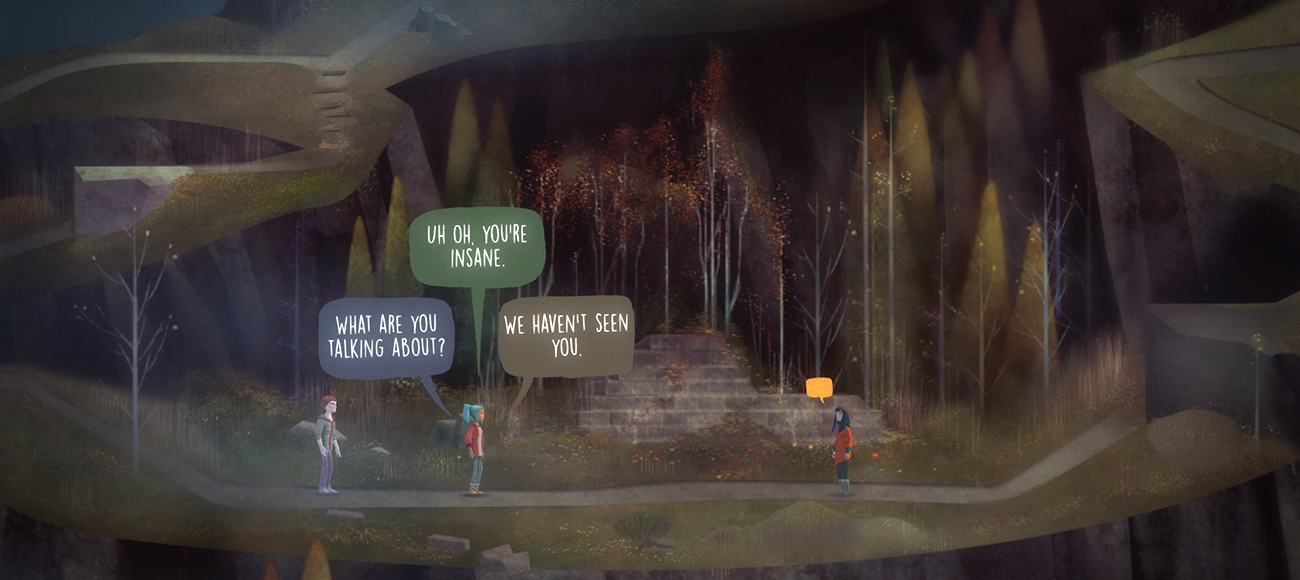
Afterdream is a 2D horror adventure game with puzzle elements and lo-fi pixelated graphics that takes between two to three hours to finish. It’s on Steam, but I played it on Nintendo Switch and had a fantastic time. Afterdream drops you right into the story and immediately grabs your attention, and its pacing is impeccable. The horror is mostly atmospheric, but the game features a great set of jumpscares mixed with short segments of heightened tension.

Afterdream isn’t for people who can’t tolerate horror, but I’d happily recommend it to anyone else who’s interested in trying out a short, original, and creative story game. The puzzles are fun but not too difficult, and the environmental design is really something special.

You play as a woman named Jennifer who wakes up in a filthy derelict room wearing a suit she doesn’t own. During the intermittent frame story, Jennifer relates this situation to an older man who seems to be a psychiatrist, claiming that she’s experienced an unusually realistic nightmare.

Within this nightmare, Jennifer’s job is to navigate a series of haunted houses while finding a series of objects for a series of NPCs. There are no Professor Layton style puzzles relating to number games or spatial arrangement challenges; rather, Afterdream’s puzzles are mainly fetch quests reminiscent of old-school adventure games in which a certain object needs to be applied to a certain environmental obstacle, like a key being needed to unlock a door.

The challenge, such as it is, lies in being able to form a mental map of each area and remembering what goes where. The game mechanics are extremely simple and intuitive, and there are no inventory limits or menu screens to distract the player from the immersive environment. It’s always clear what you can interact with, and the in-game text isn’t cryptic about what needs to happen.

The haunted houses don’t reveal their secrets willingly, but Jennifer is aided by a Polaroid ghost camera that she can use to scan her surroundings. The oddities exposed through the camera’s viewfinder become real once photographed. You might hear an odd ticking sound, for example, in which case your camera will reveal a ghostly clock on the wall. It’s a neat game mechanic, and it’s put to good use in a nice variety of situations.

Jennifer begins in an old and rotting apartment building and then progresses to a fancier but similarly ruined mansion, wherein a helpful ghost tells her that she’s been given an opportunity to make contact with the spirit of her recently deceased father. In order to summon his ghost, Jennifer must first find a special “portal object” hidden within the liminal space between life and the afterlife. Unfortunately, no one can say what this object looks like or where it’s hidden.

Still, Jennifer has no choice but to keep moving forward through progressively spookier areas. As a special present to me personally, there’s a dark and grimy sewer level, and it’s wonderful. There’s also a “creepy little town” level, and it’s beautiful and I love it.

Even though the game is divided into discrete stages, its story isn’t formulaic. To lighten the heavy atmosphere, the writing employs humor at key moments, with both Jennifer and the NPC ghosts occasionally poking fun at the absurdity of various situations. I really enjoyed the instances when I thought something horrible was going to happen but everything actually turned out to be perfectly wholesome. The pacing is excellent, with plenty of fun character interactions and chill periods of downtime between the creepy bits and jumpscares.

Afterdream is the perfect length for its story, and its gameplay goes from strength to strength as its setting becomes stranger and more disturbing. It might not be to the taste of people looking for more action or more explicit horror, but it was perfect for me.

One final thing: When I first saw the game’s trailer, I was like, “This looks cool, but I hope you can turn off the strobe effects.” And thankfully, you can in fact turn off the strobe effects. It’s always nice when game developers take this sort of accessibility issue into consideration.

List of Cozy Horror Games on Sidequest

To celebrate Halloween and everything autumn, Sidequest created a list of cozy horror games for people who enjoy the themes and aesthetics of spooky season but aren’t into jumpscares or explicitly ghoulish imagery. I love every game on this list, and I had a lot of fun writing about three favorites of my own. Here’s a set of excerpts:

Six Cats Under

Despite its grim premise, Six Cats Under is a chill game with cute pixel graphics and an ambient lo-fi soundtrack. Even watching a short playthrough on YouTube is relaxing.

What Remains of Edith Finch

This is the perfect Pacific Northwest Gothic setting for a haunted house story, but Edith’s former home is actually quite beautiful and charming. Adding to the game’s coziness is its comfortable two-hour playtime, as well its clearly signposted guidance along the critical path.

Night in the Woods

Although you’ll gradually uncover the town’s secrets during the days leading to and following Halloween, your main goal is to reconnect with old friends in dead malls and empty grocery store parking lots after spending your afternoons strolling through streets filled with gorgeous fall foliage.

I think it’s worth commenting on my criteria for what makes a game “cozy.”

Accessibility is a major factor. You should be able to play a cozy game at your own pace without having to worry about the anxiety of time limits or the frustration of losing progress. Another key element of cozy games is their ability to inspire a sense of comfort through visual presentation. “Cozy graphics” aren’t disposable Instagram aesthetics, but rather a commitment to a distinct visual style that feels hand-crafted and deliberate in its expression of the game’s themes.  

More than anything, a cozy game uses its relaxed vibes to create a safe space to ask meaningful questions that the player wouldn’t have the energy to engage with otherwise. Cozy games should be thought-provoking but casual, like a conversation with a friend in front of a fire.  “Cozy horror” isn’t an oxymoron, then, as cozy games are perfect for the long nights when you can bundle up, get comfortable, and take the time to study the shadows lurking in the darkness.

You can check out Sidequest’s full list of cozy horror games here:
https://sidequest.zone/2023/10/30/sidequests-favorite-cozy-horror-games-for-weenies/

Review of A Guest in the House on WWAC

I had the pleasure of writing a review of Emily Carroll’s darkly brilliant graphic novel, A Guest in the House, for Women Write About Comics. The story gazes into the moonlit shadows of “traditional” families, and it’s gothic horror at its sexiest and most subversive. Here’s an excerpt from my review:

Carroll’s visual representation of Abby’s inner world is brilliantly strange and gorgeously queer. In her more introspective moments, Abby indulges in a fantasy of herself as a heroic knight fighting dragons, who lay waiting for her, hot and wet in their dark caves. Having slain a dragon while remaining protected and genderless inside her full-body armor, Abby seeks comfort in the arms of the beautiful ladies that await her arrival. While the majority of the artwork in A Guest in the House is painted in black ink with gradations of gray, Abby’s fantasies practically scream from the page in lurid full color that slowly begins to bleed into Abby’s waking life.

You can read the full review here:
https://womenwriteaboutcomics.com/2023/10/a-guest-in-the-house-review/

If you’re interested, I also recommend checking out Emily Carroll’s website (here) for a curated selection of horror art and short comics. It’s not for the faint of heart, but it’s one of the best sites on the internet.

While I was writing this review, I told a friend that A Guest in the House is like Dark Souls, but if Dark Souls were about a housewife in rural Canada in the 1990s. I stand by this evaluation, and I think it makes sense given the artist’s love of FromSoft games. Carroll recently released a short fancomic about Bloodborne, and you can download it for free from Itchio (here). As with A Guest in the House, I might offer a content warning for body horror and violence, but the art and writing are gorgeous.

They Only Come Out at Night

Grog has noticed a number of peculiarities in Kakariko Village. Eerie lights flicker in the mountain valley after dark. Murky black water fills the old stone well that no one uses. Golden spiders spin their webs under the eaves of abandoned buildings. Little does Grog know that the legendary Sheikah of Kakariko still live, and that they are watching.

I’m one of the many children of the 1990s who read Stephen King way too young. I think I must have been ten years old when I first encountered the IT, and I read the novel like it was Harry Potter. I was too young to understand a lot of what was going on, but what I took away from the story was a lifelong fascination with haunted towns.

This is one of the many reasons why I love Kakariko Village in Ocarina of Time. Like Derry, Kakariko seems pleasant and idyllic in the daytime, but all manner of horrors creep through its sewers. Over the course of his journey through Hyrule, Link learns that Kakariko is a Disneyland-style stage setting that covers an underground labyrinth of corpse-choked dungeons. Impa opened the depopulated village to the refugees from the civil war that left Link an orphan, which means many of the people living in Kakariko have no idea what their homes are standing on top of.

I’m curious about the perspective of normal people who live in fantastic worlds, and I’m particularly interested in Grog, the odd young man who greets Link at the entrance to Kakariko after dark. His dialog is iconic: “People are disgusting. My own father and mother are disgusting. You must be disgusting, too!”

When Link returns to Kakariko after seven years, Grog is nowhere in sight. No longer a surly teenager who resents his parents, Grog has gotten himself caught up in some truly strange business. It was only when I played Ocarina of Time as an adult that I was able to put together all the pieces of Grog’s story, which ends with his death (or perhaps suicide) in the Lost Woods.

I think Grog’s unfortunate fate is representative of what happens to people in Hyrule who see too much or ask too many questions. He’s therefore a fun character to use to look at Kakariko from an outsider’s perspective while speculating on what may have happened to the Sheikah. “They Only Come Out at Night” uses some of my favorite Stephen King tropes to tell a story about a deeply haunted village, and I really enjoyed writing it.

If you’re interested in peering into the shadows, the story is on AO3 here:
https://archiveofourown.org/works/51149224

I wrote this piece for The Eyes of Hyrule, a Legend of Zelda fanzine about the mysterious Sheikah clan. The zine will hold leftover sales on Etsy (here) during November, and you can check out more of the work appearing in the zine on Twitter (here) and on Tumblr (here).

For the story illustration, I was fortunate to be able to join forces with Frankiesbugs, a true master of cute and creepy art. You can follow their work on Instagram (here) and on Tumblr (here). I also recommend checking out their current video game project in development, which is on Steam (here) and on Instagram (here).

List of Free Short Horror Games on Sidequest

I’m excited to share a project I’ve been working on for several months: an annotated list of ten retro horror games that are free to play on Itchio. I posted reviews of many of these games here on this blog over the summer, and I’m grateful to the amazing editors at Sidequest for allowing me to refine my thoughts and present everything in one article.

To me, one of the fun things about indie retro horror games is that many of them deliver their central idea with as much concision and impact as possible, allowing the player to become thoroughly spooked in one sitting. So that readers can get a decent idea of what to expect, I organized my list according to roughly how long each game takes to play.

If you’re interested, you can check out the article here:
https://sidequest.zone/2023/10/23/ten-short-horror-games-on-itchio/

I really enjoyed putting this list together, and I’m looking forward to making another one next year!

The Kumo Diary

A professor’s assistant at Tokyo Imperial University uncovers a curious manuscript whose author weaves an elegant tale of the twilight years of the Heian court. As she reads between the gossamer lines of the narrator’s account of a moonlit assignation, the quiet and unassuming scholar reflects on what happens in the shadows cast by civilization and enlightenment.

This story is a play on The Tale of Genji that I contributed to Carpe Noctem: Vampires Through the Ages, an anthology of historical fantasy fiction, illustrations, and comics about vampires in historically specific settings.

I wouldn’t say I’m a “fan” of The Tale of Genji in the same way that I’m a fan of the Legend of Zelda series, but I’ve read multiple translations of the book and enjoyed them all. When you engage with a story so deeply, it’s difficult not to come up with fun theories. I certainly wouldn’t be the first person in Japanese literary history to make this suggestion, but please consider: Why are the characters in The Tale of Genji always described as being so pale, and why are many of them only active between dusk and dawn?

“The Kumo Diary” is set in the Meiji period (1868-1912), Japan’s industrial era of “civilization and enlightenment.” As Japan attempted to establish itself as a nation that could compete with Western powers, its intelligentsia were motivated to create a unified “Japanese culture.” The Tale of Genji occupied an interesting place in this movement. On one hand, it could easily be regarded as the quintessential work of classical Japanese literature. On the other hand, its plot is largely concerned with the love affairs of a rotating cast of beautiful but neurotic women. Japanese scholars were therefore tasked with making The Tale of Genji a respectable classic to be held in esteem by a modern nation.

Scholars had been compiling and revising the chapters of The Tale of Genji for centuries, so it was necessary to create a “definitive” version of the text. While I was studying the history of The Tale of Genji, I couldn’t help but wonder about all the apocryphal chapters that never made it into the canonical text.

It took me ten years, but finally I wrote one of these apocryphal chapters myself. I embedded the so-called “Kumo Diary” into a frame story about a woman who finds the manuscript and decides not to share it with the stodgy male professor who employs her. It’s interesting to imagine there being a secret history of The Tale of Genji, and I really enjoyed writing the ending of my story. After all, who’s to say there aren’t demonic women pulling the strings from the shadows? If they do their work correctly, we’d never know they were there at all.

I’ve posted the story on AO3, and you can read it here:
https://archiveofourown.org/works/50802628

The illustration is by the darkly brilliant Paristandard, whose creepy and creative illustrations can be found (on Twitter), (on Tumblr), and (on Instagram). It was an amazing experience to work with them, and I can’t recommend them enough for character designs, book covers, short comics, and other illustration projects. For this project in particular, the historical specificity of their costume design was uncanny, and I am in awe.

A Worthy Successor

In an eerie castle submerged under cursed waters, Ganondorf tells Tetra about the world that once was. Ganondorf’s story is at its end, but his words inspire Tetra to dream of the world to come.

I recently started playing The Wind Waker in order to do research for a short essay about Koroks. The Wind Waker is a fresh and lovely game, at least at the beginning, and I always forget the emotional impact of the end. The pathos of Ganondorf’s longing for the Hyrule of the past always gets me right in the heart.

I think it’s interesting that, after The Wind Waker, Tetra goes on to establish New Hyrule, the setting of Spirit Tracks. She thereby achieves Ganondorf’s goal of restoring an ancient kingdom blessed by gentle winds. This begs the question – how would Tetra know about Hyrule? Given how much time Tetra spent with Ganondorf under the Great Sea, I think it’s safe to assume that they must have talked to one another.

This story is my attempt to envision what these conversations might have been. I wrote this story a few years ago, but I’m returning to it now because it still resonates with me. The older I get, the more I sympathize with Ganondorf, and the more willing I become to let decaying empires fall to ruin in favor of embracing the winds of change.

You can read the story here:
https://archiveofourown.org/works/35251798

The comic adaptation is by the magical Lightsintheskye, who is:
(on Twitter) + (on Tumblr) + (on Etsy)

Essay about Evergrace on Sidequest

My summer replay of Elden Ring triggered memories of an obscure PlayStation 2 game from 2000 called Evergrace. When I went online to see if anyone else had made the connection between Elden Ring and Evergrace, I was surprised to find that I seem to be one of the few people who remember this game. I did some deep digging and ended up writing an essay for Sidequest about why Evergrace is a forgotten FromSoft classic worthy of critical attention. Here’s an except:

Even in this brief description of the setting of Evergrace, FromSoft fans will notice various seeds of worldbuilding that have since sprouted into more developed forms in later titles, from the Darksign marking the Chosen Undead player-character in Dark Souls to the queen imprisoned in the towering Erdtree in Elden Ring. As I read about Evergrace, I was fascinated by the earlier forms of signature FromSoft leitmotifs that appear in the game, just as I was intrigued by its challenging elements of gameplay that would later evolve into the characteristic trademark of the Soulslike genre of video games.

You can read the full essay on Sidequest here:
https://sidequest.zone/2023/09/25/evergrace-a-forgotten-fromsoft-classic/

I’d love to write a substantial academic article about Evergrace, but I’m hindered by the fact that I can’t actually play the game without investing in a desktop computer that can run a PlayStation 2 emulator. Hopefully this essay presents a strong argument for textual documentation of classic titles, as well as freely accessible video game archives.  

Hyrule Fashion Anthology Preorders

Hyrule Fashion Anthology is open for preorders (here)!

Hyrule Fashion Anthology is a fanzine celebrating the complex evolution of fashion history through the characters and setting of the Legend of Zelda series. I contributed an essay titled “A Wind-Grieved Ghost” about the influence of medieval Japanese Noh theater on Ganondorf’s costume and character in The Wind Waker. I put a lot of love and research into this piece, and I may have even made myself cry.

The zine is filled with gorgeous fashion illustrations that illuminate the historical and cultural influences of the character designs in the series, as well as brilliant renditions of fan-favorite characters in a diversity of times and places. In addition to the artwork, the zine also includes articles about weaving, metalworking, and the beauty of style in all its forms.

Preorders are open until September 19!
If you’re interested, you can check out the zine through these links…

Carrd: https://hyrulefashionanthology.carrd.co
Twitter: https://twitter.com/HyruleFashion
Bigcartel: https://hyrulefashionanthology.bigcartel.com

Terrible People

Terrible People collects six short and eerie tales of dark fantasy, unfortunate encounters, and horrible life choices. The writing is accessible to teenagers and adults alike, and there’s a diversity of death, poison, and murder for everyone to enjoy.

Terrible People is my fifth zine of original short fiction, and it’s the first that feels like a real short story collection. Each of the stories in this zine was accepted for publication elsewhere; but unfortunately, every single one of these publications was cursed. To give an example, one online magazine closed their website and deleted their social media accounts less than a month after they accepted one of these stories. To give another example, a small press that published an anthology with another of the stories burned down, meaning that almost all copies of the book were destroyed.  

Perhaps I’m tempting fate by printing these stories on my own. Who can say?

If you’d like to order a (totally not cursed) copy of the zine, it’s on Etsy here:
https://www.etsy.com/listing/1556837985/terrible-people-horror-fiction-zine

At 52 pages, the zine is relatively lengthy, which means I was able to give it a spine. This necessitated extra formatting work, and I feel like I’m slowly starting to understand the art of book design. What I’m thinking of doing in the near future is making a short chapbook from a single story and experimenting with the formatting until it looks more like an actual book. Terrible People is probably the last zine I’m going to make that has the style of formatting I’m using now, which I actually quite like.

I’ve been thinking that perhaps it might be nice to set up a micropress one day. For the time being, however, I’m content simply to continue writing these strange little stories while hoping that the curse haunting my attempts to publish them eventually dissipates.