An Unfound Door, Chapter One

Agnes walks along an old road through a mountain forest while leading a demonic boar on a magical silver chain. To keep herself awake, she talks to the creature, confessing that she wants to study its magic in an effort to revitalize the fortunes of her dying kingdom. The demon eventually begins to reply in garbled human speech. It responds strongly when Agnes asks about a golden medallion that she found on the battlefield after she asked the hero who saved her to spare the monster’s life. The demon, who is clearly in pain, asks Agnes to place the medallion against a scar on its forehead. She feels compelled by something larger than herself to do as it asks, only to be overwhelmed by magic.

. . . . . . . . . . . . . . . . . . . . .

An Unfound Door is a gothic mystery set in a decaying castle. Agnes, the princess of Faloren, hopes to save her crumbling kingdom by unlocking the secrets of long-lost relic, but she must conceal it from Fhiad, a mysterious emissary with sinister motives. As their paths cross in twisting corridors and hidden passages, Agnes and Fhiad realize that they must descend into the shadows of the past together if they hope to bring light to the future.

This story summary needs some work, but I’ll keep editing it as I write.

In terms of “Save the Cat” story structure, this initial chapter provides the opening image: A young woman leading a demonic boar through the darkness of a mountain forest.

The closing image, which will mirror the opening image, will be Agnes and the now-human demon sitting in the shade of a lone tree as they watch the sun set. In both cases, Agnes will be leaving the scene of a battle with the demon to return to civilization. What Agnes considers to be “civilization” will have changed, as will her understanding of herself and her relation to the magic she’s trying to harness. And obviously she and the demon will have kissed.

The opening chapter sets the gothic tone of the story by introducing a brave but somewhat naive young woman not-quite lost in a dark and sinister place. It also presents what I hope is an intriguing mystery. What is the demon, and where did it come from? Why is Agnes’s kingdom in decline, and why is she alone in the forest with a demon?

To establish Agnes’s character as the protagonist, she has literally “saved the cat” here, except the “cat” in this case is a giant horrible boar demon. I assume the “hero saves the princess from the evil demon” narrative pattern will be familiar to most readers, who will hopefully be intrigued by the element of Agnes’s character that leads her to capture the demon instead of killing it. She perceives her need of the demon’s magic to be worth the risk, but she’s also curious and looking for trouble, even if she can’t yet admit that to herself.

Agnes is going to start wearing a series of masks once the story gets going, so I think it’s useful for the reader to see her true face at the beginning. As corny as this sounds, the way that Agnes needs to change over the course of the story is to learn to follow her heart, by which I mean she needs to recognize her own face underneath her masks. Also, I want to use the story to explore the beauty of decay, and I’d like to use Agnes to make an argument that some kingdoms should be allowed to crumble.

The illustration accompanying the chapter preview graphic was created by the marvelous Ilya Rawan, who posts magical artwork on Twitter (here) and on Instagram (here).

Gothic Horror Story Elements

In order for a story to be considered “Gothic,” I think it needs to include…

– A house. This “house” can be a castle or a space station or an abandoned medical research facility or what have you, but it needs to be a place where people live and eat and sleep.

– It has to be a big house. In addition to being big on the outside, it should be larger than it appears. The house should have something along the lines of a secret sub-basement, hidden rooms, tunnels in the walls, a House of Leaves style portal to another dimension, or something along those lines. The house needs to be large enough to be considered a labyrinth.

– The house has to be old and in a state of decay or disrepair. In addition, the house needs to be isolated and surrounded by wilderness. Over the course of the story, the natural environment should intrude on the interior of the house. This should still be the case even if the environment is not technically “natural,” as in the case of Suburban Gothic.

– The house needs to be associated with and occupied by a family.

– The family needs to have a dark secret, preferably one hidden within the house.

– At least one member of the family should still live in the house. “Family” can be loosely defined, but the concept of “family” as such is key.

– If there’s no family living in the house, then the story is a “haunted house” story, not a “Gothic” story. This is also the case if the people living in the house aren’t alive or aren’t human (or whatever passes for “a normative person” in the world of the story). This is important, as “Gothic” is just as much of a narrative structure as it is a collection of tropes. For example…

– The point-of-view character should be a member of the family in some way. Often this character will come into the house through marriage or inheritance. Sometimes they won’t initially know they’re related to the family. In the case of servants and governesses and so on, the point-of-view character will either be secretly related to the family, or they’ll be a parent or spouse in all but name. If the point-of-view character isn’t related to the family, they will gradually fall under the delusion that they are.

– The point-of-view character will obviously be privileged, as they live in a large house and are associated with a wealthy family, but they also need to be disadvantaged in some way. The way in which they’re disadvantaged should have some thematic relevance to the dark secret hidden by the house.

– The point-of-view character must be forbidden from certain behavior by an arcane rule or system of rules. The forbidden behavior will generally involve the navigation of space in or around the house: Don’t go into the forest, don’t go into the cellar, don’t leave your room at night, etc.

– The disadvantage of the point-of-view character will compel them to accept the family rules even though they can intuitively feel that something is horribly wrong. This traps them within the house.

– The goal of the point-of-view character is to escape the maze of the house. The only way to navigate this labyrinth is by breaking the rules, engaging in forbidden behavior, and bringing the dark secret to light.

– The primary antagonist should be a living person in the family, related to the family, or emotionally invested in the family in some way. Although supernatural elements are not out of the question, it’s often the case that the phenomena presumed to be supernatural have a rational (albeit psychologically deranged) explanation. That being said, there’s often a Todorovian elision between “natural” and “supernatural,” with the distinction being left to the reader.

– When the point-of-view character reveals the family’s secret, this destroys the house. This destruction is usually literal. The family almost always dies as well. If the point-of-view character is too closely tied to the family, they may die too. Regardless, the reader will understand that the collapse of the house and the demise of the family is a good thing that needed to happen.

– The house and family should represent an older social system responsible for the disadvantage of a group of people represented by the point-of-view character. This system usually concerns oppression on the basis of class or gender, but it can sometimes be about race, nationality, or colonial heritage.

– The Gothic genre is not conservative, because it’s essentially about how outdated systems of privilege that still continue to oppress people are deeply fucked up and unhealthy and need to be destroyed. “Haunted house” stories are often conservative, but I would argue that Gothic stories advocate for radical systemic change and the self-realization of freedom from social expectations.

– At the same time, Gothic stories are not didactic. The lure of the forbidden goes both ways, after all, and the reader should be able to understand why the point-of-view character allows themselves to become trapped in the house. The old castle is majestic. The beast-husband is attractive. The spoils of ill-gotten wealth are luxurious and comfortable. The ruins are delightfully mysterious. The poison apple looks delicious. The story is queer and problematic, and that’s precisely why it’s appealing.

There are numerous cross-genres and sub-genres of Gothic that have their own specific conventions, like Gothic Romance and Boarding School Gothic. I didn’t address the visual language of the Gothic, or how tropes and conventions vary between times and cultures. Still, I think this is the core of the genre.

Eight Quick Editing Hacks

It’s always a good idea to take time with editing. Giving your manuscript time to rest and breathe before returning to it with a critical eye can work wonders. Deadlines will not wait, however, and sufficient time may not always be available. That’s when editing hacks come in handy!

This post lists eight of my favorite editing hacks, four for deleting extraneous words and four for catching typos. Each of these editing hacks is painless and intended to help you apply a final layer of polish to your writing before you send it out into the world.

Four Quick Style Hacks with Ctrl+F

Find + delete quantitative adverbs.

This especially applies to Americans, who tend to use quantitative adverbs to add color and rhythm to their speech. Unfortunately, these adverbs don’t often translate well into writing, and they can usually be deleted without affecting the meaning of the sentence. “A lot” and “a bit” are common, as are “only” and “very.”

Crtl+f + ly.

This will help you catch quantitative adverbs like “really” and “completely” and “extremely.” I’m a big fan of adverbs, which add texture and flavor to writing, but many writers tend to have a few specific adverbs they overuse in their initial drafts. Searching for all instances of “ly” in your manuscript is a great way to rein them in.

Find + delete words for facial expressions.

“Smile,” “smirk,” “chuckle,” and “sigh” are some of the common ones. There’s nothing wrong with these words, of course, but many younger writers tend to overuse them. Instead of describing what’s happening on someone’s face, it’s often more effective to convey emotion through action or dialog. You can usually delete words that describe facial expressions or tone of voice without hindering the reader’s understanding of the situation.

Find + delete academic transition words.

I’m referring to words like “therefore,” “moreover,” “conversely,” and so on. Although these words can help you structure your ideas as you write, few people use them outside the context of academic papers. This applies to fiction, obviously, but it’s also relevant to nonfiction that you’re pitching or submitting to an editor at a website, newspaper, or magazine. Many people cultivate a habit of using formal transition words while learning to write in high school and college, and unlearning this habit is a process. In the meantime, ctrl+f can help you weed out any holdovers from academic writing.

Four Editing Hacks for Catching Typos

Apply a different font.

This is common advice, as changing the font of your text can trick your eyes into seeing typos that you would have glossed over otherwise. I have to admit that this has never been effective for me. This is what works instead…

Copy and paste your work into a different word processing program.

If changing the font is too superficial, it may be more effective to change the entire text field. I write in MS Word and Scrivener, but I like to copy and paste my manuscripts into Google Docs for two reasons. First, it’s free; and second, it doesn’t mess with the text formatting. As an added bonus, Google’s grammar check has become remarkably sophisticated during the past two years. Sometimes it’s dead wrong, but sometimes it will surprise you with an excellent suggestion. Free grammar check websites such as Slick Write can also be useful. You may not need help with grammar, but a “copy and paste your writing into the text field” site like Slick Write can point out passive voice, frequently occurring words, and other stylistic issues that it can be easy to miss if you’re on a deadline.

Send the text of your writing to yourself in the body of an email or post it onto a private blog.

Some people swear by the email method, which allows you to read your writing with fresh eyes on a different screen. Unfortunately, there are times when my own email inbox gives me anxiety, and I’m sure this experience is relatable to anyone dealing with deadlines or a high volume of correspondence. Instead of using email, you can set up a private blog (on Dreamwidth, for example) and post your writing as an entry. If it helps to maintain separate spaces for different writing projects, you can set up as many journals as you want and delete them when you’re ready to move on. A few of my nonfiction writer friends tell me that they do this with wiki software, but your mileage may vary.

Use a free text reader tool like NaturalReader or Voice Dream.

Many writers read their text aloud to check for typos, but this is time-consuming and not feasible for people who write in shared spaces. Although text readers are still far from perfect, they’ve gotten much better over the past few years. Commercial text readers offer a range of natural voices, but my own experience is that listening to a slightly mechanical voice read your writing makes typos stand out more than they would in a human voice. NaturalReader is easy to use and works well in a desktop browser window, while the Voice Dream app is good if you prefer to listen from your phone.

All of these hacks are designed for spot checks once you already have an edited manuscript. I’m curious if anyone has any quick and easy strategies that they use to edit manuscripts (fiction or nonfiction) at an earlier stage. Also, if you’ve created a short list of “find and delete” filler words that you’d be willing to share, I’d love to see it!

. . . . . . . . . . .

This post originally appeared on Get Your Words Out, a community of writers aiming to maintain healthy creative habits and writing productivity. Membership to the community opens at the beginning of the calendar year. Its content is limited to members who maintain their writing pledges, but the GYWO Twitter account is accessible to everyone and posts encouragement, prompts, and writing resources at a steady but manageable pace.

Your Journey Awaits! Pokémon Fanzine

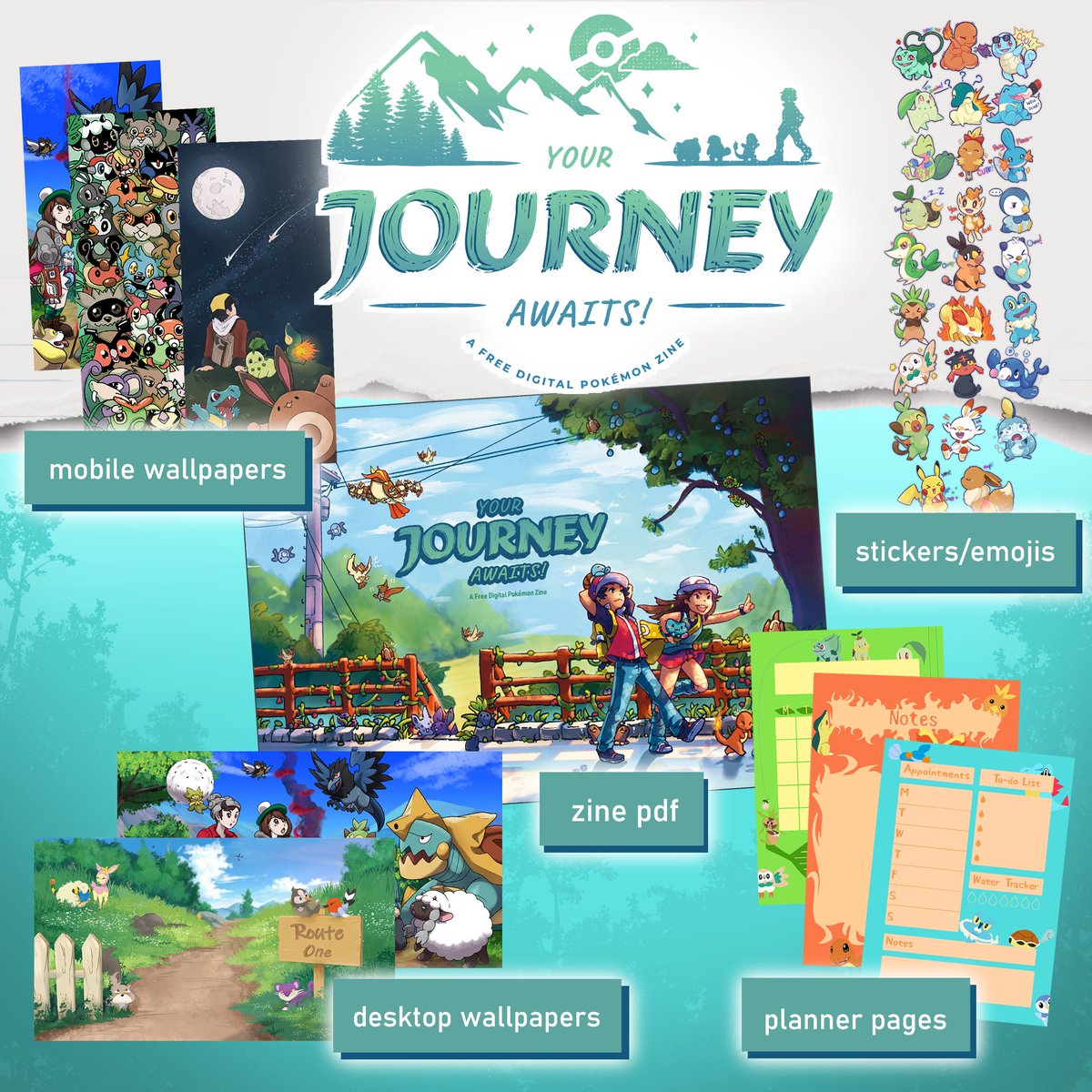
I’ve spent the past several years in the Legend of Zelda fandom, but I have a deep and enduring love for the Pokémon series. Although I’ve taught classes and given conference lectures about Pokémon, I haven’t written fanfic about the series in years. When a few fandom friends announced that they were putting together a zine about the small towns where your avatar characters begin their journeys in the games, I was onboard.

The story I contributed to the Your Journey Awaits! Pokémon Fanzine is “The New Kid in Postwick,” which is about Sonia and Leon from Pokémon Sword and Shield. It’s about Sonia’s childhood in the small rural town of Wedgehurst, her friendship and rivalry with Leon, and the ambitions underlying her decision to set out as a young Pokémon trainer. Here’s a short description of the story…

Sonia has lived in Wedgehurst her entire life. Despite the beautiful nature and rich history of the area, she’s started to feel isolated from the wider world. Her anxieties are exacerbated by the boy who just moved into an old farmhouse in Postwick along with an exotic Charmander. Although he seems confident and carefree, Leon has problems of his own, and he’s ambivalent about moving to the country from Wyndon. Sonia and Leon gradually come to understand one another as they train together, and they seal their friendship by making a promise to venture out into the Wild Area together.

You can read my story on AO3 (here), and you can check out previews of the work appearing in the zine on its Twitter profile (here). The zine itself can be downloaded for free on Itchio (here). Along with a PDF of the zine, the download includes all sorts of fun digital extras like icons and wallpapers. The illustrations and stories are accessible to readers of all ages, so please feel free to share the zine with any younger Pokémon fans in your life!

Ceres and the Poison Sea

I just finished Chapter 10 of The Demon King, an original fantasy novel about adult wizards making terrible decisions. This chapter is an extended flashback to the time before the apocalypse that created the world of the story. Although I’m still brainstorming the details of this disaster in terms of the universe’s magical system, what essentially happened is that a frustrated researcher with a wealth of funding but no oversight managed to create the equivalent of a miniature sun that exploded into a supernova before collapsing into a black hole. This set off a chain reaction that rapidly accelerated climate change, which in turn significantly raised the sea level and irradiated the ocean.  

The researcher’s tech firm was located in New York. Because of the disaster, the city no longer exists, nor does anything east of Newark Bay and the Arthur Kill Straight. In order to prevent the decimation of the entire Mid-Atlantic region, mages pushed the landmass of Manhattan Island and Staten Island westward to create a mountain range protecting the mainland from the toxic ocean and its storms. This mountain range also serves as a water filtration system that feeds a system of freshwater lakes and rivers to its immediate west, which has become a kingdom known as Whitespire.

Geographically speaking, Whitespire is somewhere in the vicinity of Elizabeth Seaport in New Jersey. Although a great deal of I-95 is underwater, Route 1 still functions as a major trade route, and Whitespire is about halfway between the Northern Kingdoms (Hartford, Springfield, and a bit of Rhode Island) and the Southern Territories (Baltimore and Washington DC). Because of changing climate patterns, everywhere north of Albany and south of Richmond is uninhabitable, as is the land west of the Appalachian Mountains. Meanwhile, most of New Jersey and eastern Pennsylvania is a wasteland where water is scare and nothing grows.

The Northern Kingdoms are governed by draconian regimes that are constantly at war with one another, while the Southern Territories are lawless and threatened by the steadily rising ocean. Whitespire is the only real civilization left on the East Coast of North America, which has been isolated from the rest of the world by the impossibility of travel by sea or air. The citystate thrives because of its mild climate, access to plentiful fresh water, and relative distance from other centers of power.

Whitespire is ruled by a royal family whose primary duty is to ensure that the system filtering the seawater through the mountains continues to function properly. The bloodline of the royal family is not strictly hereditary, as anyone able to command the necessary magic may be adopted into royal line. Generally speaking, however, knowledge of the kingdom’s secrets and rituals are passed from parent to child. The queens and kings of Whitespire are supported by a religious order dedicated to preserving the magic necessary to protect the kingdom.

Under the stewardship of its royal family, Whitespire has been peaceful for several hundred years, but this doesn’t mean the monarchs have absolute authority. Political power is shared between the noble lines that maintain the rivers and lakes that spread from the Whitespire Castle, and there are occasional disputes over succession, taxes, and territory rights.

Ceres is the current reigning queen of Whitespire. For reasons known only to herself, Ceres’s mother resolved disputes among Whitespire’s aristocracy through strategic assassinations, which eventually resulted in her murder. As a result, Ceres ascended the throne during a political crisis when she was nineteen. She is a supremely competent ruler, but her reign has been marred by lingering political tensions. She navigates this challenge by presenting a wise and virtuous image of herself in public but being crafty and merciless behind closed doors.

Ceres was born to be a queen, and she plays her role with style and grace. Her only concern is that she is entirely ignorant of the vast majority of Whitespire’s deep magic, as her mother never shared the kingdom’s lore with her. To make matters worse, the former queen killed many of the people who were close to her, along with the entire order of priestesses dedicated to the worship of a deity called The Weaver, who supposedly established Whitespire by wresting the primordial world from the control of demons.

Although the truth is more complicated, “demons” are believed to be powerful monsters whose magic can’t be controlled and can thus only exist in a state of madness and chaos. Demons are real; and the eponymous “demon king” Ananth, who has traveled centuries into the future from a time that he considers be the pre-apocalyptic present, is one of them.

Ceres is primarily a foil to Ananth during the first two narrative arcs, but I plan for her to become the main viewpoint character during the third and final part of the story. She befriends Ananth mainly for political reasons as she attempts to prevent a coup organized by operatives from the Northern Territories, but her real interest in him comes from his openly stated intention to steal the hidden relic that’s the key to the magic of the royal family. Ceres needs this relic just as much as Ananth does, so she aids his plans with the hope that he’ll find it for her. As someone who possess powerful magic of her own, Ceres has full confidence that she can fight and kill Ananth if necessary, so she’s completely unbothered by his antagonism toward her.

Ananth doesn’t treat Ceres like a queen, so she returns the favor by not treating him as a demon capable of destroying her kingdom whenever the mood strikes him. As a result, they gradually form an unlikely friendship that gives Ceres a stage to be her best and most authentic self, namely, a strong and self-assured woman who loves drinking and dick jokes. It goes without saying that she’s a joy to write.

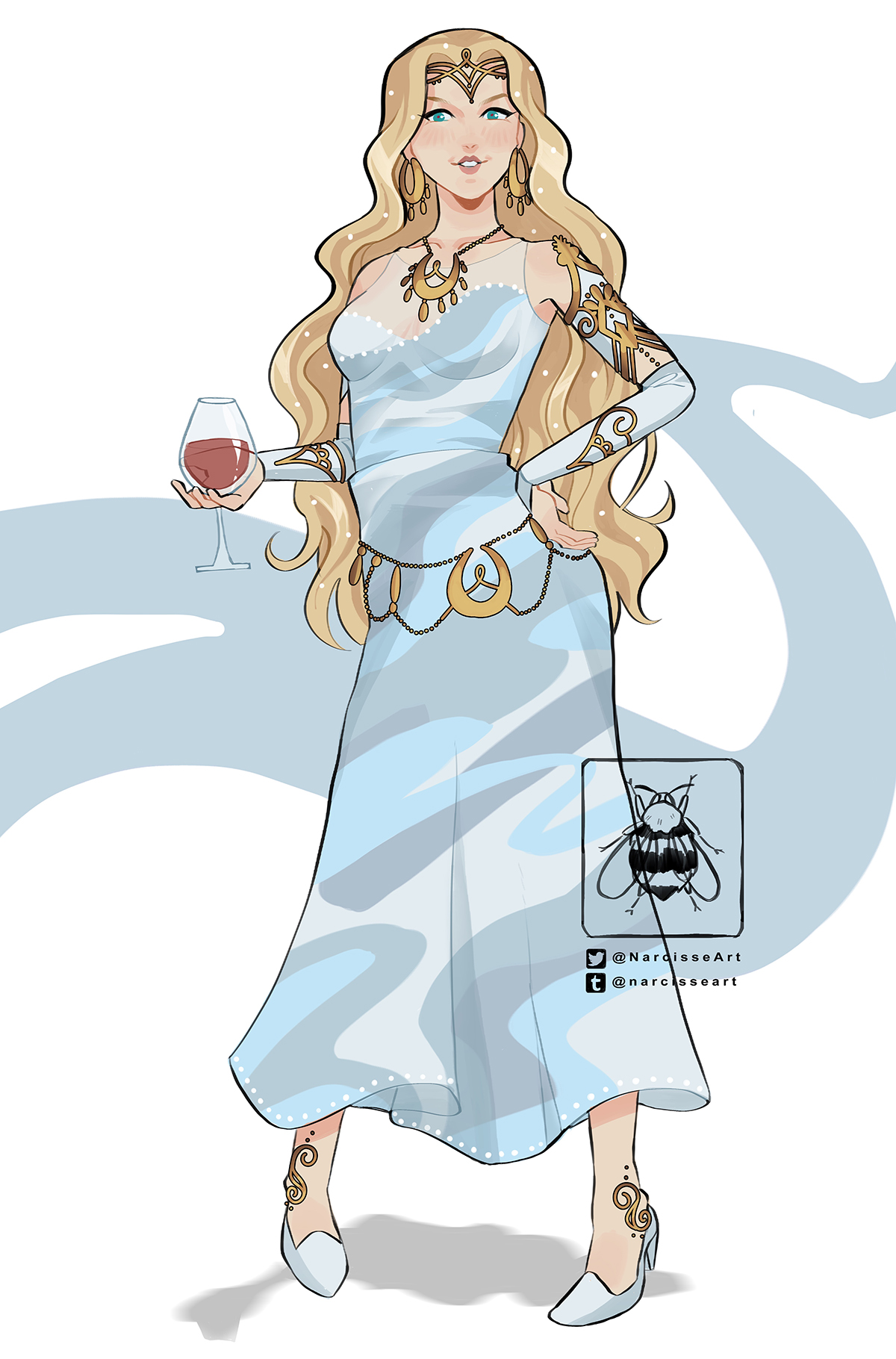
The illustration above was created by Doc Hollibee, who is on Twitter (here) and Tumblr (here). Doc drew me a picture of Princess Zelda with a sword (here), and I loved it so much that I asked her to draw Ceres with the same energy. Doc creates marvelous illustrations that depict the women of the Final Fantasy games as beautiful but still powerful and full of personality, and I’m thrilled and delighted to see the same artistic sensibility applied to my own original character.

The Demon King Reboot

Around this time last year, I finished an original fantasy novella called The Demon King. I serialized it on AO3, posting each chapter as I wrote it with a minimum of editing. This year I’ve been slowly editing the story into a legitimate novel. The process has been a lot of fun, but I’ve had to make some major changes.

I originally planned to serialize The Demon King in five arcs. The outline of the story was structured for each arc to focus on one character while providing the reader with one major revelation. I wanted there to be something resembling a punchline at the end of every scene, so I wrote the story as a comedy centered on character interactions. In other words, I saw The Demon King as something like an ongoing prose webcomic illuminated with occasional illustrations. AO3 isn’t a good platform for a project like this, however, and it was impossible to build an audience. I therefore closed the story at the end of the first arc.

In the original version of the story, I deliberately left room for the plot to spool out across later installments. In order to write a proper novel, however, I need to make the structure more streamlined and compact.

My strategy has been to simplify the plot in order to focus on the most important themes and character development arcs. The easiest way to go about this has been to remove half of the cast from the story. This was relatively painless, as I’m sure these characters will return in another project.

Another efficient way to simplify the story has been to make certain aspects of the plot clear from the beginning. A major component of this was to drop the conceit of the main characters going by multiple names. In the first draft, the eponymous demon king called himself “Balthazar” because he thought it sounded like a wizard name, and the characters closely associated with Balthazar humored him by using wizard names of their own. I decided to cut the plot points relevant to Balthazar using a fake name; so, in the current draft of the story, he goes by his real name, Ananth.

Ananth uses time magic, which needs to be clear from the beginning. The extent of the time travel will only be revealed gradually, but it will make my job infinitely easier if the reader sees Ananth using time magic in the very first chapter. Not only does this explain a number of aspects of his character that would otherwise be needlessly mysterious, but it also creates a compelling sense of mystery by providing opportunities for the reader to understand that Ananth is in fact very bad at using magic. Given that his only real talent is a basic ability to manipulate time, how did he become so powerful? Where (or when) did he come from, and what are his intentions?

While Ananth’s character has changed significantly, his foil Ceres hasn’t changed much at all. Ceres is her real name, and she’s not hiding anything by being catty and manipulative; that’s just her personality. The one significant edit I made is that Ceres is no longer a princess, but a queen. Then again, this isn’t much more than a matter of using the “find and replace” function to switch a few words, as Ceres was always a queen in my heart.

In any case, I’ve succeeded in compacting the story outline from fifty chapters into a solid thirty, and I’ve managed to finish the first ten. I enjoyed serializing fanfic novels on AO3 because of the constant stream of positive feedback and encouragement, so the major challenge of writing an original novel has been working in relative isolation. It was difficult to get started on revising this project, and it’s been slow going. Still, now that I know the shape of the story, I have a better sense of working toward an achievable goal.

The illustration above is by @Lunie_junk on Twitter, who also shares her work on DeviantArt (here) and on her Patreon page (here). I love Lunie’s Legend of Zelda and Final Fantasy art, and I’m a huge fan of her soft pastel style and colorful fantasy illustrations. She takes character commissions on a regular basis, and I recommend checking her out on her Carrd page (here) if you’re interested. I adore the story illustration Lunie created for me, and I really enjoyed working with her!

Writing While ADHD

I won’t lie. Writing while ADHD is a challenge! There are many benefits to ADHD, such as the ability to think quickly and generate galaxies of original ideas, as well as an enhanced capacity for hyperfocus and flow. It’s always good to remember that ADHD isn’t an “illness,” but rather a less common type of brain wiring. Still, ADHD can make the act of sitting down and putting words on the page trickier than it is for people with other types of brains. What I’ve learned from more than a decade of writing while ADHD is that we simply have to work with it, not against it.  

This post is divided into three segments that address specific ADHD concerns: the necessity of minimizing distractions, the efficacy of establishing a routine, and tricks for overcoming executive function disorder. All of this advice applies to people without ADHD, but it’s critical to those of us whose heads are buzzing with ideas yet who find it difficult to write.

Minimizing Distractions

Virginia Woolf famously established the necessity of a room of one’s own. Writing is a solitary activity, and it’s important to minimize distractions so you can hear yourself think. Unfortunately, avoiding distractions is difficult for many people with ADHD, and it can sometimes be necessary to take extra steps to create a comfortable work environment.

The easiest way to make a quiet space is to stay away from the internet. This is just as obvious as it is problematic, as it negates many of the tools used by other writers, such as Discord-based writing sprints, music channels on YouTube, and online countdown timers. This also means that you can’t do research as you’re writing, meaning that you’ll have to set up a system of annotations to return to later. Nevertheless, the internet is kryptonite for people with ADHD, and it’s best to limit access while you’re writing and editing.

In addition, it goes without saying that your phone should be nowhere near your hand. If you have pressing business or emails that need to be taken care of, promise yourself that you’ll handle it after you finish writing. Many people with ADHD are excellent multitaskers, but writing demands focus.

ADHD gives us intense powers of concentration once we’re able to focus on one task, so it’s important that this concentration isn’t misdirected. Because of our brain chemistry, people with ADHD tend to gravitate toward the most high-stimulation activities available, so we need to be extra careful to create a quiet physical and mental space free of distractions.

To summarize: Be kind to your ADHD brain by putting away your phone and staying off the internet while you’re writing.

Establishing a Routine

Many writing guides stress the importance of establishing a routine. Putting your butt in the chair can be difficult for everyone, but it’s especially difficult for people with ADHD, many of whom find it almost impossible to concentrate if we’re not feeling motivated. This is why it’s crucial for those of us with ADHD to put extra effort into training ourselves to get into an appropriate headspace to write.

Having a quiet environment free of distractions helps immensely, as does having a set time of day for writing. If you use medication, it’s helpful to sync your writing time to your medication schedule. It also helps to schedule your writing in accordance to the natural flow of your mood and energy. While some writers are capable of carving out small blocks of writing time during their daily schedules, this isn’t a feasible strategy for most people with ADHD. Instead of fitting writing into a pre-existing schedule, many of us have to rearrange our commitments to work and education in order to solidify a routine for writing.  

The process of establishing a routine tends to take longer for people with ADHD. Some days might be painful, especially at first. Because we can’t choose how our brains are going to function on any given day, it’s important to be patient and kind to ourselves in order to keep the routine going. If you can only write for twenty minutes during your designated time before getting distracted, consider it twenty minutes well spent. If you can only write for five minutes, that’s okay too. People with ADHD tend to be susceptible to burnout, so it’s important to give yourself time to adjust to a new routine and not to push yourself if you’re not feeling it.

The important thing is to stick to your routine, no matter what. It will take time – three or four months at minimum – but you’ll train your brain to appreciate the routine instead of resisting it. With practice, this routine will help you trigger your ADHD superpowers of concentration when you need them. Knowing with certainty that you’ll be able to access a state of flow is the key the what is perhaps the tallest hurdle for writers with ADHD: overcoming executive function disorder.

To summarize: While paying attention to the natural fluctuations of your focus and energy, set aside a specific time to write every day, and be kind to yourself if some sessions aren’t as productive as others.

Overcoming Executive Function Disorder

Let’s say you have a fantastic idea, and you can’t wait to start writing. You’ve written any number of stories or essays before, not to mention school assignments and social media posts. Even though you acknowledge that writing is work, it’s work you love doing…

…and yet somehow you just can’t bring yourself to do it. It’s like there’s an invisible force field around the project, and no amount of good intentions (or pressing deadlines) will help you get past it. You’ve settled into a writing routine, and you’ve minimized the distractions around your writing space, but you still can’t get started.

This is when it helps to be sneaky. You have to trick yourself into opening the document and putting your fingers on the keyboard. The easiest way to do this is to shift the goalposts of what you count as a successful writing session. Maybe you can’t write a page. So what? You can write a sentence instead. So what if you can’t write a sentence? You can write a short list of sentence fragments. It’s all good. If you can’t focus today, there’s always tomorrow.

Once you get started, you’ll usually end up tricking yourself into meeting your original goal, which is fantastic! Sometimes it’s just not working, and there’s no helping it. And that’s okay! You don’t have to play by the same rules as other writers. If you end up with just a sentence, you’re doing great. (True story: Some of my most successful publications were written at a pace of one sentence every day.)

Delayed gratification isn’t something that most people with ADHD are equipped to handle, so another useful trick to getting around executive function disorder is to treat yourself before you start writing, not as a promised reward. Go ahead and eat a piece of chocolate or drink a cup of fancy tea as soon as you sit down. Physical motion often helps ADHD people focus, and a pantheon of respected writers have said that they do their best work after taking a walk. The brains of people with ADHD aren’t wired to get serotonin from the expectation of a reward, so it helps to treat the opportunity to sit down and write as part of an integrated ritual of self-care.

To summarize: If you find it difficult to start working, shift your expectations of what you need to achieve – and maybe treat yourself before you start writing.

Again, most of this advice applies to almost everyone. Our brains operate along multiple spectrums of how we process the world, and ADHD doesn’t manifest in the same ways or the same degree for everyone. That being said, it’s important to remember that issues that may not be a concern for other writers may be a barrier to an ADHD writer. Creating a distraction-free space and establishing a set routine is extremely helpful to those of us writing while ADHD, as is learning how to treat writing as a reward to be enjoyed instead of a task to be completed.

This post is concerned with the broad strokes of general practice, but it would be interesting to hear the specifics of other writers’ experiences. What are your strategies for keeping your ideas and research organized? How do you stay on track with larger projects? While you’re in a period in when your brain isn’t cooperating and your writing progress is incremental, how do you deal with the anxiety of not being as productive as your peers? I’d love to hear your thoughts!

. . . . . . . . . . .

This post originally appeared on Get Your Words Out, a community of writers aiming to maintain healthy creative habits and writing productivity. Membership to the community opens at the beginning of the calendar year, and its content is limited to members who maintain their writing pledges, but the GYWO Twitter account is accessible to everyone and posts encouragement, prompts, and writing resources at a steady but manageable pace.
The Legend We Create

The courageous hero loves the wise princess, but they are bound by their fate and must put their feelings aside for the sake of a world floating above the ruins of an ancient kingdom.

…or so the legend goes, but some storytellers have a slightly different interpretation.

The Legend We Create is a tale of mutual pining and second-chance romance on the Great Sea, as well as a meditation on how each new generation heals the wounds of history by telling their own narratives about the past. You can read this short story on AO3 (here).

This story was published in Fated: A Zelink Zine. You check out the work of the other contributors on the zine’s Twitter account (here).

On the Internet, No One Knows You’re (Not) Kris

I recently participated in the annual Yuletide fic exchange for small fandoms. More than a thousand people contribute their work to this exchange, in which each participant is anonymously matched with someone who requests a story for one of the fandoms they’ve offered to write for. The person with whom I was matched asked for fic about Deltarune, and they requested “existential horror about free will and the ethics of a player guiding characters with self-awareness.” I’m always up for existential horror, and the recipient’s description of how they view the player-character Kris really vibed with me: “A Weird Kid who’s kinda lonely but not quite knowing how to make friends/not liking many of their options in town before the game starts.”

This prompt inspired me to write a story called “On the Internet No One Knows You’re (Not) Kris,” which is an exploration of Kris’s character within a narrative meta-analysis of the game. You can find it on AO3 (here).

The person who requested the story confessed that they’ve spent countless hours diving down the rabbit hole of Deltarune theories, so I took a plunge into the internet theory maze as well. The game subtly implies that Kris isn’t in full control of their body or personality, and that what’s manipulating them is their SOUL, the red heart that represents them during battle sequences. Many Deltarune theories try to answer the question of who (or what) is controlling Kris’s SOUL. There’s also the issue of what connection Deltarune might have to Undertale, as the two games share the same metaphysics and many of the same characters.

This ended up being my favorite Deltarune theory:
https://theamazingsallyhogan.tumblr.com/post/663249972697907200/great-big-massive-spoilers-under-the-cut-part-1

What this theory posits is that Kris has made a devil’s bargain with their SOUL, exchanging their free will for the power to rescue a childhood friend who mysteriously vanished a few years before the game begins. Although this theory doesn’t explain everything that’s going on in Deltarune – which, after all, has only released its first two chapters – the essay shines light on the characters’ backstory, which is only very briefly alluded to in the game itself.

This theory led me to create an illustration (here) based on the scene from Howl’s Moving Castle in which Howl makes a pact with the fallen star Calcifer, and I drew the comic above about how the ostensible villain of the second chapter of Deltarune might have a radically different view of the concept of free will. I also created an animated illustration (here) of the secondary villain Spamton, but I ultimately decided not to include it with the story. Spamton is bizarrely beloved in a certain corner of Deltarune fandom, but I think it’s probably safe to say that he’s an acquired taste. Still, I had a lot of fun writing Spamton’s dialog in my story. Despite spending far too long on the Deltarune wiki, I regret nothing.

An Unfound Door

The sacrificial princess Agnes spares the life of a demon from the blade of the hero who rescued her from certain demise, but was this the wisest decision? Upon returning to her decaying kingdom, she finds the beast waiting for her, now in the form of a man. He is determined to restore the ruins of his homeland to their former glory, but his ambition presages calamity. As Agnes follows her enemy through the shadows, she must shine light onto the mysteries of the past if she wishes to restore hope for the future.

This is my working description for An Unfound Door, the dark fantasy mystery novel that I’m currently writing. I borrowed the title from this passage in Thomas Wolfe’s Look Homeward, Angel, a coming-of-age story primarily set in an old and decrepit town: “Remembering speechlessly we seek the great forgotten language, the dark lane into heaven. A stone, a key, an unfound door. O lost and by the wind grieved ghost, come back again.”

The character illustrations are by Marianne Lalou, who is on Tumblr, on Twitter, and on Instagram. Lalou was able to take my amateur designs (that I posted here) and polish them into something magical. They’re one of my favorite fantasy illustrators and character designers, and it was an amazing experience to work with them!