I recently had the privilege of writing a review for Comics Beat about Cathy Malkasian’s new graphic novel, Shadows of the Sea. I have to admit that I struggled with Malkasian’s previous books, which are brilliant but tonally dark and emotionally devastating. Shadows of the Sea is just as strange and heartbreaking as the artist’s earlier work, but it ends on a gloriously high note that gives me hope for the future. I was prepared to write a review about the value of portraying despair in dark times, but man. Hope is good too.
Here’s an excerpt:
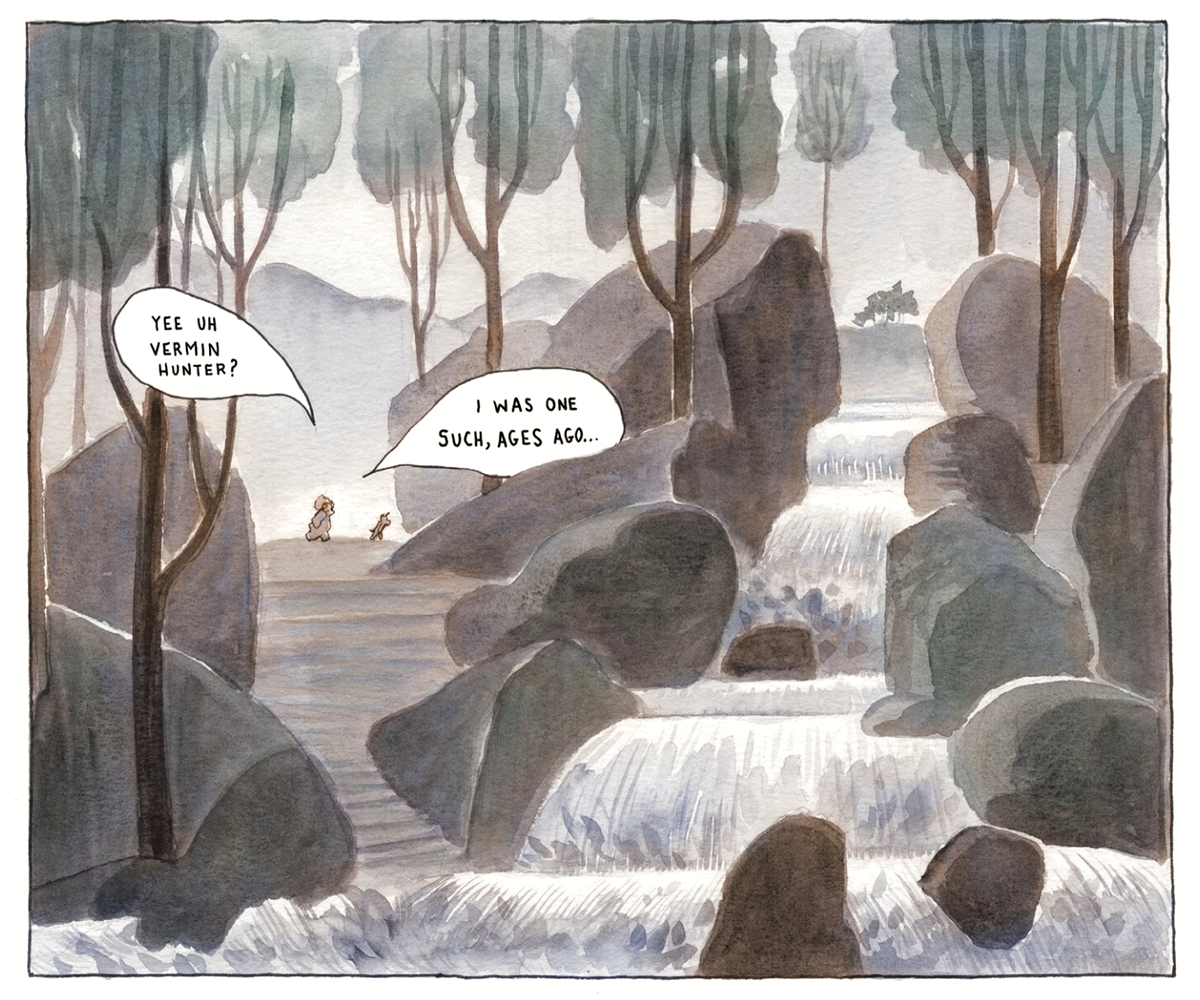
In his review on The Beat, John Seven assesses Malkasian’s 2017 graphic novel Eartha as one of the artist’s characteristic “gloomy, apocalyptic parables that don’t make you feel so great about humankind.” It’s difficult to disagree, as Eartha is deeply disquieting. In contrast, Shadows of the Sea feels like a gentler turn of the same thematic wheel, presenting a story that’s smaller in scope but richer in emotional immediacy. The fantastic world Malkasian has painted is cruel and strange, to be sure, but it still affords the possibility of healing. Shadows of the Sea lingers not because of its darkness, but because of the hope that emerges after a brave confrontation with bitter truths.
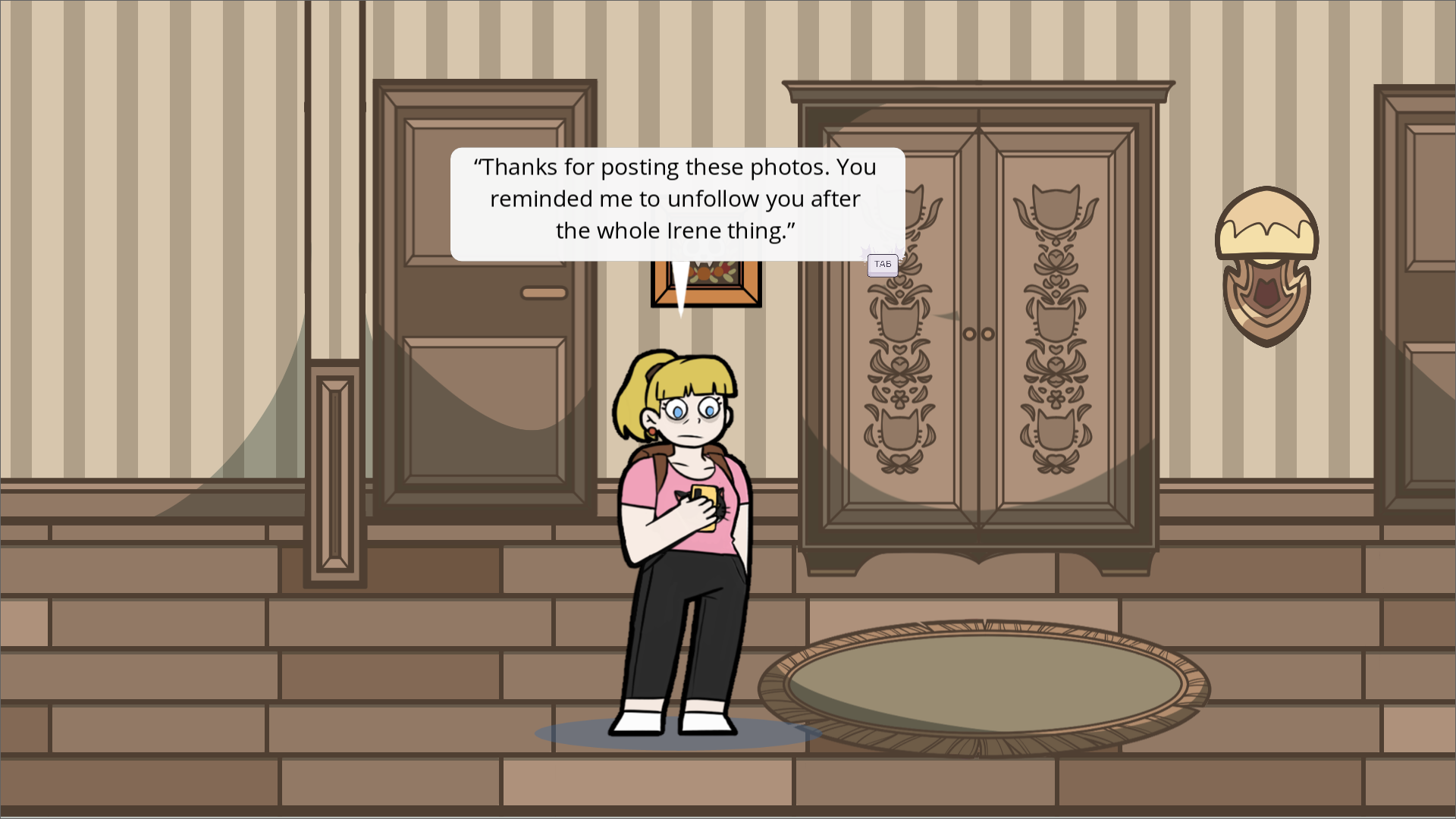
Il Mistero di Felina (The Mystery of Felina) is a free-to-play 2D narrative horror game that takes about twenty minutes to finish. The story follows Lara Lorenzi, a travel influencer who’s been invited to the small island of Felina to participate in a festival that celebrates the island’s cats.
Unfortunately for Lara, there is weirdness afoot. The island’s sheep have been dying, and there seems to be blood on the walls of the local church. In the downstairs tavern of the inn where Lara spends the night, a group of older men have gathered in a somber toast to their friend, who will be “leaving the island” soon. The young man who invited Lara to the island is awkward and sweaty, and he seems to be uncomfortably nervous about something.
Meanwhile, Lara’s been getting strange comments online, presumably about a nasty bit of drama with a fellow influencer. Though she’s picking up bad vibes from the island, Lara is in dire need of positive content, and she can’t afford to waste the opportunity.
As Lara, the player walks around the small town, enjoys the scenery, and advances the story through conversation. There’s also an optional but fun smartphone menu that allows the player to take pictures and upload them for Lara’s followers to enjoy.
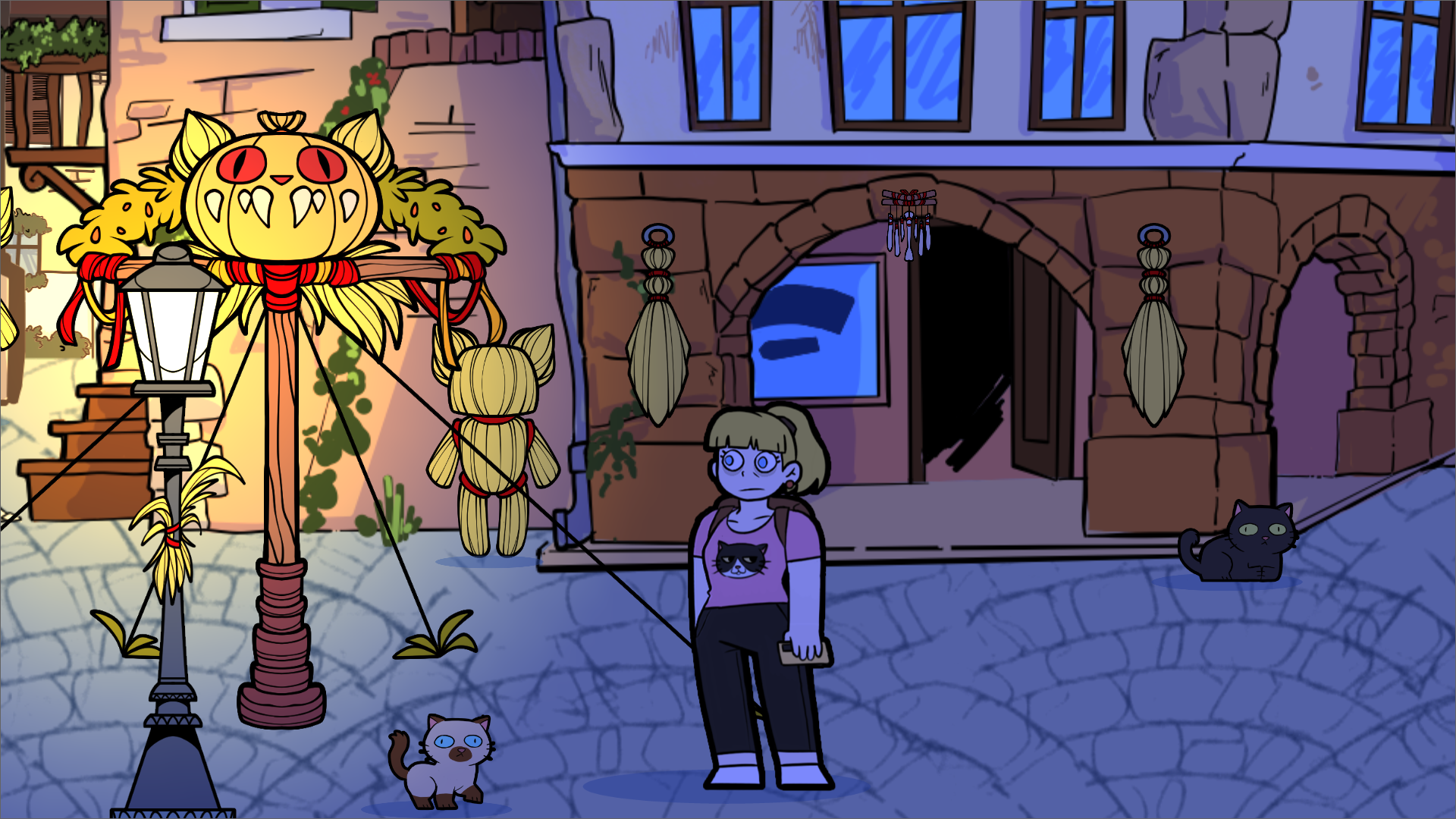
You’ll almost certainly want to take pictures, because the art in this game is wonderful. The architecture is shabby yet quaint, while the interiors are filled with interesting details. The people on the island are all colorful characters, and the festival decorations are very cute yet deeply sinister.
I also appreciate the character animations. The way Lara walks around the island is well-observed, especially in relation to her character design. Later, when Lara crouches while wearing a costume in order to pass herself off as a child, her walking animation is even more artistic. There are a number of cats roaming around the island, and it’s a treat to stand still for a moment and observe their behaviors.
Il Mistero di Felina echoes with hints of classic gothic folk horror like The Wicker Man and The Shadow Over Innsmouth, and it also recalls more contemporary spooky stories like Oxenfree, Night in the Woods, and… Neko Atsume. Still, this unnerving little game is uniquely its own thing, and I would have gladly spent more time on Felina basking in the Mediterranean sunlight while picking apart the dysfunctional personalities of the island’s residents.
The game has a convenient autosave function, but you can easily play Il Mistero di Felina in one sitting. The story is enjoyably campy but also legitimately creepy, with excellent pacing and a tidy conservation of detail. I’m a fan of the unique aesthetic, whose bright colors work brilliantly to enhance the horror. I love every indie horror game I play, but this one is something special.
I can’t resist closing this without at least one cat pun, so here you go: Il Mistero di Felina is a purrfectly spooky cautionary tale that knows exactly how to sink its claws into contemporary anxieties.
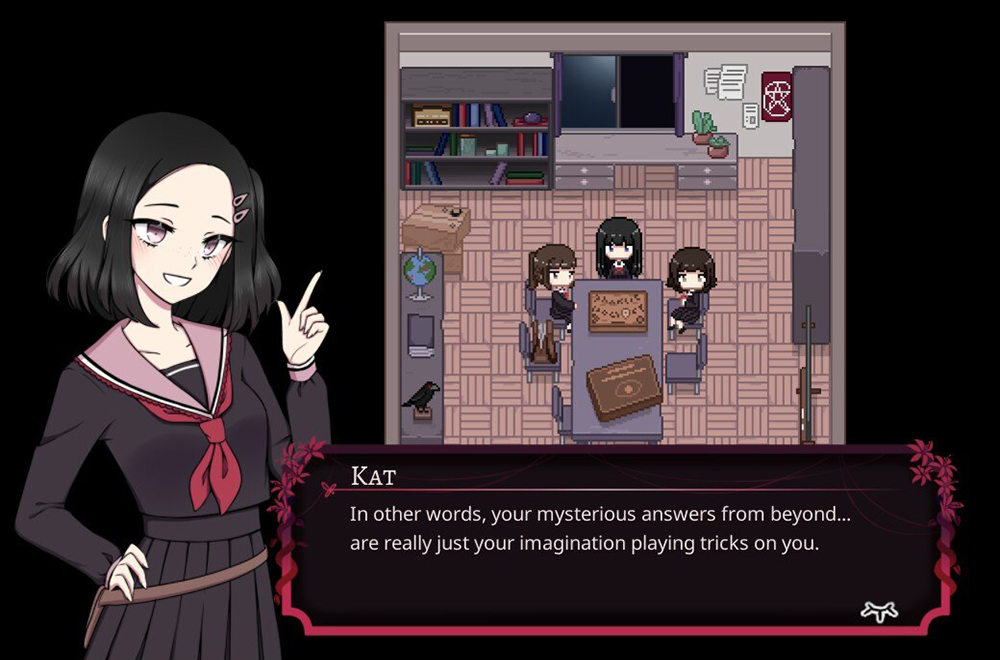
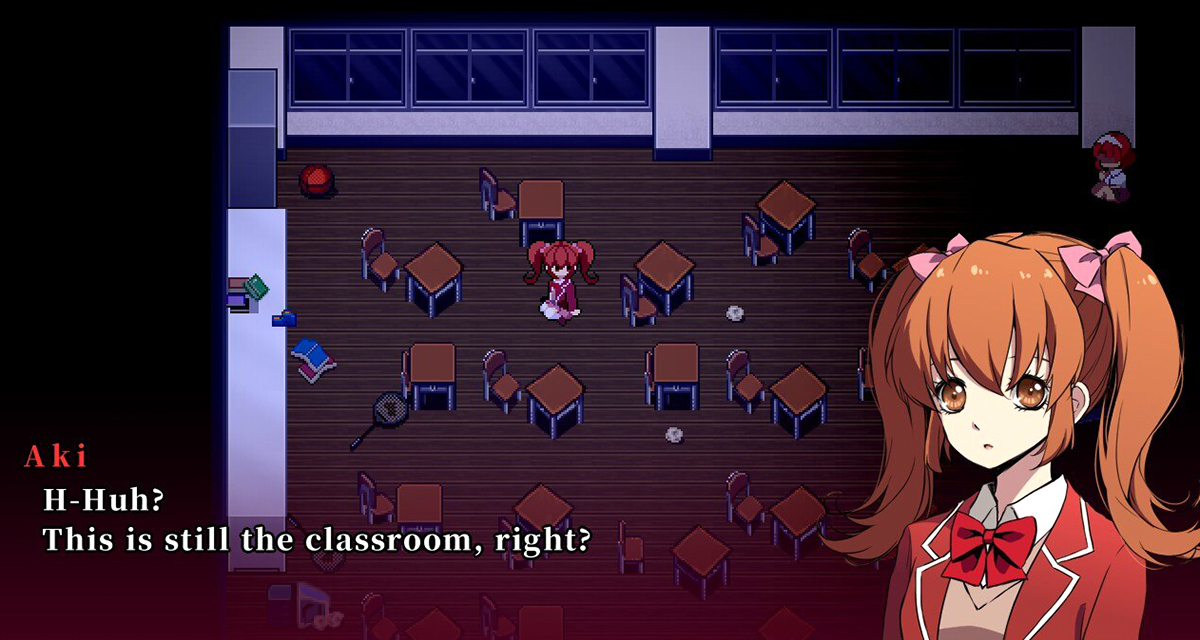
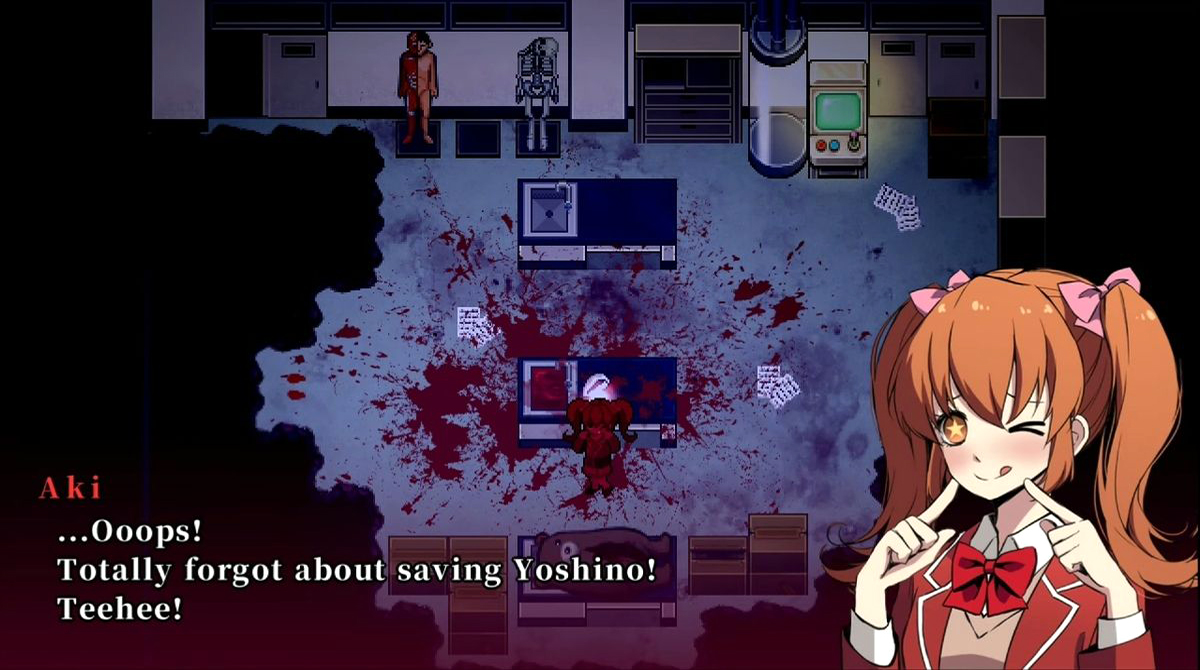
Misao is a short 16-bit indie survival horror game originally released in 2011 and then published on Steam (here) as a remastered edition in 2024. The game is set in a high school that’s been transported to a demonic realm by the vengeful spirit of the eponymous Misao, a beautiful but quiet girl who mysteriously disappeared three months prior to the opening of the story.
You play as a girl (or optionally as a boy, in the HD version) named Aki who suddenly hears Misao’s voice in the middle of class, asking someone to “find me.” The classroom is cloaked in darkness, an earthquake hits, and the school begins to fall apart in the aftershocks. As Aki explores the mostly abandoned building, she learns that four of her classmates were bullying Misao with the compliance of their homeroom teacher. Despite the intensity of the bullying, Misao didn’t kill herself – but someone else did.
The gameplay consists of navigating the school while collecting six objects necessary to piece together Misao’s story. There’s no set order to acquiring these items, meaning that the game starts off as somewhat confounding but gradually comes to make more sense. Once you get your bearings, what you need to do becomes fairly self-evident, but a walkthrough is recommended for players (such as myself) who might find themselves overwhelmed at first. There are several excellent guides posted to Steam, but I recommend (this one) on account of its helpful division into sections.
Like Mad Father (reviewed here), which was also published by Miscreant’s Room, Misao is essentially a haunted house simulator in which your player-character can die in dozens of delightfully gruesome ways. Thanks to a handy quicksave function, there’s no penalty for dying, and the player is encouraged to get into all sorts of trouble for the sole purpose of seeing what will happen. Aside from two short chase sequences, very little skill is needed to survive, just a bit of trial and error.
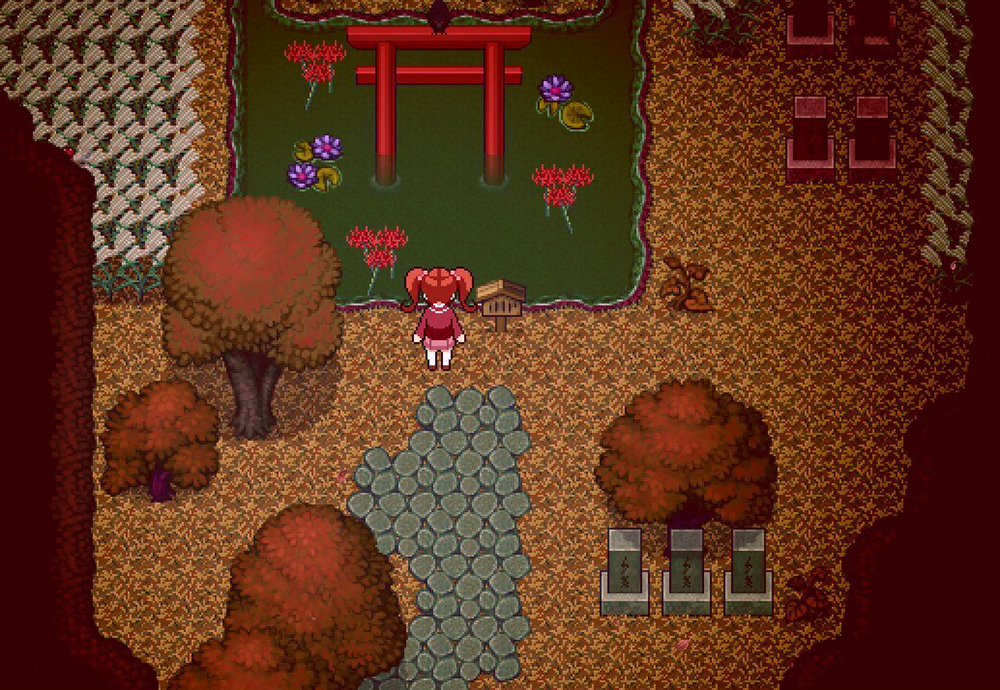
What I love about Misao is how much fun this game has with the tropes and imagery of a haunted high school. The laboratory is staffed by a mad scientist who has a chainsaw and will take advantage of any excuse to use it. The hamburgers in the cafeteria are made of unspeakable meat, and the seating area in front of the open kitchen is filthy with blood and entrails. The toilets haven’t been cleaned for a very long time, nor has the secret zombie cave under the school. The Shinto shrine in the courtyard is beautiful, but the rituals performed there are anything but.
Misao’s story mixes high school bullying and friendship drama with a mystery surrounding a twisted serial killer, and everyone gets exactly what they deserve. Still, for players who think high school kids shouldn’t be condemned to eternal damnation, Aki can rescue her classmates from their personal hells in a short epilogue. A few of the characters Aki encounters are native to the demon realm, and they’re all having the time of their lives. My favorite is the student librarian, who’s fully aware of the bloodshed surrounding her but just wants to make friends. She is a treasure.
If you’re not a completionist, Misao takes about two hours to finish, allowing the story to make an impact without testing the player’s patience through needless puzzles or gameplay challenges. The haunted high school setting is creatively rendered and a lot of fun to explore, even if the open-world structure is a bit overwhelming at the beginning.
The deaths are all creative and disturbing, but the retro graphics allow the game to feel campy instead of creepy, so much so that Misao sometimes feels more like a comedy than a horror story. I grew to feel a begrudging sort of affection for the characters, but I can’t deny that I had a huge smile on my face as I watched them get picked off – and really, good for Misao. I support her.
I really enjoyed writing a review of Karenza Sparks’s debut graphic novel, The Corus Wave, for Comics Beat.
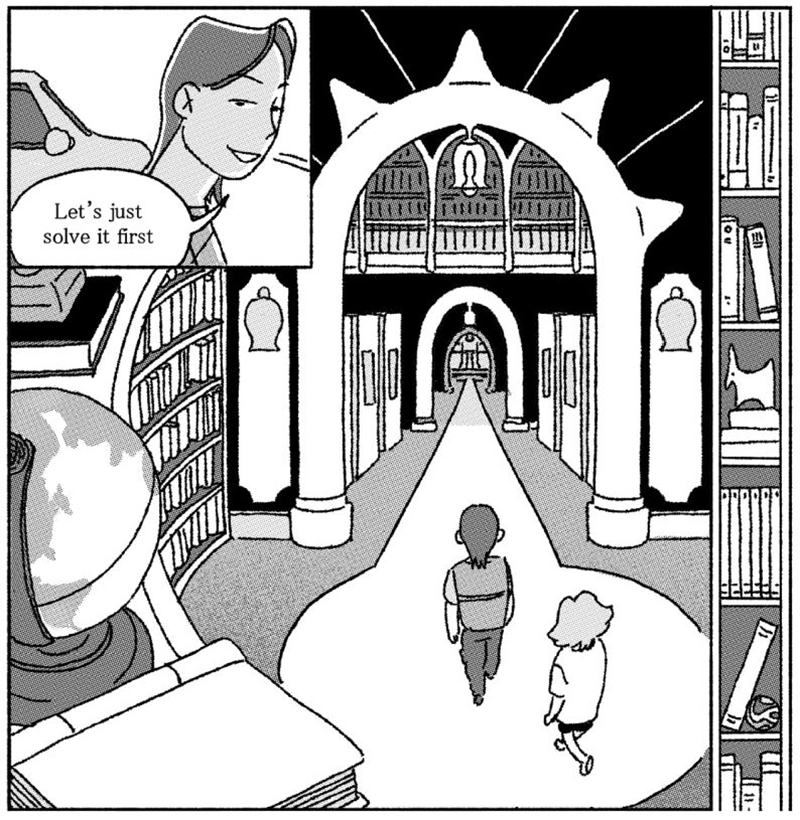
The Corus Wave is a cozy science mystery about a grad student who inadvertently tumbles down a research rabbit hole while writing her thesis about an unusual (and potentially supernatural) fossil. The story quickly becomes a low-stakes Da Vinci Code adventure with a lot of local color borrowed from the artist’s home in Cornwall, and it’s super charming. I really love this book.
Here’s an excerpt from my review:
The Corus Wave is a celebration of the joys of research. The hunt for Corus’ manuscripts begins with a footnote that becomes a rabbit hole, but the story evolves in a more practical direction as the two students find friendship and support in a scholarly community. Their fieldwork provides opportunities to appreciate the human stories behind a built environment whose unique design flourishes might otherwise be taken for granted. The Corus Wave is about going offline and touching grass, the pleasure of which is conveyed through gentle and attractive art that presents lively and expressive characters navigating interior spaces that only reveal their secrets under close observation.
Dorotea is a spooky ten-minute narrative adventure game made in Game Boy Studio and set in the medieval castle town of Conversano in southeast Italy.
You play as Dorotea, a researcher who has been hired by a local museum to catalog the books, manuscripts, and art objects in a neglected storage room housing a collection dating from the 1600s. Upon opening and passing through a strange door at the back of the room, Dorotea finds herself transported to the medieval era, when the museum was still a convent.
Thankfully, Dorotea is intercepted by a nun before she can land herself in trouble, but she’s not entirely out of danger. The lord of the castle on the hill isn’t a good person, and there also seem to be monsters of a more literal sort in the vicinity.
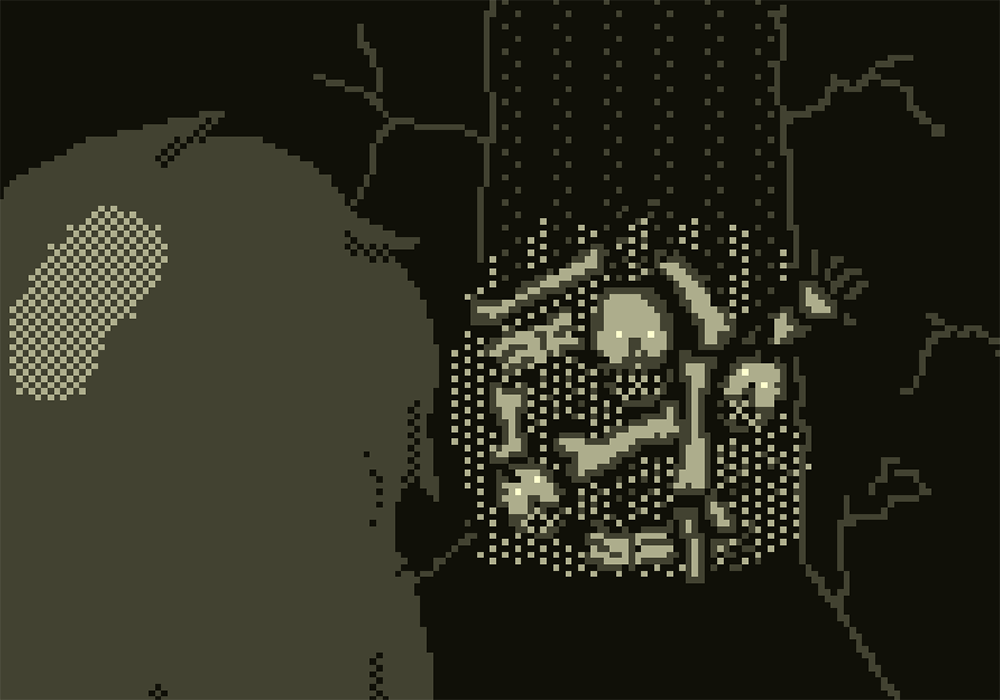
Dorotea features a suspenseful (but no-penalty) chase sequence, but its horror is largely atmospheric. The game’s uncanny pixel-art insert illustrations contribute to the feeling of something being terribly amiss, as do the ghosts and monsters, but the game also explores the anxiety generated by the prospect of being trapped in the past. As much as we might like to romanticize the medieval period, the culture shock experienced by most people – especially women – would likely be atrocious.
Putting its supernatural elements aside, Dorotea dwells in what might be called “archive horror,” or the morbid claustrophobia of a closed room filled with the relics of people long dead. There’s the dankness of the space itself, as well as the fear of the door swinging closed behind you, trapping you inside with nothing but dust. Then there’s the very real possibility that, in all the detritus of the past, you might find something deeply disturbing that you wish you hadn’t seen – or that someone very much wanted to hide. With its retro graphics and creepy pixel illustrations, Dorotea is a fantastic vehicle for conveying a sense of unease.
Dorotea is a short game, but it nevertheless manages to pull off a gut punch of a twist ending while indulging in a few interesting experiments with the ludic medium. The game was created for Italocurso Game Jam 2025, which is themed on folk horror specific to regional cultures in Italy. The 33 entries include a number of games offered in English, and all of them look amazing.
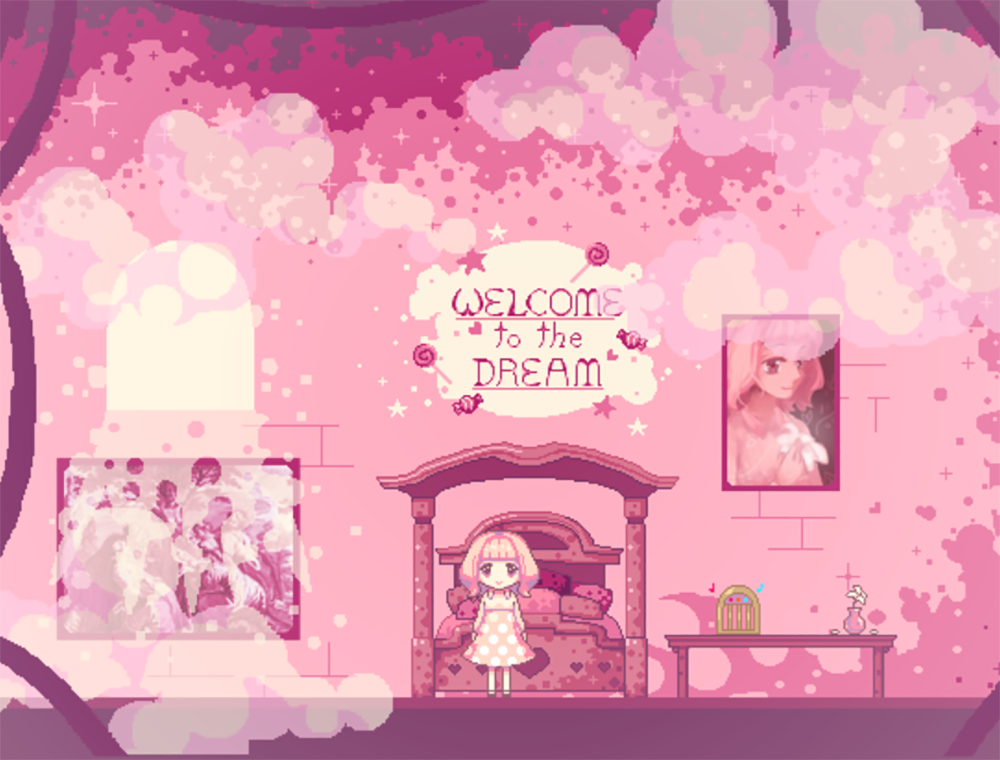
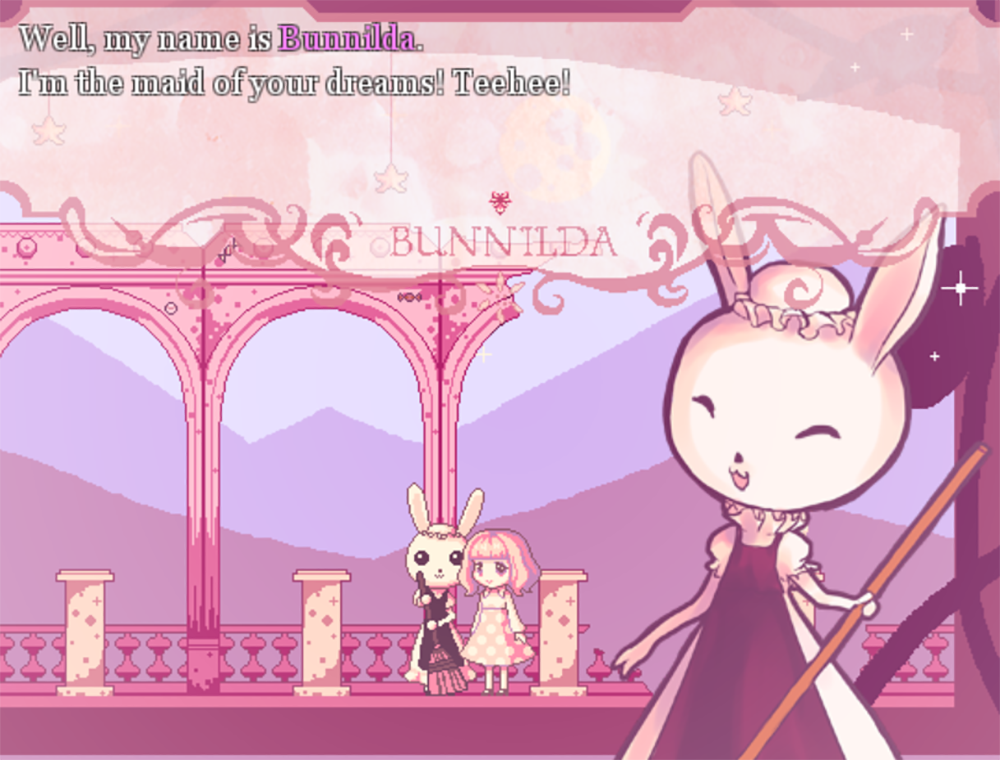
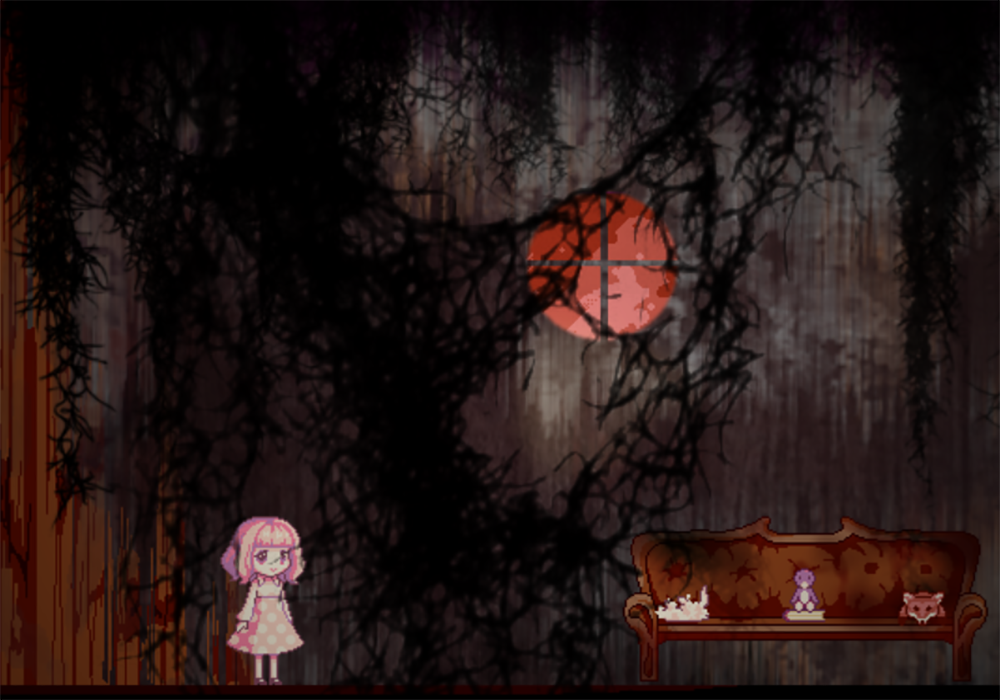
Dreaming Mary (available via the RPG Maker forums here) is a 2D narrative adventure game developed in RPG Maker by Dreaming Games. The opening of the game is super cute, but its pastel pink exterior hides a terrible secret.
You play as the eponymous Mary, who begins the game in the bedroom of her dream world. She emerges into a lovely hallway with three rooms: a garden modeled on a Greek temple, an aristocratic library with floor-to-ceiling shelves, and a swank but cozy jazz bar. Each room is home to an anthropomorphic animal, each of whom wants to play a simple game. The friendly bunny needs advice on how to arrange her statues, while the flirty fox wants to play a round of hide-and-seek. The gentle owl asks a few questions about the books on his shelves.
At the end of the corridor is a beautiful tree guarded by a burly boar. If Mary wishes to progress further into the dream, this is her gateway, but she’ll need to collect the blessing of each animal first.
If you play through the game normally, you’ll arrive at a sweet but somewhat ambiguous ending after around 15-20 minutes. If you follow a walkthrough – I recommend this one – to discover the game’s secrets and see the full story, you’ll find your way to a far darker but more satisfying ending in around 30-35 minutes.
According to the developer’s notes, Dreaming Mary was inspired by the 2011 magical girl anime Madoka Magica, which similarly begins as a cute slice-of-life story before evolving into something much more complicated. Mary’s dream is as lushly pink and pastel as Madoka’s fantasies of becoming a magical girl, which makes the hidden nightmare segments all the more shocking.
Should Mary actually figure out how to wake up… That’s when the story becomes truly grim.
To give a fair warning, many of the puzzle solutions don’t make much sense, and I’m not sure how possible it would be to get the game’s true ending without a walkthrough. Still, it’s worth the extra effort, because the contrast between the sunny opening of the game and its sinister conclusion is something special.
Dreaming Mary was released in 2014. It seems the devs have gone quiet since then, which is a shame. While Dreaming Mary isn’t perfect, it’s promising, and I would have loved to see this prototype expanded into a more polished game. Still, Dreaming Mary stands well enough on its own as a short but intriguing indie horror story in the surreal lineage of Yume Nikki.
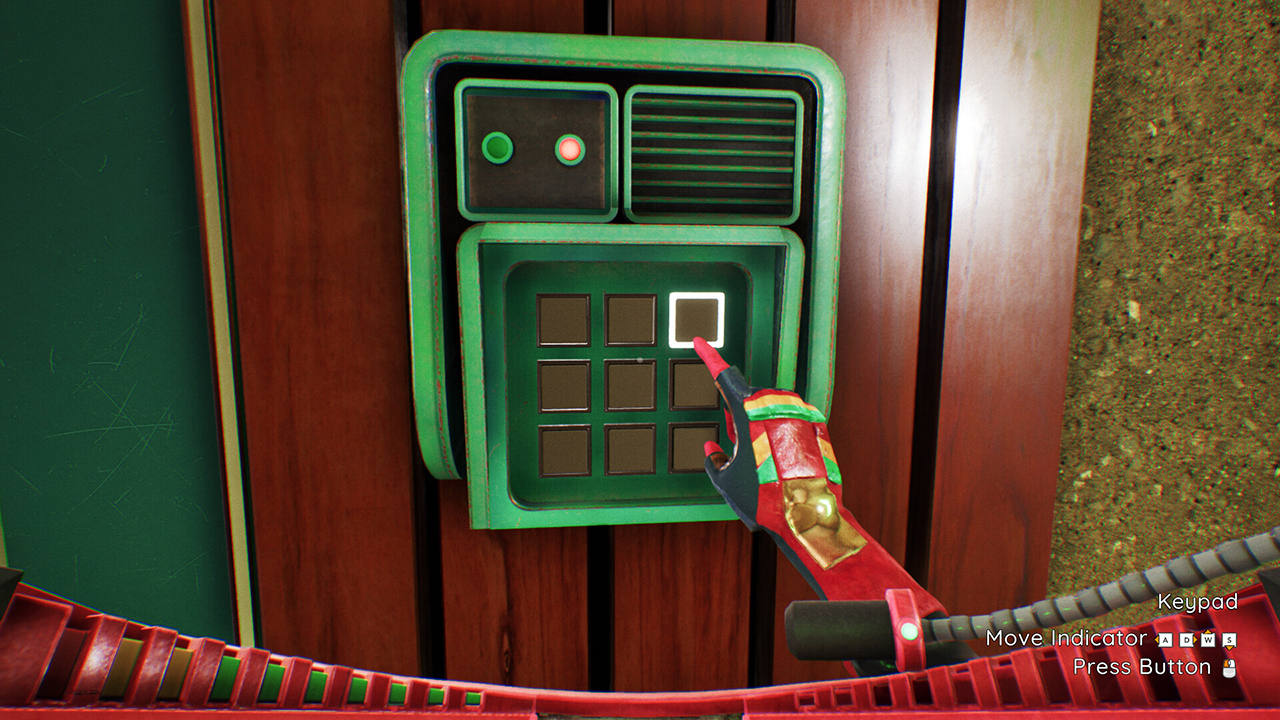
Vartio, a short and atmospheric horror game about walking through the woods at night, was developed by Pepperbox Studios and released on Steam in August 2025.
You play as a medieval soldier sent to an isolated fortress in the middle of a dense forest. As soon as you arrive, the guard captain explains your duty: you must patrol the woods by moonlight. Your job, as the player, is to follow a first-person circular path through the trees. You’ll complete three loops that result in a playtime of around 20 minutes.
Though Vartio has a bit of a twist ending, there’s nothing explicitly scary in the game. Aside from an owl flying in your direction toward the beginning of the second loop, there’s nothing resembling a jump scare. The graphics are well-designed but primitive and repetitive, and nothing much happens, truth be told. There’s no pathfinding or puzzle-solving; you just follow the road. You can leave the trail to explore a bit if you like, but there’s not much you can see in the darkness.
Precisely because the walk through the woods is so boring, it’s likely that your imagination will begin to work overtime as you navigate the sounds of the forest. The first loop is fairly normal. During the second loop, however, you become more sensitive to any break from the regular noises. And the third loop… Well, it’s a surprise.
Vartio is creepy, but it’s also oddly relaxing, like ambient lo-fi beats for forest goths. If you’re a fan of atmospheric horror that gives you space to make up a story as you go along, Vartio is an intriguing combination of retro graphics and precision sound design that allows you to immerse yourself in the spookiness of a starlit sea of trees.
I’m super grateful to Comics Beat for giving me the opportunity to review the newest horror comics collection from Adam Ellis, Let Me in Your Window. These gorgeously drawn stories offer disturbing insights into the murky shadows of internet culture, as well as brilliant speculation on potential digital futures.
Something I always appreciate about Ellis is how he documents the many absurdities of both corporate platform policies and social media subcultures alike. It’s easy to read the stories in Let Me in Your Window as spooky urban legends with no allegory… but also, I feel extremely Seen by Ellis’s characteristic take on digital horror. Here’s an excerpt from my review:
Adam Ellis’s second horror comic collection, Let Me in Your Window, is digital horror at its finest. As the successor to Ellis’s 2024 collection Bad Dreams in the Night, Let Me in Your Window ventures even deeper into the wires as it speaks to anxieties surrounding the omnipresent ghosts that speak to us through our screens. Even if most of us are content to allow these phantoms to pass unnoticed, it can be unnerving to realize that we’re ghosts as well – ghosts being watched, ghosts being catalogued, and ghosts that constantly leave behind traces of our former selves. The ten stories collected in Let Me in Your Window invite the reader to reflect on what it means to inhabit the constantly unfolding urban legends of online culture.
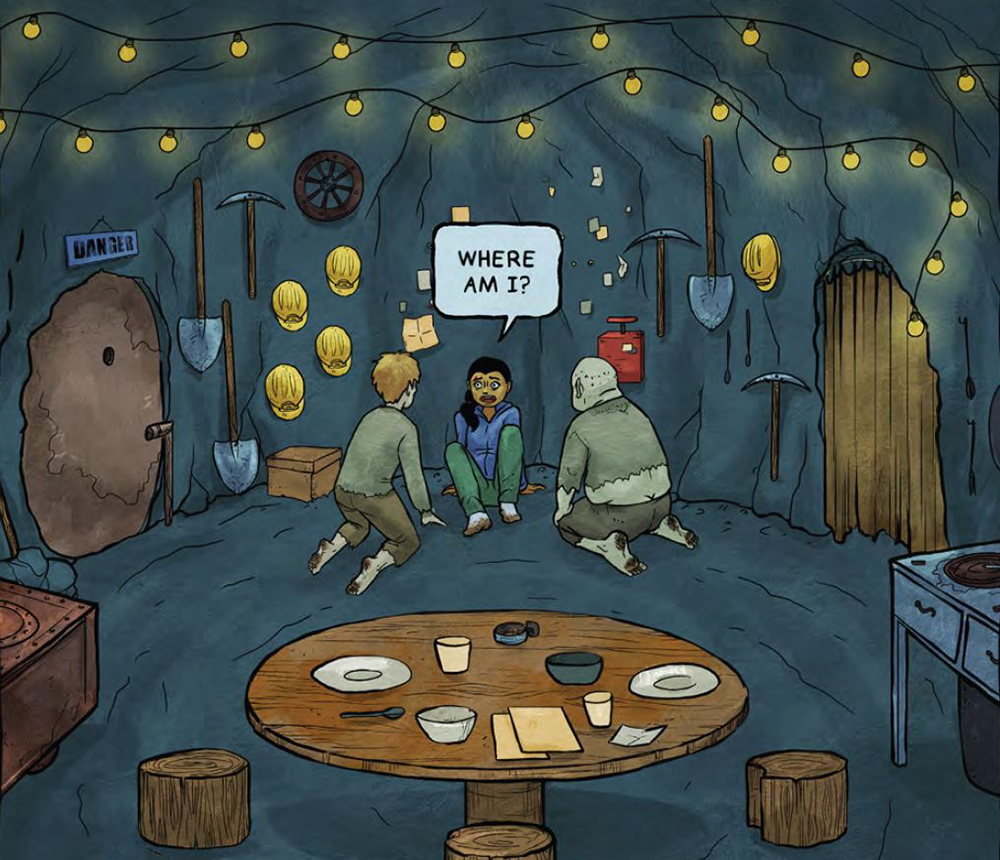
My review of Hero Cave, a dark fantasy comedy, was recently published on Comics Beat (here). This graphic novella is only about fifty pages long, but it’s surprisingly powerful and cathartic. Here’s an excerpt from my review…
It’s easy to look down on NPCs, the “non-player characters” who seem shallow and uninteresting when compared to the protagonists. It’s not so easy to realize that, in certain aspects of your life, you’re not much better than an NPC yourself. In Player vs. Monster: The Making and Breaking of Video Game Monstrosity, Jaroslav Ŝvelch explains how the construction of monsters in Dungeons & Dragons reflects the concerns of the white-collar managerial class. To the dungeon master, even a creature as miraculous as a walking skeleton is little more than a series of numbers to be entered into a spreadsheet. Given how frequently we’re all reduced to data points — by social media algorithms, by insurance companies, and certainly by employers — perhaps it’s worthwhile to extend a bit of sympathy to a low-level skeleton.
As an aside, Hero Cave features a type of nonbinary representation that I love to see. Waifishly thin models with stylishly androgynous faces are all well and good, but it’s frustrating that only attractive and nonthreatening “childlike” body types are commonly understood as being nonbinary. I believe we should have a bit more range in our representation, while also not limiting ourselves to conventional notions of “humanity.”
Why, for example, does a cartoon skeleton need to fit into a binary notion of gender? Also, if a character is an undead eldritch monstrosity, it’s silly to think that their nonbinary gender identity is the most interesting thing about them. Hero Cave demonstrates a refreshing lack of concern for the gender of its skeleton protagonist, but that doesn’t preclude the possibility of queer sexuality serving as an escape from the restrictive confines of hellworld capitalism. I didn’t want to get into this aspect of the book in my review, but it’s brilliant, and it means a lot of me personally.
My review of Hollow Press’s newest publication, Bramble, was posted on Comics Beat!
Hollow Press is an Italian micropress that publishes strategy guides for dark fantasy adventure games that don’t exist. Their most well-known book is Vermis (which I wrote about here), but I think Bramble is probably more accessible to a wider readership. It’s very weird and creative, and the art style is a lot of fun. Here’s an excerpt from my review…
Bramble is a worthy successor to Vermis, and the book proudly stands on its own as an accessible introduction to the emerging genre of original strategy guides. Its story is driven by the forward momentum of a traditional graphic novel and augmented by the intriguingly fragmented worldbuilding presented by digital RPGs. As a physical object, Bramble also suggests the nostalgic mystery of forgotten media, and the reader can easily imagine coming across this book hidden in the back of a closet or buried at the bottom of a box at a flea market.