At this year’s Modern Language Association conference, I’m looking forward to giving a paper about historical memory, ecocriticism, and the work of the superstar manga artist Kyō Machiko. My paper is titled “The Green Dreams of Kyō Machiko’s Manga,” and I’ll be presenting in Session 658, “The Future of Graphic Narrative in Japan,” at 1:45pm on Sunday, January 11.
Let me share my abstract for the paper here:
Kyō Machiko is a graduate of Tokyo University of the Arts, and she won the prestigious Tezuka Osamu New Artist Prize in 2014. She’s since published more than two dozen books while attracting upwards of ninety thousand followers on her account on Instagram. In an interview with Matt Hill for The Comics Journal, Kyō explains that translations of her books have been published in Spain, Italy, Taiwan, Vietnam, and Korea, but she has not actively sought English-language publication because, she claims, “I am not a super major author in Japan.” Kyō’s modesty aside, her bibliography is impressive, and she typically publishes at least two softcover manga volumes every year while serializing multiple stories.
In June 2023, Kyō’s publisher Akita Shoten announced that her 2013 graphic novel Cocoon would be adapted into an anime. This film aired on the public broadcasting channel NHK during August 2025. Tateno Hitomi, who worked as an animator on Studio Ghibli films such as Spirited Away, Whisper of the Heart, and The Wind Rises, served as the chief animation producer. The level of care and talent dedicated to this cinematic adaptation is fitting, as Cocoon is an intensely upsetting story about an unfortunate chapter of Japanese history that’s nevertheless important to remember and pass on to future generations.
In this talk, I’ll introduce Kyō Machiko’s work and examine the critical relevance of her political messages. I’ll discuss Cocoon before turning to her more recent graphic novel Kamimachi. The argument I’d like to make is twofold. Specifically in relation to Kyō’s manga, I’ll demonstrate how the artist’s contextualization of characters within their natural environments facilitates an emphasis on the refuge sought by young women navigating a society that refuses to view them as human. As a broader observation that relates to this panel’s theme of “The Future of Manga Studies,” I want to argue that artistic political statements are no less trenchant and cutting when drawn in a “softer” style often associated with more entertainment-focused media.
If you’re interested in the subject of this presentation, I published an article about “Nature and War Memory in Kyō Machiko’s Cocoon” on Women Write About Comics (here), and I posted an informal reflection on the artist’s manga Kamimachi on my Japanese fiction blog (here).
Liam is a budding content creator who specializes in guided meditation videos. Seeking to grow his following, he jumps at an Airbnb listing for a spiritual retreat in the Adachigahara mountains of rural Japan. At the end of a long journey, the stylish cabin enclosed within a verdant forest is everything Liam could hope for. The beautiful young woman who manages the property offers a warm welcome, but there’s something strange about her smile…
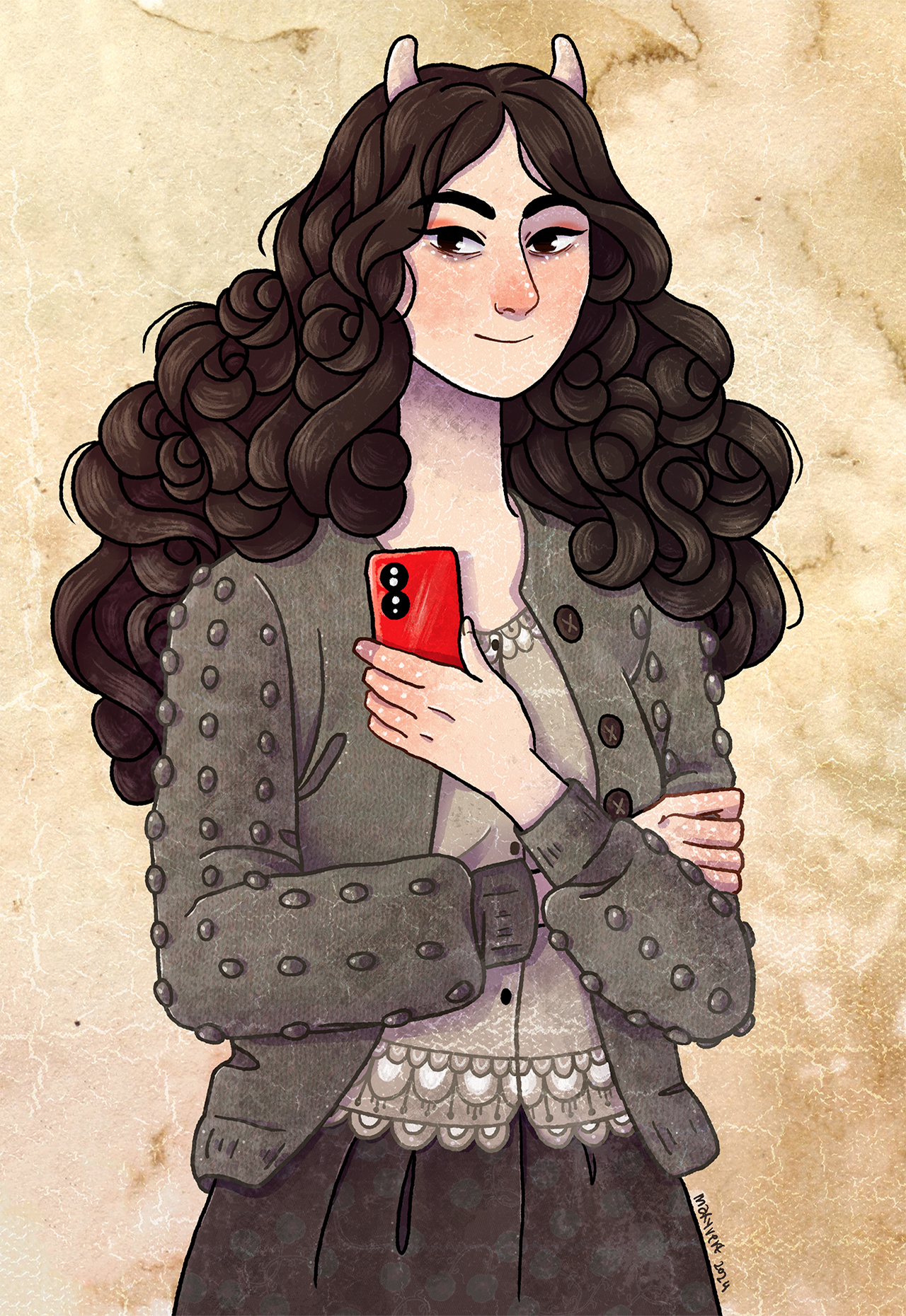
I was extremely honored to contribute to this year’s 13 Days Advent horror anthology. My story, “The Smile of the Mountain Demon,” is about a 21st century yamauba who entraps a YouTube influencer with Buddhist pretensions by using Airbnb and the language of New Age spirituality. The young man is looking for a scenic “spiritual retreat” to use as a source of content, and the yamauba is looking for a tasty snack.
This story is based on the medieval Adachigahara folktales in which a cunning yamauba entraps a less-than-devout Buddhist priest, as well as Minako Ohba’s beautiful and heartbreaking short story “The Smile of a Mountain Witch.”
If you’re interested, I’ve posted my story on AO3 (here), and you can download a free digital copy of the anthology via its page on Itchio here:
The illustration that accompanies my story was created by the brilliant dark fantasy artist Maxyvert, who posts strange and ethereal paintings on Tumblr (here), on Instagram (here), and on Twitter (here). This artist takes commissions for both digital and physical watercolor portraits (here), and it was an amazing experience to work with them.
I’m proud to have worked with the brilliant editorial team at Women Write About Comics on my essay “Nature and War Memory in Machiko Kyō’s Cocoon,” in which I discuss the imagery that propels the story of a heartbreaking graphic novel about the Pacific War.
An animated cinematic adaptation of Cocoon is scheduled to be released in Summer 2025. This is a high-profile project commissioned by NHK and directed by the veteran Studio Ghibli artist Hitomi Tateno, whose animation credits range from Spirited Away to The Wind Rises.
Although the essay (like the manga itself) should be approached with sensitivity to its content, I hope I was able to offer a small contribution to the international awareness of the narrative work of Machiko Kyō, a celebrated and prolific Japanese artist who has created some of the most groundbreaking manga of the past decade.
You can find my essay about Cocoon (here) on Women Write About Comics, an award-winning venue for media journalism covering pop culture from a diversity of perspectives. I’m extremely grateful for the support and excellent feedback of Emily Lauer (on Bluesky here), whose critical insight illuminates the discussions and reviews of genre fiction on WWAC.
変な家 (Henna ie) is a collection of short horror stories about houses with strange and uncanny floorplans.
The book has four chapters, each of which takes the form of a series of conversations between the narrator, their architect friend, and various people who have seen the houses in person. The first three chapters explore three different houses with extra rooms and mystery spaces, and these explorations are liberally illustrated with diagrams in which certain sections of the floorplan are highlighted and annotated to clarify the text.
Each of these first three stories is like a locked room mystery, except the mystery starts with a floorplan from which the narrator gradually builds a story about what sort of upsetting behavior that type of strange space might enable. In the final chapter, it’s revealed that these houses (and, presumably, many more like them) are all connected to an old and wealthy family with a terrible secret.
I flew through this book and loved every page. The conversations are easy to follow; and, thanks to the diagrams, the spaces are easy to visualize. I enjoyed the slow build of the overarching mystery, and the revelations about the bizarre family at the center of the strangeness were beyond anything I expected.
It’s worth noting that the first story in this book was originally written as a script for a twenty-minute video on YouTube, which you can find with English subtitles (here). There’s also a manga adaptation. The first three chapters, which form a complete story, have been scanlated and are available to read (here). And finally, I’d like to share a more substantial review posted on one of my favorite book blogs (here). I’ve got my fingers crossed that this strange little book (and its sequel, which is rumored to be even better) will somehow find its way into English translation.
Hyrule Fashion Anthology is open for preorders (here)!
Hyrule Fashion Anthology is a fanzine celebrating the complex evolution of fashion history through the characters and setting of the Legend of Zelda series. I contributed an essay titled “A Wind-Grieved Ghost” about the influence of medieval Japanese Noh theater on Ganondorf’s costume and character in The Wind Waker. I put a lot of love and research into this piece, and I may have even made myself cry.
The zine is filled with gorgeous fashion illustrations that illuminate the historical and cultural influences of the character designs in the series, as well as brilliant renditions of fan-favorite characters in a diversity of times and places. In addition to the artwork, the zine also includes articles about weaving, metalworking, and the beauty of style in all its forms.
Preorders are open until September 19! If you’re interested, you can check out the zine through these links…
Last week I had the opportunity to contribute to a Pride Month roundtable on LGBTQ+ manga organized by Women Write About Comics. In this roundtable, we share specific recommendations as well as more general thoughts on topics such as autobiographical essay manga, nonbinary manga characters, and debates surrounding BL and yuri manga.
This conversation was very cathartic for me personally. It was a traumatic experience to publish my monograph on queer manga, as I encountered incredible resistance during every step of the project. I’ve also been surprised by the feedback I’ve received, with critics claiming that I didn’t write enough about “real” queer creators. My book feels more cursed than the Necronomicon, and I’ve been extremely hesitant to talk about it or the research that went into it. Still, it felt good to finally address the issue of who “gets to count” as queer, as well as why many queer people in Japan may not have chosen to identify as such in the past.
Thankfully, the situation in Japan is starting to change, and WWAC’s Pride Month manga roundtable captures the spirit of this social and cultural shift as it’s reflected in popular discourse, especially in creative work by and about openly queer people exploring and celebrating their identities.
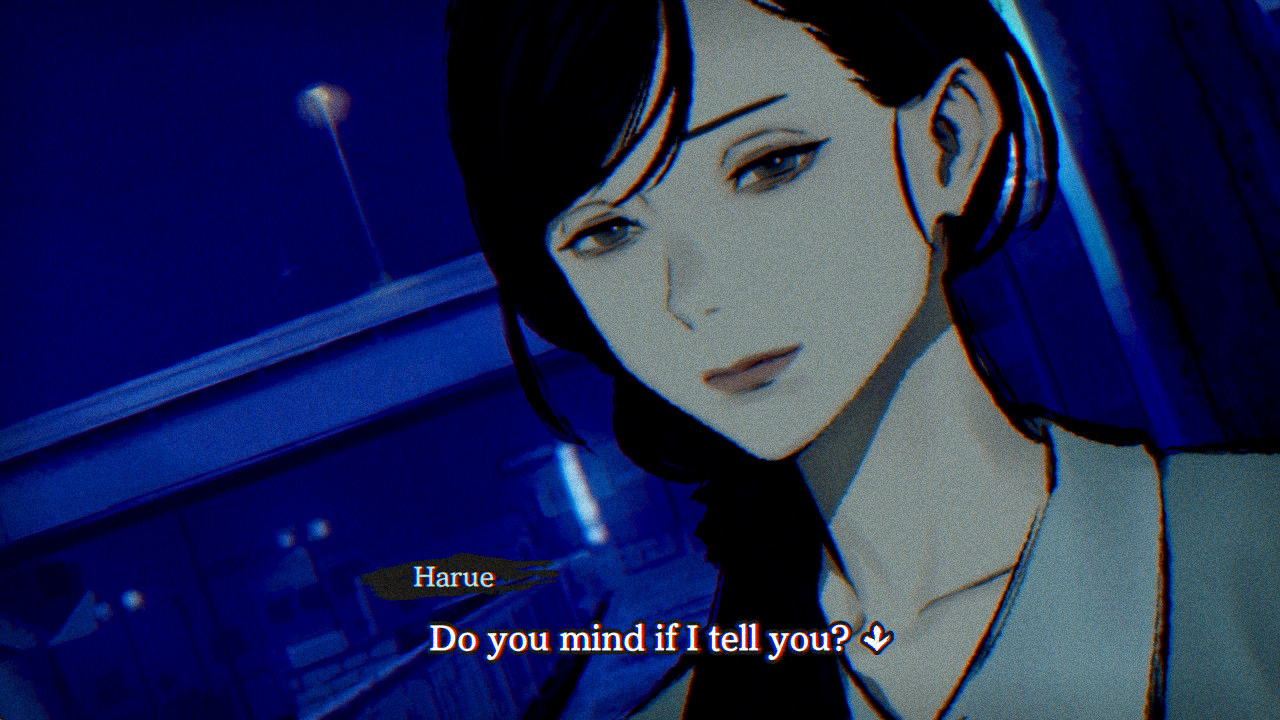
Paranormasight: The Seven Mysteries of Honjo is a supernatural thriller set in the Honjo neighborhood of Sumida Ward in central Tokyo during the 1980s. This visual novel’s story is told via the intersecting perspectives of three main protagonists through a series of short episodes laid out along a story grid. Although you have some choice regarding the order in which you play the episodes, the story is linear, with minor branching paths leading to premature endings. Paranormasight has strong elements of horror, as well as a few jumpscares, but it’s sensitive about its use of mature themes and graphic visual imagery. Depending on how quickly you read, it should take about ten to twelve hours to unlock all of the endings.
Let me cut to the chase: I really enjoyed Paranormasight and would happily recommend it even to people who aren’t horror fans. The game only has a moderate level of interactivity, so I’m not sure it would appeal to people who dislike visual novels. That being said, Paranormasight is at the height of its genre, and it’s as well-written, well-illustrated, and intriguingly presented as a visual novel can get.
A quick description of the story is going to sound like anime nonsense, but please take my word for it that this is a story written for an adult audience and bear with me for a moment.
During the early modern Edo period, an onmyōji wizard found the secret to a ritual that would bring someone back from the dead. In order to recreate the soul of the deceased, one would need to store sufficient “soul dregs” of murder victims inside a ritual object. The wizard managed to perform the ritual, a process that resulted in nine deaths. The history of these deaths has survived to the present in the form of urban legends about the “seven mysteries of Honjo.”
Late one night, ritual objects in the form of wooden netsuke charms mysteriously appear in the hands of nine people in the Honjo neighborhood. In addition to the physical charms, these “curse bearers” have inherited the resentful memories of the victims of the original ritual, as well as the power to kill others with a curse, which they’re able to trigger when certain conditions are met. If one of the curse bearers manages to kill enough people, they’ll be able to perform the ritual of resurrection – but only if another curse bearer doesn’t kill them first.
Paranormasight opens with a stand-alone prologue in which one of the curse bearers meets a gruesome end. When the prologue is concluded, the story is taken up by three more curse bearers: a grieving mother whose young son died in a kidnapping incident, a high school girl whose best friend committed suicide, and a senior police detective assigned to investigate the mysterious death of a youth truancy officer. All three of these protagonists are sympathetic, as is the companion character accompanying each of them. As the story unfolds, they gradually begin to work together in an attempt to figure out what’s happening so that they can survive the curse while preventing more murders.
I feel like I’ve spent years quietly waiting for Square Enix to start publishing visual novels, and I’m happy it’s finally happening. Visual novels are somewhat infamous for being relatively inexpensive to make, and it’s so cool to see one of these games with big-budget production values. Although the art and music are wonderful, the high quality of Paranormasight mainly comes through in the strength of its writing, its manga-style mise-en-scène, and its excellent translation.
When I talk about the mise-en-scène, I’m referring to the cinematic framing of each scene. While many visual novels will show you a visually flat illustration of a character superimposed on top of a static background, Paranormasight puts a great deal of effort into making conversations feel more dynamic, with the camera following standard “line of sight” rules to show the player the conversation from different angles and perspectives. As a result, Paranormasight feels like reading a manga instead of reading an illustrated novel. This framing isn’t overly dramatic and doesn’t draw attention to itself, but it must have required an incredible amount of planning and effort to pull off with such skill and variety.
The same goes for the writing. The writing doesn’t go out of its way to appear “brilliant,” but the way the various threads of the characters gradually become woven into the larger story is incredible. Although you’ll often have to finish one character’s current storyline before continuing another’s, I was impressed by how the game maintains its forward momentum while still giving the player a fair amount of freedom to move between characters and conversation topics. I also appreciate how none of the characters ever devolves into a stereotype, and how both major and minor characters have a balanced mixture of admirable and problematic personality traits.
On a lark, I downloaded Paranormasight onto my older Nintendo Switch and played the prologue in Japanese. I can therefore say with confidence that the English translation is excellent. The translation team preserves the flavor of the original writing through canny localization choices, especially regarding the game’s more arcane vocabulary. I’ve been annoyed with the translation of Tears of the Kingdom, which is filled with nonsense like “Ultrahand” and “secret stones,” so I admire how the English version of Paranormasight manages to make its more unusual terms seem perfectly natural.
Despite its goofy name and slightly silly supernatural premise, Paranormasight was created for an audience of intelligent adults. The game is very much mass-market entertainment published by a giant corporation, so perhaps it’s not as bold or edgy as it could be, but I actually think this market concession to “broad appeal” is a blessing. Sometimes it’s nice to read a horror thriller that has the confidence not to rely on sexual assault, fantastically grotesque violence, or poorly-disguised bigotry against minorities. As a fun bonus, there are no creepy “male gaze” character designs, just a wide range of character types who are drawn in an appealing anime-influenced style but still look like real people.
Paranormasight was developed in cooperation with the Sumida City Tourism Association, and the game does a fantastic job of giving the player a sense of its setting. This works especially well in tandem with the story’s theme of how many Japanese urban legends are closely connected to a specific place and the history of the people who live there. Although most of the gameplay involves choosing how to advance the conversation, there are also moments when the player is invited to explore an area via a visual panorama while investigating points that catch their attention. It’s fun to explore this weird little neighborhood in Sumida that’s been around since the Edo period, and you never feel as though you’re on the receiving end of a history lecture.
One of the coolest aspects of Paranormasight is its framing device, in which a narrator wearing an Edo-period kimono and a half-face Noh mask directly addresses the player. This narrator invites the player to watch the story through a Shōwa-era color television, one of the bulky cathode-ray screens embedded in its own piece of furniture.
The menu has a great time with this retro aesthetic, distorting the background with tv “noise” and curving the screen at the edges. From the menu, you can access an annotated index with entries for the characters, places, and historical incidents that appear in the story. Each entry is accompanied by an illustration and two or three paragraphs of text. I generally don’t bother with the annotated indices in visual novels, but the one in Paranormasight is especially well-written and edited to provide a satisfying amount of intriguing information without overwhelming the player with walls of text. I also love that the entries for the urban legends are illustrated with period-accurate woodblock prints.
For someone with my particular set of interests, Paranormasight is a 10/10 game. Even if you’re not into urban history or urban legends, I still think the strength of the game’s writing and the cleverness of its design are strong selling points. You can download Paranormasight as a phone app, but it’s perfect for Nintendo Switch’s handheld mode and well worth the $20.
By the way, if you’re intrigued by the concept of “virtual tourism through a visual novel,” I’d also like to recommend the supernatural mystery thriller Root Letter. Its story is set in the small city of Matsue in rural Shimane prefecture, which is also famous for its Edo-period urban legends. Root Letter is very good, but it’s nowhere near as polished as Paranormasight. Square Enix really hit it out of the park with this one.
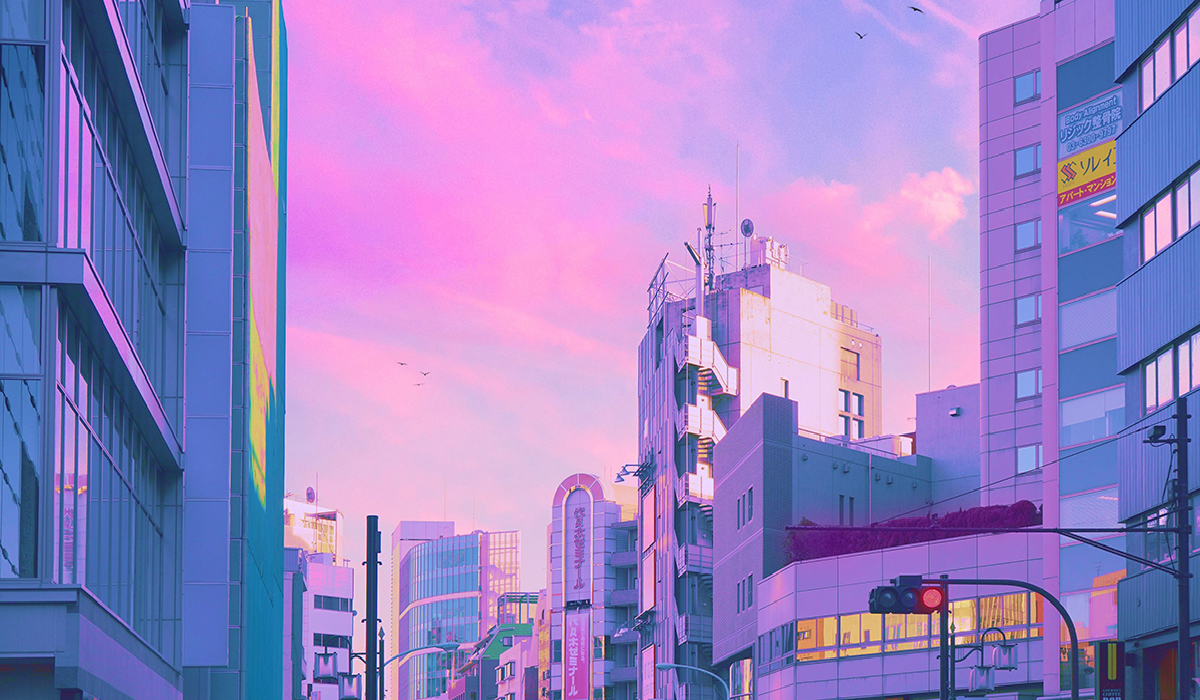
This spring, I taught a new class called “Tokyo Stories in Contemporary Japanese Fiction.” Here’s the course description…
Tokyo is one of the largest and most vibrant cities in the world. It’s also one of the most storied, laying claim to centuries of history and countless colorful districts and neighborhoods. In this class we will explore Tokyo by delving into a collection of stories set in and around the great metropolis. We will work our way forward in time, beginning with the city’s roots as the samurai capital of Edo. Along the way, we will investigate contemporary themes such as demographic crisis, social stratification, gender trouble, and the ruins of neoliberal capitalism.
Through the study of representative works of contemporary Japanese fiction, this course gives students the opportunity to learn about Japanese values from a diversity of perspectives as we investigate how social and cultural organizations are mapped onto physical space. Our study will incorporate visual media such as films, animation, music videos, fine art, architectural photography, and fashion. Various methods of critical cultural analysis will be modeled in class lectures and practiced during class discussions, and students will be asked to perform their own critical analysis in their written assignments.
By the end of the semester, students will have been exposed to a diverse range of representative authors and cultural concerns that will help them develop a nuanced understanding of Japanese literature, history, and society.
You can download a copy of the course syllabus (here). I’ve collected PDF copies of the course readings on Dropbox (here).
This fall, I’m teaching a new class called “Japanese Ghost Stories.” Here’s the course description…
This course offers a survey of the numinous and supernatural through Japanese fiction, drama, comics, animation, and video games from the Heian period to the present day. Students will assemble a foundational knowledge of Japanese religion and folklore while studying popular narrative traditions representative of their historical eras.
By peering into the liminal spaces connecting the living with the dead, students will develop critical thinking and media literacy through careful investigation into the matters that people of different times and places have perceived as monstrous, alien, and unspeakable. Issues of gender, sexuality, and ethnic minority status will receive special attention as we navigate theories relating to the cultural role and social relevance of ghosts. By the end of the semester, students will possess a broad perspective on Japanese narrative traditions and popular culture, as well as an understanding of how fantastic stories of the dead reflect the tangible experiences of the living.
You can download a copy of the syllabus (here). I’ve collected PDF files of the course readings on Dropbox (here). If you’re interested, a copy of the course assignments handout is (here). You can check out the work of artist who drew the banner image (here).
I’d like to acknowledge that this course was inspired by Professor Naomi Fukumori’s class “The Monstrous in Japanese Literature and Culture,” and I encourage anyone who is interested to check out the course syllabus (here).
Over the course of its expansive story, Final Fantasy VII changes direction and shifts focus but holds fast to the goal of saving the world from a crisis created by Shinra. Even if there were no interstellar demons or mad scientists, the Planet would never have survived were it not for a small group of activists who dared to challenge the most powerful corporation in the world…
I contributed a meta essay titled “The End of the Line for the Shinra Corporation” to the Return to the Planet fanzine, which celebrates the 25th anniversary of the original 1997 release of Final Fantasy VII. My piece is about how the game references the corporate critique and real-world grassroots environmental activism in Japan during the 1990s. The zine is filled with gorgeous artwork, stories, and nonfiction, and it’s free to download. You can read my essay on my Japanese fiction blog (here), and I also posted it on AO3 (here). You can check out the zine via these links:






 Digital Fantasy Diary