Blackout

Blackout
https://freshgames.itch.io/blackout

Blackout is a Halloween-themed point-and-click adventure game that you can play in your browser or download for free.

You play as a teenage witch who falls from the roof of a house while trying to snatch a feather from a crow. She loses her memory during her tumble to a second-floor balcony, and she’s surprised to find that the house is filled with corpses. The electricity seems to have been cut, and it’s too dark to see anything clearly. Your job as the player is to guide the witch through the haunted house and get the lights on so she can figure out what happened.  

Once the lights are back on, you’re free to explore the house a second time to see what’s actually going on. This is a super fun twist, and it’s what really sells the game for me. The tone completely shifts, and the ending is fantastic. I hope it doesn’t spoil the story to say that it’s just as much comedy as it is horror.  

Even though your character is in the dark, the game’s 16-bit pixel art is bright and colorful. Each room of the house is a pleasure to explore. There are enough points of interest to provide flavor, but the graphics are designed to help the important puzzle pieces stand out. The puzzles are mostly self-explanatory – use the footstool to reach the key on the shelf, etc. – but some are silly and surprising. The writing in this game is just as charming as the art, and I really enjoyed the time I spent in this weird little house.

Blackout probably takes twenty minutes to play if you know what you’re doing. Since there’s not much guidance, I got stuck a few times, and it took me about 45 minutes to finish the game. I’m grateful to ( this ) short video walkthrough on YouTube for helping me figure out the endgame puzzle, which is very clever but only makes sense in retrospect once the lights are back on.

Don’t Let Her In

Don’t Let Her In
https://flowerstudio.itch.io/dont-let-her-in

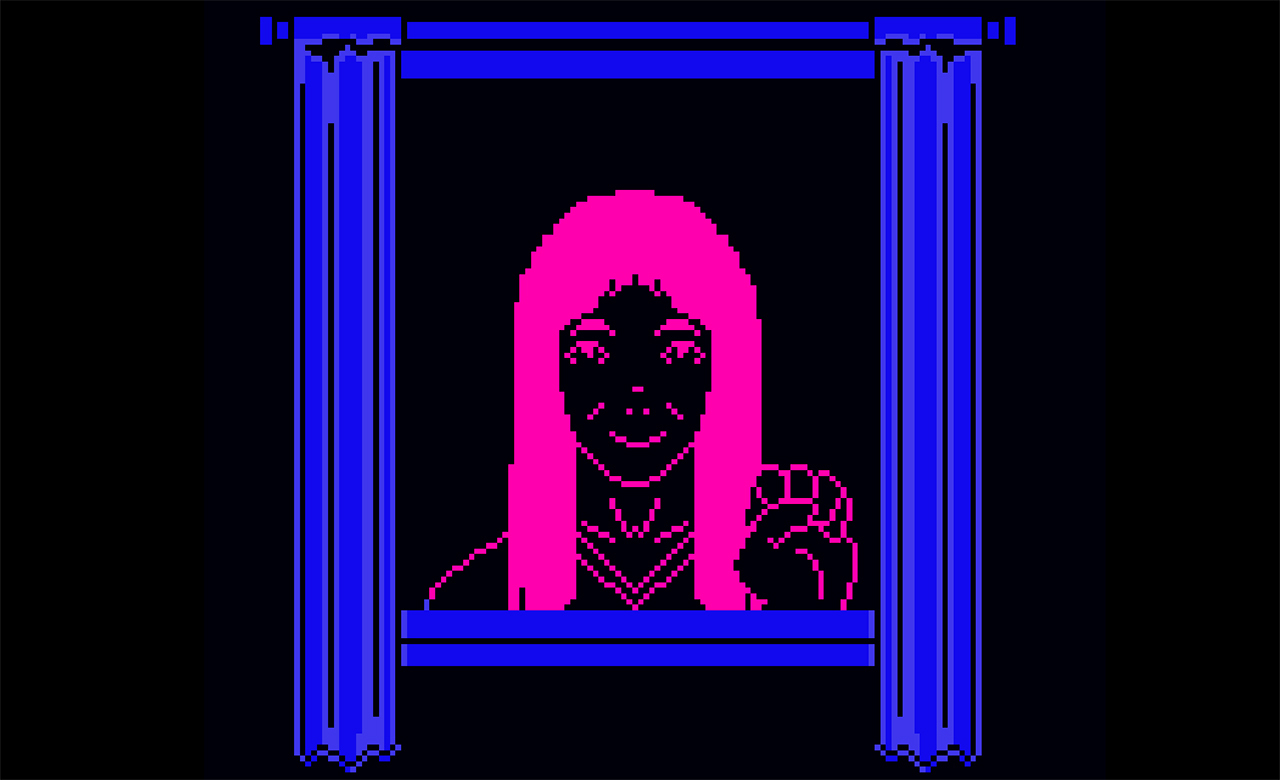
Don’t Let Her In is a free ten-minute horror game that you can play on a Game Boy Color emulator (such as mGBA) or directly in your browser on Itch.io.

You play as a teenager who hasn’t set foot outside the house in several weeks. Their father left a note on the kitchen table with a simple warning: Don’t let her in. As the player, you move through the house while interacting with various objects. You have one job, but you won’t be able to keep yourself safe forever.

Alternatively, you can ignore your father’s warning and invite the creepy woman inside the house as soon as she knocks on the kitchen window. This also leads to a satisfying story, although I’d recommend playing the game straight the first time around. The slow lead to the twist ending is wonderful, and having already experienced this twist makes the second ending much more satisfying.

The game’s graphics are simple but effective, and you might be surprised by how much body horror a few pixels can generate. The subtle worldbuilding is quite intriguing as well. There’s no good ending to this story, and its tone is bleak – there’s no irony or campiness, just horror. Don’t Let Her In may be short, but it’s remarkably effective at creating an atmosphere of loneliness and dread.

The Smile of the Mountain Demon

Liam is a budding content creator who specializes in guided meditation videos. Seeking to grow his following, he jumps at an Airbnb listing for a spiritual retreat in the Adachigahara mountains of rural Japan. At the end of a long journey, the stylish cabin enclosed within a verdant forest is everything Liam could hope for. The beautiful young woman who manages the property offers a warm welcome, but there’s something strange about her smile…

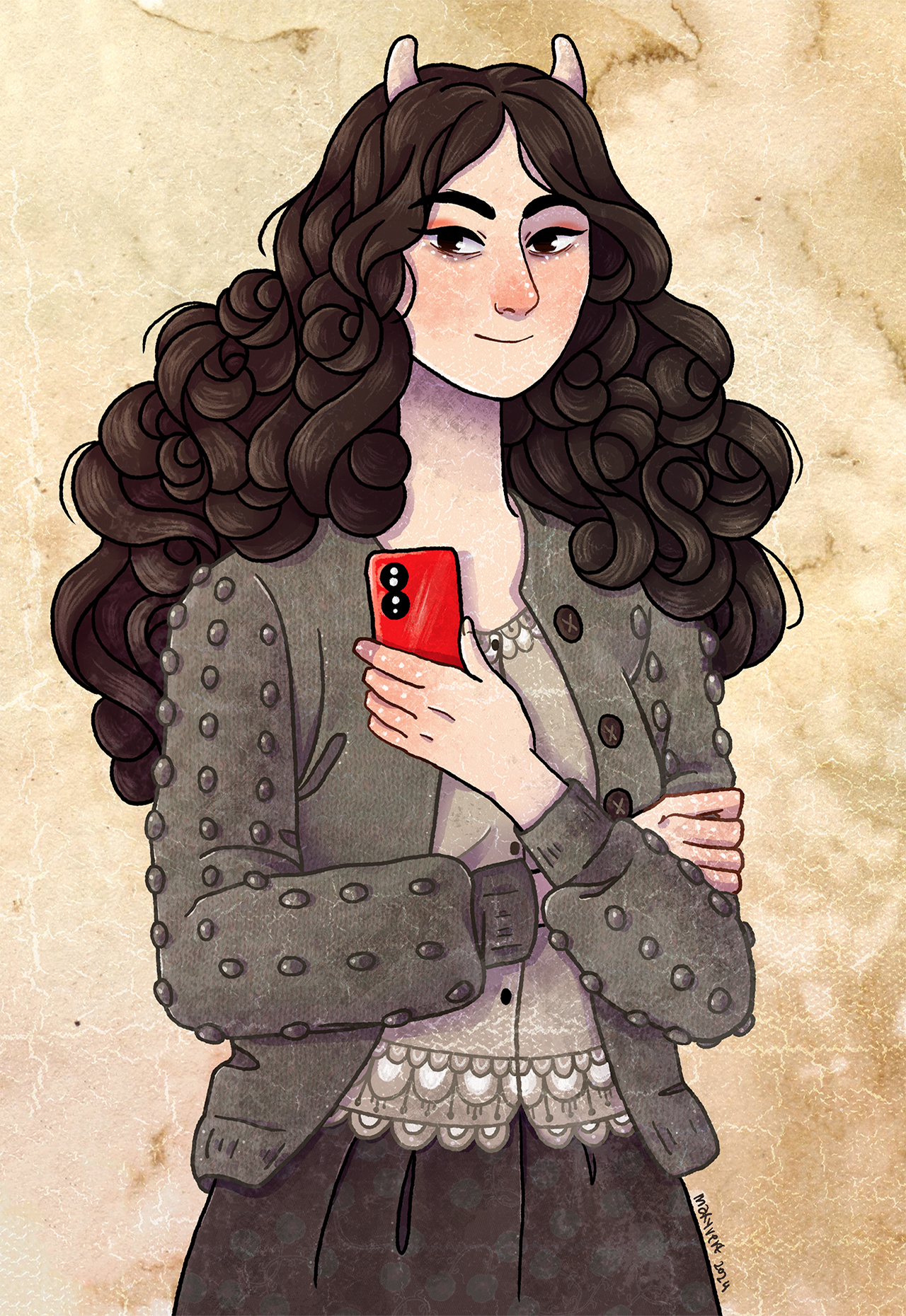
I was extremely honored to contribute to this year’s 13 Days Advent horror anthology. My story, “The Smile of the Mountain Demon,” is about a 21st century yamauba who entraps a YouTube influencer with Buddhist pretensions by using Airbnb and the language of New Age spirituality. The young man is looking for a scenic “spiritual retreat” to use as a source of content, and the yamauba is looking for a tasty snack.

This story is based on the medieval Adachigahara folktales in which a cunning yamauba entraps a less-than-devout Buddhist priest, as well as Minako Ohba’s beautiful and heartbreaking short story “The Smile of a Mountain Witch.”

If you’re interested, I’ve posted my story on AO3 (here), and you can download a free digital copy of the anthology via its page on Itchio here:

🌟 https://13daysadvent.itch.io/13days-demons-divinity

The illustration that accompanies my story was created by the brilliant dark fantasy artist Maxyvert, who posts strange and ethereal paintings on Tumblr (here), on Instagram (here), and on Twitter (here). This artist takes commissions for both digital and physical watercolor portraits (here), and it was an amazing experience to work with them.

Crow Country

Crow Country is a retro-styled 32-bit survival horror game that takes about four hours to play. What I love about Crow Country is its Story Mode, which removes all enemies and allows you to enjoy the game as an atmospheric adventure in an abandoned amusement park.

The year is 1990, and you (ostensibly) play as a police detective named Mara Forest. Mara is investigating the disappearance of Edward Crow, the owner of a small amusement park called Crow Country. Crow Country shut down and closed to the public two years ago after a girl named Elaine Marshall was severely injured in an accident.

Although Elaine’s family sued Edward Crow for the hospital fees, he never responded to court summons, and now the park sits boarded up and abandoned. Mara has reason to believe that Crow has holed up on the property, so she breaks in and begins searching for clues pertaining to his whereabouts.

Unfortunately for Mara, there are zombies about. Thankfully, she has a gun and a car trunk full of ammo. There’s also ample ammo scattered throughout the park, as well as various types of guns (and grenades) for Mara to pick up and experiment with. I’ve heard that the zombies aren’t particularly aggressive, and that shooting them isn’t particularly difficult, but I wouldn’t know. I didn’t bother with combat, and I have no regrets.

Even in Story Mode, Crow Country is a dense game with a lot to do. The map isn’t actually that big, but every “room” has multiple points of interaction. Most of this interaction provides atmosphere and flavor text, but Mara also needs to solve environmental puzzles in order to find the tools she needs to progress deeper into the park.

Mara can collect bits and pieces of brochures that she assembles into a map that proves to be extremely useful, as locked doors and unsolved puzzles are clearly marked. Although I did have to look up one or two solutions for optional challenge puzzles, I was never lost or confused about what I needed to do next. Unlike many puzzle-based adventure games, Crow Country is entirely possible to play without a guide.

In terms of its PlayStation-era retro graphics, Crow Country looks exactly like Final Fantasy VII. All of the character models are composed of charmingly blocky polygons, and the environments are pre-rendered and gradient shaded. Points of interaction are easy to distinguish, and you can rotate the camera a full 360 degrees. It’s a joy to move through this environment, especially once you begin to open Dark Souls style shortcuts.

Crow Country isn’t a cozy horror game; there’s no learning or friendship or beautiful autumn leaves. That being said, the horror elements are very mild, especially in Story Mode. Despite the atmospheric creepiness of its setting, Crow Country is less of a horror story about zombies and more of a speculative fiction story about how humans process the reality of climate change – or rather, how we will do anything to avoid processing this reality. The game’s conclusion is fantastic, as is the foreshadowing leading to its final reveals.

I wasn’t expecting Crow Country to be so fun to play, or for its environment to be so creatively designed, or for its story to hit so hard. I have zero patience for “intentionally inaccessible” retro game nonsense at this point in my life, but Crow Country wants to be experienced. Since it’s so short and accessible, I’d recommend the game to anyone who’s interested in the premise, even if you’re not typically a fan of survival horror.

Necromancer Zelda

Echoes of Wisdom is growing on me, and I especially love how Zelda fights by rapid-summoning monsters to overwhelm her enemies. I suppose Zelda is technically creating “echoes” instead of resurrecting her defeated foes, but she still reminds me of the Tears of the Kingdom trailer in which Ganondorf triggers the Blood Moon, summons a bunch of monsters, and tells them to “sweep over Hyrule.” Necromancy seems like a very fun gig if you can get it.

This comic was drawn by the horrifically talented Frankiesbugs, whose cute and creepy illustrations and comics can be found on Tumblr (here), on Instagram (here), on Cara (here), and on Redbubble (here).

Best Horror Comics on How to Love Comics

I had the immense honor of being able to contribute to a list of “The 45 Best Horror Comics You Should Read” on the website How To Love Comics. Here’s how I pitched the eight titles I recommended…

Betwixt: A Manga Horror Anthology, edited by Fawn Lau and Mayuko Hirao
A diverse collection of big-name creators showcasing manga-style stories that focus on urban legends and folk horror.

Bloodborne: The Healing Thirst, by Ales Kot and Piotr Kowalski
A stand-alone story that captures the oppressive gothic atmosphere of Bloodborne while being accessible to readers with no knowledge of the game.

The Crossroads at Midnight, by Abby Howard
A single-artist collection of queer short stories with distinctive monochromatic art and intensely disturbing imagery. 

The Hills of Estrella Roja, by Ashley Robin Franklin
A lushly illustrated graphic novel about a college student on the hunt for cryptids in the beautiful but eerie Texas desert.

Loving, Ohio, by Matthew Erman and Sam Beck
A suburban gothic horror story about a small town quietly controlled by an all-too-realistic cult. 

Not Drunk Enough, by Tess Stone
A colorful and stylish horror comedy about being trapped in a mad science corporation after dark.

PTSD Radio, by Masaaki Nakayama
A quiet but intensely creepy collection of Japanese urban legends loosely connected by an overarching narrative.

The Shadow over Innsmouth, by Gou Tanabe
A painstakingly faithful Lovecraft adaptation with meticulously drafted art and a well-researched translation. 

You can check out the fully annotated list (here). There are a lot of famous heavy hitters on this list, and it was a pleasure to be able to include a few lesser-known manga and indie graphic novels.