Evelyn: A Gothic Tale

Evelyn: A Gothic Tale
https://frankiesbugs.itch.io/evelyn-a-gothic-tale

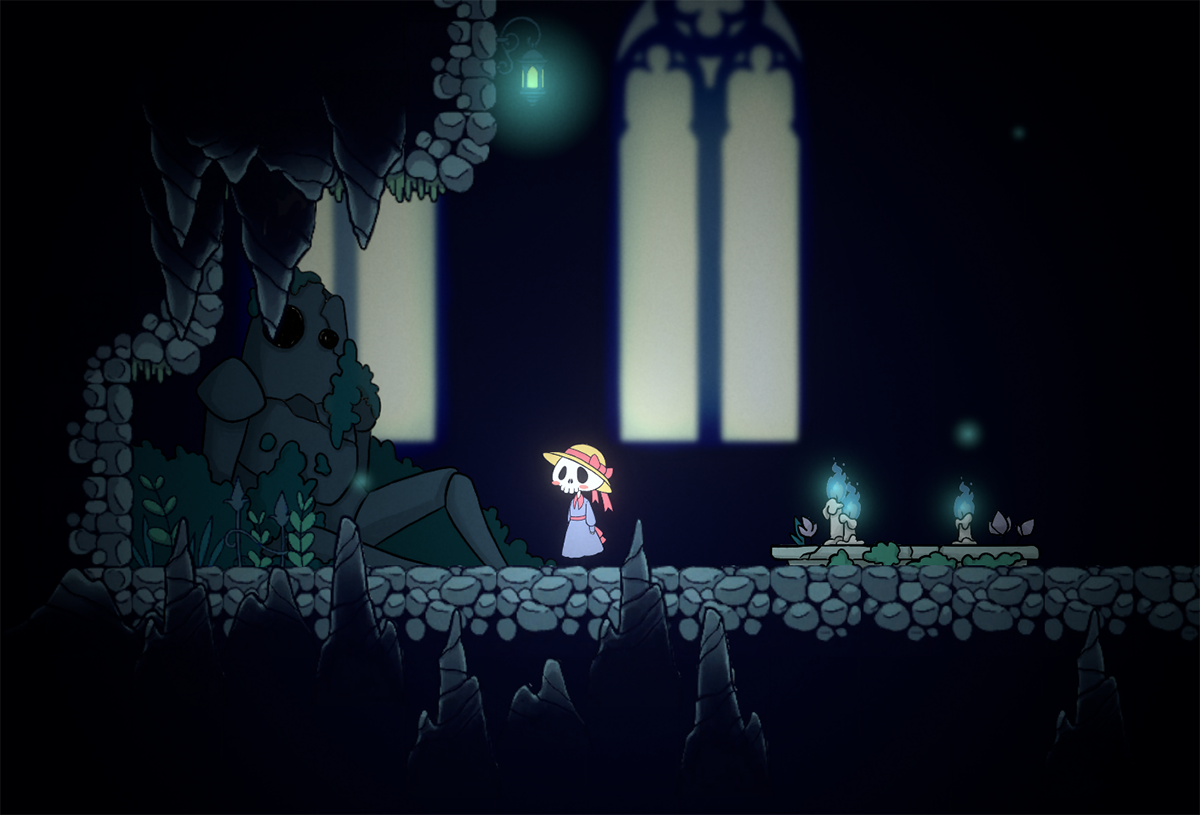
Evelyn: A Gothic Tale is an atmospheric 2D puzzle platformer currently being created as a solo project by the Italian artist and game developer Frankiesbugs. The demo for Evelyn, which is free to download from Itch.io, features full Xbox controller support and takes about ten to fifteen minutes to finish, though you’ll likely want to spend more time exploring.

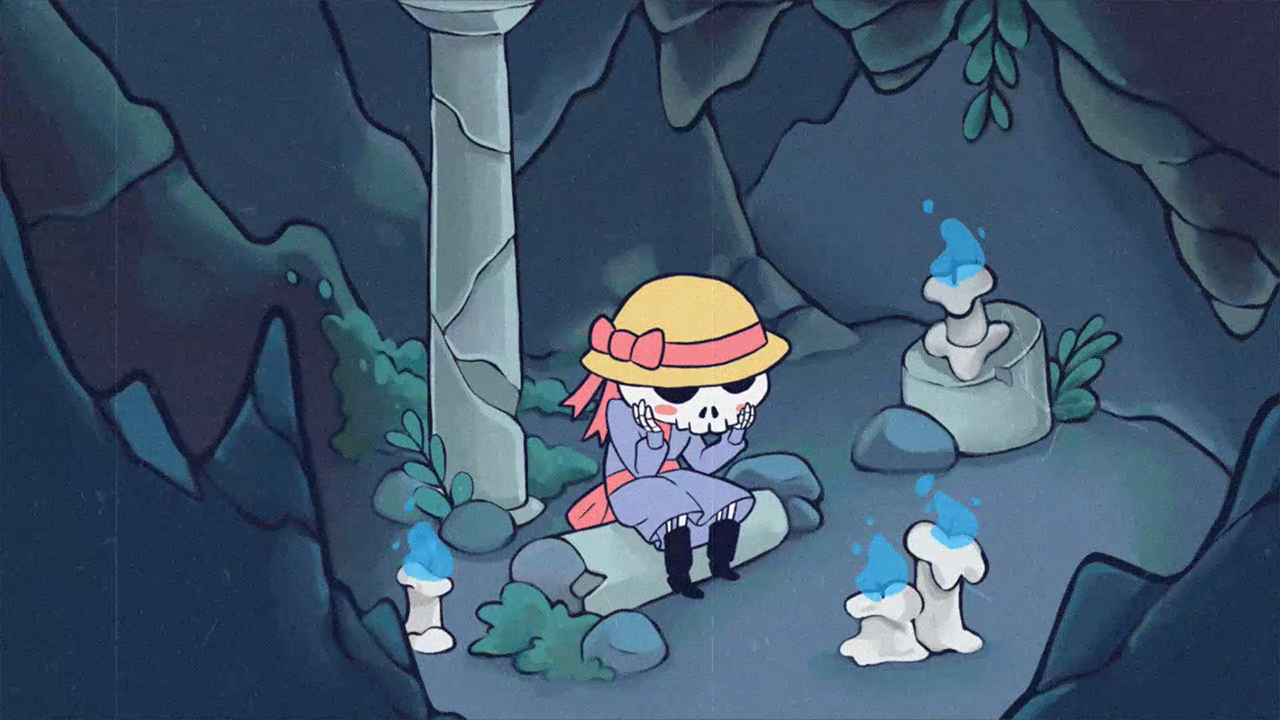
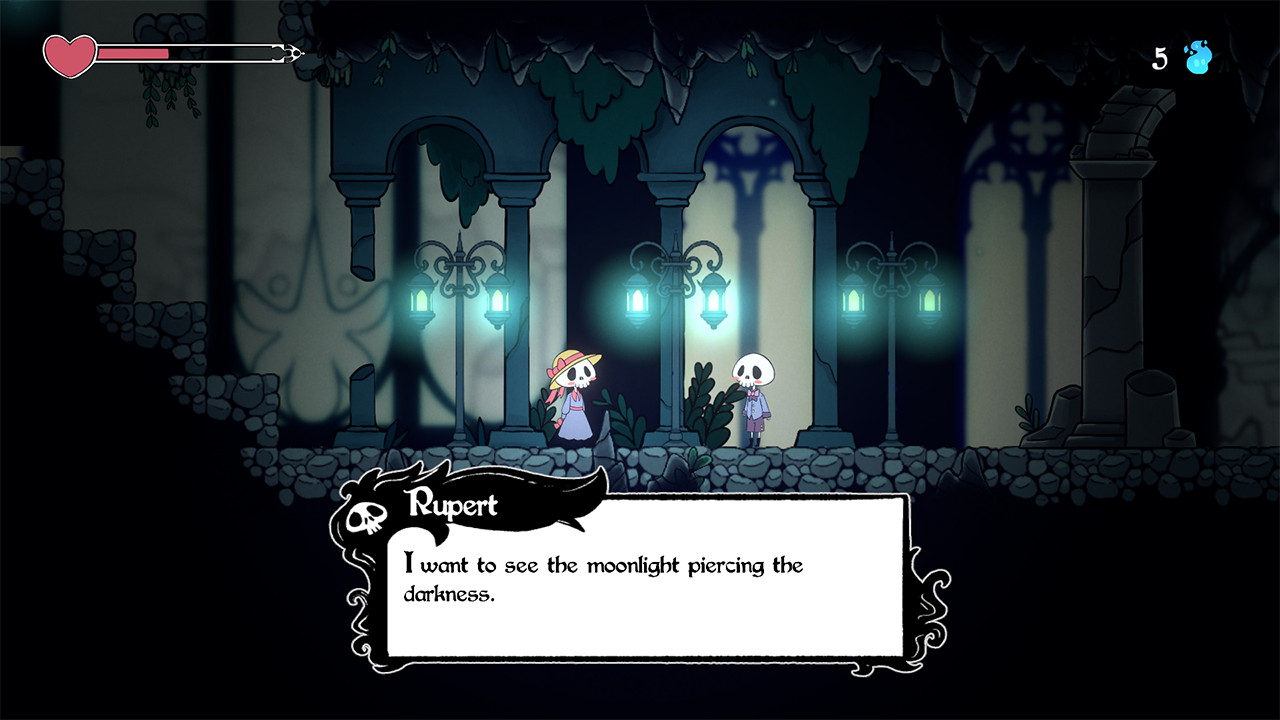
You play as the eponymous Evelyn, a small skeleton in a jaunty blue dress who’s become bored in her underworld crypt and wants to return to the world of the living. Getting there will be no easy task, however, as the way is obstructed by numerous gates and barriers. In addition, Evelyn will need to collect enough flames to light her way forward through the final stretch of darkness between worlds. If she manages to get her bony fingers on enough flames, she might even be able to secure an additional passage for her charmingly pathetic friend Rupert.

There’s no combat in Evelyn, but environmental hazards will hinder the player’s progress. In the demo, these hazards primarily consist of pits and spikes that Evelyn must jump over in classic 2D platformer style. The twist that Evelyn brings to this formula are its light-based puzzles, which involve obstructing or redirecting beams of light in order to trigger changes in the world and thereby grant Evelyn the keys she needs to pass through a series of grand stone gates.

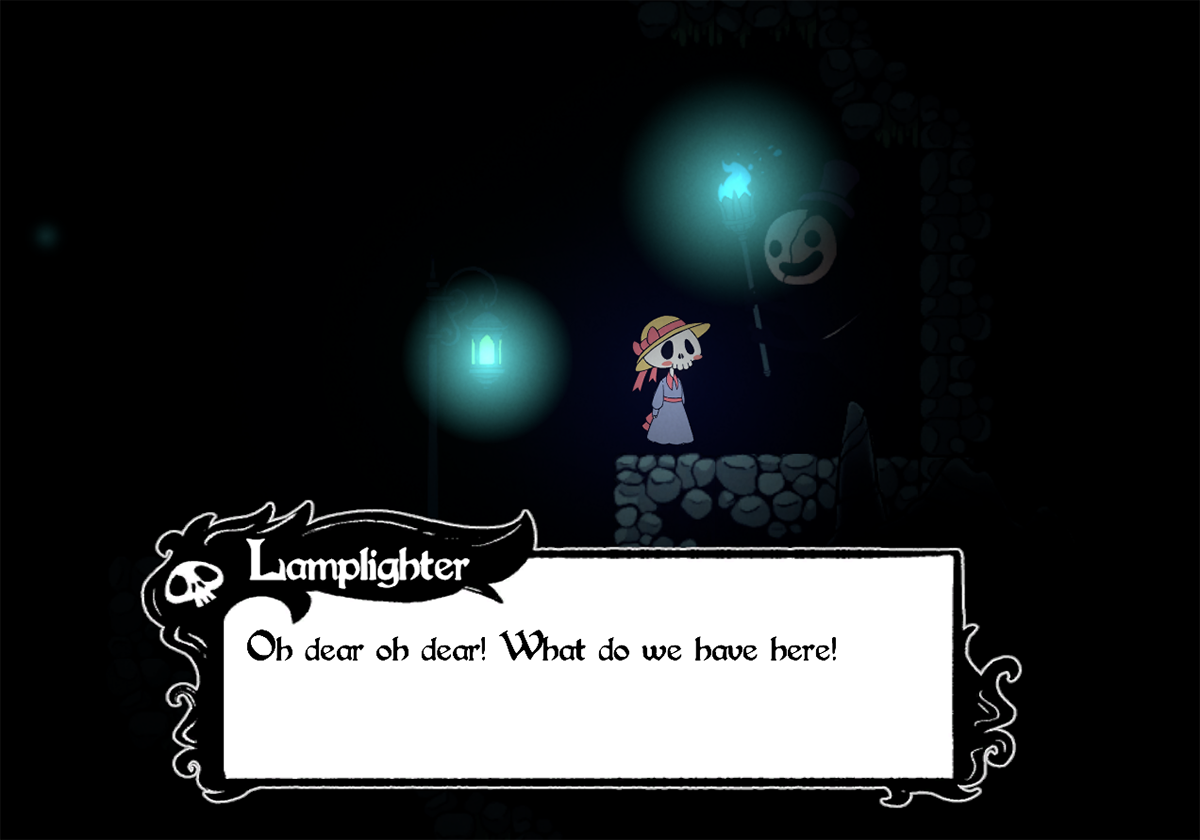
The game mechanics involving light also carry over to the platforming. While most of the map is rendered in a vibrantly colorful style that still manages to convey the atmosphere of an underground crypt, a few of the side paths are shrouded in actual darkness broken only by strategically placed lamps. In order to navigate these dark sections, the player must rely on the instincts developed in previous sections while paying close attention to the lamp placement. The interplay between light and dark sections is perfectly balanced. I was always excited to venture into the darkness of a shadowy side path, but I always felt relieved to return to the well-lit areas. 

Evelyn features full controller support, and I played with an Xbox controller with no problem at all. Evelyn’s movement speed is perfect in relation to the size of the map, as is her jump height. Though I suspect this game might be classified as “casual” in terms of difficulty, its gameplay is enhanced by a nice balance between freedom of movement and the small areas of friction impeding progress. Evelyn’s health bar contributes an additional element of challenge, as you can only fall into so many pits or spike traps before you have to start over. I will admit that I died a few times while exploring, but experience and familiarity with the map compressed the time I needed to navigate back to the point I died, resulting in a pleasantly smooth learning curve.

When I think about what makes a good Metroidvania, it’s not just the level design and gameplay, but also the sense of exploration and discovery that (more than anything, I think) distinguishes the genre from an action platformer like the Super Mario games. The hand-drawn characters and environment of Evelyn inspire a sense of moving through an actual world, especially in the details of the background art that caused me to wonder how a particular creature might have come to be tucked away in a particular dark corner.

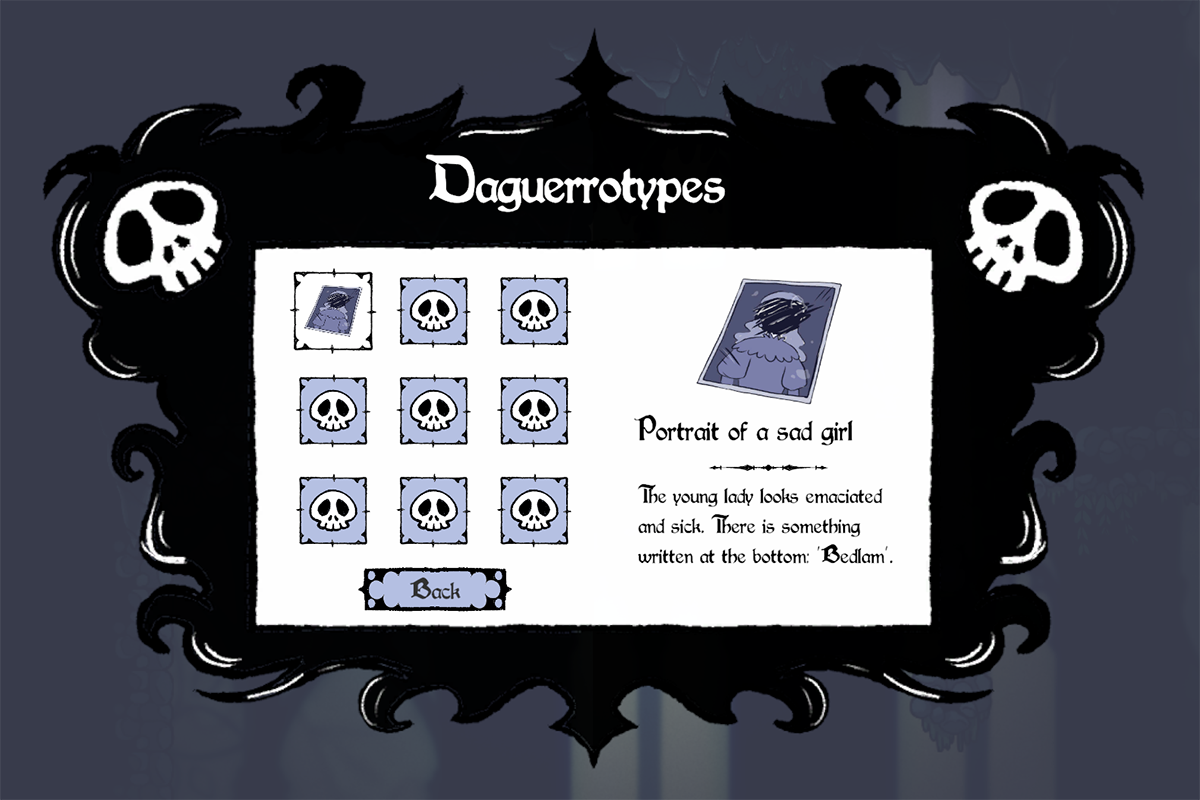
The icing on the cake of any standout Metroidvania is the writing. Balance is important in this aspect of game design, as the text needs to walk a fine line between being too sparse and too voluble while simultaneously offering intriguing information without indulging in exposition. The writing in Evelyn is fantastic, from the dialogue to the text on the collectible daguerreotypes, and each character has a distinct voice (and there’s one character in particular that really surprised me, bless his heart). Evelyn herself is a silent protagonist, but her in-game animations express a great deal of character, as does the narrative animation that opens the game in the style of a silent film from the 1920s.

I’m amazed by how well-polished this demo is, and I’m curious to uncover more about the story behind this crypt and its restless inhabitants, which seems just as disturbing as the character art is cute. Everything about this spooky little game works in concert to lure the player deeper into its underground world, and I’m looking forward to spending more time in the company of these strange skeleton children. For the time being, I’m cheering Evelyn on as she makes her way out into the world.

Kuro

Kuro
https://visualmemoryunit.itch.io/kuro

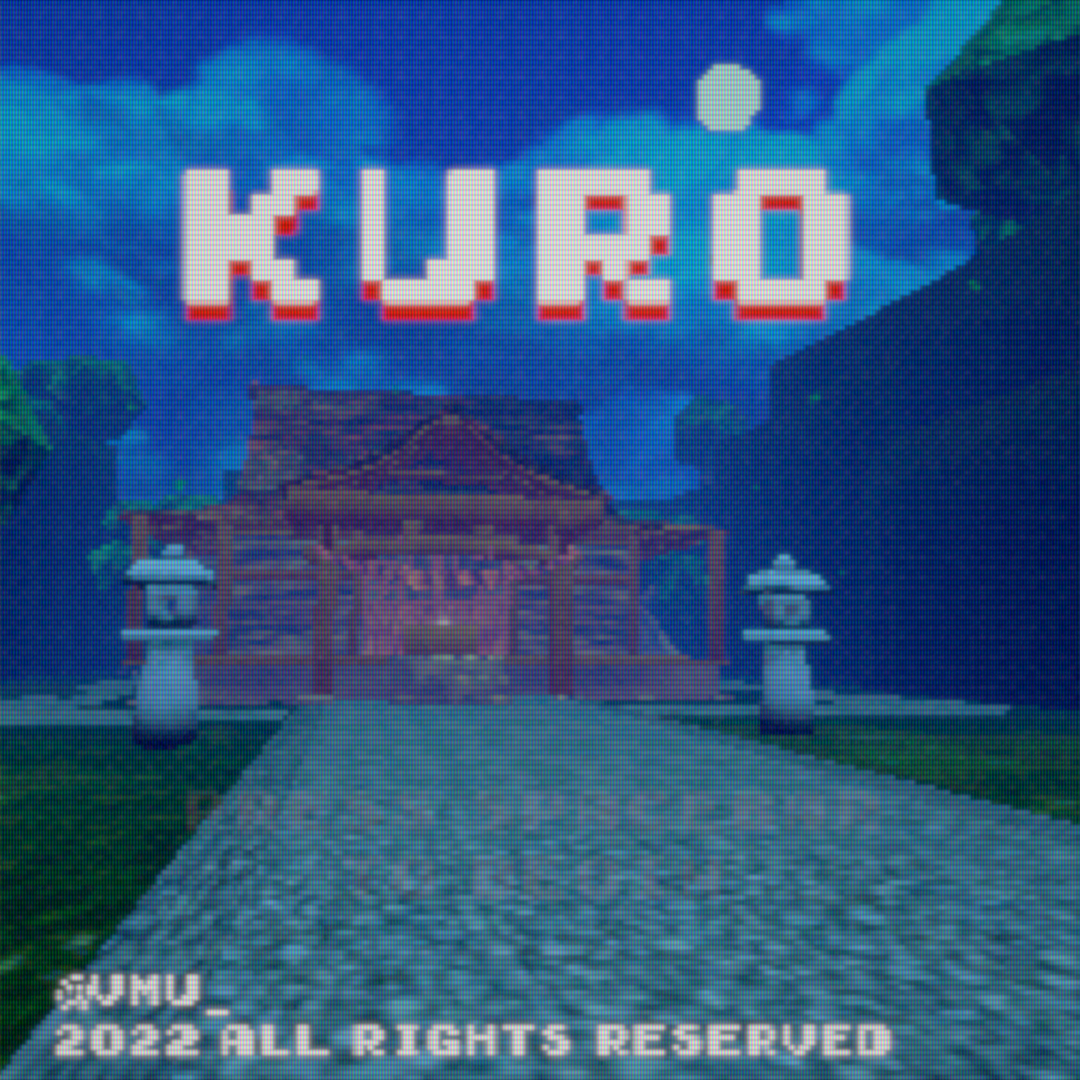
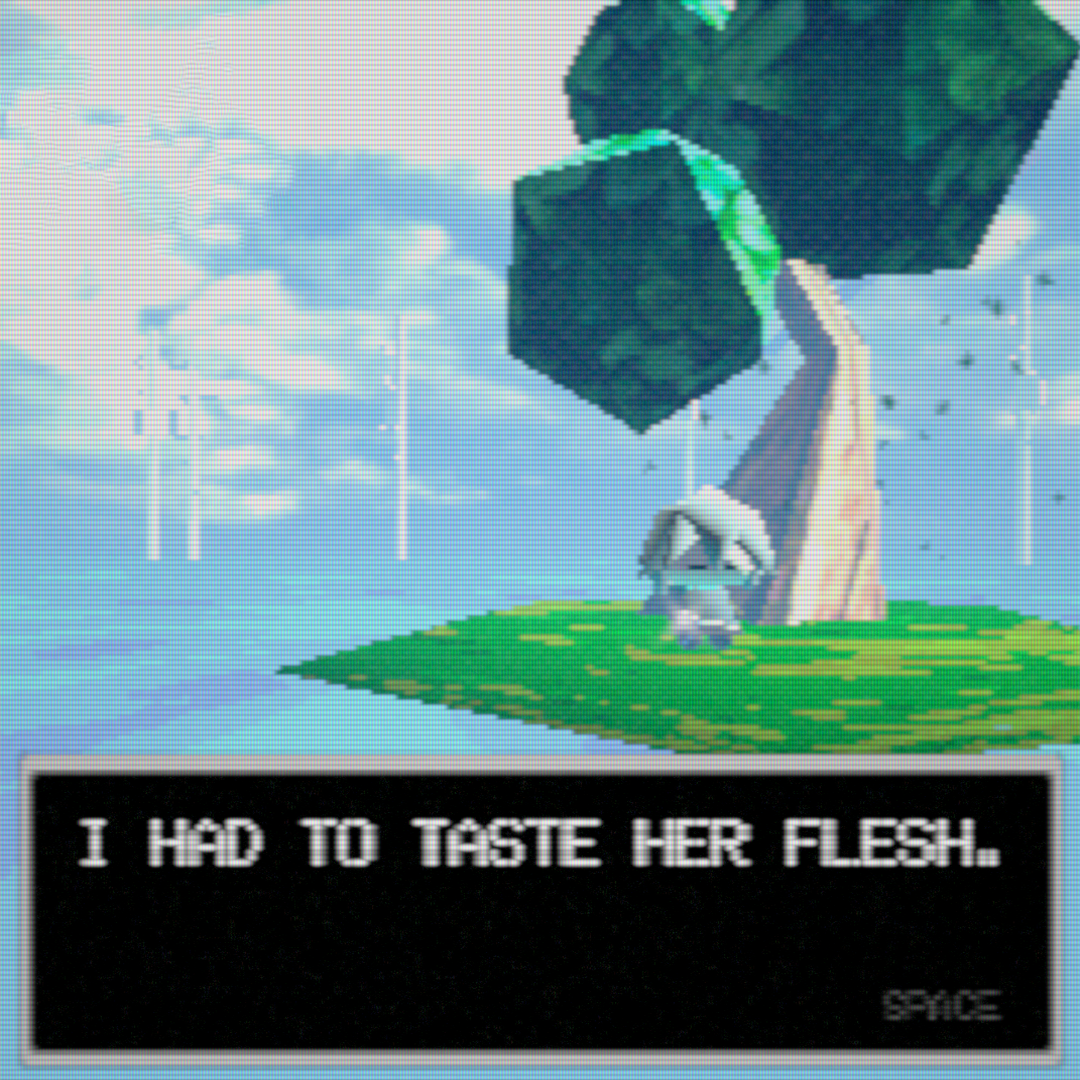
Kuro is a free-to-play homebrew PS1 gothic horror game that takes about twenty minutes to finish. There aren’t any jumpscares, but the story is as dark as the chunky retro polygons are cute.

You play as Kuro, a mysterious visitor to an abandoned Shinto shrine. The moonlit shrine is beautiful and peaceful on the outside, but its interior conceals an underground labyrinth haunted by the ghost of a brutally murdered young woman named Miu. As Kuro, your job is to find and reunite the parts of Miu’s corpse so that her spirit can move on.

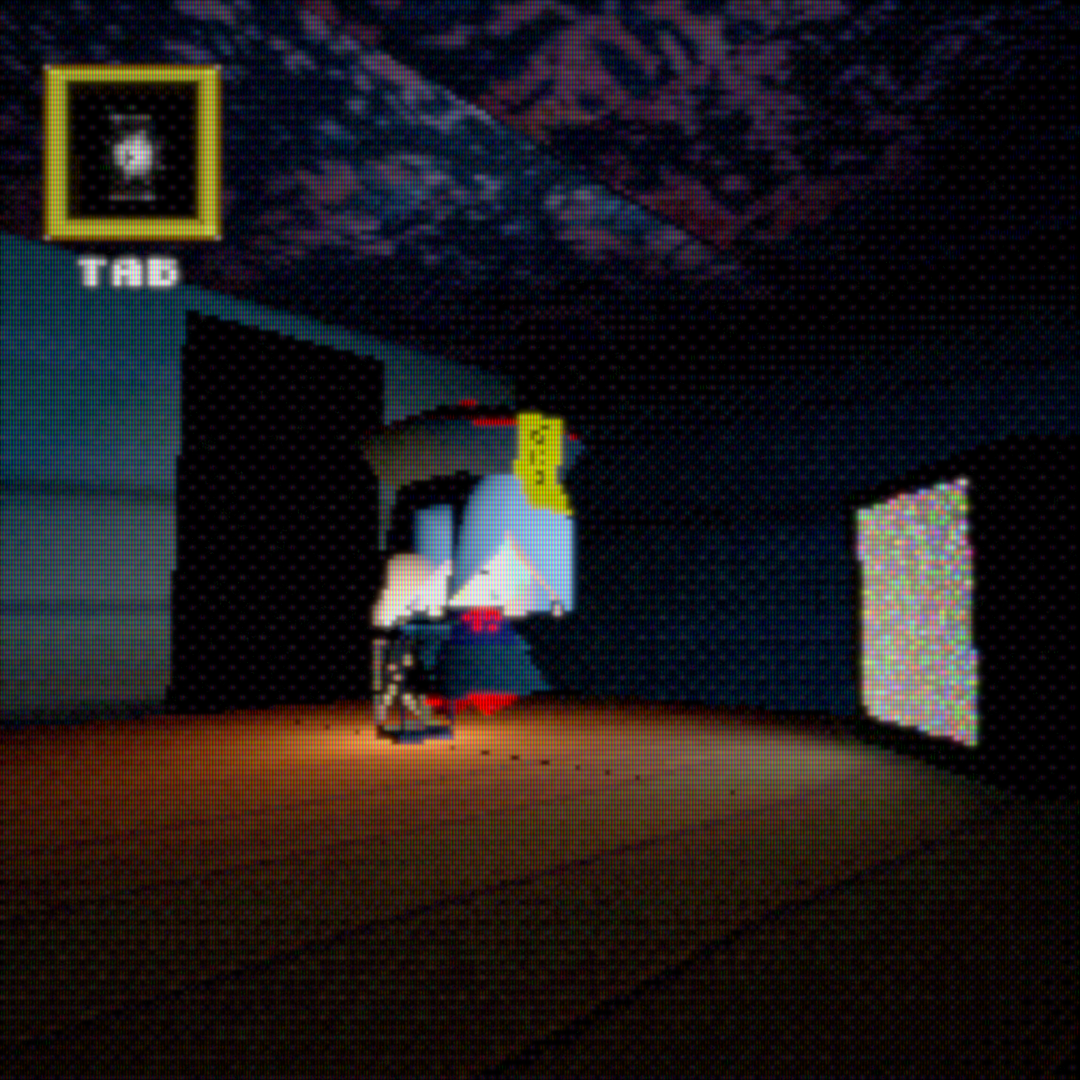
Along with Miu’s head and body, Kuro must acquire the means to open three locked doors. Though the game’s map isn’t overly large, Kuro moves slowly (with tank controls) across spaces presented to the player from dramatic angles. It’s unlikely that you’ll become lost, but the game does an excellent job of conveying the disorientation of wandering through a dark basement.

For me, the standout scene is when Kuro enters a locked room that’s completely empty except for an old television whose screen is filled with static. When Kuro interacts with the television, she’s transported to an otherworldly landscape where she meets the man who killed Miu. He explains what happened, but this isn’t the end of the story. Once Kuro returns to the shrine and begins to dig deeper, the player learns that murder is probably the most wholesome thing that happened here. 

I genuinely appreciate the developer’s commitment to including every gothic trope they could think of. One might argue that the writing is somewhat clumsy, and that the game’s twenty-minute playtime isn’t sufficient to allow ample space for its horrors, but I’m of the opinion that the writing is just as integral to the retro aesthetic as the graphics. I feel like there’s a tendency to remember games like Final Fantasy VII and Resident Evil 2 as “well-written,” but PS1-era games had a tendency to hit you with a cascade of revelations in the most basic and matter-of-fact prose. Kuro matches the tone of this style of video game writing perfectly.

I also love to see this kind of gothic story in a setting that isn’t European, and I’m fascinated by the idea that a Shinto shrine would have a basement. Perhaps a shrine constructed overseas (in British Columbia, for instance) might have an underground level, but this would be unthinkable in Japan, where shrine buildings are always elevated above the ground in the traditional Polynesian architectural style.

The reason for this is 100% practical in a wet and humid climate, where various types of unpleasant things (primarily mold, fungus, and insects) would quickly infest the ground level of a building. Also, the water table is generally so close to the surface that it would be difficult to prevent underground rooms from flooding. There’s also a spiritual component to the architecture, as Shinto belief systems tend to associate anything inside the earth with an otherworld of rot and impurity. This otherworld is a necessary space for the cycle of life, but it’s not a good place for humans to be under any circumstances. In terms of its spiritual utility, one of the purposes of a shrine is to demarcate the boundaries between worlds.

So a Shinto shrine would not have a basement. But if it did. The horrors of Kuro would definitely happen there.

I admire how Kuro explores the idea of transgressing an extremely powerful taboo. Between the lost-media stylization of the game’s retro graphics and the grotesque quality of its writing, the player definitely gets a sense of wandering through a place they’re not supposed to be. Kuro is a short and simple game, but it’s very well-observed and surprisingly effective.

Review of Pig Wife on Comics Beat

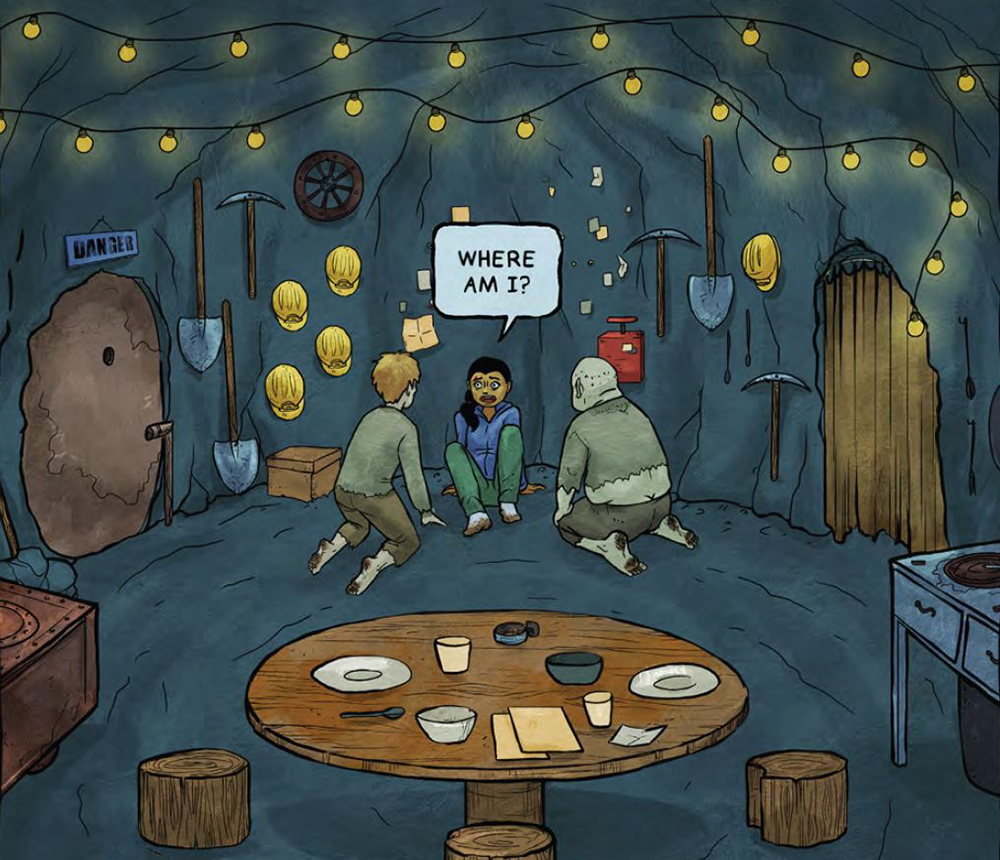
I recently had the immense pleasure of writing a review for Comics Beat about Pig Wife, a massive graphic novel drawn by Abbey Luck, a Hollywood animator who specializes in Adult Swim style bizarro art. Pig Wife is definitely Hollywood, and it’s definitely got a Gen-X style “alternative” edge to it. Neither of these things is to my taste, usually, but I love Pig Wife for what it is: namely, a gothic “weird girl” coming-of-age story set in a not-quite abandoned labyrinth of mine tunnels in rural Pennsyltucky.

I say in my review that it’s easy to read this 500-page book in one sitting, and I mean it. Pig Wife tells an incredibly entertaining story; but, appropriately enough, there’s a lot going on below the surface. Here’s an excerpt from my review:

By forgoing the nuances of character, Pig Wife can focus entirely on plot, and the plot is a well-oiled machine that grabs the reader and aggressively drags them down into the tunnels. Moreover, by virtue of the broad strokes of its characterization, Pig Wife is also able to convey the allegorical elements of its scenario.

The coming-of-age story in which a young hero embarks on a journey has a universal appeal, but teenage girls (and slightly older girls, if they’re trans) often undergo a separate ascent from innocence to experience that I think of as “climbing out of the pit.” By “the pit,” I mean the everpresent tarpit of internalized sexism and misogyny, and the mine tunnels of Pig Wife are as good of a visualization of this pit as any.

You can read the full review on Comics Beat here:
https://www.comicsbeat.com/graphic-novel-review-pig-wife/

Review of Witchcraft on Comics Beat

My most recent review for Comics Beat is about Witchcraft, a graphic novel by Sole Otero, an internationally famous Argentinian comic artist whose style has developed in a cool and unique way during the past decade. Witchcraft is a massive book, but it’s an incredible page turner. The writing is brilliant, and the art is both extremely stylized and exactly what it needs to be to tell the story, a gothic cautionary tale that jumps between the present day and various periods in the history of Buenos Aires. And the story is indeed about witches and magic and power. This book is so goddamn good, and I feel very honored to have been able to write about it. Here’s an excerpt:

Witchcraft is primarily set in Buenos Aires, and the narrative jumps between historical periods when the witches were active and the present day, when the gender politics of their activities are far more complicated. It would be easy to see the witches as feminist saviors as they run women’s clinics and shelter members of the local indigenous population, but their benevolence is called into question by the nature of their magic, which requires the victimization of men and the silent complicity of their fellow women. Instead of a feminist message, what Witchcraft offers is a fast-paced and high-stakes story about cycles of abuse and the human cost of the sacrifices necessary for the marginalized to survive.

You can read the full review on Comics Beat here:
https://www.comicsbeat.com/graphic-novel-review-witchcraft/

Symbiosis

Symbiosis
https://spicaze.itch.io/symbiosis

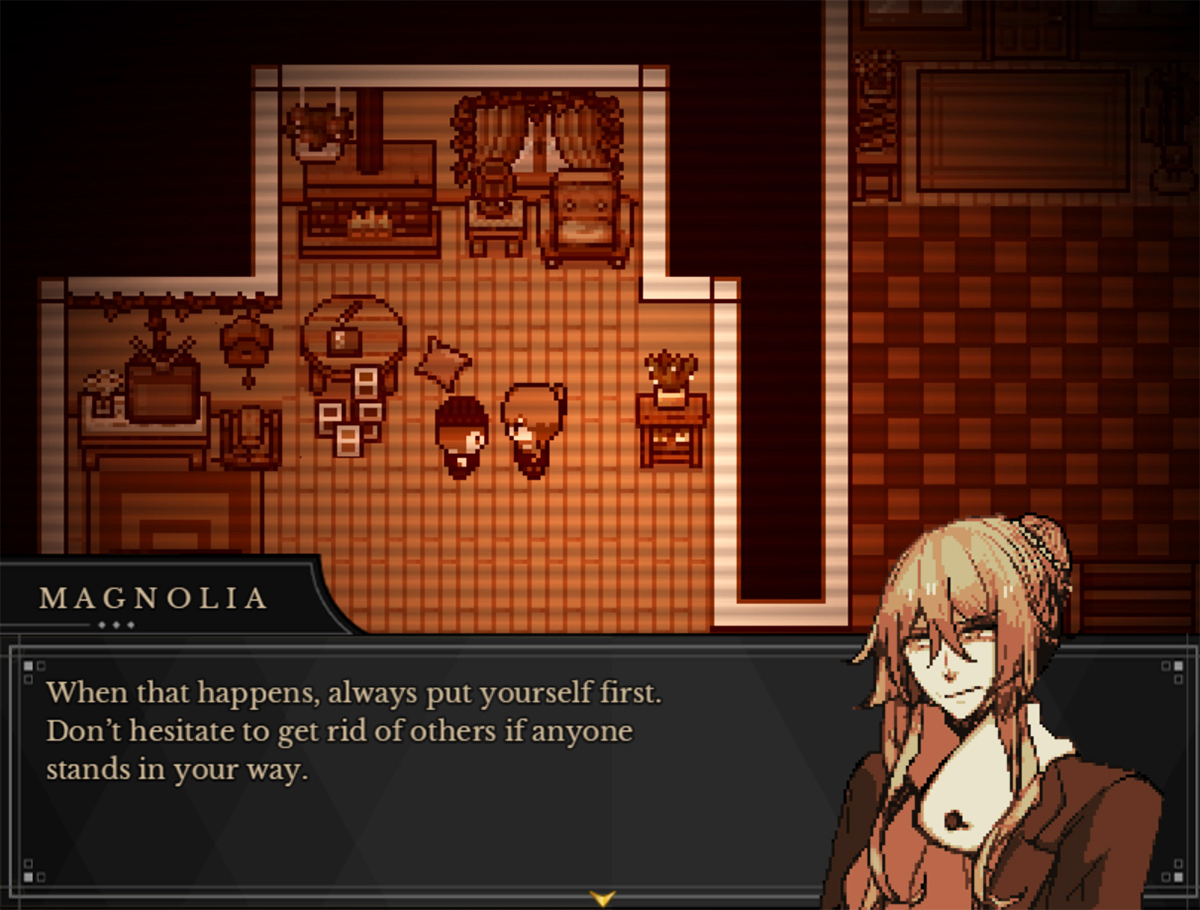
Symbiosis is a free-to-play RPG Maker horror game about a murderous mad scientist living in a house in the woods with an adorable child. The story has two endings, and it takes about 25 minutes to play through the game once.

You play as Magnolia, a geneticist who left her university post after a mysterious fire broke out in her lab when her research came under public scrutiny. She now lives in isolation with Mint, a curious and precociously intelligent young boy whom she’s raising as her son. According to local rumors, Magnolia is a witch. It doesn’t help that hikers have a tendency to disappear in the forest surrounding her property.

The game begins as Magnolia carves up the corpse of someone she caught sneaking into her house. She’s interrupted by Mint, who can’t sleep and wants a bedtime story. Unfortunately, there are three more intruders in the house, and Mint won’t stay in his room. Your job as the player is to turn the remaining intruders into corpses – for science! – while ensuring that Mint remains out of harm’s way. 

Magnolia’s house isn’t too terribly large, but it’s big enough to have all sorts of nooks and crannies to poke around, as well as various journals and research notes to find. The player can use these clues to figure out who Magnolia is and where Mint came from, although you’ll have to make your own decision regarding Magnolia’s feelings toward Mint and what the fate of the pair will be. The game’s creator has posted a guide for the two endings (here), and this short devlog also contains their thoughts on the story and characters.

What sets Symbiosis apart from the crowd of RPG Maker horror games is the creator’s gleeful willingness to allow Magnolia to be messy and problematic. She initially seems to be a complete sociopath, and her bad behavior is a joy to watch. As you witness her interactions with Mint unfold, however, her character becomes more complicated. Why Magnolia feels affection for Mint is open to interpretation, but I think it’s fair to say that her attachment is genuine.

The way I interpret this relationship is that it’s an analogy for the process of artistic creation (or scientific discovery, as the case may be). In order to create something meaningful, an artist has to be unpleasant, selfish, and more than a little antisocial. Gradually the art comes to take on a life of its own, and it’s up to the artist to decide whether to let it go or to keep it firmly in the orbit of their own dysfunctional personality.

Lest you think I’m spoiling the story, fear not – there’s all sorts of nasty business in Magnolia’s past for the player to discover. This woman is a legitimately horrible person, and her crimes are fantastic fun.

Symbiosis tells a short but grisly story through simple narrative adventure gameplay intercut with stylishly illustrated cutscenes, and I enjoyed it enough to go back and see both endings. I definitely recommend this game to fans of gothic horror, demonic women, and questionable scientific ethics.

Review of The Harrowing Game on Comics Beat

I consider myself extremely fortunate to have been an early reader of Antoine Revoy’s newest graphic novel, The Harrowing Game. I love this book, which is strongly inspired by Junji Ito but still very much its own thing. I’m also lucky to have gotten an opportunity to write a review for Comics Beat. Here’s an excerpt…

The Harrowing Game will delight fans of Junji Ito and H.P. Lovecraft, to be sure, and connoisseurs of horror will appreciate Revoy’s intriguing interpretations of familiar tropes. Revoy twists gothic stories into broken reflections of cultural anxieties, and the storytelling is no less dramatic for the subtlety of its social commentary. If nothing else, it’s a pleasure to get lost in the details of Revoy’s spectacular illustrations. Whether you’ll be able to find your way out untouched and undisturbed is another story.

You can read the full review on Comics Beat here:
https://www.comicsbeat.com/graphic-novel-review-the-harrowing-game/

Whispering Willows

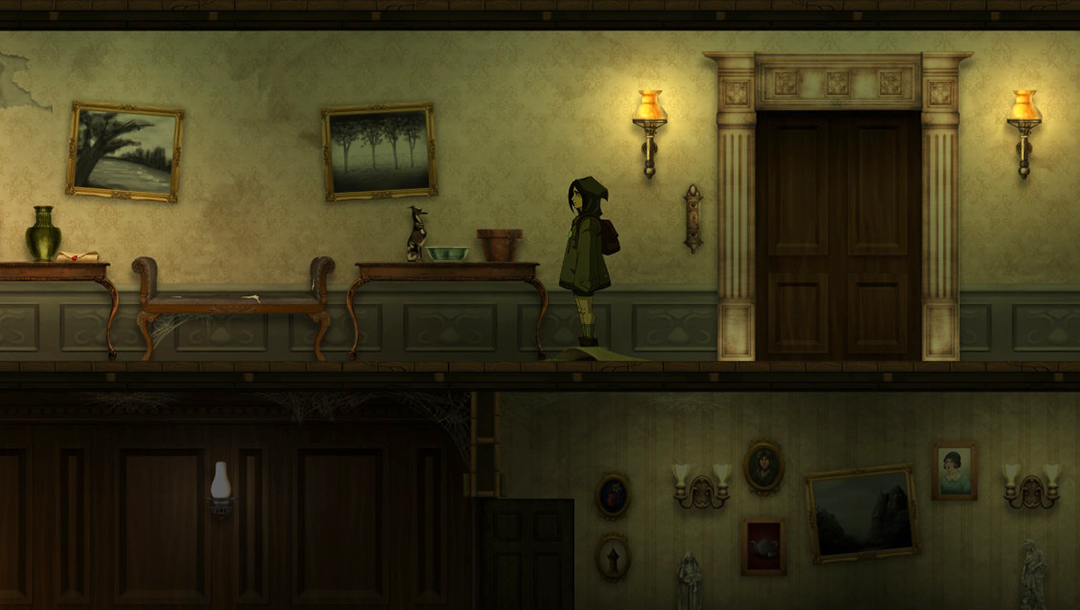
Whispering Willows (on Steam here) is a 2D adventure game set in a haunted mansion. There’s no combat, and the game takes about three hours to finish. It’s a small indie game made in 2014, and it’s not perfect. Still, I enjoyed the time I spent in Willows Mansion, and I’d recommend giving this game a shot if you’re into spooky gothic stories.

You play as Elena Elkhorn, a teenage girl whose father works as the groundskeeper at the derelict and abandoned Willows Mansion. Elena’s father doesn’t return one night, and she has a bad feeling about the mansion. Hoping to bring her father home, Elena sneaks onto the property and immediately falls headlong into an underground crypt. There she meets the ghost of her ancestor, who teaches her how to use the power of her magical pendant to leave her body to go spiritwalking. In a cursed mansion filled with phantoms, this is an extremely useful ability to have.  

Before I jump into the many things I love about this game, let me be upfront about its flaws:

– There’s not much actual gameplay.
– The hand-drawn cutscene art is unpolished.
– The writing is good but a bit uneven.
– The background music is limited.
– Your character walks very slowly.
– There’s no map to help you navigate.

Essentially, this is a small indie game that indeed looks and feels like a small indie game. I’m not complaining about the rough edges of Whispering Willows; I just want to make it clear that it’s a game made ten years ago on a tiny budget earned from a Kickstarter campaign. Still, I found its simplicity and amateurish aspects charming, and it has many strong points.

To begin with, the map is surprisingly large, and there’s a lot of space to navigate. You’ll explore the mansion’s crypt, its garden, and various outbuildings; but mainly you’re going to be walking around the house itself. The mansion is impossibly large and includes all the standard gothic flourishes: locked doors, grisly kitchens, moldy bathrooms, crooked paintings, peeling wallpaper, taxidermied hunting trophies, creepy dolls, and all the secret passageways you could ever want.

Of course there are all manner of notes lying around, and these notes collectively tell a suitably gothic story about the very wealthy but very evil man who built the mansion. This story never quite comes together in terms of plot or themes, and the character motivations are ridiculous. Still, all the individual bits and pieces are gothic catnip, from a lover kept in a secret room to a murdered best friend to a servant driven mad by what he’s seen.

This all takes place in California during the Wild West days, meaning that the land occupied by the mansion had to be taken from someone. It turns out that it was forcibly wrested from Elena’s own ancestors. Alongside his more intimate crimes, then, the mansion’s owner became the mayor of a frontier town by means of enacting war and genocide on First Nations people.

We tend to think of gothic mansions as being located in Europe, or perhaps New England. There are definitely nineteenth-century mansions in California, though (like the Carson Mansion), and they’re built on land soaked in blood.

Importantly, the First Nations people in Whispering Willows aren’t all ghosts. Elena and her father are very much alive, and they’re not tempted by the faded pseudo-grandeur of the former colonists. At the end of the game, it’s extremely satisfying to see Elena essentially say “fuck all this” as she walks away from the mansion with her father.  

This is an interesting perspective on classic gothic story tropes that I love to see. And honestly, Whispering Willows isn’t such a bad game. The puzzles are easy, but the lack of difficulty is a selling point for me. Also, the gameplay mechanic of Elena spiritwalking to interact with the numinous aspects of the environment is used in clever ways, and it’s a lot of fun.  

Aside from Elena’s slow walking speed, my only real complaint is that this game would benefit immensely from a map. Even though navigation isn’t particularly complicated, I got lost a few times and had to resort to a walkthrough (this one here) a few times, which wouldn’t have been necessary if the player could just pull up a subscreen.

Whispering Willows definitely feels like an indie game, but it’s got a delightfully grisly story and an excellent sense of atmosphere, and it’s worth checking out if you’re interested in Wild West Gothic from an indigenous perspective.

As a side note, this was apparently the game that launched Akupara Games, a publisher that specializes in quirky indie games with a strong sense of style and setting. Two of my favorite titles they’ve helped get off the ground are Rain World and Mutazione, and it’s cool to know that this was where they started.  
The Sleeping Princess

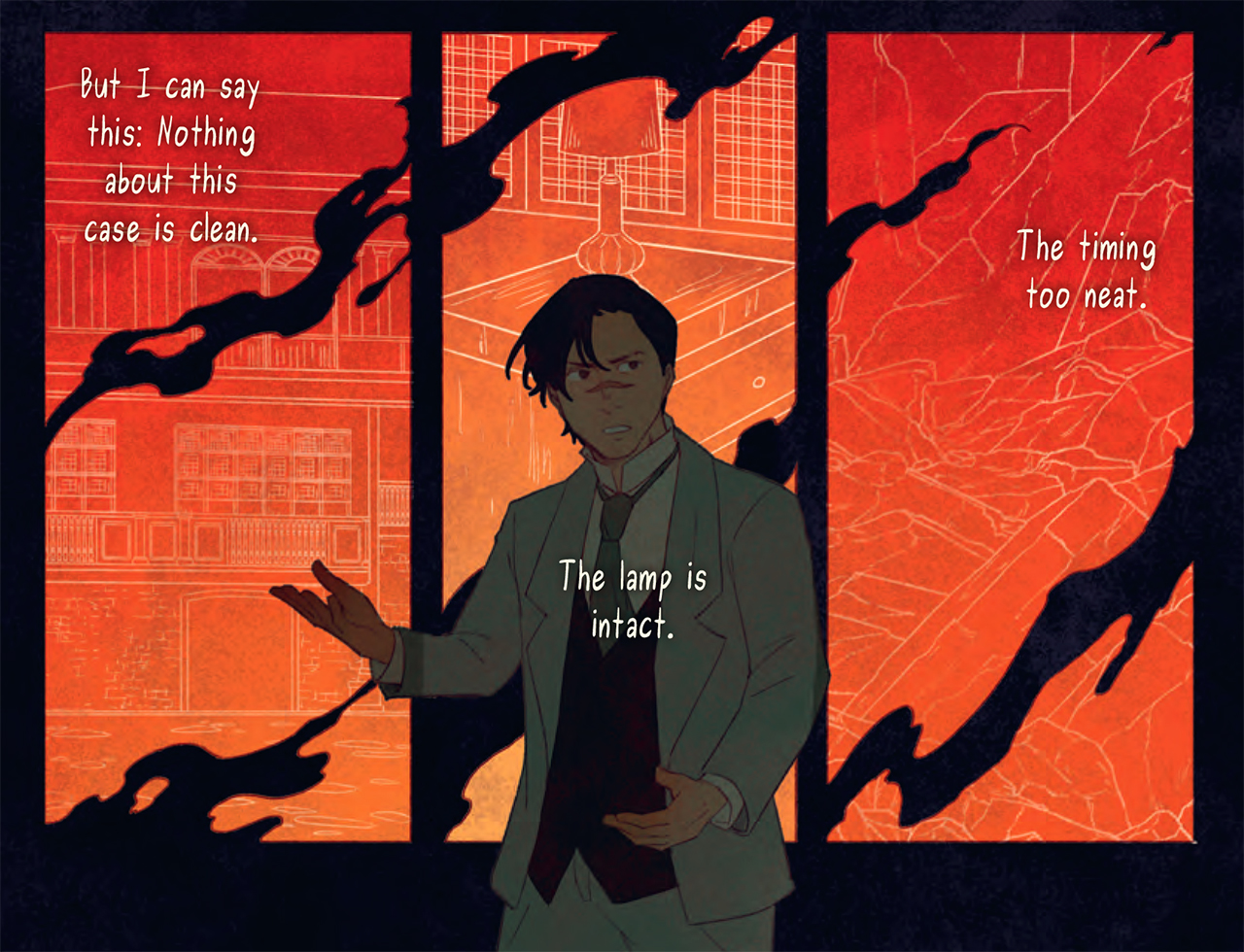
There is a legend in Hyrule that a sleeping princess lies behind the door of a locked room deep under the ruins of the North Castle. When the princess rises, so too will the ancient powers sealed within her dreams. Impa knows the legend is true, and she fears the fate that will befall the kingdom should the first Zelda wake. Yet when a shadow rises on the borders of Hyrule after the birth of a new princess, Impa must make a terrible choice.

I had the honor of contributing a story called “The Sleeping Princess” to Blood Moon Rising: A Zelda Horror Zine. I was interested in exploring the background of Princess Zelda in the original 1986 game, and I thought it might be fun to see her story through the eyes of Impa, who knew about the undead princess who was the first of Zelda’s line. In other words, I’m connecting some of the more disturbing threads between The Legend of Zelda and Zelda II: The Adventure of Link.

“The Sleeping Princess” is a story about maternal love, political sacrifice, and the dark secrets hidden within the labyrinthine dungeons of Hyrule. I was strongly inspired by H.P. Lovecraft’s novel At the Mountains of Madness, which dwells in the geometric terror of monumental architecture built by strange hands, and I did my best to create a sense of ruined grandeur similar to that of Dark Souls and Ico: Castle in the Mist.

For the story’s illustrations, I had the incredible pleasure of working with the devilishly talented Pumpkinsouppe, whose dark arts brought this ruined world to life.

You can find “The Sleeping Princess” on AO3 here:
https://archiveofourown.org/works/62492182

Leftover sales of the zine are open until February 24 on BigCartel (here).

An Unfound Door, Chapter 16

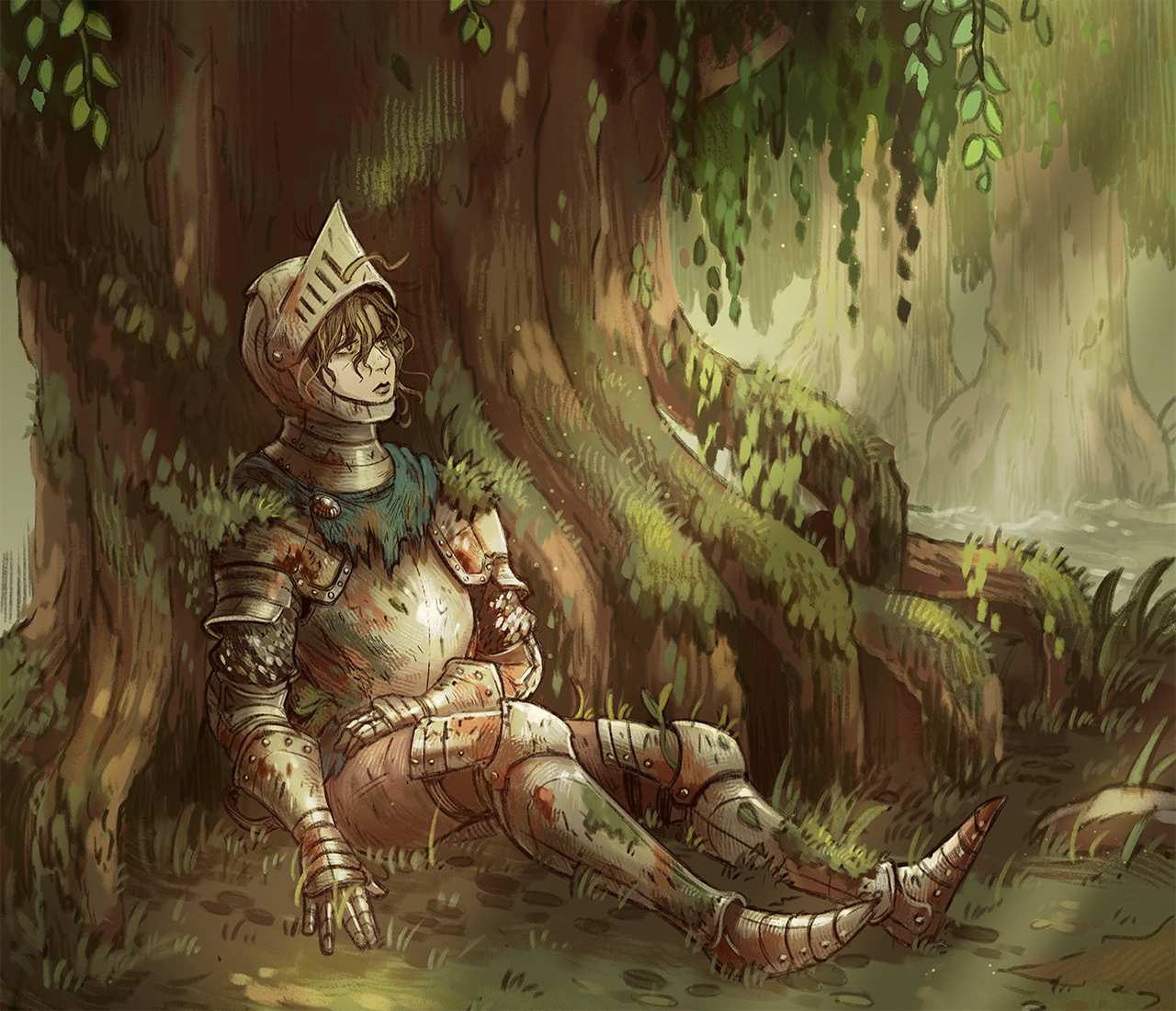
Fhiad reflects on the uncanny emptiness of Erdbhein Castle as he leads Agnes to the queen’s ruined chambers. While describing Erdbhein before the war, Fhiad tells Agnes about his three sisters, all of whom were highly competent administrators. Fhiad confesses that he dreamed of becoming a mage so he could return to Erdbhein to build monumental stone structures aboveground to rival the stonework in the long-abandoned city underneath the castle.

.

This chapter is about Fhiad processing his grief. It would be the perfect opportunity for an exposition dump, but Fhiad isn’t in a good mental state to deliver a lecture at the moment. Like Agnes, he feels like a failure, and he misses his family.

While Fhiad talks about the past, I hope the reader gets a sense of this character belonging to a much larger story. Unfortunately, Fhiad is never going to be able to live that story, and the reader isn’t going to hear much more about it, either. Fhiad mentions spending time in an ancient city in the mountains below Erdbhein, and tells Agnes that he went to university to study architecture because he always dreamed of building something equally grand aboveground.

That’s an intriguing detail, I hope. It adds another layer of foreshadowing regarding Agnes and Fhiad’s final destination, but the reader is never going to encounter another reference to Erdbhein’s history and culture. That’s what it means for an entire group of people to be destroyed; all of their art and memories and folklore are destroyed along with them.

Agnes is deeply disturbed by this loss, as she should be. Meanwhile, Fhiad’s anger regarding the destruction of Erdbhein has drained away, alongside his sense of agency. At the beginning of the story, he was furious and hostile and scary, but he’s become calmer and more introspective as the reality of his situation becomes clear.

Fhiad’s monologue in this chapter mirrors Agnes’s monologue at the beginning of the novel about how she’s the exact wrong person to handle a difficult situation. Agnes was doing something stupid (bringing a demon back to Faloren) because she felt that she had no power to halt her kingdom’s decline on her own. Fhiad was likewise attempting to do something stupid (stealing a relic that could turn back time) because he saw no other way to address what happened in the past. Fhiad knows that his mother or any one of his sisters could have been effective in restoring his kingdom, but he feels that he himself doesn’t have the power to do anything. And honestly, he’s right.

I think that’s a hard lesson to learn, that sometimes you’re just not the right person to fix a messed-up situation. Not everyone can be a hero. At the same time, if a broken situation can’t be fixed by normal people working together and trying their best while using the tools at their disposal, then perhaps the situation isn’t worth fixing.

In The Demon King, a novel I put on hold to focus on writing An Unfound Door, the main character finds himself in a situation that’s somewhat similar to what Fhiad’s going through. This character is going to succeed by virtue of being ten years older and completely unhinged, and his success will destroy him. Fhiad is going to fail, though. His failure isn’t without sadness, but accepting himself and the reality of his circumstances is going to be the best thing that ever happened to him.

The same goes for Agnes, who needs to understand that she can simply walk away from Faloren. The arc of her character development is longer and more complicated; but, from this point forward, it’s going to be Fhiad’s job to support her.

This chapter is relatively quiet, especially after the action in the previous chapter, but it’s the emotional turning point of the novel. So this chapter is about grief, but it’s also about two tired adults taking a much-needed break to have a nice date with delicious tea in a handsome ruined castle overgrown with beautiful bioluminescent flowers.

The illustration of Fhiad in this chapter’s preview graphic was created by the bold and brilliant fantasy illustrator Armd39, who posts dynamic and creatively textured artwork on Bluesky (here) and on Instagram (here). You can also find her commission info pinned on Twitter (here) if you’re interested. Arma was wonderful to work with, and the process of creating this illustration was a fantastic experience that easily added a few months to my life.

An Unfound Door, Chapter 15

Now that Fhiad has taken the form of a demon boar, Agnes rides him through the mountain forest on the way to Erdbhein. They make quick progress, stopping only for Agnes to rest. As they approach Erdbhein Castle, Fhiad leads Agnes to an overlook from which she can see the overgrown ruins of the city in the valley.

At the cliffside castle’s back entrance, severely decayed husks emerge from what used to be a village that housed the castle staff. Fhiad is frightened, so Agnes dismounts and comforts him as she leads him across a bridge and into the castle’s rear courtyard. More husks emerge, and Fhiad is paralyzed with fear. Agnes forcibly reverts him to his human form, and they escape into the castle keep.

.

Based on the synopsis, you might think there’s fighting in this chapter, but the truth is that I dislike writing action. As much as I enjoy the choreography of cinematic fight scenes, I find prose descriptions of battles to be tedious. I always skim through action sequences as a reader. Why subject myself to this sort of thing as a writer?

In my defense, neither Fhiad nor Agnes is an action hero. Fhiad is an extremely cowardly demon, and Agnes wields a sword the way I imagine most people would, which is to panic and swing it around wildly. When she actually hits something, she’s horrified and disgusted.

Instead of a thrilling adventure, this chapter is more of an extended meditation on death and decay. In particular, I really enjoyed writing about the slow creep of the husks. My personal take on zombies is that they’re scariest when they take the “persistence predator” aspects of human physicality to an extreme. Fast zombies are a lot of fun! But slow zombies that just keep coming? That’s what really creeps me out.

On a more serious note, zombies are an indirect way to think through the indignity of certain types of death. An Unfound Door isn’t a political novel by any means, but I can’t deny that I wrote this story while watching a genocide unfold. It’s important to bear witness, I think. Still, I’m disturbed by the media spectacle of destruction, in which the victims of war are reduced to nothing more than their blunt physicality in order to sell an enticing narrative to a public that passively consumes death on television or online. As my academic work has (hopefully) demonstrated, I care deeply about these issues, and fiction is another way to explore the complications and consequences of an empire lashing out at imagined enemies as it crumbles from the inside. Let it suffice to say that I have a great deal of sympathy for zombies.

In any case, Agnes isn’t particularly afraid of husks, which she sees as pathetic but harmless. There are a whole lot of husks in this ruined castle, however, and Agnes has a difficult time shepherding Fhiad inside the keep while doing her best to keep both of them safe. Consequently, the main narrative breakthrough that occurs in this chapter is a demonstration that Agnes has become much more sensitive to Fhiad’s emotional state. I guess riding a man through the forest like a horse will do that.

The illustration of Agnes in the chapter preview graphic was created by Loustica Lucia, a bright and shining fantasy artist who posts colorful battle scenes and character portraits on Instagram (here), on Tumblr (here), and on Bluesky (here).