Haunted Houses

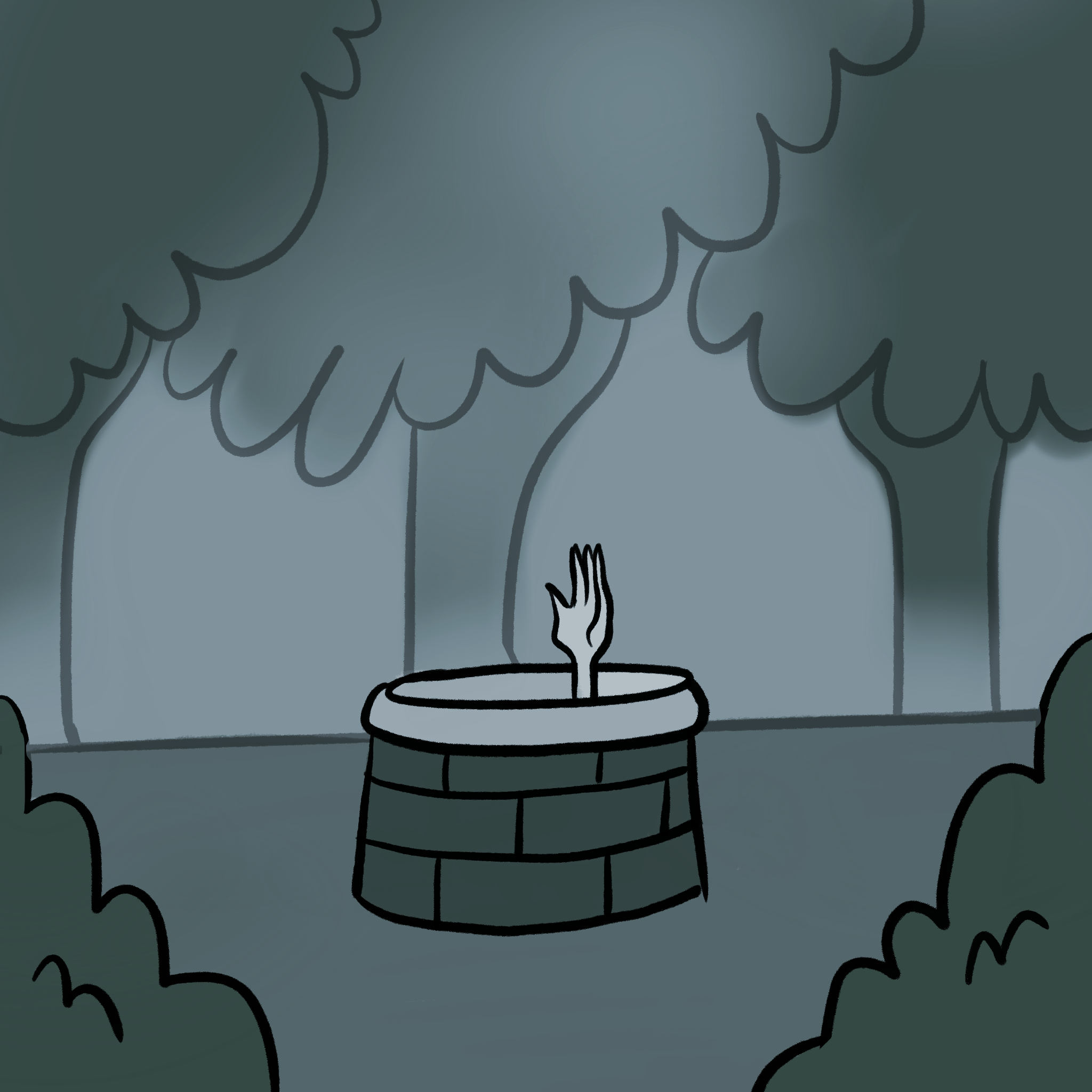
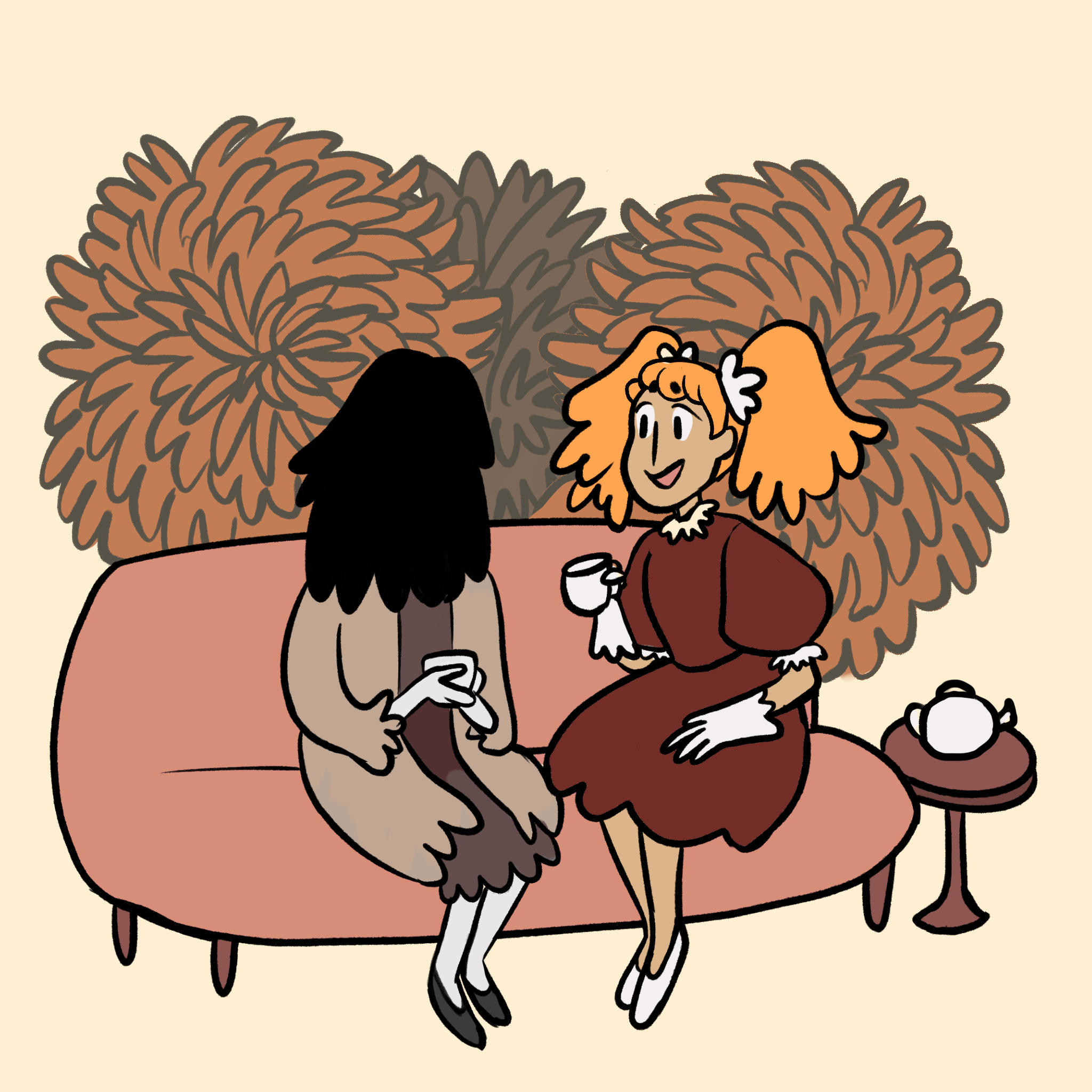
Earlier this week I published my newest zine of horror-themed microfiction. Haunted Houses contains fifteen very short stories about haunted spaces and the terrible people who inhabit them. The cover art is by @QuinkyDinky, and the zine contains interior art by @irizuarts. I’ve got a listing up on Etsy (here), and I’m also promoting the zine on Twitter (here) and Instagram (here).

This zine is quite short, with each story and illustration occupying only one page. This is partially a trick of formatting, but it’s also a result of careful editing. You wouldn’t want to spend too much time in these places, after all.

I have to admit that, even though I’m categorizing this zine and the two other collections of microfiction that preceded it as “horror,” I’m on the fence about what genre my stories actually belong to.

In my mind, the genre of horror isn’t about a specific set of tropes or narrative structures. Rather, horror is characterized by the psychological and visceral sensation of unease it inspires.

I personally prefer to think of most horror, including the stories I write, as “dark fantasy,” or perhaps simply “magical realism.” I’m not easily creeped out by fiction, mainly because the real world is so lowkey awful so much of the time. As I write this, the National Guard is setting up base at a West Philadelphia Target in advance of the presidential election next week, ostensibly as a “defense” against people engaging in civic protest. There are actual tanks in the parking lot of the place I go to stock up on toilet paper, and that’s really scary. But monsters? Not so much.

I’ve always tended to identify with monsters, and not simply because so many villain characters are overtly coded as queer. Monsters are about disrupting the status quo, and I can get behind that. Postwar American horror cinema, including the slasher films of the 1970s and 1980s, is all about interlopers quietly invading small-town America and infecting people. The story behind many of these movies basically boils down to this: Can you even imagine scary things like communism and feminism and civil rights secretly gaining a foothold in our town? (Stephen King goes into fantastic detail about this in his 1981 book Danse Macabre, if you’re curious, and I think the book still reads well and holds up in many ways.)

To me, monsters aren’t scary because I am the monster, which is an uncomfortable set of life experiences to try to talk about in fiction or otherwise. There’s nothing you can specifically put your finger on regarding why people treat you the way they do, but you know there’s something a little off.

Fuck Sigmund Freud and his weird misogyny and homophobia, but I think I’m on the same page with him regarding “the uncanny” as one of the primary components of horror. Freud got a lot of things wrong in his career, but something he gets absolutely right is that it’s difficult to discuss the uncanny in concrete terms.

The uncanny doesn’t just apply to appearance, of course – social interactions and environments can be uncanny as well. If what I’m writing is horror at all, it probably falls into the subcategory of social horror, which focuses on people behaving in a way that’s almost human, but not quite. Many horror stories are cathartic, in that the status quo is threatened but ultimately restored at the end. Even if things have changed, we can feel relief in the knowledge that at least they’re getting back to normal. With social horror, however, our anxiety is never resolved, because we now understand that the status quo itself is horrifying.

It’s difficult for me to talk about the details of my identity and life in a mimetic way. When I’ve tried, it’s been my experience that people either won’t believe me, will think I’m being manipulative in an attempt to elicit undeserved sympathy, or will be put off by the political elements underlying my descriptions of the ways in which I’ve had to move through the world.

The point of the stories in Haunted Houses is not to try to explain why certain aspects of my life have been unsettling, but rather to create a sense of the uncanny in order to communicate the sense of feeling unsettled for reasons you can’t quite explain. Sometimes my stories about haunted houses are about the hidden trauma of being queer in a society that goes out of its way to create monsters; but, in the end, I just really like telling stories about strange people occupying uncomfortable places. I enjoy exploring these themes both as a reader and as a writer, and I’ve found that summoning the courage to open the door and peer into the darkness on the other side is, if not total escapism, still good spooky fun.

And right now, at this specific moment in time, I think we can all relate to the uncanny experience of feeling trapped in a haunted space, because this is our daily life – we live here now.
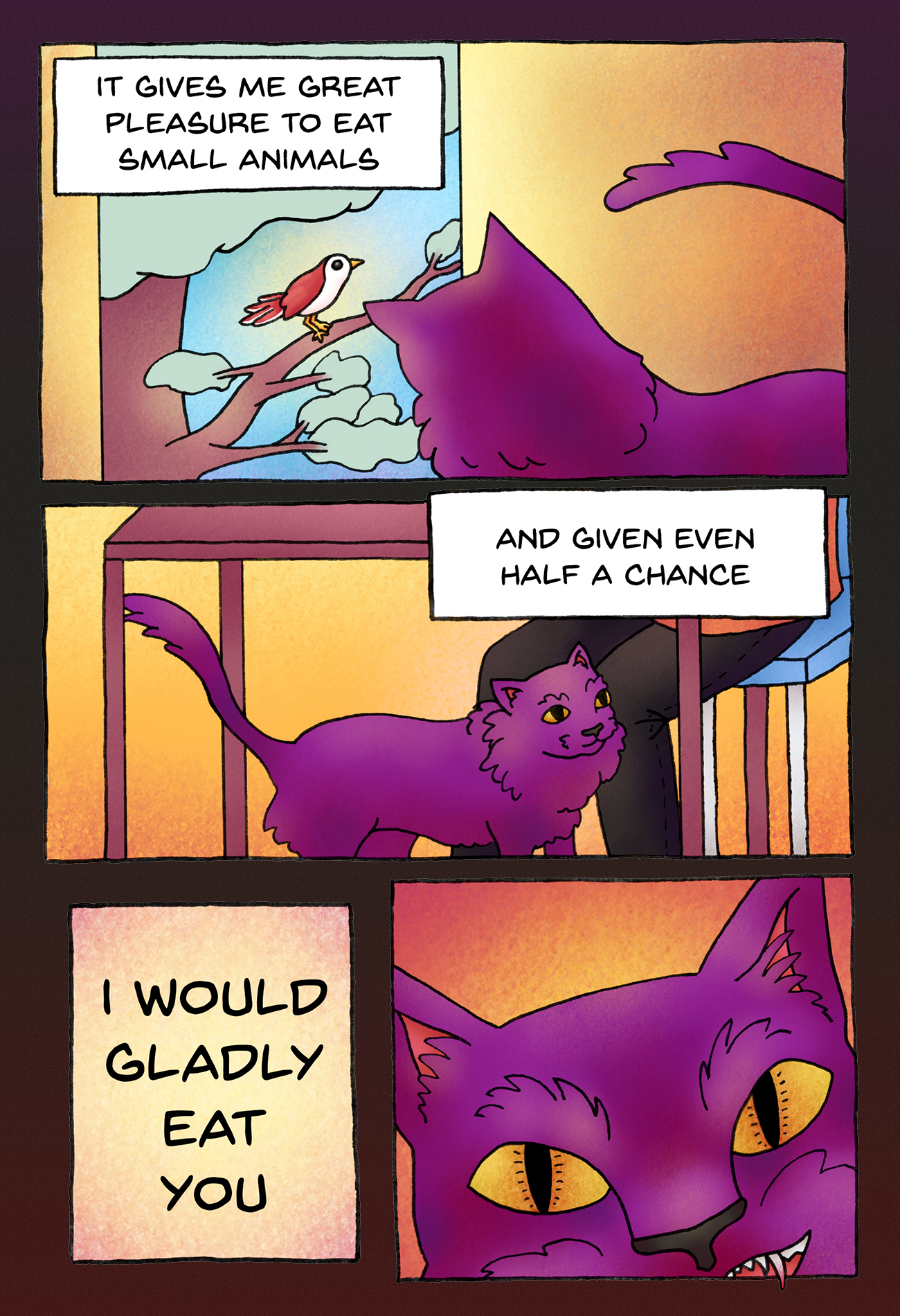
Cats Will Kill You

I have nothing but the strongest admiration for everyone who shares their living space with one of these little murder machines.

I drew this comic for the Catsploitation 2 zine created and edited by Matthew Ragsdale (@blankvalleyfilm on Instagram). You can get a copy of the zine from Matthew’s store (here).

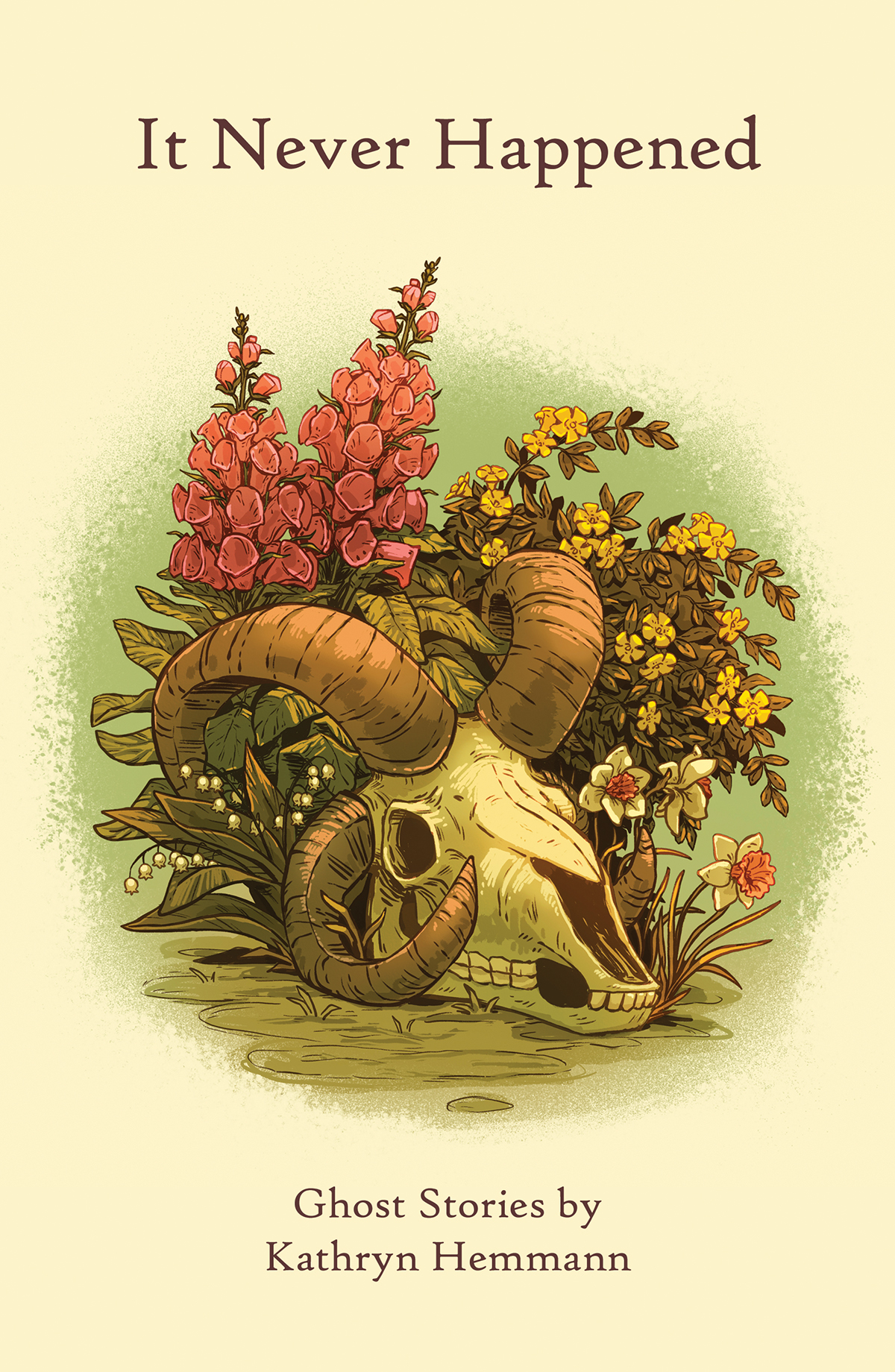
It Never Happened

It Never Happened is my second zine of horror-themed flash fiction. It collects fifteen very short stories, as well as a spooky comic (that you can find here) by the artist Frankiesbugs.

This is the zine description:

This zine collects fifteen short stories about finding oneself in strange circumstances and adjusting to a new normal. Nothing that takes place in these stories actually happened, of course. Most of what transpires is a little creepy, but it’s important to remember that none of this is real. If you read these stories, you might not be real either, but don’t let that stop you.

I love autobio comics, and a lot of these stories came from my failed attempts to write comic scripts. What I realized during this process is that it’s very difficult for me to talk about myself. Although I obviously have no trouble sharing my opinions, I never know what to say when I try to describe my own life. All of the stories in this zine are based on real experiences; but, as the title suggests, none of this ever actually happened.

Or rather, that’s not entirely true. One of these stories is 100% factually accurate, but I’m not going to say which one.

If you’re interested, there are still a few copies of this zine (on Etsy).

Crosswalk


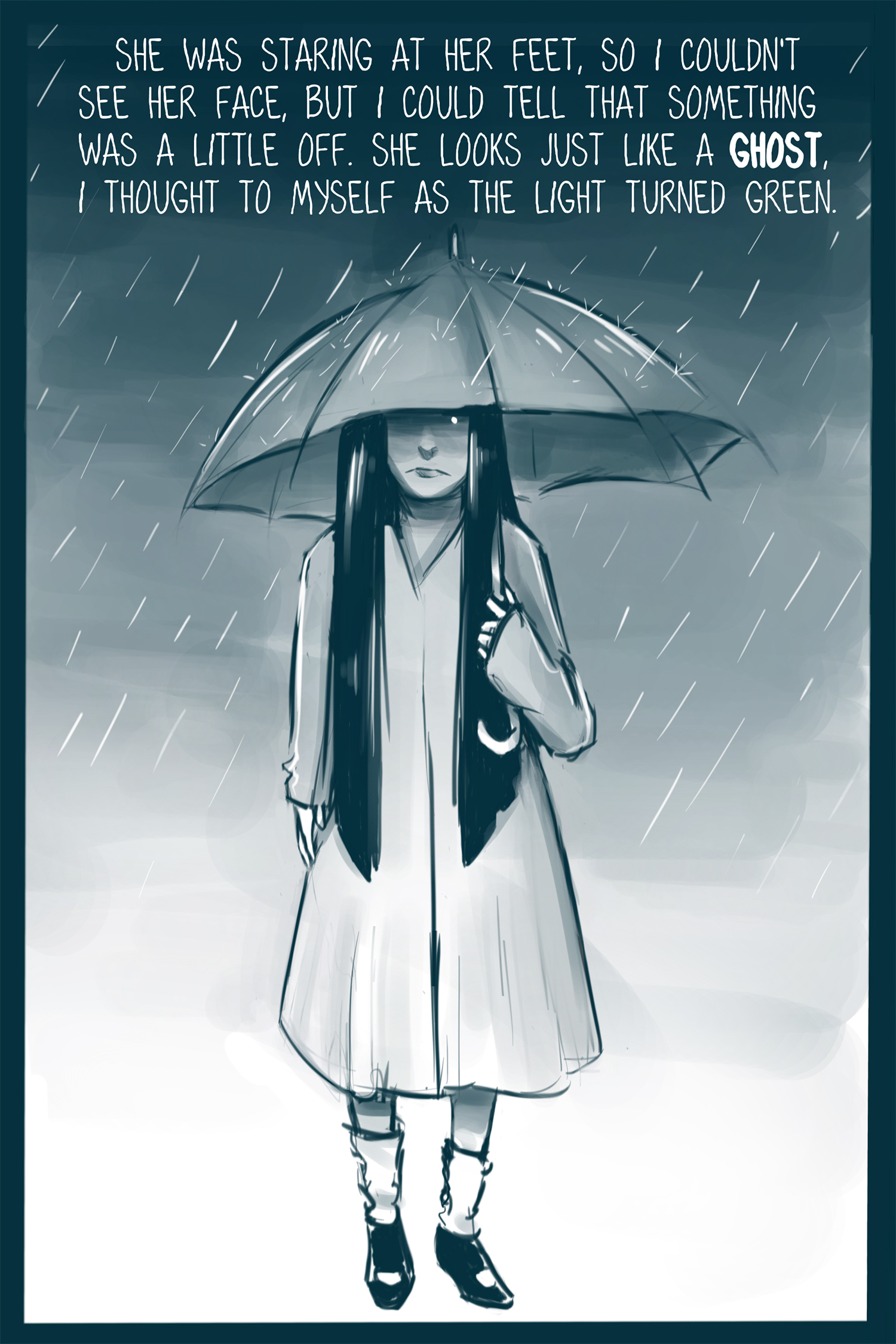
This comic was drawn by Frankiesbugs (@frankiesbugs on Tumblr) and written by me, Kathryn Hemmann (@kathrynthehuman on Twitter).

This actually happened to me in Philadelphia in 2012. It was super creepy, and I still think about it sometimes. Maybe this is just me, but I’m not entirely sure that Philadelphia exists in consensus reality.

Every Seven Days


This comic was drawn by Elizabeth D. (@mushroomys on Twitter) and written by me, Kathryn Hemmann (@kathrynthehuman on Twitter).

I used to think the Japanese horror film Ringu was super scary, and the Hollywood version creeped me out as well. As I’ve gotten older, however, I’ve begun to find both movies silly and charming, especially since I would love to have a ghost friend come to visit through my television screen.

Haunted Haiku

Haunted Haiku collects of 147 horror-themed haiku. Some are eerie, some are elegiac, some are homages to cult horror films, and some are just weird.

This zine is fifty pages long and standard half-letter size. This was my first time printing a zine with perfect binding (in which the pages are glued instead of stapled together), and I underestimated how large the interior margins need to be. I’m almost sold out of this zine (although there are still a few copies left on Etsy), but I’m going to change the font size if I ever end up doing a reprint.

The cover art is by the Australian writer, illustrator, and comic artist Sarah Winifred Searle (@swinsea on Twitter). It was an incredible honor to be able to work with her! It was actually Sarah who came up with the title of this zine. I was going to call it “Horror Haiku” (like my other two haiku zines), but Sarah suggested that “Haunted Haiku” might sound nicer. She was right, of course, which is one of the many reasons why it’s always wonderful to collaborate with artists on projects like this.

In any case, this is the first zine I took to be sold at Atomic Books in Baltimore, which is one of my favorite independent bookstores in the world. One of the reasons I love Atomic Books is that their shelves of zines are the first thing you see when you walk in the door, which makes you feel as if you’re stepping into a unique and special space. Anyone can buy books on Amazon, which is why I appreciate when independent bookstores use their physical location as a way to bring an actual community of writers and readers together. Getting an email from Atomic Books saying that they would be interested in receiving a few copies of this zine is definitely one of the coolest things to happen to me this year.

Ghost Stories

Although I’ve written fanfiction on and off for decades, I got really serious about fandom around November 2014. I’ve written hundreds of thousands of words of fic since then; and, for the most part, it was a positive and rewarding experience. Although I’m still wrapping up a few ongoing fandom-related projects, I’ve started to think about publishing original fiction.

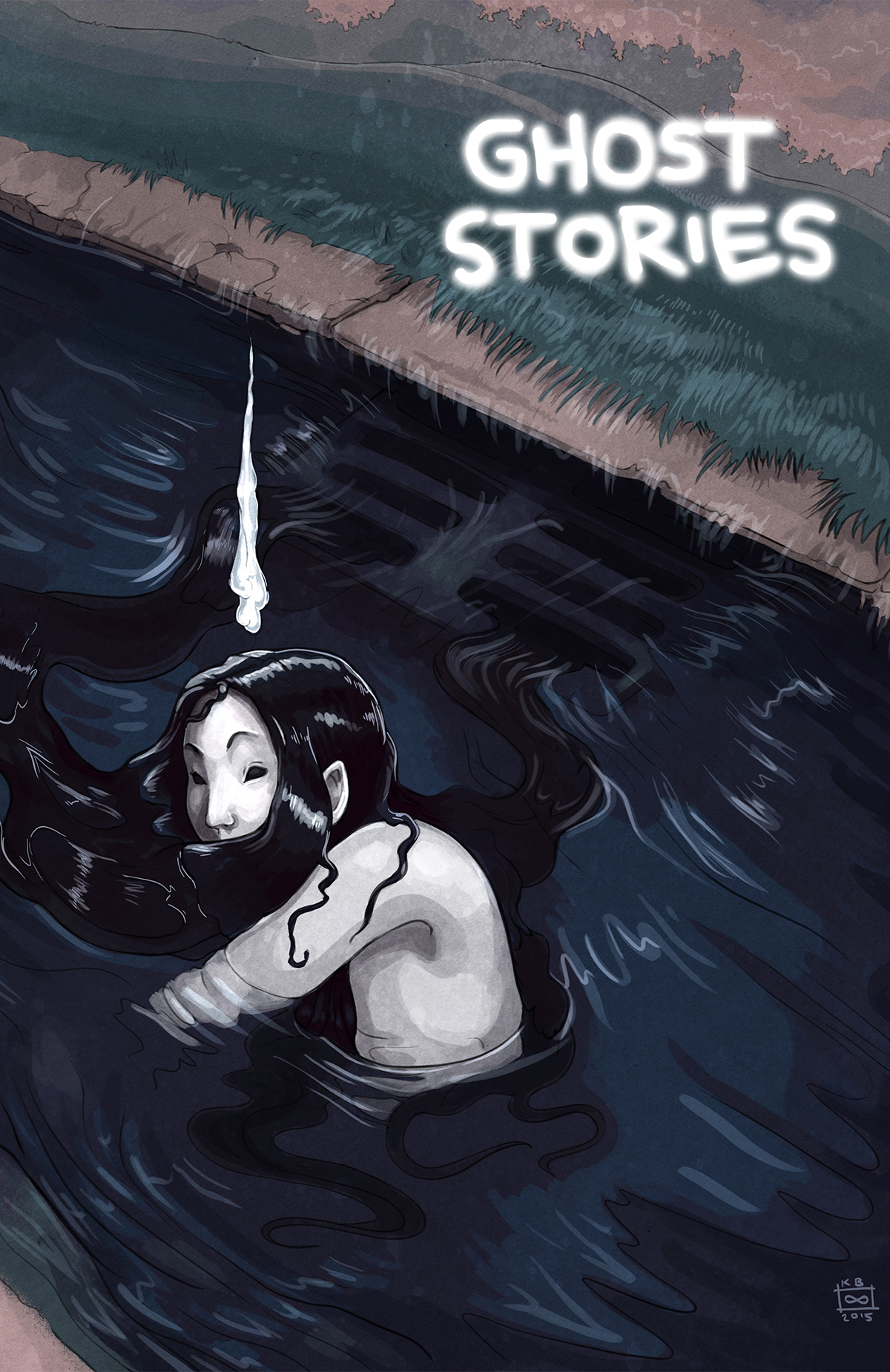
I published a chapbook called Ghost Stories in November 2018, and it collects thirteen short stories that occupy the space between horror, magical realism, and autobiography. It’s 28 pages long, standard half-letter size, and professionally printed with a velvet-touch cover and glossy interior pages by a service called Mixam. The tagline for the chapbook, which appears on the back cover, is this: These are the stories I tell myself to help make sense of a truth that’s too strange to be believed. Sometimes ghosts are kinder than the living.

The cover artist is Kirsten Brown (@unknownbinaries on Tumblr), who creates absolutely incredible horror-themed art.

I sold my last few copies of this zine at the DC Zinefest in July, but you can read the first story in the collection (here).

Aunt Bernice

One summer my family took a long drive to visit my Aunt Bernice. The land around her house was completely flat and completely empty. There were no cornfields or scrub pines or chicken farms; the only thing in that part of the world is red dirt.

Aunt Bernice was obsessed with people who were either dead or dying. My parents were obligated to listen to her, but my sister and I could only handle about half an hour of her stories. They didn’t get cable out in the country, so the two of us decided to go outside.

My sister and I walked across the dirt patches surrounding Aunt Bernice’s house and climbed over the rotting wooden fence enclosing her property. We wandered through the field that spread out behind her backyard, pulling up long stalks of grass and kicking at grasshoppers. Eventually we made it to the edge of someone else’s farm, where we found a single tree, probably the only one for miles. Its branches were hung with a collection of dust-coated plastic toys dangling from threads of twine so dirty they were almost black.

We noticed a boy sitting on one of the tree limbs. He was naked except for a faded pair of red shorts, which were too small for his thick legs. I started to turn away, but my sister stepped out of the unmowed grass and onto the stony soil surrounding the tree.

The boy interrogated her in a toneless voice.

“Who are you?”
“Who are your parents?”
“Why haven’t I seen you before?”
“Where do you go to school?”
“Do you have any brothers?”

My sister responded to his questions with curt and perfunctory replies, but neither she nor the boy showed any signs of becoming bored with the conversation. After turning over a few half-buried pebbles with the tip of my sandal, I interrupted my sister to ask if maybe we shouldn’t go back. She told me to go on without her.

The sun was already low in the sky by the time I pried open the unhinged screen door on the back porch. My parents were in front of the house saying goodbye to Aunt Bernice. They told me to use the bathroom before we left. I went inside and sat down on a ratty couch in the living room, but it was musty with the smell of decay. I got up and went to the kitchen, but there was nothing in the refrigerator except for a thin film of ancient grease on the glass shelves.

When I went back outside, my parents were standing beside the car, saying that I should hug Aunt Bernice before we left. I remained on the porch, calling out to them that we needed to wait until my sister got back.

“What are you talking about,” my mother snapped, clearly annoyed. “You don’t have a sister.”

Oh, I realized. Of course I don’t have a sister.