Lily’s Well

Lily’s Well
https://pureiceblue.itch.io/lilys-well

Lily’s Well is a lo-fi horror adventure game with a charming top-down NES aesthetic. You play as an anime girl named Lily who hears a voice calling for help from the well by her isolated cabin in the woods. Your job is to explore the house and its surroundings while collecting materials to make a rope. Depending on how many materials you assemble, you’ll be able to descend to a different level of the well. Each of the ten levels is its own horrible ending.

There are ten “good” materials and another five “bad” materials that you can find. If you incorporate a bad material into your rope, it will break. Lily will die, and you’ll have to start over again from the beginning. The game doesn’t signpost which materials are good or bad, so you have to go through them one by one and figure this out for yourself using the process of elimination. I got very frustrated very quickly, but this could have just been me being impatient.

I found the guide (here) to be extremely useful. This isn’t so much a walkthrough as it is a list of materials and a FAQ, and you’ll still have to put the pieces of the game together yourself. While using the guide, it took me about three hours to get all of the endings.

If you use the guide judiciously, you can finish the game in about 45 minutes. This involves spending 25 minutes to get to the bottom of the well, and another 20 minutes to explore what’s down there. Every other ending is an instant gruesome death for Lily, while the bottom of the well is essentially the second half of the game. In all fairness, the game’s true ending has a much better payoff if you die a few times first, and there are all sorts of fun little secrets to play with between runs, including certain events that only trigger on multiple playthroughs.

I said at the beginning that Lily’s Well has an NES aesthetic, but it’s really more of an early 1990s MS DOS game. The graphics are primitive, but the game uses them extremely well and puts a lot of care into the adventure elements. There’s all sorts of text for anything you care to interact with; and, if you’re patient, it’s possible to figure everything out on your own without using a guide.

The adventure game elements of Lily’s Well were hit-or-miss for me, and what I really enjoyed was the game’s dark humor. It was fun to see this cute anime girl die in all sorts of fun and creative ways, and I loved how over-the-top gruesome each ending is. I kept playing to dig deeper into the lore and see just how gleefully horrible Lily’s world could get under its placid surface, and I was not disappointed.

Leftovers

Leftovers
https://realmpact.itch.io/leftovers

Leftovers is a free narrative horror game that takes about 20 to 25 minutes to play. Your mother has ten servings of leftover food, and she wants you to deliver them to the other tenants of your rundown apartment building. As you might imagine, each of these tenants is super creepy.

You can answer the tenants’ questions by nodding or shaking your head, and “failing” the interaction will cause you to run home to the top floor. Your mother will get progressively angrier each time you return, and you’ll have to walk down all the flights of stairs again. My recommendation would be to set the camera at max speed before starting the game, as this can potentially save several minutes of stair climbing.   

The concept of Leftovers is great; but, as this was created for a game jam, it was made under time constraints. The 3D space of the apartment building is about as basic as it could be. There’s no background music, and there are only two or three instances of sound effects. Since you have to start over from the beginning so often, I wish there had been a few changes to the environment between runs.

Still, I had a lot of fun with Leftovers. The hand-drawn 2D character designs are great, as is the writing. I was impressed by how much story fit into just a few lines of dialogue, and I really enjoyed how the individual tenant stories gradually begin to fit together into a cohesive narrative. It’s definitely worth playing the game a second time in order to appreciate the story details and foreshadowing.

Leftovers stands well enough on its own as an experimental prototype, but I would love to see the developers return to the game and polish it into something stranger and gorier and even more disturbing.  

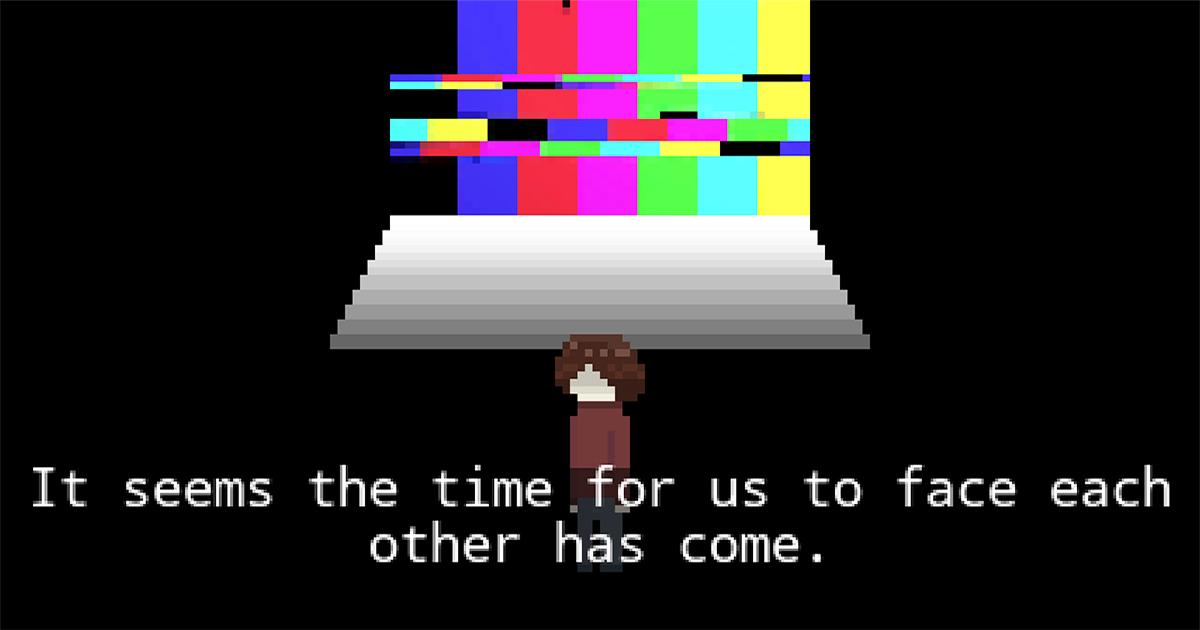
See You Soon

See You Soon
https://not-jacob.itch.io/see-you-soon

See You Soon is a free narrative horror game on Itchio that takes about seven minutes to play. You wake up in the middle of the night because the phone won’t stop ringing, a classic setup that takes an interesting turn. I can’t say much more without spoiling the surprise, but there’s a fun twist in the middle.

See You Soon has 2D graphics with very simple controls, and there are only four screens to navigate. There are two endings, and one of them results in a special surprise if you the launch the game again. That was delightful. Also, if you decide to let one of the monsters catch you, you get a fun little jump scare.

There’s a brief moment of tension when something starts (very slowly) chasing you, but I felt that See You Soon is more silly than spooky. The writing is a little awkward, but I found its earnestness to be almost wholesome. The simplistic pixel art is charming, and the monsters are kind of cute.

To me, See You Soon has the vibe of a chihuahua going aggro. Sure, it’s doing its best to be nasty and unpleasant, but it’s just a little guy. See You Soon is definitely a horror game and probably won’t appeal to people who aren’t fans of the genre, but it made me smile from start to finish.

As a sidenote: See You Soon opens with a content warning about flashing lights. I’m generally sensitive to such things, but nothing in this game gave me any trouble. There are no strobe effects, only quick jump cuts.

Ground Down

Ground Down
https://inverts.itch.io/ground-down

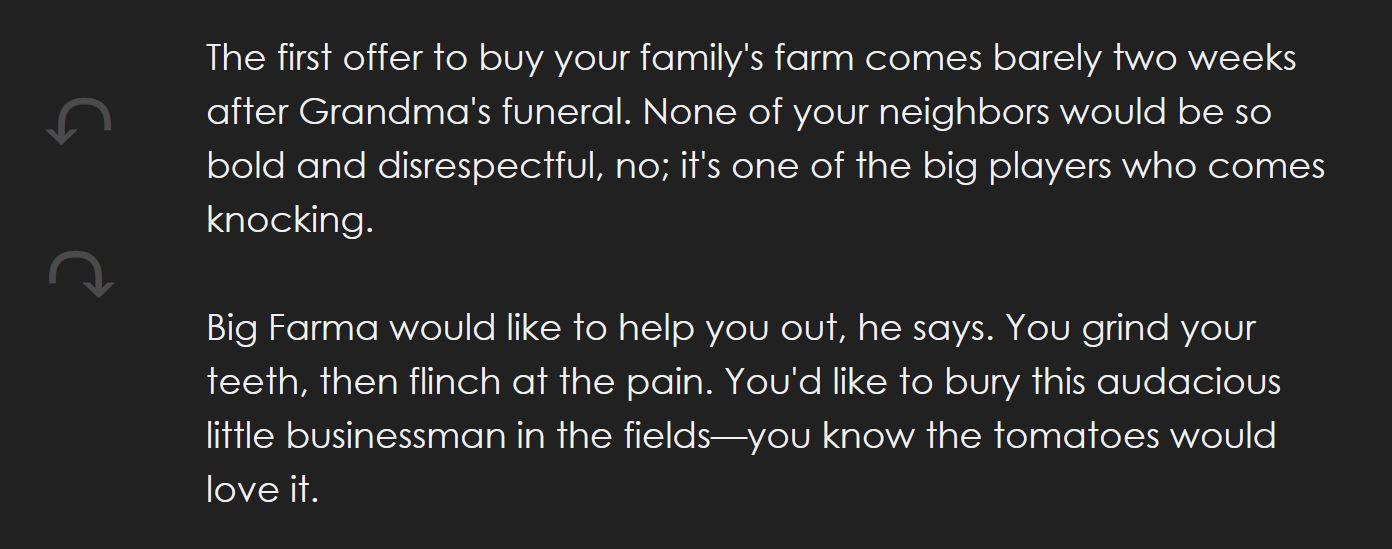
Ground Down is a short botanical horror story presented in the form of a Twine game. The player is occasionally offered choices concerning how to proceed, but there’s only one ending. Depending on your choices and your reading speed, I’d say Ground Down takes about ten to twenty minutes to finish.

You play as a young farmer whose grandmother has just passed away, leaving you the farm you’ve grown up on. You also have your grief, a house full of mementos, and debts to pay. On top of that, you’ve started to grind your teeth, but you have neither the time nor the money to visit a dentist.

I should say that, if you’re unusually squeamish about teeth, you might want to give this game a pass.

Personally speaking, I’m a little squeamish about teeth and dental pain in general, but I very much enjoyed this game. I felt some mild discomfort at the beginning, but the way the theme of “teeth as a symbol of agency” comes back at the end of the story is nothing short of brilliant.

The writing of Ground Down is fantastic in general. Each sentence is perfectly constructed, and each word is chosen with care. There’s a Raymond Carver feel of resonant simplicity to the prose, which is a pleasure to read and to reflect on. The gradual build of the narrative tension is subtle but palpable, and the ending is gorgeously cathartic.

The creator describes Ground Down as a “kinetic novel,” and there’s an interesting rhythm to the text, which sometimes speeds up and slows down. The choices you can and can’t make are interesting as well. Although your choices don’t affect the ending, they’ll color your understanding of what happens.

It’s also worth noting that the Century Gothic font is easy to read, and the contrast between the dark gray background and the light gray text is easy on the eyes, especially if you’re playing the game on your phone. The ambient background music, Kevin MacLeod’s “Decline,” is perfect.

Really, everything about Ground Down is perfect. I played the game twice, and I’m looking forward to playing it again soon. The story’s theme of protecting the roots of your identity from the erosion of late-stage capitalism resonated with me, and the imagery is delicious. And, as a fun bonus, you can name and pet your hen!

Spun Stories Folk Horror Anthology

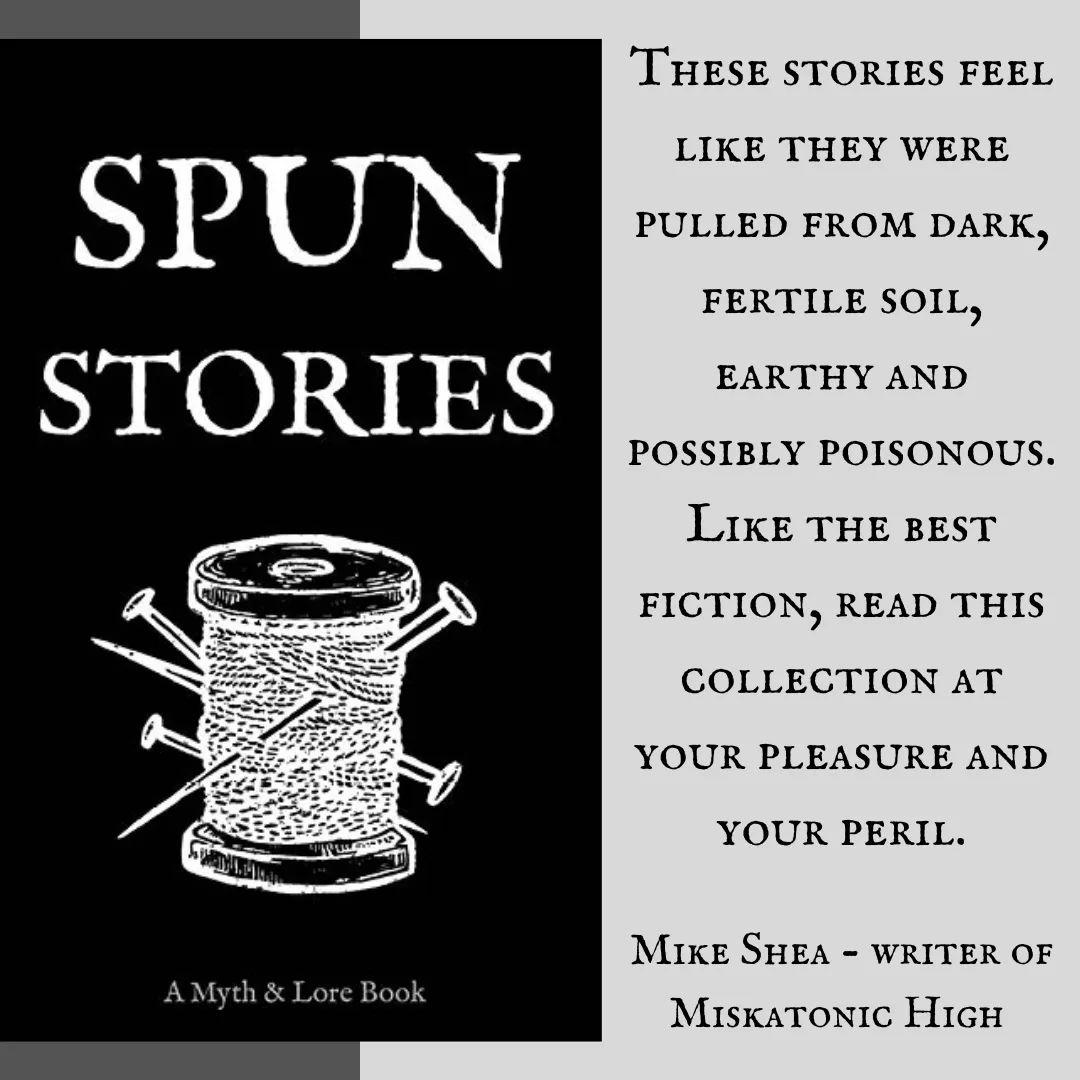
I’m honored to have a piece appearing in Spun Stories, the first anthology of short fiction released by Myth & Lore magazine. My folk horror story, “The Cow-Headed Boy,” is about an idealistic young teacher who accepts a position in a village in rural Pennsylvania at the turn of the twentieth century. Many of the village’s Yuletide traditions are quaint and charming, but some are a bit more sinister. Despite my general lack of interest in anything related to Christmas, I ended up doing a lot of research into Germanic pagan solstice traditions, and I hopefully managed to channel a bit of H.P. Lovecraft in the process.     

If you’re interested, you can preorder a copy of the Spun Stories anthology (here), and you can follow Myth & Lore magazine on Twitter (here) and on Instagram (here). I also want to give a shout-out to the editor, a talented artist who goes above and beyond in promoting authors while networking with the indie horror community. If you’re interested in folk horror, it’s definitely worth following Myth & Lore on social media – and perhaps even submitting your own work!

The Eyes of Hyrule Zine Preview

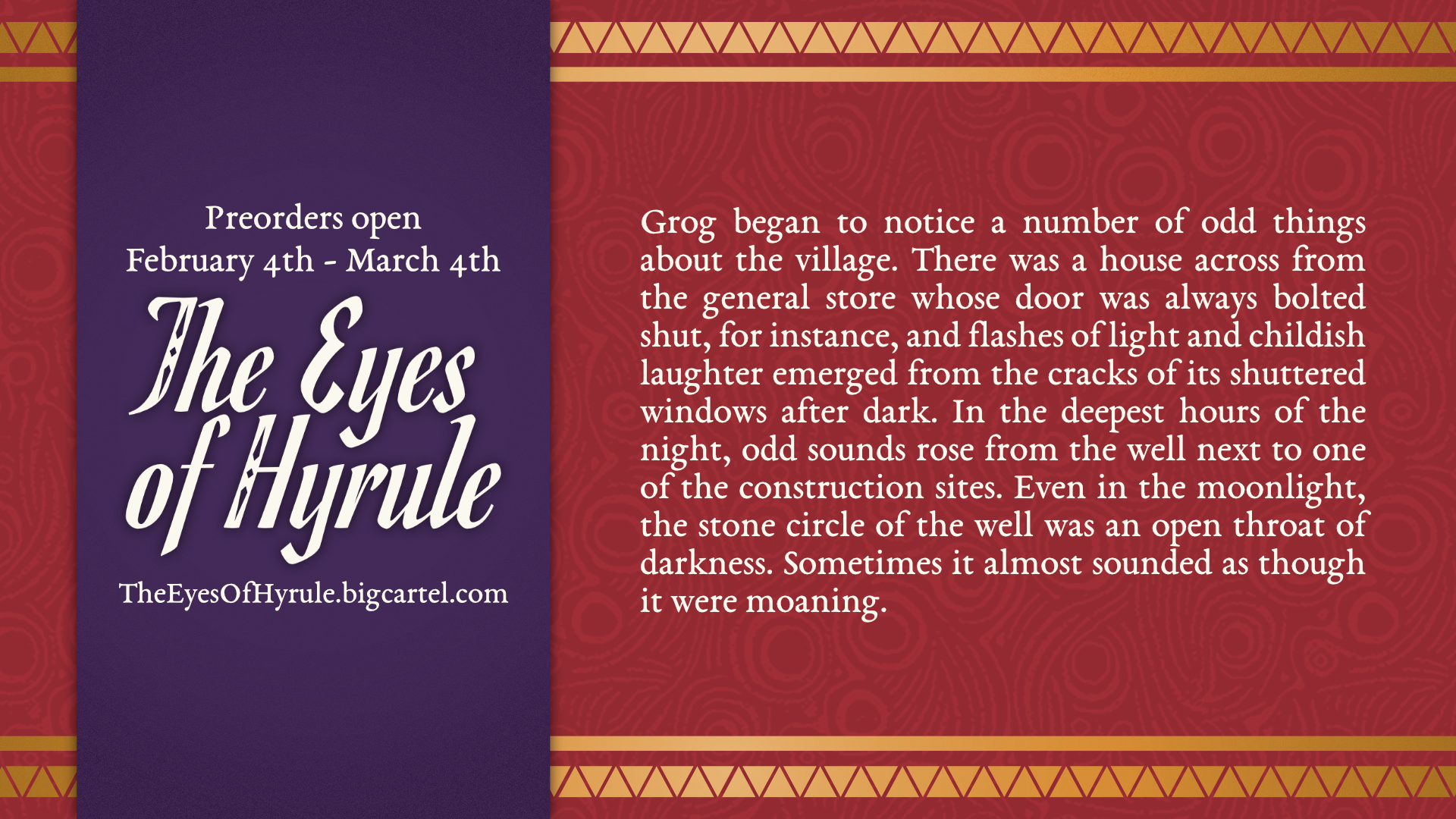
I’m excited to announce that preorders are open for The Eyes of Hyrule, a Legend of Zelda fanzine devoted to the Sheikah. The zine’s Carrd is (here), and you can check out more previews on its Twitter account (here).

There’s a lot of talent involved in this project, and the mods have been totally on the ball at keeping everything organized for the zine, which is expected to ship out this summer. It’s always a pleasure to be part of a project where everything clicks and comes together so well. Also, I might be biased, but I think the stories (and comics!) in this zine are especially interesting and unique.  

My own piece, “The Only Come Out at Night,” is a soft horror story about Kakariko Village in Ocarina of Time. It’s narrated from the perspective of Grog, the punk kid who hangs out near the entrance of the village at night. During the trading sequence necessary to acquire Biggoron’s Sword, the player can pick up hints that Grog’s story is much darker and more complicated than his initial appearance would suggest. I therefore wanted to use this character to explore the darker side of the Sheikah through the medium of a Stephen King style “peculiar little town” story. I had a lot of fun writing this piece, and I can’t wait to share it.

If you’re interested, you can preorder a copy of The Eyes of Hyrule via Bigcartel (here).

At the Edge of the Garden

When I was ten years old, all my friends had trampolines. I wanted a trampoline too, but my mother was opposed to the idea. One of my cousins decided to jump onto a trampoline from the roof of his house, breaking his arm and becoming a neighborhood hero in the process. My mother used my cousin’s behavior as a justification for keeping our yard trampoline-free, but I understood that she didn’t want her garden to be invaded.

My family lived on the outskirts of a pine forest bordering a small town. The property would later be sold, cleared, and incorporated into a subdivision, but our house was fairly isolated when we lived there. Since I had no one to play with and nothing better to do, I spent the summer roaming the forest with my dog while pretending to be a dinosaur. After a boy was shot in a hunting accident only a mile away from our house, my mother came to the reluctant conclusion that keeping me and the dog in the yard on a trampoline would probably be safer than letting us run wild in the woods.

The trampoline dominated my mother’s garden, as she had known it would, but this was more than likely a relief for her. She had neglected to do any weeding that summer, and the plants had gone feral. The trampoline blocked the view of the overgrown tangle of the rose bushes and ornamental shrubs that she used to keep meticulously maintained. My dog would sometimes disappear into the thistles and milkweed that grew as tall as my waist at the edge of the yard and emerge with his coat covered in burs, and my mother would pretend not to notice.

My parents’ marriage had turned sour. They fought after dinner, so I tried to be in the house as little as possible. I would go outside to jump on the trampoline every evening. It was soothing, almost hypnotic. I would position myself in the middle of the black canvas tarp and bounce in place as I watched the sun set over the pine trees standing just beyond the garden. I would hop off the trampoline and head back inside once the sky had gone completely dark, but twilight tends to linger in that part of the world, especially during summer. Sometimes I would be on the trampoline for more than an hour, letting my mind draft into various fantasies of prehistoric life while my dog barked at the rabbits that sniffed around the patch of soil where my mother used to grow carrots.

One evening, just as the sun had begun to sink below the tops of the pines, I saw a figure slink out of the dim forest underbrush. There wasn’t enough light to see clearly, but I was convinced it was a person. My dog was somewhere else, so I was alone with the shadow.

I was struck by a sense of terror, but I couldn’t stop jumping on the trampoline. My body moved mechanically as the blob of darkness made its way across the yard. Eventually it halted, raised the stalks of its arms, and slowly waved at me. I kept jumping, and it kept waving. It seemed as though it were trying to get my attention, but I refused to acknowledge its presence. If I looked at it directly, the stalemate would be broken, and I would be eaten. I was only a dinosaur in my mind, after all, and I knew that I was no match for whatever had come out of the trees.

As the sun disappeared, the shadow sank back into the forest. I hopped off the trampoline and ran inside as quickly as my shaking legs could carry me. 

The next day, when the sun was fully back in the sky, I ventured out to the line of trees beyond the garden, but I didn’t find anything out of the ordinary. The thick mat of pine needles covering the ground lay undisturbed.

Later that afternoon, my dog got hit by a speeding truck on the state highway that ran past the end of our driveway, but I don’t think there was any connection to what I’d seen the previous evening. How could there have been? Nothing made sense to me at the time – not the death of my dog, not the end of my parents’ marriage, and not the creeping realization that my mother and I would have to leave our home at the end of the summer. All things considered, a strange shadow lurking in the woods at the edge of the garden was the least of what was wrong with that house.

. . . . . . . . . . . . . . .

This story was originally published in Issue 7 of 3 Moon Magazine in April 2021. The issue’s theme was “Growing Malcontent,” and this story was my first foray into botanical horror. 3 Moon Magazine ceased publication and closed its website at the end of 2022, and I am reproducing this story with the kind permission of the editors.

A Monstrous Little Mermaid Story

I’m honored to have an essay in one of my favorite online magazines, Cosmic Double. “A Monstrous Little Mermaid Story” is about how I discovered the joy of queer transformations in HP Lovecraft’s “The Shadow over Innsmouth.”

“A Monstrous Little Mermaid Story” is free to read on the Cosmic Double website here:
https://cosmicdouble.com/2023/01/08/a-monstrous-little-mermaid-story/

I originally created this essay as something of a writer’s statement for a short story called “Don’t Eat the Fish.” The story is about the uncanny space at the intersection of queerness, disability, and economic precarity, but I also think it stands on its own as an unsettling work of body horror. I workshopped this story for years as I slowly developed my skills, and I worked hard to polish the narrative voice and sharpen the genre effectiveness while also being as honest as I could about the nuances of my own personal experience.

I generally try to keep overt identity politics out of my writing, which isn’t a value statement as much as it is a personal preference. It’s not as though my stories aren’t informed by my identity or social environment. Rather, both my identity and my environment constantly shift and change, and my stories generally aren’t about myself to begin with. Still, because this particular story was so strongly informed by my positionality, I spent more than a year submitting it a series of literary magazines dedicated to raising the voices of queer, disabled, and economically precarious writers.

Unfortunately, every single magazine I submitted the story to was like, “Oh damn, that’s truly upsetting, and this story is not Positive Queer Representation™ enough.” Usually, when I have a story rejected, I’m lucky enough to get a personal note from an editor along the lines of, “This isn’t a good fit for us right now, but we all enjoyed this piece and would love to see more work from you in the future.” With this story, the response was inevitably: NO.

I therefore wrote this essay as a way of processing what my story and its literary influences meant to me. I’ve long since accepted that the story itself will never be published, but I’m truly grateful to Cosmic Double for being willing to publish an essay that may not be Positive Queer Representation™ but still attempts to represent what I believe is a very real aspect of nonbinary (and trans!) queer identity. That takes courage, and the essays I’ve been reading on the site led me to believe that the editors are open to an earnest investigation of what it means to feel “monstrous.” If you’re interested in well-crafted essays from unexpected points of view, please check them out!

A Perfectly Normal Cooking Game

A Perfectly Normal Cooking Game
https://ribyrnes.itch.io/candypink

A Perfectly Normal Cooking Game is exactly what it says on the label: a cute and pastel-colored pixel game that teaches you how to make marshmallows. You play as a pastry chef who has just been promoted to the kitchen of a company that makes pink heart-shaped confectionery. The recipe includes sugar, corn syrup, water, and a secret ingredient… love!

Just kidding! The secret ingredient definitely isn’t love. Anyone who is squeamish about gore should probably avoid this game.

A Perfectly Normal Cooking Game was made for the Two Minute Horror Jam, with “two minutes” being about how long it takes to finish the game. The experience of playing A Perfectly Normal Cooking Game actually takes about five or six minutes to properly savor, which will probably include you laughing and saying “oh no no no no no no fuck no” to yourself at least once.   

The game also has a secret ending. Along with a lot of people in the comments, I got the secret ending the first time I played the game, as the alternative was too horrible to contemplate.

There’s not much I can write about such a short game without spoiling it, so let me just say that this is a neat little story with perfect presentation that uses its medium well.

Another fun two-minute horror game on Itchio is:

Make Sure It’s Closed
https://corpsepile.itch.io/make-sure-its-closed

Make Sure It’s Closed does a fantastic job of creating a palpable sense of dread in a very short span of time, so much so that I want to recommend this game to any writer who needs an easy and effective reference for what “dread” feels like. I was so impressed that I also played the creator’s game The Open House (free on Itchio here), which is a bit longer and less immediately accessible but still a lot of fun.

Cosmic Horror and the Ruins of Capitalism in Night in the Woods

I maintained my sanity during the pandemic by spending time outdoors in abandoned places. Some of these places exist in the real world, but most were virtual. One of my favorite haunts has been Possum Springs, a depopulated town in western Pennsylvania that serves the setting of the 2017 story exploration game Night in the Woods.

In Night in the Woods, you play as Mae, an anthropomorphic cat who has dropped out of college and moved back to Possum Springs to live with her parents. With no job and nothing better to do, Mae decides to investigate the disappearance of several local children. It turns out that there is a monster living in the abandoned mine tunnels under Possum Springs, and a cult of town residents has been feeding young people to this creature in return for a promise that it will prevent the town’s economic decline. When Mae and her friends catch the cult in the act of sacrificing one of its own members, its leader tells the group of teenagers that these rituals aren’t easy for them, especially now that they’re getting older. It’s time for a new generation to take over and ensure the prosperity of Possum Springs, however modest this prosperity might be.

Mae and her friends don’t join the death cult, of course. They escape from the monster, and the mine tunnels collapse and trap the remaining cult members underground. At the end of the game, Mae reflects that what she’s taken away from this experience is the conviction that, if there is no benevolent higher power in a hostile universe, then she and her friends will have to help each other while doing the best they can for themselves and their community.

The elements of cosmic horror in Night in the Woods are genuinely creepy, especially during Mae’s interactive nightmare sequences, but the purpose of the cult is to serve as a thematic juxtaposition to the true terror of Possum Springs, a large and impersonal set of interlocking systems that collectively exploit hardworking but vulnerable people – namely, capitalism.

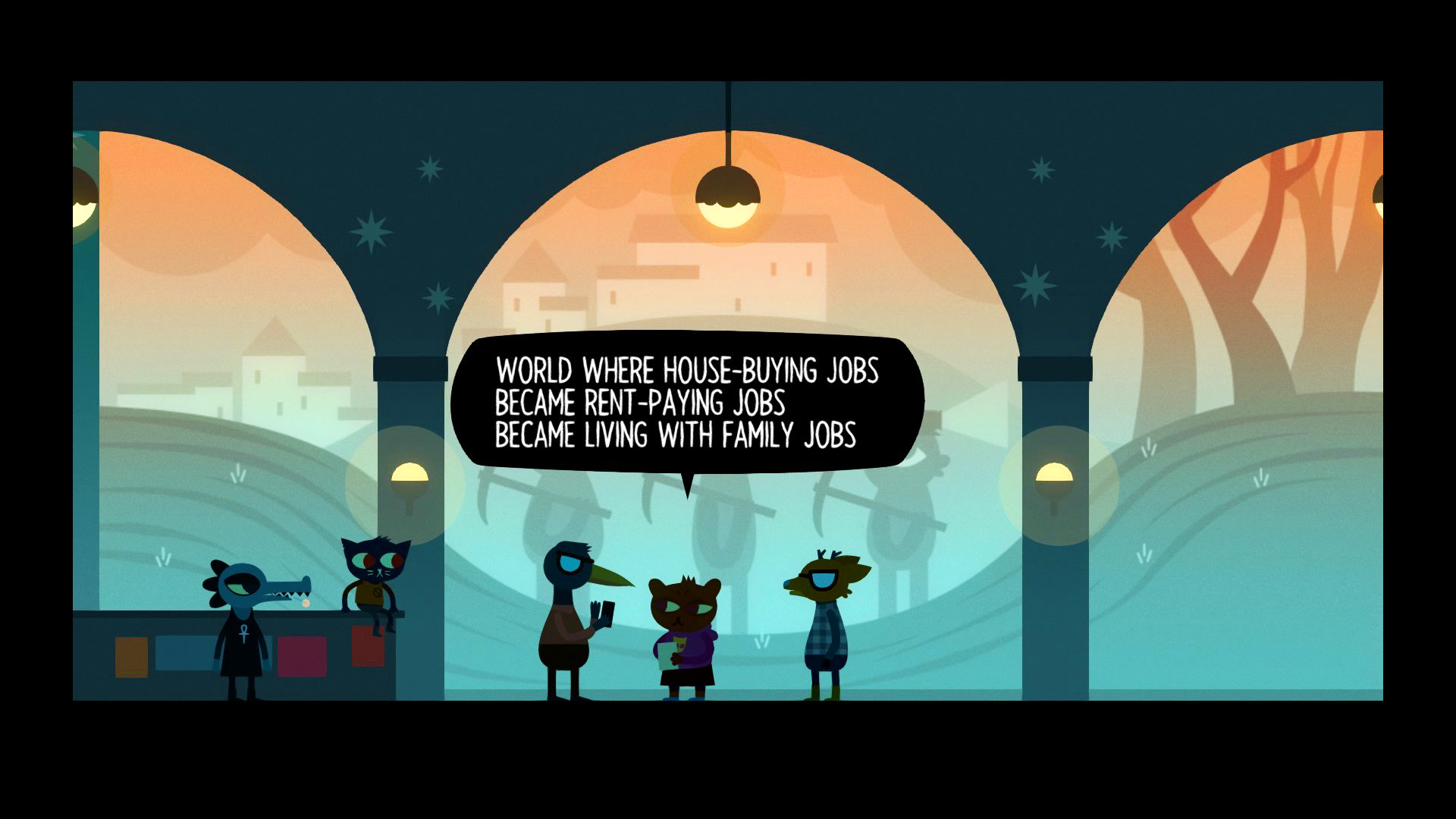
Mae’s parents are afraid of losing their house to the bank because of an usurious mortgage they took out to finance Mae’s college tuition, and entire neighborhoods in Possum Springs are filled with repossessed, unsold, and subsequently abandoned buildings. The pastor of the local church wants to open a shelter for the newly homeless and the railroad drifters who camp out in the forest next to town, but she fails to obtain a permit from the city council due to concerns that lowering the property values in the neighborhood will fatally disrupt an already struggling real estate market.

The horror of an absurd and uncaring universe in Night in the Woods has very little to do with the unfathomable monster lurking in the mine tunnels, although the cult of older people who sacrifice members of younger generations for the vague promise of being able to sustain an imagined standard of living comes uncomfortably close to allegory in the wake of the 2016 American presidential election. Forces beyond our control and comprehension are indeed destroying individual lives and modestly thriving communities, but these forces are nothing as quaint as a stygian tentacle beast that eats children.

According to Scott Benson, the lead writer and artist of Night in the Woods, Possum Springs is located in western Pennsylvania just outside of Pittsburgh. This situates the town in the Rust Belt, an economically depressed region stretching around the Great Lakes from Buffalo to Detroit. The cities in the Rust Belt were centers of American manufacturing until the 1980s, when international free trade agreements incentivized companies in sectors like natural resource extraction and the automotive industry to outsource materials and labor. Formerly bustling mines and factories closed, resulting in a dramatic decline in population that in turn resulted in the bankruptcy of many smaller businesses.

It’s currently possible to accrue a sizeable following on social media by posting urban exploration photos of shuttered factories and other ghostly relics of infrastructure, such as empty schools, hospitals, movie theaters, and shopping malls. There’s a certain poetic charm in high-contrast photos of healthy green weeds stretching up through the cracks of ash-gray concrete and leafy vines twining around rusted iron support pillars. Images of the remains of modern civilization devoid of human presence provide fertile ground for the imagination to run wild.

Night in the Woods denies its players the solitary pleasures of urban exploration, however. As a dialog-driven game, its story can’t be advanced unless the player participates in conversations with various people around Possum Springs. As the you learn more about the town, you begin to understand the problems experienced by its inhabitants, which range from poverty to alcoholism to severe depression. At the same time, you come to appreciate the people who care about each other and want to do right by their community even despite the financial and emotional burdens they carry.

Night in the Woods suggests that the fractures in the community cannot be repaired by any given individual action, like “going to college” or “owning a home.” Rather, the problem lies in the larger economic forces that steamroller over working-class people in small towns. None of the characters Mae interacts with are stupid or unaware of what’s happening, but most of them don’t have the agency to make any real choices about their lives.

Night in the Woods features a number of optional sidequests that tell an ongoing story about the historical tension between the former mine owners and the labor unions in Possum Springs, and it’s clear that the working conditions for miners were deplorable. The mines closed at least a decade before the story begins, but the labor of the workers in Possum Springs is still exploited. Mae’s father, who was laid off from his job at a small factory, now works at a large supermarket by the highway that forced the local grocery store in Possum Springs to be shut down. At the end of the game, Mae’s father considers starting a labor union at his workplace, which pulls money out of the local economy without benefiting the town or its people.

The game’s presentation of unions isn’t entirely positive, however. As Mae’s friend Bea explains, the unions are male-dominated, and homosocial labor solidarity lends itself to an atmosphere in which overt sexual harassment is swept under the rug. Mae’s friend Selmers, who started writing poetry for the rehab program she entered after becoming addicted to pain pills while working at the local pharmacy, performs a reading of an incredible piece about how even unionized jobs are becoming unsustainable in the face of global capitalism.

Night in the Woods is ultimately about accepting uncomfortable realities while moving forward and finding friendship and community in difficult times and circumstances. The game isn’t just a protest against the violence of the global neoliberal capitalism that destroys local economies; it’s a model of resistance on a small and personal scale, as well as an argument for the quiet beauty of allowing outdated structures to fall gently to ruin.

Small town life isn’t for everyone, but neither is building a community from scratch in a big city. If nothing else, it’s good to have choices. The gameplay of Night in the Woods is centered around making choices, and the choice Mae and her friends make is to bury the monster in the mine, sacrificing short-term gains for long-term stability.

Although Night in the Woods is set in the days leading to and following Halloween, its advocacy for regrowth and positive change is a welcome message as society gradually begins to recover from the effects of the pandemic. If nothing else, Possum Springs is a great place to find surreal and spooky chills, and Mae’s homecoming is a crash course on how to make conversation with other people in real-world places that will be hopefully be not so abandoned in the future.

. . . . . . . . . . . . . . .

This essay was originally published on May 18, 2021 in Entropy, a digital magazine about the fringes of art and culture. Entropy closed its website in late 2022, and I am reproducing this publication with the kind permission of the editors.