Agnes and Zidan from An Unfound Door

An Unfound Door is a Gothic mystery set in a decaying castle. Agnes, the princess of Faloren, hopes to save her crumbling kingdom by recovering a long-lost relic, but she must find it before it’s discovered by Zidan, a foreign prince with mysterious motives. As their paths repeatedly cross in the twisting corridors and hidden passages, Agnes and Zidan realize that they must descend into the shadows of the past together if they hope to bring light to the future.

While I’ve been planning this story, I’ve also been working on character designs. This is what I’ve come up with…

Agnes is in her early twenties. Her palette is fairly monochromatic, making her look somewhat ghostly. She’s not used to interacting with people, and she’s aloof and serious to a fault. Her floral motif is the moonflower. I was aiming for something like a “dark academia” aesthetic.

Zidan is also in his early twenties. His palette is warm with accents in brighter colors. He’s charming and polite, but he’s too proud to conceal the sharp edges under his smooth exterior. His floral motif is the Chinese lantern flower. I was inspired by the work of the artist Emily Cheeseman in creating his design.

Carpe Noctem

Carpe Noctem: Vampires Through the Ages is an anthology of original art, comics, and historical fiction about vampires around the world. The backer campaign lasts until Saturday, December 11, and you can read about the project and order a copy of the book on Kickstarter (here). Carpe Noctem was fully funded in three days, and four stretch goals have been unlocked since then. You can check out contributor bios, merch illustrations, and previews of art and writing on the project’s Twitter account (here).

I’m contributing a short story about a Heian-period vampire titled “The Kumo Diary,” which follows a Meiji-era scholar’s assistant who discovers an old manuscript that she initially mistakes as a lost chapter from The Tale of Genji. Along with The Tale of Genji, I’ve drawn inspiration from Ryunosuke Akutagawa’s short story “Rashomon” and Fumiko Enchi’s eerie postwar novel Masks. In the excerpt above, you can see my homage to a fictional essay in Masks called “An Account of the Shrine in the Fields.” It was a lot of fun to write about Heian-period demonic women, and I also enjoyed doing research in order to put together the Meiji-period frame story. I’m very proud of the ending, and I hope readers will get a pleasant chill from the gradual transformation of the two narrators’ distinctive voices.

Carpe Noctem is scheduled to be published in August 2022. You can back the Kickstarter campaign to pre-order a copy of the anthology along with a collection of the dark and stylish merch created as a promotion. There’s a special NSFW zine and a bonus story told through a collection of physical documents that are exclusive to the Kickstarer campaign, so please check it out if you’re interested!

Free Real Estate

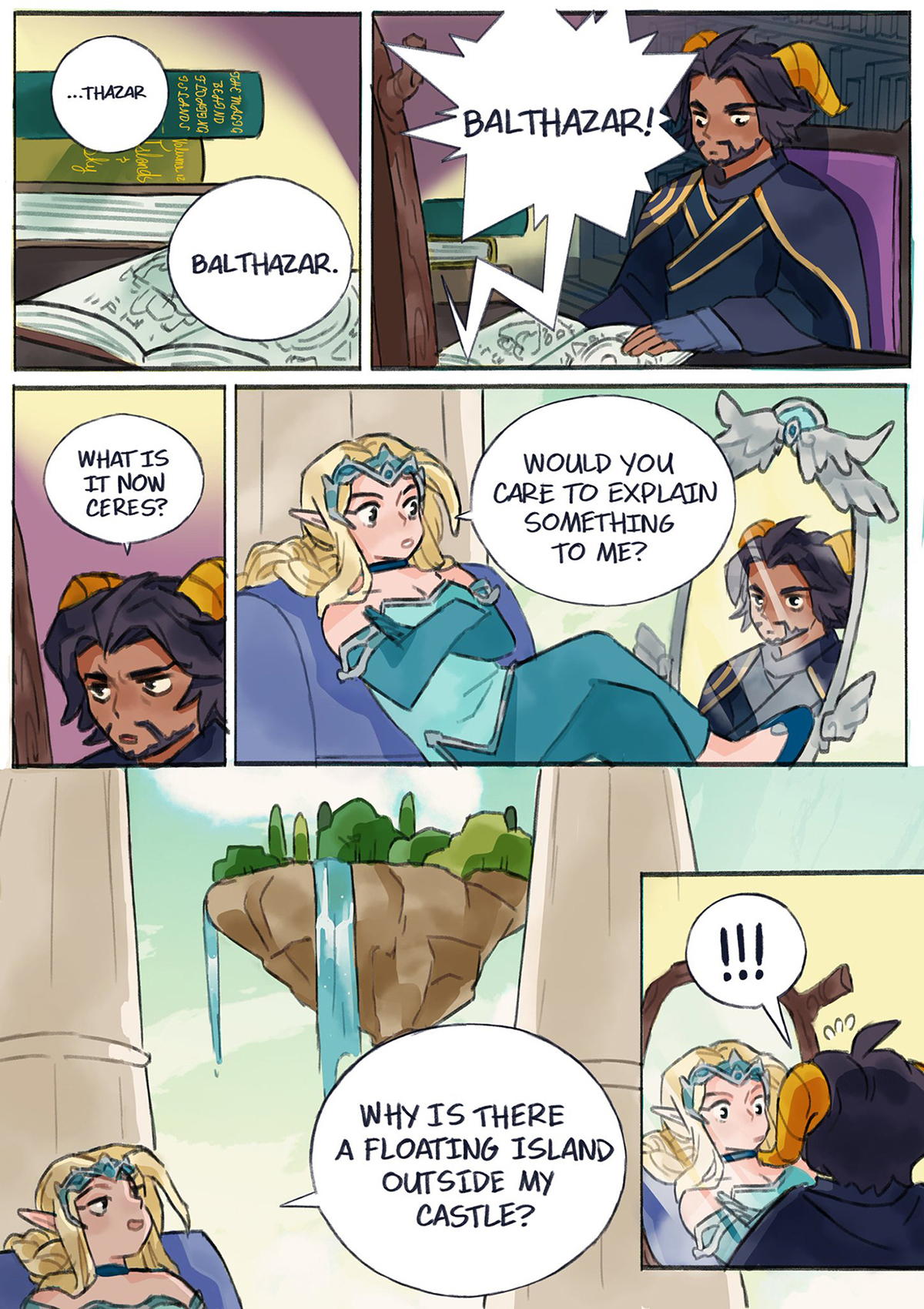
Just another day in the life of a powerful but clueless wizard and the princess who (barely) tolerates him.

This scene takes place at the end of the second arc of my original fantasy novel, The Demon King. In this segment of the story, Balthazar attempts to learn how to control the weather and ends up harnessing ancient forces at the limits of human comprehension. He uses his newfound power for silly nonsense that does not benefit him or anyone else, but you have to admit that floating islands are cool. And, as Ceres says, it’s free real estate.

This comic was written by me and illustrated by Mjoyart on Twitter (and elsewhere). I wrote the script and sketched a set of rough thumbnails, and Meghan was able to turn my stupid joke into something truly magical. Meghan posts Pokémon and Legend of Zelda comics and fan art on Twitter, and I highly recommend checking out her online portfolio (here) to see her original storyboards and animation projects. Her art is fantastic and never ceases to amaze me, and I’m very lucky to have been able to work with her!

Greenpath

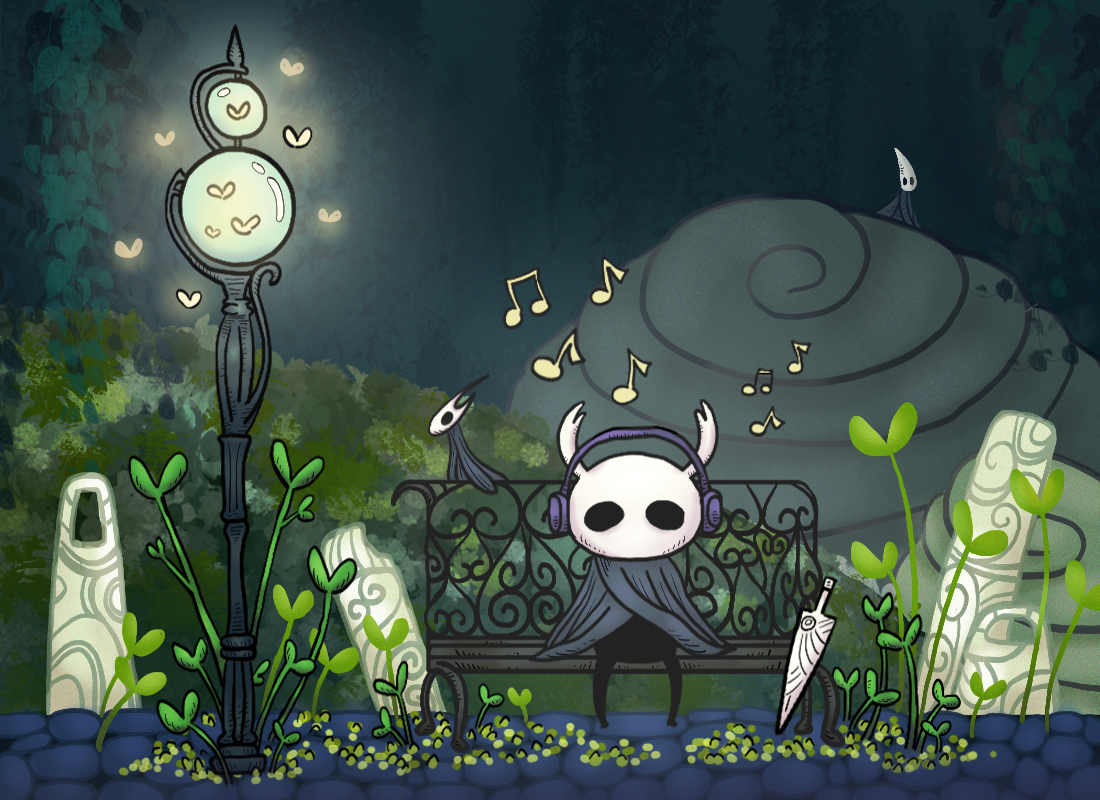
Hollow Knight is a Metroidvania-style adventure game set in the forgotten underground kingdom of Hallownest. The kingdom fell to ruin after a viral blight infected its citizens, transforming them into mindless husks. As a knight in the form of a small beetle wielding a nail, you venture below the surface through a secret entrance in an old well to challenge the mysteries of Hallownest.

The old underground roads are long abandoned, and there are no helpful signs to guide the player through the maze of passages. The necessity of careful exploration as you find your own path forward is one of the primary appeals of Hollow Knight, but it’s easy to lose your way and fall victim to the undead husks or become trapped in the dilapidated infrastructure.

The tiny protagonist’s journey through Hallownest is lonely, but the ruins of the old kingdom are far from empty. Where there were once cities and markets and train stations, dense vegetation now breaks through the paving stones and covers crumbling structures in blankets of flowering plants. Nowhere is this postapocalyptic explosion of nature more apparent than an area called Greenpath, where small birdlike creatures flutter through the underbrush while giant dragonflies glide in lazy circles above bubbling pools of acid water.

Hollow Knight’s soundtrack, written and digitally performed by the Australian composer Christopher Larkin, captures both the loneliness and wonder of the kingdom of Hallownest. I find the background music for Greenpath especially atmospheric and evocative. It begins with bright and gentle strings that suggest the twinkling of fresh dew and the whisper of wind over moss. Soft and airy notes from a flute and xylophone join the song to create a melody reminiscent of the rustling of leaves as you scuttle through the bushes. 

The environmental music in Hollow Knight is adaptive, meaning that it changes according to gameplay. Some of the more challenging sections of Greenpath necessitate precisely timed jumps over deadly beds of tangled thorns, and the song crescendos into string chords as staccato as your character’s footsteps as you rush through the beautiful yet menacing jungle. You feel as though you’re truly exploring overgrown ruins, brushing aside vines as you navigate the twisting stone corridors.

The quietly elegiac environmental songs of the Hollow Knight soundtrack are oddly relaxing and make excellent ambient background music. If you’re in the mood for something more upbeat, the boss fight battle songs are fantastic as well. You can listen to the complete album on Spotify and YouTube, and (this link) will take you directly to the song “Greenpath” on Bandcamp. 

. . . . . . . . . . . .

This essay was published in the “Playlist” issue of the West Philly Dog Bowl Zine, which debuted at the Philly Comics Expo this past weekend. You can download a free digital version of the zine via their Linktree site (here).

Wanderers

This comic was written by me and drawn by LunaArtGallery, whose work can be found on Tumblr, on Instagram, and on Twitter. You can read their commentary on the piece on their Tumblr post (here).

Given that the universe of the Legend of Zelda games is characterized by its disparate timelines, I’d like to think that there’s at least one timeline in which Zelda and Ganondorf work out their differences peacefully instead of enacting the cycle of destruction brought about by a war between two ancient gods. Every game in the series is filled with abandoned ruins that Link explores but never questions, so it might be interesting for Zelda and Ganondorf to seek out the truth underlying the legends that have shaped their lives. This idea was inspired by the game Journey, which is about bearing witness to the mistakes of the past in a quest for atonement and enlightenment. If we ever get to play as Zelda, it would be lovely for her adventure to take her in a similarly compelling direction.

The Coming Storm

This is a tribute to the iconic Zac Gorman comic, but with a twist.

I sometimes think about how Ganondorf more than likely didn’t start out as evil. I imagine that he probably went on a journey that paralleled Link’s, but his reaction to the secrets he found in hidden caves and forgotten temples was substantially different due to the circumstances of his life and destiny. While the Legend of Zelda games contain subtle elements of melancholy from Link’s perspective, Ganondorf’s story is more like a full-on Greek tragedy.

A Noble Pursuit

None of the lessons from the Gerudo Classroom have prepared Rhondson for married life with Hudson, who has grown restless and disappeared from Tarrey Town a year after its founding. She travels to the Akkala Citadel Ruins to hunt for her husband while reflecting on the bridges that will need to be rebuilt in order for Hyrule to embrace a peaceful future.

“A Noble Pursuit” is a short story that explores the theme of cultural differences, including different attitudes regarding the preservation of historic sites, via the Akkala Citadel Ruins.

As the Gerudo tailor Rhondson crosses the Sokkala Bridges, she’s impressed by how sturdy and practical they are; and, at the end of the story, she considers how building more bridges – both literal and cultural – might help make the Akkala Citadel habitable once more.

At the end of the story, Rhondson finds that her missing husband Hudson has made friends with the monstrous Hinox who’s always snoozing away on the citadel’s parade grounds. She realizes that both the Hinox and her husband need a renewed sense of purpose, and she encourages Hudson to direct his energy into rebuilding the ruins of the Akkala Citadel into a place better suited to cultural exchange.  

This story about archaeology, castles, ruins, giant monster friends, and what it means “to live happily ever after” was written for Memorabilia, a Breath of the Wild fanzine​ that you can check out on Twitter (here) and on Tumblr (here). The accompanying illustrations are by the stylish scholar Pocketwei, whose art of handsome characters and beautiful landscapes can be found on Twitter (here) and on Instagram (here).

You can read “A Noble Pursuit” on AO3 (here).

Only Power Remains

Only Power Remains is an Ocarina of Time fancomic that explores the backstory of Ganondorf, the iconic villain of the Legend of Zelda games. According to the series lore, Ganondorf was the only male child born to the Gerudo, and otherwise all-female society living in the desert at the border of the kingdom of Hyrule. Through a series of connected scenes, Only Power Remains investigates how Ganondorf grew from a strong-willed boy to a power-hungry warlord.

This comic is a fascinating and insightful exploration of Ganondorf’s backstory that rings true to the Legend of Zelda canon while still being accessible to casual fans of the series. It also stands on its own as a cohesive story, and I would happily recommend it to curious readers who may not be familiar with the details of the Zelda games. Louisa Roy’s writing is sharp and original, and her vibrant and expressive art does a lot of heavy lifting in terms of introducing and developing established characters.

In her extensive “Author Notes” at the end of the zine, Roy explains that she especially enjoyed drawing Ganondorf’s childhood interactions with a merchant in Hyrule Castle Town. The merchant is disrespectful during their first meeting, as he sees Ganondorf as nothing more than a bratty kid. Ganondorf therefore learns the Hylian language spoken by the merchant in order to come back a year later and verbally cut him down before taking what he wants from his stock of musical instruments. Without becoming too political, Roy conveys the tensions of cultural differences, and there’s a certain charm in watching Ganondorf slice through the Gordian knot of xenophobic stereotypes.

The supporting cast receives a similar level of nuance and sympathy, especially Nabooru, a Gerudo leader who eventually rebels against Ganondorf. With Nabooru, as with Ganondorf, the reader is given a sense that the tragic story of the Gerudo could have gone a different way had circumstances been even slightly different. The comic ventures into many unexplored corners of Hyrule during its journey, but the artist’s design work is brilliant and remains faithful both to the world of the games and to their real-life cultural influences.

Only Power Remains is far from the first Legend of Zelda fancomic created by Louisa Roy, who has published a number of zines featuring side stories that allow the minor characters in the games to shine in their own heroic (or antiheroic) light. The publication quality of these comic zines is consistently excellent, from the layout to the lettering to the cover design. You can follow the artist as @om_nom_berries on Twitter and @om-nom-berries on Tumblr, and you can find her comics on her website (here) and browse through her zines on Etsy (here). If you’re interested in Only Power Remains, you can check out the listing is (here).

Ballad of the Wind Fish

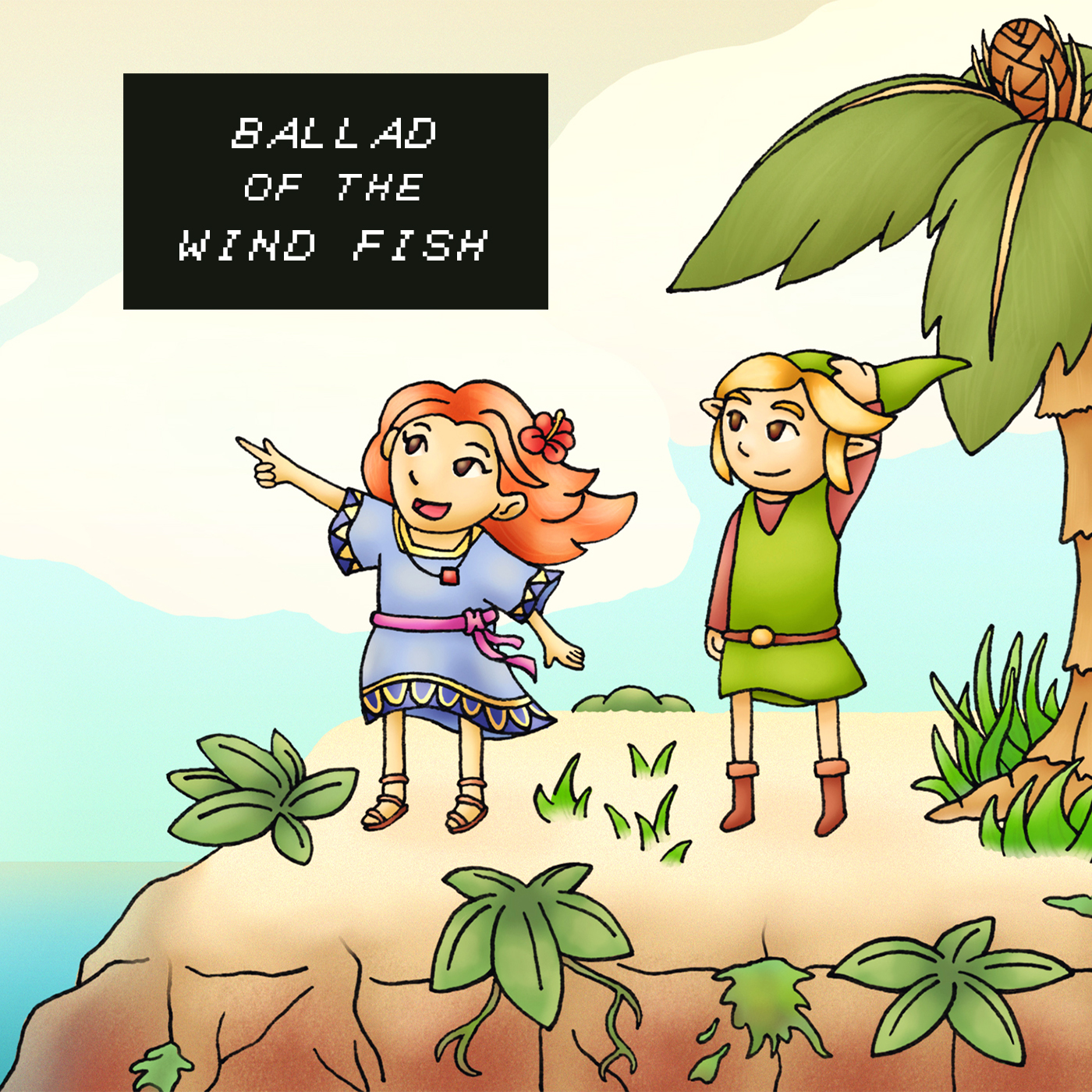
Ballad of the Wind Fish is a bittersweet narrative minicomic that uses the 1993 Game Boy game The Legend of Zelda: Link’s Awakening as a stage to explore the connections between childhood fantasies, nostalgia, and escapism.

The comic is twelve pages long, with one panel per page. I created it for the #Linktober drawing challenge on Instagram during October 2019, but it’s still very near and dear to my heart. Although the comic is ostensibly about Link’s Awakening, it’s really more of a meta exploration of a certain glitch in the original release of the game, as well as a meditation on being a child of the 1990s. I formatted it into a zine and created two pieces of polished art to use for the cover. It’s my hope that this short comic fills the reader with warm memories and sunny summertime vibes.

You can download a free digital copy from Gumroad:
https://gum.co/windfishzine

If you like, you can buy a physical copy on Etsy:
https://www.etsy.com/listing/1035486197/ballad-of-the-wind-fish-zelda-minicomic

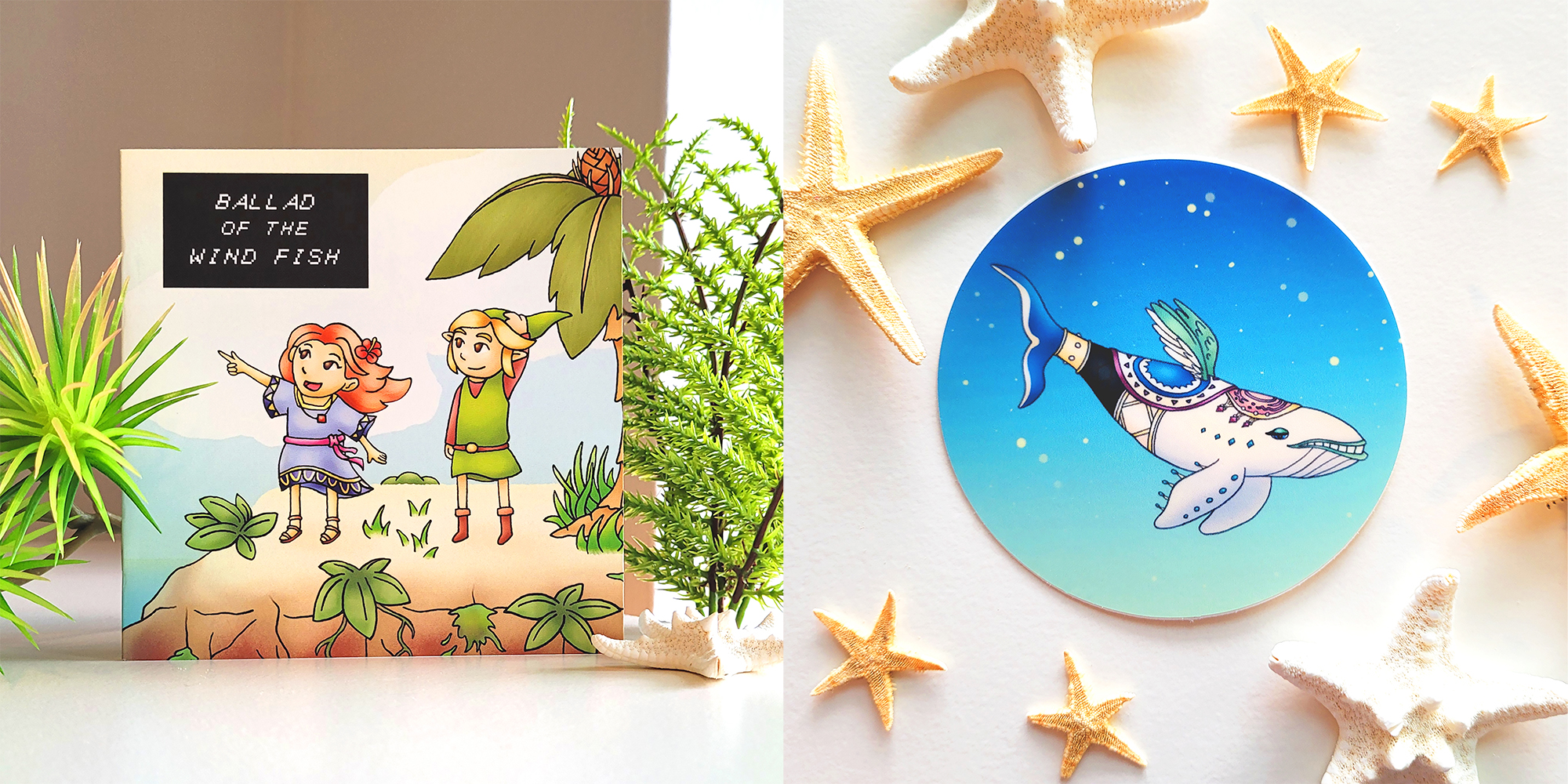
The zine is 4.75” square, or roughly the size of a Nintendo DS game case. It’s professionally printed in vibrant full color, and it comes with a 3” circular vinyl sticker depicting the eponymous Wind Fish.

If you’d rather not bother with any of that, you can read the comic as I originally posted it on Tumblr (here).