A Worthy Successor

In an eerie castle submerged under cursed waters, Ganondorf tells Tetra about the world that once was. Ganondorf’s story is at its end, but his words inspire Tetra to dream of the world to come.

I recently started playing The Wind Waker in order to do research for a short essay about Koroks. The Wind Waker is a fresh and lovely game, at least at the beginning, and I always forget the emotional impact of the end. The pathos of Ganondorf’s longing for the Hyrule of the past always gets me right in the heart.

I think it’s interesting that, after The Wind Waker, Tetra goes on to establish New Hyrule, the setting of Spirit Tracks. She thereby achieves Ganondorf’s goal of restoring an ancient kingdom blessed by gentle winds. This begs the question – how would Tetra know about Hyrule? Given how much time Tetra spent with Ganondorf under the Great Sea, I think it’s safe to assume that they must have talked to one another.

This story is my attempt to envision what these conversations might have been. I wrote this story a few years ago, but I’m returning to it now because it still resonates with me. The older I get, the more I sympathize with Ganondorf, and the more willing I become to let decaying empires fall to ruin in favor of embracing the winds of change.

You can read the story here:
https://archiveofourown.org/works/35251798

The comic adaptation is by the magical Lightsintheskye, who is:
(on Twitter) + (on Tumblr) + (on Etsy)

Hyrule Fashion Anthology Preorders

Hyrule Fashion Anthology is open for preorders (here)!

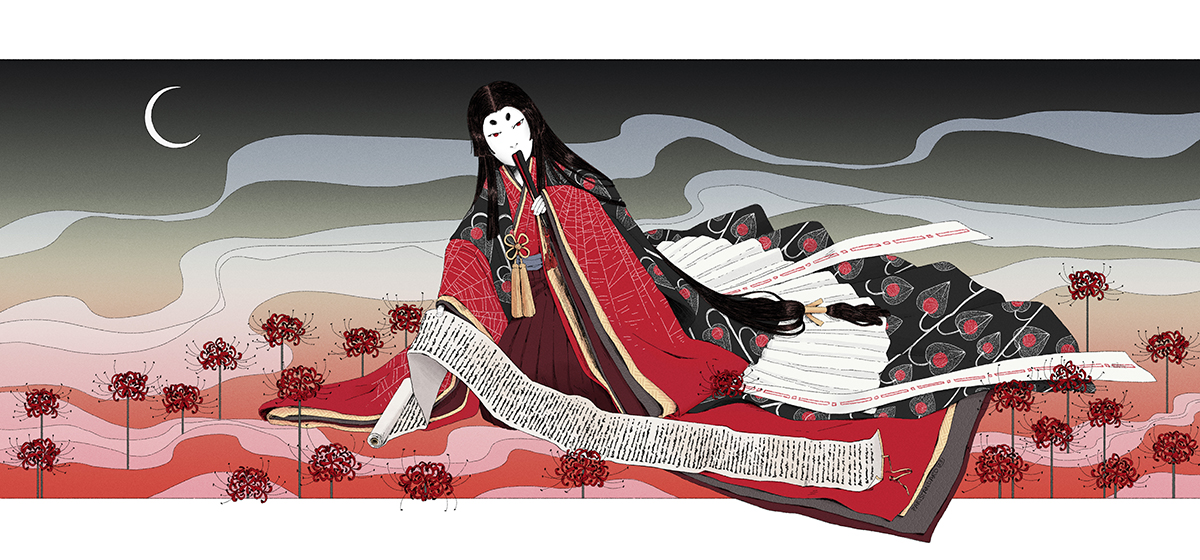
Hyrule Fashion Anthology is a fanzine celebrating the complex evolution of fashion history through the characters and setting of the Legend of Zelda series. I contributed an essay titled “A Wind-Grieved Ghost” about the influence of medieval Japanese Noh theater on Ganondorf’s costume and character in The Wind Waker. I put a lot of love and research into this piece, and I may have even made myself cry.

The zine is filled with gorgeous fashion illustrations that illuminate the historical and cultural influences of the character designs in the series, as well as brilliant renditions of fan-favorite characters in a diversity of times and places. In addition to the artwork, the zine also includes articles about weaving, metalworking, and the beauty of style in all its forms.

Preorders are open until September 19!
If you’re interested, you can check out the zine through these links…

✨ Carrd: https://hyrulefashionanthology.carrd.co
✨ Twitter: https://twitter.com/HyruleFashion
✨ Bigcartel: https://hyrulefashionanthology.bigcartel.com

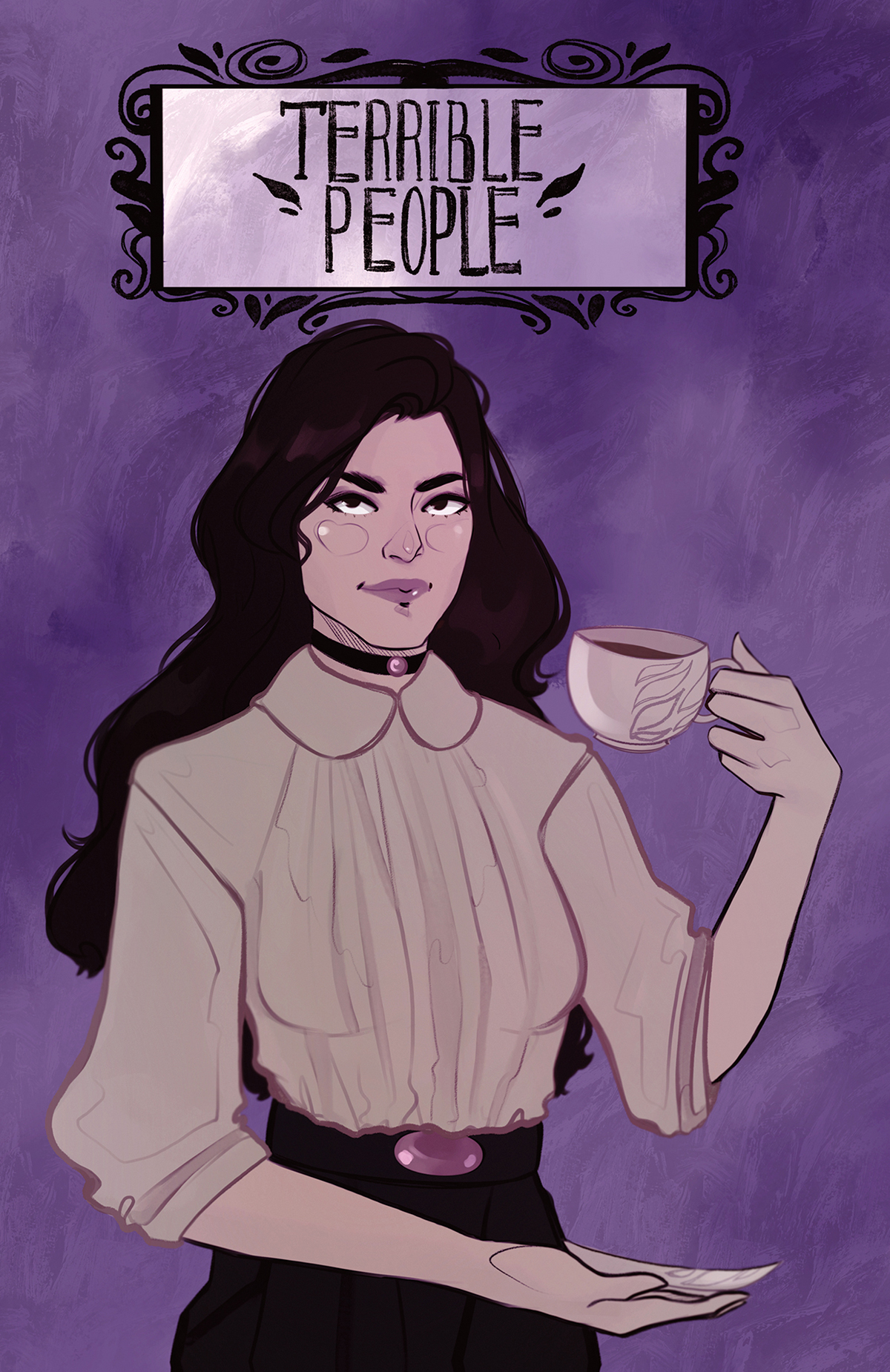
Terrible People

Terrible People collects six short and eerie tales of dark fantasy, unfortunate encounters, and horrible life choices. The writing is accessible to teenagers and adults alike, and there’s a diversity of death, poison, and murder for everyone to enjoy.

Terrible People is my fifth zine of original short fiction, and it’s the first that feels like a real short story collection. Each of the stories in this zine was accepted for publication elsewhere; but unfortunately, every single one of these publications was cursed. To give an example, one online magazine closed their website and deleted their social media accounts less than a month after they accepted one of these stories. To give another example, a small press that published an anthology with another of the stories burned down, meaning that almost all copies of the book were destroyed.  

Perhaps I’m tempting fate by printing these stories on my own. Who can say?

If you’d like to order a (totally not cursed) copy of the zine, it’s on Etsy here:
https://www.etsy.com/listing/1556837985/terrible-people-horror-fiction-zine

At 52 pages, the zine is relatively lengthy, which means I was able to give it a spine. This necessitated extra formatting work, and I feel like I’m slowly starting to understand the art of book design. What I’m thinking of doing in the near future is making a short chapbook from a single story and experimenting with the formatting until it looks more like an actual book. Terrible People is probably the last zine I’m going to make that has the style of formatting I’m using now, which I actually quite like.

I’ve been thinking that perhaps it might be nice to set up a micropress one day. For the time being, however, I’m content simply to continue writing these strange little stories while hoping that the curse haunting my attempts to publish them eventually dissipates.    

Divine Beast

Zelda returns to her original form after the defeat of the Demon King. But, after so many years, is the being that comes back to Link entirely human? Zelda has appetites better suited to claws and fangs, but Link resolves to care for her, no matter the cost. This is a story about Zelda attacking and eating frogs, and cuccos, and horses… and possibly something with even sweeter flesh.

I’ve been enjoying Tears of the Kingdom, but I’m frustrated by its story. I love all the characters, and I think the game’s broad narrative arc is an interesting reimagining of Ocarina of Time. Still, there are many elements of Tears of the Kingdom that I find unsatisfying, especially its ending. I understand the plot mechanics of what happens, which are nicely explained in (this post) on Tumblr, but Zelda’s complete reversion to her human form doesn’t sit easy in my mind. Is it really possible for a transformation of such magnitude to have no lasting effects? Did the sacrifice Zelda made really have such little weight?

Tears of the Kingdom fails to attach meaning to its worldbuilding in a way that very few Legend of Zelda games have in the past. It’s understandable to dismiss these games as childish heroic fantasies. Still, at some point, the true darkness of each game’s story expresses itself. The player may have seen the plot through the limited viewpoint of Link, the teenage “chosen one,” but the crumbling kingdom of Hyrule looks substantially different through the eyes of other characters. Link will emerge triumphant and ride off into the sunset, but everyone else has to live in the ruins, and it’s only very late in his quest that Link realizes this. With this realization, the player can begin to put together the missing pieces of a much larger story.

Despite having an incredible potential to expand on the many mysteries of Hyrule, Tears of the Kingdom does its best to simplify its story to a single one-dimensional layer: Ganon is bad. By defeating Ganon, Link gets rid of everything that’s wrong with the world, meaning that everything in Hyrule is now good again. This is all that matters. What happened in Breath of the Wild doesn’t matter. What happened in the ancient era doesn’t matter. What happened to the Zonai doesn’t matter. None of Hyrule’s past matters, nor does its future. In the endless present of the game, Zelda only exists as a vessel for “good,” and the only important thing is that Link saves her.

As much as I love Zelda, I resent that she only exists as a plot device and a reward for the player. While superficially turning Zelda into a superhero, Tears of the Kingdom robs her of agency. I generally like happy endings, but I hate the conclusion of Tears of the Kingdom. Simply put: it’s happy, but it’s boring. What I therefore wanted to do with “Divine Beast” was to make Zelda’s decision more interesting by ensuring that it has consequences. I also wanted to give the worldbuilding of Tears of the Kingdom a bit of the weight and depth it deserves.

And, more than anything, I want Link and Zelda to be free.

“Divine Beast” is complete at 2,000 words, and you can read it on AO3 here:
https://archiveofourown.org/works/49296496

I drew the illustration myself. You can follow my art on Tumblr (here) or on Instagram (here).

The Flower Thief

“The Flower Thief” is a story about how Ganondorf visits Hyrule as a child and falls in love with the green and beautiful land, even as he is warned away by the queen who will become Zelda’s mother.

What fascinates me about Ganondorf (at least prior to Tears of the Kingdom) is that he’s a villain whose actions seem far more evil than his character. Given that he’s not necessarily an evil person, what would drive him to such extremes?

In my own experience, evil is boring and mundane. “Evil” is someone who sends hateful messages on social media because they know they can get away with it, or someone who pretends not to see when a colleague is being harassed at work. People who are born into privilege can often be evil without even thinking about it, as the rules that govern the actions of other people don’t apply to them. People in positions of authority are often evil simply because it’s the path of least resistance. So, in most cases, evil is passive; it’s a matter of not challenging the baser impulses of human nature, or not bothering to fix a system that’s become twisted and broken.  

It’s therefore intriguing to me that, when Ganondorf wants “power,” what he’s seeking is the ability to upset the established order. Even if it’s for his own selfish reasons, he aims to transform the world, whether by undoing the mistakes of the past or creating an ideal future. He fails – and he fails miserably – but at least he tries.

I grew up with shōnen adventure manga, and I’m interested in seeing a similar coming-of-age story about someone like Ganondorf, who is talented and works hard but still ends up as the villain. “The Flower Thief” was my attempt to write a story like this for myself, and I think I managed to do a decent job of creating a nice parallel to Link’s first journey to Hyrule Castle in Ocarina of Time.

You can read “The Flower Thief” on AO3 here:
https://archiveofourown.org/works/32033518

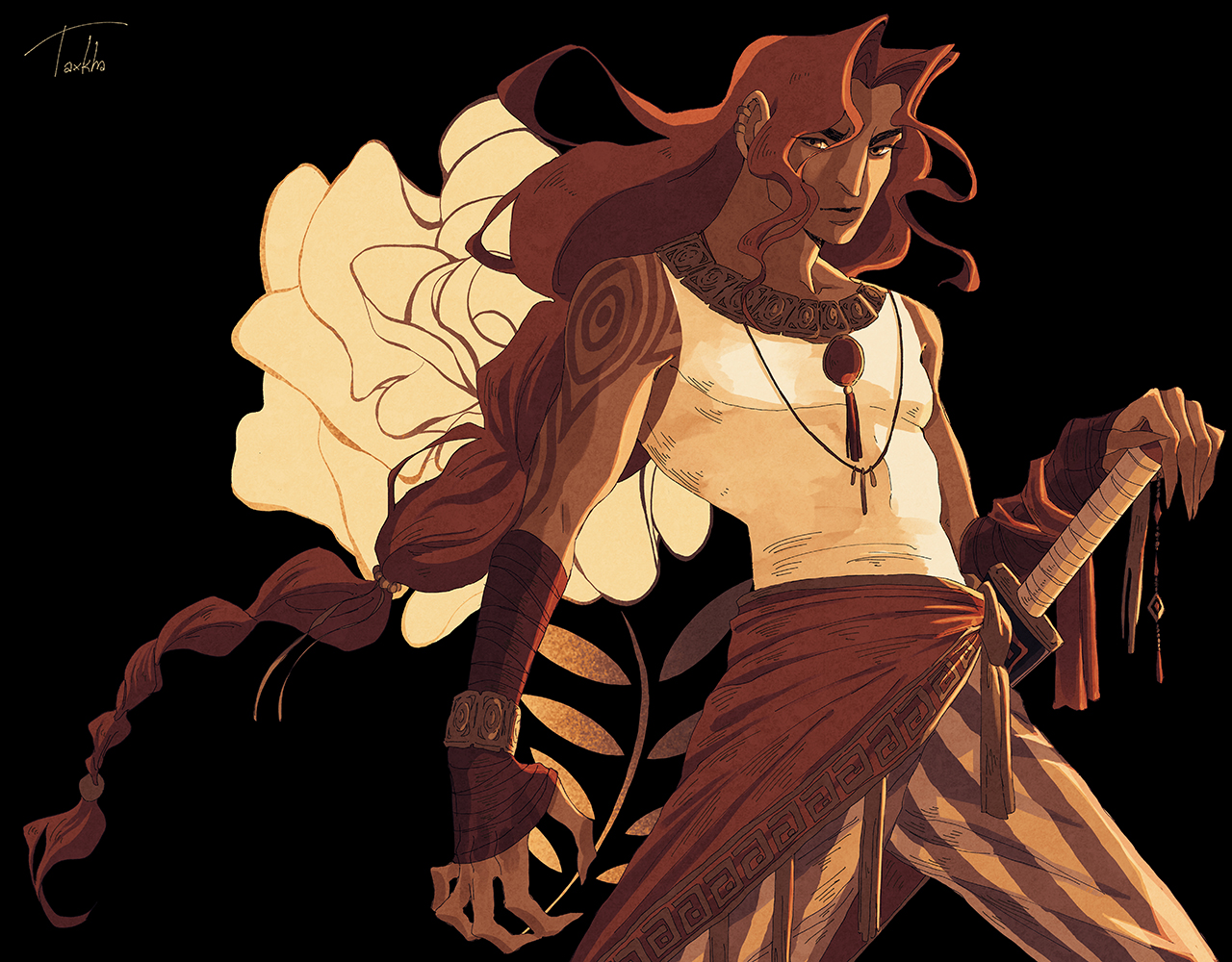
This story was written for Ties of Time, an Ocarina of Time and Majora’s Mask fanzine. Ties of Time was published back in 2021, but you can still see the zine’s artwork on Twitter (here), and the zine’s stories have been collected on AO3 (here). The character illustration of teenage Ganondorf is by the bold and daring Taxkha, who shares their art on Tumblr (here) and on Twitter (here).

The Ritual of Lomei Labyrinth

A vast labyrinth stretches under the ancient kingdom of Lomei. It is said that this labyrinth serves as the prison for a terrible monster known only as the Calamity. Every seventeen years, a sacrifice is performed in order to appease the monster. As the day of the ritual draws near, a young soldier named Link volunteers himself as the sacrifice, secretly hoping that he will be the one to put an end to the Calamity. It is tradition for the princess of Lomei to lead the sacrifice underground, a ritual for which Zelda has trained her entire life. Inspired by Link’s courage, she dares to reveal a hidden secret of the labyrinth that may save them both – as well as the monster trapped within a maze of deceit.

Since I started writing original horror stories in 2018, I’ve become increasingly fascinated with the Greek myth of Ariadne and the Minotaur. I consider this to be one of the earliest prototypes of gothic fiction, which explores the topos of a young woman navigating a large house that holds a terrible secret.

Earlier this year, I returned to one of my favorite gothic labyrinth stories, Ursula Le Guin’s The Tombs of Atuan. I love the idea of a bratty teenage girl being the priestess of horrific elder gods trapped in an underground maze, and reading The Tombs of Atuan while waiting for the release of Tears of the Kingdom made me think about the Lomei Labyrinths in Breath of the Wild, as well as the mysterious Zonai civilization that created them. Before I could stop myself, I ended up writing a three-chapter short story that casts Zelda in the role of Ariadne. I think Calamity Ganon makes a suitably creepy Minotaur, but hopefully Link is a much more sympathetic character than Theseus!

The story is complete at 5,400 words, and you can find it on AO3 here:
https://archiveofourown.org/works/44979319/chapters/113177725

I had a great time working with one of my favorite character artists, Benveydraws, to create a portrait of Princess Zelda. Benvey replaced Zelda’s characteristic feather motifs with the earthier imagery of golden leaves, and he worked closely with references of Greek statues to give the character a suitable Classical Mythology vibe. Benvey specializes in designing bold and beautiful female characters, and you can find more of his work on Tumblr (here) and on Twitter (here).

Trinity Trigger

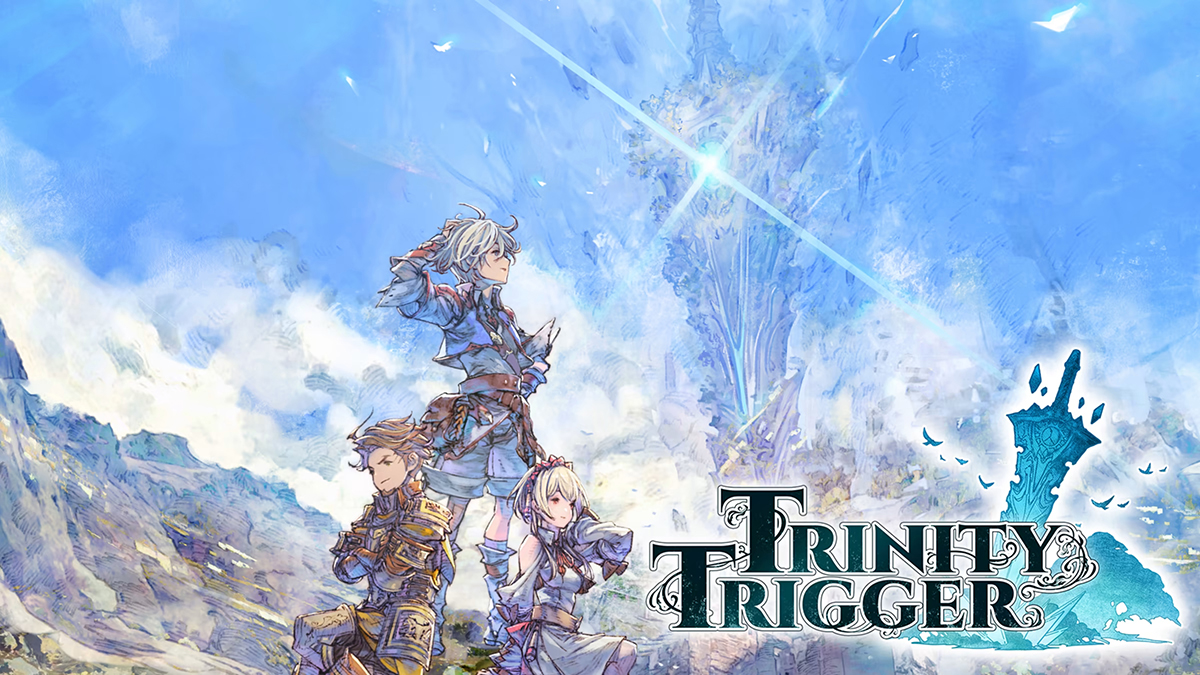
Trinity Trigger, an action JRPG published by Xseed Games in April 2023, is essentially Secret of Mana with a fresh coat of paint. The story is simple. The combat is simple. The dungeons are simple. There’s a rudimentary crafting system, and it’s simple as well. I love this simplicity, which allows you to enjoy the game in the same way that you might enjoy scenery from a train window. Not everything has to be complicated, and Trinity Trigger is a wonderful title for people who play games to relax.

You control three heroes, each of whom can wield a set of weapons chosen via a ring menu, just like Secret of Mana. Some enemies are vulnerable to certain weapons, but these vulnerabilities aren’t a big deal outside of boss fights.

Unlike Secret of Mana, you don’t need to grind for weapon upgrades, which are unlocked automatically at the end of each dungeon. There are a few sidequests that involve backtracking in order to fight a slightly stronger enemy variation, but these aren’t necessary for staying ahead of the gentle difficulty curve. Trinity Trigger is slightly more complicated than I’m giving it credit for, but not by much, and it’s no trouble to figure out the various character optimization systems as you go.

If I were to offer any criticism of the game, I might point out that the AI of the characters you’re not directly controlling isn’t great, but this doesn’t really matter. The voice acting isn’t great either, but you can turn it off. There are a few short anime-style animated cutscenes, and they don’t include English subtitles if you’ve got the voice language set to Japanese. This is an unfortunate oversight, but it’s not as if the cutscenes contain important information about the story, which is largely immaterial.

This story, such as it is, involves a pair of deities enmeshed in an endless war. In order to avoid decimating the world, they’ve agreed to fight through human proxy warriors. The factions of both gods want this cycle to end. Your main viewpoint character, who has been chosen as one god’s proxy warrior, is therefore joined by two warriors from the opposite faction.

Even if they never intend to fight anyone, your party still journeys from one dungeon to the next in order to collect mystical weapons. These dungeons are actually giant weapons once wielded by the gods, and their magic spills out into the environment, causing diverse biomes to exist in close proximity. The snowy mountain biome is right next to the desert biome, for example. The game is fairly linear, so you progress from one biome to the next while wondering what climate is going to be around the next corner.

In many ways, Trinity Trigger reminds me of I Am Setsuna, a game I also enjoyed. The primary purpose of I Am Setsuna was to recapture the simplicity of the combat system of Chrono Trigger, which felt especially satisfying given how complicated and arcane JRPG combat systems had become in the 2010s. In the same way, Trinity Trigger is all about creating a frame for the basic combat loop of Secret of Mana while adding a few small quality-of-life updates.

Along with the simplicity of its combat, a significant part of what made Secret of Mana so lovely was how beautiful and green its world was. As an early Super Nintendo game, Secret of Mana didn’t have great writing, nor were the characters even remotely well-developed. In Secret of Mana, an evil empire wants to cut down a magical tree, and you must save the tree. The evil empire is evil, of course, and they must be stopped. The empire is never presented as a real threat, however. The reason you keep going in Secret of Mana, and the reason you care about the Mana Tree, is because the world is filled with gorgeous variations on the “forest” environment. There are sunlight-drenched peaceful forests and dark labyrinthine forests and lush autumn forests and sparse alpine forests and fantastic mushroom forests and glittering winter forests and forests with pink cherry blossom petals floating on the breeze.

Like Secret of Mana, the writing in Trinity Trigger is passable but not worth remarking on. Instead, the storytelling of the game is broadly conveyed through its environment. What would it mean if the natural environment stopped following natural patterns? What would it look like if lakes and rivers dried up and forests disappeared? What if natural disasters became an everyday occurrence? In Trinity Trigger, an environmental apocalypse is underway, but it’s happening very slowly. Your characters are doing their best to stop it, but that’s not really the point. Rather, what Trinity Trigger wants is for you to enjoy how the wind rustles the leaves and how the sunlight sparkles on the sand.

Basically, in Trinity Trigger, you run around colorful environments and attack colorful enemies with colorful weapons while watching various sets of numbers go up. There’s not much to say about the game save that it’s uncomplicated and fun to play, and I enjoyed the twenty hours I spent with it. I have nothing but respect and appreciation for a solid and well-made 7/10 game that knows what it’s doing and does it well, and I’m always up for saving some trees.

Hyrule’s Finest Teas

Link is a second-year college student who works as a barista at a small café on a cobblestone street next to his university. Every day he waters the plants, samples new teas, and listens patiently to the concerns of the people who visit. He especially enjoys the company of one of the regulars, a posh upperclassman named Zelda who comes to the café every day to write. It would be the perfect job if not for his boss, whose excellent taste does little to blunt the edge of his exacting standards.

It took me years of being in fandom to reach this point, but I finally embraced the cliché of writing a Coffeeshop AU. I had an intense Fall 2022 semester, and I wrote “Hyrule’s Finest Teas and Imports” to let off steam during the winter break. This started as a wholesome story about delicious café food, but it gradually transformed into something a bit darker. While I was thinking about why someone like Ganondorf would manage a café, I did a lot of research into the shady real estate practices common around college campuses in the United States. I ultimately decided that it would be fun for Ganondorf to commit tax fraud. As a treat.

The story is complete at four chapters and 9,200 words. It’s on AO3 here:
https://archiveofourown.org/works/43918116/chapters/110424639

I was extremely fortunate to work with the magical Mirarasol on an illustration for this story. Mirarasol creates lovely artwork of cute characters inhabiting stylish interiors, and they’ve done fan art for a number of games in addition to their original illustrations. If you’re interested, you can check out their work on Twitter (here) and on Instagram (here).  

Varré’s Bouquet

Deep under the Royal Capital of Leyndell, the cursed Omen son of Queen Marika bides his time within a prison of shadows. When the ambitious young surgeon Varré is summoned to attend to Mohg’s crown of horns, the two men forge a close bond, yet Varré can do nothing as the shining prince Miquella tempts Mohg with tales of a frightful power hidden within the dark hollows of the earth. As the Lands Between fall to ruin, Varré realizes the wisdom of Miquella’s dream, and he once again offers himself to Mohg, along with his love – and his blood.

While sweating through a set of analytical essays and academic book reviews earlier this year, I amused myself by writing a short story about the two worst characters in Elden Ring, White Mask Varré and Luminary Mohg. They’re both terrible people, but I’m intrigued by the unwritten backstory of their relationship. Because Varré is so unapologetically supportive of Mohg’s evil schemes, the pair has become the subject of a number of silly tongue-in-cheek memes (this one on Tumblr is probably of my favorite), but I followed my heart and wrote unironic gay monster romance. Game Rant may have called Mohg the “worst LGBT+ representation,” but I think he and Varré are adorable.

My story is complete at 3,800 words, and you can read it on AO3 here:
https://archiveofourown.org/works/46268107/chapters/116484187

I consider myself extremely lucky to have been able to work with Paristandard to create an illustration for the story. Along with Elden Ring, they also draw fan art for Lord of the Rings and The Silmarillion, and their original comics and character designs are fantastic. You can find their work on Twitter (here) and on Instagram (here).

The Academy of Raya Lucaria

This is how I imagine Sellen and Rennala celebrating the end of the semester at the Academy of Raya Lucaria.

The postapocalyptic world of Elden Ring isn’t a great place to live, and good people usually end up dead. The Academy of Raya Lucaria seems as though it was dangerous even before the world ended, as very few of the wizards who studied there had even the slightest hint of ethics regarding the otherworldly powers they were attempting to harness. As much as I would love to study magic myself, I’m fairly certain that I would die – or even worse, become undead – within the first semester of wizard school.

Also, multiple people have commented to me that Elden Ring contains the most accurate portrayal of academia they’ve seen in a video game. As a professor, I think it’s best that I keep my comments to myself, but damn if that isn’t the truth.