The Ritual of Lomei Labyrinth

A vast labyrinth stretches under the ancient kingdom of Lomei. It is said that this labyrinth serves as the prison for a terrible monster known only as the Calamity. Every seventeen years, a sacrifice is performed in order to appease the monster. As the day of the ritual draws near, a young soldier named Link volunteers himself as the sacrifice, secretly hoping that he will be the one to put an end to the Calamity. It is tradition for the princess of Lomei to lead the sacrifice underground, a ritual for which Zelda has trained her entire life. Inspired by Link’s courage, she dares to reveal a hidden secret of the labyrinth that may save them both – as well as the monster trapped within a maze of deceit.

Since I started writing original horror stories in 2018, I’ve become increasingly fascinated with the Greek myth of Ariadne and the Minotaur. I consider this to be one of the earliest prototypes of gothic fiction, which explores the topos of a young woman navigating a large house that holds a terrible secret.

Earlier this year, I returned to one of my favorite gothic labyrinth stories, Ursula Le Guin’s The Tombs of Atuan. I love the idea of a bratty teenage girl being the priestess of horrific elder gods trapped in an underground maze, and reading The Tombs of Atuan while waiting for the release of Tears of the Kingdom made me think about the Lomei Labyrinths in Breath of the Wild, as well as the mysterious Zonai civilization that created them. Before I could stop myself, I ended up writing a three-chapter short story that casts Zelda in the role of Ariadne. I think Calamity Ganon makes a suitably creepy Minotaur, but hopefully Link is a much more sympathetic character than Theseus!

The story is complete at 5,400 words, and you can find it on AO3 here:
https://archiveofourown.org/works/44979319/chapters/113177725

I had a great time working with one of my favorite character artists, Benveydraws, to create a portrait of Princess Zelda. Benvey replaced Zelda’s characteristic feather motifs with the earthier imagery of golden leaves, and he worked closely with references of Greek statues to give the character a suitable Classical Mythology vibe. Benvey specializes in designing bold and beautiful female characters, and you can find more of his work on Tumblr (here) and on Twitter (here).

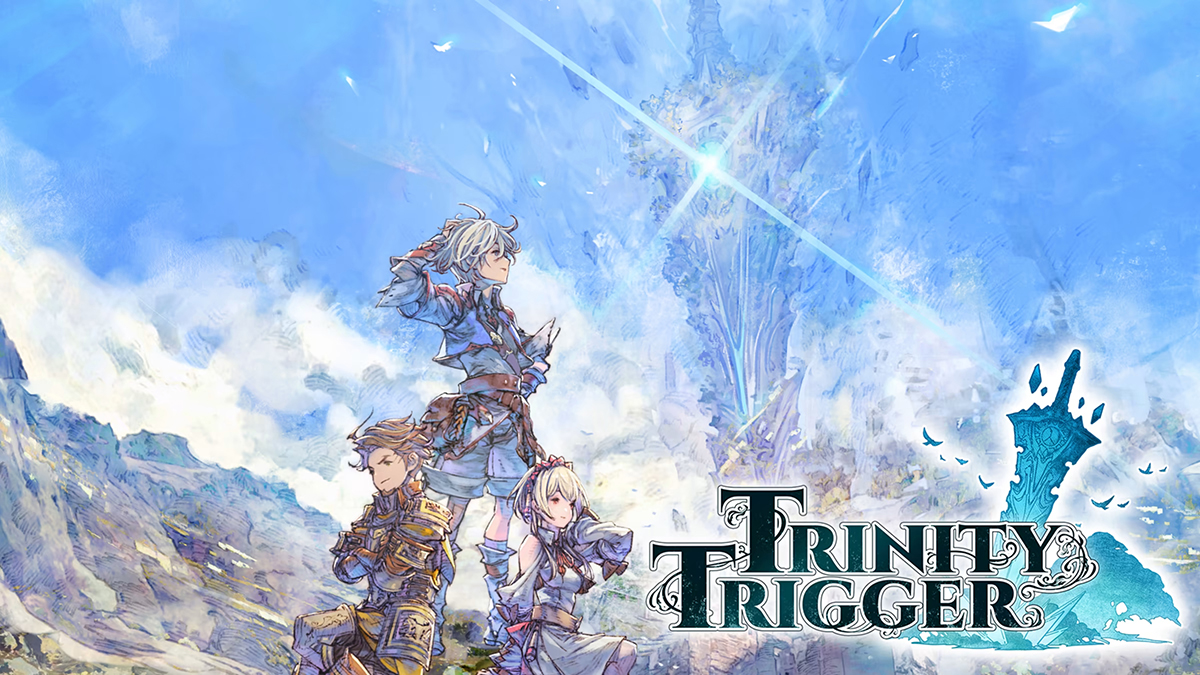
Trinity Trigger

Trinity Trigger, an action JRPG published by Xseed Games in April 2023, is essentially Secret of Mana with a fresh coat of paint. The story is simple. The combat is simple. The dungeons are simple. There’s a rudimentary crafting system, and it’s simple as well. I love this simplicity, which allows you to enjoy the game in the same way that you might enjoy scenery from a train window. Not everything has to be complicated, and Trinity Trigger is a wonderful title for people who play games to relax.

You control three heroes, each of whom can wield a set of weapons chosen via a ring menu, just like Secret of Mana. Some enemies are vulnerable to certain weapons, but these vulnerabilities aren’t a big deal outside of boss fights.

Unlike Secret of Mana, you don’t need to grind for weapon upgrades, which are unlocked automatically at the end of each dungeon. There are a few sidequests that involve backtracking in order to fight a slightly stronger enemy variation, but these aren’t necessary for staying ahead of the gentle difficulty curve. Trinity Trigger is slightly more complicated than I’m giving it credit for, but not by much, and it’s no trouble to figure out the various character optimization systems as you go.

If I were to offer any criticism of the game, I might point out that the AI of the characters you’re not directly controlling isn’t great, but this doesn’t really matter. The voice acting isn’t great either, but you can turn it off. There are a few short anime-style animated cutscenes, and they don’t include English subtitles if you’ve got the voice language set to Japanese. This is an unfortunate oversight, but it’s not as if the cutscenes contain important information about the story, which is largely immaterial.

This story, such as it is, involves a pair of deities enmeshed in an endless war. In order to avoid decimating the world, they’ve agreed to fight through human proxy warriors. The factions of both gods want this cycle to end. Your main viewpoint character, who has been chosen as one god’s proxy warrior, is therefore joined by two warriors from the opposite faction.

Even if they never intend to fight anyone, your party still journeys from one dungeon to the next in order to collect mystical weapons. These dungeons are actually giant weapons once wielded by the gods, and their magic spills out into the environment, causing diverse biomes to exist in close proximity. The snowy mountain biome is right next to the desert biome, for example. The game is fairly linear, so you progress from one biome to the next while wondering what climate is going to be around the next corner.

In many ways, Trinity Trigger reminds me of I Am Setsuna, a game I also enjoyed. The primary purpose of I Am Setsuna was to recapture the simplicity of the combat system of Chrono Trigger, which felt especially satisfying given how complicated and arcane JRPG combat systems had become in the 2010s. In the same way, Trinity Trigger is all about creating a frame for the basic combat loop of Secret of Mana while adding a few small quality-of-life updates.

Along with the simplicity of its combat, a significant part of what made Secret of Mana so lovely was how beautiful and green its world was. As an early Super Nintendo game, Secret of Mana didn’t have great writing, nor were the characters even remotely well-developed. In Secret of Mana, an evil empire wants to cut down a magical tree, and you must save the tree. The evil empire is evil, of course, and they must be stopped. The empire is never presented as a real threat, however. The reason you keep going in Secret of Mana, and the reason you care about the Mana Tree, is because the world is filled with gorgeous variations on the “forest” environment. There are sunlight-drenched peaceful forests and dark labyrinthine forests and lush autumn forests and sparse alpine forests and fantastic mushroom forests and glittering winter forests and forests with pink cherry blossom petals floating on the breeze.

Like Secret of Mana, the writing in Trinity Trigger is passable but not worth remarking on. Instead, the storytelling of the game is broadly conveyed through its environment. What would it mean if the natural environment stopped following natural patterns? What would it look like if lakes and rivers dried up and forests disappeared? What if natural disasters became an everyday occurrence? In Trinity Trigger, an environmental apocalypse is underway, but it’s happening very slowly. Your characters are doing their best to stop it, but that’s not really the point. Rather, what Trinity Trigger wants is for you to enjoy how the wind rustles the leaves and how the sunlight sparkles on the sand.

Basically, in Trinity Trigger, you run around colorful environments and attack colorful enemies with colorful weapons while watching various sets of numbers go up. There’s not much to say about the game save that it’s uncomplicated and fun to play, and I enjoyed the twenty hours I spent with it. I have nothing but respect and appreciation for a solid and well-made 7/10 game that knows what it’s doing and does it well, and I’m always up for saving some trees.
Hyrule’s Finest Teas

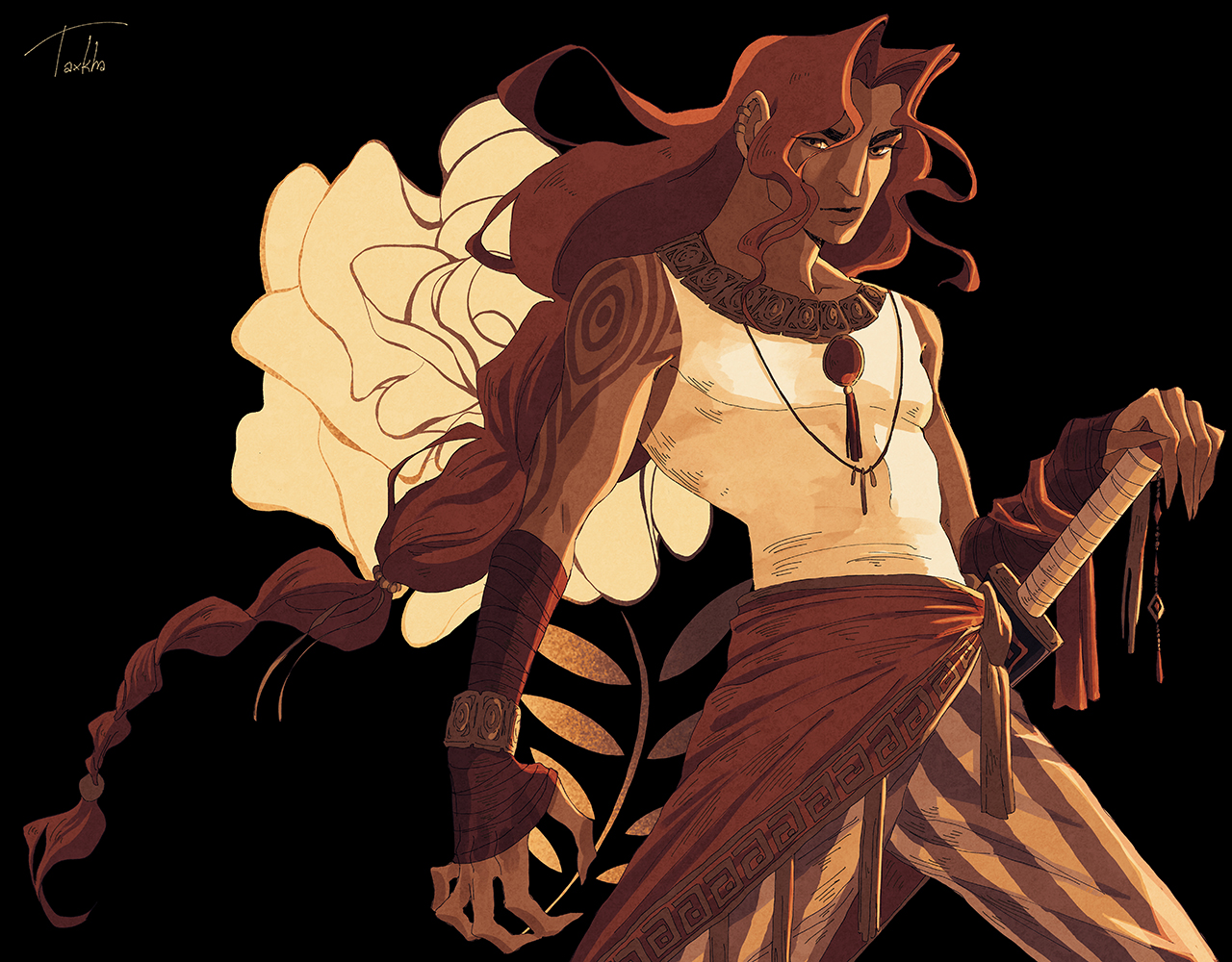
Link is a second-year college student who works as a barista at a small café on a cobblestone street next to his university. Every day he waters the plants, samples new teas, and listens patiently to the concerns of the people who visit. He especially enjoys the company of one of the regulars, a posh upperclassman named Zelda who comes to the café every day to write. It would be the perfect job if not for his boss, whose excellent taste does little to blunt the edge of his exacting standards.

It took me years of being in fandom to reach this point, but I finally embraced the cliché of writing a Coffeeshop AU. I had an intense Fall 2022 semester, and I wrote “Hyrule’s Finest Teas and Imports” to let off steam during the winter break. This started as a wholesome story about delicious café food, but it gradually transformed into something a bit darker. While I was thinking about why someone like Ganondorf would manage a café, I did a lot of research into the shady real estate practices common around college campuses in the United States. I ultimately decided that it would be fun for Ganondorf to commit tax fraud. As a treat.

The story is complete at four chapters and 9,200 words. It’s on AO3 here:
https://archiveofourown.org/works/43918116/chapters/110424639

I was extremely fortunate to work with the magical Mirarasol on an illustration for this story. Mirarasol creates lovely artwork of cute characters inhabiting stylish interiors, and they’ve done fan art for a number of games in addition to their original illustrations. If you’re interested, you can check out their work on Twitter (here) and on Instagram (here).  

Varré’s Bouquet

Deep under the Royal Capital of Leyndell, the cursed Omen son of Queen Marika bides his time within a prison of shadows. When the ambitious young surgeon Varré is summoned to attend to Mohg’s crown of horns, the two men forge a close bond, yet Varré can do nothing as the shining prince Miquella tempts Mohg with tales of a frightful power hidden within the dark hollows of the earth. As the Lands Between fall to ruin, Varré realizes the wisdom of Miquella’s dream, and he once again offers himself to Mohg, along with his love – and his blood.

While sweating through a set of analytical essays and academic book reviews earlier this year, I amused myself by writing a short story about the two worst characters in Elden Ring, White Mask Varré and Luminary Mohg. They’re both terrible people, but I’m intrigued by the unwritten backstory of their relationship. Because Varré is so unapologetically supportive of Mohg’s evil schemes, the pair has become the subject of a number of silly tongue-in-cheek memes (this one on Tumblr is probably of my favorite), but I followed my heart and wrote unironic gay monster romance. Game Rant may have called Mohg the “worst LGBT+ representation,” but I think he and Varré are adorable.

My story is complete at 3,800 words, and you can read it on AO3 here:
https://archiveofourown.org/works/46268107/chapters/116484187

I consider myself extremely lucky to have been able to work with Paristandard to create an illustration for the story. Along with Elden Ring, they also draw fan art for Lord of the Rings and The Silmarillion, and their original comics and character designs are fantastic. You can find their work on Twitter (here) and on Instagram (here).

The Academy of Raya Lucaria

This is how I imagine Sellen and Rennala celebrating the end of the semester at the Academy of Raya Lucaria.

The postapocalyptic world of Elden Ring isn’t a great place to live, and good people usually end up dead. The Academy of Raya Lucaria seems as though it was dangerous even before the world ended, as very few of the wizards who studied there had even the slightest hint of ethics regarding the otherworldly powers they were attempting to harness. As much as I would love to study magic myself, I’m fairly certain that I would die – or even worse, become undead – within the first semester of wizard school.

Also, multiple people have commented to me that Elden Ring contains the most accurate portrayal of academia they’ve seen in a video game. As a professor, I think it’s best that I keep my comments to myself, but damn if that isn’t the truth.

Dear Friend

If you want to fight your way into the spotlight, it always helps to have a dear friend with sharp teeth.

This is a fan illustration of an original short story written by a fandom friend, Runicmagitek on AO3. Their story is called “Dear Friend,” and it’s about a sinister shadow who follows an aspiring chanteuse from a dark corner of the forest into the bright lights of the city.

Runic is an incredible prose stylist, and it was a lot of fun to draw their characters! For more monster girls and murder friends, please check out their writing here:

🥂 AO3: https://archiveofourown.org/users/runicmagitek/
🔪 Twitter: https://twitter.com/runic_magitek
✨ Tumblr: https://runicmagitek.tumblr.com/

Momodora: Reverie Under The Moonlight

Momodora: Reverie Under The Moonlight is a 2D fantasy Metroidvania with adorable 16-bit pixel graphics and an emphasis on cute magical girls. It has an Easy Mode that’s genuinely chill, and it took me about seven hours to get 100% completion. Momodora features a lot of nods to the Dark Souls games in general and Bloodborne in particular, but I think a more accurate comparison (at least on Easy Mode) is the mellow Nintendo DS adventure-platformer Super Princess Peach.

I came to Momodora not knowing what to expect, and I was pleasantly surprised to find that it’s absolutely delightful. The game is relatively simple, but that’s okay, because it’s very good at what it does.

You play as Kaho, a cute girl wearing a white mage hood over a black miniskirt dress and thigh-high stockings. I get the feeling that her theme is supposed to be “sexy Shintō shrine maiden,” and she uses a giant red maple leaf as a sword. She also has a bow with unlimited arrows whose attack can be charged, an adorable dodge roll, and the ability to double-jump right out of the box. Her animations are lovely, and she’s a lot of fun.

Kaho is a silent protagonist, but what you pick up from other characters is that she’s come from abroad to talk to the Queen of Karst about a curse that has spread from the castle city into her small village. You begin the game on the border of a beautiful and vibrant 16-bit pixel forest before entering Karst, which is what the gothic Victorian city of Yharnam (from Bloodborne) would look like if it were rendered in Chrono Trigger style graphics. Whatever curse is threatening Kaho’s village has subsumed Karst in full force, and Kaho has to fight all manner of cute imps, cute witches, cute sorceresses, and cute devils, all of whom have colorful and interesting anime designs.  

Before you can go into Karst Castle proper, you need to find four seals that unlock its gate. This quest sends you into a maze of interconnected areas that include a flooded graveyard, an overgrown garden, a giant crematorium, and the rafters of a ruined cathedral. All of these areas are beautifully rendered and a joy to explore, and along the way Kaho meets a handful of cute NPCs and picks up a limited arsenal of items whose flavor text provides a hint of worldbuilding in classic Dark Souls fashion. Kaho gains a few more abilities – one in particular is a true blessing and a miracle on this earth, but I won’t spoil it – but Momodora sticks to its core gameplay and never gets too complicated.

In addition, you can find and collect 17 health upgrades, as well as 20 silver bugs to trade to a garden rabbit for prizes. About half of these collectables require minor exploration and backtracking, and the other half are hidden in ridiculous ways that I don’t think most players would be able to find without a walkthrough. Thankfully, if you’re playing on Easy Mode, it’s totally fine not to worry about the collectables you don’t find naturally.

You also pick up currency from defeated enemies that you can use to buy relics (which are essentially magic spells) from various merchants, but none of these items are necessary. Since Kaho doesn’t otherwise gain levels or become more powerful, I can imagine that some of the boss fights might be challenging and require a bit of an extra advantage, but this isn’t an issue in Easy Mode, in which Kaho begins the game with two powerful relics that will carry the player through the entire game.

In conclusion, Momodora is a chill and beautiful Metroidvania style action-exploration game that’s like Bloodborne for people who want to enjoy the gothic story and atmosphere without having to spend dozens of hours slamming their head against a wall to git gud. Also, since almost every character and enemy is a super cute magical girl or sexy adult witch-demon, I guess you could say that Momodora is like Bloodborne for lesbians.

I mean, Bloodborne itself is very much “Bloodborne for lesbians,” but you get what I’m saying.

The Gentle Inclusivity of Kawakami Hiromi

I’m delighted to announce that my short essay “The Gentle Inclusivity of Kawakami Hiromi’s ‘Summer Break'” was just published in the 21st volume of the Proceedings of the Association for Japanese Literary Studies. Here’s the abstract…

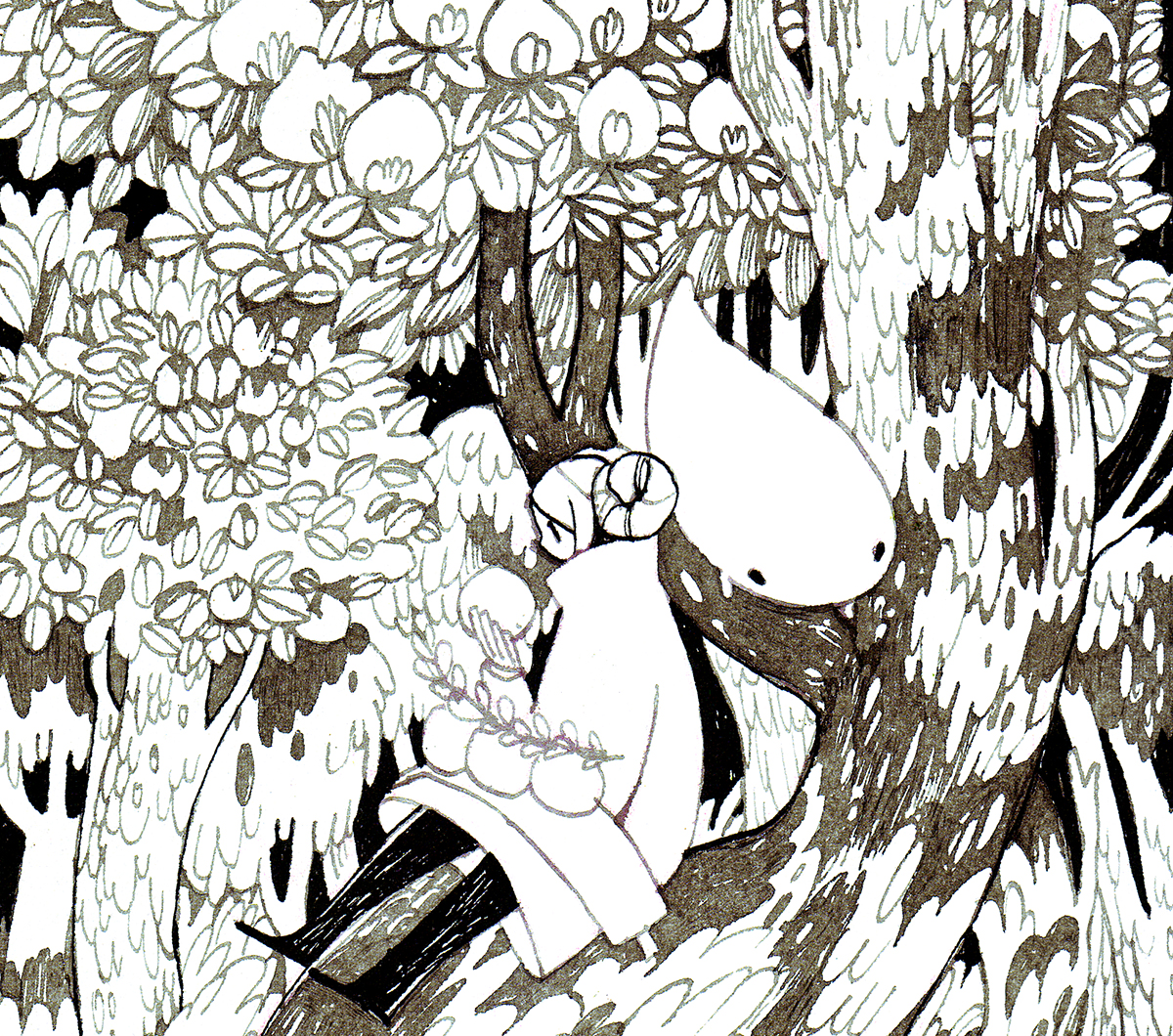
“Summer Break” (Natsu yasumi), the second story in Kawakami Hiromi’s 1998 collection The God of Bears (Kamisama), is narrated by a young person who spends a summer working as a laborer in a pear orchard. Like the other stories in The God of Bears, “Summer Break” operates according to the logic of magical realism, which is perhaps why the owner of the orchard tells the narrator not to worry about the small, talking creatures that run through the trees and devour fallen fruit. The narrator nevertheless forms a bond with one of these pear spirits, whose panic attacks mirror the narrator’s own dissociative episodes. At the end of the story, both the pear spirit and the narrator grapple with anxiety and suicidal ideation, but the story’s conclusion embraces self-acceptance.

From the first publication of the award-winning title story of The God of Bears in 1994 to the appearance “Summer Break” in the complete collection in 1998, various public figures attempted to address the social malaise that characterized Japan’s economic recession. Several highly influential public intellectuals, including the clinical psychologist Kawai Hayao and the cultural critic Saitō Tamaki, viewed mental illness as a symptom of broader cultural forces.

In “Summer Break,” however, Kawakami portrays the experience of mental illness as embodied and personal instead of abstract and societal. This paper analyzes how the fantasy elements of “Summer Break” render its treatment of mental illness as sympathetic and relatable, an aspect of the story that is enhanced by its use of magical creatures that externalize the narrator’s psychological state. I will place this analysis within in the context of recent narratives in Japanese fiction and popular culture categorized as ijinkei (“about nonhuman characters”), as well as critical discussions of the folkloric qualities of this period of Kawakami’s writing.

…that’s a lot of material to cover in such a short essay, but I think I did a decent job of contextualizing the story. This piece of writing was intended to serve as an introduction to my translation of the story itself. Unfortunately, despite almost a year of constant work and the assistance of multiple high-profile translators, we weren’t able to secure the publication rights. It’s a disappointment, but I hope the silver lining is that there are plans for the full God of Bears short story collection to appear in translation soon.

My essay is available on JSTOR; but, since I understand that not everyone has institutional access, I’ve also made a copy available on my website (here). Although it’s unofficial, you can download a PDF of my translation of the short story “Summer Break” (here). Years ago, I translated all of the stories in The God of Bears, and the illustrator I was once planning on working with to create illustrations is Maru, who you can find on Twitter (here). And finally, you can learn more about the Proceedings of the Association for Japanese Literary Studies on their website (here).

An Unfound Door, Chapter Eight

Agnes and Fhiad meet in the library on the morning after the summer court opens. Agnes wakes before dawn out of habit, while Fhiad has been up all night reading. Fhiad left to get tea, and he returns just as Agnes is studying the books he left on a desk.

They sit down together, and Fhiad apologizes for making wild proclamations. When Agnes asks if Fhiad would truly destroy Faloren if he found Soreiya’s Tear, he explains that doing so would be impossible, as the cost for performing magic on such a large scale would have an unimaginably high cost. Fhiad gives a demonstration of magical cost, and Agnes is so amazed that she asks a clueless question about his past, thus chilling the warmth of an intimate moment. 

. . . . . . . . . . . . . . . . . . . . .

This chapter marks the beginning of what Jessica Brody (of Save the Cat fame) calls the “fun and games” section of the story, which should constitute the bulk of Act Two. While the opening and closing of a novel should ideally follow a set formula that helps guide the reader, the middle of the story offers much more freedom to the writer.

I like to use this freedom to indulge in all of the narrative tropes I enjoy, and this chapter includes one of my favorite scenes. Namely, I love when an intimate conversation in a library helps the protagonist and her foil understand that they should be friends. At the beginning of this chapter, Agnes is characteristically blunt and ready to fight, but she and Fhiad manage to establish a common ground by virtue of the fact that they’re both giant nerds.

Fhiad begins to show his true colors in this scene. He’s more socially polished than Agnes, but he’s a shy academic at heart. In fact, most of Fhiad’s trouble has resulted from him being a pushover. Although he gets in a few good jabs at Agnes, Fhiad also submits to her demands multiple times during this conversation.

I was recently reading an academic book chapter about gothic fiction, and the author was saying that the erotic charge of the narrative is primarily generated by the question of whether a wild and mysterious man will sexually assault the heroine who fears him. This sexual fear turns to romance when the heroine realizes that the man’s menacing aura is a result of his violent passion for her.

I unapologetically appreciate that sort of character dynamic, but it doesn’t fit what’s going on with Agnes and Fhiad. Agnes isn’t fearless, but her extreme pragmatism drives her to behave as if she were. Meanwhile, Fhiad is competent and talented in his own way, but he has no business being “wild” or “menacing.” In a reversal of the classic gothic gender dynamic, Fhiad needs Agnes to push him forward, while what Agnes needs from Fhiad is his patience and kindness.     

More than anything, however, this chapter is about doing magic in a cool library. The next chapter is also going to be about magic and libraries. And the chapter after that? More magic, and more libraries. I love libraries and magic, what can I say. This is my story, and I get to write whatever I want.

The lovely gothic portrait of Agnes that accompanies this chapter’s preview was created by the magical Emily.E.Draws, whose vibrantly colorful fantasy characters can be found on Instagram (here) and on Tumblr (here).

An Unfound Door, Chapter Seven

Fhiad leaves the court and walks through the halls of the castle as he reflects on the circumstances that brought him to Faloren. Guerig, the king’s secretary and acting regent, has granted Fhiad permission to live in the castle while supposedly doing research on the building’s architecture. Fhiad curses himself for being drawn back to the kingdom, but he has few resources and fewer choices.

As he wanders, Fhiad reflects on how he was originally sent to Faloren as a replacement for a retired diplomat during what he intended to be a temporary break from his studies. He reflects on how the kingdom has declined during the past hundred years, and he wonders why Agnes seems to be a ghost of the person he met in the northern forest. 

. . . . . . . . . . . . . . . . . . . . .

An Unfound Door is written in limited third-person perspective, and this is the first chapter that focuses on Fhiad. As the representative of the novel’s “B Story,” Fhiad represents the upside-down world of Act Two, which begins when the “A Story” character’s status quo is disrupted. Fhiad is the catalyst for this disruption, but his arc is also a mirror of Agnes’s character development. Fhiad and Agnes ultimately want the same thing – the power to choose the direction of their lives – but their initial motivations and goals are drastically different.

Fhiad may have told Agnes that he intends to destroy her kingdom, but what he truly wants is to understand what happened to him. He’s suffering from severe trauma that he hasn’t been able to process, and he alternates between distraction and intense anger. He attempts to distract himself from his grief by tasking himself with a quest. Meanwhile, his frustration has no outlet save for Agnes, who became his target simply because she’s the only living person he knows. Fhiad is doing his best to survive, but he’s a hot mess.

More than anything, this chapter establishes how and why Fhiad has come to Faloren Castle. It also provides a second perspective on the setting.

What the reader is able to see through Fhiad’s eyes are two things that Agnes takes for granted. First, Agnes is subtly shunned by the members of her court; and second, Faloren Castle is impossibly large and labyrinthine. These two observations help justify the “fun and games” portion of Act Two, which will involve Agnes and Fhiad hunting for a hidden relic. In other words, Fhiad’s observations hint that Agnes is free to search the castle precisely because she doesn’t have many social obligations, and that her search is going to be interesting because it isn’t going to be easy.

Something else Fhiad has noticed is that there’s something suspicious about Agnes’s cousin Galien. This is fair, as Galien is hiding a number of unpleasant secrets. Still, Galien is no more a villain than Fhiad. I like to think of An Unfound Door as a “gothic fantasy mystery,” which means that everyone has secrets. This is why, at this point in the story, the main task of the characters is to learn how to communicate with each other. If they’re going to figure out who the actual villains are, they’ll need to be able to trust each other.

The portrait of Fhiad in the chapter preview was created by the heroic Silverpeel, a fantasy artist with a gothic flair. You can see more of Peel’s illustrations of knights and forests and gods and legends on Instagram (here), on Bluesky (here), and on Tumblr (here).