An Unfound Door, Chapter 10

After returning from the library in the east tower, Agnes and Fhiad immediately head to the door in the graveyard via a set of underground access tunnels for the castle staff. They enter the tunnel system through the ground floor library. Along the way, Agnes remarks on how all of the underground areas of the castle have been abandoned for decades. In the courtyard, Fhiad tries to open the door with magic but fails.

The next day, Agnes talks with her father, who is recovering from a lingering illness. He suggests that she should visit the castle’s west wing, which once hosted a world-renowned magic academy but has fallen to ruin after the war with Erdbhein. As she prepares to present herself at court that evening, Agnes reflects on the magic of the lost Soreiya’s Tear and thinks that her own wish would be to see Faloren before its decline.

.

Following two successive library explorations, this chapter is significantly more mundane. Agnes and Fhiad manage to locate the “unfound door” of the novel’s title, but Fhiad can’t open it. Agnes then talks to her father, the king, but he doesn’t know anything either.

The king points Agnes in a potential direction, but his advice is little more than his own wishful thinking. Much later on in the story, it will be revealed that Agnes’s father and mother spent a fair bit of time exploring the castle themselves. Although it may seem like Agnes’s father is an antagonist, he had dreams and ambitions once, and he loves his daughter in his own way.

An Unfound Door isn’t YA fiction – everyone in this story is an adult – but one of the staple elements of the genre of YA fiction that has always bothered me is how anyone over the age of twenty is automatically cast as a villain. I understand why it can be useful to set up “adults” as antagonists from a narrative perspective, but the idea that any given adult would have any actual power in real life is laughable.

Speaking personally, I feel like there are more limitations placed on me with every year I get older, and that’s the theme I want to express through Agnes’s father. Precisely because he’s a king, there are many things he can’t do. Still, when Agnes obliquely mentions that she’s taking up the quest he secretly began when he was younger, he can’t help but get excited. Agnes’s father isn’t a bad person; he’s just the hero of an entirely different story.

Also, although I love novels like those in the Redwall and Harry Potter series, I want to use the setbacks and mundanity of this chapter to challenge the fantasy genre convention that Agnes will be embarking on a fun adventure in a magical castle. I am not made of stone, and I’ve definitely enjoyed writing the adventure segments! Still, the point of this story is for Agnes to realize that her quest to save her kingdom isn’t what she should be doing with her life. Not everyone is meant to be a hero, and that’s okay.

The illustration in this chapter’s graphic was created by the magical Allison McKenzie, a Final Fantasy fan artist who draws colorful and expressive female characters who are always full of life. As you can probably guess from Agnes’s visual design, her character is partially based on Garnet from Final Fantasy IX, so I’m thrilled that Allison drew this illustration for me. You can check out her art on Twitter (here), on Instagram (here), and on Tumblr (here).

An Unfound Door, Chapter Nine

Agnes and Fhiad visit the magic library in the abandoned tower of the east wing of the castle, where Fhiad demonstrates the concept of magical “cost” to Agnes. Fhiad then locates a book about the castle’s architecture left in the library by Agatha, the princess of his era. He explains that Agatha was searching for a secret entrance to the castle’s deeper subterranean levels, where she believed Soreiya’s Tear was hidden. Fhiad shows Agnes an illustration of a door, and she immediately recognizes it as the entrance to a vault in the graveyard adjoining the north courtyard garden.

Fhiad is frustrated that Agnes was able to solve the problem so quickly, while Agnes is jealous of Fhiad’s relationship with Agatha. She snaps at him; and, in retaliation, he creates an entirely new staircase to the main hallway in a grand display of magic. Agnes is impressed, and Fhiad is pleased by her praise. They agree to visit the door in the graveyard immediately in order to see it for themselves.

.

There’s a tidy bit of plot setup in the chapter. This is where the reader learns about the weirdness going on between Fhiad and the princess of his era, and this is also where I introduce the eponymous “unfound door” of the novel’s title.  

This is the second chapter narrated from Fhiad’s perspective. When he sets part of the tower library on fire in order to adjust the castle architecture, he doesn’t remark on the fact that he’s doing anything unusual, but this is where it should become clear to the reader how exceptionally skilled he is. Agnes had a similar scene in Chapter Five, when it’s strongly implied that she’s keeping the bureaucracy of the royal household running almost single-handedly.

An Unfound Door isn’t a power fantasy, however. This is a story about the fall of empires and the gentle beauty of decay, and it ultimately doesn’t matter how talented the characters are. Both Agnes and Fhiad want to restore their kingdoms, but this isn’t possible, not even with their incredible skills. This isn’t a story about being strong and overcoming obstacles. That sort of narrative makes me tired.

I originally wrote this chapter in October 2023 before taking a long hiatus from the project. I returned to the novel this past April, and I’m pleased to say that the first draft is finished. Now that I’ve returned to the earlier chapters, it feels strange to see Fhiad and Agnes at this stage of their relationship. Even though I wrote this story myself, I have to admit that I’m looking forward to watching them gradually warm up to one another.

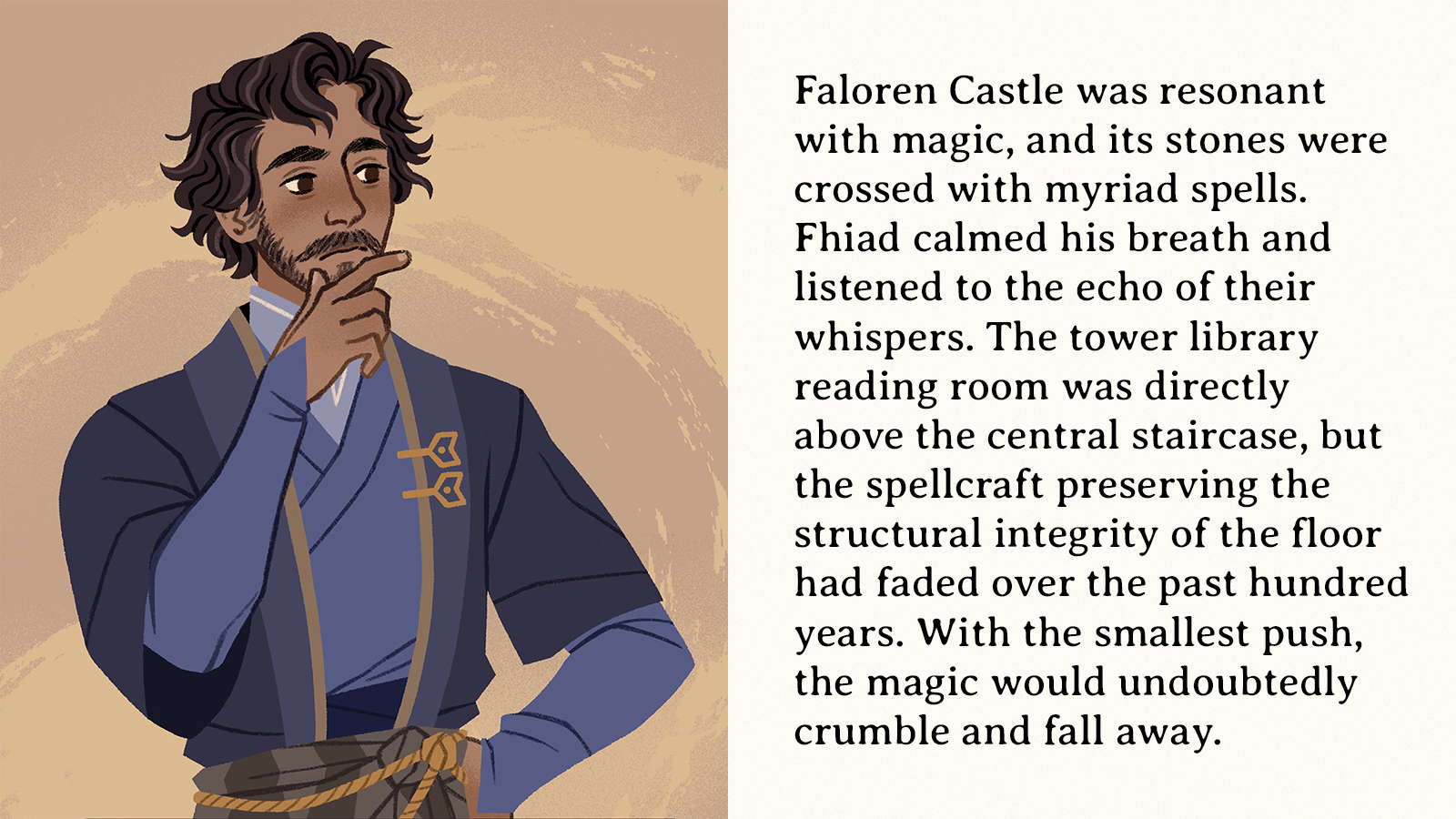
The illustration of Fhiad in this chapter’s preview graphic was created by the marvelous Emily Cheeseman, whose website is (here). You can follow her work on Instagram (here), and I recommend checking out her postcard club on Patreon (here). The general atmospheric vibe of An Unfound Door was partially inspired by Em’s graphic novella adaptation of Gawain and the Green Knight (here), so it was an incredible honor to have her draw one of my story’s main characters!

A Legend of Shadows

When calamity besets his home in the desert, the young prince Ganondorf is forced to journey abroad to seek answers in Hyrule’s ancient sanctuaries. Lost within the shadows of a temple deep in the forest, Ganondorf struggles with a burden he does not yet have the power to bear.

I wrote “A Legend of Shadows” for Hyrule Apocrypha, an illustrated storybook fanzine exploring the myths and lore of the Legend of Zelda series. I consider myself extremely lucky to have been be able to create a story illustration with Peregyr, whose green and magical art can be found on Twitter (here) and on DeviantArt (here). We had a great time imagining Ganondorf’s backstory as a failed hero. This is how the story opens…

What would you do if you weren’t the hero? What if the chosen one were someone else entirely? Would you curse the gods and lament your fate? Would you turn tail and go home? Would you try your luck elsewhere, in a distant land where no one knew your name? Or would you simply lay down your sword and give up? Ganondorf was beginning to suspect that he was no hero, but he was nothing if not stubborn. Giving up was not a choice he was willing to make.

You can read the full story on AO3 (here), and you can check out more of the work featured in the zine on Twitter (here) and on Tumblr (here). Leftover sales, which include some lovely Zelda-themed merch, are now open (here).

Mr. Saitou

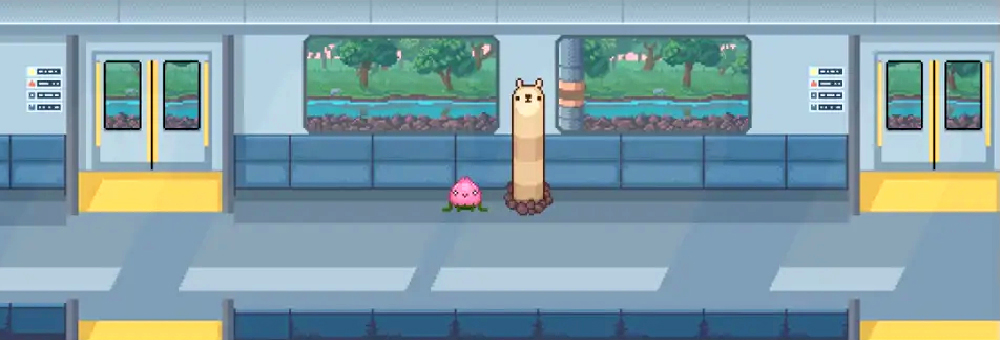
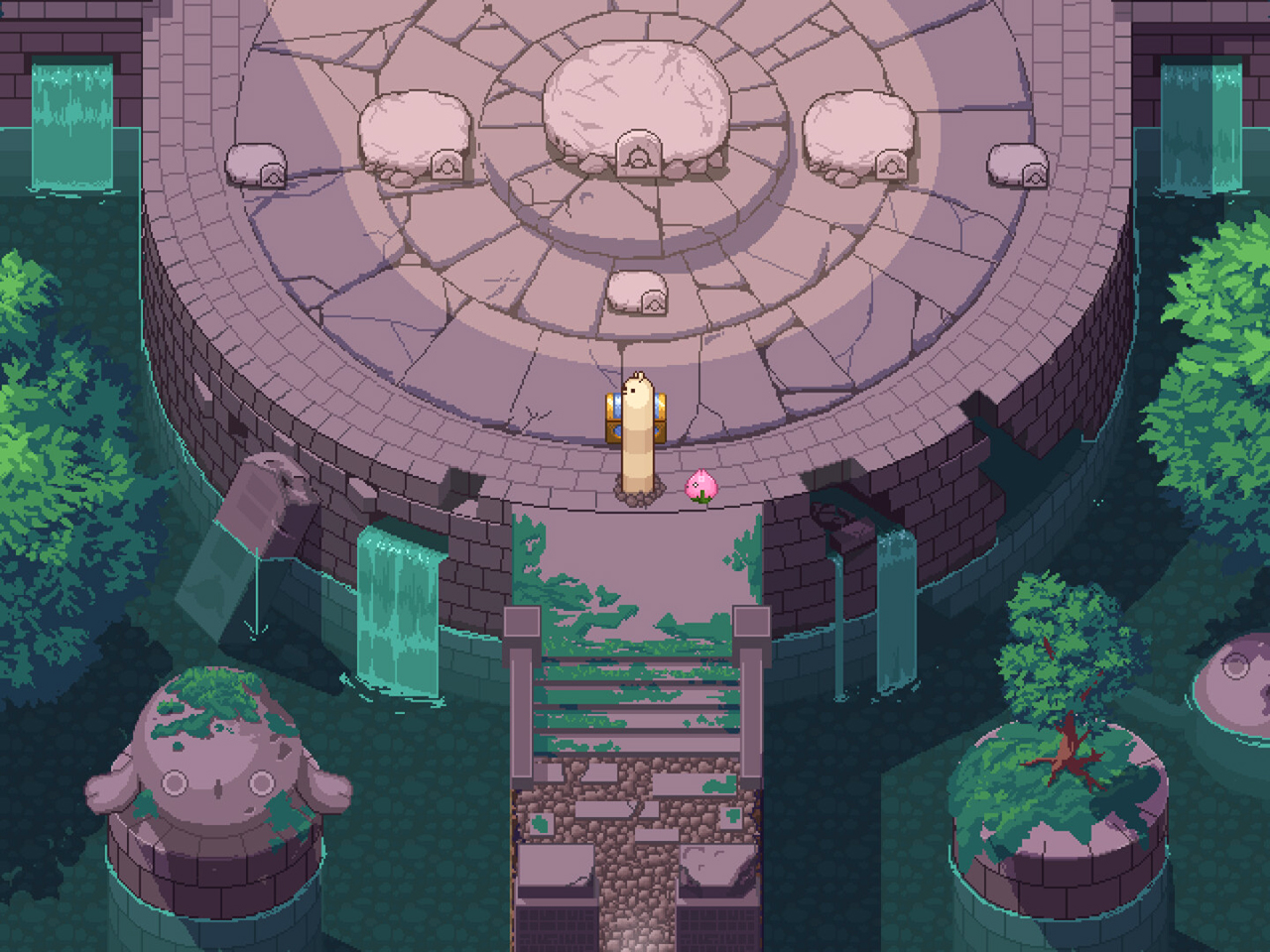
Mr. Saitou is an Undertale-style narrative adventure game (with music by Toby Fox) that takes about two hours to finish. You play as Saitou, a white-collar worker who finds himself in the hospital after a failed suicide attempt triggered by stress and overwork. While sleeping, Saitou dreams of himself as a llamaworm (a comically extended groundhog) who goes on an adventure with a cute pink flowerbud named Brandon, the dream persona of a young child Saitou meets in the hospital.

Mr. Saitou has something of slow start, during which the player’s sole job is mashing a button to advance text. Thankfully, the game becomes much more engaging after the first ten minutes, at which point Saitou enters the dream world.

After the introduction, Saitou spends about half an hour in an office of llamaworms that serves as a stage for a gentle comedy about workplace culture. After a ten-minute segment of mandatory afterwork socialization in an izakaya, Saitou returns home to his neighborhood of underground tunnels.

Saitou decides to skip work the next day. This gives him an opportunity to meet Bradon, who wants to visit the Flooded Gem Caverns deeper in the tunnels. The remainder of Mr. Saitou unfolds in a beautiful fantasy-themed underground space enhanced by lowkey elements of exploration and simple puzzles.

What I appreciate most about Mr. Saitou is its creativity, which is driven by cute but thoroughly original character designs and clever writing. Even though most of the gameplay consists of simple conversation-based fetch quests, I never got tired of seeing what was around the next corner, and I always enjoyed talking with each new character.

The game’s humor sits comfortably at the intersection between wholesome and quirky, and the writing subtly references internet culture without relying too heavily on these allusions. The simple spatial puzzles are easy and engaging without feeling as if they were phoned in, and the thematic background music is lovely from start to finish.

I love almost everything about Mr. Saitou, but I should probably mention that there’s an unskippable musical cutscene featuring about three minutes of unremittingly flashing strobe lights toward the end. If you (like me) are photosensitive, this may be worth taking into consideration.

In addition, the sentimentality of the ending may ring hollow for players searching for a more nuanced or complicated story, especially regarding the extent of an individual’s personal responsibility for ensuring their quality of life under late-stage capitalism. This is a valid criticism, of course, but Mr. Saitou is a game about a llamaworm and a talking flower having magical underground adventures. All things considered, I think it’s probably best to enjoy the game for what it is.

Mr. Saitou is a sweet but still surprising game that’s entertaining to read and engaging to play, and I feel that its story earns the right to state its final message clearly: The world is filled with interesting people and beautiful places, and there’s more to life than slowly killing yourself for your job. Good health is a blessing, so you might as well make the most of your time on this earth while you’re still young.

Residents of the Wild Fanzine

I’m honored to have a story about the adventures of the Gerudo archaeologist Rotana appearing in Residents of the Wild, a digital Legend of Zelda fanzine celebrating the NPCs of Breath of the Wild and Tears of the Kingdom. All proceeds from the zine will be donated to this year’s Zeldathon charity event. The zine is scheduled to be delivered on August 1, and preorders are open until July 28.

📚 rotwzine.carrd.co
📚 residents-of-the-wild-zine.square.site

When the Moon Didn’t Fall

All the clocks in Clock Town have stopped working, and letters have stopped arriving from the Gerudo in the Great Bay. Both the clock master’s daughter and the swamp witches’ son sense that something is amiss. Slowly they come to understand one another while their world gradually winds itself apart.

When the Moon Didn’t Fall is a short novella that imagines what Zelda and Ganon would look like in the world of Majora’s Mask. According to the Legend of Zelda Encyclopedia, Termina only exists as a dream inside Link’s mind, and it’s interesting to analyze how the events and characters of Majora’s Mask reflect the trauma that Link experienced in Ocarina of Time. I therefore wanted to use Termina as a stage to explore the trauma of Zelda and Ganon, specifically within the context of a dream that’s rapidly fading.

I think it’s fair to admit that I was strongly inspired by Stephen King’s 1990 novella “The Langoliers,” which is a disturbing bit of speculation concerning what happens to the world of the past after the present has already moved on. I tried to capture a similar sense of time (literally) running out, a theme that felt appropriate to the anxiety-inducing atmosphere of Majora’s Mask. Like “The Langoliers,” When the Moon Didn’t Fall has elements of uncanniness and horror, but it’s also about forgiveness, healing, and hope for the future.

I originally wrote this story back in 2018, but it still holds a special place in my heart. I completed a substantial set of edits so that I could include one of the early chapters in my portfolio of writing samples for The Whispers of Hyrule, an upcoming Legend of Zelda fanzine celebrating Hyrule’s forests. I love the swamp forest bordering the open plains of Majora’s Mask, and I enjoyed revisiting the strange green spaces of Termina through this fic.  

You can read the full story on AO3 here:
https://archiveofourown.org/works/14093202/

The story illustration was created by the dangerously talented Thali, whose cool and creepy video game art can be found on Twitter (here), on Instagram (here), and on Tumblr (here).

Evil Gardening with Ganondorf

I always seem to find myself in a Wind Waker mood during summer. One of the many things I love about The Wind Waker is how beautiful and green and breezy it is. It’s a joy to spend time in the world of the game, which is filled with all sorts of strange and interesting creatures.

To me, then, it’s always been amusing that the Deku Tree in the Forest Haven blames this state of affairs on Ganondorf. I believe the implication is supposed to be that Ganondorf is so innately evil that his very presence on the Great Sea causes monsters to appear, but that’s extremely silly. Ganondorf may be up to no good, but he’s just a crabby old man.

If Ganondorf is responsible for the appearance of plant monsters, I prefer to think that this is because one of his many old man hobbies is gardening. Evil gardening!!

This comic was drawn by the darkly brilliant Frankiesbugs, whose cute and creepy illustrations and comics can be found on Tumblr (here), on Instagram (here), on Cara (here), and on Redbubble (here). Frankiesbugs is also responsible for the comic art and environment design featured in an upcoming beat-em-up game called V’s Rage. Like Wind Waker, V’s Rage boasts plenty of cute creatures, beautiful sun-soaked landscapes, and ridiculous middle-aged men. You can check out the game and play a substantial free demo on Steam (here).

Tales of the Black Forest

Tales of the Black Forest
https://store.steampowered.com/app/1093910/Tales_of_the_Black_Forest/

Tales of the Black Forest is a 16-bit RPG Maker narrative adventure game whose tone is split evenly between wholesome cuteness and graphic horror. Although Tales of the Black Forest features a dozen simple puzzles, a few short chase sequences, and limited elements of exploration, it might be more accurate to call it a visual novel instead of a classic adventure game. Tales of the Black Forest takes about three and a half hours to play, and more than half of this time is spent reading character dialog as you progress through a linear story.

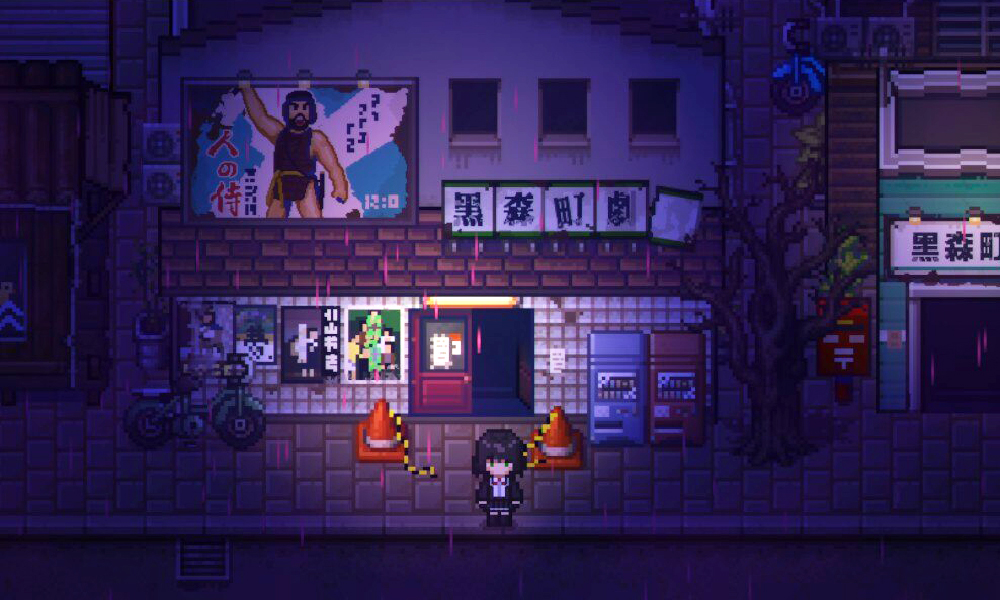
The game’s story follows a high school student named Kihara Kashin who wakes up on a bench outside an abandoned train station. Kihara has somehow been transported to a depopulated town called Kuromori (whose name means “black forest”), where she used to live as a child before her mother died in a car accident. Inside the derelict station, Kihara meets a mysterious shape-shifting woman named Kiritani Yuki, who tells her that she has been trapped in the ruins of Kuromori by a curse. The only way to escape Kuromori is to use Nensha, a magical power that allows Kihara to travel back in time by touching retro electronic devices. By going back to the 1990s with Kiritani as her guide, Kihara can learn the origin of the curse and hopefully break it. 

The overall story arc of Tales of the Black Forest admittedly doesn’t make much sense. Thankfully, the game is split into three distinct chapters, each of which showcases the stand-alone character story of a cute yōkai girl while allowing the player to explore her environment. Each of the three chapters also explores the intersection between an urban legend and a social issue of the 1990s.

The first chapter is about a deserted village, Shiranaki (a play on the urban legend of Inunaki Village), and rural depopulation. The second chapter is about a magical ghost train and a fictional version of the Aum Shinrikyō “new religious movement” that carried out the Tokyo Subway Sarin Gas Attacks in March 1995. The third chapter is about a haunted movie theater that serves as a case study for how many small businesses that thrived during the postwar Shōwa era were forced to close during the prolonged economic recession of the 1990s.

Along with urban legends and social issues, Tales of the Black Forest is strongly inspired by the movies of Studio Ghibli, and its magical world is filled with quirky yōkai and gentle kami. The character illustrations of cute girls that accompany the dialog text are somewhat generic, but the game’s developers clearly put a great deal of love and attention into the 16-bit character sprites and their environments. There’s not a single part of this game that doesn’t make a gorgeous screenshot.

Alongside its whimsy and beauty, however, Tales of the Black Forest contains serious and sometimes graphically violent scenarios with disturbing themes and imagery. The overall tone of the game’s story emphasizes character drama more than horror, but the gruesome and upsetting elements are still there. You’ll be talking to adorable cats in the beautiful green yard of a forest café, and fifteen minutes later you’ll be watching a young woman beaten to death by a deranged cultist.

This mix of wholesome and horror worked for me, but both tonal aspects of the story are equally prominent. Accordingly, I wouldn’t recommend Black Forest to anyone who can’t sit through the creepier moments of The Ring, nor would I recommend it to anyone who can’t tolerate the more sentimental moments of My Neighbor Totoro.

Tales of the Black Forest was made by a Chinese studio in an obvious homage to Japanese popular culture, and its story occasionally feels like an attempt to filter a lecture from an “Introduction to Contemporary Japanese Society” university course through the medium of fiction. I personally found the references to Japanese social problems of the 1990s to be interesting and well-intentioned, but I could understand that some players might find these elements of the story a bit cringe in the way that early 2000s “onigiri means rice ball desu” North American anime fandom was a bit cringe.

Tales of the Black Forest was originally written in Chinese, and the English translation feels as though it was created by someone without much experience in localization. It’s serviceable, but it can be awkward at times. I tend to think the concept of “standard English” is nonsense, and I found the translation to be charming, especially because it reminded me of how pirated anime used to have English subtitles created by people whose first language was Chinese. In keeping with the retro theme of the game, I very much appreciated this unintentional element of nostalgia.

Tales of the Black Forest isn’t perfect, but it’s a solid 7/10 game that’s elevated to an 8/10 by virtue of the love and care that the two-person development team put into every aspect of its creation. This game caters to Japanese pop culture nerds who are fans of both cute anime characters and creepy urban legends, and I’m surprised it hasn’t attracted more attention since it was released on Steam in 2019. Tales of the Black Forest is a small but shining hidden treasure.

Usurper Ghoul

Usurper Ghoul
https://evandahm.itch.io/usurper-ghoul

Usurper Ghoul is a nonviolent Game Boy adventure game that channels the “ruined kingdom” vibe of Dark Souls. I tend to think that Dark Souls is marred by needless difficulty; and, in the same way, the gameplay elements of Usurper Ghoul are needlessly frustrating. The nonlinear exploration-based gameplay of Usurper Ghoul is on brand for a Soulslike Game Boy game, but it’s not for everyone. Like Dark Souls, Usurper Ghoul becomes more interesting the more you engage with it, but the beginning is rough.

You play as a horned, skull-headed demon who wakes in a garden in the hills overlooking a small village, which in turn overlooks a valley of tombs. In true Dark Souls fashion, no one tells you where to go or what you need to do, and it’s possible to spend a lot of time walking around without getting anywhere. There are a few people scattered across the wilderness, but they’re not particularly helpful.

With no particular goal other than to explore the world, your job is to collect three items from three categories. Flowers allow you to interact with people, sticks allow you to interact with the environment, and rocks allow you to access more knowledge about the world. One stick allows you to unlock doors, for example, while another stick allows you to read written text. The catch is that you can only hold one of each type of item at a time.

The necessity of discarding one item in order to use another fits the broader theme of the game, which is that something must be sacrificed in order for something else to be gained. Unfortunately, switching between items involves a great deal of needless backtracking. The world of Usurper Ghoul isn’t that big, and the game isn’t overly complicated, but it’s big and complicated enough for the backtracking to be annoying. There are no puzzles involved; it’s just donkey work.

One might say that Dark Souls involves needless complications and barriers to progress, but one of the primary attractions of Dark Souls is that it’s gorgeous to look at. You might be continually frustrated over the course of your journey through Lordran, but you tolerate the setbacks because the environment is so beautiful and atmospheric. The world design of Usurper Ghoul is unique and interesting, to be sure, but it’s still rendered with primitive Game Boy graphics. There’s no background music, and the sound design is limited to jarring beeps at odd moments. In other words, it’s not necessarily a pleasure to trek back and forth across the map to switch out one tool for another.

The overall story of Usurper Ghoul is intriguing, but the writing is hit or miss. Most NPCs say decontextualized NPC banalities, and the lore encountered in books and on monuments often feels like a parody of Dark Souls. Although this is never explained, your goal is to enter a tower; and, to do so, you have to collect enough lore to figure out the right order to light torches in front of the tombs in the valley. You need different sticks to unlock gates, to read the writing on the tombs, and to light their torches, so this is a tedious process even if you (like me) lose patience with the game’s obtuse writing and resort to a walkthrough to figure out the order.

Having discussed what’s frustrating about Usurper Ghoul, I now want to explain why I enjoyed it anyway. The next paragraph contains mild gameplay spoilers, but it’s also the coolest part of the game.

For your own nefarious purposes, you can offer three varieties of flowers to NPCs. Comely flowers make people like you, malodorous flowers make people dislike you, and horrid flowers will kill anyone who touches them (except you). In one of the game’s endings, you can climb the tower in the valley and simply leave the kingdom behind without hurting anyone. If you want to experience everything Usurper King has to offer, however, your goal becomes to kill as many NPCs as possible while managing the limitations imposed by each death. Each NPC you kill with a horrid flower leaves a book in the tower whose text emphasizes the theme of sacrifice. For me, this was when the story became worth the trouble of navigating the world.

I found the endgame of Usurper Ghoul to be extremely compelling. And really, despite the initial annoyances, the ideas informing Usurper Ghoul are brilliant. I feel that the success of the execution is limited by the Game Boy technology, and I’d like to give the developer a nice chunk of cash to hire collaborators and develop these ideas into a less bare-bones format, perhaps along the lines of Tunic. Usurper Ghoul is a fascinating proof of concept; and, with a bit of polish, I could easily imagine it becoming a cult classic.

For me, the payoff of Usurper Ghoul was worth the frustration of the gameplay and the occasional Dark Fantasy Generator™ writing, but your mileage may vary. There’s a lot to explore and experiment with in the world of the game, and it’s definitely possible to spend several hours there. I lost patience toward the middle and used (this walkthrough on Reddit) to smooth over some of the rougher bits, and I ended up spending a bit more than two hours with the game. If nothing else, I’m really looking forward to checking out the developer’s comic projects in the near future.

An Elegy of Earth and Sky

An Elegy of Earth and Sky
https://archiveofourown.org/works/55003288

Long ago, in a time now lost to the ages, Hyrule was a formless void roiling with primal darkness. Seeing potential in this untapped energy, three goddesses descended from the source of light to shape Hyrule according to their will. They bestowed three sacred virtues upon their daughter before leaving her in the land they created, where the god of the earth waited to grant her a gift of his own.

I’ve been intrigued by the mythology of the Legend of Zelda games since I first read the fantastically illustrated story of Hyrule’s creation in the game manual for A Link to the Past, and I’ve enjoyed how games like Ocarina of Time and Skyward Sword have expanded on the divine cosmology of the series. I was frustrated by the lack of any foundational mythology in Tears of the Kingdom, so I decided to write my own version of Hyrule’s origin story. The first half is based on Hesiod’s Theogony, while the second half borrows from one of the stories about Izanami and Izanagi in the Kojiki. Hopefully this short story reflects the poetry of its inspirations!

The illustration that accompanies this story was created by Hylias_Disgrace, a purveyor of the strange and divine whose gorgeous character art and intriguing comics can be found on Instagram (here). It was the artist’s decision to use the famous Gustav Klimt painting The Kiss as a way to bring out the parallels between Hyrule’s deities and the myth of Hades and Persephone, and I love how this dynamic illustration celebrates the cycles of the natural world.