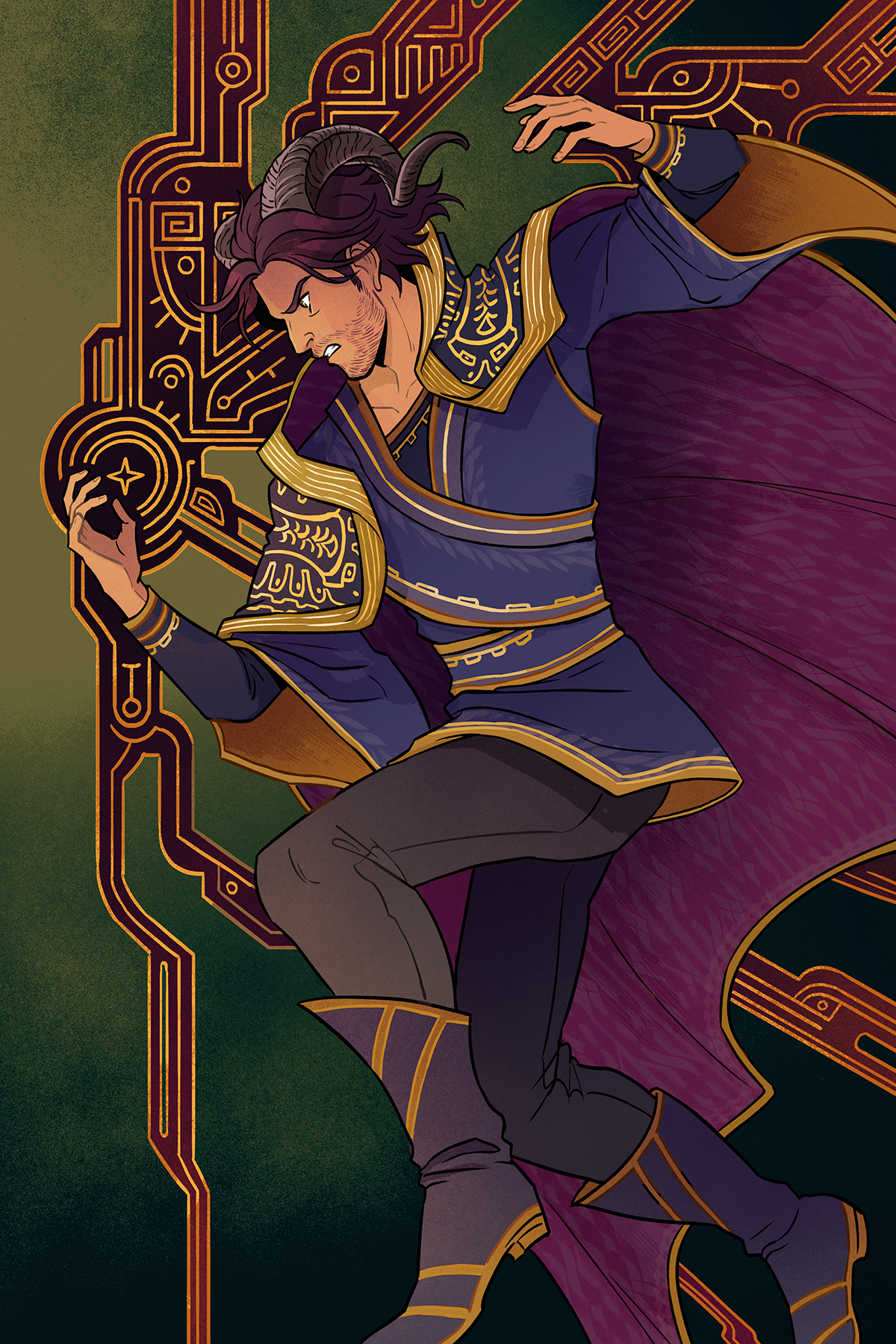
Ceres and the Poison Sea

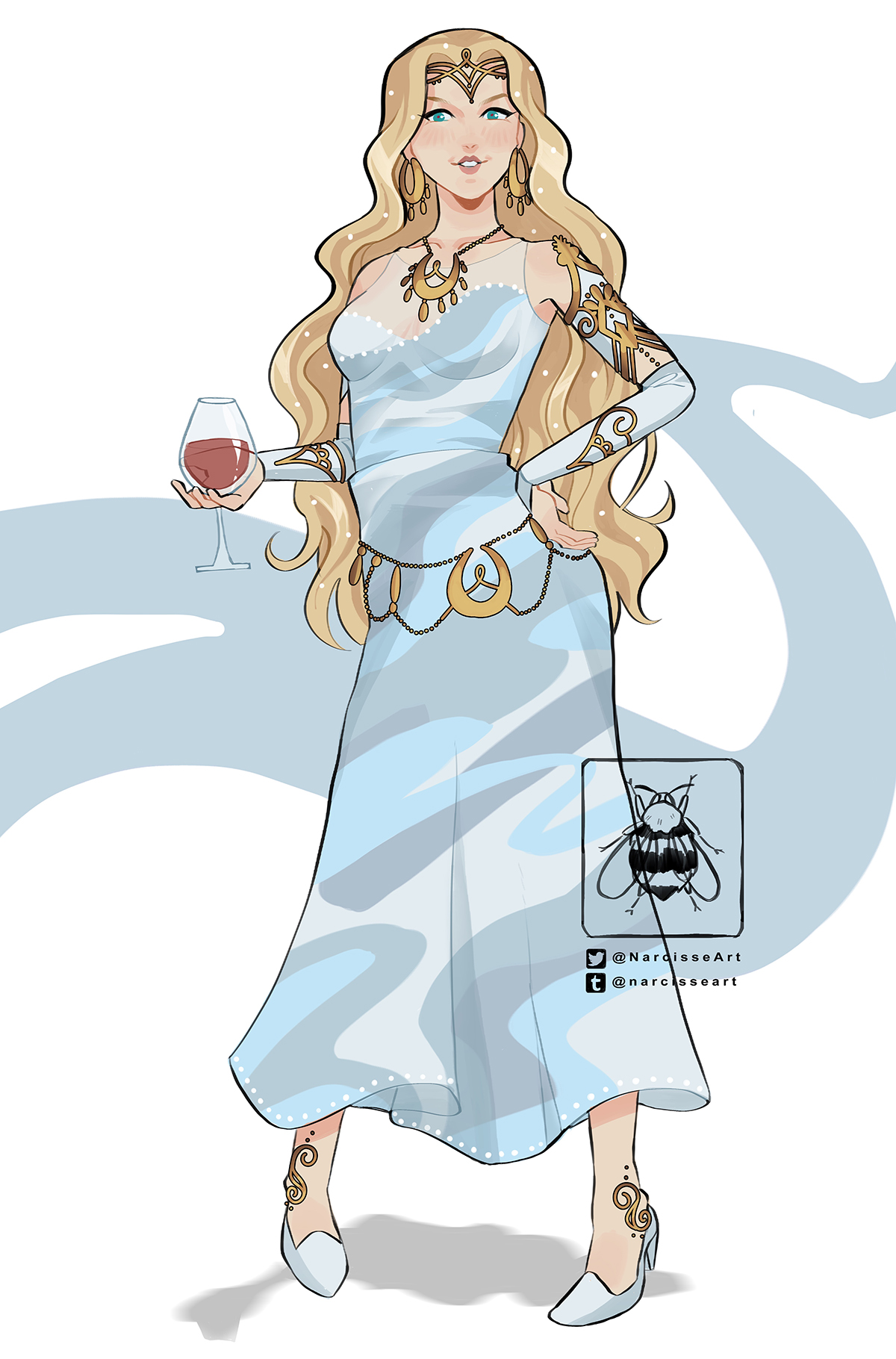
I just finished Chapter 10 of The Demon King, an original fantasy novel about adult wizards making terrible decisions. This chapter is an extended flashback to the time before the apocalypse that created the world of the story. Although I’m still brainstorming the details of this disaster in terms of the universe’s magical system, what essentially happened is that a frustrated researcher with a wealth of funding but no oversight managed to create the equivalent of a miniature sun that exploded into a supernova before collapsing into a black hole. This set off a chain reaction that rapidly accelerated climate change, which in turn significantly raised the sea level and irradiated the ocean.  

The researcher’s tech firm was located in New York. Because of the disaster, the city no longer exists, nor does anything east of Newark Bay and the Arthur Kill Straight. In order to prevent the decimation of the entire Mid-Atlantic region, mages pushed the landmass of Manhattan Island and Staten Island westward to create a mountain range protecting the mainland from the toxic ocean and its storms. This mountain range also serves as a water filtration system that feeds a system of freshwater lakes and rivers to its immediate west, which has become a kingdom known as Whitespire.

Geographically speaking, Whitespire is somewhere in the vicinity of Elizabeth Seaport in New Jersey. Although a great deal of I-95 is underwater, Route 1 still functions as a major trade route, and Whitespire is about halfway between the Northern Kingdoms (Hartford, Springfield, and a bit of Rhode Island) and the Southern Territories (Baltimore and Washington DC). Because of changing climate patterns, everywhere north of Albany and south of Richmond is uninhabitable, as is the land west of the Appalachian Mountains. Meanwhile, most of New Jersey and eastern Pennsylvania is a wasteland where water is scare and nothing grows.

The Northern Kingdoms are governed by draconian regimes that are constantly at war with one another, while the Southern Territories are lawless and threatened by the steadily rising ocean. Whitespire is the only real civilization left on the East Coast of North America, which has been isolated from the rest of the world by the impossibility of travel by sea or air. The citystate thrives because of its mild climate, access to plentiful fresh water, and relative distance from other centers of power.

Whitespire is ruled by a royal family whose primary duty is to ensure that the system filtering the seawater through the mountains continues to function properly. The bloodline of the royal family is not strictly hereditary, as anyone able to command the necessary magic may be adopted into royal line. Generally speaking, however, knowledge of the kingdom’s secrets and rituals are passed from parent to child. The queens and kings of Whitespire are supported by a religious order dedicated to preserving the magic necessary to protect the kingdom.

Under the stewardship of its royal family, Whitespire has been peaceful for several hundred years, but this doesn’t mean the monarchs have absolute authority. Political power is shared between the noble lines that maintain the rivers and lakes that spread from the Whitespire Castle, and there are occasional disputes over succession, taxes, and territory rights.

Ceres is the current reigning queen of Whitespire. For reasons known only to herself, Ceres’s mother resolved disputes among Whitespire’s aristocracy through strategic assassinations, which eventually resulted in her murder. As a result, Ceres ascended the throne during a political crisis when she was nineteen. She is a supremely competent ruler, but her reign has been marred by lingering political tensions. She navigates this challenge by presenting a wise and virtuous image of herself in public but being crafty and merciless behind closed doors.

Ceres was born to be a queen, and she plays her role with style and grace. Her only concern is that she is entirely ignorant of the vast majority of Whitespire’s deep magic, as her mother never shared the kingdom’s lore with her. To make matters worse, the former queen killed many of the people who were close to her, along with the entire order of priestesses dedicated to the worship of a deity called The Weaver, who supposedly established Whitespire by wresting the primordial world from the control of demons.

Although the truth is more complicated, “demons” are believed to be powerful monsters whose magic can’t be controlled and can thus only exist in a state of madness and chaos. Demons are real; and the eponymous “demon king” Ananth, who has traveled centuries into the future from a time that he considers be the pre-apocalyptic present, is one of them.

Ceres is primarily a foil to Ananth during the first two narrative arcs, but I plan for her to become the main viewpoint character during the third and final part of the story. She befriends Ananth mainly for political reasons as she attempts to prevent a coup organized by operatives from the Northern Territories, but her real interest in him comes from his openly stated intention to steal the hidden relic that’s the key to the magic of the royal family. Ceres needs this relic just as much as Ananth does, so she aids his plans with the hope that he’ll find it for her. As someone who possess powerful magic of her own, Ceres has full confidence that she can fight and kill Ananth if necessary, so she’s completely unbothered by his antagonism toward her.

Ananth doesn’t treat Ceres like a queen, so she returns the favor by not treating him as a demon capable of destroying her kingdom whenever the mood strikes him. As a result, they gradually form an unlikely friendship that gives Ceres a stage to be her best and most authentic self, namely, a strong and self-assured woman who loves drinking and dick jokes. It goes without saying that she’s a joy to write.

The illustration above was created by Doc Hollibee, who is on Twitter (here) and Tumblr (here). Doc drew me a picture of Princess Zelda with a sword (here), and I loved it so much that I asked her to draw Ceres with the same energy. Doc creates marvelous illustrations that depict the women of the Final Fantasy games as beautiful but still powerful and full of personality, and I’m thrilled and delighted to see the same artistic sensibility applied to my own original character.

The Demon King Reboot

Around this time last year, I finished an original fantasy novella called The Demon King. I serialized it on AO3, posting each chapter as I wrote it with a minimum of editing. This year I’ve been slowly editing the story into a legitimate novel. The process has been a lot of fun, but I’ve had to make some major changes.

I originally planned to serialize The Demon King in five arcs. The outline of the story was structured for each arc to focus on one character while providing the reader with one major revelation. I wanted there to be something resembling a punchline at the end of every scene, so I wrote the story as a comedy centered on character interactions. In other words, I saw The Demon King as something like an ongoing prose webcomic illuminated with occasional illustrations. AO3 isn’t a good platform for a project like this, however, and it was impossible to build an audience. I therefore closed the story at the end of the first arc.

In the original version of the story, I deliberately left room for the plot to spool out across later installments. In order to write a proper novel, however, I need to make the structure more streamlined and compact.

My strategy has been to simplify the plot in order to focus on the most important themes and character development arcs. The easiest way to go about this has been to remove half of the cast from the story. This was relatively painless, as I’m sure these characters will return in another project.

Another efficient way to simplify the story has been to make certain aspects of the plot clear from the beginning. A major component of this was to drop the conceit of the main characters going by multiple names. In the first draft, the eponymous demon king called himself “Balthazar” because he thought it sounded like a wizard name, and the characters closely associated with Balthazar humored him by using wizard names of their own. I decided to cut the plot points relevant to Balthazar using a fake name; so, in the current draft of the story, he goes by his real name, Ananth.

Ananth uses time magic, which needs to be clear from the beginning. The extent of the time travel will only be revealed gradually, but it will make my job infinitely easier if the reader sees Ananth using time magic in the very first chapter. Not only does this explain a number of aspects of his character that would otherwise be needlessly mysterious, but it also creates a compelling sense of mystery by providing opportunities for the reader to understand that Ananth is in fact very bad at using magic. Given that his only real talent is a basic ability to manipulate time, how did he become so powerful? Where (or when) did he come from, and what are his intentions?

While Ananth’s character has changed significantly, his foil Ceres hasn’t changed much at all. Ceres is her real name, and she’s not hiding anything by being catty and manipulative; that’s just her personality. The one significant edit I made is that Ceres is no longer a princess, but a queen. Then again, this isn’t much more than a matter of using the “find and replace” function to switch a few words, as Ceres was always a queen in my heart.

In any case, I’ve succeeded in compacting the story outline from fifty chapters into a solid thirty, and I’ve managed to finish the first ten. I enjoyed serializing fanfic novels on AO3 because of the constant stream of positive feedback and encouragement, so the major challenge of writing an original novel has been working in relative isolation. It was difficult to get started on revising this project, and it’s been slow going. Still, now that I know the shape of the story, I have a better sense of working toward an achievable goal.

The illustration above is by @Lunie_junk on Twitter, who also shares her work on DeviantArt (here) and on her Patreon page (here). I love Lunie’s Legend of Zelda and Final Fantasy art, and I’m a huge fan of her soft pastel style and colorful fantasy illustrations. She takes character commissions on a regular basis, and I recommend checking her out on her Carrd page (here) if you’re interested. I adore the story illustration Lunie created for me, and I really enjoyed working with her!

Plant Space

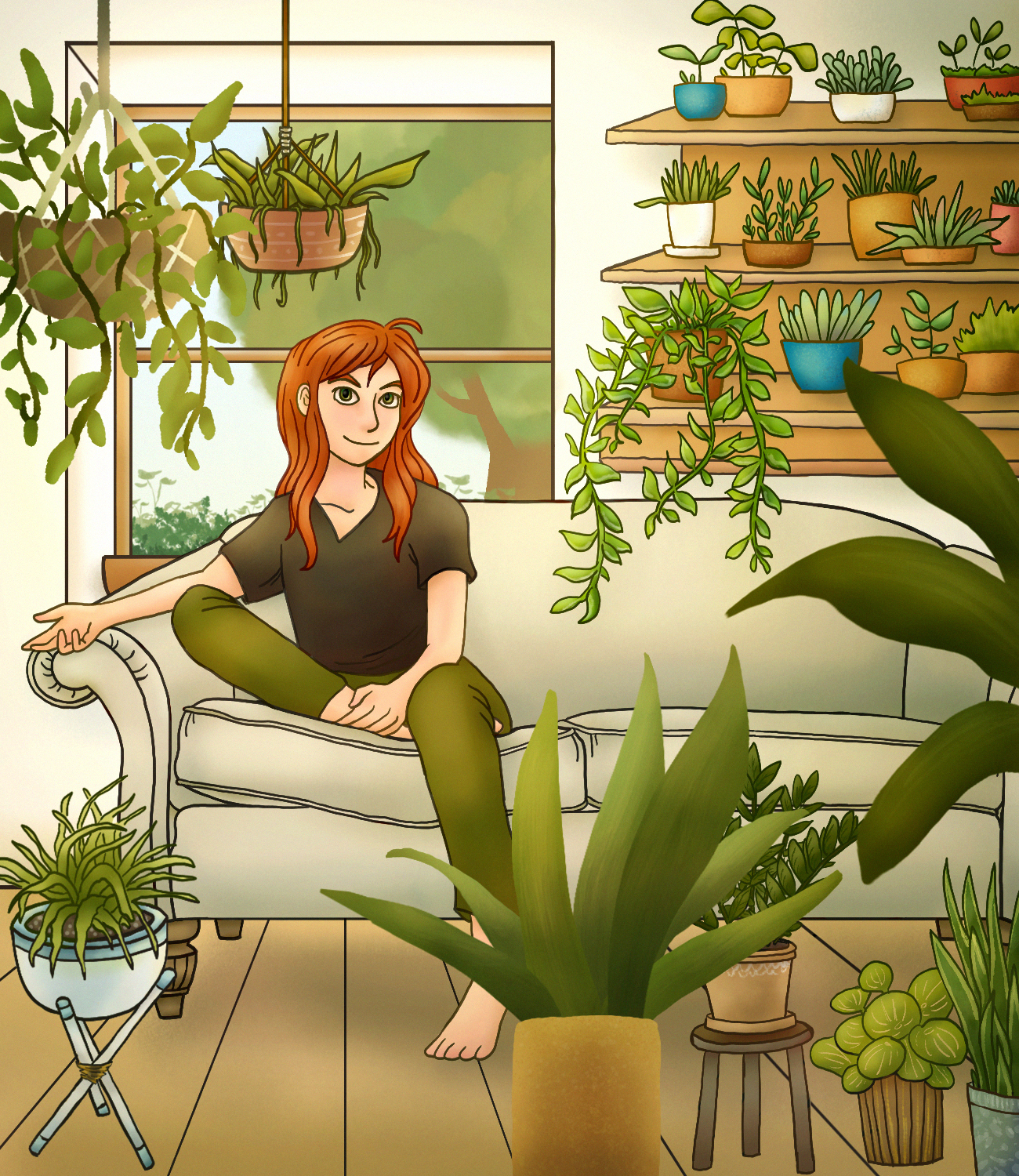
No one in this house is “productive.” 🌿

Inspired by my annual reading of Sarah Ahmed, I drew this as a reminder to myself that there’s room for stillness and silence in the ongoing resistance against systems that seek to exploit our energy and labor. It ended up becoming an unintentional self-portrait. I was thinking, “What sort of person would live in a house like this,” and then I realized, “Oh right, I do.”

A lot of my plants have been all across the United States as I moved from apartment to apartment while chasing jobs in a market that depends on people like me, by which I mean young(ish) people who are willing to cut their connections and uproot their entire lives in order to have a small chance at getting their foot in the door of an unnecessarily competitive industry. Academia especially is built on exploited and largely uncompensated labor, and there’s so much survivor bias that not even the people who have experienced and suffered from this precarity acknowledge how harmful it is to everyone involved.

It’s wild how the vast majority of critiques of capitalism are contained within the logic of capitalism. Capitalism is all about doing things and being productive; and, in exactly the same way, most critiques of capitalism are about doing things and being productive. To give a classic example, Marx says that workers need to utilize the “muscle power” and “vital force” that have been harnessed by capitalism and redirect their energy and labor to overthrow the system. I would argue that not doing things and not being productive is an equally valid means of resisting capitalism. Sarah Ahmed, who has just as fraught of a relationship with academia as I do, has argued the same thing: Don’t allow yourself to become a tool in the hands of people who are intent on breaking you.

After being destroyed by a “dream job” that I almost had to kill myself to stay on top of, I made a firm decision to take it easy and chill out for a bit. Part of this decision is deprogramming my instinct to be “productive,” but a lot of it is simply taking the time to be quiet and listen while creating the space to appreciate the sort of time-consuming writing, scholarship, and art that’s been marginalized and pushed aside by the constant demand for new content. Like my plants, I’m going to sit still and soak in the sun.

………also, I needed an “author photo” for my summer project, a zine about Gothic botanical horror. 💀🌱

A Public Service

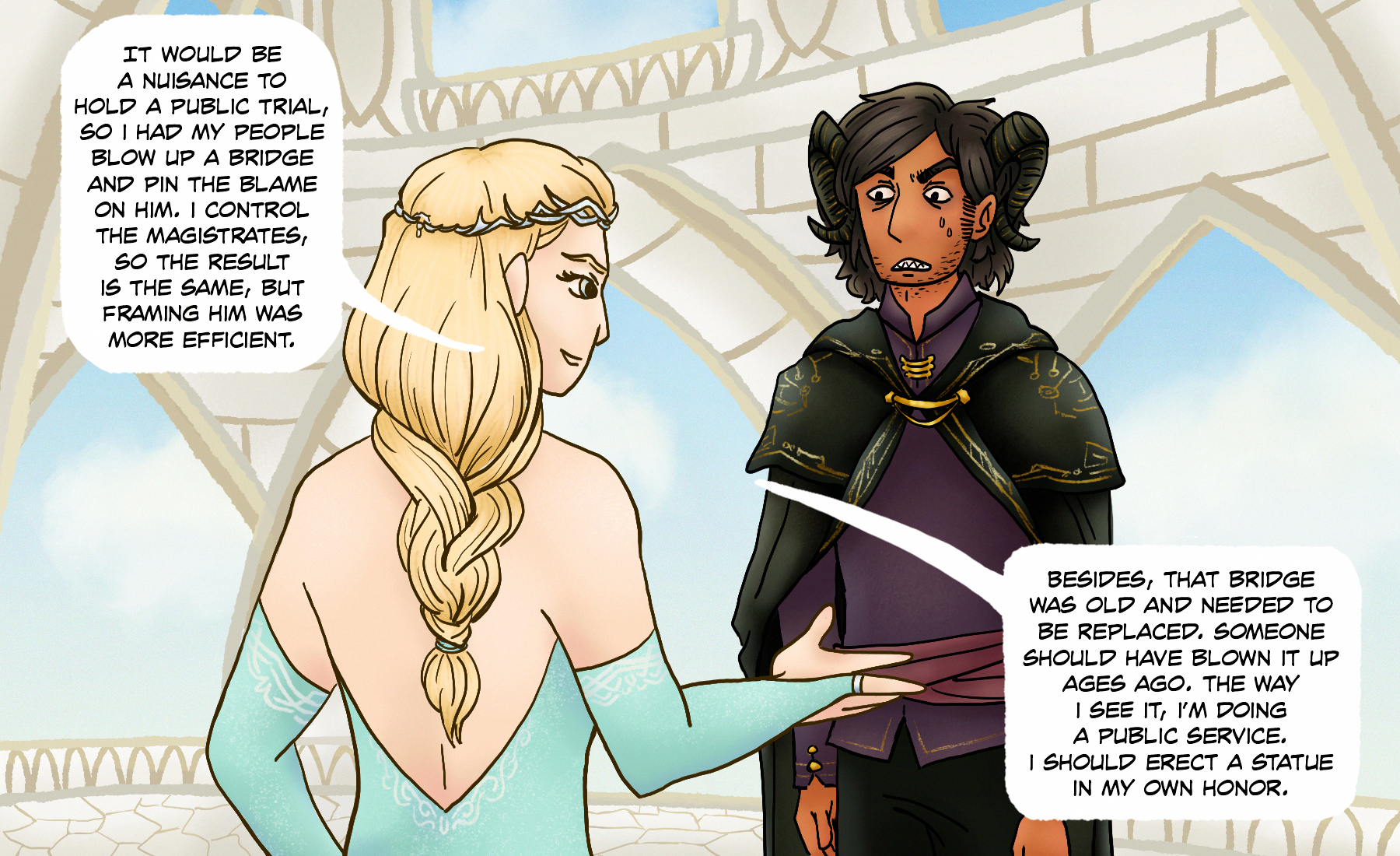
Queens don’t have to do paperwork. 👑

It’s been a while, but I’m back to work on The Demon King, an original fantasy story about tired adults doing their best. I wrote a stand-alone novella last year, and I’m currently expanding it into a proper novel. I drew the thumbnails for a few comic scripts back when I first started playing with ideas, and I recently decided to ink and color a few of them just for fun. This one is loosely based on a study of a panel in Tess Stone’s Not Drunk Enough, a stylish horror comic with a target audience of me specifically.

The Magic of Fiction

I thought long and hard (so to speak) about the title of the book the Demon King is reading, but everything I came up with was awful. I decided to give up after “Dragon with a Hard-on” and just leave it up to the reader’s imagination.

This comic is written by me and drawn by Frankiesbugs, whose art is sometimes cute, sometimes creepy, and always stylish. You can follow them on Instagram, on Twitter, and on Tumblr for more comics, demons, and attractive people in fancy dress behaving badly.

The Shadows of Hyrule

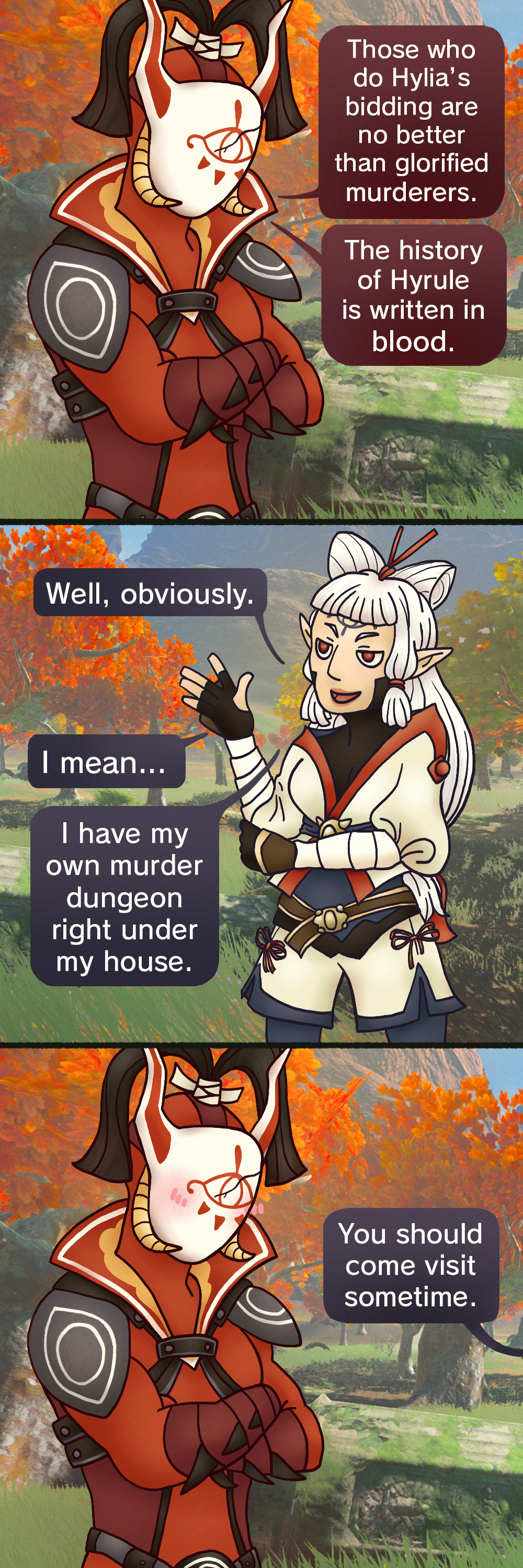
Honey, everyone has a murder dungeon in Kakariko Village.

The joke is that, while the “evil” Yiga Clan is characterized as violent and bloodthirsty in Breath of the Wild, the “good” Sheikah Clan is canonically just as disturbing. They’re all magical ninja assassins. What do you expect?

These two characters are Sooga and Impa from the Breath of the Wild AU melee fighting game Age of Calamity, and this is fan art of the four-part Sooga/Impa fancomic Shadow Folk by Frankiesbugs on Tumblr. You can read Shadow Folk on Tumblr starting (here), or you can donate 1€ to download a PDF version (here). I have to admit that I never considered any sort of relationship between Impa and Sooga until I read this comic, but the art is stylish and beautiful and the story is a lot of fun.

On the Internet, No One Knows You’re (Not) Kris

I recently participated in the annual Yuletide fic exchange for small fandoms. More than a thousand people contribute their work to this exchange, in which each participant is anonymously matched with someone who requests a story for one of the fandoms they’ve offered to write for. The person with whom I was matched asked for fic about Deltarune, and they requested “existential horror about free will and the ethics of a player guiding characters with self-awareness.” I’m always up for existential horror, and the recipient’s description of how they view the player-character Kris really vibed with me: “A Weird Kid who’s kinda lonely but not quite knowing how to make friends/not liking many of their options in town before the game starts.”

This prompt inspired me to write a story called “On the Internet No One Knows You’re (Not) Kris,” which is an exploration of Kris’s character within a narrative meta-analysis of the game. You can find it on AO3 (here).

The person who requested the story confessed that they’ve spent countless hours diving down the rabbit hole of Deltarune theories, so I took a plunge into the internet theory maze as well. The game subtly implies that Kris isn’t in full control of their body or personality, and that what’s manipulating them is their SOUL, the red heart that represents them during battle sequences. Many Deltarune theories try to answer the question of who (or what) is controlling Kris’s SOUL. There’s also the issue of what connection Deltarune might have to Undertale, as the two games share the same metaphysics and many of the same characters.

This ended up being my favorite Deltarune theory:
https://theamazingsallyhogan.tumblr.com/post/663249972697907200/great-big-massive-spoilers-under-the-cut-part-1

What this theory posits is that Kris has made a devil’s bargain with their SOUL, exchanging their free will for the power to rescue a childhood friend who mysteriously vanished a few years before the game begins. Although this theory doesn’t explain everything that’s going on in Deltarune – which, after all, has only released its first two chapters – the essay shines light on the characters’ backstory, which is only very briefly alluded to in the game itself.

This theory led me to create an illustration (here) based on the scene from Howl’s Moving Castle in which Howl makes a pact with the fallen star Calcifer, and I drew the comic above about how the ostensible villain of the second chapter of Deltarune might have a radically different view of the concept of free will. I also created an animated illustration (here) of the secondary villain Spamton, but I ultimately decided not to include it with the story. Spamton is bizarrely beloved in a certain corner of Deltarune fandom, but I think it’s probably safe to say that he’s an acquired taste. Still, I had a lot of fun writing Spamton’s dialog in my story. Despite spending far too long on the Deltarune wiki, I regret nothing.

Growing Up with The Legend of Zelda

The Legend of Zelda series has been criticized for its formulaic writing, but one of the strengths of its archetypal characters is that they allow room for multiple interpretations. I was born in the same year as the Zelda series, and my perspective on these characters and their stories has shifted as I’ve grown older.

When I was a kid, I loved Link. I had no innate skill as a gamer, but I enjoyed the thrill of running wild in Hyrule. I may not have fully understood the game mechanics, but this meant I was always discovering new things. Despite my many deaths, I reveled in the certainty that I was a force of good fighting for justice, and it was comforting to know that all I had to do in order to succeed was to follow the marks on my map.  

In my late teens, I began to identify more with Princess Zelda. As my view of the world became wider, I realized that it wasn’t always the best course of action to charge forward with an unsheathed sword. I also came to understand that it was impossible for me to be a lone hero. There were times when I would be at the mercy of forces beyond my control, and sometimes I would need to rely on the strength of other people to achieve my goals.  

Now that I’m an adult, I can’t help but sympathize with Ganondorf. The world is infinitely complicated and filled with impossible decisions. Even though you may have the best of intentions, it’s inevitable that some people will see you as a villain when you challenge the status quo. If you want the power to change the world, you have to forge your own path, and no one will give you a map marked with signposted quests to complete. Still, as long as you’re making your own rules, you might as well be stylish and have gorgeous hair.

The Legend of Zelda series has become a type of modern mythology. The games continue to be relevant not just because of the strength of their gameplay, but also because of the resonance of their archetypes in the lives of the people who grow up with their stories. Instead of growing out of the Zelda series, I’ve found that I’ve grown to appreciate it more now that I can relate to the characters through multiple levels of lived experience.

. . . . . . . . . . . . . . . . . . .

This essay and its accompanying illustration were originally published in Coin-Operated Press’s Nerd! Zine anthology. You can check out the zine on the press’s website (here).

An Unfound Door

The sacrificial princess Agnes spares the life of a demon from the blade of the hero who rescued her from certain demise, but was this the wisest decision? Upon returning to her decaying kingdom, she finds the beast waiting for her, now in the form of a man. He is determined to restore the ruins of his homeland to their former glory, but his ambition presages calamity. As Agnes follows her enemy through the shadows, she must shine light onto the mysteries of the past if she wishes to restore hope for the future.

This is my working description for An Unfound Door, the dark fantasy mystery novel that I’m currently writing. I borrowed the title from this passage in Thomas Wolfe’s Look Homeward, Angel, a coming-of-age story primarily set in an old and decrepit town: “Remembering speechlessly we seek the great forgotten language, the dark lane into heaven. A stone, a key, an unfound door. O lost and by the wind grieved ghost, come back again.”

The character illustrations are by Marianne Lalou, who is on Tumblr, on Twitter, and on Instagram. Lalou was able to take my amateur designs (that I posted here) and polish them into something magical. They’re one of my favorite fantasy illustrators and character designers, and it was an amazing experience to work with them!

Agnes and Zidan from An Unfound Door

An Unfound Door is a Gothic mystery set in a decaying castle. Agnes, the princess of Faloren, hopes to save her crumbling kingdom by recovering a long-lost relic, but she must find it before it’s discovered by Zidan, a foreign prince with mysterious motives. As their paths repeatedly cross in the twisting corridors and hidden passages, Agnes and Zidan realize that they must descend into the shadows of the past together if they hope to bring light to the future.

While I’ve been planning this story, I’ve also been working on character designs. This is what I’ve come up with…

Agnes is in her early twenties. Her palette is fairly monochromatic, making her look somewhat ghostly. She’s not used to interacting with people, and she’s aloof and serious to a fault. Her floral motif is the moonflower. I was aiming for something like a “dark academia” aesthetic.

Zidan is also in his early twenties. His palette is warm with accents in brighter colors. He’s charming and polite, but he’s too proud to conceal the sharp edges under his smooth exterior. His floral motif is the Chinese lantern flower. I was inspired by the work of the artist Emily Cheeseman in creating his design.