Quiet Haunting

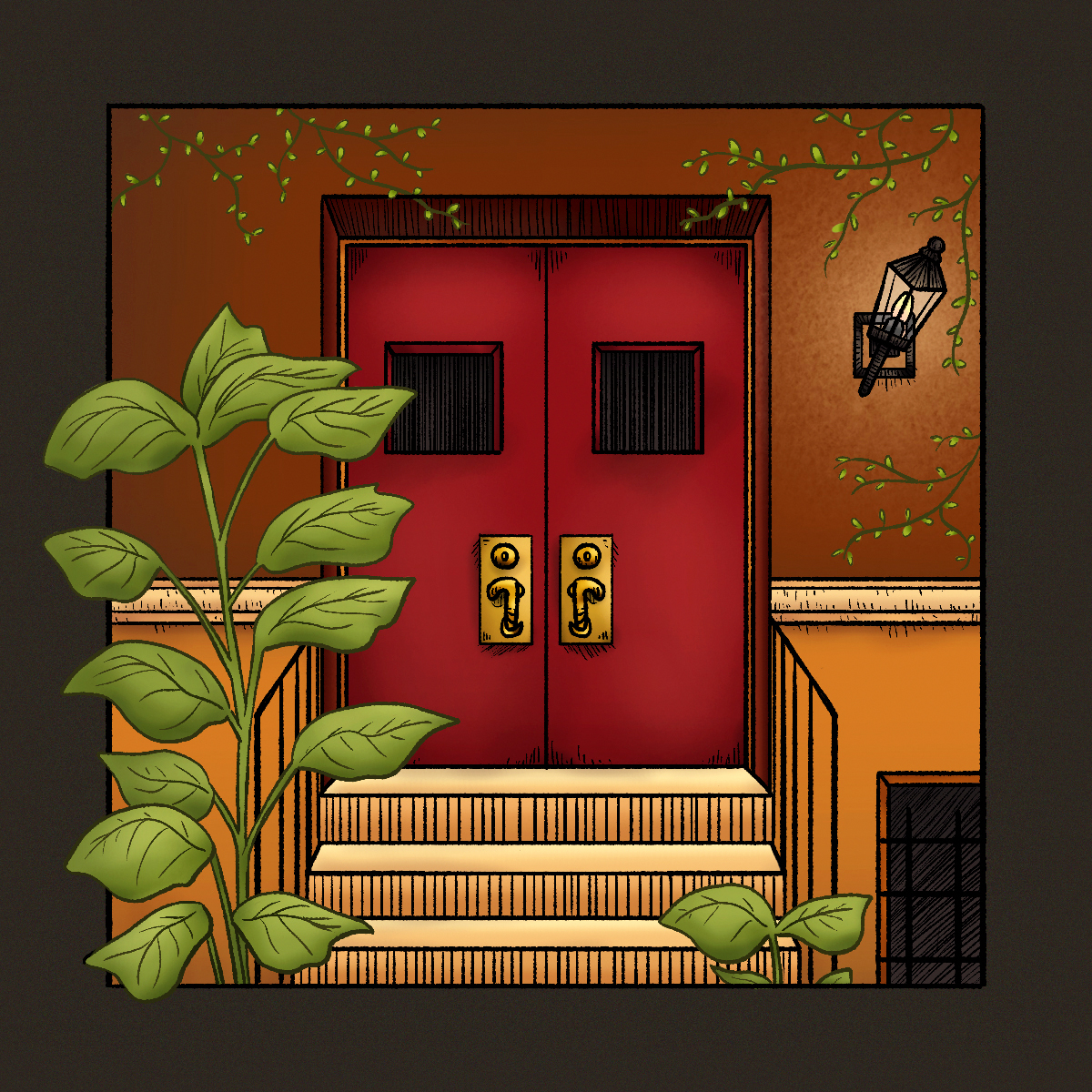
I moved to South Philadelphia toward the end of the pandemic. My landlord raised the rent, and it was cheaper just to buy a house. Granted, it’s not a big house, nor is it particularly nice. The floors are uneven, and the ceiling sags. The kitchen is like the set of an old movie, and the basement is infested with centipedes. But it’s affordable, and it’s quiet, especially since no one lives next door.

I’ve recently started to hear things moving on the other side of the townhouse wall. The noises aren’t loud, nor are they frequent. It’s mostly soft shuffling and light tapping, usually right before dawn and just after dusk. To make matters even more curious, someone has been watering the plants in the house’s back yard. Two leafy fig trees have grown from small sprouts to extraordinary heights over the summer.

Earlier this evening, I noticed that the house’s back door was open. It was just a crack, as if someone had forgotten to close it. The opossums that live in the alleyway will come inside and eat your trash if you let them, so I figured I’d be doing someone a favor if I closed the door. I climbed over the crumbling cinderblock wall and maneuvered through the foliage. When I put my hand on the knob, the door surprised me by swinging open.  

There was nothing inside, just uneven floors and sagging ceilings like my own, but I could hear a beeping sound emerging from the basement. I peeked down the stairs, where I saw an older man in a colorless cardigan sweater sitting on a metal folding chair. He was flipping through an issue of National Geographic that he’d taken from a cardboard box filled with old magazines.

I froze in alarm, but he looked up and met my eyes before I could back away. “I’m sorry to bother you,” I apologized. “I live next door, and I heard the beeping. I was worried something was going to explode.”

“It’s fine.” He shrugged. “It’s just an oven timer. I figured I’d give it a few more minutes, but I might as well turn it off.”

I felt awkward, like I couldn’t just leave, so I asked him why he was sitting in the basement with an oven timer.

“They pay me to look after the place,” he answered. “You know, rattle a few chains, make some thumping noises in the night. Feed the spiders, maybe put a bloody handprint on the window. That sort of thing. It keeps the property values down.”

I realized that I could see the back of the chair through the man’s sweater. This didn’t bother me as much as you’d think it would. I’d seen stranger things in the neighborhood, and the man seemed nice enough.

“I haven’t really heard anything from next door,” I admitted. “Do you want me to be more scared?”

“Don’t sweat it. They’re not paying me much, and I haven’t gotten a raise in years. My heart’s just not in it these days.” With a sigh, he closed the magazine and tossed it back into the box before disappearing in a thin wisp of smoke.

I left the basement, closing and locking the door behind me before returning to my own house. I guess the post-pandemic economy has been tough for everyone. All things considered, I don’t mind living next door to a haunted house. Like I said, it’s affordable, and it’s quiet.

. . . . . . . . . . . . . . . . . . . .

This illustrated short story was originally published in the Philly Zine Fest 2022 Anthology. This year’s Philly Zine Fest was held at Temple University on Saturday, November 5. Despite a giant political rally happening right across the street that afternoon, it was a very chill and relaxed event with lots of good vibes and creative energy. It’s been my dream to table at the Philly Zine Fest for years, and it was just as amazing as I hoped it would be. Here’s to many more celebrations of independent artists and writers in years to come! If you’re interested, you can find the Philly Zine Fest website (here), and it’s definitely worth checking out their parent organization, The Soapbox Community Print Shop & Zine Library.
The Gentle Inclusivity of Kawakami Hiromi

I’m delighted to announce that my short essay “The Gentle Inclusivity of Kawakami Hiromi’s ‘Summer Break'” was just published in the 21st volume of the Proceedings of the Association for Japanese Literary Studies. Here’s the abstract…

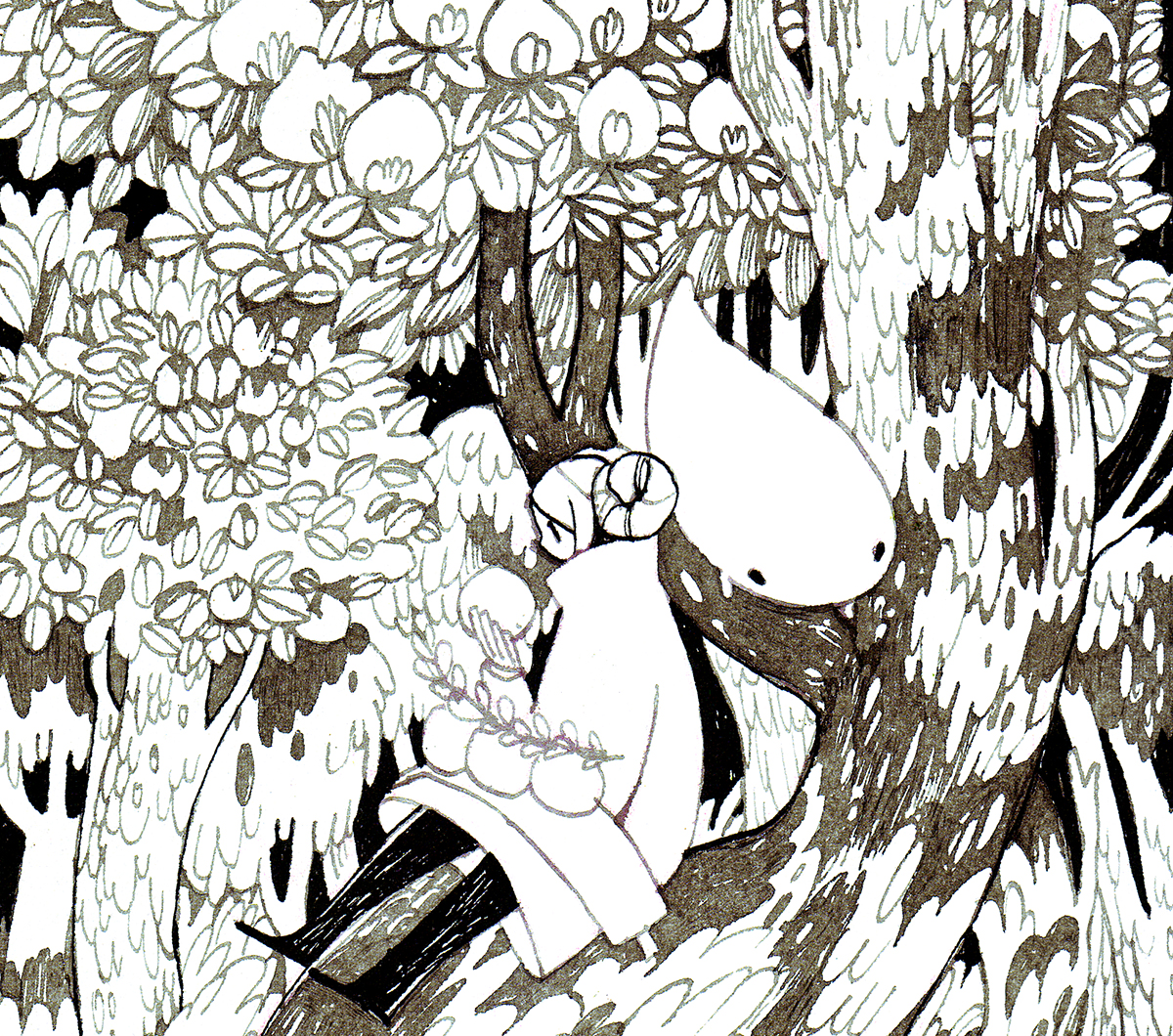
“Summer Break” (Natsu yasumi), the second story in Kawakami Hiromi’s 1998 collection The God of Bears (Kamisama), is narrated by a young person who spends a summer working as a laborer in a pear orchard. Like the other stories in The God of Bears, “Summer Break” operates according to the logic of magical realism, which is perhaps why the owner of the orchard tells the narrator not to worry about the small, talking creatures that run through the trees and devour fallen fruit. The narrator nevertheless forms a bond with one of these pear spirits, whose panic attacks mirror the narrator’s own dissociative episodes. At the end of the story, both the pear spirit and the narrator grapple with anxiety and suicidal ideation, but the story’s conclusion embraces self-acceptance.

From the first publication of the award-winning title story of The God of Bears in 1994 to the appearance “Summer Break” in the complete collection in 1998, various public figures attempted to address the social malaise that characterized Japan’s economic recession. Several highly influential public intellectuals, including the clinical psychologist Kawai Hayao and the cultural critic Saitō Tamaki, viewed mental illness as a symptom of broader cultural forces.

In “Summer Break,” however, Kawakami portrays the experience of mental illness as embodied and personal instead of abstract and societal. This paper analyzes how the fantasy elements of “Summer Break” render its treatment of mental illness as sympathetic and relatable, an aspect of the story that is enhanced by its use of magical creatures that externalize the narrator’s psychological state. I will place this analysis within in the context of recent narratives in Japanese fiction and popular culture categorized as ijinkei (“about nonhuman characters”), as well as critical discussions of the folkloric qualities of this period of Kawakami’s writing.

…that’s a lot of material to cover in such a short essay, but I think I did a decent job of contextualizing the story. This piece of writing was intended to serve as an introduction to my translation of the story itself. Unfortunately, despite almost a year of constant work and the assistance of multiple high-profile translators, we weren’t able to secure the publication rights. It’s a disappointment, but I hope the silver lining is that there are plans for the full God of Bears short story collection to appear in translation soon.

My essay is available on JSTOR; but, since I understand that not everyone has institutional access, I’ve also made a copy available on my website (here). Although it’s unofficial, you can download a PDF of my translation of the short story “Summer Break” (here). Years ago, I translated all of the stories in The God of Bears, and the illustrator I was once planning on working with to create illustrations is Maru, who you can find on Twitter (here). And finally, you can learn more about the Proceedings of the Association for Japanese Literary Studies on their website (here).

The Museum of Hyrule

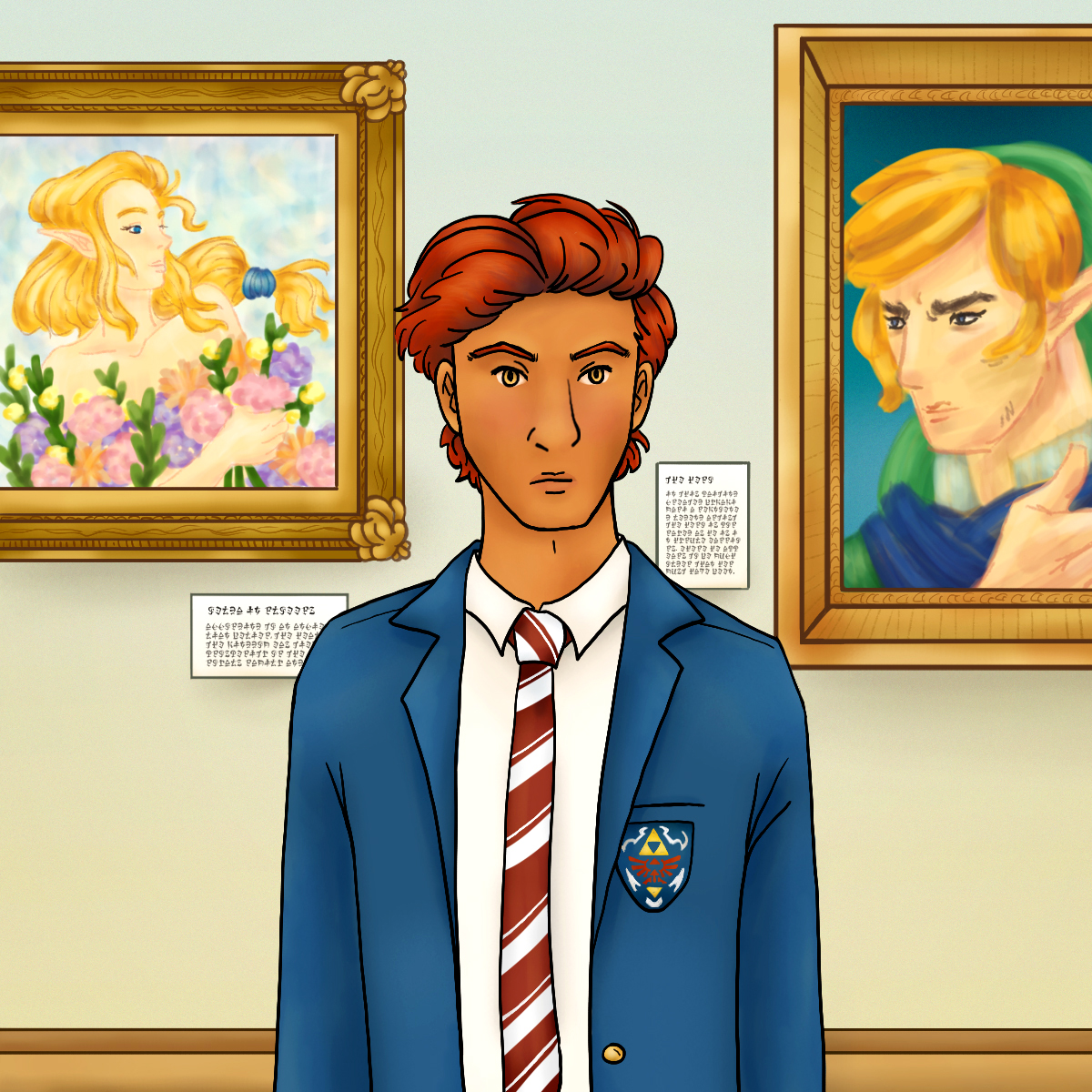
I was recently thinking about what a modern version of Hyrule would look like, and I was imagining how fun it would be for Link to encounter the Master Sword during a class trip to a museum. When I started sketching, however, what I ended up drawing is a reincarnation of Ganon seeing his crown from Ocarina of Time. The moment I wanted to capture is the calm immediately before a terrible storm.

Also, as someone who loves art and history, I tend to dislike museums, but that’s another story entirely.

Review of Japanese Role-Playing Games

This past summer I was given an opportunity to review an academic essay collection titled Japanese Role-Playing Games: Genre, Representation, and Liminality in the JRPG. The work the two editors did for this collection is incredible, and every single essay is fantastic. Here’s a short excerpt from the book review that I published in the journal Asian Studies Review:

Japanese Role-Playing Games: Genre, Representation, and Liminality in the JRPG is the first English-language collection of essays focusing entirely on a genre of Japanese games known for their complex stories and rich worldbuilding. The fourteen essays in this collection cover the construction of the JRPG genre, the formation of transcultural gaming communities, and the representation of issues such as nationality, gender, and disability.

Japan Studies scholars with varying degrees of familiarity with the specific titles used as case studies will find a wealth of information and resources in these essays, which briefly summarize the games while explaining why they are representative, important, and connected to broader currents in Japanese history and society. Meanwhile, Game Studies scholars will find approachable yet intellectually rigorous discussions of culture and national origin, which have thus far been relatively few and far between in the field outside of the work of a few specialists.

If you’d like to read the full review, you can find it (here). I understand that not everyone has institutional access to academic journals, so I’m also hosting the PDF on my own website (here). In addition, you can find Japanese Role-Playing Games on the publisher’s website (here), and you can follow the journal Asian Studies Review on Twitter (here).

Spooktober Fifteen Day Challenge

I’m thrilled that my work has been published in The Oracle‘s first issue, an anthology of horror-themed flash fiction and art. My piece, “Spooktober Fifteen Day Challenge,” is a creepy little story told in the form of a cursed social media game.

I recently read an article in Rolling Stone (this one right here) about the Momo Challenge, and this Halloween-themed story is inspired by the idea that a monster might prey on children through a series of social media challenge prompts. Although the format is nontraditional, my goal is for the reader to gradually get a sense of the loneliness and anxiety of the “you” to whom the prompts are addressed. 

The “Fright Flash” issue of the zine is very short, but it’s lovely to look at and quite spooky. If you’re interested, The Oracle is (here) on Twitter, and you can download a free digital copy of the “Fright Flash” issue via Google Drive (here).

An Unfound Door, Chapter Eight

Agnes and Fhiad meet in the library on the morning after the summer court opens. Agnes wakes before dawn out of habit, while Fhiad has been up all night reading. Fhiad left to get tea, and he returns just as Agnes is studying the books he left on a desk.

They sit down together, and Fhiad apologizes for making wild proclamations. When Agnes asks if Fhiad would truly destroy Faloren if he found Soreiya’s Tear, he explains that doing so would be impossible, as the cost for performing magic on such a large scale would have an unimaginably high cost. Fhiad gives a demonstration of magical cost, and Agnes is so amazed that she asks a clueless question about his past, thus chilling the warmth of an intimate moment. 

. . . . . . . . . . . . . . . . . . . . .

This chapter marks the beginning of what Jessica Brody (of Save the Cat fame) calls the “fun and games” section of the story, which should constitute the bulk of Act Two. While the opening and closing of a novel should ideally follow a set formula that helps guide the reader, the middle of the story offers much more freedom to the writer.

I like to use this freedom to indulge in all of the narrative tropes I enjoy, and this chapter includes one of my favorite scenes. Namely, I love when an intimate conversation in a library helps the protagonist and her foil understand that they should be friends. At the beginning of this chapter, Agnes is characteristically blunt and ready to fight, but she and Fhiad manage to establish a common ground by virtue of the fact that they’re both giant nerds.

Fhiad begins to show his true colors in this scene. He’s more socially polished than Agnes, but he’s a shy academic at heart. In fact, most of Fhiad’s trouble has resulted from him being a pushover. Although he gets in a few good jabs at Agnes, Fhiad also submits to her demands multiple times during this conversation.

I was recently reading an academic book chapter about gothic fiction, and the author was saying that the erotic charge of the narrative is primarily generated by the question of whether a wild and mysterious man will sexually assault the heroine who fears him. This sexual fear turns to romance when the heroine realizes that the man’s menacing aura is a result of his violent passion for her.

I unapologetically appreciate that sort of character dynamic, but it doesn’t fit what’s going on with Agnes and Fhiad. Agnes isn’t fearless, but her extreme pragmatism drives her to behave as if she were. Meanwhile, Fhiad is competent and talented in his own way, but he has no business being “wild” or “menacing.” In a reversal of the classic gothic gender dynamic, Fhiad needs Agnes to push him forward, while what Agnes needs from Fhiad is his patience and kindness.     

More than anything, however, this chapter is about doing magic in a cool library. The next chapter is also going to be about magic and libraries. And the chapter after that? More magic, and more libraries. I love libraries and magic, what can I say. This is my story, and I get to write whatever I want.

The lovely gothic portrait of Agnes that accompanies this chapter’s preview was created by the magical Emily.E.Draws, whose vibrantly colorful fantasy characters can be found on Instagram (here) and on Tumblr (here).

Essay on Comic Fanzine Discourse

I’m excited that the essay I presented at the Toronto Comic Arts Festival academic symposium, “The Role of Dōjinshi in Comic Fanzine Discourse,” has been posted on Women Write About Comics (here).

Although this piece began as an overview of the culture of comic fanzines in Japan, it gradually evolved into a discussion of how English-language fanzines have been impacted by the intense pressures of a creative market that provides neither stability nor opportunities for emerging artists. Here’s an excerpt:

This level of competition in formerly free-for-all online spaces has resulted in the widespread frustration succinctly expressed by @rogvaettr’s tweet. From the perspective of someone who simply enjoys fandom culture and indie publishing, we’re living in a golden age of comics and illustration. For many aspiring artists and writers, however, these glossy fanzine anthologies are another shot of anxiety onto a battlefield already pierced with arrows.

The tensions always implicit in any creative industry have been exacerbated by prolonged economic recession and steeply rising costs of living in urban areas, the combination of which has forced freelancers to take on more work while also maintaining an active social media presence. To many people, the intrusion of professional-level competition into ostensibly amateur fandom spaces feels like a betrayal of the sense of community based on affective attachment that formerly provided a relief from professional pressures and anxieties.

This essay was an enormous undertaking that spanned almost half a year, and I want to acknowledge the support of my brilliant editor Kat Overland. Writing about online discourse is difficult, and Kat helped me make good decisions while also directing me to number of useful resources on indie comics. I should mention that Kat is a lot of fun to follow on social media, and you can find them on Twitter (here). I’m also highly indebted to Masha Zhdanova’s essay “A Brief History of Webcomics: 2010 to Now,” which is an interesting and excellent discussion of webcomics in a transcultural context. You can read the essay on WWAC (here) and follow Masha on Twitter (here). Last but not least, I want to thank Anna Peppard (on Twitter here), who organized the TCAF Academic Symposium and encouraged me to share my initial draft with an amazing group of Comics Studies scholars.

An Unfound Door, Chapter Seven

Fhiad leaves the court and walks through the halls of the castle as he reflects on the circumstances that brought him to Faloren. Guerig, the king’s secretary and acting regent, has granted Fhiad permission to live in the castle while supposedly doing research on the building’s architecture. Fhiad curses himself for being drawn back to the kingdom, but he has few resources and fewer choices.

As he wanders, Fhiad reflects on how he was originally sent to Faloren as a replacement for a retired diplomat during what he intended to be a temporary break from his studies. He reflects on how the kingdom has declined during the past hundred years, and he wonders why Agnes seems to be a ghost of the person he met in the northern forest. 

. . . . . . . . . . . . . . . . . . . . .

An Unfound Door is written in limited third-person perspective, and this is the first chapter that focuses on Fhiad. As the representative of the novel’s “B Story,” Fhiad represents the upside-down world of Act Two, which begins when the “A Story” character’s status quo is disrupted. Fhiad is the catalyst for this disruption, but his arc is also a mirror of Agnes’s character development. Fhiad and Agnes ultimately want the same thing – the power to choose the direction of their lives – but their initial motivations and goals are drastically different.

Fhiad may have told Agnes that he intends to destroy her kingdom, but what he truly wants is to understand what happened to him. He’s suffering from severe trauma that he hasn’t been able to process, and he alternates between distraction and intense anger. He attempts to distract himself from his grief by tasking himself with a quest. Meanwhile, his frustration has no outlet save for Agnes, who became his target simply because she’s the only living person he knows. Fhiad is doing his best to survive, but he’s a hot mess.

More than anything, this chapter establishes how and why Fhiad has come to Faloren Castle. It also provides a second perspective on the setting.

What the reader is able to see through Fhiad’s eyes are two things that Agnes takes for granted. First, Agnes is subtly shunned by the members of her court; and second, Faloren Castle is impossibly large and labyrinthine. These two observations help justify the “fun and games” portion of Act Two, which will involve Agnes and Fhiad hunting for a hidden relic. In other words, Fhiad’s observations hint that Agnes is free to search the castle precisely because she doesn’t have many social obligations, and that her search is going to be interesting because it isn’t going to be easy.

Something else Fhiad has noticed is that there’s something suspicious about Agnes’s cousin Galien. This is fair, as Galien is hiding a number of unpleasant secrets. Still, Galien is no more a villain than Fhiad. I like to think of An Unfound Door as a “gothic fantasy mystery,” which means that everyone has secrets. This is why, at this point in the story, the main task of the characters is to learn how to communicate with each other. If they’re going to figure out who the actual villains are, they’ll need to be able to trust each other.

The portrait of Fhiad in the chapter preview was created by the heroic Silverpeel, a fantasy artist with a gothic flair. You can see more of Peel’s illustrations of knights and forests and gods and legends on Instagram (here), on Bluesky (here), and on Tumblr (here).

Fruiting Bodies Review on WWAC

I recently had the honor of writing a review of Ashley Robin Franklin’s graphic novella Fruiting Bodies for the website Women Write About Comics. Here’s an excerpt:

Franklin joins Silvia Moreno-Garcia and Jeff Vandermeer in the pantheon of contemporary writers and artists who have celebrated the uncanny invisible world that stretches deep below our feet and proliferates in the warmth of our bodies. Classical botanical horror has its roots in concerns over cultural hybridization, but Fruiting Bodies resists the genre’s Victorian anxieties in favor of a probing exploration of the primal fears surrounding the collapse of bodily autonomy. In the end, Franklin suggests, human social distinctions of gender and sexuality are meaningless to a natural world that devours everyone equally.

You can read the full review (here), and you can find the book’s page on Silver Sprocket’s website (here). You can follow Ashley Robin Franklin on Instagram (here), and I also recommend checking out her other short comics on her Etsy store (here). As always, I want to acknowledge the good work of my patient and brilliant editor, whom you can follow on Twitter (here).

An Unfound Door, Chapter Six

The summer court opens with a celebration attended by the wealthy families and nobility of Faloren. After the ailing king retires for the evening, Agnes is introduced to Fhiad, who claims to be a university student from Cretia studying architecture. Later, when Agnes escapes to a shadowy corner for a moment of quiet, Fhiad approaches her and quickly becomes cruel and insulting. He tells Agnes that his homeland of Erdbhein has been destroyed, and he declares his intention to take revenge by visiting the same ruin on Faloren by finding Soreiya’s Tear, the legendary relic he was once accused of stealing.

. . . . . . . . . . . . . . . . . . . . .

This chapter is the transition between Act One and Act Two. Fhiad has returned, and he establishes himself as an antagonist. He states his goal to uncover a magical artifact with the intention of destroying Agnes’s kingdom. Fhiad’s anger is not the real problem, however, and it will Agnes’s goal to find a means of addressing the atrocity he survived.

It’s always bothered me when a villain is angry about something legitimately upsetting, but then the writer has this character kick a puppy to show that their anger is bad. What I mean by “kicking a puppy” is that the villain will do something excessively violent or disturbing that is either entirely out of character or framed in such a way as to make their actions seem irrational and done solely for the sake of being evil.

A villain typically represents a challenge to an established order, especially an order built on arbitrary divisions that inform a hierarchy. In the case of fantasy, there is often a class of “monsters” who are sentient yet still positioned as being okay to kill. When a villain wants to establish an alternate power structure in which “monsters” are not killed, it’s only natural to wonder if they might indeed be justified in doing so. The villain must therefore be shown kicking a proverbial puppy so that we do not begin to feel sympathy for them. Based on my observations of various fandom discourse wars, a surprising number of people take this puppy kicking very seriously as an indication that a villain is irredeemably evil.

It’s important to me that Fhiad is portrayed as a legitimate antagonist, at least at first. In this chapter, he proves himself to be two-faced, manipulative, and more than a little creepy. He invades Agnes’s personal space, physically threatens her, and mocks and insults her. He verbally attacks her at a vulnerable moment, and he says horrible things that are all the more hurtful because they’re true. Even worse, he’s cruel to Agnes precisely because he knows she can do nothing to stop him. In addition, it’s implied that he may no longer be entirely human.

Regardless, the root cause of Agnes’s problem – the decline of her kingdom – is not Fhiad, nor is it anything he’s said or done in the past or the present. Rather, this problem is a direct result of a horrible atrocity committed in the past by Agnes’s ancestor. I therefore had to make sure that what Fhiad does at the beginning of Act Two is upsetting but doesn’t fall to the level of puppy kicking. In other words, I attempted to create tension by means of the antagonist’s bad behavior while still being fair to the complexity of his character and his experience of justified anger.

Meanwhile, surrounding both of these characters is the opening of the summer court, a lavish gathering that offers a possibility of what Faloren could be if the kingdom weren’t in decline. Despite the good cheer of the party, Agnes is acutely uncomfortable in her role as a princess. Her keen displeasure in being made an object of display is a window into her essential character, as well as foreshadowing for the development of her story.

The illustration that accompanies the chapter preview was created by Arte072, a fantasy artist inspired by medieval fashion and illuminated manuscripts. You can find their work on Instagram (here) and on Tumblr (here).