Review of River’s Edge on WWAC

I recently had the opportunity to review Kodasha USA’s release of Kyoko Okazaki’s 1994 graphic novel River’s Edge for Women Write About Comics.

River’s Edge is like an anti-shōjo manga about teenagers at the margins of society being evil to one another. This is the sort of gritty “all the trigger warnings” graphic novel that I wouldn’t recommend to everyone, but I really enjoyed it. I think it’s an important piece of art, and I’m grateful that it’s available in English. Here’s an excerpt from my review:

Even to readers not interested in manga classics or sociopolitical critiques of millennial Japan, River’s Edge tells an engrossing tale of teenagers precariously close to falling out of mainstream society. Characters who initially seem to be stereotypes gain fascinating depth and complexity as their lives spiral out of control over the course of a story that rapidly gains momentum. River’s Edge isn’t entirely bleak, however. The footholds the characters find in the landslide are meaningful, and their small moments of genuine friendship and connection are all the more valuable in the cultural wasteland they inhabit.

You can read the full review here:
https://womenwriteaboutcomics.com/2023/08/review-rivers-edge-reflects-gritty-millennial-malaise/

Review of Sas Milledge’s Mamo on WWAC

I recently had the good fortune to write a review of Sas Milledge’s graphic novel Mamo for Women Write About Comics. The book came out last April, but it’s been at the back of my mind all year. Mamo is the sensitive queer critique of cottagecore that I’ve always wanted, demonstrating the appeal of “nature” and “tradition” while simultaneously arguing that these concepts must change and evolve for new generations.

Mamo is about a witch who returns to her hometown for a brief visit and gets pulled into a local mystery despite her best intentions. I started thinking about Mamo’s story this summer while trying to grow a tomato plant from Home Depot in my tiny concrete backyard. Either I was watering the plant too much, or I wasn’t watering it enough. Maybe it needed to be around other plants? Maybe it needed to be lifted farther off the ground? I couldn’t figure out why it wasn’t thriving, and I kept wishing that I weren’t so clueless about growing a simple tomato plant.

Like, wouldn’t it be nice if I’d lived in the same place all my life, and I’d grown tomatoes every summer, and I knew exactly when to plant and harvest them. Wouldn’t it be nice to bake my own bread to go with the tomatoes. Wouldn’t it be nice if a kind older adult helped me. Wouldn’t it be nice if, when I went to the grocery store, I knew exactly where the yeast is, and everyone I saw in the store greeted me by name. Wouldn’t it be nice to have a backyard that wasn’t concrete. Wouldn’t it be nice to have a tree by my house. Wouldn’t it be nice to live near the friends I grew up with, and be part of a community.

The truth is that I did spend a part of my childhood in a green and beautiful small town in rural Georgia where my mother’s entire extended family lives. And the truth is that I felt extremely alienated and unwelcome there, and that I couldn’t stay. My mother’s family has all the “tradition” you could ever want, and this was extremely unhealthy for me, especially as a young queer person. Even if you leave, though, a part of you is still going to miss the abstract concept of “homeland,” especially when it’s tied to all the simple pleasures most people don’t get enjoy in a city.

Mamo understands this, and it expresses these tensions beautifully. Here’s an excerpt from my review:

As a renegotiation of tradition, the cottagecore visual aesthetic of Mamo is liberating. Milledge’s bold and expressive art celebrates green spaces that exist on their own terms regardless of human relationships. The literary trope of seeking freedom from oppressive social constraints by venturing into the wilderness is as old as human storytelling, and Milledge’s colorful and immersive art invites the reader into the forest along with Jo and Orla as they attempt to find a new path between untethered freedom and rigid tradition.

You can read the full piece on Women Write About Comics here:
https://womenwriteaboutcomics.com/2023/08/mamo-by-sas-milledge/

As always, I’d like to express my appreciation for my editor, the amazing Kat Overland, who allowed me to write about a graphic novel that came out more than a year ago. Kat also writes about comics, and you can – and should! – follow them on Twitter (here) and on Bluesky (here). You can also follow Mamo’s creator, Sas Milledge, on Instagram (here) and on Tumblr (here). As I was reading Mamo, I realized that I used to be a huge fan of the artist’s Legend of Zelda comics (like this one), and it turns out that they still have excellent taste in fandoms.    

The Flower Thief

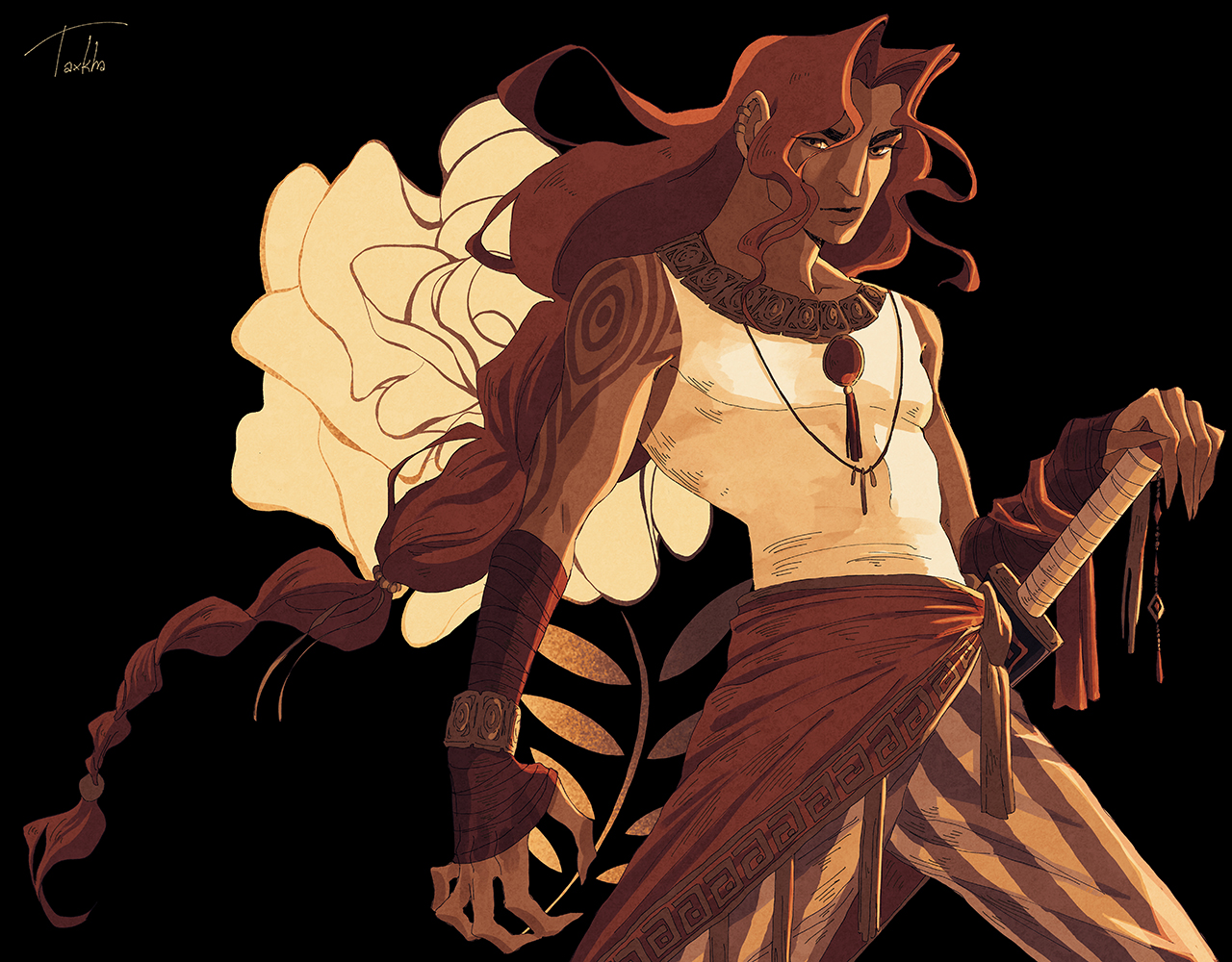
“The Flower Thief” is a story about how Ganondorf visits Hyrule as a child and falls in love with the green and beautiful land, even as he is warned away by the queen who will become Zelda’s mother.

What fascinates me about Ganondorf (at least prior to Tears of the Kingdom) is that he’s a villain whose actions seem far more evil than his character. Given that he’s not necessarily an evil person, what would drive him to such extremes?

In my own experience, evil is boring and mundane. “Evil” is someone who sends hateful messages on social media because they know they can get away with it, or someone who pretends not to see when a colleague is being harassed at work. People who are born into privilege can often be evil without even thinking about it, as the rules that govern the actions of other people don’t apply to them. People in positions of authority are often evil simply because it’s the path of least resistance. So, in most cases, evil is passive; it’s a matter of not challenging the baser impulses of human nature, or not bothering to fix a system that’s become twisted and broken.  

It’s therefore intriguing to me that, when Ganondorf wants “power,” what he’s seeking is the ability to upset the established order. Even if it’s for his own selfish reasons, he aims to transform the world, whether by undoing the mistakes of the past or creating an ideal future. He fails – and he fails miserably – but at least he tries.

I grew up with shōnen adventure manga, and I’m interested in seeing a similar coming-of-age story about someone like Ganondorf, who is talented and works hard but still ends up as the villain. “The Flower Thief” was my attempt to write a story like this for myself, and I think I managed to do a decent job of creating a nice parallel to Link’s first journey to Hyrule Castle in Ocarina of Time.

You can read “The Flower Thief” on AO3 here:
https://archiveofourown.org/works/32033518

This story was written for Ties of Time, an Ocarina of Time and Majora’s Mask fanzine. Ties of Time was published back in 2021, but you can still see the zine’s artwork on Twitter (here), and the zine’s stories have been collected on AO3 (here). The character illustration of teenage Ganondorf is by the bold and daring Taxkha, who shares their art on Tumblr (here) and on Twitter (here).

Speed Dating for Ghosts

Originally released on Valentine’s Day in 2018, Speed Dating for Ghosts is a short and simple roleplaying visual novel (or rather, visual short story collection) in which you can date your choice of nine ghosts. The version currently available on Steam, on Switch, and on Itchio includes the “Go to Hell” expansion, which includes three more postgame ghosts to date and an epilogue in the form of a beach party in Hell.

You play as yourself. Presumably you are dead, and also a ghost. You have registered for a speed dating event that is, predictably, run by a ghost. At this event, you choose between three rooms, each of which contains three ghosts. You have two short conversations with each of the three ghosts. If a ghost likes you, you can go on a date with them. Thankfully, it’s not difficult to convince the ghosts to warm up to you, and you can go on a date with all of them without having to replay the initial conversations.

These “dates,” such as they are, involve helping each ghost take care of their unfinished business. Instead of romancing the ghosts, what you’re really trying to do is learn their stories. After you complete a date, you’re rewarded with more information about the ghost via a character sheet on the “Graveyard” page of the game’s main menu. Once you date the first nine ghosts, you’re given the option to visit Hell for postgame content.

The gameplay consists of choosing between dialog options and being friendly. The art is simple and stylized but manages to achieve a good balance of creepy and cute. The writing is wonderful.

For me, playing through one speed dating room + going on three dates took about 25 minutes. Technically, you can convince a ghost not to date you, but I don’t know why you’d do this. All of the dialog choices make sense, and I can’t imagine needing to use a walkthrough. The postgame content is a bit trickier, and two of the ghosts in Hell might require some extra effort to date. The third ghost in Hell is a dog, and you can pet him. I love him forever.

Aside from the ghost dog, I’m also a fan of Spooky Peter, the plague doctor ghost who’s been around for centuries and has found a vocation in frightening the living. If you agree to apprentice under him, he inducts you into one of the more arcane mysteries of the afterlife, and I appreciated the worldbuilding of his story. There are also two older ghosts (Vera and Gary) who were involved in murder mysteries, and both of their plot arcs are fantastic. One of these stories was so emotionally satisfying that it made me tear up a little, while the other thoroughly creeped me out.

Speed Dating for Ghosts is a fun collection of short stories tied together by an interesting framing device, and I enjoyed the two hours I spent with it. Based on the dry tone of its humor, I’d say that the game is aimed at a mature audience, but there’s nothing particularly grim or edgy or upsetting about it. The writing and art contain elements of horror, but they’re very mild. I didn’t know what to expect from Speed Dating for Ghosts, and I was surprised by how creative and clever it is. It’s always a pleasure to find a weird little game like this that uses the medium to craft a unique and engaging piece of storytelling.

The Best Wells in Tears of the Kingdom

“The Best Wells in Tears of the Kingdom” is a series of short travelogue essays celebrating the hidden secrets, environmental storytelling, and understated exploration elements of Tears of the Kingdom.

One of my main criticisms of Breath of the Wild was that its world felt curiously flat. Why wasn’t Link allowed to go underground? What was lurking underneath Hyrule?

When I first discovered that Tears of the Kingdom was filled with wells and caves, I made it my mission to track them all down. Ganondorf would just have to wait. I’m currently taking my time and leisurely enjoying myself as I go cave diving, but I managed to locate all 58 wells before completing the first dungeon. Each of these wells is unique, but what I’ve been most impressed by are the small stories told by the characters who’ve found themselves at the bottom of a well by accident – or by choice.

For the record, these are my favorites:

1. Kakariko Village Well
2. Haran Lakefront Well
3. Rikoka Hills Well
4. Popla Foothills South Well
5. Kara Kara Bazaar Well
6. Zelda’s Secret Well

You can find the annotated list on AO3 here:
https://archiveofourown.org/works/48633913/chapters/122678209

The cover illustration for this piece, which depicts the veteran well explorer Fera, was created by the magical MiroiMirage. You can find their lively and colorful artwork on Twitter (here) and on Instagram (here). It was a joy and an honor to work with Miroi while getting a glimpse into their creative process. All of the groundwork they laid for the final painted illustration was amazing, so much so that I’d like to share one of their preliminary sketches, which you can see (here).

You’re Not Lost, You’re Here!

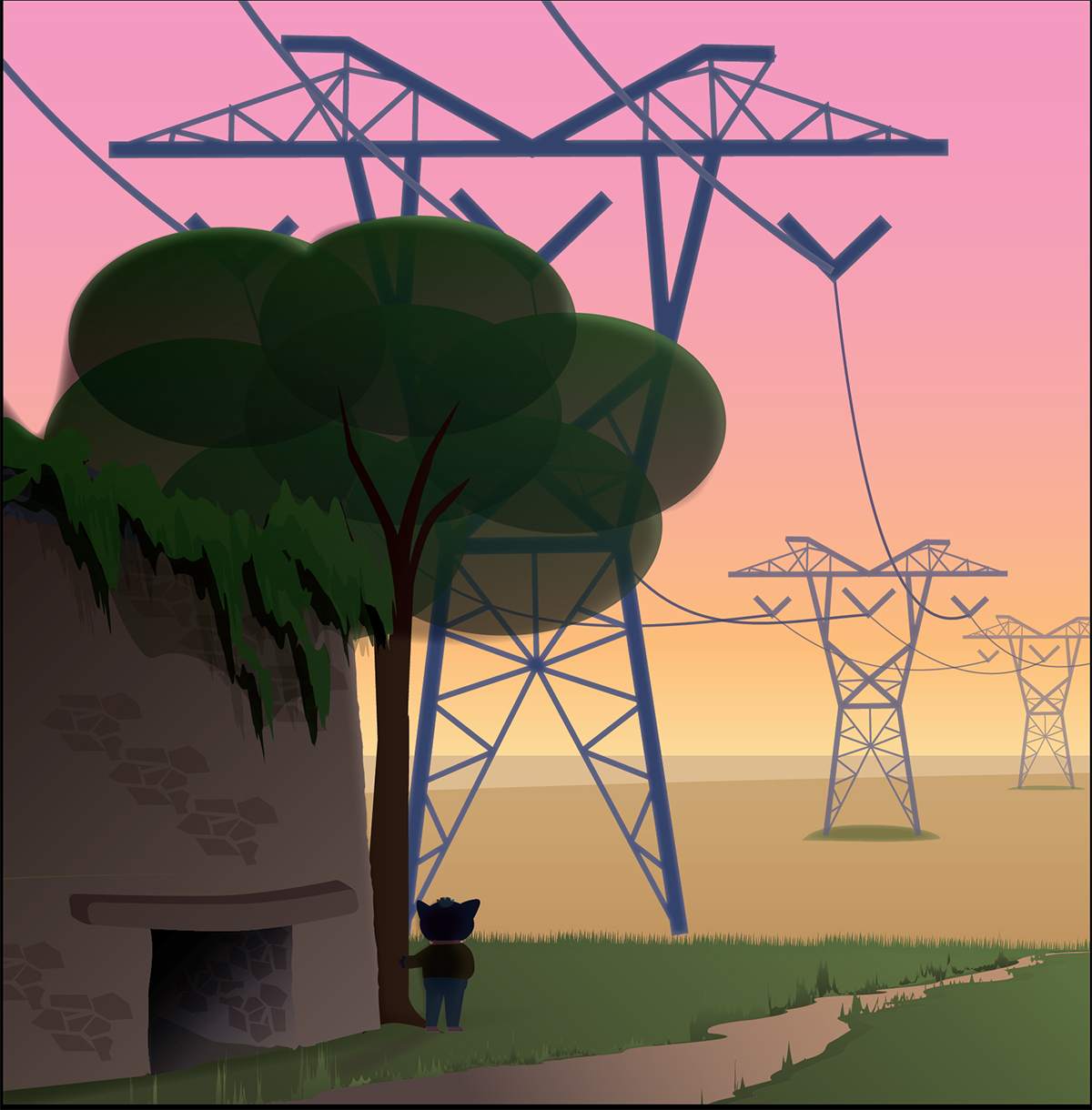
Plenty of people want to leave Possum Springs. But what about the people who are happy to stay? “You’re Not Lost, You’re Here!” is a linked trio of short stories about a day in the life of the strange little town of Possum Springs. Mae’s aunt Molly reflects on the eeriness of depopulation, Mae’s father Stan fantasizes about breaking corporate windows, and Mae’s mother Candy wonders what her daughter will see when she returns home with nightmare eyes.  

Something Night in the Woods does really well, I think, is to offer the player an opportunity to glimpse into the lives of people whose perspectives might be difficult to understand out of context. To give an example, Mae hates the police and teases her Aunt “Mall Cop” Molly with more than touch of hostility, but why would Molly have wanted to become a police officer in the first place? Why would Mae’s father, a former factory technician, embrace worker solidarity but still distrust unions? And why would Mae’s mother, who doesn’t necessarily believe in God, feel such a strong connection to the Possum Springs church that she runs its business office?

It’s easy enough to sympathize with Mae and Bea and Gregg and Angus, whose attitudes of progressive Millennial cosmopolitanism presumably reflect the player’s own, but I think the older characters in Night in the Woods are just as interesting and compelling. I come from a working-class background myself, and I wanted to try to make these secondary characters more relatable as the heroes of their own stories.

You can read this trio of vignettes on AO3 here:
https://archiveofourown.org/works/49029619

I wrote this piece for At the End of Everything, a Night in the Woods fanzine. Their website on Carrd is (here), and you can check out everyone’s artwork on Twitter (here) and on Tumblr (here). If you’re interested in ordering a copy of the zine, leftover sales are open throughout August.

I had the pleasure of working on an illustration with the brilliant and multitalented Wolf Godwin. You can find his art and photography on Instagram (here), his animations on YouTube (here), and his music on Soundcloud (here). Wolf has written lovely piano versions of several songs from the Night in the Woods OST, so please check out his work if you’d like to indulge in some fun and eerie autumn vibes.

The Ritual of Lomei Labyrinth

A vast labyrinth stretches under the ancient kingdom of Lomei. It is said that this labyrinth serves as the prison for a terrible monster known only as the Calamity. Every seventeen years, a sacrifice is performed in order to appease the monster. As the day of the ritual draws near, a young soldier named Link volunteers himself as the sacrifice, secretly hoping that he will be the one to put an end to the Calamity. It is tradition for the princess of Lomei to lead the sacrifice underground, a ritual for which Zelda has trained her entire life. Inspired by Link’s courage, she dares to reveal a hidden secret of the labyrinth that may save them both – as well as the monster trapped within a maze of deceit.

Since I started writing original horror stories in 2018, I’ve become increasingly fascinated with the Greek myth of Ariadne and the Minotaur. I consider this to be one of the earliest prototypes of gothic fiction, which explores the topos of a young woman navigating a large house that holds a terrible secret.

Earlier this year, I returned to one of my favorite gothic labyrinth stories, Ursula Le Guin’s The Tombs of Atuan. I love the idea of a bratty teenage girl being the priestess of horrific elder gods trapped in an underground maze, and reading The Tombs of Atuan while waiting for the release of Tears of the Kingdom made me think about the Lomei Labyrinths in Breath of the Wild, as well as the mysterious Zonai civilization that created them. Before I could stop myself, I ended up writing a three-chapter short story that casts Zelda in the role of Ariadne. I think Calamity Ganon makes a suitably creepy Minotaur, but hopefully Link is a much more sympathetic character than Theseus!

The story is complete at 5,400 words, and you can find it on AO3 here:
https://archiveofourown.org/works/44979319/chapters/113177725

I had a great time working with one of my favorite character artists, Benveydraws, to create a portrait of Princess Zelda. Benvey replaced Zelda’s characteristic feather motifs with the earthier imagery of golden leaves, and he worked closely with references of Greek statues to give the character a suitable Classical Mythology vibe. Benvey specializes in designing bold and beautiful female characters, and you can find more of his work on Tumblr (here) and on Twitter (here).

Trinity Trigger

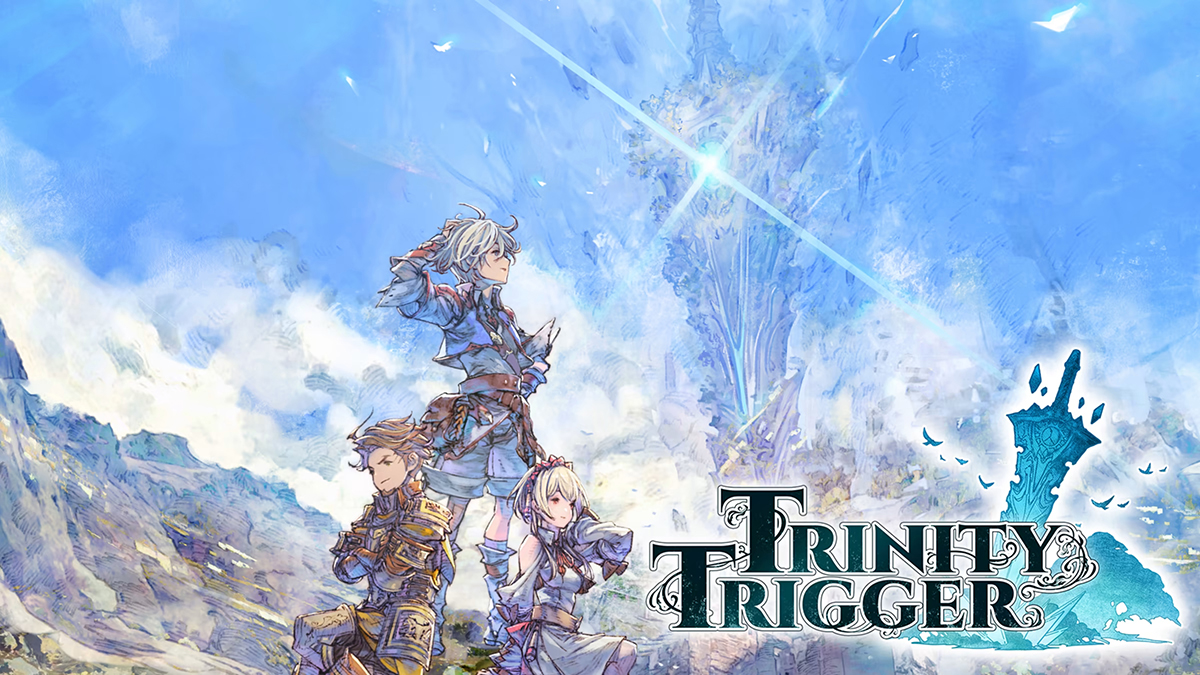
Trinity Trigger, an action JRPG published by Xseed Games in April 2023, is essentially Secret of Mana with a fresh coat of paint. The story is simple. The combat is simple. The dungeons are simple. There’s a rudimentary crafting system, and it’s simple as well. I love this simplicity, which allows you to enjoy the game in the same way that you might enjoy scenery from a train window. Not everything has to be complicated, and Trinity Trigger is a wonderful title for people who play games to relax.

You control three heroes, each of whom can wield a set of weapons chosen via a ring menu, just like Secret of Mana. Some enemies are vulnerable to certain weapons, but these vulnerabilities aren’t a big deal outside of boss fights.

Unlike Secret of Mana, you don’t need to grind for weapon upgrades, which are unlocked automatically at the end of each dungeon. There are a few sidequests that involve backtracking in order to fight a slightly stronger enemy variation, but these aren’t necessary for staying ahead of the gentle difficulty curve. Trinity Trigger is slightly more complicated than I’m giving it credit for, but not by much, and it’s no trouble to figure out the various character optimization systems as you go.

If I were to offer any criticism of the game, I might point out that the AI of the characters you’re not directly controlling isn’t great, but this doesn’t really matter. The voice acting isn’t great either, but you can turn it off. There are a few short anime-style animated cutscenes, and they don’t include English subtitles if you’ve got the voice language set to Japanese. This is an unfortunate oversight, but it’s not as if the cutscenes contain important information about the story, which is largely immaterial.

This story, such as it is, involves a pair of deities enmeshed in an endless war. In order to avoid decimating the world, they’ve agreed to fight through human proxy warriors. The factions of both gods want this cycle to end. Your main viewpoint character, who has been chosen as one god’s proxy warrior, is therefore joined by two warriors from the opposite faction.

Even if they never intend to fight anyone, your party still journeys from one dungeon to the next in order to collect mystical weapons. These dungeons are actually giant weapons once wielded by the gods, and their magic spills out into the environment, causing diverse biomes to exist in close proximity. The snowy mountain biome is right next to the desert biome, for example. The game is fairly linear, so you progress from one biome to the next while wondering what climate is going to be around the next corner.

In many ways, Trinity Trigger reminds me of I Am Setsuna, a game I also enjoyed. The primary purpose of I Am Setsuna was to recapture the simplicity of the combat system of Chrono Trigger, which felt especially satisfying given how complicated and arcane JRPG combat systems had become in the 2010s. In the same way, Trinity Trigger is all about creating a frame for the basic combat loop of Secret of Mana while adding a few small quality-of-life updates.

Along with the simplicity of its combat, a significant part of what made Secret of Mana so lovely was how beautiful and green its world was. As an early Super Nintendo game, Secret of Mana didn’t have great writing, nor were the characters even remotely well-developed. In Secret of Mana, an evil empire wants to cut down a magical tree, and you must save the tree. The evil empire is evil, of course, and they must be stopped. The empire is never presented as a real threat, however. The reason you keep going in Secret of Mana, and the reason you care about the Mana Tree, is because the world is filled with gorgeous variations on the “forest” environment. There are sunlight-drenched peaceful forests and dark labyrinthine forests and lush autumn forests and sparse alpine forests and fantastic mushroom forests and glittering winter forests and forests with pink cherry blossom petals floating on the breeze.

Like Secret of Mana, the writing in Trinity Trigger is passable but not worth remarking on. Instead, the storytelling of the game is broadly conveyed through its environment. What would it mean if the natural environment stopped following natural patterns? What would it look like if lakes and rivers dried up and forests disappeared? What if natural disasters became an everyday occurrence? In Trinity Trigger, an environmental apocalypse is underway, but it’s happening very slowly. Your characters are doing their best to stop it, but that’s not really the point. Rather, what Trinity Trigger wants is for you to enjoy how the wind rustles the leaves and how the sunlight sparkles on the sand.

Basically, in Trinity Trigger, you run around colorful environments and attack colorful enemies with colorful weapons while watching various sets of numbers go up. There’s not much to say about the game save that it’s uncomplicated and fun to play, and I enjoyed the twenty hours I spent with it. I have nothing but respect and appreciation for a solid and well-made 7/10 game that knows what it’s doing and does it well, and I’m always up for saving some trees.

Seeded Ground

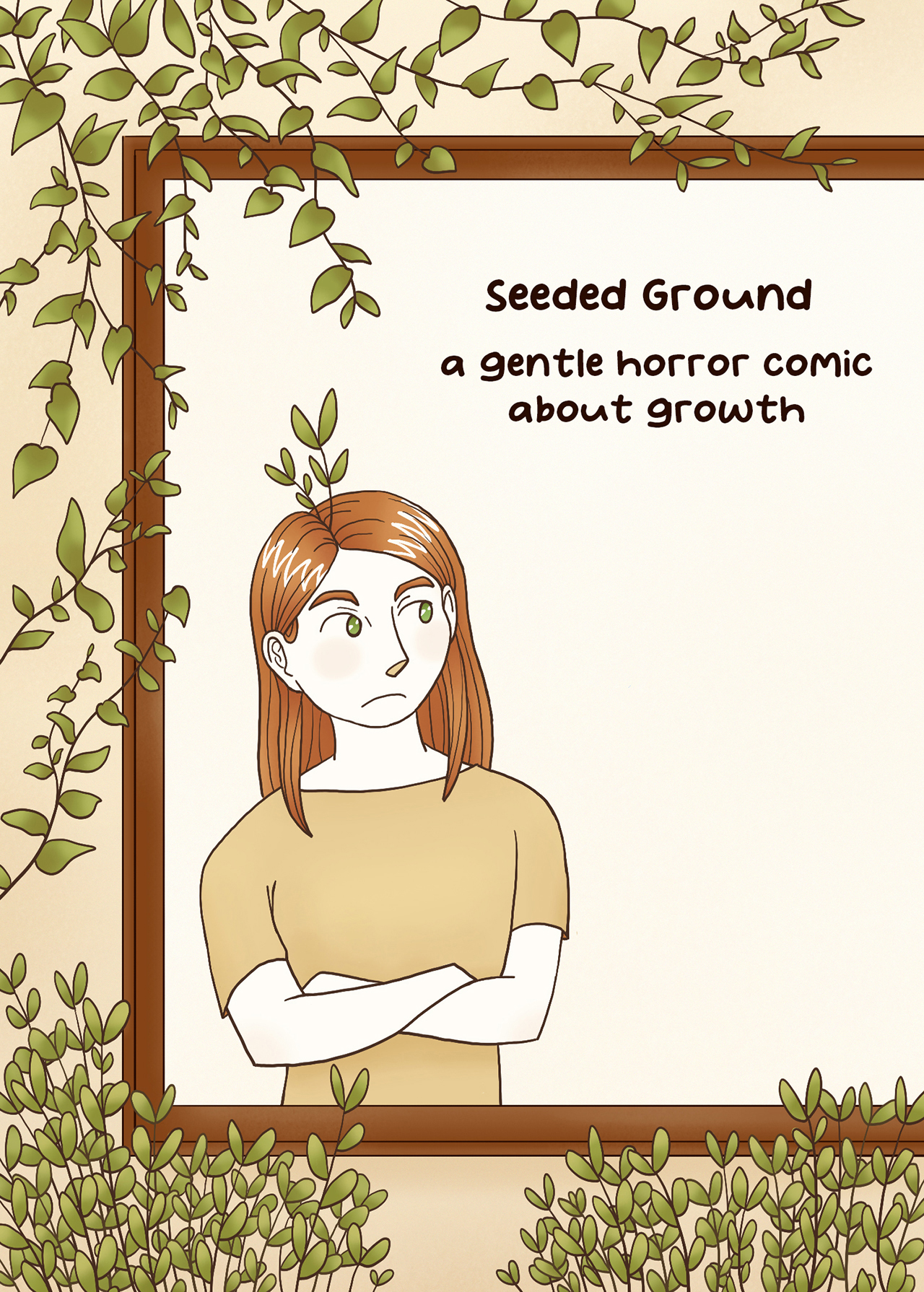
Seeded Ground is a twelve-page botanical horror comic about growth. It reads a bit like a supervillain origin story, but I created it as a statement of resistance against the oppressive ideologies of neoliberalism that have lured so many people in my generation into the trap of self-optimization.

You can download a free digital copy of the comic from Itch.io here:
https://digitalterrarium.itch.io/seeded-ground

I was inspired to draw this comic by a tweet written by a respected senior scholar. They argued that assigning at least five pages of writing every week is necessary to maintain “a certain standard of quality” in the undergraduate students who register for their classes.

This tweet inspired me to reflect on an unfortunate aspect of education in the United States. Namely, it’s an unstated but almost universally accepted goal of the formal education system to monopolize students’ time in order to train them to become the sort of adult workers who are willing to devote their lives to their career. An employee at a “good” job is expected to wake up early, commute, spend the entire day at work, and then go home and finish the tasks they didn’t have time to complete at the office. Meanwhile, freelance and part-time workers are expected to be available at any hour of the day, every day of the week, and at short notice. This is messed up, and I hate it.

My own experience as a professional working adult has essentially been the equivalent of that professor’s tweet. Namely, I’ve felt compelled to engage in meaningless work that no one will ever see in order to maintain the pretense of “a certain standard of quality.” Around the time of the pandemic, I got fed up. Was I really supposed to feel guilty about not replying to emails within 24 hours while I was sick with Covid? Fuck that.

These days I’m much more aggressive about enforcing boundaries concerning how much work I’m willing to do, and I can’t even begin to express how much the quality of my life has improved. I have no regrets.

As an epilogue to Seeded Ground, I illustrated a quote from the radical social theorist Herbert Marcuse’s 1964 book One-Dimensional Man: Studies in the Ideology of Advanced Industrial Society:

“If the individual were no longer compelled to prove himself on the market, as a free economic subject, the disappearance of this compulsion would be one of the greatest achievements of civilization.”

And he’s not wrong! I know it’s a twee Millennial stereotype to hate capitalism, but I really do believe that the point of life is not to optimize your performance as an employee. People need room to grow.

And if that growth is impeded? All sorts of bad things can happen. 🌿

We Know the Devil

We Know the Devil
https://pillowfight.itch.io/we-know-the-devil

We Know the Devil is a horror-themed visual novel about three teenagers at summer camp. Although the world of the game is close to our own, there are a few differences, one of which is that “the devil” is real. One of the kids’ duties as campers is to reinforce the magical wards protecting a forest, and your job as the player is to help them make it through the night. We Know the Devil has four endings; and, depending on how quickly you read, it takes about thirty to forty minutes to finish a run.

Since you can’t get the true ending on your first playthrough, I might recommend going into the game without consulting a guide, but only if you’re the sort of person who absolutely can’t tolerate any spoilers whatsoever. We Know the Devil functions primarily at an allegorical level, and you’ll get infinitely more out of its story if you understand what’s going on. In this post, I’m not going to spoil what happens, but I think it makes sense to accurately describe the game’s premise.  

We Know the Devil is divided into ten short chapters. For the most part, the game is entirely linear. The only element of gameplay is that the player is required to make seven choices, and these choices only affect the ending. Essentially, the player is put into the shoes of one of the three main characters and given a choice between the other two characters. The ending you get is determined by which of the three kids is left out of the pairings the most frequently. Essentially, you’re choosing who dies at the end (although they don’t actually die).

To get the true ending, you have to balance the pairings evenly. Unfortunately, you can’t do this on your first playthrough, as the game doesn’t give you the key choice that makes a perfect balance possible. The first ending you get will therefore be strange and upsetting, but it’s the unpleasantness of this ending that serves as the cipher for decoding the allegory.

A major weakness of We Know the Devil is that the setting of the game is poorly defined to an extreme degree. Unless you understand the allegory, it’s difficult to piece together what’s going on. This confusion is exacerbated by the inanity of the character dialog, a great deal of which is trite chatter. In fact, some of the writing feels like a parody of an indie comic about depressed edgy teens, and my first playthrough of the game left me cold.

Although the horror elements were intriguing, I didn’t understand the larger narrative. Why were these kids at camp if they didn’t want to be there? If they had cellphones, didn’t they have cars? Why couldn’t they just leave? Why were they refusing to communicate with each other? If “the devil” is real, why were teenagers being forced to patrol the woods at night? Were they conducting some sort of ritual? And for what purpose?

None of these questions is answered, and the first ending I got didn’t make much sense in terms of plot, character development, or narrative themes. I couldn’t figure out why people have lavished so much praise on this game since its initial release in 2015, so I googled “We Know the Devil ending explained.” That’s when the story became much more interesting.

Essentially, each of the three main viewpoint characters represents a different type of queer identity. The ways in which these characters fail to communicate with one another are representations of how young people attempt to keep themselves in the closet, and the way in which “the devil” gets one of them at the end is a representation of how a secret queer identity might manifest in an unhealthy way. The summer camp is supposed to be analogous to a Christian camp for “problem teens,” and the ritual night in the woods is an analogy for how such organizations put campers in difficult situations in order to break them emotionally, after which they can be “fixed.” If you’re interested in learning more, I highly recommend (this fantastic essay), which unpacks what’s going on in We Know the Devil from the perspective of someone close to the culture and experience being portrayed.  

To me, the queer identities of the characters were obvious from the start. Still, a character being gay or trans is completely normal to me here in 2023, and I know very little about Christianity in the United States. All of the allegory therefore went completely over my head. Once I picked up on what everything was supposed to represent, all of the seemingly random symbology started to make sense and fit together nicely.

Admittedly, the allegory is clever. Still, I wish the story stood better on its own, especially for players who don’t come from that particular cultural background. All that aside, I enjoyed the game’s gentle and sketchy visual portrayals of its characters, and the descriptive writing that frames their conversations is quite good and occasionally even beautiful. In addition, the ambient music that underscores the game is gorgeous and used to fantastic effect. On the whole, I’m grateful that I had the opportunity to experience the story told by We Know the Devil, but I wish I’d done myself a favor and read more about its cultural context first.