変な家: A Mysterious Story of Real Estate

変な家 (Henna ie) is a collection of short horror stories about houses with strange and uncanny floorplans.

The book has four chapters, each of which takes the form of a series of conversations between the narrator, their architect friend, and various people who have seen the houses in person. The first three chapters explore three different houses with extra rooms and mystery spaces, and these explorations are liberally illustrated with diagrams in which certain sections of the floorplan are highlighted and annotated to clarify the text.

Each of these first three stories is like a locked room mystery, except the mystery starts with a floorplan from which the narrator gradually builds a story about what sort of upsetting behavior that type of strange space might enable. In the final chapter, it’s revealed that these houses (and, presumably, many more like them) are all connected to an old and wealthy family with a terrible secret.   

I flew through this book and loved every page. The conversations are easy to follow; and, thanks to the diagrams, the spaces are easy to visualize. I enjoyed the slow build of the overarching mystery, and the revelations about the bizarre family at the center of the strangeness were beyond anything I expected.

It’s worth noting that the first story in this book was originally written as a script for a twenty-minute video on YouTube, which you can find with English subtitles (here). There’s also a manga adaptation. The first three chapters, which form a complete story, have been scanlated and are available to read (here). And finally, I’d like to share a more substantial review posted on one of my favorite book blogs (here). I’ve got my fingers crossed that this strange little book (and its sequel, which is rumored to be even better) will somehow find its way into English translation.

Inside

Inside is a 2.5D puzzle platformer originally released for the Xbox One in 2016. The near-future dystopian sci-fi setting contains strong elements of horror, and players should expect to experience numerous violent deaths. The game takes about four hours to finish, although a longer completionist run that involves accessing hidden areas will be rewarded with a secret ending.

You play as a ten-year-old boy, and you begin the game alone in the woods. The boy has presumably escaped from a shadowy research facility, and he’s being chased by dogs and men with guns. The boy will be killed if he’s spotted, so the player’s initial goal is to move to the right side of the screen while evading capture.

After the boy escapes from the woods, he emerges onto a farm littered with the carcasses of parasite-infested pigs. It’s here that the game introduces its central puzzle mechanic, which involves using a headset to control the mindless bodies of adult humans. When the boy makes his way out the farm and into a decaying city, it becomes clear that these mindless bodies were once marketed to the general population before the apparent collapse of human civilization.

Inside eventually finds its stride, but the puzzles at the beginning of the game have the potential to be frustrating for a first-time player. In order to progress through one of the barns on the farm, for example, the player has to backtrack to the left in order to open the barn’s back door. Opening this door allows a gaggle of chirping chicks to enter the barn.

The game has never previously asked the player to move from right to left, and there’s no indication that the chicks exist other than a faint chirping on the other side of the barn’s back door. It’s therefore not immediately apparent that these chicks are a necessary element to solving a puzzle that already has half a dozen moving parts. The game becomes much better about broadcasting puzzle solutions as it progresses, but it might be necessary to consult a walkthrough at the beginning.

The first quarter of the game also features another type of frustrating puzzle that involves crossing long distances to escape from attack dogs. If the boy dies at any point during one of these sequences, the player has to start over at the beginning, thereby losing up to six or seven minutes of progress. Repeatedly playing through one of these sequences only to fail at the end isn’t fun.

Thankfully, Inside becomes much better at managing respawn points after the boy leaves the farm. Many of the game’s later puzzles involve a combination of careful timing and brutal death, but they allow the player adequate space to stand still and assess the situation.

Tiny birds and bloodthirsty canines aside, Inside is visually striking from start to finish. The sound design is brilliant, and the audio works alongside the graphic design to create a palpable sense of danger and menace. Unlike Playdead’s earlier game Limbo (2010), which was more abstract and fantasy-themed, Inside is grittier and more focused on portraying a disturbingly realistic apocalypse.

As I played Inside, I could envision its story evolving in two ways. My first theory was that the boy is a host for the same parasite that killed the pigs on the farm; and, if he escapes into civilization, the infection will spread and the world will be doomed. My second theory was that the boy is being controlled just as he controls the mindless bodies; and, after he accomplishes his mission, he will be unplugged.

The actual endgame story developments are nothing even remotely resembling what I expected. Instead, Inside gradually transforms into a meditation on bioethics and subjectivity that’s all the more striking because of the player’s interaction with the story. I’m still not sure how to interpret the ending, but the path to get there involves one of the biggest ludo-narrative surprises I’ve ever had the pleasure to encounter. I usually don’t have any patience for concerns over spoilers, but I’d recommend going into this game spoiler-free. The ending of Inside genuinely has to be experienced to be believed.

Oxenfree

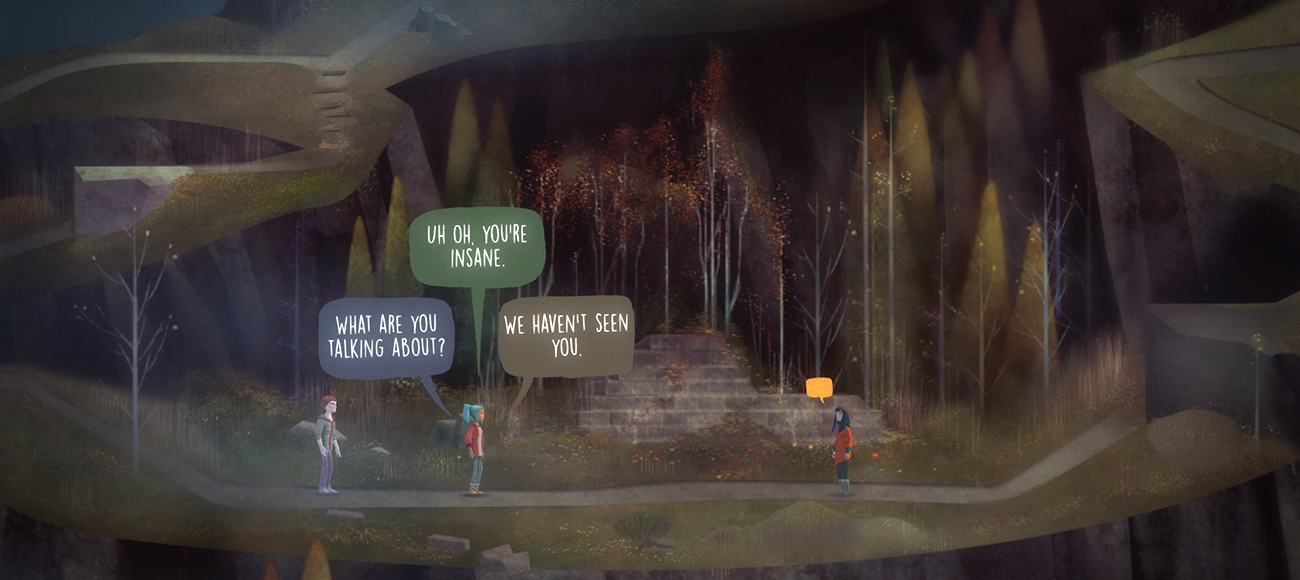
Oxenfree is a horror-themed teenage friendship drama conversation simulator set on a haunted island in the Pacific Northwest. Originally released in 2016, Oxenfree is available on all consoles, and it takes about four and a half hours to finish the story.

You play as a teenage girl named Alex who takes the last ferry out to Edwards Island with her pothead friend Ren and her edgy stepbrother Jonas. They plan to spend the night on the beach, where two girls named Clarissa and Nona are waiting for them with a cooler of beer. There’s an urban legend that old-fashioned transistor radios can pick up strange signals on the island, and Ren leads Alex and Jonas to a sea cave where the signal distortions are rumored to be strong. By tuning into the radio transmissions, Alex ends up opening a portal to a parallel dimension.

I really enjoyed Oxenfree, both when I first played it and when I revisited it earlier this year. The graphic design is gorgeous, the OST is ambient and chill, and the elements of horror are genuinely creepy. The story of Oxenfree is intriguing, and walking across the island while navigating Alex’s relationships with the other characters is a fun and interesting experience.

Still, as a game, Oxenfree suffers from two major problems.

The first of these problems is that Alex walks very slowly. This makes sense, as a major element of gameplay is choosing Alex’s response in real time during ongoing conversations. The relaxed speed of travel also encourages the player to enjoy the scenery and the ambiance. Unfortunately, backtracking is a slog. The frustration engendered by Alex’s sluggish walking speed is exacerbated by the fact that the load times between screens are obscene, usually exceeding sixty seconds. As a result, I felt strongly discouraged against unguided exploration.

In order to uncover the full story of what’s happening, the player needs to embark on a scavenger hunt to collect a dozen letters scattered across the island. Because of the slow character movement and unbearable loading times, I had to give up on finding the letters myself. I was reduced to searching for spoilers online, which isn’t ideal.

As far as I can tell, a Cold War era submarine somehow managed to get itself caught in a dimensional paradox just offshore, and the Edward Island’s “ghosts” are the manifestations of the sailors trying to free themselves. These ghosts are secondary to the main story of Oxenfree, which is about the relationships between the teenage characters.

Although I think the friendship drama might have been more compelling if I had encountered the game at a younger age, Oxenfree’s second major problem is that its writing feels strange and awkward, at least to me.

I really wanted Alex to spend time with the two other teenage girls on the island. I like Nona and Clarissa a lot. I found them to be interesting characters, and I wanted to know more about them. Unfortunately, Oxenfree doesn’t give Alex many dialogue options to interact with either girl that aren’t petty, condescending, or downright bitchy. This isn’t the way that normal people talk to one another, even if they’re teenagers.

It’s clear that Oxenfree expects Alex to spend the majority of its playtime with Jonas and Ren, both of whom tend to respond poorly if the player chooses conversation options that don’t read as stereotypically “masculine.”

To give an example, after something terrible and upsetting happens, Jonas tells Alex that he’s scared. If she demonstrates sympathy or empathy by responding with “Are you okay?” or “I’m scared too,” Jonas will become annoyed or openly hostile. Meanwhile, the uncomfortably callous response of “You’re fine, let’s keep going” is configured as “correct” and doesn’t result in a string of passive-aggressive insults.

There are several different variations on Alex’s personality that the player can choose to express, but Oxenfree doesn’t give the player many opportunities to be chill, or friendly, or sincere, or emotionally vulnerable, or just curious about what’s going on. Each conversation choice generally has three options, but there’s always an additional option of not saying anything. As I played, I gradually found myself “choosing” not to say anything, especially not to the boys.

In other words, the opportunities for roleplaying the character of Alex are limited. I don’t think Alex is supposed to be unsympathetic, but the writer/director’s understanding of how interpersonal communication works feels very specific to a personality and worldview that I don’t understand. The portrayal of these teenagers – especially the teenage girls – is just so mean. The voice actors all give wonderful performances that help the player better understand the characters, but I wish the writing were as nuanced as the acting.

Granted, Alex ends up being the villain of Oxenfree II, so another interpretation might be that she is in fact a bad and selfish person who doesn’t care if she hurts people. If this is indeed the case, though, I wish that the writing had signposted her personality more clearly, or at least given more concrete hints regarding how the true nature of the situation on Edwards Island has affected her character.

Oxenfree has been universally praised, and I’ve even seen people refer to it as a “cozy game,” meaning that it presumably creates a sense of warmth in the player by being unchallenging to play while focusing on a story with themes of friendship and personal growth. I can understand the affective positivity of this reaction, but I also think it’s important to explain why Oxenfree can be difficult and frustrating, especially to someone playing the game in 2024.

Oxenfree is gorgeous to look at and features engaging conversation-based gameplay mechanics, but this is a horror game with slow movement speed and long loading times in which characters are often seriously unpleasant to one another. I maintain that Oxenfree is a unique and interesting game that’s well worth checking out – especially given its relatively short length – but it’s always good to have an accurate understanding of what you’re getting into.

While doing some research about the game’s reception, I learned that Netflix acquired the Oxenfree development team, Night School Studio, in 2021. Netflix produced Oxenfree II, and I read that there’s a live-action series adaptation of Oxenfree in production. This sounds nice, to be honest. Crossmedia adaptations don’t always succeed, but I get the impression that Oxenfree might actually work much better if it weren’t an interactive video game.

Gender and Magic in Final Fantasy VI

Final Fantasy VI is deeply concerned with the relationship between human beings and technology. The game borrows many elements from Western fantasy and science fiction, yet the story and action are centered around two teenage female protagonists, Terra and Celes, who are variations on the “magical girl” and “beautiful fighting girl” archetypes of Japanese popular culture.

Back in 2016, I published an essay about “Gender and Magic in Final Fantasy VI” on the website of the sadly defunct gaming magazine Kill Screen. Since then, I’ve made substantial edits for clarity, and I posted the updated version on AO3.

This meta essay situates Final Fantasy VI within the cultural context of Japan in the 1990s in order to discuss how the game explores its posthuman themes through the bodies of its female characters. I demonstrate how Final Fantasy VI uses gender as a lens for its exploration of the intersections between biology and technology, and I argue that the otherness associated with Terra and Celes serves as a powerful analogy for anxieties surrounding the future of the human species in relation to seemingly magical biotechnologies.

You can read the essay on AO3 here:
https://archiveofourown.org/works/53596483

The cover illustration was created by Palliceart, an artist with a dual specialty in magical girls and beautiful fighting girls. You can find her gorgeous and ethereal artwork on Twitter (here), on Instagram (here), and on Tumblr (here).

Giraffe and Annika

Giraffe and Annika is an extremely chill 3D adventure story game with anime-style character designs and panel-by-panel manga cutscenes. The game takes about four hours to finish, and I suppose that whether it’s worth $30 depends on how much you value this type of experience. I played Giraffe and Annika in short stretches during the day to get a bit of emotional sunshine, and it was lovely.

You play as Annika, a ten-year-old catgirl who mysteriously finds herself on a beautiful forested island. There’s a bit of an Alice in Wonderland flavor to the scenario, as Annika doesn’t worry too much about where she is or how she got there, and she begins the story as something of a blank slate. After investigating an empty house belonging to someone named Lisa, Annika goes back outside to find a blue-haired catboy named Giraffe waiting for her. Giraffe tells Annika that she has special powers, and he asks her to visit three dungeons on the island in order to restore starlight to a magical pendant.

The dungeons are themed open-air environments inhabited by roaming ghosts that will drain Annika’s health meter if they get too close. Thankfully, the dungeons are also filled with numerous health-restoring crystals. At the end of each dungeon is a boss battle that takes the form of a simple rhythm game. It’s possible to die from ghost attacks and other environmental hazards in the dungeons; and, in fact, I died a lot. Thankfully, save points and respawn points are so frequent that this isn’t an issue. There is zero stress in this game.

By clearing the dungeons, Annika will unlock exploration abilities such as a floaty space jump and the ability to swim underwater. She’ll also perform small fetch-quest tasks for NPCs who will help her bypass other obstacles. There are various objects that Annika can interact with across the island, but the optional collectibles are just for fun. Objectives are clearly marked, and you’ll never be in danger of getting lost or going off-track from the main quest.

The island is very lush and green and beautiful, and there’s a short day-night cycle that adds a touch of visual flair. I also appreciate the cuteness of the designs of the game’s sizeable cast of NPCs. In order to access the second dungeon, for example, you need to feed carrots to a sea turtle; and, to get the carrots, you have to round up a family of rabbits. The rabbits look like a Studio Ghibli adaptation of Beatrix Potter, and they’re adorable. Meanwhile, the sea turtle is completely photorealistic, which is a good illustration of the game’s gentle sense of humor.

It’s always a pleasure to encounter and interact with new characters, and I really enjoyed the manga-style cutscenes, which play out panel by panel. The character art is comically expressive, and the bright pastel colors are lovely.

It’s difficult to critique Giraffe and Annika, as it’s very sweet and competently constructed. Still, the main 3D playspace of the game can feel a bit textureless, and I also felt that the game wears out its welcome when it starts trying to challenge the player at the very end. I actually appreciate the occasionally amateurish design, as it fills me with a sense of nostalgia for the early 3D adventure games of the PlayStation era. Even though Giraffe and Annika sometimes looks as though it was built with out-of-the-box 3D graphic assets, it’s clear that the creators put a lot of effort into creating unique environments with a distinct sense of character.

Giraffe and Annika probably won’t appeal to someone looking for a deep story or challenging gameplay, but I can imagine that it would be a perfect starter game for its target audience of younger players. As for me, it provided a pleasant and much-needed mood boost during a dismal week in February. Giraffe and Annika is a bright and simple fantasy adventure with cute characters and no unnecessary cooking or crafting elements, and sometimes that’s exactly what you need in your life.

Zelda Horror Zine Preorders Open

I’m excited to share a preview of my story for Blood Moon Rising, a Legend of Zelda horror fanzine.

I wrote about the undead princess of Zelda II, as well as the decision that Impa is forced to make in dooming the princess of the original Legend of Zelda to the same fate. The two NES Zelda games are deeply dystopian, and I enjoyed going full Dark Souls while exploring the decay of their horrifically postapocalyptic settings.

Preorders of the zine are open until March 15, and all proceeds will go to Medical Aid for Palestinians. There’s some truly frightful work in this zine, so please check out their social media if you’re interested!

🩸 https://bloodmoonzine.carrd.co
🩸 https://bloodmoonzine.tumblr.com
🩸 https://twitter.com/BloodMoonZine
🩸 https://bloodmoonrising.bigcartel.com

My House Is Haunted!

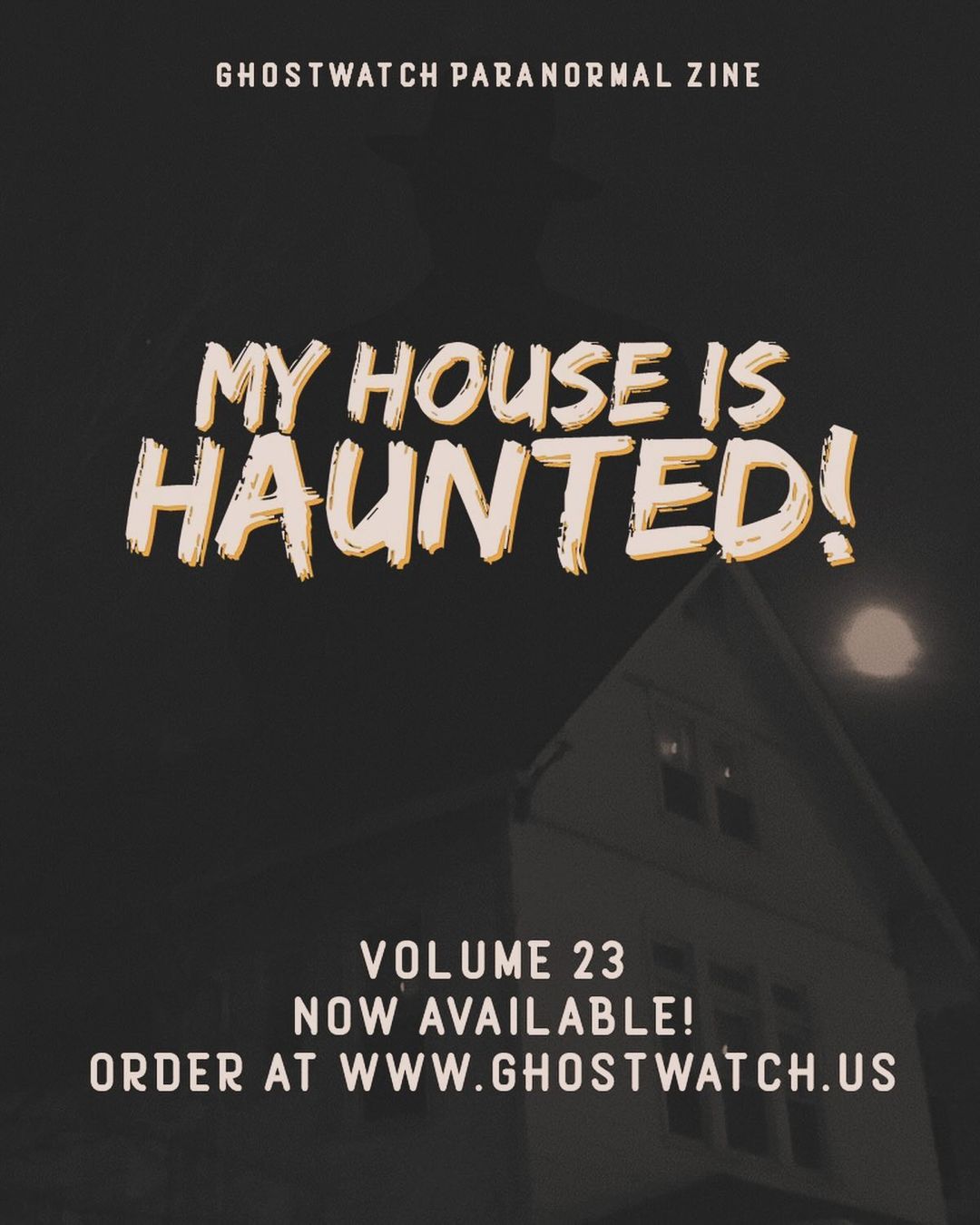
I’m excited to have a short story appearing in the latest issue of Ghostwatch.

My story, “The Sweet Blue House,” is based on a property I viewed while househunting in the suburbs of West Philadelphia. There’s nothing paranormal about what I saw, but some houses don’t need ghosts to be haunted.

Ghostwatch is a really neat publication. I have zero belief in the supernatural, and what I love about Ghostwatch is how it collects odd and interesting bits of folklore and documents local and regional cultures in the United States while maintaining a supremely chill attitude. The zine’s account on Instagram is a lot of fun too.

If you’re interested, you can order the “My House Is Haunted” issue here:
https://www.ghostwatch.us/product/vol-23-my-house-is-haunted

Retro JRPG Lessons from Final Fantasy Mystic Quest

In 2023, I tried to play about a dozen indie retro JRPGs. I’ve always loved the JRPG play cycle of slowly gaining strength and resources through turn-based battles and dungeon exploration, and I don’t necessarily find repetitive simplicity boring. Still, I bounced off almost all of the games I tried within the first hour.

In order to think through why I’ve had so much trouble getting into more contemporary retro JRPGs, I returned to Final Fantasy Mystic Quest, which was originally released for the Super Nintendo in 1992. Mystic Quest was intended to introduce American console gamers to the conventions of JRPGs, and its various ease-of-use features allow the player to complete the story in less than five hours. Despite its primitive graphics and gameplay, I had a good time with Mystic Quest, and I took away five lessons about why this simple-as-bricks game works for me while so many contemporary retro JRPGs don’t.

(1) If the game is more than an hour long, there needs to be actual gameplay.

I have a soft spot for indie retro RPGs in which the player does nothing but walk around and talk to people, but there’s a limit to how much of this I’m willing to engage with. Even in a story-focused game, there needs to be some sort of activity that isn’t reading text on a screen.

(2) The player needs to experience this gameplay within the first ten to fifteen minutes.

I think a major aspect of what people liked about old JRPGs is that the player could generally progress from the first town to the first dungeon right at the beginning of the game. Exposition and worldbuilding are important, but not as important as the game being fun to play. Even Final Fantasy VII, which has a famous opening cutscene, sees Cloud and Barret fighting enemies and navigating a dungeon within the first five minutes.

(3) Battles with minor enemies should be over quickly.

This is especially the case at the beginning of the game, when the player is still getting a feel for how everything works. If every random battle is two minutes long, these minutes add up. It doesn’t matter how clever the battle-specific character dialogue or flavor text is; it loses its charm when I see it repeated dozens of times across dozens of random battles.

(4) There should be a bell curve for complexity.

The opening of a game needs to demonstrate the game’s aesthetics and mechanics in a way that shows the player what the game is about. This doesn’t need to be dramatic or flashy or cinematic, and the point is definitely not to overwhelm the player with a giant town filled with NPCs or endless text reels of exposition. All of that should come later, when the player is already invested and eager for more. A game should start simple and gradually become more complex before opening up somewhere in the middle. By the end of the game, though, the complexity needs to decrease as the player becomes more focused on finishing the story. Structure is important.

(5) The player should be able to interact with the environment in region-specific ways.

This is the key ingredient that makes the Legend of Zelda games work so well, and even standard JRPGs like Final Fantasy IV and Final Fantasy VI incorporate elements of environmental exploration as well. If I’m in a forest, I want to be able to find an axe that I can use to chop down trees. If I’m navigating the sewer system under a castle, I want sluice gates that raise and lower the water level. If I’m in a seaside merchant town, I want there to be secret passages filled with treasure. Exploration is infinitely more enjoyable if the player has something to do.

Okay, one more:

(6) It’s fun to be able to jump.

I’m not going to elaborate on this, because it’s a self-evident truth: It’s fun to be able to jump. Also, if there are cute animals, the player should be able to pet them.

Melissa

Melissa
https://cattrigger.itch.io/melissa-heart

Melissa is a free-to-play retro horror visual novel about a rudimentary dating game on an old library computer. If you’re okay with dying quickly, it takes about seven minutes to play, but you can add a few more minutes by trying to stay alive for longer. The game has an easily accessible save system, so you can restart at every dialogue choice to see what happens when you beg for mercy. Good luck!

Melissa reminds me of the best parts of Doki Doki Literature Club without the need to scroll through an hour of cutesy school shenanigans. The initial dating game is exactly the sort of thing you’d find on a floppy disc next to Oregon Trail, and both the graphics and the sound design feel nicely textured and deliciously crunchy. The writing gets in and gets the job done, and the twist is a lot of fun.

The developer made a sequel called Morris
https://cattrigger.itch.io/morris-heart

…that is significantly longer (about 25-30 minutes) and also very good. The retro nostalgia appeal is amplified by the occasional internet dial-up sounds, and at certain points the game asks you to print things out on the library’s public printer, which makes adorable dinosaur noises. Aside from the eponymous Morris, the story featured two additional characters, both of whom are delightfully unhinged. In the comments on the game’s page on Itch.io, a few people said that they’d happily date the evil older woman, and honestly? Same.

It amuses me that Melissa and Morris are both named after famous computer viruses. If you’re interested, I recommend checking out these two bizarre FBI pages, if only for their top-notch banner graphics:

The Melissa Virus
https://www.fbi.gov/news/stories/melissa-virus-20th-anniversary-032519

The Morris Worm
https://www.fbi.gov/news/stories/morris-worm-30-years-since-first-major-attack-on-internet-110218

Anyway, it seems like the developer is making a full Date Time trilogy for release on Steam, and I’m intrigued by the work they’ve posted so far. It’s interesting to think that this universe of cursed retro dating games is informed by its own system of deep lore, and I’m always here for monster computer viruses who are down to smooch.

Fishy

Fishy
https://i-choose-paradise.itch.io/fishy

Fishy is a horror-themed “wholesome” visual novel that takes about twenty minutes to finish. You play as a sweet middle school girl who’s spending the night at an aquarium for a friend’s birthday party. The problem is that she’s deathly afraid of the ocean, and it doesn’t help that there’s mild friendship drama afoot. She gets separated from the group and wanders into a restricted area, where she encounters fish that aquarium guests are never meant to see.

The art of Fishy is fantastic and alternates between genuinely gorgeous and genuinely creepy. Putting the spooky fish aside, the environmental illustrations perfectly capture the magical atmosphere of what it might be like to spend the night in an aquarium. The character designs are lovely as well.

The writing is competent, but the game seems to be aimed at the same audience as its preteen characters. In its determination to be wholesome and teach the player a positive life lesson, the story hesitates to create a sense of tension, dread, or even character development.  

Fishy’s message is that having a prosthetic limb is cool, actually. And that’s great! Prosthetic limbs are in fact cool as hell. Still, the twenty minutes that most players will spend with the game isn’t quite enough time to tie all the various thematic threads together. There’s the player-character’s anxiety + her relationship with her friends + her fear of the ocean + the potentially haunted aquarium; and then, on top of that, there’s the positive message about disability positivity. It’s a lot!

The lack of any real darkness or specificity makes the experience of the player-character somewhat confusing, at least to my adult sensibilities. Like, what exactly is the source of the friendship drama? Why is the player-character afraid of the ocean? Is there something going on in her life that makes her prone to attacks of social anxiety? Why does she react to this situation in such an extreme way? Is she having a legitimate psychotic break?

I always appreciate stories that reach for big goals, of course, and the writing is quite compelling. If nothing else, the characters all seem like real people, and I was interested in learning more about them.  

Also, I have a bit of a crush on the girl in the friend group who knows all sorts of disturbing facts about the ocean and doesn’t mind bringing them up at (in)appropriate moments. I want a whole game about Weird Fish Girl and whatever her damage is. She’s wonderful, and I love her.

All in all, Fishy is a fun story with a few spooky scenes, and it feels like a good visual novel to share with younger children. The hand-drawn art is appealing, and the story goes to some interesting places in a relatively short amount of time. In any case, it’s free to play, so no complaints there. Even if you’re not into preteen friendship drama, it’s always good to spend quality time with the terrors of the deep.