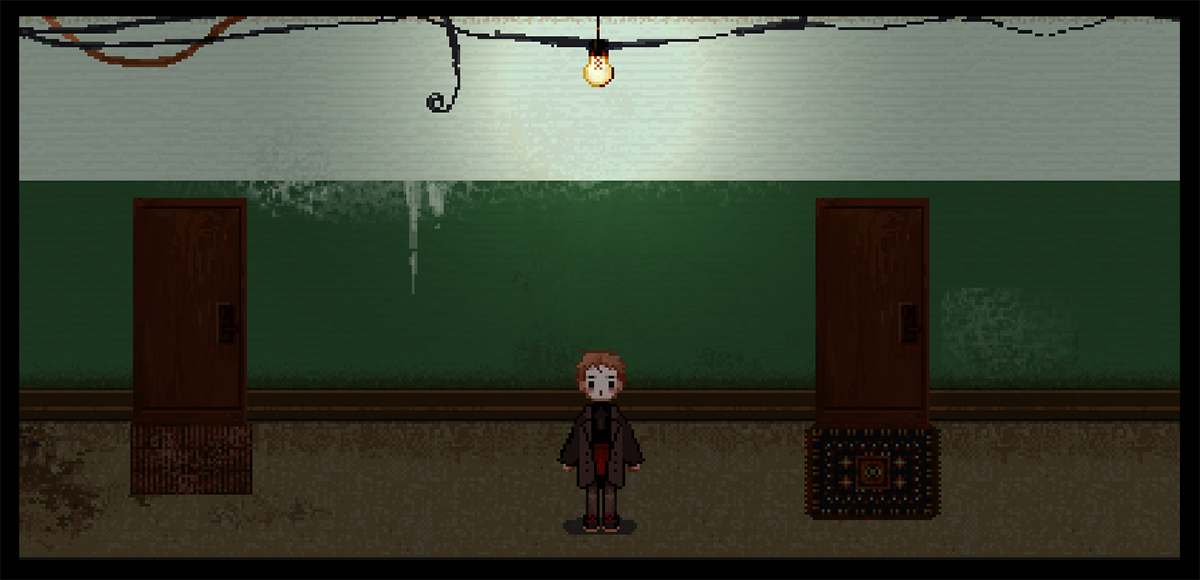
Flesh, Blood, & Concrete
https://waxwing0.itch.io/fbc
Flesh, Blood, & Concrete is a free-to-play RPG Maker adventure game that bills itself as “an apartment building exploration simulator.” During its 45-minute playtime, the game delves into themes of isolation, mental illness, and existential dread within the confines of a decaying apartment complex.
Players take on the role of Lera, a 28yo architect whose car breaks down in the snow. While seeking refuge from the cold, Lera meets a girl named Nika who, inexplicably, is dressed like an anime maid. Nika invites Lera to warm up inside her “house,” a giant abandoned apartment block at the edge of an unnamed town. As Lera, the player is given free rein to explore the building. The deeper inside you get, the stranger the architecture becomes, and it turns out that the “flesh and blood” of the title are not merely symbolic.

Flesh, Blood, & Concrete has no combat or puzzles. Instead, players explore the building and interact with the environment. In essence, your job is to collect items, which you can examine in the game’s small menu screen at your leisure. As you move from floor to floor and poke around all the vacant units, you gradually piece together Lera’s backstory through environmental storytelling and occasional conversations with Nika.
While the game’s pacing might feel a bit slow, the deliberate sense of space between incidents gives the player time to reflect on what exactly is going on with Lera. In my interpretation, Lera’s interactions with Nika hint at her desire to flee from the adult world, and I don’t think it’s a stretch to suggest that the dilapidated building is a manifestation of the intensity of Lera’s depression. At the end of the game, the player is confronted with a symbolic choice (the mechanics of which are explained in the creator’s spoiler-free guide), and what constitutes the “good” ending is open to interpretation.
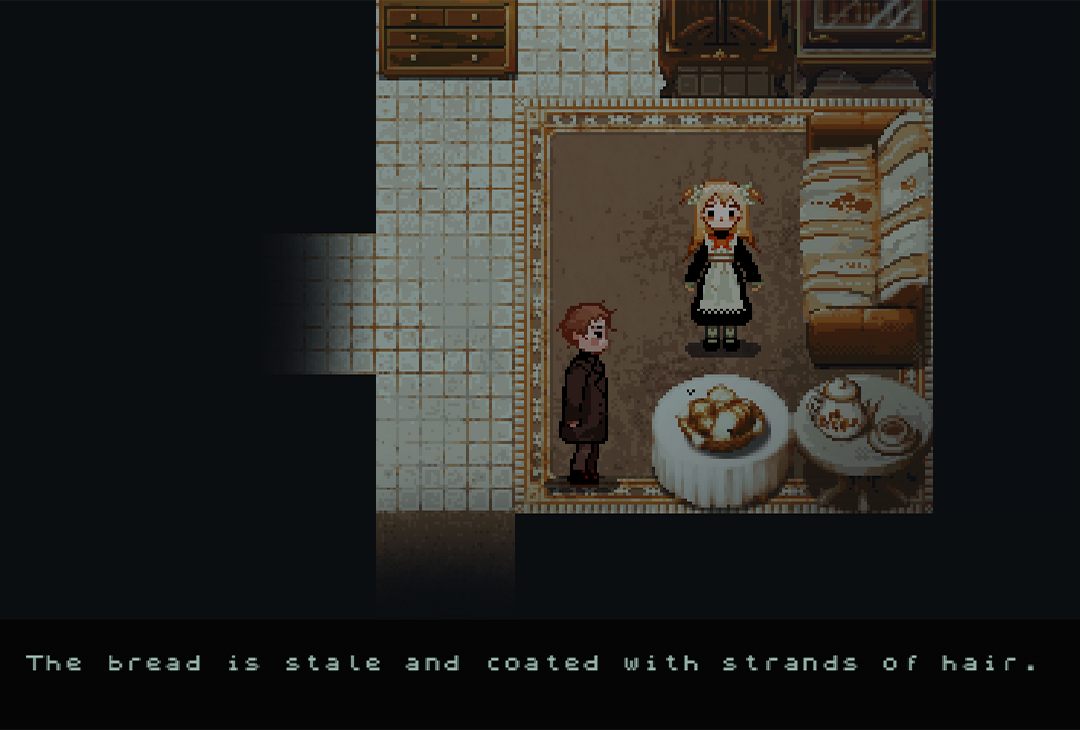
In keeping with the bleakness of the game’s themes, its pixel art is rendered in muted tones. The corridors are desolate stretches of flickering lights and peeling wallpaper, and the individual apartment interiors start off as charming and cozy but gradually descend deeper into the uncanny. The game’s soundtrack complements its visuals, with a blend of ambient sounds and minimalist synth piano pieces working to create a melancholic mood. Any sense of nostalgic coziness won’t last, however – some of the game’s visuals are sublimely gory.
As an aside, I recently played the indie narrative adventure game Indika, and I was thinking that I’d love to see more games set in Eastern Europe. Flesh, Blood, & Concrete is a universal story, but the specificity of the game’s Russian setting adds a unique and interesting flavor to its narrative and visuals. I also appreciate that this “apartment exploration simulator” takes the darker aspects of mental illness seriously but still delights in the playfulness of its morbid style of creative expression. It’s one of the more intriguing RPG Maker horror games I’ve encountered, and I’d recommend giving it a shot if you can handle the (literal) viscerality of its imagery.
 Digital Fantasy Diary