
The Annotated Kitab al-Azif

My queer Lovecraftian romance, “The Annotated Kitab al-Azif,” was just published in the latest issue of Black Sheep, a magazine for weird fiction. This story treats the gnostic origins of the Necronomicon with respect while being slightly silly about grad students.

You can order a copy of the issue with my story here:

🐙📖 www.amazon.com/dp/B0G25R82TY

It’s very cool to have the opportunity to publish a Lovecraft pastiche in an honest-to-god pulp magazine, which seems appropriate. At the same time, I definitely feel the friction of using Lovecraft’s own tropes to push back against the ugly Orientalism surrounding the Necronomicon.

The truth is that, while I admire Lovecraft, but I wouldn’t consider myself a fan. Rather, I spent a formative part of my childhood in a small town in the Deep South whose public library was severely limited by budget constraints. The only thing remotely close to fantasy fiction they had on their shelves was Stephen King, the lone second volume of Lord of the Rings, and a handful of ancient paperback collections of H.P. Lovecraft.

I didn’t really have the cultural context to understand Stephen King, and I wouldn’t recommend The Two Towers as the place to start reading Tolkien. Lovecraft grabbed me, though. Even as a kid, I understood the xenophobia expressed in Lovecraft’s stories. Believe me, I understood all too well. Still, I guess I was young enough that this wasn’t a dealbreaker, especially since there was nothing else to read during the summer where I practically lived at this tiny little library.

I had more resources the following year, when I started attending an international school in Atlanta and began to read more widely. But Lovecraft stuck with me, and a small but significant goal of my writing now is to try to capture and explain why that is.

I sincerely believe that people should write whatever they want, but a part of me still questions the value of aligning myself with the work of such a problematic author. The truth remains, though, that these Lovecraft stories only occupy a small closet in the house I’m trying to build with my writing. What I want to do is expand the scope of the small rural library that only had room for Stephen King and H.P. Lovecraft, as well as to create space for original work that dismantles the toxic feedback loop of preset responses to human difference.

Much love to Black Sheep magazine for giving a home to this story. 
The Gentle Inclusivity of Kawakami Hiromi

I’m delighted to announce that my short essay “The Gentle Inclusivity of Kawakami Hiromi’s ‘Summer Break'” was just published in the 21st volume of the Proceedings of the Association for Japanese Literary Studies. Here’s the abstract…

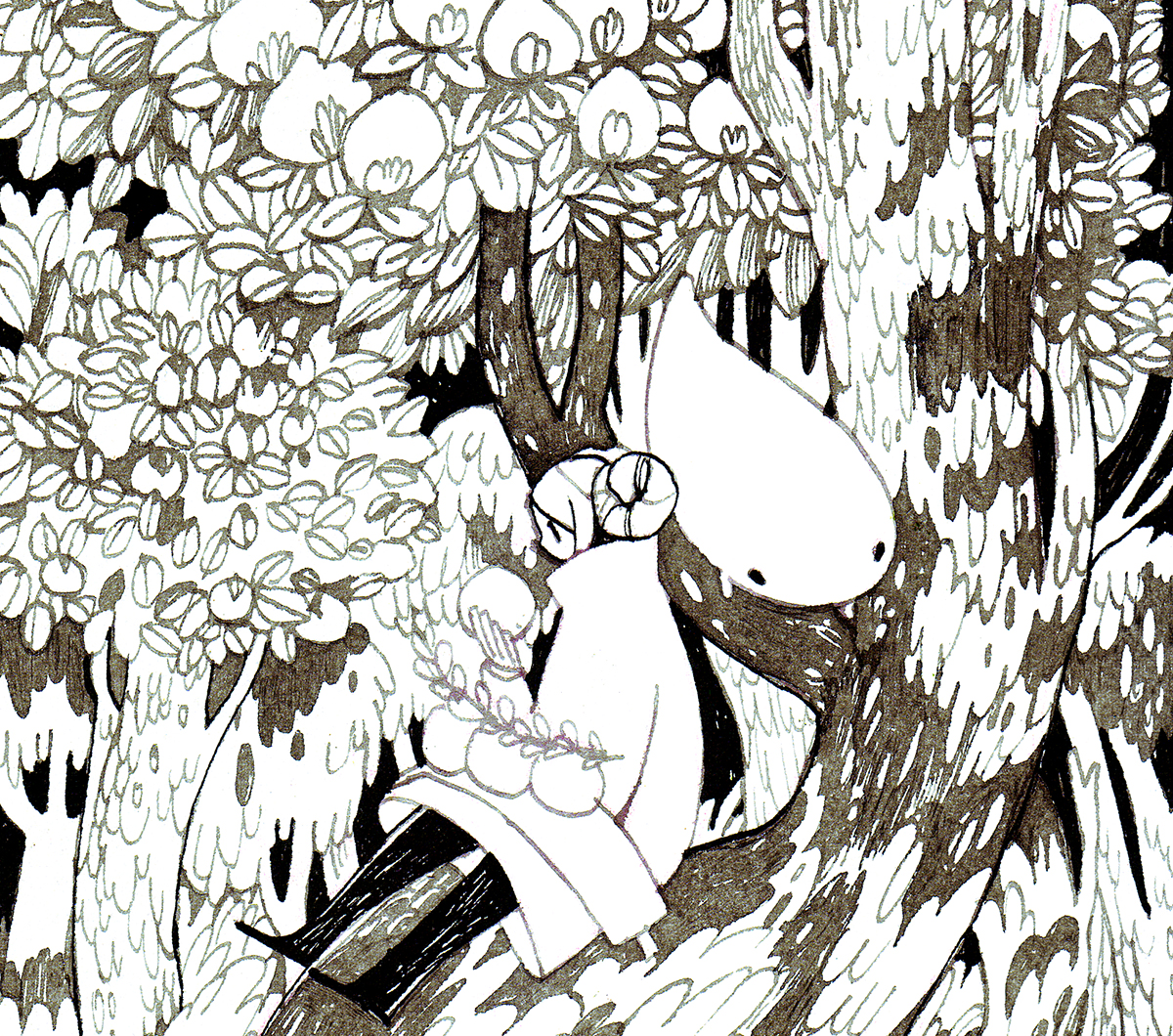
“Summer Break” (Natsu yasumi), the second story in Kawakami Hiromi’s 1998 collection The God of Bears (Kamisama), is narrated by a young person who spends a summer working as a laborer in a pear orchard. Like the other stories in The God of Bears, “Summer Break” operates according to the logic of magical realism, which is perhaps why the owner of the orchard tells the narrator not to worry about the small, talking creatures that run through the trees and devour fallen fruit. The narrator nevertheless forms a bond with one of these pear spirits, whose panic attacks mirror the narrator’s own dissociative episodes. At the end of the story, both the pear spirit and the narrator grapple with anxiety and suicidal ideation, but the story’s conclusion embraces self-acceptance.

From the first publication of the award-winning title story of The God of Bears in 1994 to the appearance “Summer Break” in the complete collection in 1998, various public figures attempted to address the social malaise that characterized Japan’s economic recession. Several highly influential public intellectuals, including the clinical psychologist Kawai Hayao and the cultural critic Saitō Tamaki, viewed mental illness as a symptom of broader cultural forces.

In “Summer Break,” however, Kawakami portrays the experience of mental illness as embodied and personal instead of abstract and societal. This paper analyzes how the fantasy elements of “Summer Break” render its treatment of mental illness as sympathetic and relatable, an aspect of the story that is enhanced by its use of magical creatures that externalize the narrator’s psychological state. I will place this analysis within in the context of recent narratives in Japanese fiction and popular culture categorized as ijinkei (“about nonhuman characters”), as well as critical discussions of the folkloric qualities of this period of Kawakami’s writing.

…that’s a lot of material to cover in such a short essay, but I think I did a decent job of contextualizing the story. This piece of writing was intended to serve as an introduction to my translation of the story itself. Unfortunately, despite almost a year of constant work and the assistance of multiple high-profile translators, we weren’t able to secure the publication rights. It’s a disappointment, but I hope the silver lining is that there are plans for the full God of Bears short story collection to appear in translation soon.

My essay is available on JSTOR; but, since I understand that not everyone has institutional access, I’ve also made a copy available on my website (here). Although it’s unofficial, you can download a PDF of my translation of the short story “Summer Break” (here). Years ago, I translated all of the stories in The God of Bears, and the illustrator I was once planning on working with to create illustrations is Maru, who you can find on Twitter (here). And finally, you can learn more about the Proceedings of the Association for Japanese Literary Studies on their website (here).