Paranormasight: The Seven Mysteries of Honjo

Paranormasight: The Seven Mysteries of Honjo is a supernatural thriller set in the Honjo neighborhood of Sumida Ward in central Tokyo during the 1980s. This visual novel’s story is told via the intersecting perspectives of three main protagonists through a series of short episodes laid out along a story grid. Although you have some choice regarding the order in which you play the episodes, the story is linear, with minor branching paths leading to premature endings. Paranormasight has strong elements of horror, as well as a few jumpscares, but it’s sensitive about its use of mature themes and graphic visual imagery. Depending on how quickly you read, it should take about ten to twelve hours to unlock all of the endings.

Let me cut to the chase: I really enjoyed Paranormasight and would happily recommend it even to people who aren’t horror fans. The game only has a moderate level of interactivity, so I’m not sure it would appeal to people who dislike visual novels. That being said, Paranormasight is at the height of its genre, and it’s as well-written, well-illustrated, and intriguingly presented as a visual novel can get.

A quick description of the story is going to sound like anime nonsense, but please take my word for it that this is a story written for an adult audience and bear with me for a moment.

During the early modern Edo period, an onmyōji wizard found the secret to a ritual that would bring someone back from the dead. In order to recreate the soul of the deceased, one would need to store sufficient “soul dregs” of murder victims inside a ritual object. The wizard managed to perform the ritual, a process that resulted in nine deaths. The history of these deaths has survived to the present in the form of urban legends about the “seven mysteries of Honjo.”

Late one night, ritual objects in the form of wooden netsuke charms mysteriously appear in the hands of nine people in the Honjo neighborhood. In addition to the physical charms, these “curse bearers” have inherited the resentful memories of the victims of the original ritual, as well as the power to kill others with a curse, which they’re able to trigger when certain conditions are met. If one of the curse bearers manages to kill enough people, they’ll be able to perform the ritual of resurrection – but only if another curse bearer doesn’t kill them first.

Paranormasight opens with a stand-alone prologue in which one of the curse bearers meets a gruesome end. When the prologue is concluded, the story is taken up by three more curse bearers: a grieving mother whose young son died in a kidnapping incident, a high school girl whose best friend committed suicide, and a senior police detective assigned to investigate the mysterious death of a youth truancy officer. All three of these protagonists are sympathetic, as is the companion character accompanying each of them. As the story unfolds, they gradually begin to work together in an attempt to figure out what’s happening so that they can survive the curse while preventing more murders.

I feel like I’ve spent years quietly waiting for Square Enix to start publishing visual novels, and I’m happy it’s finally happening. Visual novels are somewhat infamous for being relatively inexpensive to make, and it’s so cool to see one of these games with big-budget production values. Although the art and music are wonderful, the high quality of Paranormasight mainly comes through in the strength of its writing, its manga-style mise-en-scène, and its excellent translation.  

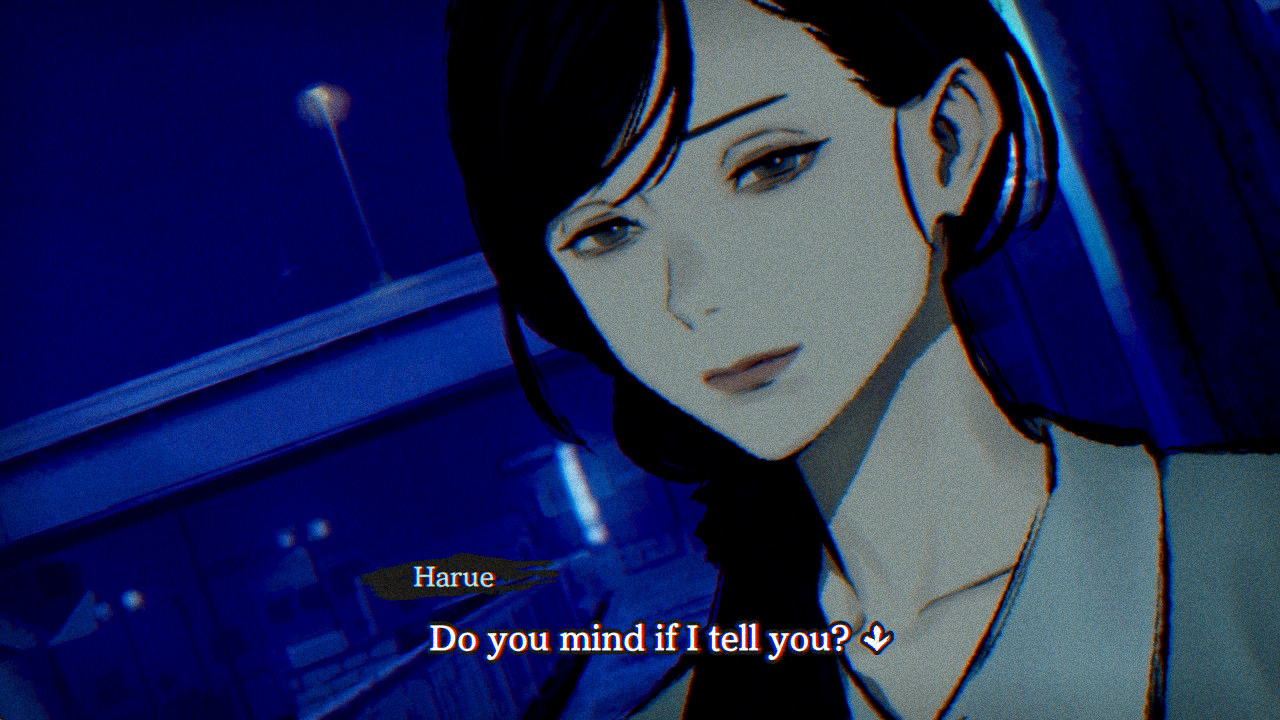
When I talk about the mise-en-scène, I’m referring to the cinematic framing of each scene. While many visual novels will show you a visually flat illustration of a character superimposed on top of a static background, Paranormasight puts a great deal of effort into making conversations feel more dynamic, with the camera following standard “line of sight” rules to show the player the conversation from different angles and perspectives. As a result, Paranormasight feels like reading a manga instead of reading an illustrated novel. This framing isn’t overly dramatic and doesn’t draw attention to itself, but it must have required an incredible amount of planning and effort to pull off with such skill and variety.

The same goes for the writing. The writing doesn’t go out of its way to appear “brilliant,” but the way the various threads of the characters gradually become woven into the larger story is incredible. Although you’ll often have to finish one character’s current storyline before continuing another’s, I was impressed by how the game maintains its forward momentum while still giving the player a fair amount of freedom to move between characters and conversation topics. I also appreciate how none of the characters ever devolves into a stereotype, and how both major and minor characters have a balanced mixture of admirable and problematic personality traits.

On a lark, I downloaded Paranormasight onto my older Nintendo Switch and played the prologue in Japanese. I can therefore say with confidence that the English translation is excellent. The translation team preserves the flavor of the original writing through canny localization choices, especially regarding the game’s more arcane vocabulary. I’ve been annoyed with the translation of Tears of the Kingdom, which is filled with nonsense like “Ultrahand” and “secret stones,” so I admire how the English version of Paranormasight manages to make its more unusual terms seem perfectly natural.  

Despite its goofy name and slightly silly supernatural premise, Paranormasight was created for an audience of intelligent adults. The game is very much mass-market entertainment published by a giant corporation, so perhaps it’s not as bold or edgy as it could be, but I actually think this market concession to “broad appeal” is a blessing. Sometimes it’s nice to read a horror thriller that has the confidence not to rely on sexual assault, fantastically grotesque violence, or poorly-disguised bigotry against minorities. As a fun bonus, there are no creepy “male gaze” character designs, just a wide range of character types who are drawn in an appealing anime-influenced style but still look like real people.

Paranormasight was developed in cooperation with the Sumida City Tourism Association, and the game does a fantastic job of giving the player a sense of its setting. This works especially well in tandem with the story’s theme of how many Japanese urban legends are closely connected to a specific place and the history of the people who live there. Although most of the gameplay involves choosing how to advance the conversation, there are also moments when the player is invited to explore an area via a visual panorama while investigating points that catch their attention. It’s fun to explore this weird little neighborhood in Sumida that’s been around since the Edo period, and you never feel as though you’re on the receiving end of a history lecture.

One of the coolest aspects of Paranormasight is its framing device, in which a narrator wearing an Edo-period kimono and a half-face Noh mask directly addresses the player. This narrator invites the player to watch the story through a Shōwa-era color television, one of the bulky cathode-ray screens embedded in its own piece of furniture.

The menu has a great time with this retro aesthetic, distorting the background with tv “noise” and curving the screen at the edges. From the menu, you can access an annotated index with entries for the characters, places, and historical incidents that appear in the story. Each entry is accompanied by an illustration and two or three paragraphs of text. I generally don’t bother with the annotated indices in visual novels, but the one in Paranormasight is especially well-written and edited to provide a satisfying amount of intriguing information without overwhelming the player with walls of text. I also love that the entries for the urban legends are illustrated with period-accurate woodblock prints.

For someone with my particular set of interests, Paranormasight is a 10/10 game. Even if you’re not into urban history or urban legends, I still think the strength of the game’s writing and the cleverness of its design are strong selling points. You can download Paranormasight as a phone app, but it’s perfect for Nintendo Switch’s handheld mode and well worth the $20.

By the way, if you’re intrigued by the concept of “virtual tourism through a visual novel,” I’d also like to recommend the supernatural mystery thriller Root Letter. Its story is set in the small city of Matsue in rural Shimane prefecture, which is also famous for its Edo-period urban legends. Root Letter is very good, but it’s nowhere near as polished as Paranormasight. Square Enix really hit it out of the park with this one.

Tokyo Travel Recommendations

I recently shared a list of recommendations with a student who will be studying abroad in Tokyo this coming school year, and I thought I’d share it here as well!

Two Resources

Tokyo Trend Ranking
This is a free magazine that you can find in most stations of the Tokyo Metro. It comes out once a month and is filled with photographs and information about unique and popular restaurants and pubs and cafés, as well as seasonal special events throughout the city. Because it’s meant to promote usage of the Metro, it always contains illustrated walking tours focused on one or two specific stations. If you want to explore the off-the-beaten-track neighborhoods of Tokyo, this is a great resource!

Suica Card
This is a refillable prepaid train fare card, and it’s the first thing you want to get when you arrive in Japan. You should probably go ahead and get one in the airport as soon as you get off the plane. You can get one at the automatic vending machines next to train stations, and the process is super easy. Your Suica card will work just about everywhere in Japan, and you can use it in all sorts of places, from convenience stores to movie theaters. If you’re feeling hardcore, you can link it to your smartphone and your bank account.

Seventeen Places to Visit

Tokyo National Museum
This is the big museum of Japanese art and culture that you definitely want to see. It’s in Ueno Park in northeast Tokyo, not too far away from the zoo.

Shitamachi Museum
This is also in Ueno Park. It’s a small museum, just the inside of an old house, but you can walk through it and see how people lived during the first half of the twentieth century.

Edo-Tokyo Museum
This indoor museum is probably the best place to go if you want to learn more about the history of the city of Tokyo. The architecture is really cool, and it’s a neat space to walk around. It’s also not too far away from Akihabara.

Art Aquarium
Fish and art and over-the-top spectacle. It’s really close to Tokyo Station, whose interconnected underground shopping streets are another blitz of sensory overload.

Maruzen Nipponbashi Branch
In my opinion, this is the best place to go in Tokyo for English-language books. Most of the English books they stock come from the UK, and they tend to be of higher quality than American publications of the same titles. These imports are expensive, though!

Meiji Shrine
The main shrine buildings are well worth visiting, especially because someone always seems to be getting married there. More than the shrine itself, however, the huge forested park is a great place to take a long walk while surrounded by nature. All of this is free, but I highly recommend paying the 500 yen entrance fee for the Inner Garden, which is especially lovely. Meiji Shrine is a major tourist destination, though, so you want to go early in the morning (probably as soon as they open the grounds) in order to avoid the crowds.

Nezu Museum
If you start at Meiji Shrine and walk along the Aoyama-dōri boulevard through Harajuku, you’ll eventually get to the Nezu Museum, which houses a private collection of Asian art. Even if you don’t care anything about sculpture and ceramics, the estate garden is gorgeous, and teahouse café at the entrance to the garden is a beautiful place to drink tea and eat cake and feel super fancy.

Aoyama Flower Market Tea House
This café is in the neighborhood of the Nezu Museum, and it’s one of the most beautiful interior spaces I’ve ever seen in my life. You definitely want to get there when they open, because they get busy! They have tasty salads, heavenly parfaits, and delicious teas. If you can’t get a seat here, the entire neighborhood of Aoyama is full of trendy little organic restaurants filled with beautiful young people. Even going into one of the Starbucks in this neighborhood will make you feel like a rockstar.

Sunshine Aquarium
This large rooftop aquarium has no redeeming cultural value, but it’s a cool place to spend an afternoon. If you watch a lot of anime set in contemporary Japan, you’re sure to recognize the setting! The caretaker talks showcasing the animals are a lot of fun to watch; and, since they’re geared toward children, they’re also relatively easy to understand. The Sunshine City shopping complex contains a Pokémon Center, a Studio Ghibli store, a Shonen Jump store, and other pop culture outlets. It also contains a Tokyu Hands, which is a great place to buy just about everything. The Tokyu Hands fronts the main outdoor shopping arcade, and they host small indie craft fairs at the entrance on the weekends.

Cat Café Nekorobi
This is right behind the Tokyu Hands, and it’s a warm space filled with softness and light. In my experience, it generally isn’t that crowded; and, although the cats are standoffish (but what can you expect, they’re cats), the staff and the other patrons are very friendly. What you really want to take your time with is the guestbook, which is an ongoing work of art. Also, this is the starting point of Otome Road, which is where you go if you’re looking for pop culture goods targeted at a female audience.

Shoto Museum of Art
This is a neat little art museum in Shibuya with some really cool gallery spaces. They exhibit a lot of early modern (Edo period) and modern (Meiji and Taishō period) art alongside contemporary work, and the architecture of the building is quite interesting as well.

Shibuya Botanical Center
This is a warm and happy healing space full of greenery. The entire building is suffused with humidity, and there’s free tea on the top floor. This is a great place to learn the Japanese names of flowers and plants, and it’s also a wonderful place to take selfies or pictures with your friends in soft diffuse light.

Mori Art Museum
This museum has some really cool exhibitions, which feature everything from avant-garde architectural photography to the work of popular manga artists. The gallery spaces are located at the top of a huge skyscraper, so the views of Tokyo from the windows are incredible. It’s located in the Roppongi Hills shopping complex, which is super trendy and also home to a large movie theater that shows a lot of American movies with subtitles. TV Asahi also has a presence in the area, so you can sometimes randomly encounter live performances of various Power Rangers and Doremon characters if you go during the afternoon.

Oedo Onsen Monogatari
This place is ridiculous. It’s an onsen theme park where you can go in and take all sorts of baths and eat all sorts of snacks and drink all sorts of beverages. A lot of people visit with their families, so it’s a good place to chill out in a yukata and watch people walk by. It’s in Odaiba, an artificial island in Tokyo Bay, so it’s kind of a pain in the ass to get to, but there’s a huge mall called VenusFort nearby that has an Italian-themed interior. The mall is an experience in and of itself, and you can often see brand-new idol groups performing there on pop-up stages.

Ghibli Museum
110% worth the hype. When you first enter, you’re allowed to watch a screening of an original short film, and your “ticket” is a tiny animation cell. You’d think that this place exists solely to sell you merchandise, but commercialism isn’t really the focus, thankfully. Still, you probably want to get a ticket for early in the morning before the crowds gather. You can only reserve a ticket in advance (usually at least a week in advance) from one of the digital vending machines in Lawson convenience stores, but the process isn’t really that difficult. Because of the scarcity of tickets, this is something you can only do if you’re in Japan for an extended period of time, so you should jump on the opportunity if you’re interested!

Yokohama Museum of Art
The building is awesome, and the exhibitions are always fantastic. The reason you’d want to make a special trip out to Yokohama, however, is because the museum is part of the Minato Mirai waterfront area, which is a huge upscale shopping complex and gourmet paradise. You can find the same sort of pop culture specialty chain stores (like the Pokémon Center) that are in Sunshine City in Ikebukuro, but Minato Mirai is way more classy and far less crowded over the weekend. Also, there are a lot of restaurants in the Yokohama Chinatown that have branches in Minato Mirai, and it’s usually much easier to get a table here than it is in the main branches.

Meigetsuin Temple in Kamakura
Why go all the way to Kyoto when you can go to Kamakura? You’ll probably have to go through Yokohama to get here, but it’s really not that far away from Tokyo, and the train ride is lovely. I recommend getting off the train at Kita-Kamakura Station and then walking to Kamakura proper along the main road while visiting a few temples along the way. Engakuji and Kenchōji are the two most popular sites, but my favorite is Meigetsuin, which is known as “the hydrangea temple” because of its stunning mountainside walking garden. Due to the natural beauty of the area and relatively low rent, a lot of artists live in Kamakura, and there are all sorts of small galleries and lovely cafés in and around the city. Once the weather gets warm, you’ll notice that the lifestyle magazines in convenience stores start featuring Kamakura locations on their covers, and it’s well worth consulting one for recommendations!