Review of Hourglass on Comics Beat

I had the immense honor of publishing a review of Barbara Mazzi’s graphic novella Hourglass on Comics Beat. Hourglass is gorgeous, and it explores the full speculative potential of steampunk. It has its gears and smashes them too, all the while being incredibly stylish. I’m ambivalent about steampunk, but I have nothing but love for this fantastic book. Here’s a short excerpt from my review…

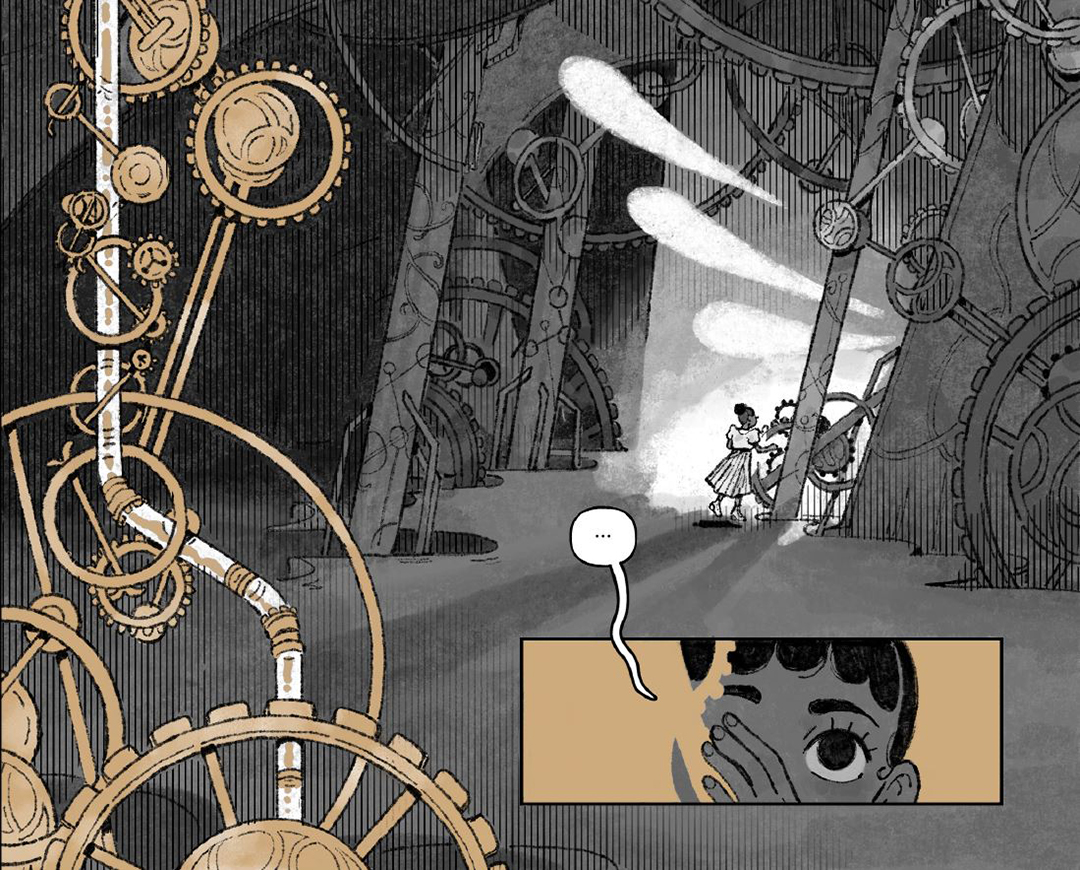
Barbara Mazzi’s stylish artwork is the perfect vehicle for these characters and their world. Instead of moldering in the usual steampunk attachment to the Victorian era, Hourglass delights in the lavish luxury of the 1920s. Designs inspired by Art Deco contrast strong angles against delicate filigree. Meanwhile, the interior of the machine is a chaos of detail that reminds me of the detailed mechanical designs of Studio Ghibli films like Castle in the Sky. Mazzi’s warm shades of gray convey the warmth of the machine’s interior, while the mellow gold of the spot color emphasizes the magic of this world and the humanity of its inhabitants.

You can read the full review on Comics Beat here:
https://www.comicsbeat.com/graphic-novel-review-hourglass-gears-are-powered-by-adventure/

Studio Ghibli Fanzine Preorders

.

.

I’m excited to share a preview of the short story I wrote for New Winds: A Studio Ghibli Fanzine.

My story, “The Record of the Last Heavenly Warrior,” is narrated from the perspective of one of the giant robots from Castle in the Sky who remained in Laputa Castle after all the humans fled. The log it creates across the years is an account of the actions it takes to help nature return to the abandoned structure. Through the care it offers the environment and its companions, the robot gradually begins to understand why humans abandoned the fortress, and it wonders what it will do should they ever return.

The editors and layout artists who’ve worked on New Winds put an extraordinary amount of love and attention into making the writing in this zine shine, and the comics and illustrations that fill the pages are equally beautiful. If you’re interested, preorders for the zine are open until February 6 on Bigcartel (here). You can check out more previews on the zine’s accounts on Twitter (here) and Tumblr (here).

🌿 https://studioghiblizine.bigcartel.com/
🌿 https://x.com/ghiblifanzine
🌿 https://ghiblifanzine.tumblr.com/

Summer Break

In December 2019, I printed a chapbook that contains my unofficial translation of Hiromi Kawakami’s “Summer Break” (Natsu yasumi), the second story in the author’s prizewinning 1998 collection Kamisama. This story has not been officially translated, so I created a translation of my own to use in my Japanese literature classes.

“Summer Break” is a Studio Ghibli style celebration of the magic of the natural world and a quiet meditation on coping with mental illness. The narrator spends a few weeks working at a pear orchard, where they unwittingly adopt a trio of small tree spirits. One of these creatures is humorously neurotic, and its anxiety for the future resonates with the worries of the narrator, who feels that the world is slipping away from them.

You can download a free PDF copy of the chapbook from Itch.io here:
🌿 https://digitalterrarium.itch.io/summer-break

The cover illustration was created by Koyamori, who goes by @maruti_bitamin on Instagram.

Essay on WWAC about Machiko Kyō’s Manga Cocoon

I’m proud to have worked with the brilliant editorial team at Women Write About Comics on my essay “Nature and War Memory in Machiko Kyō’s Cocoon,” in which I discuss the imagery that propels the story of a heartbreaking graphic novel about the Pacific War.

An animated cinematic adaptation of Cocoon is scheduled to be released in Summer 2025. This is a high-profile project commissioned by NHK and directed by the veteran Studio Ghibli artist Hitomi Tateno, whose animation credits range from Spirited Away to The Wind Rises.

Although the essay (like the manga itself) should be approached with sensitivity to its content, I hope I was able to offer a small contribution to the international awareness of the narrative work of Machiko Kyō, a celebrated and prolific Japanese artist who has created some of the most groundbreaking manga of the past decade.

You can find my essay about Cocoon (here) on Women Write About Comics, an award-winning venue for media journalism covering pop culture from a diversity of perspectives. I’m extremely grateful for the support and excellent feedback of Emily Lauer (on Bluesky here), whose critical insight illuminates the discussions and reviews of genre fiction on WWAC.

Tales of the Black Forest

Tales of the Black Forest
https://store.steampowered.com/app/1093910/Tales_of_the_Black_Forest/

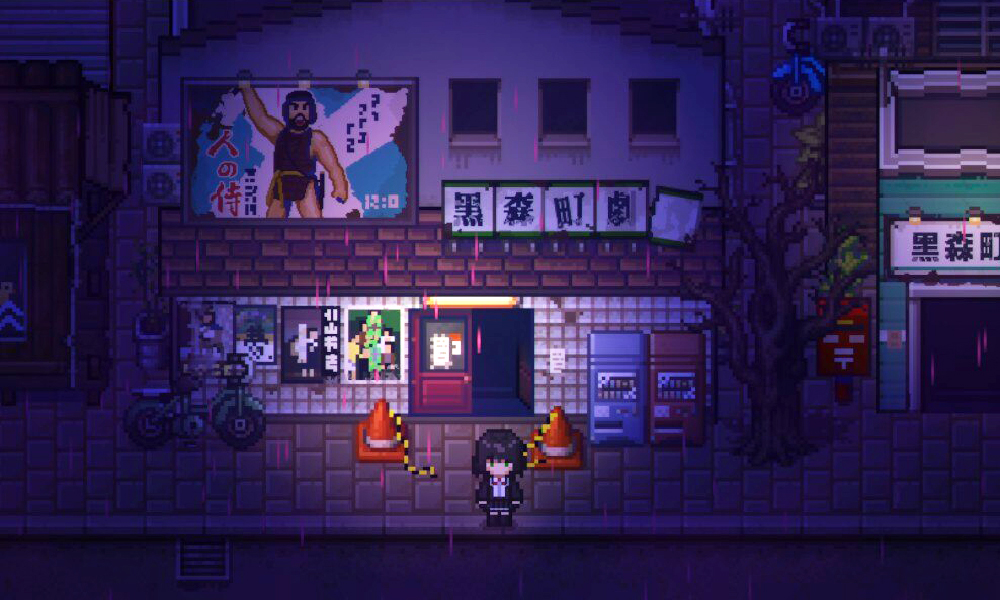
Tales of the Black Forest is a 16-bit RPG Maker narrative adventure game whose tone is split evenly between wholesome cuteness and graphic horror. Although Tales of the Black Forest features a dozen simple puzzles, a few short chase sequences, and limited elements of exploration, it might be more accurate to call it a visual novel instead of a classic adventure game. Tales of the Black Forest takes about three and a half hours to play, and more than half of this time is spent reading character dialog as you progress through a linear story.

The game’s story follows a high school student named Kihara Kashin who wakes up on a bench outside an abandoned train station. Kihara has somehow been transported to a depopulated town called Kuromori (whose name means “black forest”), where she used to live as a child before her mother died in a car accident. Inside the derelict station, Kihara meets a mysterious shape-shifting woman named Kiritani Yuki, who tells her that she has been trapped in the ruins of Kuromori by a curse. The only way to escape Kuromori is to use Nensha, a magical power that allows Kihara to travel back in time by touching retro electronic devices. By going back to the 1990s with Kiritani as her guide, Kihara can learn the origin of the curse and hopefully break it. 

The overall story arc of Tales of the Black Forest admittedly doesn’t make much sense. Thankfully, the game is split into three distinct chapters, each of which showcases the stand-alone character story of a cute yōkai girl while allowing the player to explore her environment. Each of the three chapters also explores the intersection between an urban legend and a social issue of the 1990s.

The first chapter is about a deserted village, Shiranaki (a play on the urban legend of Inunaki Village), and rural depopulation. The second chapter is about a magical ghost train and a fictional version of the Aum Shinrikyō “new religious movement” that carried out the Tokyo Subway Sarin Gas Attacks in March 1995. The third chapter is about a haunted movie theater that serves as a case study for how many small businesses that thrived during the postwar Shōwa era were forced to close during the prolonged economic recession of the 1990s.

Along with urban legends and social issues, Tales of the Black Forest is strongly inspired by the movies of Studio Ghibli, and its magical world is filled with quirky yōkai and gentle kami. The character illustrations of cute girls that accompany the dialog text are somewhat generic, but the game’s developers clearly put a great deal of love and attention into the 16-bit character sprites and their environments. There’s not a single part of this game that doesn’t make a gorgeous screenshot.

Alongside its whimsy and beauty, however, Tales of the Black Forest contains serious and sometimes graphically violent scenarios with disturbing themes and imagery. The overall tone of the game’s story emphasizes character drama more than horror, but the gruesome and upsetting elements are still there. You’ll be talking to adorable cats in the beautiful green yard of a forest café, and fifteen minutes later you’ll be watching a young woman beaten to death by a deranged cultist.

This mix of wholesome and horror worked for me, but both tonal aspects of the story are equally prominent. Accordingly, I wouldn’t recommend Black Forest to anyone who can’t sit through the creepier moments of The Ring, nor would I recommend it to anyone who can’t tolerate the more sentimental moments of My Neighbor Totoro.

Tales of the Black Forest was made by a Chinese studio in an obvious homage to Japanese popular culture, and its story occasionally feels like an attempt to filter a lecture from an “Introduction to Contemporary Japanese Society” university course through the medium of fiction. I personally found the references to Japanese social problems of the 1990s to be interesting and well-intentioned, but I could understand that some players might find these elements of the story a bit cringe in the way that early 2000s “onigiri means rice ball desu” North American anime fandom was a bit cringe.

Tales of the Black Forest was originally written in Chinese, and the English translation feels as though it was created by someone without much experience in localization. It’s serviceable, but it can be awkward at times. I tend to think the concept of “standard English” is nonsense, and I found the translation to be charming, especially because it reminded me of how pirated anime used to have English subtitles created by people whose first language was Chinese. In keeping with the retro theme of the game, I very much appreciated this unintentional element of nostalgia.

Tales of the Black Forest isn’t perfect, but it’s a solid 7/10 game that’s elevated to an 8/10 by virtue of the love and care that the two-person development team put into every aspect of its creation. This game caters to Japanese pop culture nerds who are fans of both cute anime characters and creepy urban legends, and I’m surprised it hasn’t attracted more attention since it was released on Steam in 2019. Tales of the Black Forest is a small but shining hidden treasure.

Giraffe and Annika

Giraffe and Annika is an extremely chill 3D adventure story game with anime-style character designs and panel-by-panel manga cutscenes. The game takes about four hours to finish, and I suppose that whether it’s worth $30 depends on how much you value this type of experience. I played Giraffe and Annika in short stretches during the day to get a bit of emotional sunshine, and it was lovely.

You play as Annika, a ten-year-old catgirl who mysteriously finds herself on a beautiful forested island. There’s a bit of an Alice in Wonderland flavor to the scenario, as Annika doesn’t worry too much about where she is or how she got there, and she begins the story as something of a blank slate. After investigating an empty house belonging to someone named Lisa, Annika goes back outside to find a blue-haired catboy named Giraffe waiting for her. Giraffe tells Annika that she has special powers, and he asks her to visit three dungeons on the island in order to restore starlight to a magical pendant.

The dungeons are themed open-air environments inhabited by roaming ghosts that will drain Annika’s health meter if they get too close. Thankfully, the dungeons are also filled with numerous health-restoring crystals. At the end of each dungeon is a boss battle that takes the form of a simple rhythm game. It’s possible to die from ghost attacks and other environmental hazards in the dungeons; and, in fact, I died a lot. Thankfully, save points and respawn points are so frequent that this isn’t an issue. There is zero stress in this game.

By clearing the dungeons, Annika will unlock exploration abilities such as a floaty space jump and the ability to swim underwater. She’ll also perform small fetch-quest tasks for NPCs who will help her bypass other obstacles. There are various objects that Annika can interact with across the island, but the optional collectibles are just for fun. Objectives are clearly marked, and you’ll never be in danger of getting lost or going off-track from the main quest.

The island is very lush and green and beautiful, and there’s a short day-night cycle that adds a touch of visual flair. I also appreciate the cuteness of the designs of the game’s sizeable cast of NPCs. In order to access the second dungeon, for example, you need to feed carrots to a sea turtle; and, to get the carrots, you have to round up a family of rabbits. The rabbits look like a Studio Ghibli adaptation of Beatrix Potter, and they’re adorable. Meanwhile, the sea turtle is completely photorealistic, which is a good illustration of the game’s gentle sense of humor.

It’s always a pleasure to encounter and interact with new characters, and I really enjoyed the manga-style cutscenes, which play out panel by panel. The character art is comically expressive, and the bright pastel colors are lovely.

It’s difficult to critique Giraffe and Annika, as it’s very sweet and competently constructed. Still, the main 3D playspace of the game can feel a bit textureless, and I also felt that the game wears out its welcome when it starts trying to challenge the player at the very end. I actually appreciate the occasionally amateurish design, as it fills me with a sense of nostalgia for the early 3D adventure games of the PlayStation era. Even though Giraffe and Annika sometimes looks as though it was built with out-of-the-box 3D graphic assets, it’s clear that the creators put a lot of effort into creating unique environments with a distinct sense of character.

Giraffe and Annika probably won’t appeal to someone looking for a deep story or challenging gameplay, but I can imagine that it would be a perfect starter game for its target audience of younger players. As for me, it provided a pleasant and much-needed mood boost during a dismal week in February. Giraffe and Annika is a bright and simple fantasy adventure with cute characters and no unnecessary cooking or crafting elements, and sometimes that’s exactly what you need in your life.

Hoa

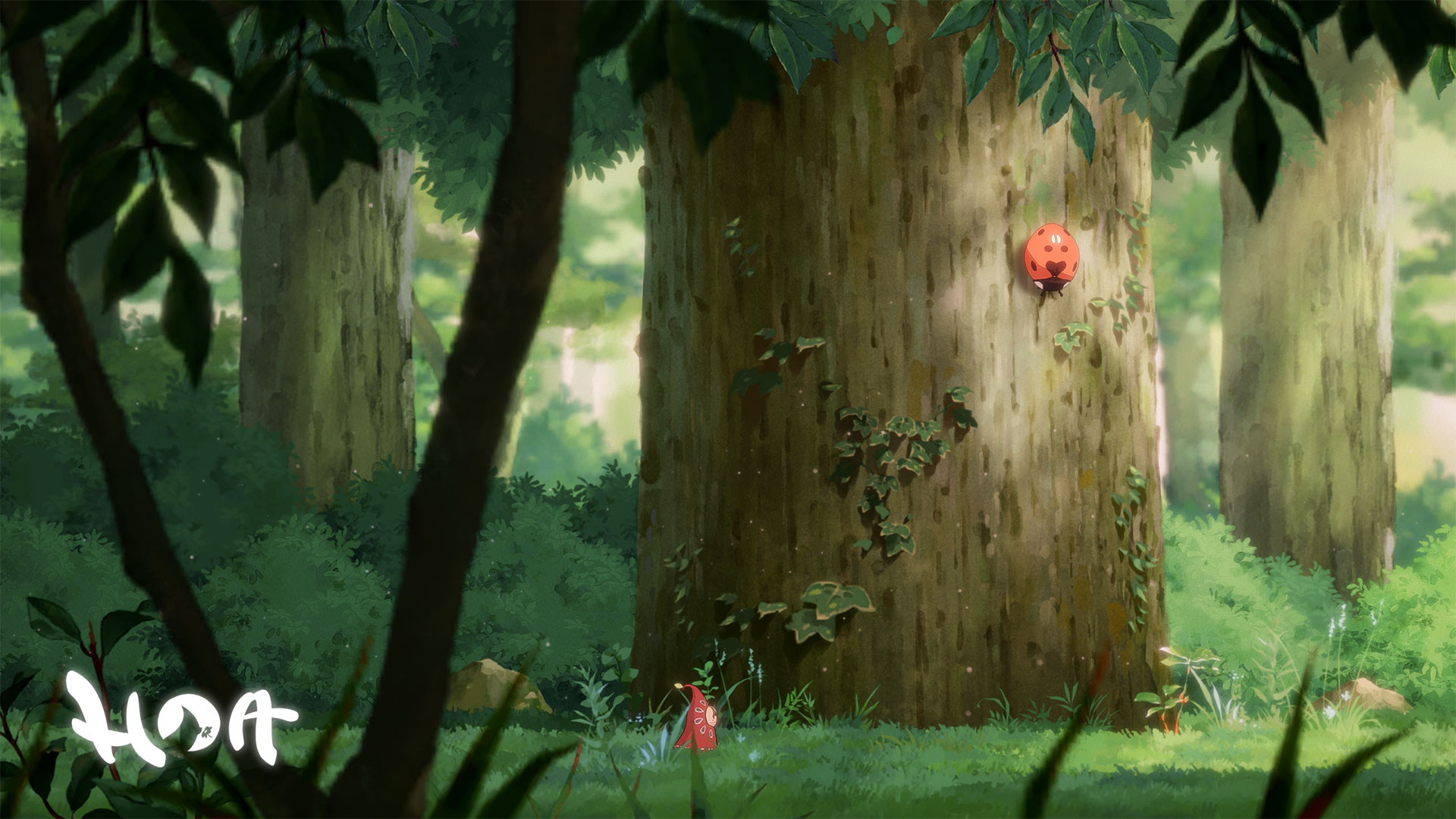
Hoa is a short and nonviolent 2D puzzle platformer set in a gorgeous green world of hand-painted art. If you’ve ever watched a Studio Ghibli movie and wanted to spend more time exploring the backgrounds, Hoa was made for you. The game’s gentle piano music is reminiscent of a Joe Hisaishi score, and Hoa gave me strong My Neighbor Totoro vibes in all the best ways.

You play as a tiny fairy who has returned to the forest after a mysterious trip across a body of water. Your motivation is unclear, but your character seems to want to make her way back to her home. Along the way, you navigate eight levels organized according to simple themed platforming puzzles. Your goal in each level is to wake the level “boss” by restoring light to their sigils, and the boss will give you a new navigation ability once you collect all the golden butterflies scattered throughout the level.

There is no combat or hostility in Hoa, and successful navigation of each level requires the cooperation of its denizens, which include snails, ladybugs, jellyfish, and tiny little robots. As your character walks, flowers bloom and leaves unfurl to help her on her way, and she double jumps in a swirl of sparkling pixie dust. All of this magic is understated and feels like a natural part of the world, and every new level is filled with pleasant surprises.

Unfortunately, there are parts of Hoa that are somewhat unintuitive, especially toward the beginning.

In the first area, your character is taught that she can break horizontal branches if she jumps on them with sufficient force. In the next area, she’s presented with a vertical branch blocking her way. On a higher level, a bug repeatedly rams into another vertical branch, eventually breaking it. It seems the message is clear: If you ram into the vertical branch on your own level enough times, it will eventually break.

This is not what the game is trying to teach you, however. What the game wants you to do is leave the room and walk all the way around the area so you can enter the room from the opposite side, where the branch that the bug knocked down now forms a bridge to another room. Hoa is trying to teach you that all of the rooms in an area are interconnected, and that sometimes you’ll need to approach a puzzle from a different direction. This makes sense, of course, but it’s counterintuitive. When I tried to search for a walkthrough, I found dozens of people asking the same question: How do you break the vertical branch?

In other words, it’s easy to understand what the level design seems to be suggesting, but it’s harder to understand whether that’s the solution the designers intended. I won’t lie – this can be frustrating.    

Once you get deeper into Hoa, you’ll begin to understand how the designers constructed these puzzles, but the game’s combined lack of precision and flexibility still creates unnecessary moments of tension. Although Hoa seems to be aimed at young children, I feel like it demands an unusually high level of patience and forgiveness, as well as an ability to read the abstract intentions of the designers instead of the concrete environment of the game. I would say that Hoa may indeed be a good game to play with a kid, but you probably want to play it all the way through by yourself first.

I should also mention that there’s a gameplay twist in the final level. It’s very good, but it’s also legitimately challenging in a way that the game hasn’t prepared you for. The basic gameplay loop is significantly disrupted, and there’s a certain tricky sequence about halfway through the level that I imagine might cause many players to quit the game without finishing it. Still, even if Hoa doesn’t perfectly execute what it’s trying to do here, it offers the player an interesting concept presented with a surprising degree of style and creativity.

I don’t want to suggest that these moments of frustration break the game. Once I was able to get past the idea that Hoa is supposed to be easy and intuitive, I was able to have a lot of fun with it. After you get a better sense of what the game wants you to do, you can make your way through the later areas with minimal hassles as you enjoy the art and music, both of which are well worth the experience.

My first playthrough of Hoa took about two and a half hours, which includes the time I spent searching for puzzle solutions online. My second playthrough was a smooth one hour, and it was a chill and peaceful experience. I’d say that Hoa is a solid “7/10 game” in the best sense of what that generally means, with the more unpolished elements serving to endow the game with a unique sense of character. All things considered, I’m happy that Hoa is a piece of hand-crafted art that exists in this world.  

Link Loves Revolution

After Nintendo premiered the new Breath of the Wild sequel trailer during E3, all sorts of artists rushed to draw illustrations of the mysterious hero in the sky, but all I can think about when I see these handsome young men is how Link canonically eats bugs. In this house we love our feral son, and I couldn’t resist drawing the Ponyo meme.

Whisper of the Heart


My husband is a fan of European football, and he spends a lot of time scrolling through football Twitter under a pseudonymous throwaway account. Most of the accounts he follows are British. He got annoyed with not being able to watch the region-locked videos people linked to, so a week or two ago he set up a VPN. (If you’re curious, he uses ExpressVPN, which is $8 a month and seems to be working nicely for him.) His computer now registers as being in the UK, and he employs this for the nefarious purpose of watching a few minutes of football videos a day and being amused by the British ads that Twitter shows him (mostly for snacks).

Even though he doesn’t use it much these days, my husband never stopped paying for his Netflix account, and it recently occurred to him that, with a UK address, he could watch British Netflix.

So the other day I was standing in the kitchen waiting for tea to brew, and my husband was sitting on the couch looking at Netflix UK. I asked him if he’s found anything to watch, and he started complaining that Netflix keeps trying to show him animated movies. He told he that they look Japanese.

I was like, “Okay, yes, go on.”

And he was like, “Have you ever heard of Studio Ghibli?”

That’s when I realized that my husband had never heard of Studio Ghibli.

. . . . .

My husband enjoys movies, but he’s in his forties and comes from a country where there hasn’t been a culture of anime fandom until relatively recently. He likes the Makoto Shinkai movies we’ve watched, which he calls “documentaries about Japan,” so I thought that Whisper of the Heart would be the best Studio Ghibli movie to show him. He loved it.

I loved it too. It’s been about ten years since I last saw Whisper of the Heart, and I was not expecting it to hit as hard as it did.

Whisper of the Heart is about a middle-school girl named Shizuku who loves reading. Shizuku checks out books from the local library, and she’s noticed that there’s another kid’s name on almost all of the library borrower cards inside the covers of the books she reads. She ends up meeting this boy, who is her age but wants to study the craft of violin making in Italy instead of matriculating to high school. Inspired by his determination to follow his dream, Shizuku decides to follow her own dream of writing a fantasy novel.

Shizuku gets really absorbed in her writing. She tells a friend that she has no appetite because she’s too preoccupied with her novel, and then she eats shortbread cookies so she can stay awake while she’s writing in the evening. She stops hanging out with her friends after school so that she can fantasize about her novel while walking home. She only puts in the bare minimum of work necessary to get by at school, and her grades drop. She gets explosively irritated when people interrupt her while she’s writing. When she’s done with the story, she gets super neurotic about feedback. She cries a lot.

I was just sitting there, like, “Oh my god. Oh my god. Oh my god.”

How dare Hayao Miyazaki come into my house and call me out like this.

. . . . .

The range of what my husband does and doesn’t know about internet culture is a mystery to me, so I was surprised when he asked me if the anime girl from the Lofi Hip Hop Radio channel on YouTube is modeled on the protagonist of Whisper of the Heart.

The answer is yes, of course she is. This reference is so obvious to me that I never thought about it as something other people might not get.

Because I teach upper-level seminar classes that don’t have any formal prerequisites, I spend a lot of time thinking about what my students do and don’t already know. I treat grad students like the educated adults they are, but it can sometimes be difficult to tell with undergrads. At George Mason, most of the students were either immigrants or the children of immigrants, but they had all gone through American public high school, so I could assume that they were vaguely aware of certain cultural touchstones. At UPenn, on the other hand, the students who went to public high school in America might actually be a tiny minority. Each new microgeneration of kids is going to create its own common knowledge base regardless of where they come from, so you have to be sensitive to that, but it’s just the nature of working with a large and heterogeneous group of people that there will be all sorts of things you don’t think about.

I went to college early, and then went to grad school right after college and got my PhD fairly quickly, so I was roughly in the same generation as my students for most of the time I was teaching. I’ve gotten older, though, as people tend to do. Now it surprises me when my undergrads are genuinely curious about Harry Potter because they’ve never read the books or seen the movies. Things I just absorbed by osmosis because I grew up with them are now units of knowledge that need to be explained, and that’s wild.

I can’t help but wonder if that’s what getting older is about – being able to pick up on more cultural references because I’ve had more years in common with the people who create media. And then I wonder when the cross-over point is going to be, like, when will I stop getting references because I’m so old that younger people no longer have any culture in common with me?

In any case, Whisper of the Heart is set in the 1990s but feels timeless. It’s still just as beautiful to me now as it was when I first watched it in college. The fact that the vast majority of anime fans under the age of thirty have probably never even heard of movie feels a little weird, but it’s also kind of nice. It’s wonderful that amazing stories were created in the past, but the genius and creativity of past work doesn’t need to be a burden, as there will always be cultural room to create stories in the future that build on the past but still feel fresh and new to each generation.

Ni No Kuni: Wrath of the White Witch

I’ve been saving Ni No Kuni: Wrath of the White Witch for a rainy day since it came out on the Nintendo Switch in September 2019, and my “rainy day” turned out to be my first winter back in Philadelphia, which has hit me with far more snow than I expected. Wrath of the White Witch is magical and delightful, and it’s the perfect game for cozy days indoors.

Wrath of the White Witch is a seventy-hour JRPG that’s intended for kids around the same age as the game’s protagonist, who is around ten years old. It was developed in collaboration with Studio Ghibli by Level-5, which makes the Professor Layton and Yo-kai Watch games.

As indicated by the game’s title, it takes place in two closely connected worlds, a high fantasy world of wizards and castles and talking animals and a world loosely based on our own. You play as Oliver, a boy who travels between a suburb of 1950s Detroit and the fantasy world with the intent of finding a way to save his mother, who has recently passed away from an illness. The idea is that Oliver’s mother’s “soulmate” in the fantasy world has gone missing; and, if he can find and rescue her, then this might have an effect on his mother’s fate in his own world.

The game’s combat system is much more complicated to describe than it is to actually play. You have three characters who can move freely across the battlefield while executing commands. You control one, and the others are controlled by AI. The AI is unfortunately not that smart, but almost none of the battles are actually that hard. The classic JRPG strategy of “just be five levels over where you probably need to be” works perfectly every time, and there’s also an Easy Mode that you can switch on and off whenever you like.

Each of your three characters can equip three familiars, which you can catch in the wild and train like pokémon. You’ll use your familiars to fight, but there isn’t any pressing need to balance your team or do research into the strengths or weaknesses of individual creatures. There’s also no pressure to catch new familiars, or even any way to check your progress if “catching them all” is your goal. The familiars are cute and fun to play with, and there’s no drawback to just using the ones you like. You can also feed them adorable status-boosting snacks if you want to.

The combat system is fairly deep, but it took me about five hours of gameplay to start moving beyond a basic sort of “attack by hitting the enemy with your stick” mentality. Wrath of the White Witch originally came out on the PlayStation 3 console in 2011; and, true to that era, it tries to explain everything to you with copious amounts of text. Oliver is accompanied by a companion named Drippy, who’s a little like Fi in Skyward Sword in that he will repeatedly interrupt gameplay to explain mechanics you could easily have figured out for yourself. Thankfully, he eventually backs off, which makes it much easier to experiment and thereby figure out the ins and outs of battle strategies.

There are a few other aspects of Wrath of the White Witch that show the game’s age. To give an example, it reminds me somewhat of Final Fantasy XII in that it forces the player to sit through more than two hours of exposition and pointless tutorial missions before the game actually begins in earnest. I won’t lie – this is horribly tedious, and you just kind of have to sit there and be patient.

Bits and pieces of the game’s story are a little tone-deaf as well, especially given its secondary setting in the United States at the beginning of the Civil Rights Movement.

There is one African-American character in Wrath of the White Witch. His name is Rusty, and he beats his wife. Like, right in front of you. His back is turned to the camera when he does it, but what’s happening is obvious. This is one of the only real instances of the game portraying a negative emotion stronger than mild anger or gentle sadness, and it’s… I mean, this is a poor word choice, but it’s striking.

One of Oliver’s traveling companions in the fantasy world is Esther, a girl from a vaguely Orientalist desert city modeled on Silk Road culture. Her counterpart in Oliver’s world is his best friend’s neighbor, a girl named Myrtle. Oliver has seen Myrtle out of her window, but he’s never spoken to her because she’s ostensibly too sick to leave the house.

It turns out that the Myrtle was sick but has gotten better, and that she doesn’t leave her room because she’s scared of her father. Rusty, a car mechanic, has had to work overtime to pay for her hospital bills, and he’s been taking his frustration out on his wife, which terrifies Myrtle. Since Oliver is a wizard, he can use magic to heal Rusty’s heart, help Myrtle overcome her anxiety, and thus inspire Esther to embrace the courage she needs to go on her own journey.

This is very much a ten-year-old’s wish-fulfillment fantasy, and it makes sense in its own way, but…

Both Myrtle and Esther have straight blond hair, bright blue eyes, and peach-tinted pale skin. It’s weird to call anyone speaking Japanese “white,” but almost everyone in the game is a generic light-skinned anime person. This means that the abusive husband’s racial identity really stands out.

He gets better, of course. After Rusty’s heart is healed, he apologizes to his wife and hugs his daughter, and everything is okay. He helps you out with a sidequest later on in the game in a way that demonstrates his high competence as a mechanic. But still, for there to be only one Black person in Detroit… And for the one Black character in the game to be violent like that… And for both his wife and daughter to be coded as white… I just feel like there’s a lot of racial history at play here that isn’t given sufficient depth for its inclusion in the game to be worthwhile.

I guess what I’m trying to say is that there’s more to American culture than hot dogs and hamburgers and saying hello to your neighbors from across their white-picket fences as you stroll down Main Street. If you’re setting a game in the United States, you should have more than one Black character, and you need to be aware of the historical violence and deep cultural wounds created by stereotypes about Black male violence against white women.

I suppose you could counter this with, “But Wrath of the White Witch is a Japanese game for children that flattens and parodies all of the people and cultures it incorporates into its fantasy world,” and that’s fair. At the same time, I’m happy that Japanese game developers have since figured out that it’s okay to have more than one Black or dark-skinned character in any given game, and that it won’t break anyone’s sense of immersion to have NPCs walking around with a variety of skintones.

(Just as an aside, I want to emphasize that I’m not cherry-picking an example here. There are a few other examples of problematic portrayals of racial and ethnic difference in Wrath of the White Witch, as well as many other examples that could be drawn from JRPGs in general. This is a serious and complicated topic, but addressing it isn’t really the point of this blog post. If you’re interested in pursuing this further, the essay collection The State of Play is a great place to get started.)

So there are elements of Wrath of the White Witch that betray the game’s age, both in terms of gameplay and in terms of its reflection of the then-current state of transnational conversations concerning representation. Still, most of the game is an absolute treasure.

The cel-shaded graphics are amazing and have not aged a day. The animation is spectacular. In particular, the way that the mantle of Oliver’s cape moves is a technological marvel. You really do feel as though you’re walking around in a Studio Ghibli movie, and it’s incredible. The world map is gorgeous, and the towns are intricately detailed and full of life. You can tell that Level-5 and Studio Ghibli put a lot of love and attention into designing the world, and it’s an enormous amount of fun to explore and take on sidequests.

The translation is brilliant, and the voice acting is lovely. The level of detail put into the sound design is pure Studio Ghibli. The score by Joe Hisaishi is everything you’d hope it would be.

I’m not saying that every game needs to have an active fandom, but I wonder why this game is relatively uncelebrated in my circles of social media. There were precious few JRPGs on the PlayStation 3, which was odd after the immense popularity of JRPGs on the PlayStation 2, so you’d think a high-quality game like Wrath of the White Witch would have stood out. Then again, I myself never managed to get into it back when it first came out despite having started it a few times. My guess is that Wrath of the White Witch’s innocent charm and nostalgic JRPG elements help it work well as a pokémon-style portable game on the small screen of the Nintendo Switch.

I know that a sequel, Revenant Kingdom, was released for PlayStation 4 in 2018, but I was too obsessed with Breath of the Wild at the time to pay much attention to it. Revenant Kingdom is partially set in contemporary New York, and I get the sense that it’s intended for an adult audience. I think it might be worth checking out once I finish up the last few postgame sidequests of Wrath of the White Witch just to see how the world of the story (and the worldview of its creators) has changed in the past ten years.