Beacon Pines

Beacon Pines is an isometric narrative adventure game that takes about four hours to finish. You play as a 12yo boy named Luka who decides to explore a mysterious abandoned factory over summer break and accidentally uncovers the dark secret of his quiet mountain town in the process.

In terms of its playspace, Beacon Pines is relatively small. Not counting a few plot-specific locations that you only visit once, there are about fifteen outdoor screens in the game, along with perhaps half as many indoor screens. Each of these screens is beautifully painted, with each point of interaction clearly indicated. 

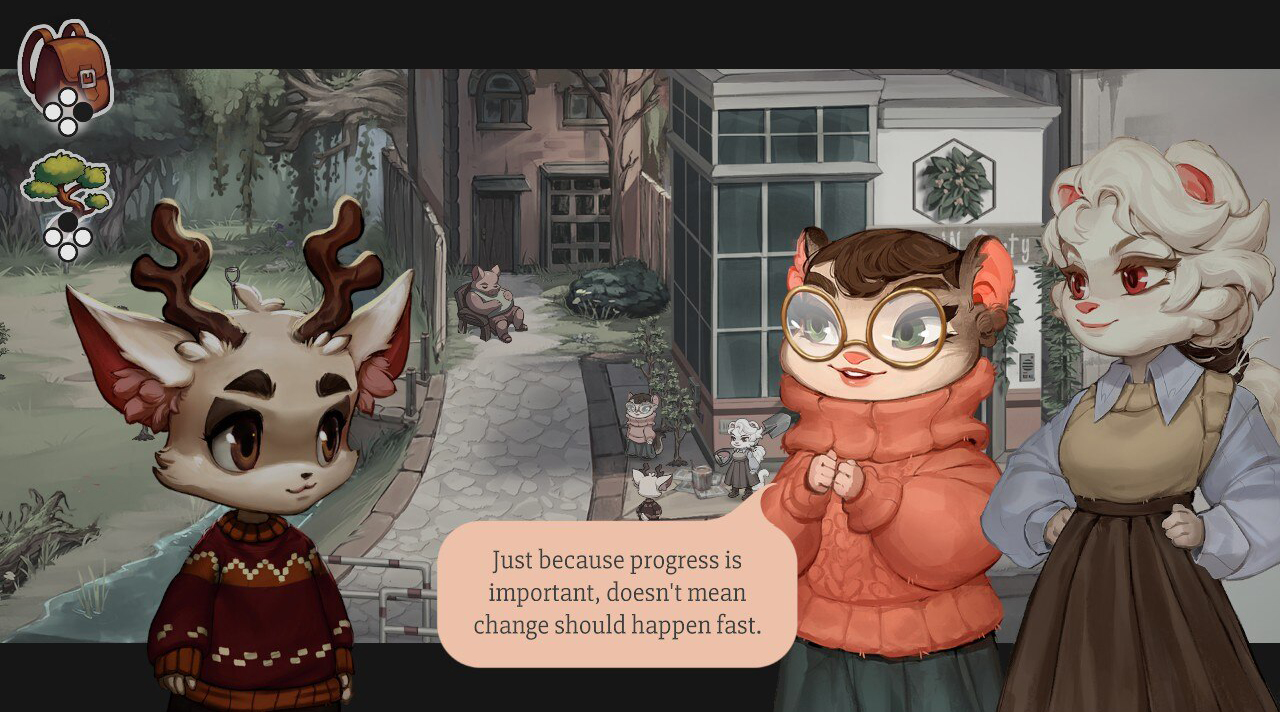
What gives Beacon Pines a sense of scale is its structure. The game envisions its story as a tree and gives the player the option to make a key choice at each divided branch. While progressing through the separate branches of the story, the player will naturally pick up “charms,” or words that can be used to slightly adjust the narrative at critical points.

You can always return to an earlier choice with zero backtracking when you get a new charm, and the story’s pacing is excellent. The time spent on each branch is relatively short, which makes it easy to remember what’s going on when you switch to another branch. The way everything fits together as you progress is a masterpiece of narrative craftsmanship.

The tone and level of the writing is consistent with Luka’s age, and the first three Harry Potter novels are the easiest analogy. Each character in the expansive cast has a limited yet well-defined personality, and the story scenarios are improbable yet intriguing. There’s not much psychological depth, and the plot is pure fantasy, but I still had a great time with Beacon Pines. It was a pleasant shock the first time I saw the first dead-end branch of the story, which was delightfully morbid.

There’s one true ending of Beacon Pines, but players should expect to see about a dozen premature endings before they get there. In other words, it’s a linear story, but it’s told in a creatively nonlinear manner that takes every “what if” scenario into account. Again, the narrative craftsmanship is superb.

It’s easy to make a comparison with Night in the Woods, as you directly control a character who makes progress by walking around a beautiful small town and talking to every NPC. The themes of the story are similar as well, as the town of Beacon Pines suffers from corporate ownership of its fertilizer factory in the same way that Possum Springs suffers from corporate ownership of its mines. As in Night in the Woods, there are supernatural elements at play, although Beacon Pines is more concerned with mad science than cosmic horror. The major difference is that I wouldn’t give Night in the Woods to a child, while Beacon Pines is suitable for middlegrade (10-14yo) players.

I am not the target audience for “all-ages” fiction, but I enjoyed Beacon Pines regardless. Most of the adult characters in the game are problematic and relatable, and the story’s environmental themes are worth considering beyond a superficial level. The villains are a lot of fun, as are the more horror-themed elements of the plot.

It’s also important to note that the character art is gorgeous. The animal characters were clearly drawn by a furry artist in a way that the characters in Night in the Woods were not, but I have nothing but love for this art style. Despite the relatively large cast of characters, the character designs are all unique and visually interesting. I’m not a furry myself, but I was still able to appreciate the high polish of the art. There is no cringe here, just beauty and creativity.

The environmental art is gorgeous as well. The pleasant façade of Beacon Pines is indeed pleasant, with lovely trees and handsome buildings adorning each screen. Although we don’t see much of the town’s dark secret, the visual design of the spaces it affects fit the theme perfectly. 

In terms of gameplay, I always felt directly engaged with the story. There’s nothing missable or collectable, and the game doesn’t get cute with achievements. There are two optional minigames, and they’re both unobtrusive and enjoyable.

Beacon Pines is short, inexpensive, and accessible. If you’re a fan of Night in the Woods, or if you’d like to play a visual novel with more interactivity, I’d definitely recommend giving Beacon Pines a shot. Since it comes off a bit like a generic cozy game on its Steam page, I had no idea Beacon Pines would be as interesting as it is, but it’s an amazing treasure of a game.
Mr. Saitou

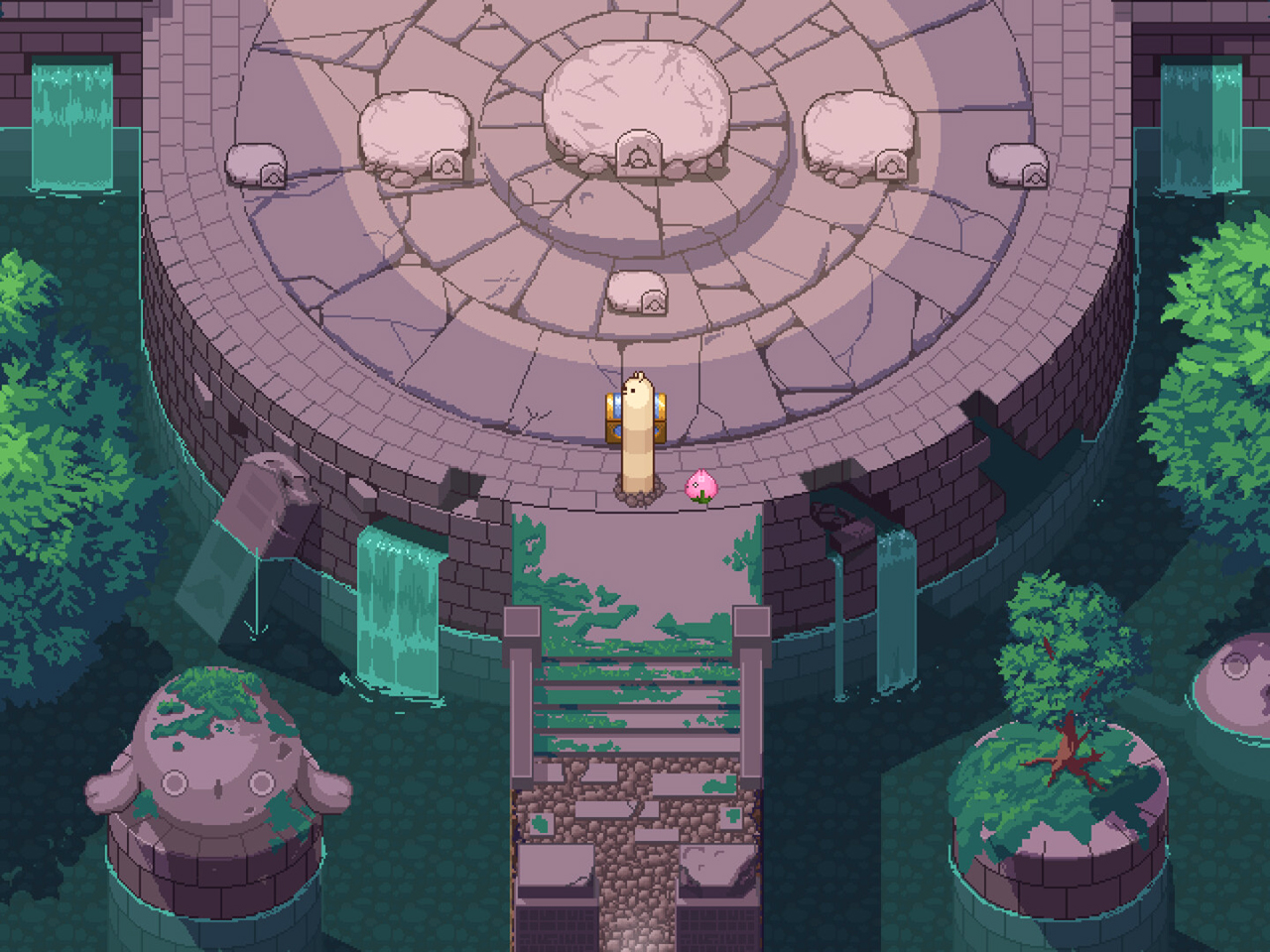
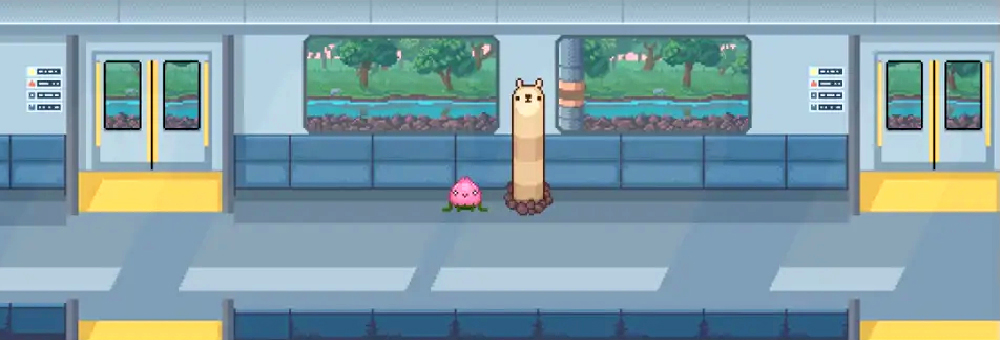
Mr. Saitou is an Undertale-style narrative adventure game (with music by Toby Fox) that takes about two hours to finish. You play as Saitou, a white-collar worker who finds himself in the hospital after a failed suicide attempt triggered by stress and overwork. While sleeping, Saitou dreams of himself as a llamaworm (a comically extended groundhog) who goes on an adventure with a cute pink flowerbud named Brandon, the dream persona of a young child Saitou meets in the hospital.

Mr. Saitou has something of slow start, during which the player’s sole job is mashing a button to advance text. Thankfully, the game becomes much more engaging after the first ten minutes, at which point Saitou enters the dream world.

After the introduction, Saitou spends about half an hour in an office of llamaworms that serves as a stage for a gentle comedy about workplace culture. After a ten-minute segment of mandatory afterwork socialization in an izakaya, Saitou returns home to his neighborhood of underground tunnels.

Saitou decides to skip work the next day. This gives him an opportunity to meet Bradon, who wants to visit the Flooded Gem Caverns deeper in the tunnels. The remainder of Mr. Saitou unfolds in a beautiful fantasy-themed underground space enhanced by lowkey elements of exploration and simple puzzles.

What I appreciate most about Mr. Saitou is its creativity, which is driven by cute but thoroughly original character designs and clever writing. Even though most of the gameplay consists of simple conversation-based fetch quests, I never got tired of seeing what was around the next corner, and I always enjoyed talking with each new character.

The game’s humor sits comfortably at the intersection between wholesome and quirky, and the writing subtly references internet culture without relying too heavily on these allusions. The simple spatial puzzles are easy and engaging without feeling as if they were phoned in, and the thematic background music is lovely from start to finish.

I love almost everything about Mr. Saitou, but I should probably mention that there’s an unskippable musical cutscene featuring about three minutes of unremittingly flashing strobe lights toward the end. If you (like me) are photosensitive, this may be worth taking into consideration.

In addition, the sentimentality of the ending may ring hollow for players searching for a more nuanced or complicated story, especially regarding the extent of an individual’s personal responsibility for ensuring their quality of life under late-stage capitalism. This is a valid criticism, of course, but Mr. Saitou is a game about a llamaworm and a talking flower having magical underground adventures. All things considered, I think it’s probably best to enjoy the game for what it is.

Mr. Saitou is a sweet but still surprising game that’s entertaining to read and engaging to play, and I feel that its story earns the right to state its final message clearly: The world is filled with interesting people and beautiful places, and there’s more to life than slowly killing yourself for your job. Good health is a blessing, so you might as well make the most of your time on this earth while you’re still young.

Deepwell

Deepwell is an Undertale-style narrative adventure game that takes about two hours to finish. You play as a blank slate character called “the Cartographer” who has recently arrived in the small forest town of Deepwell, which clings to the southern rim of a massive hole in the ground. Oddly enough, anyone who descends into the hole beyond a certain point gets “blipped,” meaning that they appear at the top of the hole as if nothing had happened. Generations of mystery hunters have sought the solution to this puzzle, but perhaps you might be the one to finally figure it out.

Deepwell is only about two dozen screens large, and there are five main characters to talk to. Most of the game involves engaging in long and meandering conversations with these characters in order to learn their stories. Sokolov manages the town library, and Evan runs the general store. Pierre has created something resembling an art gallery on one side of town, while Lily lives in a field of flowers on the other. At the intersection next to the highway, a robot named Bing helpfully provides information to visitors.  

It stands to reason that everyone living in such an isolated town would be a little weird. Aside from Bing, who is essentially a tutorial robot, each character is a self-contained short story that gradually unfolds as you talk with them. Thankfully, there are no wrong conversation choices, nor is there any missable content. The player is free to walk where they like and talk with the characters as they wish while unlocking a few extra conversation topics by interacting with each character’s environment.

On the eastern edge of town is a waterfall that hides a secret cave. Glyphs drawn onto the wall of this cave indicate whether a character’s dialogue has been exhausted. Once the Cartographer has sufficiently spoken with each of the town’s residents, a new path will open deeper into the forest to reveal a sixth character, who tempts the player with the possibility of an alternate (and much darker) ending.  

You can actually end the game any time you want by simply heading back to the highway and leaving town. You can also choose to wrap up the story at any point by taking a boat across the lake to see what’s on the north side of the giant hole. Although you’re given a choice in the final section of the game that affects the ending, I think Deepwell ties up its thematic threads quite nicely. This is a story about personal purpose and fulfillment, and about why we need art and mystery. How you approach these themes within the context of the game is up to you.

The graphics are primitive yet charming. I was put off by the crunchiness at first, but the lo-fi aesthetic grew on me. Deepwell contains a surprising number of insert illustrations and cutscenes, some of which are extremely well done. This is especially the case with Pierre, whose gallery of art installations closes with a remarkable set piece. I get the feeling that some players may find Pierre pretentious, but I appreciate his sincerity. And he’s not wrong about how visual glossiness is often a disguise for mediocrity. 

Deepwell is akin to a short story anthology that’s easy to pick up for twenty minutes at a time, but I ended up being so fascinated by the overarching narrative that I played the whole game in one sitting. The writing is exceptionally good. It gives me immense joy to know that something like Deepwell exists in the world, and I honestly feel that I’m a better person for having spent time with it.

Deepwell is free to play on Steam here:
https://store.steampowered.com/app/2803660/Deepwell/

Last Train Home

Last Train Home
https://hby.itch.io/last-train-home

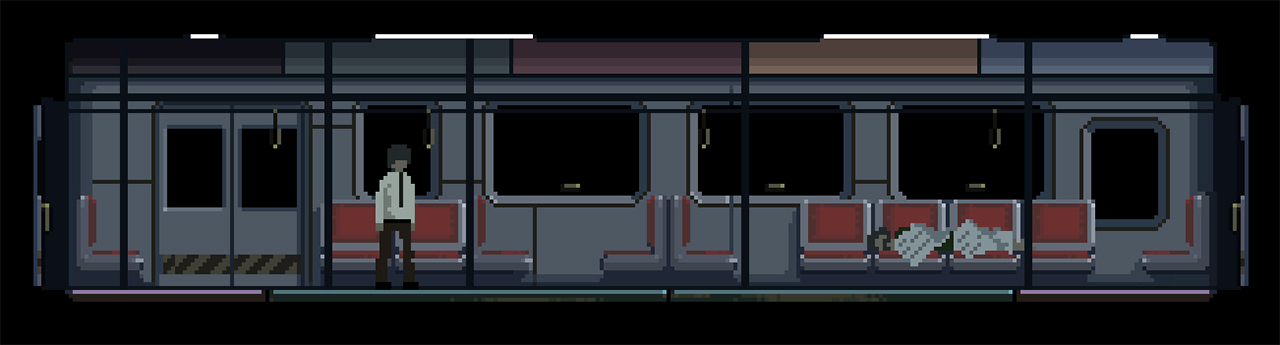
Last Train Home is a short and spooky creepypasta story game. It’s free to play in your browser, and it takes about five minutes to complete. You play as a salaryman who finds himself on a near-deserted commuter train in the dead of night.

The first half of the game is set in three train cars and the two walkways between them, each of which is occupied. With the doors at either end locked, you move between the three cars and talk with their occupants, befriending them by completing small tasks.

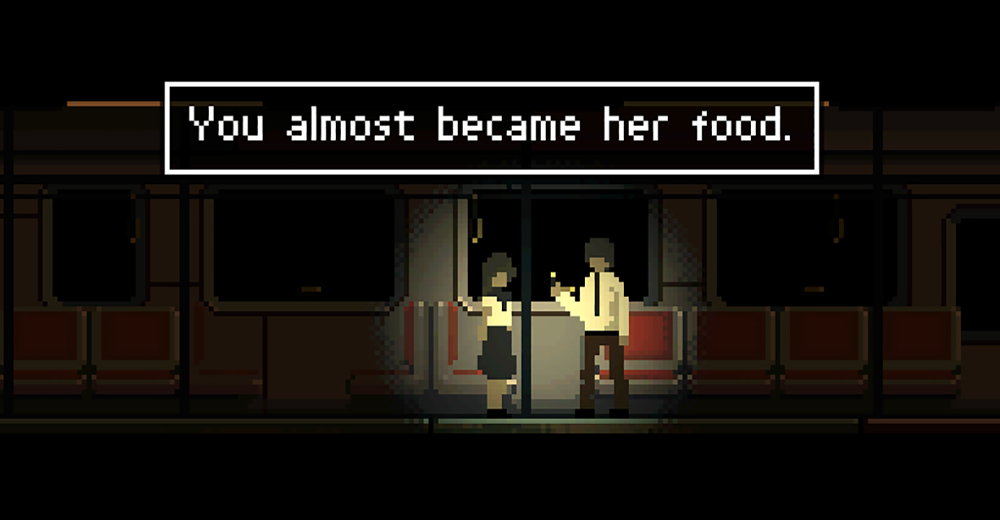
This is all well and good until the lights go off, at which point you’re left to fend for yourself in the darkness with nothing more than a cigarette lighter and the eerie flashes from outside the windows to illuminate your path forward. Where is this train going, and how do you get off?

Just as the United States is home to countless urban legends surrounding cars, from vanishing hitchhikers to cursed highway rest areas, there are all sorts of urban legends about commuter trains in Japan and South Korea. “The last train” is a common motif in cautionary tales warning midnight passengers against accidentally boarding the wrong train or even, heaven forbid, falling asleep and missing your stop as the train continues hurtling into the night.

In contrast to the pristine coziness of trains in East Asia, there’s a New York style grunginess to the cars in Last Train Home that renders the environment unsettling and uncanny. The lighting and sound design are nicely creepy as well. There’s not a lot of text, but each line manages to be subtly unpleasant. There are no jumpscares, just a pervasive atmosphere of creeping dread. The catharsis at the end of the story is lovely, but you’ll definitely have second thoughts about running to catch the last train after playing this game. 

Oxenfree

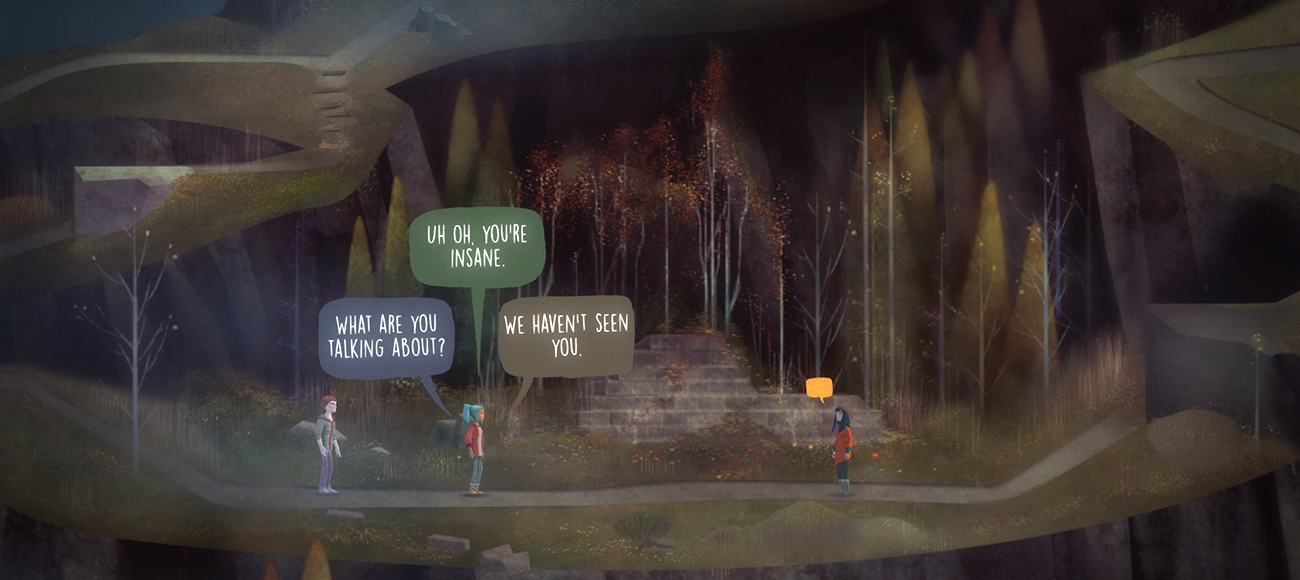
Oxenfree is a horror-themed teenage friendship drama conversation simulator set on a haunted island in the Pacific Northwest. Originally released in 2016, Oxenfree is available on all consoles, and it takes about four and a half hours to finish the story.

You play as a teenage girl named Alex who takes the last ferry out to Edwards Island with her pothead friend Ren and her edgy stepbrother Jonas. They plan to spend the night on the beach, where two girls named Clarissa and Nona are waiting for them with a cooler of beer. There’s an urban legend that old-fashioned transistor radios can pick up strange signals on the island, and Ren leads Alex and Jonas to a sea cave where the signal distortions are rumored to be strong. By tuning into the radio transmissions, Alex ends up opening a portal to a parallel dimension.

I really enjoyed Oxenfree, both when I first played it and when I revisited it earlier this year. The graphic design is gorgeous, the OST is ambient and chill, and the elements of horror are genuinely creepy. The story of Oxenfree is intriguing, and walking across the island while navigating Alex’s relationships with the other characters is a fun and interesting experience.

Still, as a game, Oxenfree suffers from two major problems.

The first of these problems is that Alex walks very slowly. This makes sense, as a major element of gameplay is choosing Alex’s response in real time during ongoing conversations. The relaxed speed of travel also encourages the player to enjoy the scenery and the ambiance. Unfortunately, backtracking is a slog. The frustration engendered by Alex’s sluggish walking speed is exacerbated by the fact that the load times between screens are obscene, usually exceeding sixty seconds. As a result, I felt strongly discouraged against unguided exploration.

In order to uncover the full story of what’s happening, the player needs to embark on a scavenger hunt to collect a dozen letters scattered across the island. Because of the slow character movement and unbearable loading times, I had to give up on finding the letters myself. I was reduced to searching for spoilers online, which isn’t ideal.

As far as I can tell, a Cold War era submarine somehow managed to get itself caught in a dimensional paradox just offshore, and the Edward Island’s “ghosts” are the manifestations of the sailors trying to free themselves. These ghosts are secondary to the main story of Oxenfree, which is about the relationships between the teenage characters.

Although I think the friendship drama might have been more compelling if I had encountered the game at a younger age, Oxenfree’s second major problem is that its writing feels strange and awkward, at least to me.

I really wanted Alex to spend time with the two other teenage girls on the island. I like Nona and Clarissa a lot. I found them to be interesting characters, and I wanted to know more about them. Unfortunately, Oxenfree doesn’t give Alex many dialogue options to interact with either girl that aren’t petty, condescending, or downright bitchy. This isn’t the way that normal people talk to one another, even if they’re teenagers.

It’s clear that Oxenfree expects Alex to spend the majority of its playtime with Jonas and Ren, both of whom tend to respond poorly if the player chooses conversation options that don’t read as stereotypically “masculine.”

To give an example, after something terrible and upsetting happens, Jonas tells Alex that he’s scared. If she demonstrates sympathy or empathy by responding with “Are you okay?” or “I’m scared too,” Jonas will become annoyed or openly hostile. Meanwhile, the uncomfortably callous response of “You’re fine, let’s keep going” is configured as “correct” and doesn’t result in a string of passive-aggressive insults.

There are several different variations on Alex’s personality that the player can choose to express, but Oxenfree doesn’t give the player many opportunities to be chill, or friendly, or sincere, or emotionally vulnerable, or just curious about what’s going on. Each conversation choice generally has three options, but there’s always an additional option of not saying anything. As I played, I gradually found myself “choosing” not to say anything, especially not to the boys.

In other words, the opportunities for roleplaying the character of Alex are limited. I don’t think Alex is supposed to be unsympathetic, but the writer/director’s understanding of how interpersonal communication works feels very specific to a personality and worldview that I don’t understand. The portrayal of these teenagers – especially the teenage girls – is just so mean. The voice actors all give wonderful performances that help the player better understand the characters, but I wish the writing were as nuanced as the acting.

Granted, Alex ends up being the villain of Oxenfree II, so another interpretation might be that she is in fact a bad and selfish person who doesn’t care if she hurts people. If this is indeed the case, though, I wish that the writing had signposted her personality more clearly, or at least given more concrete hints regarding how the true nature of the situation on Edwards Island has affected her character.

Oxenfree has been universally praised, and I’ve even seen people refer to it as a “cozy game,” meaning that it presumably creates a sense of warmth in the player by being unchallenging to play while focusing on a story with themes of friendship and personal growth. I can understand the affective positivity of this reaction, but I also think it’s important to explain why Oxenfree can be difficult and frustrating, especially to someone playing the game in 2024.

Oxenfree is gorgeous to look at and features engaging conversation-based gameplay mechanics, but this is a horror game with slow movement speed and long loading times in which characters are often seriously unpleasant to one another. I maintain that Oxenfree is a unique and interesting game that’s well worth checking out – especially given its relatively short length – but it’s always good to have an accurate understanding of what you’re getting into.

While doing some research about the game’s reception, I learned that Netflix acquired the Oxenfree development team, Night School Studio, in 2021. Netflix produced Oxenfree II, and I read that there’s a live-action series adaptation of Oxenfree in production. This sounds nice, to be honest. Crossmedia adaptations don’t always succeed, but I get the impression that Oxenfree might actually work much better if it weren’t an interactive video game.

Hypnospace Outlaw

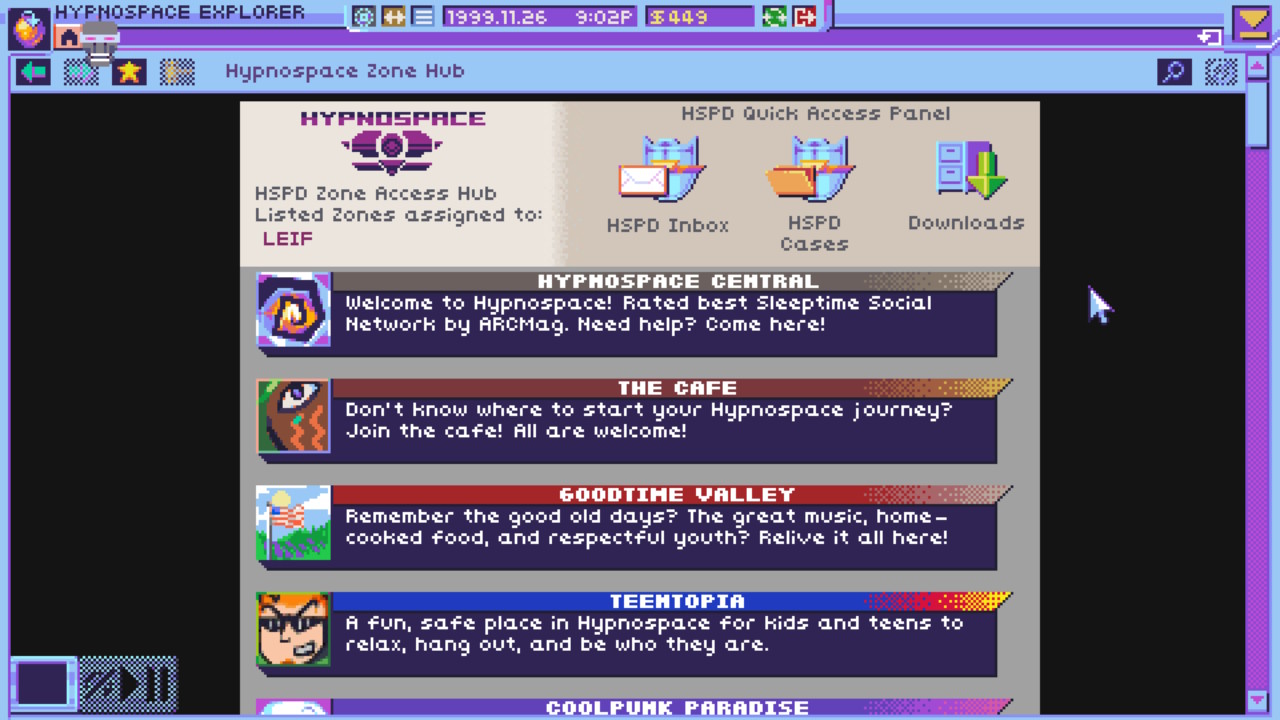
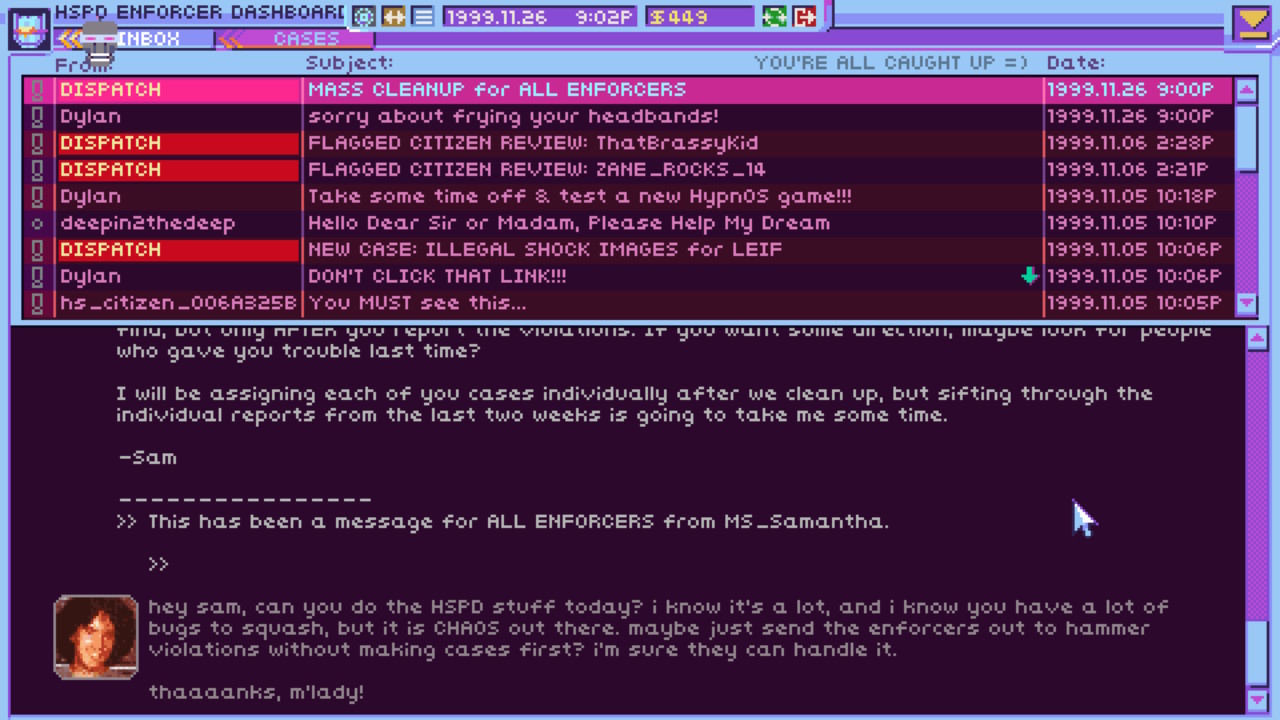
Hypnospace Outlaw is an internet detective game set in a parallel universe in 1999. You play as a volunteer moderator who’s tasked with flagging content violations, and the gamespace consists of your desktop, your email inbox, and a web browser that connects you to Hypnospace, a Geocities-style database of websites.

The Hypnospace admins send you a series of cases, and the first one is easy enough to solve. A representative of the estate of an artist who created a popular cartoon character has reported a page displaying unauthorized reproductions. You can find the page easily enough by searching for the character’s name in your web browser, where you see that a first grade teacher has shared scans of her students’ artwork of the character. You can click on each image and use a special tool in your browser to report it, thus removing the artwork from the woman’s page. Once you’ve removed all images recognizable as the character, you’ll get an email telling you that the case is resolved.

Obviously this is a shitty thing to have done, but the game doesn’t give you any ability to do otherwise. If you want to keep playing, you have to “solve” these cases in the only manner provided. Unfortunately, it’s not possible to make choices.

This lack of agency can be upsetting, especially when the game forces you to slap violation penalties on a teenage girl experiencing sexual harassment through DMs. She sent a support request to Hypnospace asking them to address the harassment, and she’s posted screenshots of the chats on her page. When you report these images as harassment, the girl is the one who’s penalized, as the images are hosted on her page.

A female member of the admin staff carbon-copies you on an email that she sends to her boss, asking him if this misattribution can be corrected. Unfortunately, he’s a piece of shit and brushes her off, saying that it’s not his problem. M’lady.

The point of being able to see the internal workings of content moderation is to give the player a sense of how wild and woolly the early public internet used to be. The administrators and moderators managing online communities were young and didn’t really know what they were doing, and there was a complete disconnect between corporate software developers and the end users, many of whom were just kids. In addition to teen drama, Hypnospace also hosts retirees with time on their hands, people who are deeply emotionally invested in the music they enjoy, small businesses doing their best, and a healthy cohort of amateur artists and poets.  

Hypnospace Outlaw has a strong Windows 95/98 aesthetic, and the Geocities/Angelfire style of page design is well-observed, with ample crunchy backgrounds and neon colors and spinning GIFs. What’s less well-observed is the quality of the writing people put on their pages. Even in college in the mid-2000s, I remember finding this exact style of personal webpage and being impressed by how knowledgeable and competently written they were. In Hypnospace Outlaw, however, the writing is uniformly bad. It’s bad on purpose, which has its charm, but I still got the feeling that the in-game webpages are more to look at than to read.  

If you can tolerate the bad-on-purpose writing, however, all sorts of intriguing worldbuilding details begin to emerge. You never learn much, however, only bits and pieces of trivia that are incorporated into people’s discussions of their special interests. The main “alternate” aspect of this universe, which is that people access the internet by wearing a headband while they sleep, is never explained. It’s also not particularly important… until it is. Still, I wouldn’t say that Hypnospace Outlaw has anything as structured as a plot. You’re mainly just here for the vibes.

After the first case, the game becomes infinitely more difficult and complicated, and I had to make constant use of a walkthrough (this one here). I have no idea how I would have figured out many of the cases otherwise. The problem is that there are dozens of public pages, not to mention hidden pages and directories and search terms and tagging systems, and the “clues” you receive are all extremely cryptic. There’s a lot of noise and not much clarity.

In the end, I’d estimate that it’s completely unnecessary to engage with about 70% of the game. There’s no real incentive to sort through the chaff unless you’re simply curious and don’t mind spending time clicking on links and reading through the webpages collected in the various themed directories. I ended up ignoring a lot of the game’s content, but I really enjoyed the pages that focus on urban legends and conspiracy theories. There’s also a page devoted to a kind of lo-fi, found-noise techno called Fungus Scene that I would very much like to exist in our own universe. Personally speaking, I would have preferred more of this sort of “weird but brilliant” creativity and less “kids being immature” cringe humor.

If you beeline through the cases with a walkthrough, Hypnospace Outlaw takes about three to four hours to finish, and how much time you’re willing to spend exploring outside the main objectives will depend on your tolerance for this subjective version of what the internet looked like in the late 1990s. For me, Hypnospace Outlaw is interesting in theory but somewhat frustrating to engage with, and the ultimate message that incompetent techbros can get away with everything from harassment to manslaughter didn’t really resonate as a meaningful story.

Still, despite routinely subjecting myself to some of the strangest titles Itch.io has to offer, I’ve never seen anything like Hypnospace Outlaw, and I’m happy it exists. If you’re at all curious, I’d recommend checking out the free demo. It’s available for the Nintendo Switch, so you can play the game while smoking weed in the bath, which is probably the best way to experience it to be honest.

Review of Soul Void on Sidequest

I recently had the pleasure of writing a review of the Game Boy horror adventure game Soul Void for the online gaming magazine Sidequest. I love Soul Void, and I’d describe it as Undertale for people who love quirky adventures with elements of horror but hate bullet hell. Although the horror elements of Soul Void are quite gruesome, it’s accessible to players of all skill levels. The game is free to play on Itchio (here), but I’d recommend playing it on a Game Boy emulator like mGBA, which you can download (here). Here’s an excerpt from my review:

Soul Void is a dark fantasy Game Boy adventure game that takes about three hours to finish. Its story of a young woman navigating the perils of the underworld is intriguing and cathartic, and its art design makes incredible use of the eeriness of its retro pixel graphics. For anyone who enjoyed the characters and worldbuilding of Undertale, Soul Void offers a similarly offbeat odyssey of mystery and friendship illustrated with disturbing but brilliantly creative horror art.

You can read the full review here:
https://sidequest.zone/2023/08/21/review-soul-void-dives-deep-into-retro-body-horror/

I want to give a big shout-out to my editor, Maddi Butler, for helping me get my thoughts in order and work through some of the more interesting themes of this game. I’d also like to thank the Sidequest Editor in Chief, Melissa Brinks, for giving me an opportunity to write about Soul Void, and for allowing me to expand on my thoughts about this amazing game. For excellent writing and commentary on video games, you can follow Maddi on Bluesky (here) + Melissa on Twitter (here). If you’re in the mood for gorgeous horror art, you can follow Soul Void’s creator, Kabadura, on Twitter (here) and on Instagram (here).

One Night, Hot Springs

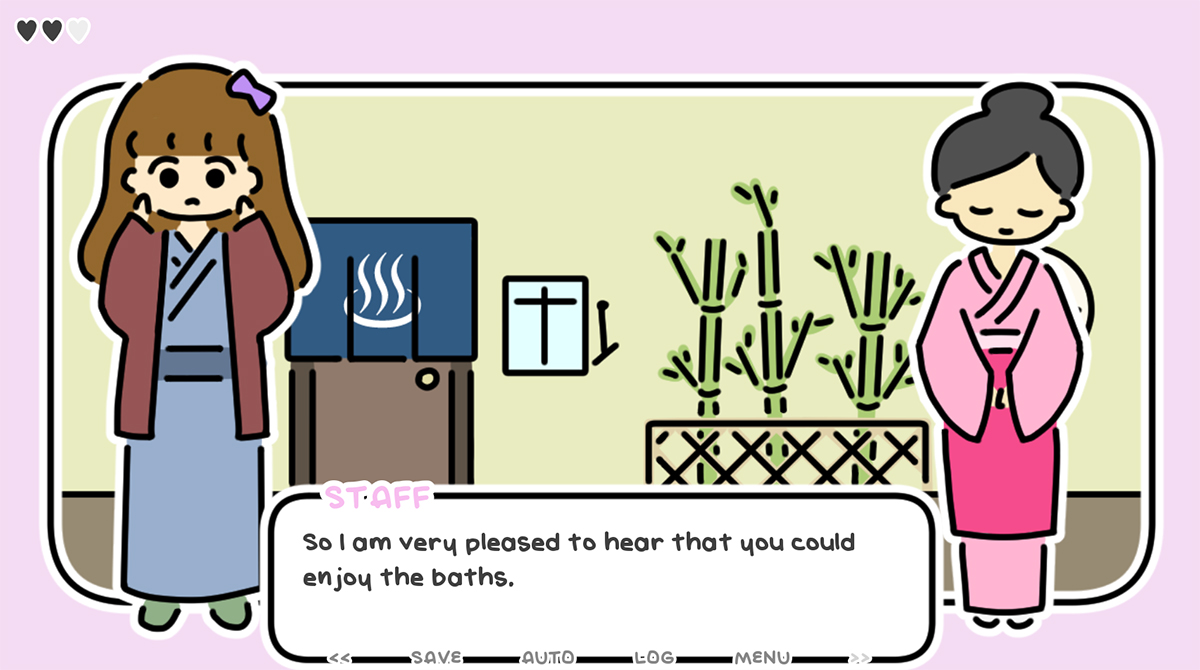
One Night, Hot Springs (here on Itchio) a short visual novel that takes about twenty minutes to play. It’s the free-to-download first chapter of A Year of Springs, which is available for $5 on various platforms, including Nintendo Switch. The story is about a 19-year-old girl named Haru who spends the night at a fancy onsen hotel with her childhood friend Minami and Minami’s friend Erika. Everything seems set up for a fun girls’ night out, but Haru is worried that being trans might make getting into a public bath tricky.

Minami and Erika are both a bit clueless about what it means to be transgender, but each is kind and supportive of Haru in her own way. The onsen staff are kind and supportive as well. No one particularly cares that Haru is trans, but they still go out of their way to make sure she feels comfortable, just as they would for any other guest. Haru is shy and doesn’t want to cause trouble, but a staff member assures her that plenty of people need (and deserve!) a bit of extra attention, and that trans guests aren’t actually as uncommon as one might think.   

There’s a big pink banner with a content warning for transphobia hovering over the game’s page on Itchio, which is why I didn’t take the plunge and buy the full game. I got seriously burned by The House in Fata Morgana, and I don’t want to play another visual novel about a trans character being abused or harassed. It turns out that I need not have worried, thankfully. If you’re honest to everyone about your character being trans, the ending you’ll get is called “The World Can Be Kind, Too.”

There’s an educational element to the game, and this can be something of a bummer, as the social and legal realities of being LGBTQ+ in Japan aren’t great. Still, One Night, Hot Springs is mostly about simulating the experience of spending a relaxing evening in the company of good friends at a beautiful onsen hotel. The artwork is cute yet polished and offers the player lovely visions of traditional architecture, delicious food, and screenshot-worthy outdoor vistas.

One Night, Hot Springs is just as wholesome as its artwork is adorable, and I really enjoyed the story. I was inspired to get the full game, A Year of Springs, and I’m looking forward to playing it soon.

League of Enthusiastic Losers

League of Enthusiastic Losers is a chill and beautiful visual novel set in Moscow in the 1990s. You play as Vitya, a handyman, who is often accompanied by his friend and roommate Volodya, a copywriter who’s working on a novel. It’s not clear whether the two men are in a romantic relationship; but regardless, they’re close friends who love and support one another. Unfortunately, while all of their friends from high school are off being successful and moving up in the world during the boom economy, the two of them can barely pay rent.

As the player, your task is to follow Vitya and Volodya as they try to figure out how to pay their landlord a portion of the rent they owe. Both men are extremely sweet and gentle, and they keep getting sidetracked as they do things like adopting a stray dog and helping their landlord’s son fix his toy airplane. Their grand plan is to dig up a “buried treasure” in the local public park that ends up consisting of several small tokens of Soviet life. Thankfully there are no antagonists in this game, and everything turns out okay. The men’s landlord is just as much of a sweetheart as they are, and their friends are happy to help support them.

The player can control Vitya and Volodya’s movement through linear 2D spaces, make a few dialog choices, and enjoy a few simple flash games like “glue the wings on the toy airplane” and “use the metal detector in the park.” There’s no stress and no point of failure, just two soft but handsome men and their adorable dog navigating a beautiful city depicted in a colorful painterly art style.

There are two things I love about the character Volodya in particular. First, he walks with a pronounced limp. It’s never explained, and no one ever comments on it, but people slow down their own pace when they walk with him. I don’t think Volodya has a “disability,” necessarily, but the game does a good job of depicting that sort of human difference.

Second, everyone around Volodya understands and accepts the fact that it takes time to write a novel, and that it probably won’t be picked up by a publisher right away. In fact, the first press he submits the manuscript to rejects it. When I compare this to the writer plot in the game Coffee Talk, in which Freya takes five days to write a novel that’s immediately accepted by a publisher with no agent necessary, I appreciate this game’s honesty about the fact that no one is immaculately conceived as a literary genius.

Everything about League of Enthusiastic Losers is honest, and the honest truth about life is that sometimes everything really is going to be okay. More than anything, League of Enthusiastic Losers is a game about being in your late twenties and gradually finding your place in the world. None of the characters is “good” or “bad,” but all of them are human, and it’s a joy to follow them through their everyday lives.

League of Enthusiastic Losers takes about half an hour to play, and you can pet the dog anytime you want.

Sumire

Sumire is a short nonviolent story game in which you play as the eponymous Sumire, a young girl who lives in a small town in rural Japan. Sumire’s grandmother recently died, and her father has left home. To make matters worse, Sumire’s childhood friend has progressed from ignoring her to outright bullying her. One morning, a magical talking flower (who is not evil, thank goodness) shows up at Sumire’s house and tells her that he has the power to help her experience one perfect day, at the end of which she might be able to see her grandmother again.

Sumire makes a checklist of what would constitute “a perfect day” and then sets out with her flower companion to achieve all of her goals, which include making peace with her former friend and confessing her feelings to a boy she likes. Along the way, you’re free to explore Sumire’s hometown, which is divided into about half a dozen small and manageable sections. The flower’s magic allows Sumire to speak with animals, plants, and a few inanimate objects, and each section of the town is filled with interesting characters and conversations.

At several points in the story, your character is asked to make a binary choice. One of these choices is always “be a decent human being,” while the other is “I wonder if this game has a genocide route.” Reviews of this game tend to make this seem far more complicated than it actually is, like…

Reviews: The game asks you to make difficult choices.

The game: A cute baby frog asks you to carry him to the river, which requires no effort on your part. Do you happily agree, or do you tell him that he’s disgusting and that you wouldn’t touch him even if he paid you? If you agree, you get a tangible reward and some extra dialog; and if you don’t, he doesn’t talk to you again.

Reviews: The game forces you to think about the consequences of your actions.

The game: Are you friendly to the slightly nerdy kid who’s friends with the boy you like, or do you tell him that he’s a fat fuck who deserves to be bullied? If you’re friendly, this unlocks a fun but entirely optional minigame; and if you’re not, he doesn’t talk to you again.

To me, it was always crystal clear what choices Sumire should make in order to achieve her goals, which are written in the form of a checklist on a piece of paper that you can access from the menu screen. For example, one of your goals is basically “tell Mom I love her.” So, when you trigger a scene in which you have an option to tell your mom you love her… You should probably do that!

The joy of this game is being able to roleplay what it feels like to be friendly and kind and have your kindness acknowledged and rewarded. There are no trick questions, and there are no decisions that don’t turn out the way you expect. For example, if you tell your mother that you love her, she doesn’t respond by accusing you of being emotionally manipulative for demanding attention when she clearly wants to be alone; this just isn’t that sort of game.

When I say “that sort of game,” I’m specifically thinking of Spiritfarer, which is written about adults for an intended audience of other adults. Spiritfarer is about as wholesome as a game can be, but it acknowledges that not everyone is going respond to kindness with gratitude. Meanwhile, I’m pretty sure that Sumire is intended for a younger audience, or at least an older audience that wants to feel nostalgia for a childhood that isn’t complicated by a more mature understanding of human behavior.

That being said, I’m curious about what would happen if you were to consistently choose the antisocial dialog options. Does the game get dark and creepy? Because that would be interesting. I couldn’t find anything about this online, so perhaps it might be worth experimenting with in the future.

Aside from the (probably?) limited satisfaction of trying out different dialog choices, I’m not sure if Sumire has any replay value in the traditional sense, as you can experience everything the game has to offer during a single two-hour playthrough. Regardless, the world of the game is so beautiful and charming that I’m already looking forward to returning to it in the future. Sumire is the video game equivalent of comfort food, and it’s perfect for a rainy afternoon when you need some flowers and sunshine in your life.