I’m excited to say that my essay “Final Fantasy VII Confronts Capitalism: Tifa Lockhart vs. Medical Debt” is now on Sidequest (here)! 👊🌟
I recently read the official Final Fantasy VII Remake prequel novel, Traces of Two Pasts. I was fascinated by Tifa’s backstory, especially how she was driven to the starting point of the game by medical debt. I hadn’t come across a serious discussion of this book in fandom or elsewhere, so I wanted to write a short but accurate summary with substantial analysis. My goal was to situate the book’s anti-capitalist themes in the context of the game’s story, Japan’s economic recession in the 1990s, and our current hellworld.
Here’s an excerpt from my article…
Tifa is twenty years old at the beginning of Final Fantasy VII. Despite her youth, she’s calm and level-headed, yet Tifa willingly becomes a member of Avalanche, an armed militia that conducts terrorist attacks on Midgar’s power grid. Though she questions the use of violence, Tifa understands that aggressive action is necessary.
The juxtaposition between Tifa’s personality and her involvement in an active terrorist organization begs the question of how such a kind and gentle woman could become so politically radicalized. The question Kazushige Nojima asks in Traces of Two Pasts is much sharper: under the circumstances, how could she not? If you had to walk in Tifa’s shoes, wouldn’t you become radicalized too?
I Am Setsuna, which was published by Square Enix in 2016, is a twenty-hour JRPG set in a beautiful fantasy world blanketed by snow.
You play as a young man named Endir, a member of a secretive tribe of masked warriors. Endir has been hired by a mysterious third party to assassinate Setsuna, a young woman who has been chosen as the sacrifice whose death will hold back the tide of ice and monsters plaguing the world for another decade. When Endir finds and confronts Setsuna, she tells him that she is willing to die, but she requests that he accompany her on her journey to the sacrificial grounds so that her death will have meaning.
The structure of the game follows a standard JRPG progression. As he follows Setsuna on her pilgrimage, Endir travels between an alternating series of towns and dungeons. Each new town has slightly nicer weapons, and the money gained while fighting monsters allows these weapons to be purchased. The player can also purchase accessories that can be customized with various materials dropped by defeated monsters, thus granting characters new and improved battle abilities and magic spells.
I am Setsuna takes its inspiration in equal parts from Final Fantasy X and Chrono Trigger, meaning that its combat system is simple, easy to pick up, and fun to experiment with. Your characters gain levels quickly, so you’ll never have to worry about grinding. To help keep battles engaging, the combat employs an optional system of timed button presses that enable attack bonuses.
About ten hours in, the game becomes more challenging. Enemies take longer to defeat and often damage your characters before they die, while the dungeons become twisting labyrinths of indistinguishable corridors. It shames me to admit this, but I had to buy the Japanese strategy guide to find my way through an endgame dungeon filled with teleporter traps. In addition, I’d have to say that the game’s story begins to lose its threads well before the ending, which is remarkably unsatisfying.
As I’ve gotten older, I’ve found that I care far less about finishing any given video game. The moment a game stops being fun, I put it down and move on to something else. This is less about frustration and more about appreciation. Even if I never beat a game’s final boss, I can still be grateful for the parts of it that I enjoyed. Once I’ve seen everything I want to see, I can feel satisfied.
For me, I am Setsuna is a perfect example of a game that’s wonderful to play until it stops being fun. Although I’ve finished the story twice in the past, I was happy to enjoy about a dozen hours during my most recent playthrough. I suppose that I could keep going and power through the segments that necessitate a walkthrough, but I don’t particularly want to. And that’s okay.
Over the course of the first twelve hours of I am Setsuna, you’ll traverse snow-covered forests, venture into mountain villages beset by blizzards, and explore sparkling ice caves. Along the way, you’ll fight winter-themed creatures such as snow rabbits, arctic foxes, walruses, and bears. All of your characters are bundled up in warm and comfortable clothing, and it’s a pleasure to spend time in the villages chatting with NPCs by the fire while admiring the dried herbs and patterned quilts hanging from the walls.
I’m a fan of I am Setsuna, but I’d recommend it in the same way I’d recommend an actual retro game like Ocarina of Time. It’s absolutely worth playing I am Setsuna to experience its atmosphere and charm, but no one should feel bad about walking away when it becomes difficult and awkward.
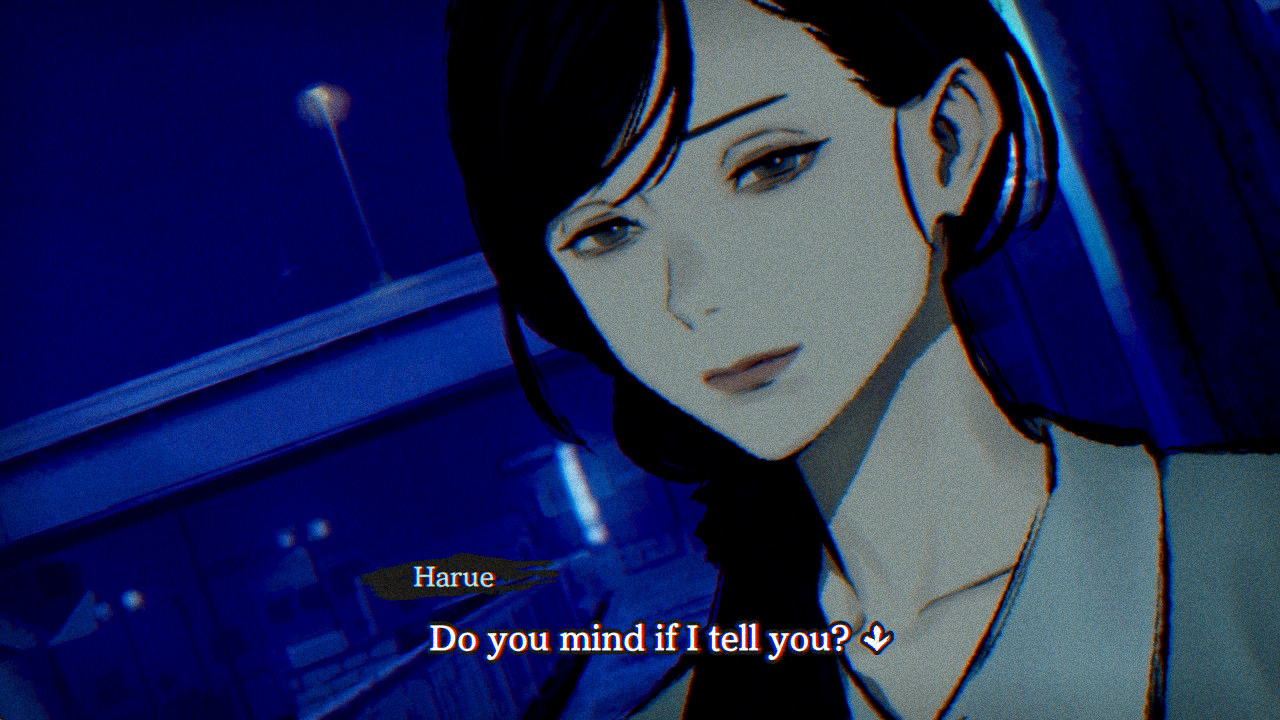
Paranormasight: The Seven Mysteries of Honjo is a supernatural thriller set in the Honjo neighborhood of Sumida Ward in central Tokyo during the 1980s. This visual novel’s story is told via the intersecting perspectives of three main protagonists through a series of short episodes laid out along a story grid. Although you have some choice regarding the order in which you play the episodes, the story is linear, with minor branching paths leading to premature endings. Paranormasight has strong elements of horror, as well as a few jumpscares, but it’s sensitive about its use of mature themes and graphic visual imagery. Depending on how quickly you read, it should take about ten to twelve hours to unlock all of the endings.
Let me cut to the chase: I really enjoyed Paranormasight and would happily recommend it even to people who aren’t horror fans. The game only has a moderate level of interactivity, so I’m not sure it would appeal to people who dislike visual novels. That being said, Paranormasight is at the height of its genre, and it’s as well-written, well-illustrated, and intriguingly presented as a visual novel can get.
A quick description of the story is going to sound like anime nonsense, but please take my word for it that this is a story written for an adult audience and bear with me for a moment.
During the early modern Edo period, an onmyōji wizard found the secret to a ritual that would bring someone back from the dead. In order to recreate the soul of the deceased, one would need to store sufficient “soul dregs” of murder victims inside a ritual object. The wizard managed to perform the ritual, a process that resulted in nine deaths. The history of these deaths has survived to the present in the form of urban legends about the “seven mysteries of Honjo.”
Late one night, ritual objects in the form of wooden netsuke charms mysteriously appear in the hands of nine people in the Honjo neighborhood. In addition to the physical charms, these “curse bearers” have inherited the resentful memories of the victims of the original ritual, as well as the power to kill others with a curse, which they’re able to trigger when certain conditions are met. If one of the curse bearers manages to kill enough people, they’ll be able to perform the ritual of resurrection – but only if another curse bearer doesn’t kill them first.
Paranormasight opens with a stand-alone prologue in which one of the curse bearers meets a gruesome end. When the prologue is concluded, the story is taken up by three more curse bearers: a grieving mother whose young son died in a kidnapping incident, a high school girl whose best friend committed suicide, and a senior police detective assigned to investigate the mysterious death of a youth truancy officer. All three of these protagonists are sympathetic, as is the companion character accompanying each of them. As the story unfolds, they gradually begin to work together in an attempt to figure out what’s happening so that they can survive the curse while preventing more murders.
I feel like I’ve spent years quietly waiting for Square Enix to start publishing visual novels, and I’m happy it’s finally happening. Visual novels are somewhat infamous for being relatively inexpensive to make, and it’s so cool to see one of these games with big-budget production values. Although the art and music are wonderful, the high quality of Paranormasight mainly comes through in the strength of its writing, its manga-style mise-en-scène, and its excellent translation.
When I talk about the mise-en-scène, I’m referring to the cinematic framing of each scene. While many visual novels will show you a visually flat illustration of a character superimposed on top of a static background, Paranormasight puts a great deal of effort into making conversations feel more dynamic, with the camera following standard “line of sight” rules to show the player the conversation from different angles and perspectives. As a result, Paranormasight feels like reading a manga instead of reading an illustrated novel. This framing isn’t overly dramatic and doesn’t draw attention to itself, but it must have required an incredible amount of planning and effort to pull off with such skill and variety.
The same goes for the writing. The writing doesn’t go out of its way to appear “brilliant,” but the way the various threads of the characters gradually become woven into the larger story is incredible. Although you’ll often have to finish one character’s current storyline before continuing another’s, I was impressed by how the game maintains its forward momentum while still giving the player a fair amount of freedom to move between characters and conversation topics. I also appreciate how none of the characters ever devolves into a stereotype, and how both major and minor characters have a balanced mixture of admirable and problematic personality traits.
On a lark, I downloaded Paranormasight onto my older Nintendo Switch and played the prologue in Japanese. I can therefore say with confidence that the English translation is excellent. The translation team preserves the flavor of the original writing through canny localization choices, especially regarding the game’s more arcane vocabulary. I’ve been annoyed with the translation of Tears of the Kingdom, which is filled with nonsense like “Ultrahand” and “secret stones,” so I admire how the English version of Paranormasight manages to make its more unusual terms seem perfectly natural.
Despite its goofy name and slightly silly supernatural premise, Paranormasight was created for an audience of intelligent adults. The game is very much mass-market entertainment published by a giant corporation, so perhaps it’s not as bold or edgy as it could be, but I actually think this market concession to “broad appeal” is a blessing. Sometimes it’s nice to read a horror thriller that has the confidence not to rely on sexual assault, fantastically grotesque violence, or poorly-disguised bigotry against minorities. As a fun bonus, there are no creepy “male gaze” character designs, just a wide range of character types who are drawn in an appealing anime-influenced style but still look like real people.
Paranormasight was developed in cooperation with the Sumida City Tourism Association, and the game does a fantastic job of giving the player a sense of its setting. This works especially well in tandem with the story’s theme of how many Japanese urban legends are closely connected to a specific place and the history of the people who live there. Although most of the gameplay involves choosing how to advance the conversation, there are also moments when the player is invited to explore an area via a visual panorama while investigating points that catch their attention. It’s fun to explore this weird little neighborhood in Sumida that’s been around since the Edo period, and you never feel as though you’re on the receiving end of a history lecture.
One of the coolest aspects of Paranormasight is its framing device, in which a narrator wearing an Edo-period kimono and a half-face Noh mask directly addresses the player. This narrator invites the player to watch the story through a Shōwa-era color television, one of the bulky cathode-ray screens embedded in its own piece of furniture.
The menu has a great time with this retro aesthetic, distorting the background with tv “noise” and curving the screen at the edges. From the menu, you can access an annotated index with entries for the characters, places, and historical incidents that appear in the story. Each entry is accompanied by an illustration and two or three paragraphs of text. I generally don’t bother with the annotated indices in visual novels, but the one in Paranormasight is especially well-written and edited to provide a satisfying amount of intriguing information without overwhelming the player with walls of text. I also love that the entries for the urban legends are illustrated with period-accurate woodblock prints.
For someone with my particular set of interests, Paranormasight is a 10/10 game. Even if you’re not into urban history or urban legends, I still think the strength of the game’s writing and the cleverness of its design are strong selling points. You can download Paranormasight as a phone app, but it’s perfect for Nintendo Switch’s handheld mode and well worth the $20.
By the way, if you’re intrigued by the concept of “virtual tourism through a visual novel,” I’d also like to recommend the supernatural mystery thriller Root Letter. Its story is set in the small city of Matsue in rural Shimane prefecture, which is also famous for its Edo-period urban legends. Root Letter is very good, but it’s nowhere near as polished as Paranormasight. Square Enix really hit it out of the park with this one.
Secret of Mana is a charming action-adventure game about grinding for unnecessary upgrades. It’s not for everyone, but I adore it.
The game plays a bit like Kingdom Hearts in that you run around a two-dimensional isometric map and hit adorable enemies with a sword (or your choice of seven other weapons). There’s a satisfying cronch when your weapon connects, and the enemy death animations are super cute. For example, mammal-type enemies will explode in a poof of bones that make rattling sounds as they drop to the ground in a neat little pile. The magic animations are also lovely, and they become more elaborate as each spell grows more powerful.
The game’s story is about protecting seeds and saving a tree, and it’s filled with gorgeous Instagram-style ~nature~ that has its over-saturated anime filter slider pulled all the way to the top end. The tree leaves rustle gently, the grass sways in the wind, the sun sparkles on the surface of water, the frost glistens with a rainbow-hued shine, and so on. Your job as the player is to walk around these beautiful fantasy-themed environments killing critters for the points you need to max out the levels of your weapons and magic.
The way this works is that each of the eight weapons has eight magical orbs, which you earn by defeating bosses, and each orb unlocks an additional level for that weapon. Once a new level is unlocked, you can earn points by defeating enemies in order to achieve the special attack for that weapon, all of which are laughably impractical and none of which you will ever use. There’s no real reason to level up your weapon attacks; but, if you want to, it becomes more difficult with each progressive level. To get to Level 2, each enemy kill nets you 8 points (out of a necessary 100). To get to Level 3, each enemy kills nets you 7 points (out of a necessary 100). And so on. Ditto for each of the eight magic element sets.
Each of your characters has to level up all of the weapons and magic elements separately, so you’re in for some grinding. But only if you want! Again, it’s not necessary, but I find it relaxing.
The PlayStation 4 remake changes almost nothing about the original Super Nintendo game, and the updated graphics and music are wonderful. For a good six months after the release, there was some sort of bug that caused the game to crash if you went for too long without saving, but the developers have patched and fixed whatever was causing the problem.
The PS4 remake of Secret of Mana takes about ten to fifteen hours to finish if you don’t grind and a little less than thirty hours if you do, and either way it’s good wholesome content for when you need to turn off your brain and chill out for a bit.



 Digital Fantasy Diary