The Slithery-Dee Came Out of the Sea

I had the honor of contributing a short story called “The Slithery-Dee Came Out of the Sea” to the first issue of Creaking Floorboards, an art and fiction zine that showcases tales of the supernatural.

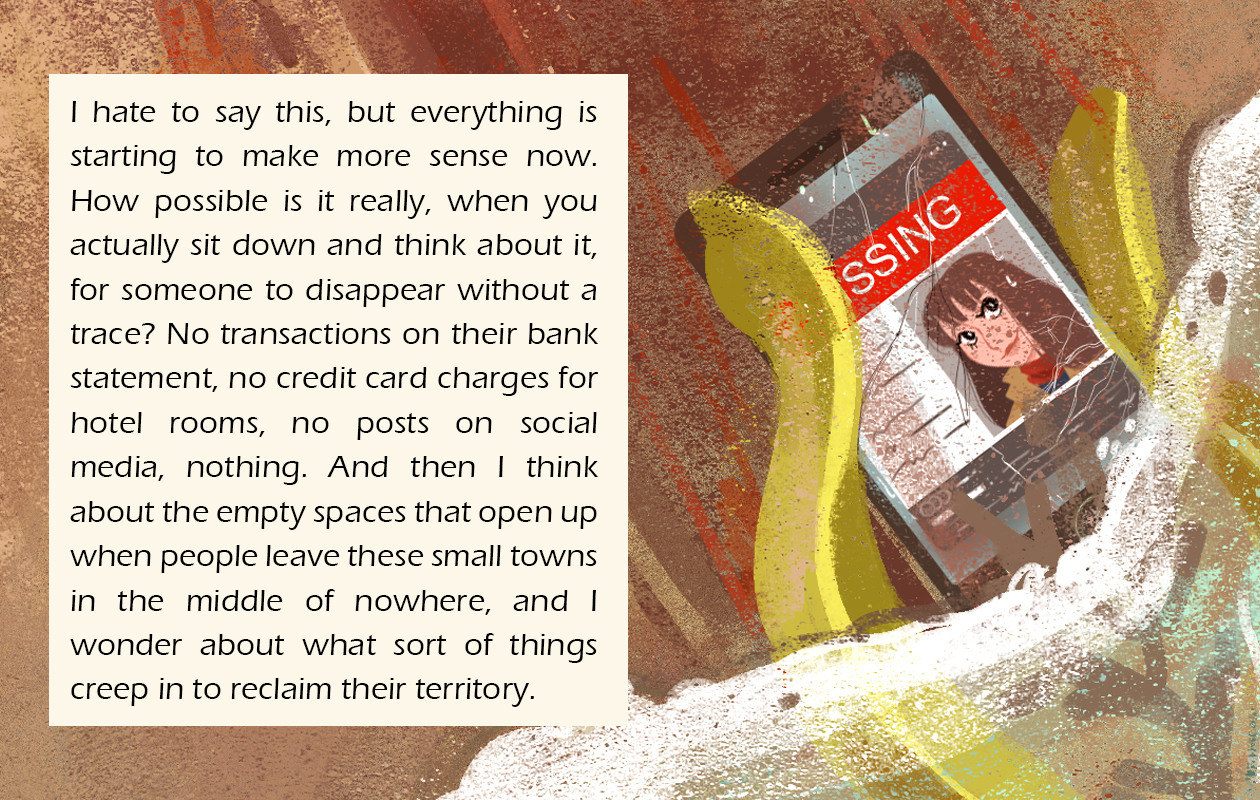
“The Slithery-Dee Came Out of the Sea” is a small-town horror story about a woman in the coastal town of Freeport, Maine who assumes that people are slowly disappearing from her life because of the post-pandemic economic recession and rural depopulation. But nope! They’re being eaten by a sea monster.

This story is loosely based on a poem of the same name (this one here) from Scary Stories to Tell in the Dark, a collection of American folklore from 1981 that’s infamous for giving emotional scars to children. What’s interesting about this weird little poem is how the narrator watches everyone else get eaten but never runs away. I was interested in exploring the state of mind of someone in this situation. Surely a part of you must know something strange is going on, but it’s difficult to see the supernatural for what it is when everything in your life seems to be going wrong.

I’m honored to have received an illustration from ChassDraws, who shares her bold and colorful art on Instagram (here) and on Bluesky (here). Of the many things I love about Chassie’s illustration, what I especially appreciate is how it preserves the uncertainty of the situation while still providing an undeniable hint regarding what’s actually going on.

You can download a free digital copy of Creaking Floorboards here:
https://creaking-floorboards.itch.io/creakingfloorboards

I’ve also archived a PDF of my story (here) with a page-by-page layout and higher contrast, which should hopefully make the text easier to read for people who are visually sensitive.
Review of Stagtown on Comics Beat

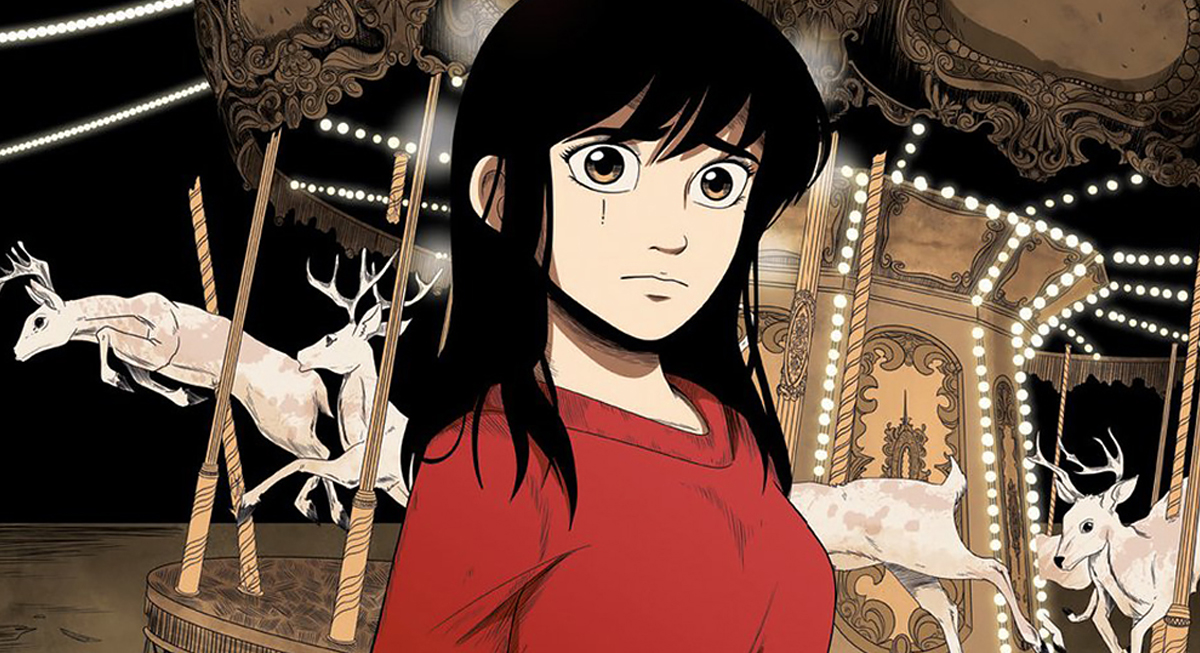
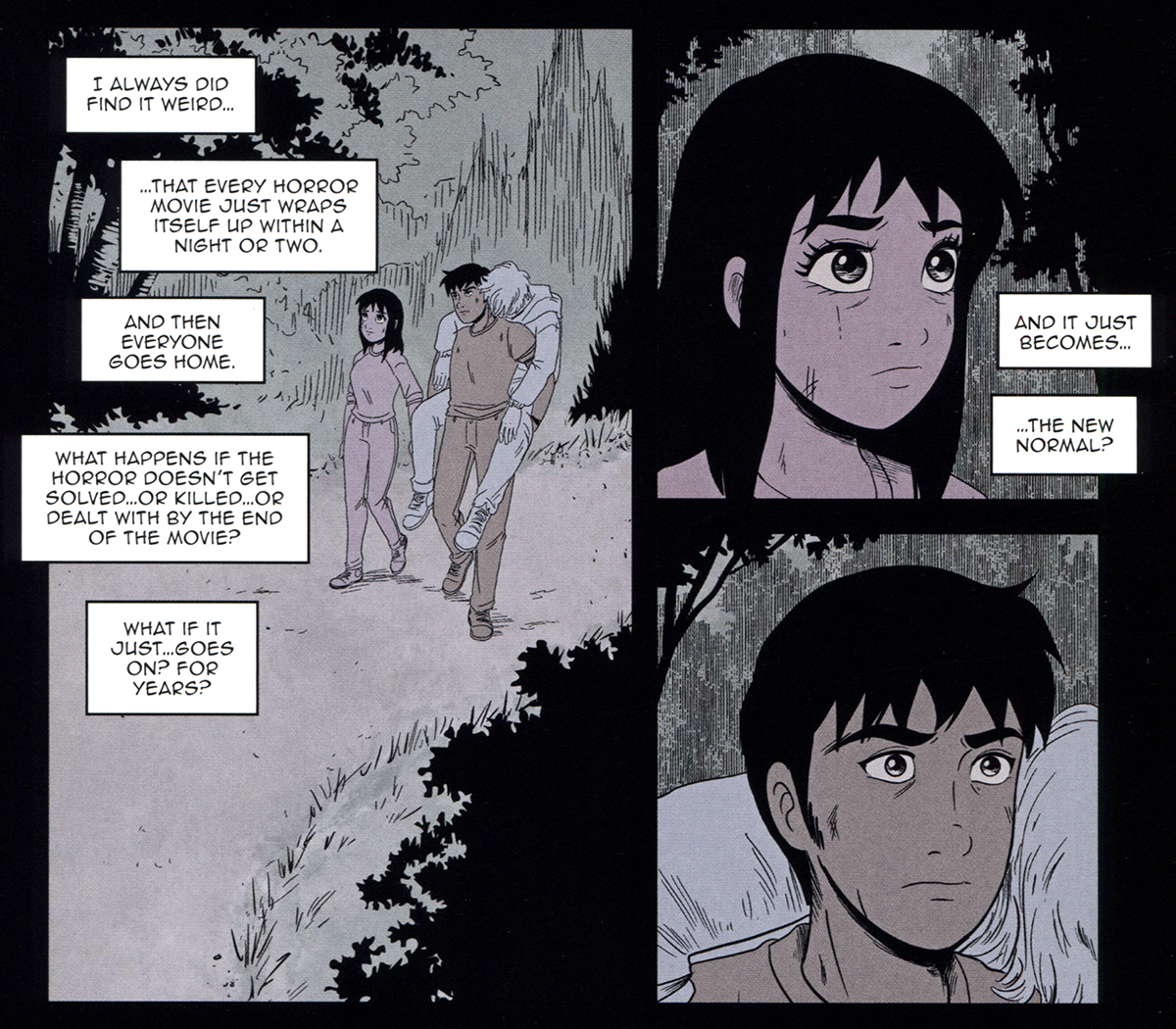
I was excited to have an opportunity to write a review for Comics Beat of the new graphic novel Stagtown, which collects the opening act of Punko’s popular horror webcomic.

I’ve been a fan of Punko’s work since her debut manga-style graphic novel Bizenghast, which takes place in an isolated small town perched above a giant crypt. Stagtown is a return to a similar setting, but it’s a much more nuanced and mature piece of storytelling graced with remarkably confident and atmospheric art.

Just as I’m comparing Stagtown to Bizenghast here, I make a number of connections in my review of the graphic novel, including comparisons to The X Files, The Magnus Archives, and Stephen King – who coined the phrase “peculiar little town” that I use in the review title. I’ve pointed out these connections not because Stagtown is derivative. In fact, Punko’s art and writing are quite distinctive, as is her particular take on small town horror. Rather, I make these comparisons to emphasize how deeply Stagtown is connected to some of the primary roots of contemporary American Gothic. As I write toward the end of my review:

Underneath its elements of supernatural horror, Stagtown is a story about young adults who are stuck in place. The characters feel fresh and contemporary, but the setting is haunted by the analog horror sense of being cut off from the broader culture and society. Frankie and Felix are doing their best to overcome a less-than-ideal situation, but their efforts have depressingly few tangible results. Stagtown is small-town gothic horror that would make Stephen King proud, but it’s also a cautionary tale about economic recession, suburban stagnation, and a younger generation trying to survive in a world that has no place for their dreams or energy.

You can read the full review on Comics Beat here:
https://www.comicsbeat.com/graphic-novel-review-stagtown/