Retro Horror Games on Sidequest

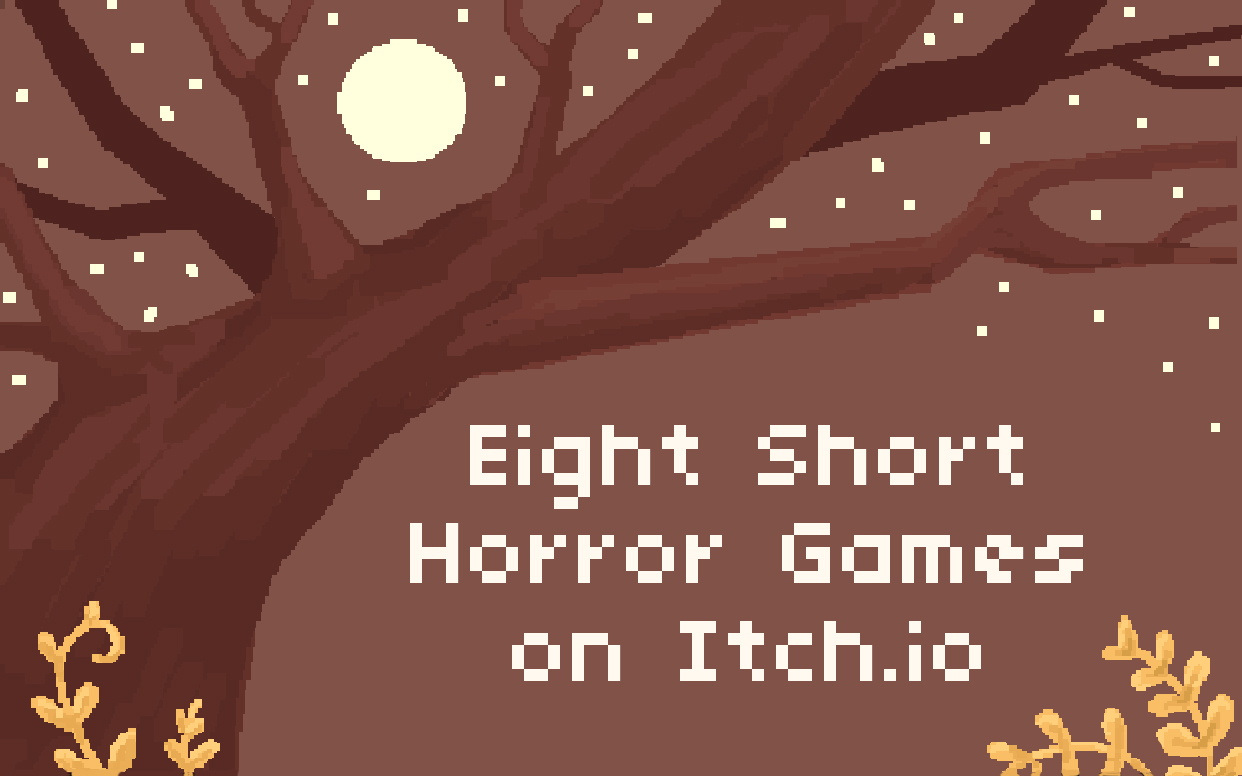
My annual roundup of free-to-play retro horror games on Itch.io is now on Sidequest. There’s a gritty mix of fresh blood and decayed favorites in this year’s creepypixel harvest, from the recent haunted forest simulator Bloodbark to the Tumblr-favorite Flesh, Blood, & Concrete to the first game created by Deltarune artist Temmie Chang, Escaped Chasm.

You can check out the post here:
https://sidequest.zone/2025/10/15/retro-horror-games-on-itchio/

And there’s also my lists from October 2024 and October 2023, which are somehow even more liminal and retro.

I’m overjoyed to have commissioned a banner illustration from the shining Teller-of-Tragedies, who shares gorgeous and immersive dreamcore pixel art on Tumblr (here) and on Instagram (here).

Essay about Deltarune on Sidequest

I recently had the immense pleasure of writing an article about the latest chapters of Deltarune for Sidequest. This piece features some story analysis and theorizing, as well as a personal anecdote about an extremely awkward moment during my job search in my last year of grad school, but it’s mostly about the joys of retro media and the lost art of having fun. Here’s an excerpt…

Nostalgia is a difficult subject to approach. Cultural nostalgia, which often takes the form of a glorified version of an earlier decade, is a hallmark strategy of conservative political movements that attract sympathy by engendering a fantasy of a time when, supposedly, things were better. Nostalgia for childhood media can be fraught as well, especially when we view the more problematic aspects of this media from an adult perspective.

Still, nostalgia has its uses. When approached with care and attention, indulging in nostalgia can be an exercise that facilitates a rediscovery of play. In its celebration of the television and video games of an earlier era, Chapter 3 of Deltarune invites introspection into the aspects of play that a younger version of yourself understood to be “fun.”

You can read the full essay on Sidequest here:
https://sidequest.zone/2025/08/04/deltarune-remembers-how-to-have-fun/

As an aside, my corner of video game fandom spent the month of July going wild for the character Tenna, an anthropomorphic personification of a CRT television who plays a central role in Chapter 3 of Deltarune. Tenna’s status as the Summer 2025 Tumblr Sexyman is partially due to his eye-catching visual design and flashy personality, but I also get the feeling that his near-instant popularity was due to the way he speaks to a particular type of cultural malaise.

As a consequence of the concomitant collapse of social media platforms and the proliferation of AI-generated “content,” everyone is exhausted by the effort it takes to wade through (and compete with) soul-numbing machine slop. What Tenna represents is an era of media that, though it might not have been “good,” was at least intentional. My essay doesn’t touch on specific issues relating to gen-AI, but I was directly inspired to write this piece by the very enthusiastic reception of the recent chapters Deltarune in online creative communities. There’s definitely something interesting going on there culturally, I think.

Dark Souls Fandom Essay on Sidequest

“The Softer Side of Dark Souls Fandom,” my essay about a major shift in internet culture, was published on Sidequest. Everybody loves Bloodborne and Elden Ring now; but, ten years ago, FromSoft fans were a fairly isolated group, not to mention some of the most hateful people I’d ever encountered online. At about 1,400 words, this piece is far shorter than it should be, but I still had a fun time writing about how FromSoft fandom has become much more welcoming and inclusive over the past decade. Here’s an excerpt:

I’ve put untold hundreds of hours into Dark Souls and its sequels. When the game first came out almost fifteen years ago, however, there was nothing I hated more than Dark Souls. I refused to play it. I associated the game with the worst people on the internet, who spewed hate while using Dark Souls memes to shame and attack anyone they felt challenged the hegemony of their male-dominated subculture of video game fandom.

I therefore feel an ironic pleasure in the fact that, these days, Dark Souls and the other FromSoft games have been embraced by women and the queer community, the exact people these angry online gaming communities loved to hate. In a strange twist of fate, the games weaponized to mock diversity have become a sanctuary for many of the people who were once excluded.

You can read the full essay here:
https://sidequest.zone/2025/07/14/dark-souls-fandom/

An earlier version of this essay was published in Act Your Age, Vol. 2: Dark, a fandom memoir anthology zine that you can check out (here).

I decided to publish this piece online when the host of one of my favorite video game podcasts, Bonfireside Chat, came out as transgender. Since she’s not really a public figure, I don’t mention her in the essay itself, but her announcement made me incredibly happy. Regardless of gender and sexuality, I hope everyone can find a place where they feel accepted and supported in their interests… even if their interest is in dark fantasy games about dying in all sorts of grisly and horrifying ways!
Essay about Final Fantasy VII’s Anti-Capitalist Critique

I’m excited to say that my essay “Final Fantasy VII Confronts Capitalism: Tifa Lockhart vs. Medical Debt” is now on Sidequest (here)! 👊🌟

I recently read the official Final Fantasy VII Remake prequel novel, Traces of Two Pasts. I was fascinated by Tifa’s backstory, especially how she was driven to the starting point of the game by medical debt. I hadn’t come across a serious discussion of this book in fandom or elsewhere, so I wanted to write a short but accurate summary with substantial analysis. My goal was to situate the book’s anti-capitalist themes in the context of the game’s story, Japan’s economic recession in the 1990s, and our current hellworld.

Here’s an excerpt from my article…

Tifa is twenty years old at the beginning of Final Fantasy VII. Despite her youth, she’s calm and level-headed, yet Tifa willingly becomes a member of Avalanche, an armed militia that conducts terrorist attacks on Midgar’s power grid. Though she questions the use of violence, Tifa understands that aggressive action is necessary.

The juxtaposition between Tifa’s personality and her involvement in an active terrorist organization begs the question of how such a kind and gentle woman could become so politically radicalized. The question Kazushige Nojima asks in Traces of Two Pasts is much sharper: under the circumstances, how could she not? If you had to walk in Tifa’s shoes, wouldn’t you become radicalized too?

You can read the full piece on Sidequest here:
https://sidequest.zone/2025/06/02/final-fantasy-vii-confronts-capitalism/

Crow Country Essay on Sidequest

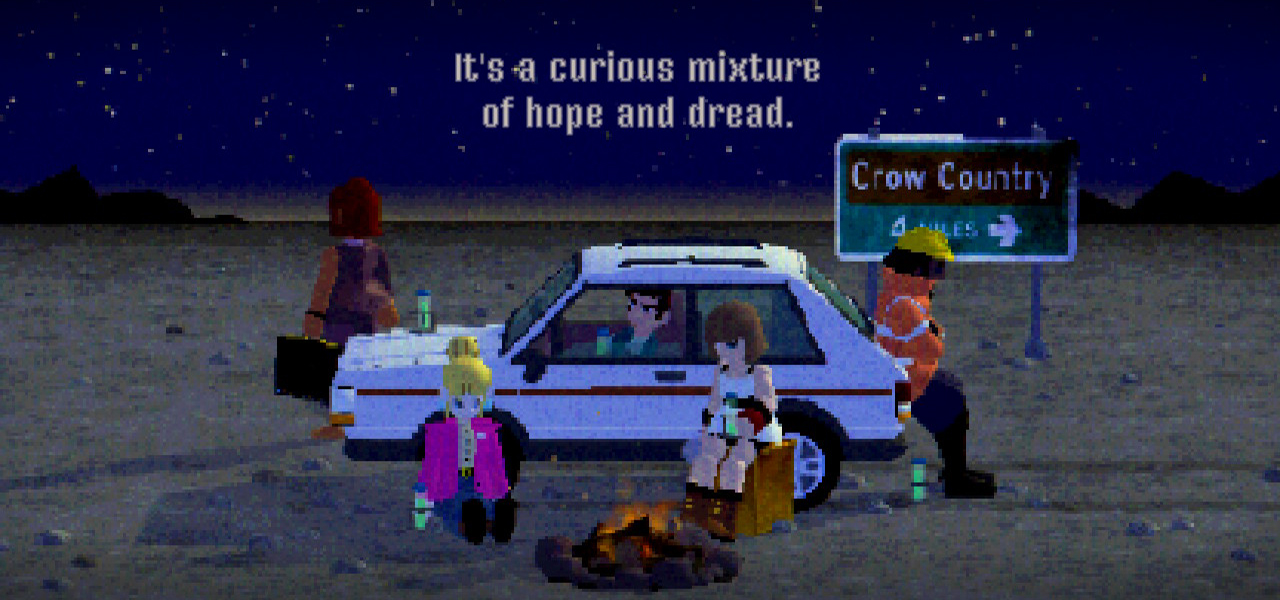
I’m excited to share “Crow Country Is a Game about Climate Change,” an ecocritical analysis of one of my favorite indie games of 2024. This essay also serves as a kind of “Ending Explained” story breakdown that was inspired by a few Reddit discussion threads that missed the point of what (to me at least) is a clear, powerful, and compelling artistic statement. How do we process the reality of climate change, and how can we face the challenges of the future?

Crow Country borrows heavily from the visual design of Resident Evil and Final Fantasy VII, and I argue that it provides an interesting meta-commentary on their themes as well. Specifically, I think Crow Country uses its retro aesthetics to remind players of the political climate of the late 1980s and early 1990s, when environmentalism was considered an important bipartisan issue in the United States.

In my essay, I put Crow Country in conversation with two books, Colette Shade’s Y2K: How the 2000s Became Everything (2025) and David Wallace-Wells’s The Uninhabitable Earth: Life After Warming (2017). I believe that Shade’s discussion of the “lost environmentalism” of 1990s media like Captain Planet and FernGully can be expanded to video games, and I explain how Crow Country plays on that cultural nostalgia. Meanwhile, Wallace-Wells discusses a “crisis in storytelling” about climate change that positions its victims as cute animals instead of actual human beings, but Crow Country subverts this narrative impulse by demonstrating that its “zombie” climate refugees are none other than ourselves.

You can read the essay on Sidequest here:
https://sidequest.zone/2025/04/22/crow-country-climate-change/

Crow Country (on Steam here) is an incredible game, by the way. I enjoyed writing about it, and I enjoyed playing it as well. It takes about four hours to finish, and there’s an optional “no combat” mode that allows players to focus on exploring the space while engaging with the story and puzzles. If you’re interested, I posted a no-spoiler review of the game ( here ).

ETA: This essay was featured on Critical Distance (here). What an honor! I hope a wider audience gets a chance to read this piece, if only so that more people can appreciate the nuanced but powerful message of this incredible game.

Video Game Sewers on Sidequest

I love video game sewer levels! I understand that not many people share my fascination with creepy underground tunnels, so I wrote an article for Sidequest to share my appreciation of the hidden mysteries and strange beauty of video game sewers. Here’s an excerpt:

A common complaint regarding sewer levels holds that the uniformity of their twisting corridors acts as an excuse for developers to create a generic maze with a minimum of effort. If designed with creativity, however, slight variations in an otherwise uniform environment can have a heightened effect, especially if the design of the sewers subtly reflects the layout of the city above.

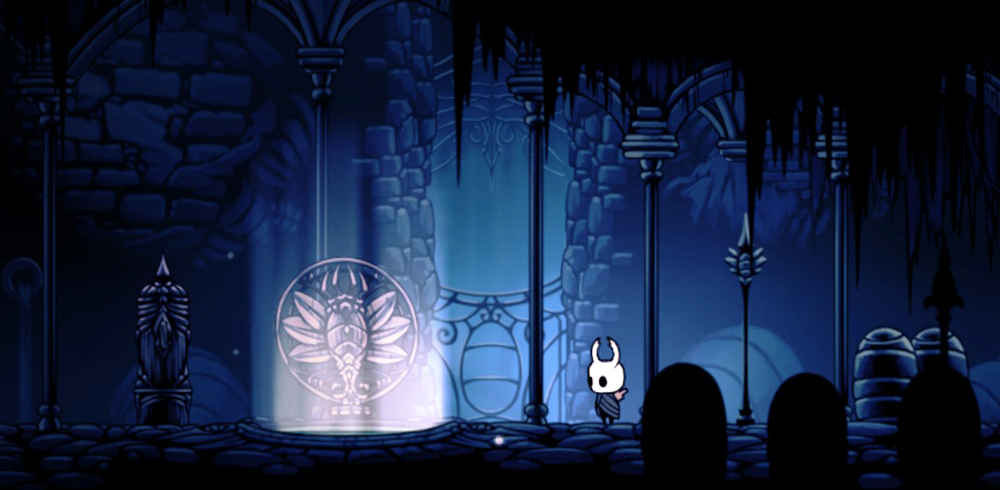
A perpetual rain falls on the ruined City of Tears in Hollow Knight, and this water flows into the Royal Waterways below. At the edges of the settlement, the sewer channels are falling apart and choked with debris. Directly under the city, however, the rainwater pools into gentle streams whose luminescence casts soft shadows of light onto the darkness of the tunnel walls.

You can read the full piece on Sidequest here:
https://sidequest.zone/2025/03/03/video-game-sewers/

Sidequest Article on Fantasy America

I often write about Japanese culture in video games, so I thought it might be fun to explore how Japanese games represent American culture. I’m a fan of thematically curated lists, which can help draw parallels and comparisons that invite deeper investigation.

Here in February 2025, it’s a weird time in the United States. To say that we’re living through a crisis of national identity feels like an understatement. The piece I wrote for Sidequest isn’t political, but I still found it interesting and meaningful that Japanese fantasies of the United States are incredibly diverse. In fact, I might even say that “diversity” is a major aspect of the appeal of America as a video game setting.

You can check out the piece on Sidequest here:
🍔 https://sidequest.zone/2025/02/10/five-japanese-games-set-in-fantasy-america/

2024 Horror Games Post on Sidequest

There’s a chill in the air as the twilight lingers and the moon glows bright in the autumn sky. What better time to crouch in front of your computer and scare yourself silly? For intrepid digital ghost hunters, Sidequest presents eight eerie games that are free to play on itch.io and short enough to occupy an intermission between deep dives into creepypasta wikis…

I was thrilled to have an opportunity to write another piece for Sidequest showcasing a curated collection of indie horror games. If you’re interested, you can check out the list here:

💻 https://sidequest.zone/2024/10/01/eight-short-horror-games-on-itchio/

Sidequest Article on A Link Between Worlds

I had the pleasure of writing a fun article for Sidequest about how A Link Between Worlds is a perfect cozy horror game to play during the long summer evenings. It’s a dark twist on Legend of Zelda series traditions and one of my favorite adventure games.

If you’re interested, the article is here:
https://sidequest.zone/2024/08/05/spooky-zelda-game/

Many kudos to the magical LunarChibistry for creating the lovely artwork of Princess Hilda in the promo graphic!

Neko Can Dream Review on Sidequest

I’m excited to have published a review of the indie narrative adventure game Neko Can Dream on Sidequest. Neko Can Dream was created by the Japanese yuri manga artist Nekobungi Sumire, who captures a complex and beautiful world inside the simple Game Boy graphics.

Here’s an excerpt from my review:

Neko Can Dream will take most players about two and a half hours to finish. Even though the narrative tone is gentle, the pace is quite brisk, and the excellent game design ensures that the player never becomes lost or confused. Certain elements of the individual character stories will resonate strongly with players interested in themes relating to queer identity; however, at its core, Neko Can Dream is about how the dream worlds of video games can help people at all stages of life recover from trauma and reach out for connection.

If you’re interested, you can read the full review on Sidequest here:
https://sidequest.zone/2024/05/27/neko-can-dream-bittersweet-nostalgic-treat/