Review of Model Five Murder on Comics Beat

I really enjoyed Tan Juan Gee’s Model Five Murder, which was just published by Silver Sprocket. This graphic novella is an intriguing sci-fi noir mystery with stylish art that investigates the issues of AI, technology, and labor. I’m very lucky to have been able to write a review for Comics Beat. Here’s an excerpt…

Model Five Murder is a thematically rich murder mystery that plays with the question of whether concepts like “victim” and “murderer” have any meaning in a situation involving artificial life and artificial intelligence. If memories and consciousness can be transferred between bodies, is it murder to shoot an android? If androids are proprietary technology owned by a corporation, who has the legal right to make decisions about their bodies?

You can read the full review here:
https://www.comicsbeat.com/graphic-novel-review-model-five-murder/

Review of Strange Bedfellows on Comics Beat

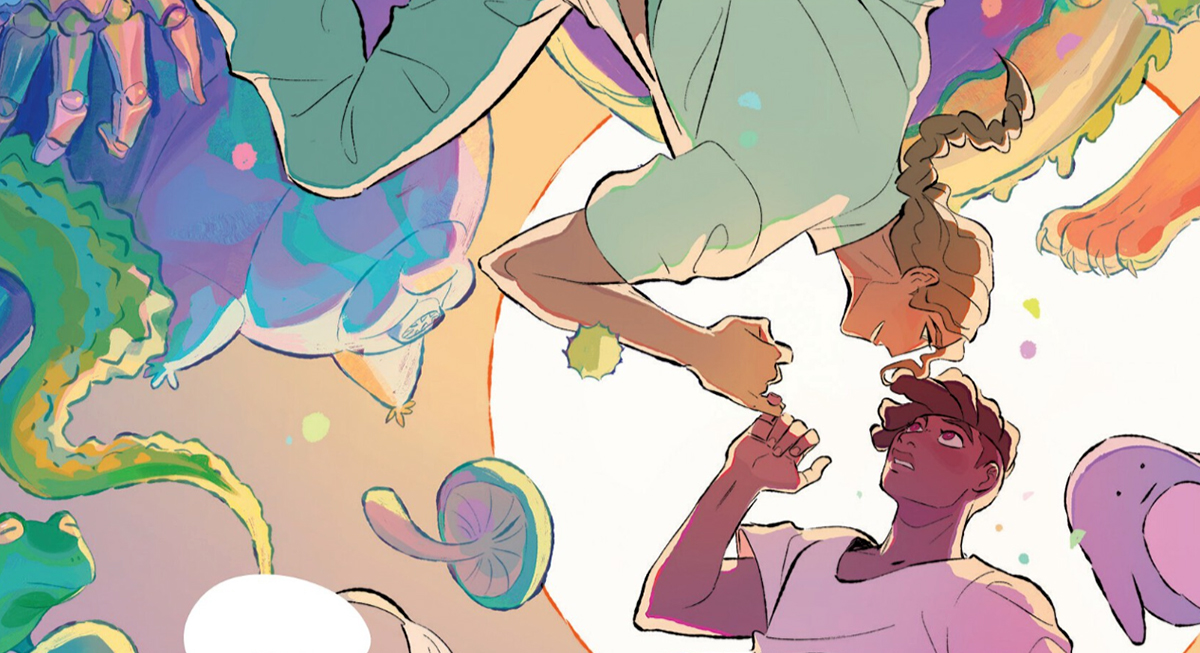
I’m excited to share my review of Ariel Slamet Ries’s newest graphic novel, Strange Bedfellows. This is a solarpunk romantic comedy that’s set in a utopia but still takes the darkness of human nature seriously. The art is gorgeous, and I very much enjoyed the time I spent in this fascinating world with these beautiful trashfire characters. Here’s an excerpt from my review:

Hardship comes to everyone, and romance isn’t always easy. The soft and hopeful message of Oberon’s story is that the flaws and complications in human ambitions are what make our lives interesting and beautiful. Strange Bedfellows assures the reader that, while we may not ever live in a perfect utopia, we don’t have to give up on our dreams of a kinder and greener future.

You can read the full review on Comics Beat here:
https://www.comicsbeat.com/graphic-novel-review-strange-bedfellows-dreams-of-a-romantic-solarpunk-future/

Beacon Pines

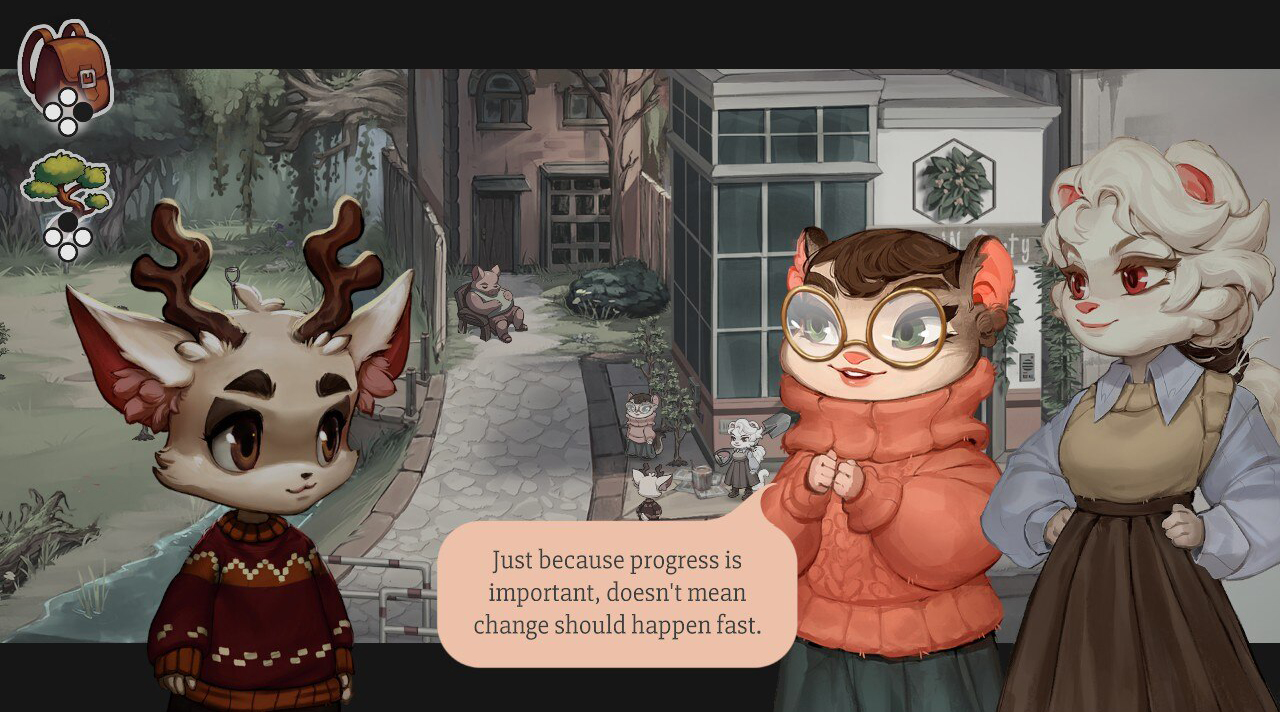
Beacon Pines is an isometric narrative adventure game that takes about four hours to finish. You play as a 12yo boy named Luka who decides to explore a mysterious abandoned factory over summer break and accidentally uncovers the dark secret of his quiet mountain town in the process.

In terms of its playspace, Beacon Pines is relatively small. Not counting a few plot-specific locations that you only visit once, there are about fifteen outdoor screens in the game, along with perhaps half as many indoor screens. Each of these screens is beautifully painted, with each point of interaction clearly indicated. 

What gives Beacon Pines a sense of scale is its structure. The game envisions its story as a tree and gives the player the option to make a key choice at each divided branch. While progressing through the separate branches of the story, the player will naturally pick up “charms,” or words that can be used to slightly adjust the narrative at critical points.

You can always return to an earlier choice with zero backtracking when you get a new charm, and the story’s pacing is excellent. The time spent on each branch is relatively short, which makes it easy to remember what’s going on when you switch to another branch. The way everything fits together as you progress is a masterpiece of narrative craftsmanship.

The tone and level of the writing is consistent with Luka’s age, and the first three Harry Potter novels are the easiest analogy. Each character in the expansive cast has a limited yet well-defined personality, and the story scenarios are improbable yet intriguing. There’s not much psychological depth, and the plot is pure fantasy, but I still had a great time with Beacon Pines. It was a pleasant shock the first time I saw the first dead-end branch of the story, which was delightfully morbid.

There’s one true ending of Beacon Pines, but players should expect to see about a dozen premature endings before they get there. In other words, it’s a linear story, but it’s told in a creatively nonlinear manner that takes every “what if” scenario into account. Again, the narrative craftsmanship is superb.

It’s easy to make a comparison with Night in the Woods, as you directly control a character who makes progress by walking around a beautiful small town and talking to every NPC. The themes of the story are similar as well, as the town of Beacon Pines suffers from corporate ownership of its fertilizer factory in the same way that Possum Springs suffers from corporate ownership of its mines. As in Night in the Woods, there are supernatural elements at play, although Beacon Pines is more concerned with mad science than cosmic horror. The major difference is that I wouldn’t give Night in the Woods to a child, while Beacon Pines is suitable for middlegrade (10-14yo) players.

I am not the target audience for “all-ages” fiction, but I enjoyed Beacon Pines regardless. Most of the adult characters in the game are problematic and relatable, and the story’s environmental themes are worth considering beyond a superficial level. The villains are a lot of fun, as are the more horror-themed elements of the plot.

It’s also important to note that the character art is gorgeous. The animal characters were clearly drawn by a furry artist in a way that the characters in Night in the Woods were not, but I have nothing but love for this art style. Despite the relatively large cast of characters, the character designs are all unique and visually interesting. I’m not a furry myself, but I was still able to appreciate the high polish of the art. There is no cringe here, just beauty and creativity.

The environmental art is gorgeous as well. The pleasant façade of Beacon Pines is indeed pleasant, with lovely trees and handsome buildings adorning each screen. Although we don’t see much of the town’s dark secret, the visual design of the spaces it affects fit the theme perfectly. 

In terms of gameplay, I always felt directly engaged with the story. There’s nothing missable or collectable, and the game doesn’t get cute with achievements. There are two optional minigames, and they’re both unobtrusive and enjoyable.

Beacon Pines is short, inexpensive, and accessible. If you’re a fan of Night in the Woods, or if you’d like to play a visual novel with more interactivity, I’d definitely recommend giving Beacon Pines a shot. Since it comes off a bit like a generic cozy game on its Steam page, I had no idea Beacon Pines would be as interesting as it is, but it’s an amazing treasure of a game.

Studio Ghibli Fanzine Preorders

.

.

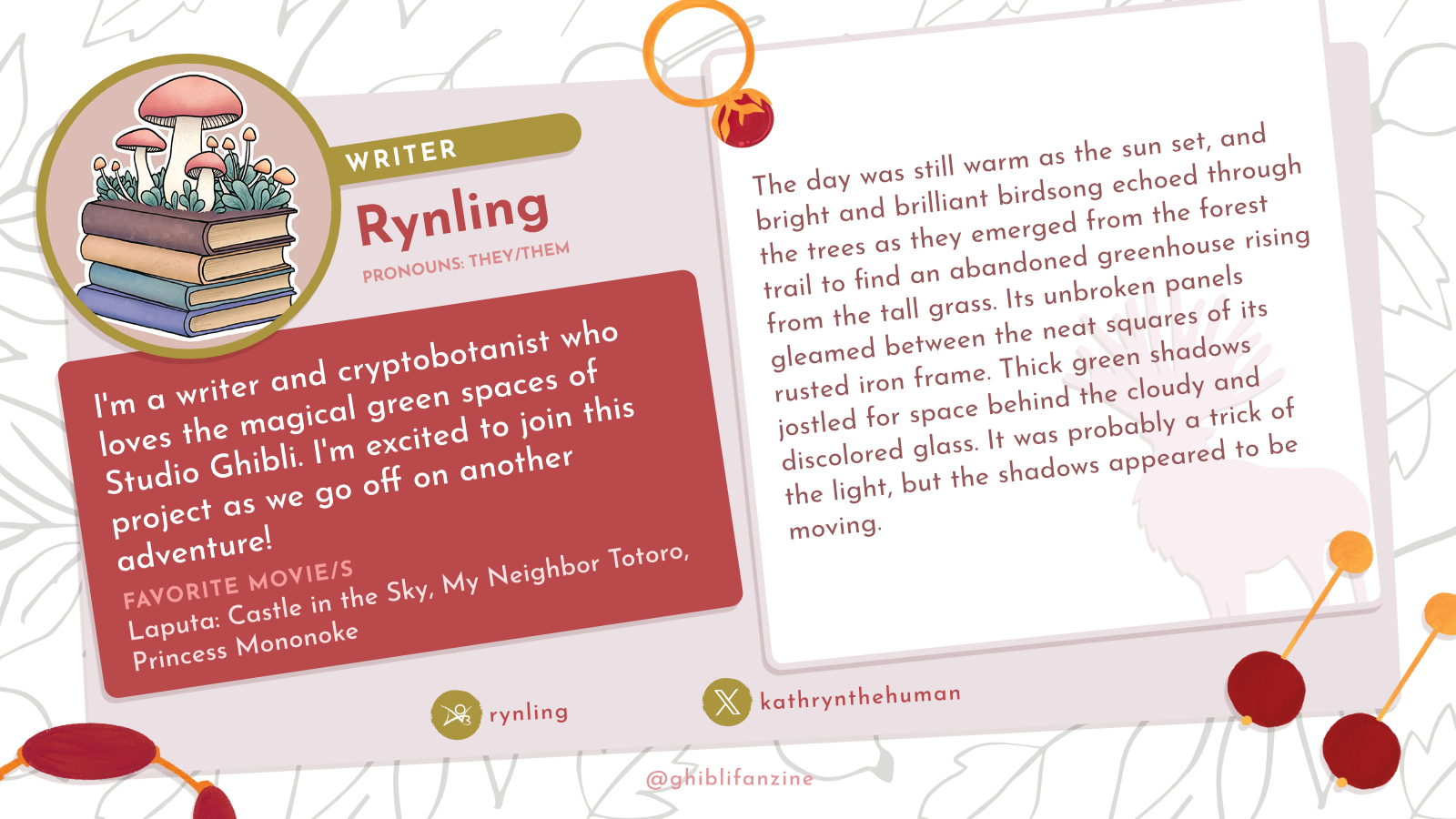
I’m excited to share a preview of the short story I wrote for New Winds: A Studio Ghibli Fanzine.

My story, “The Record of the Last Heavenly Warrior,” is narrated from the perspective of one of the giant robots from Castle in the Sky who remained in Laputa Castle after all the humans fled. The log it creates across the years is an account of the actions it takes to help nature return to the abandoned structure. Through the care it offers the environment and its companions, the robot gradually begins to understand why humans abandoned the fortress, and it wonders what it will do should they ever return.

The editors and layout artists who’ve worked on New Winds put an extraordinary amount of love and attention into making the writing in this zine shine, and the comics and illustrations that fill the pages are equally beautiful. If you’re interested, preorders for the zine are open until February 6 on Bigcartel (here). You can check out more previews on the zine’s accounts on Twitter (here) and Tumblr (here).

🌿 https://studioghiblizine.bigcartel.com/
🌿 https://x.com/ghiblifanzine
🌿 https://ghiblifanzine.tumblr.com/

Everybody’s Gone to the Rapture

Everybody’s Gone to the Rapture is a first-person walking sim set in the fictional village of Yaughton in the west of England. Yaughton is completely deserted, and the player’s job is to figure out what happened. “What happened” turns out to be a combination of things, none of which is ever properly explained, but what really matters is the human drama at the core of the crisis.

The game is entirely first-person, and the player can only do two things: walk and look around. There’s also an action button that can be used to turn on radios, pick up ringing phones, and enter open doors and gates, but we never see the player character’s hands. The player is thus little more than a moving point of view. This is just fine, because Yaughton is gorgeous.

After climbing down from the hill where the game starts, the player is confronted with a jumble of buildings and several intersections. Since you can go into almost every house, not to mention every house’s backyard and garage and garden shed, it was difficult for me to resist the temptation to do so. I kept encountering radios that can be turned on to get a bit of story, as well as shimmers of light that resolved into stylized representations of people sharing brief conversations.

Despite the lovely scenery, the first bit of Everybody’s Gone to the Rapture is fairly stagnant. The front end of the game is loaded with tons of disconnected characters whose relationship to each other isn’t immediately apparent. The light shining on the world is totally flat, and there’s no wind moving the leaves in the trees or blowing garbage across the streets.

After almost two hours of wandering around and trying to figure things out, I stopped caring about finding everything and decided to follow the glowing comet of light that’s intended to lead you through the story. What the guiding comet reveals is a series of conversations centered around a priest, Father Jeremy Wheeler, who was trying to come to terms with his faith in relation to what was happening to the town. Following a climactic scene, the game changes in a significant way.

At this point, Everybody’s Gone to the Rapture becomes much more structured. The player now understands that each area of the game is the stage for a narrative focused on one character. After the first major transition, the world of the game also becomes more active, with floating pollen, falling leaves, swaying flowers, billowing air-dried laundry, and the shadows of wind moving through the trees. As the natural world comes to life, the pieces of the story gradually start coming together.    

Everybody’s Gone to the Rapture isn’t perfect. The start of the game is extremely slow, and it’s easy to get lost at first. The guiding comet has a tendency to disappear, requiring you to restart the game to bring it back, and the slow pace of movement makes backtracking feel more annoying than it should be. Still, the graphics and music are beautiful – rapturous, even – and I was moved by the writing. If you’re patient enough to follow the story to its conclusion, your reward is an almost overwhelming sense of joy.

I should mention that I enjoyed Kirk Hamilton’s write-up of the plot (on Kotaku here), which poses many interesting questions and offers some excellent answers. The apocalyptic story seems more grim and horrific when summarized in writing than it does when you’re playing the game itself, though, so I’d recommend going in without spoilers.

Oxenfree

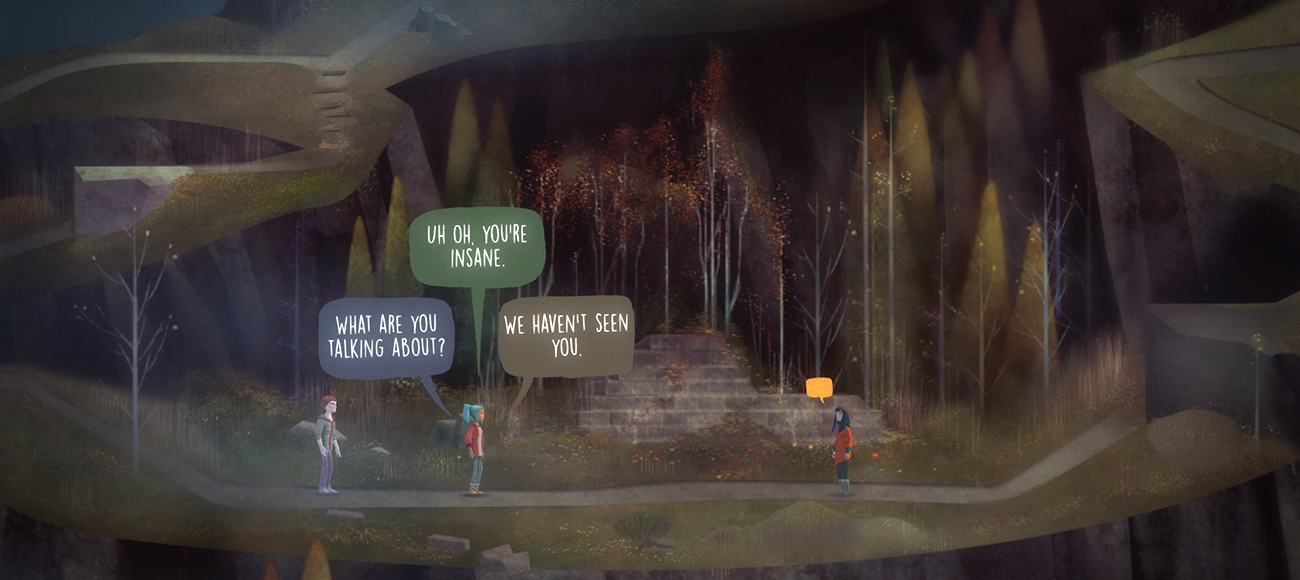
Oxenfree is a horror-themed teenage friendship drama conversation simulator set on a haunted island in the Pacific Northwest. Originally released in 2016, Oxenfree is available on all consoles, and it takes about four and a half hours to finish the story.

You play as a teenage girl named Alex who takes the last ferry out to Edwards Island with her pothead friend Ren and her edgy stepbrother Jonas. They plan to spend the night on the beach, where two girls named Clarissa and Nona are waiting for them with a cooler of beer. There’s an urban legend that old-fashioned transistor radios can pick up strange signals on the island, and Ren leads Alex and Jonas to a sea cave where the signal distortions are rumored to be strong. By tuning into the radio transmissions, Alex ends up opening a portal to a parallel dimension.

I really enjoyed Oxenfree, both when I first played it and when I revisited it earlier this year. The graphic design is gorgeous, the OST is ambient and chill, and the elements of horror are genuinely creepy. The story of Oxenfree is intriguing, and walking across the island while navigating Alex’s relationships with the other characters is a fun and interesting experience.

Still, as a game, Oxenfree suffers from two major problems.

The first of these problems is that Alex walks very slowly. This makes sense, as a major element of gameplay is choosing Alex’s response in real time during ongoing conversations. The relaxed speed of travel also encourages the player to enjoy the scenery and the ambiance. Unfortunately, backtracking is a slog. The frustration engendered by Alex’s sluggish walking speed is exacerbated by the fact that the load times between screens are obscene, usually exceeding sixty seconds. As a result, I felt strongly discouraged against unguided exploration.

In order to uncover the full story of what’s happening, the player needs to embark on a scavenger hunt to collect a dozen letters scattered across the island. Because of the slow character movement and unbearable loading times, I had to give up on finding the letters myself. I was reduced to searching for spoilers online, which isn’t ideal.

As far as I can tell, a Cold War era submarine somehow managed to get itself caught in a dimensional paradox just offshore, and the Edward Island’s “ghosts” are the manifestations of the sailors trying to free themselves. These ghosts are secondary to the main story of Oxenfree, which is about the relationships between the teenage characters.

Although I think the friendship drama might have been more compelling if I had encountered the game at a younger age, Oxenfree’s second major problem is that its writing feels strange and awkward, at least to me.

I really wanted Alex to spend time with the two other teenage girls on the island. I like Nona and Clarissa a lot. I found them to be interesting characters, and I wanted to know more about them. Unfortunately, Oxenfree doesn’t give Alex many dialogue options to interact with either girl that aren’t petty, condescending, or downright bitchy. This isn’t the way that normal people talk to one another, even if they’re teenagers.

It’s clear that Oxenfree expects Alex to spend the majority of its playtime with Jonas and Ren, both of whom tend to respond poorly if the player chooses conversation options that don’t read as stereotypically “masculine.”

To give an example, after something terrible and upsetting happens, Jonas tells Alex that he’s scared. If she demonstrates sympathy or empathy by responding with “Are you okay?” or “I’m scared too,” Jonas will become annoyed or openly hostile. Meanwhile, the uncomfortably callous response of “You’re fine, let’s keep going” is configured as “correct” and doesn’t result in a string of passive-aggressive insults.

There are several different variations on Alex’s personality that the player can choose to express, but Oxenfree doesn’t give the player many opportunities to be chill, or friendly, or sincere, or emotionally vulnerable, or just curious about what’s going on. Each conversation choice generally has three options, but there’s always an additional option of not saying anything. As I played, I gradually found myself “choosing” not to say anything, especially not to the boys.

In other words, the opportunities for roleplaying the character of Alex are limited. I don’t think Alex is supposed to be unsympathetic, but the writer/director’s understanding of how interpersonal communication works feels very specific to a personality and worldview that I don’t understand. The portrayal of these teenagers – especially the teenage girls – is just so mean. The voice actors all give wonderful performances that help the player better understand the characters, but I wish the writing were as nuanced as the acting.

Granted, Alex ends up being the villain of Oxenfree II, so another interpretation might be that she is in fact a bad and selfish person who doesn’t care if she hurts people. If this is indeed the case, though, I wish that the writing had signposted her personality more clearly, or at least given more concrete hints regarding how the true nature of the situation on Edwards Island has affected her character.

Oxenfree has been universally praised, and I’ve even seen people refer to it as a “cozy game,” meaning that it presumably creates a sense of warmth in the player by being unchallenging to play while focusing on a story with themes of friendship and personal growth. I can understand the affective positivity of this reaction, but I also think it’s important to explain why Oxenfree can be difficult and frustrating, especially to someone playing the game in 2024.

Oxenfree is gorgeous to look at and features engaging conversation-based gameplay mechanics, but this is a horror game with slow movement speed and long loading times in which characters are often seriously unpleasant to one another. I maintain that Oxenfree is a unique and interesting game that’s well worth checking out – especially given its relatively short length – but it’s always good to have an accurate understanding of what you’re getting into.

While doing some research about the game’s reception, I learned that Netflix acquired the Oxenfree development team, Night School Studio, in 2021. Netflix produced Oxenfree II, and I read that there’s a live-action series adaptation of Oxenfree in production. This sounds nice, to be honest. Crossmedia adaptations don’t always succeed, but I get the impression that Oxenfree might actually work much better if it weren’t an interactive video game.

This Year’s Adventures in AI Ethics

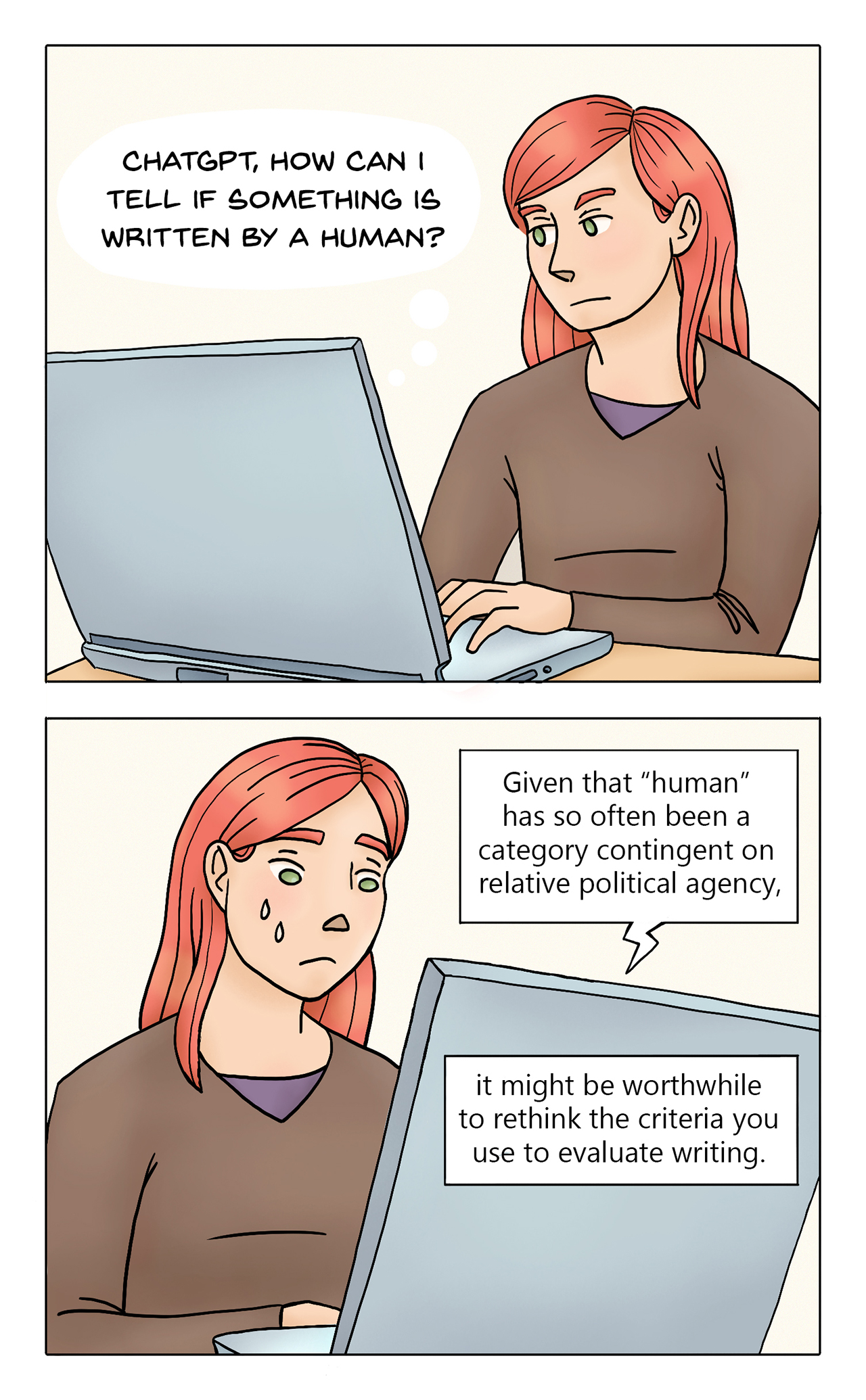
Out of curiosity, I started experimenting with ChatGPT this semester. There’s not much to say about it, save that it generates stale and flavorless writing that’s easy to recognize once you know what it looks like.

Unfortunately, now that I can recognize text generated by ChatGPT, it’s hard not to see it. It’s also hard not to get my feelings hurt when my students submit work written by ChatGPT. Why would they do me dirty like that?

So I’m not saying that I like ChatGPT. I actually kind of hate it.

Still, the potential for this sort of writing engine is incredible. What if it could work not just as an actually functional grammar checker, but also as a translator between different ways of self-expression? Wouldn’t it be interesting if the model could be developed to “translate” an outline or quickly written sketch of an idea into a piece of writing that was more easily understandable by a broader audience? Wouldn’t it be nice if people who felt embarrassed or otherwise unable to express themselves had a means of putting their thoughts on paper?

I understand how unrealistic it is to think that ChatGPT won’t be abused by bad-faith actors, and I also understand that there’s no point of people in marginalized positions having a voice if the venues where they could be heard are shut down due to AI-generated content spamming. At the same time, I think it’s probably healthy to keep an open mind and be as inclusive as possible when defining who (and what) counts as “human.”