Mr. Saitou

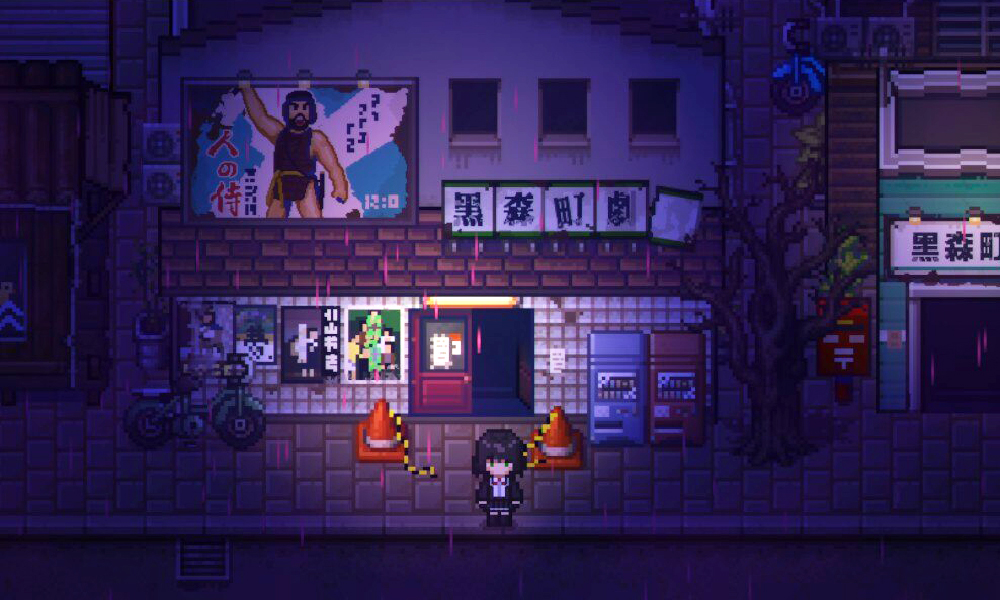
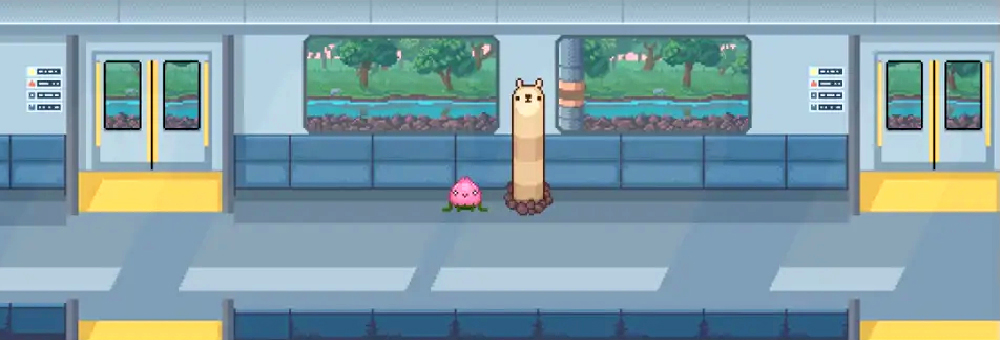
Mr. Saitou is an Undertale-style narrative adventure game (with music by Toby Fox) that takes about two hours to finish. You play as Saitou, a white-collar worker who finds himself in the hospital after a failed suicide attempt triggered by stress and overwork. While sleeping, Saitou dreams of himself as a llamaworm (a comically extended groundhog) who goes on an adventure with a cute pink flowerbud named Brandon, the dream persona of a young child Saitou meets in the hospital.

Mr. Saitou has something of slow start, during which the player’s sole job is mashing a button to advance text. Thankfully, the game becomes much more engaging after the first ten minutes, at which point Saitou enters the dream world.

After the introduction, Saitou spends about half an hour in an office of llamaworms that serves as a stage for a gentle comedy about workplace culture. After a ten-minute segment of mandatory afterwork socialization in an izakaya, Saitou returns home to his neighborhood of underground tunnels.

Saitou decides to skip work the next day. This gives him an opportunity to meet Bradon, who wants to visit the Flooded Gem Caverns deeper in the tunnels. The remainder of Mr. Saitou unfolds in a beautiful fantasy-themed underground space enhanced by lowkey elements of exploration and simple puzzles.

What I appreciate most about Mr. Saitou is its creativity, which is driven by cute but thoroughly original character designs and clever writing. Even though most of the gameplay consists of simple conversation-based fetch quests, I never got tired of seeing what was around the next corner, and I always enjoyed talking with each new character.

The game’s humor sits comfortably at the intersection between wholesome and quirky, and the writing subtly references internet culture without relying too heavily on these allusions. The simple spatial puzzles are easy and engaging without feeling as if they were phoned in, and the thematic background music is lovely from start to finish.

I love almost everything about Mr. Saitou, but I should probably mention that there’s an unskippable musical cutscene featuring about three minutes of unremittingly flashing strobe lights toward the end. If you (like me) are photosensitive, this may be worth taking into consideration.

In addition, the sentimentality of the ending may ring hollow for players searching for a more nuanced or complicated story, especially regarding the extent of an individual’s personal responsibility for ensuring their quality of life under late-stage capitalism. This is a valid criticism, of course, but Mr. Saitou is a game about a llamaworm and a talking flower having magical underground adventures. All things considered, I think it’s probably best to enjoy the game for what it is.

Mr. Saitou is a sweet but still surprising game that’s entertaining to read and engaging to play, and I feel that its story earns the right to state its final message clearly: The world is filled with interesting people and beautiful places, and there’s more to life than slowly killing yourself for your job. Good health is a blessing, so you might as well make the most of your time on this earth while you’re still young.
Tales of the Black Forest

Tales of the Black Forest
https://store.steampowered.com/app/1093910/Tales_of_the_Black_Forest/

Tales of the Black Forest is a 16-bit RPG Maker narrative adventure game whose tone is split evenly between wholesome cuteness and graphic horror. Although Tales of the Black Forest features a dozen simple puzzles, a few short chase sequences, and limited elements of exploration, it might be more accurate to call it a visual novel instead of a classic adventure game. Tales of the Black Forest takes about three and a half hours to play, and more than half of this time is spent reading character dialog as you progress through a linear story.

The game’s story follows a high school student named Kihara Kashin who wakes up on a bench outside an abandoned train station. Kihara has somehow been transported to a depopulated town called Kuromori (whose name means “black forest”), where she used to live as a child before her mother died in a car accident. Inside the derelict station, Kihara meets a mysterious shape-shifting woman named Kiritani Yuki, who tells her that she has been trapped in the ruins of Kuromori by a curse. The only way to escape Kuromori is to use Nensha, a magical power that allows Kihara to travel back in time by touching retro electronic devices. By going back to the 1990s with Kiritani as her guide, Kihara can learn the origin of the curse and hopefully break it. 

The overall story arc of Tales of the Black Forest admittedly doesn’t make much sense. Thankfully, the game is split into three distinct chapters, each of which showcases the stand-alone character story of a cute yōkai girl while allowing the player to explore her environment. Each of the three chapters also explores the intersection between an urban legend and a social issue of the 1990s.

The first chapter is about a deserted village, Shiranaki (a play on the urban legend of Inunaki Village), and rural depopulation. The second chapter is about a magical ghost train and a fictional version of the Aum Shinrikyō “new religious movement” that carried out the Tokyo Subway Sarin Gas Attacks in March 1995. The third chapter is about a haunted movie theater that serves as a case study for how many small businesses that thrived during the postwar Shōwa era were forced to close during the prolonged economic recession of the 1990s.

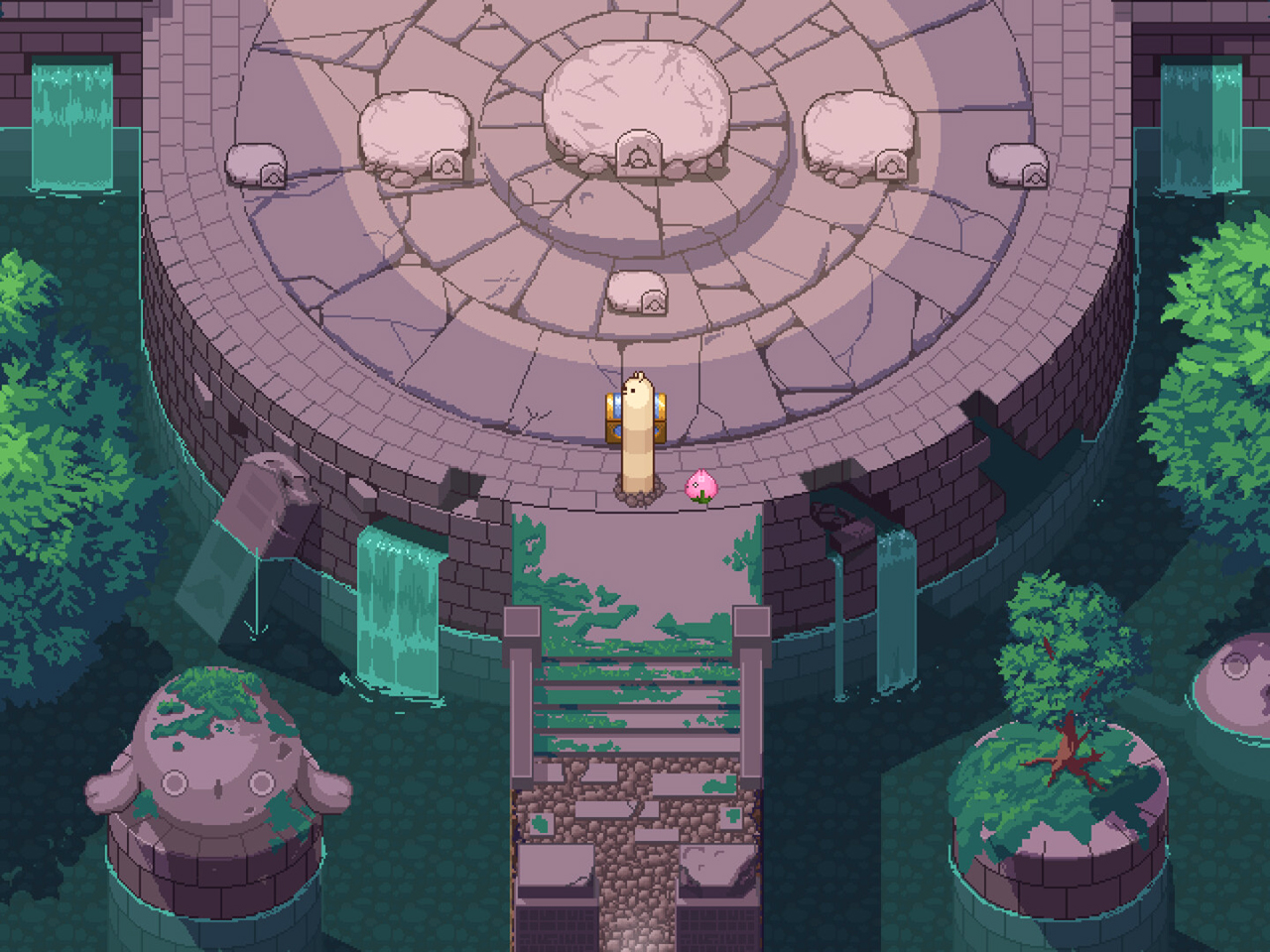
Along with urban legends and social issues, Tales of the Black Forest is strongly inspired by the movies of Studio Ghibli, and its magical world is filled with quirky yōkai and gentle kami. The character illustrations of cute girls that accompany the dialog text are somewhat generic, but the game’s developers clearly put a great deal of love and attention into the 16-bit character sprites and their environments. There’s not a single part of this game that doesn’t make a gorgeous screenshot.

Alongside its whimsy and beauty, however, Tales of the Black Forest contains serious and sometimes graphically violent scenarios with disturbing themes and imagery. The overall tone of the game’s story emphasizes character drama more than horror, but the gruesome and upsetting elements are still there. You’ll be talking to adorable cats in the beautiful green yard of a forest café, and fifteen minutes later you’ll be watching a young woman beaten to death by a deranged cultist.

This mix of wholesome and horror worked for me, but both tonal aspects of the story are equally prominent. Accordingly, I wouldn’t recommend Black Forest to anyone who can’t sit through the creepier moments of The Ring, nor would I recommend it to anyone who can’t tolerate the more sentimental moments of My Neighbor Totoro.

Tales of the Black Forest was made by a Chinese studio in an obvious homage to Japanese popular culture, and its story occasionally feels like an attempt to filter a lecture from an “Introduction to Contemporary Japanese Society” university course through the medium of fiction. I personally found the references to Japanese social problems of the 1990s to be interesting and well-intentioned, but I could understand that some players might find these elements of the story a bit cringe in the way that early 2000s “onigiri means rice ball desu” North American anime fandom was a bit cringe.

Tales of the Black Forest was originally written in Chinese, and the English translation feels as though it was created by someone without much experience in localization. It’s serviceable, but it can be awkward at times. I tend to think the concept of “standard English” is nonsense, and I found the translation to be charming, especially because it reminded me of how pirated anime used to have English subtitles created by people whose first language was Chinese. In keeping with the retro theme of the game, I very much appreciated this unintentional element of nostalgia.

Tales of the Black Forest isn’t perfect, but it’s a solid 7/10 game that’s elevated to an 8/10 by virtue of the love and care that the two-person development team put into every aspect of its creation. This game caters to Japanese pop culture nerds who are fans of both cute anime characters and creepy urban legends, and I’m surprised it hasn’t attracted more attention since it was released on Steam in 2019. Tales of the Black Forest is a small but shining hidden treasure.

The Witch’s House

The Witch’s House is an RPG Maker gothic horror game from 2012 that was released as a remastered edition for Nintendo Switch in October 2022. The game consists of cute environmental puzzles presented in gorgeous 16-bit pixel graphics, and it’s brutally violent in an over-the-top and almost cartoonish way. It takes about fifty minutes to play if you’re good at video game puzzles, and maybe an hour and twenty minutes if you need to consult a guide like I did.

You play as Viola, a 13yo girl who finds herself alone in the woods outside a mysterious mansion. A black cat greets her and invites her to wait inside until her father comes to pick her up, thereby trapping her within a hungry and malicious labyrinth. Your job is to find a way to escape the house while learning the story of the girl who lives there, a young witch named Ellen.

The game drops you right into the action with very little preamble. Within sixty seconds, you’re inside the house. Within another sixty seconds, you’ve probably already died for the first time. I was shocked and delighted by how graphic this first death was. Viola’s deaths become more horrendous and creative as you get deeper into the house, and the main appeal of the game is seeing all the fun ways this cute anime girl can die.   

With one or two exceptions, surviving the traps isn’t a matter of reflexes. Instead, the game asks you to solve simple puzzles by interacting with the environment. The house is divided into five floors, and each floor is further divided into discrete suites of rooms associated with a specific puzzle sequence. Only the fifth and final floor has enough moving parts to necessitate consulting an online guide; and, for the most part, it’s fairly easy to figure out what you need to do. 

Of course, you can always choose to do something else just to see what will happen. The Witch’s House rewards exploration and experimentation with especially gruesome deaths. My favorite death is when Viola gets eaten by a grand piano. There’s a nice discordant crunch when the lid slams down, and I appreciate how blood oozes from the cracks.

On the game’s opening menu screen, you can choose to play in an “Easy” mode that will allow you to respawn at the start of the room where you died. When you finish the game, you’ll unlock an “Extra” mode that adds more objects and text to the environment while slightly increasing the complexity of the puzzles. Despite the fact that the Extra mode and the Easy mode are mutually exclusive, I enjoyed replaying The Witch’s House with the added difficulty. You can interact with just about everything you see on screen, and the flavor text is terse yet interesting. The house is like a murder playground, and it’s fun to wander around while triggering various awful scenarios.

The game’s story is self-contained and satisfying. There are two extra endings unlocked by meeting special challenge conditions (which aren’t a big deal in Easy mode), and they both add horrifying context to the default ending. Apparently, there’s also a fourth ending where the house simply allows you to leave if you wait in the foyer for an hour of real time. I’m not going to do that, of course, but that’s a neat concept.

For me, The Witch’s House was $15 and two hours well spent. I think some people might complain about how the spooky atmosphere of the game relies a bit too heavily on jumpscares, which is fair… but they’re very good jumpscares. In the end, The Witch’s House presents a perfect short horror story with excellent pacing that continually surprises the player and doesn’t overstay its welcome. The puzzles are clever without being overly difficult, the 16-bit graphics are beautiful, and the translation is excellent.

It’s Not Me, It’s My Basement

It’s Not Me, It’s My Basement
https://arcadekitten.itch.io/its-not-me-its-my-basement

It’s Not Me, It’s My Basement is an RPG Maker gothic horror game from 2021 along the lines of The Witch’s House and Mad Father. It takes about 35 minutes to finish, and it’s free to download from Itchio.

You play as a kid named Embry whose parents have been eaten by monsters. Embry has managed to padlock the basement door, but the monsters are constantly hungry. The player is therefore tasked with feeding the monsters so they don’t escape and eat Embry. The game consists of navigating between Embry’s kitchen and the town market while stopping at the basement door a few times along the way.

The story is divided into three days, during which food becomes progressively scarce and the monsters become increasingly hungry. Each night, after feeding the monsters, Embry has a dream. All three dreams end with an extremely mild jumpscare, but the game is more concerned with creating an oppressive atmosphere than it is with trying to shock you.

What I appreciate is that it’s unclear what the monsters are or where they came from, just as it’s occasionally unclear what Embry is feeding them. Although you have the choice to enter the basement in one of Embry’s dreams, you never learn exactly what’s going on down there, and sometimes not knowing is worse.

If you’re worried that I just spoiled the game, please don’t be. There’s a lot going on here.

The creator has a few shorter games available on Itchio, some of which are loosely connected through a shared universe. The reason I chose to play It’s Not Me, It’s My Basement is because this game has a surprisingly large online fandom. Seriously, it even has its own page on TV Tropes (here).

It’s Not Me, It’s My Basement feels a bit like Homestuck run through a few filters. Everything about this game is catnip for edgy tweens. Even if that doesn’t sound appealing to you, It’s Not Me, It’s My Basement presents an interesting and open-ended story, and the game is a fun experience that doesn’t bother the player with any puzzle elements that impede the flow – or the steadily mounting creepiness – of the delivery.