Retro JRPG Lessons from Final Fantasy Mystic Quest

In 2023, I tried to play about a dozen indie retro JRPGs. I’ve always loved the JRPG play cycle of slowly gaining strength and resources through turn-based battles and dungeon exploration, and I don’t necessarily find repetitive simplicity boring. Still, I bounced off almost all of the games I tried within the first hour.

In order to think through why I’ve had so much trouble getting into more contemporary retro JRPGs, I returned to Final Fantasy Mystic Quest, which was originally released for the Super Nintendo in 1992. Mystic Quest was intended to introduce American console gamers to the conventions of JRPGs, and its various ease-of-use features allow the player to complete the story in less than five hours. Despite its primitive graphics and gameplay, I had a good time with Mystic Quest, and I took away five lessons about why this simple-as-bricks game works for me while so many contemporary retro JRPGs don’t.

(1) If the game is more than an hour long, there needs to be actual gameplay.

I have a soft spot for indie retro RPGs in which the player does nothing but walk around and talk to people, but there’s a limit to how much of this I’m willing to engage with. Even in a story-focused game, there needs to be some sort of activity that isn’t reading text on a screen.

(2) The player needs to experience this gameplay within the first ten to fifteen minutes.

I think a major aspect of what people liked about old JRPGs is that the player could generally progress from the first town to the first dungeon right at the beginning of the game. Exposition and worldbuilding are important, but not as important as the game being fun to play. Even Final Fantasy VII, which has a famous opening cutscene, sees Cloud and Barret fighting enemies and navigating a dungeon within the first five minutes.

(3) Battles with minor enemies should be over quickly.

This is especially the case at the beginning of the game, when the player is still getting a feel for how everything works. If every random battle is two minutes long, these minutes add up. It doesn’t matter how clever the battle-specific character dialogue or flavor text is; it loses its charm when I see it repeated dozens of times across dozens of random battles.

(4) There should be a bell curve for complexity.

The opening of a game needs to demonstrate the game’s aesthetics and mechanics in a way that shows the player what the game is about. This doesn’t need to be dramatic or flashy or cinematic, and the point is definitely not to overwhelm the player with a giant town filled with NPCs or endless text reels of exposition. All of that should come later, when the player is already invested and eager for more. A game should start simple and gradually become more complex before opening up somewhere in the middle. By the end of the game, though, the complexity needs to decrease as the player becomes more focused on finishing the story. Structure is important.

(5) The player should be able to interact with the environment in region-specific ways.

This is the key ingredient that makes the Legend of Zelda games work so well, and even standard JRPGs like Final Fantasy IV and Final Fantasy VI incorporate elements of environmental exploration as well. If I’m in a forest, I want to be able to find an axe that I can use to chop down trees. If I’m navigating the sewer system under a castle, I want sluice gates that raise and lower the water level. If I’m in a seaside merchant town, I want there to be secret passages filled with treasure. Exploration is infinitely more enjoyable if the player has something to do.

Okay, one more:

(6) It’s fun to be able to jump.

I’m not going to elaborate on this, because it’s a self-evident truth: It’s fun to be able to jump. Also, if there are cute animals, the player should be able to pet them.
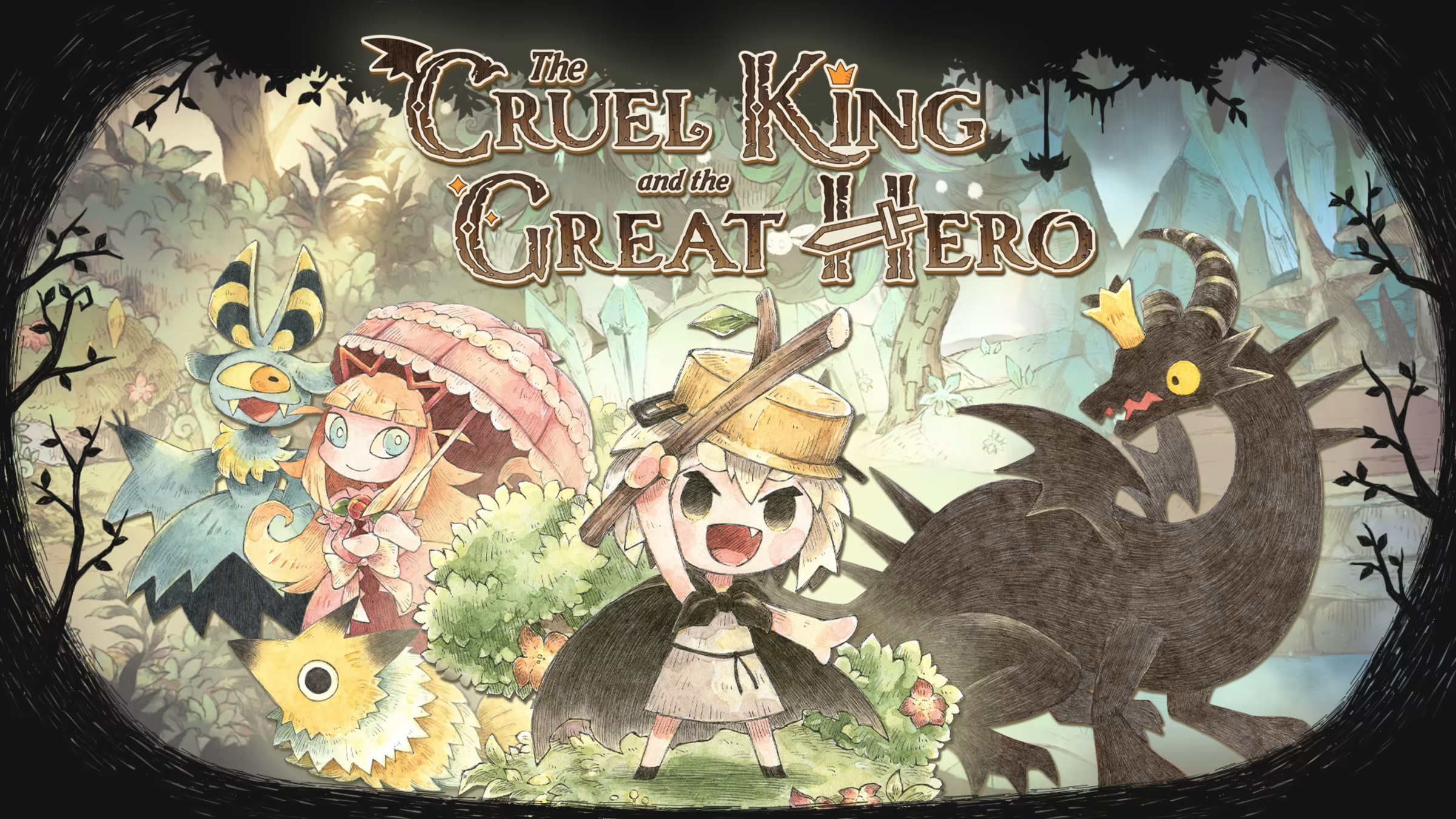
The Cruel King and the Great Hero

The Cruel King and the Great Hero was developed and published by Nippon Ichi Software, and it’s the spiritual successor to the studio’s 2018 title The Liar Princess and the Blind Prince. Just as The Liar Princess is a simplistic puzzle-platformer set apart by its distinctive manga art style, The Cruel King is a JRPG that’s so traditional it would probably be considered retro were it not so visually gorgeous and beautifully animated.  

When I say that The Cruel King is “traditional,” what I mean is that there are a lot of random encounters. The battles are turn-based and controlled solely through text menus. There’s a bit of strategy involved, but not much. Your character walks slowly, and there’s a not-insignificant amount of backtracking. If you suspect that you’ll find this frustrating, then The Cruel King probably isn’t for you.

If you’re looking for a more relaxed gameplay experience, however, The Cruel King is a delightful way to spend about 20 to 25 hours. Personally speaking, it took a few play sessions for me to readjust my expectations of how quickly the battles should progress, but I became hooked on the gameplay once I got used to the pace.

You play as Yuu, a young human girl who has been adopted by The Cruel Dragon King as his daughter. Every night before bed, the Dragon King tells the girl about her “real” father, a great hero who defeated an evil demon king. The girl wants to become a hero like her father, so the Dragon King decides to make her dream come true by coming up with little quests for her to undertake. These quests are in service to the various monsters who live in the Dragon King’s territory, and the girl becomes involved in a series of adorable sidequests.

Most of these sidequests are optional. Because the game isn’t difficult, the sidequest rewards aren’t strictly necessary. Rather, the real reward is the friendship you find along the way. In less cliché terms, the reward for playing the game is being able to experience more of the game.

The environment is not quite 2D and not quite isometric, and it reminds me a lot of the style of the Paper Mario games. There are no puzzles and no platforming, but your character gradually gains abilities that allow her to bypass environmental obstacles and thereby gain access to more of the map. Like most of the sidequests, exploration isn’t strictly necessary. Still, if you want to poke around a bit, the map screen is annotated in a way that’s easy to understand and keep track of, and there will never be any need to consult an online walkthrough. The player has access to a quest log that visually signposts the objectives for each quest, and you can instantly return to the central village hub whenever you wish.

Your adventuring party only has two characters at a time, Yuu and another character specific to each chapter of the game. This can occasionally cause difficulties when a group of enemies is designed to take advantage of an earlier companion’s special abilities, but most players will never experience anything beyond mild inconvenience. Your characters’ skill points are limited but naturally renew after each turn of battle, and it’s fun to play around with different skills and strategies without having to worry about conserving resources.  

The chill and low-stress gameplay allows the player to appreciate the most notable feature of The Cruel King, which is its gorgeous artwork. Playing the game feels like walking through the pages of a storybook, albeit one that’s beautifully animated. All of the characters and environments are hand-drawn, and each screen is filled with unique details. The illustrated bestiary that you can gradually complete as you find and defeat enemies is a treasure.

I’ve gotten used to ambient background noise in contemporary video games, so it was a treat to realize that each area of The Cruel King has its own theme music. I thought this music was nothing special at first, but over time I found that I enjoyed the fantasy flavor it adds to each section of the game. None of the character lines are voiced, but the actress who narrates the storybook-style cutscenes in Japanese gives a lovely performance (although you can silence her voice and fast-forward through these scenes if you like).

The translation is of uneven quality, but this didn’t bother me. Most of the dialog is cute and quirky but still feels natural, and many of the characters have distinctive ways of speaking that are fun without being annoying. The translation for the third-person narrative cutscenes tends to be a bit shaky, both in terms of style and grammar. I don’t think the errors were intentional (especially since the original Japanese text is relatively polished), but I still appreciate them, as the amateurish writing style made the storybook sections feel more intimate. It reminded me of Super Nintendo JRPGs, whose imperfect translations were a significant part of their charm.

Without spoiling anything, I think it’s fair to say that The Liar Princess and the Blind Prince was a horror game that got especially dark toward the end. The Cruel King and the Great Hero doesn’t have any nasty tricks up its sleeves, but the story ends up being much more interesting and nuanced than you might expect. If nothing else, you get to be friends with all sorts of monsters, and who doesn’t want a kind and supportive Dragon King for a dad?