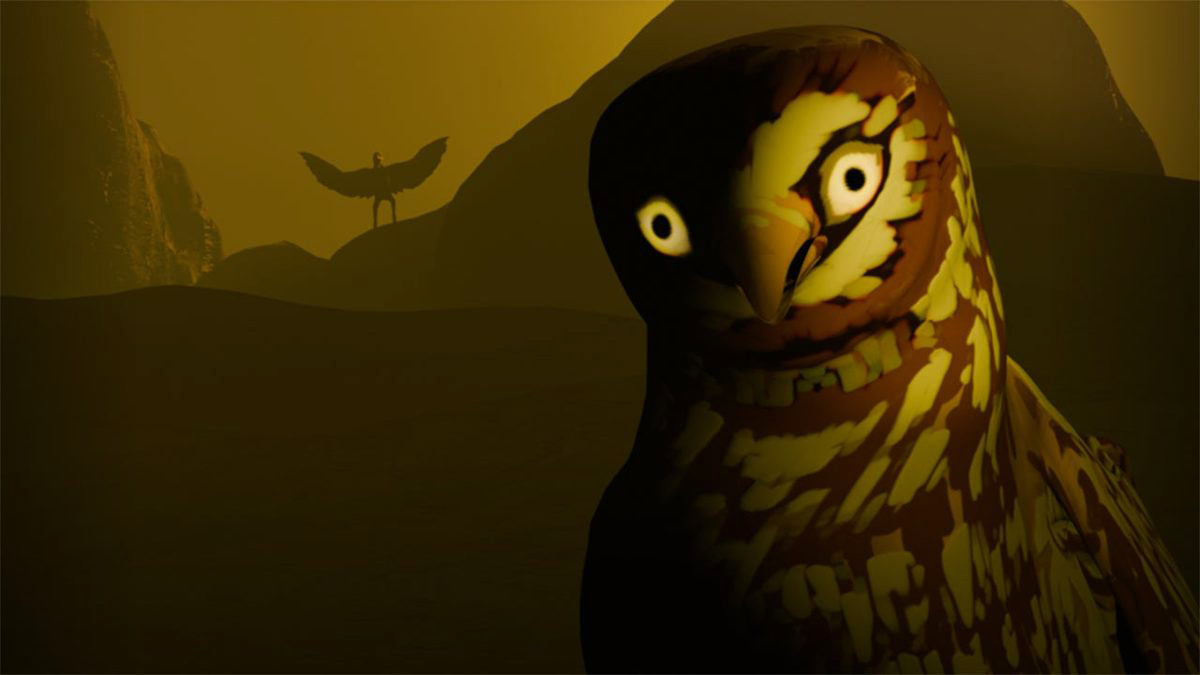
Birds Watching

Birds Watching (on Steam here) is a one-hour walking sim about a man who talks to birds while an apocalyptic disaster unfolds around him.

As an unending fire engulfs the world, a lone man takes refuge at the top of a mountain. For all he knows, he’s the only human left alive on earth, so he makes the best of a bad situation and does his best to survive in the company of the birds who have fled to the last unburned peak.

The man’s solitude is alleviated by an owl who not only befriends him but begins speaking with him. Birds can speak and understand human languages, the owl explains, and the man only needs to share a special password to initiate conversations. If he can observe and talk with the other birds on the mountain, something good will surely come of it.

The man realizes that he’ll need more concrete support when he receives a transmission on his portable radio. It turns out that other humans have survived the fire, violent and mutated though they may be. Their warlord has learned of the sanctuary on the mountain, and he’s on his way. The man can prepare to welcome him by surrendering his house and food, or he can expect to be swiftly killed.
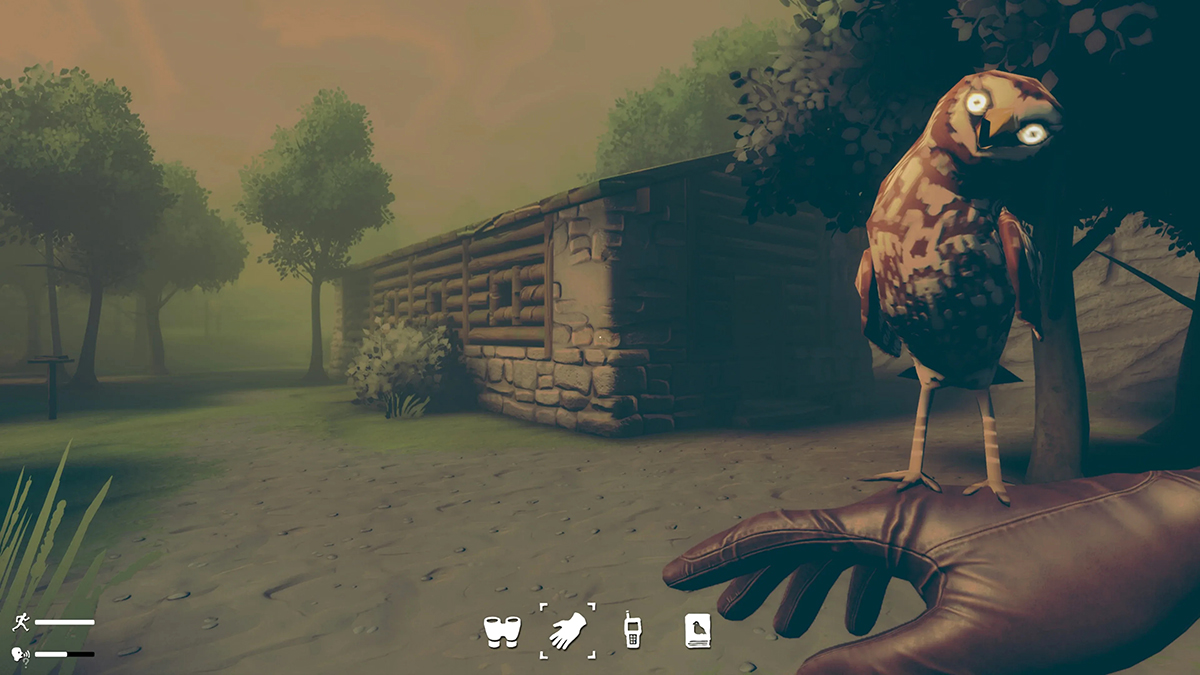
The birds might indeed be able to help repel the warlord’s invasion, but they hate you. And they aren’t shy about telling you this. Though it’s not a challenge to discover new birds and observe them through your binoculars, it will be difficult to get them to trust you. Your companion owl helpfully suggests that you prove your sincerity by making yourself more like a bird. This process begins (relatively) innocuously when you eat a handful of the worms that you use to attract birds to the various feeders scattered across the mountain, but it escalates into genuine body horror if you follow it through to its conclusion.

Even without the humiliation rituals, there’s plenty of dread in the environment, which is filled with smoke and ash from the fire burning below. Though the forest scenery seems pleasant enough, the air is never clear, and it’s easy to imagine any number of things lurking at the edges of your visibility.

These vague fears are realized when the promised invasion of the mountain actually occurs. The appearance of the humans who have survived the fire is an unpleasant surprise, to say the least. It doesn’t help that these encounters occur in tense situations when your stamina meter is already depleted.

And then, on top of all that, you’ll eventually notice something else through the smoke haze: while you’ve been watching birds, something terrible has been watching you.
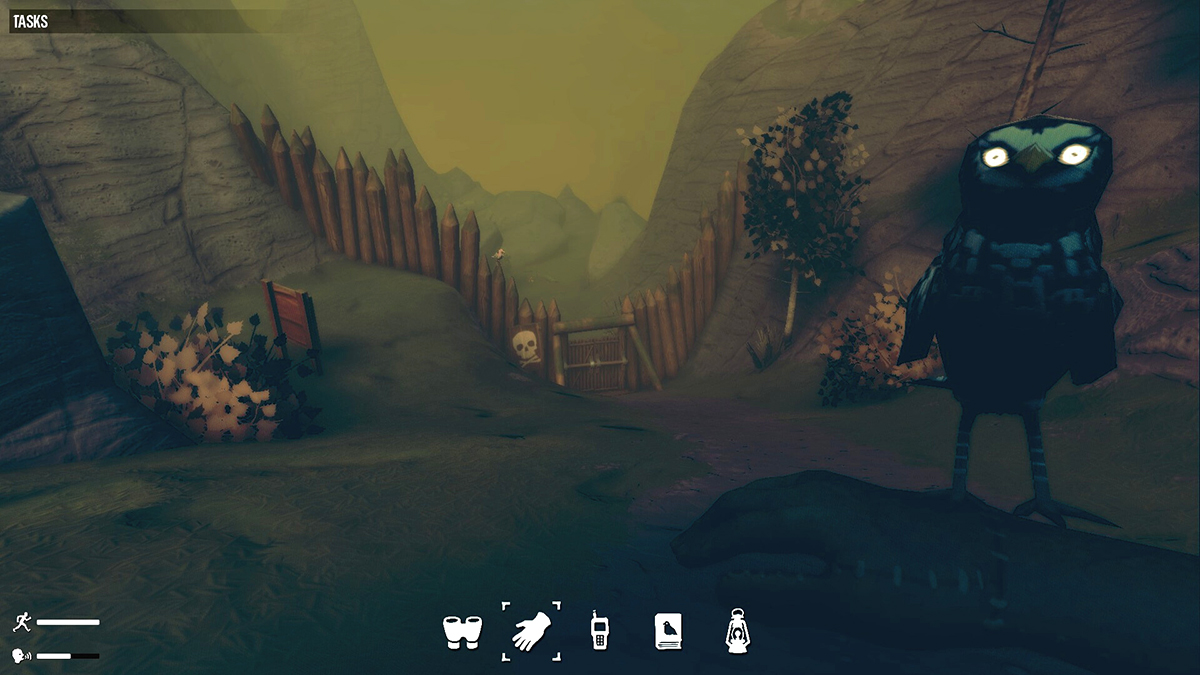
There are three possible endings to the game, and they’re all deeply upsetting. These endings follow naturally from your dialogue choices – whether you resist or capitulate to the warlord, and how far you’re willing to go to satisfy the birds.

Thankfully, nothing is dependent on being a completionist about filling in your bird watching notebook. You’ll probably want to find as many birds as possible, though, simply because your conversations with them are so unapologetically horrible and bitchy that they’re kind of funny. Once you figure out what the password you use to talk with the birds actually means, this knowledge adds a deeper level of psychological horror that’s fun to explore.

Since a leisurely run through the game only takes a little less than an hour, I went back and played it twice. Though the slightly murky lo-fi graphics caused a bit of trouble during my first playthrough, I appreciated the unique texture of the visual atmosphere more the second time around, when I was able to find significantly more birds to talk with. The alternate reading of the game suggested by a reveal toward the end casts all the conversations in an interesting new light that’s worth a second playthrough to appreciate.
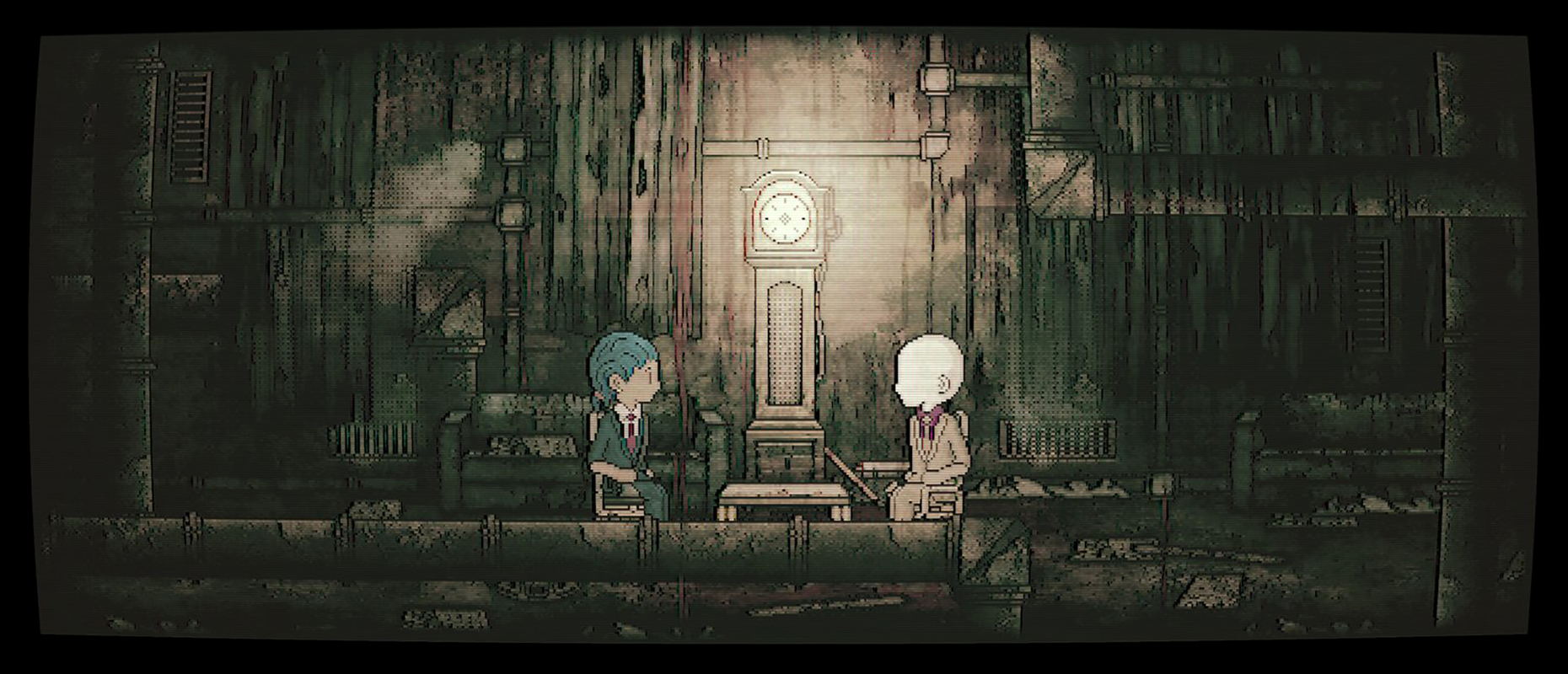
Afterdream

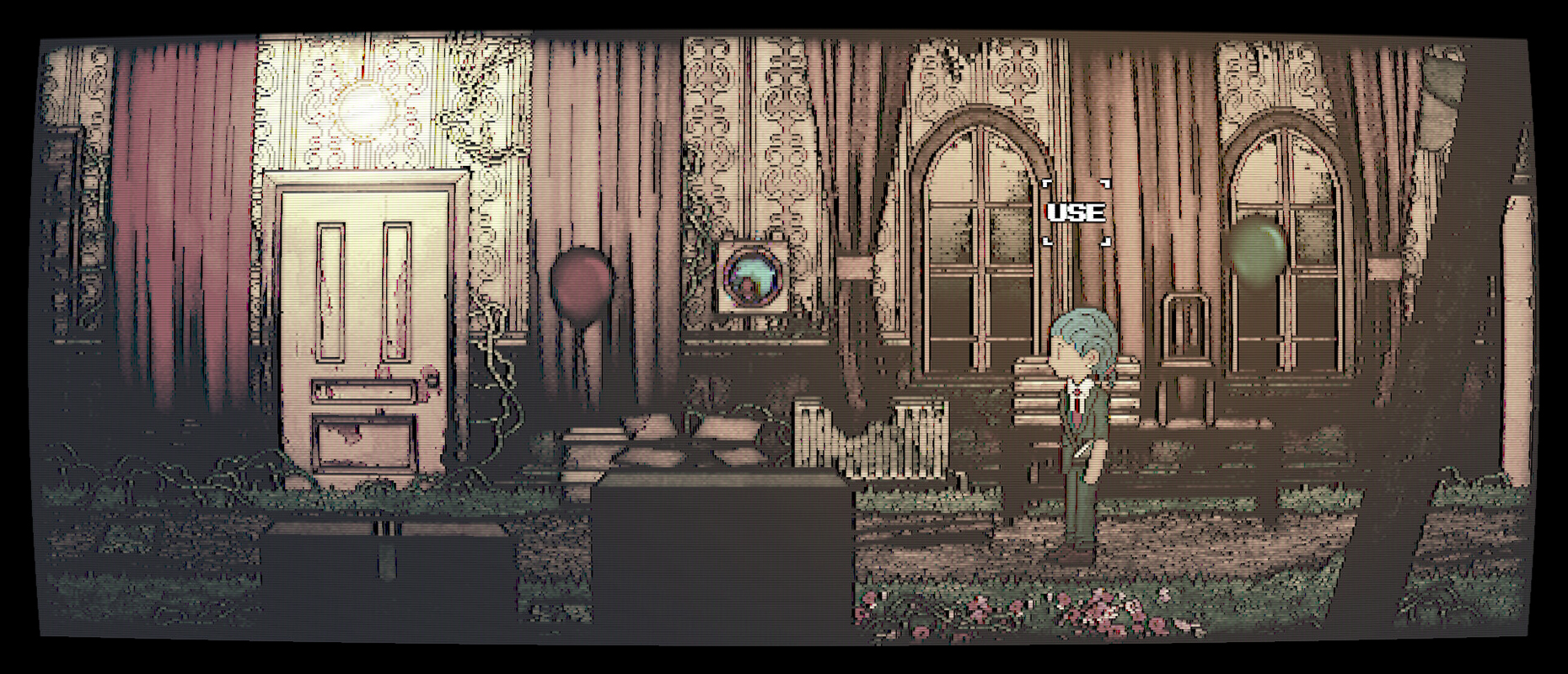
Afterdream is a 2D horror adventure game with puzzle elements and lo-fi pixelated graphics that takes between two to three hours to finish. It’s on Steam, but I played it on Nintendo Switch and had a fantastic time. Afterdream drops you right into the story and immediately grabs your attention, and its pacing is impeccable. The horror is mostly atmospheric, but the game features a great set of jumpscares mixed with short segments of heightened tension.

Afterdream isn’t for people who can’t tolerate horror, but I’d happily recommend it to anyone else who’s interested in trying out a short, original, and creative story game. The puzzles are fun but not too difficult, and the environmental design is really something special.

You play as a woman named Jennifer who wakes up in a filthy derelict room wearing a suit she doesn’t own. During the intermittent frame story, Jennifer relates this situation to an older man who seems to be a psychiatrist, claiming that she’s experienced an unusually realistic nightmare.

Within this nightmare, Jennifer’s job is to navigate a series of haunted houses while finding a series of objects for a series of NPCs. There are no Professor Layton style puzzles relating to number games or spatial arrangement challenges; rather, Afterdream’s puzzles are mainly fetch quests reminiscent of old-school adventure games in which a certain object needs to be applied to a certain environmental obstacle, like a key being needed to unlock a door.

The challenge, such as it is, lies in being able to form a mental map of each area and remembering what goes where. The game mechanics are extremely simple and intuitive, and there are no inventory limits or menu screens to distract the player from the immersive environment. It’s always clear what you can interact with, and the in-game text isn’t cryptic about what needs to happen.

The haunted houses don’t reveal their secrets willingly, but Jennifer is aided by a Polaroid ghost camera that she can use to scan her surroundings. The oddities exposed through the camera’s viewfinder become real once photographed. You might hear an odd ticking sound, for example, in which case your camera will reveal a ghostly clock on the wall. It’s a neat game mechanic, and it’s put to good use in a nice variety of situations.

Jennifer begins in an old and rotting apartment building and then progresses to a fancier but similarly ruined mansion, wherein a helpful ghost tells her that she’s been given an opportunity to make contact with the spirit of her recently deceased father. In order to summon his ghost, Jennifer must first find a special “portal object” hidden within the liminal space between life and the afterlife. Unfortunately, no one can say what this object looks like or where it’s hidden.

Still, Jennifer has no choice but to keep moving forward through progressively spookier areas. As a special present to me personally, there’s a dark and grimy sewer level, and it’s wonderful. There’s also a “creepy little town” level, and it’s beautiful and I love it.

Even though the game is divided into discrete stages, its story isn’t formulaic. To lighten the heavy atmosphere, the writing employs humor at key moments, with both Jennifer and the NPC ghosts occasionally poking fun at the absurdity of various situations. I really enjoyed the instances when I thought something horrible was going to happen but everything actually turned out to be perfectly wholesome. The pacing is excellent, with plenty of fun character interactions and chill periods of downtime between the creepy bits and jumpscares.

Afterdream is the perfect length for its story, and its gameplay goes from strength to strength as its setting becomes stranger and more disturbing. It might not be to the taste of people looking for more action or more explicit horror, but it was perfect for me.

One final thing: When I first saw the game’s trailer, I was like, “This looks cool, but I hope you can turn off the strobe effects.” And thankfully, you can in fact turn off the strobe effects. It’s always nice when game developers take this sort of accessibility issue into consideration.