
Studio Ghibli Fanzine Preorders

.

.

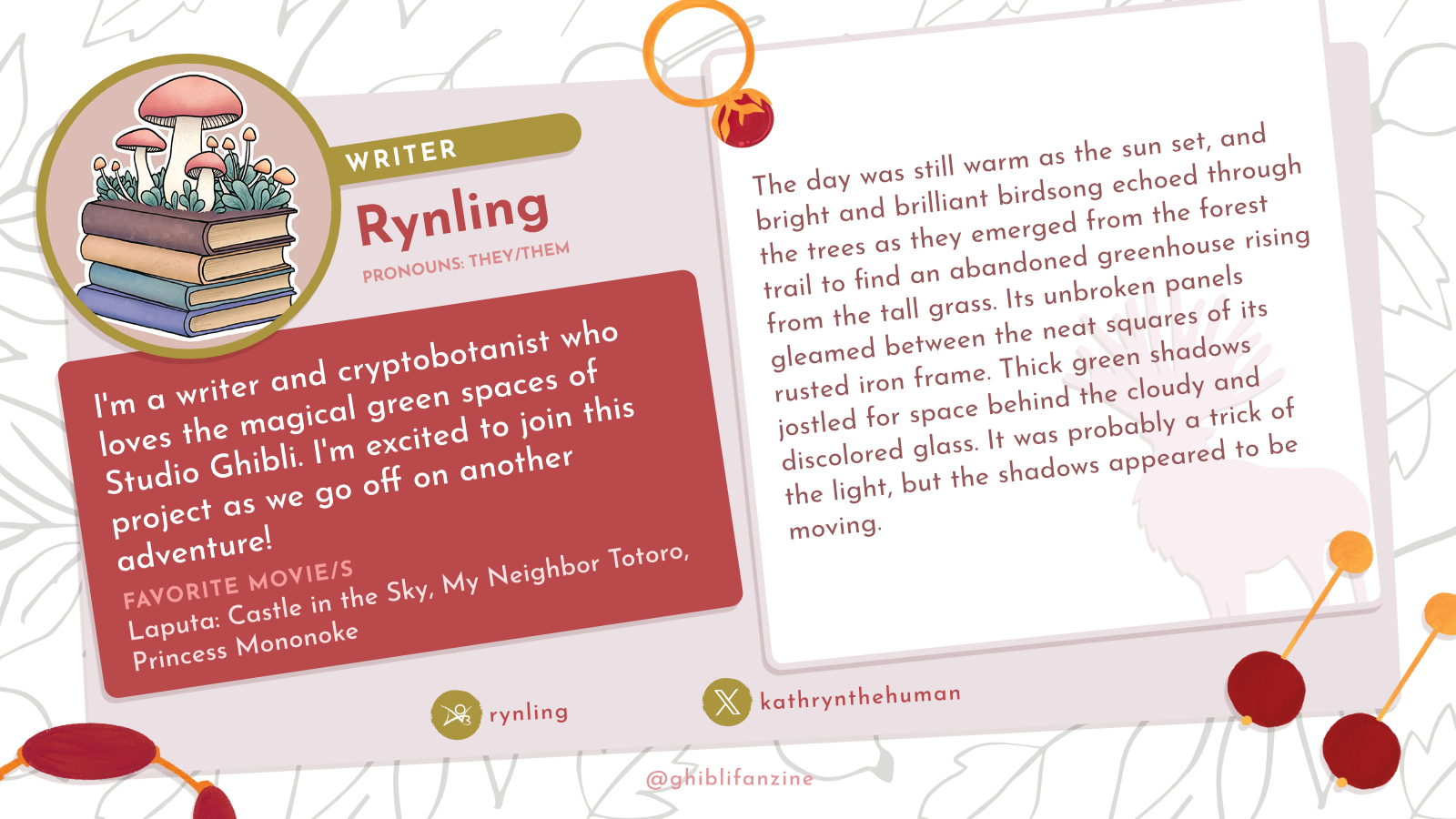
I’m excited to share a preview of the short story I wrote for New Winds: A Studio Ghibli Fanzine.

My story, “The Record of the Last Heavenly Warrior,” is narrated from the perspective of one of the giant robots from Castle in the Sky who remained in Laputa Castle after all the humans fled. The log it creates across the years is an account of the actions it takes to help nature return to the abandoned structure. Through the care it offers the environment and its companions, the robot gradually begins to understand why humans abandoned the fortress, and it wonders what it will do should they ever return.

The editors and layout artists who’ve worked on New Winds put an extraordinary amount of love and attention into making the writing in this zine shine, and the comics and illustrations that fill the pages are equally beautiful. If you’re interested, preorders for the zine are open until February 6 on Bigcartel (here). You can check out more previews on the zine’s accounts on Twitter (here) and Tumblr (here).

🌿 https://studioghiblizine.bigcartel.com/
🌿 https://x.com/ghiblifanzine
🌿 https://ghiblifanzine.tumblr.com/
Gender and Magic in Final Fantasy VI

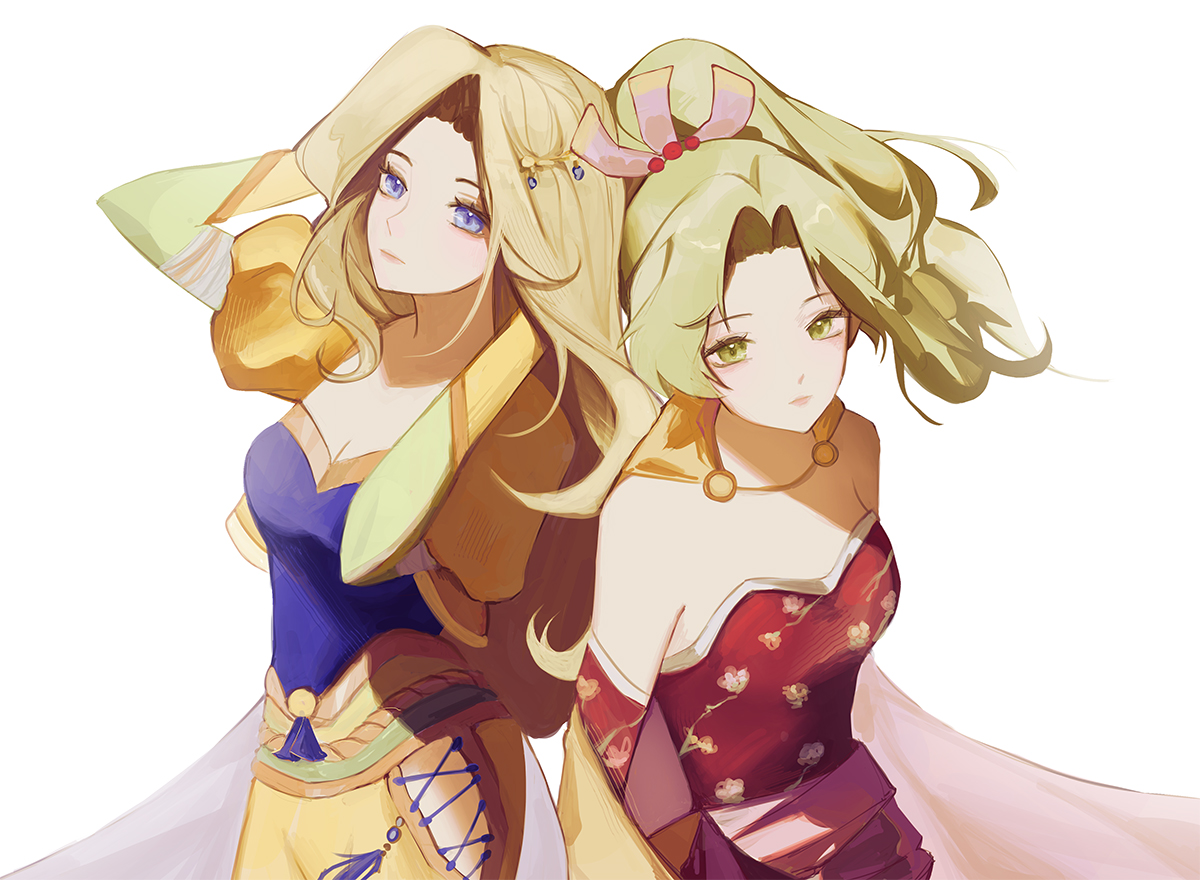
Final Fantasy VI is deeply concerned with the relationship between human beings and technology. The game borrows many elements from Western fantasy and science fiction, yet the story and action are centered around two teenage female protagonists, Terra and Celes, who are variations on the “magical girl” and “beautiful fighting girl” archetypes of Japanese popular culture.

Back in 2016, I published an essay about “Gender and Magic in Final Fantasy VI” on the website of the sadly defunct gaming magazine Kill Screen. Since then, I’ve made substantial edits for clarity, and I posted the updated version on AO3.

This meta essay situates Final Fantasy VI within the cultural context of Japan in the 1990s in order to discuss how the game explores its posthuman themes through the bodies of its female characters. I demonstrate how Final Fantasy VI uses gender as a lens for its exploration of the intersections between biology and technology, and I argue that the otherness associated with Terra and Celes serves as a powerful analogy for anxieties surrounding the future of the human species in relation to seemingly magical biotechnologies.

You can read the essay on AO3 here:
https://archiveofourown.org/works/53596483

The cover illustration was created by Palliceart, an artist with a dual specialty in magical girls and beautiful fighting girls. You can find her gorgeous and ethereal artwork on Twitter (here), on Instagram (here), and on Tumblr (here).