Don’t Let Her In

Don’t Let Her In
https://flowerstudio.itch.io/dont-let-her-in

Don’t Let Her In is a free ten-minute horror game that you can play on a Game Boy Color emulator (such as mGBA) or directly in your browser on Itch.io.

You play as a teenager who hasn’t set foot outside the house in several weeks. Their father left a note on the kitchen table with a simple warning: Don’t let her in. As the player, you move through the house while interacting with various objects. You have one job, but you won’t be able to keep yourself safe forever.

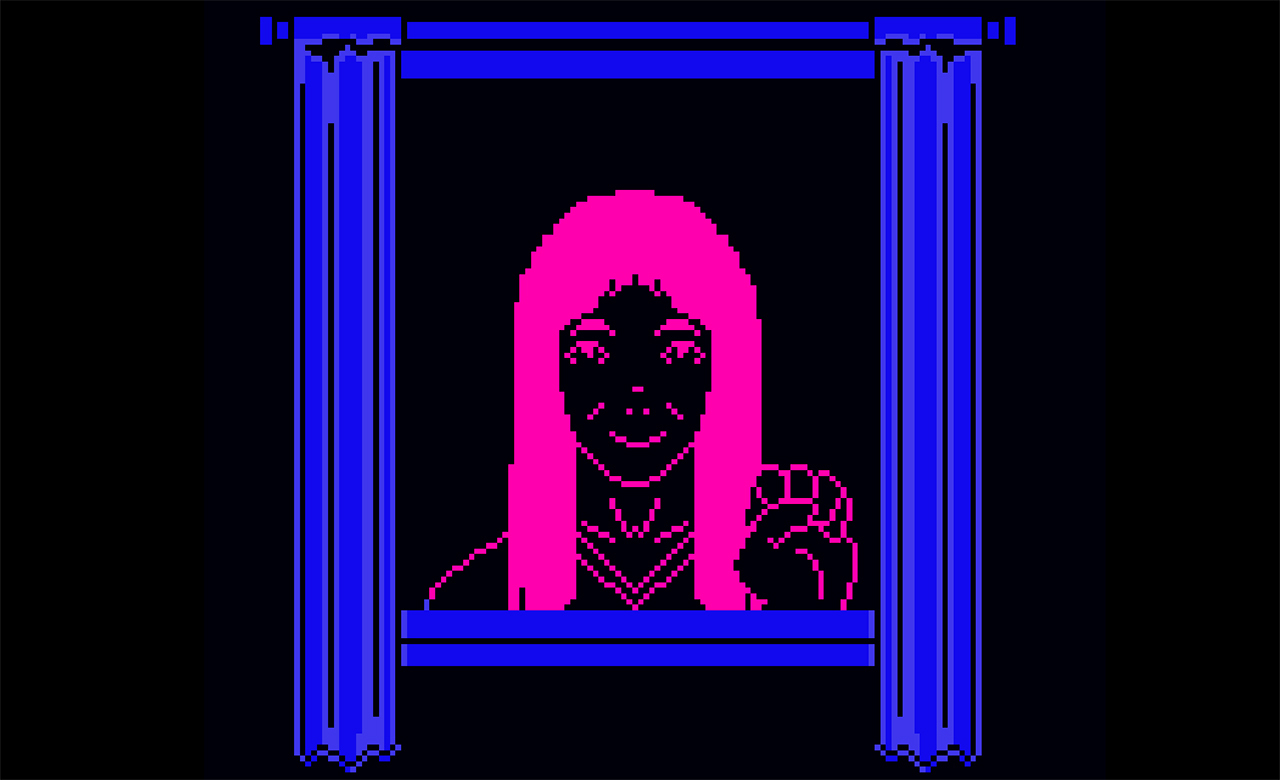
Alternatively, you can ignore your father’s warning and invite the creepy woman inside the house as soon as she knocks on the kitchen window. This also leads to a satisfying story, although I’d recommend playing the game straight the first time around. The slow lead to the twist ending is wonderful, and having already experienced this twist makes the second ending much more satisfying.

The game’s graphics are simple but effective, and you might be surprised by how much body horror a few pixels can generate. The subtle worldbuilding is quite intriguing as well. There’s no good ending to this story, and its tone is bleak – there’s no irony or campiness, just horror. Don’t Let Her In may be short, but it’s remarkably effective at creating an atmosphere of loneliness and dread.

Everybody’s Gone to the Rapture

Everybody’s Gone to the Rapture is a first-person walking sim set in the fictional village of Yaughton in the west of England. Yaughton is completely deserted, and the player’s job is to figure out what happened. “What happened” turns out to be a combination of things, none of which is ever properly explained, but what really matters is the human drama at the core of the crisis.

The game is entirely first-person, and the player can only do two things: walk and look around. There’s also an action button that can be used to turn on radios, pick up ringing phones, and enter open doors and gates, but we never see the player character’s hands. The player is thus little more than a moving point of view. This is just fine, because Yaughton is gorgeous.

After climbing down from the hill where the game starts, the player is confronted with a jumble of buildings and several intersections. Since you can go into almost every house, not to mention every house’s backyard and garage and garden shed, it was difficult for me to resist the temptation to do so. I kept encountering radios that can be turned on to get a bit of story, as well as shimmers of light that resolved into stylized representations of people sharing brief conversations.

Despite the lovely scenery, the first bit of Everybody’s Gone to the Rapture is fairly stagnant. The front end of the game is loaded with tons of disconnected characters whose relationship to each other isn’t immediately apparent. The light shining on the world is totally flat, and there’s no wind moving the leaves in the trees or blowing garbage across the streets.

After almost two hours of wandering around and trying to figure things out, I stopped caring about finding everything and decided to follow the glowing comet of light that’s intended to lead you through the story. What the guiding comet reveals is a series of conversations centered around a priest, Father Jeremy Wheeler, who was trying to come to terms with his faith in relation to what was happening to the town. Following a climactic scene, the game changes in a significant way.

At this point, Everybody’s Gone to the Rapture becomes much more structured. The player now understands that each area of the game is the stage for a narrative focused on one character. After the first major transition, the world of the game also becomes more active, with floating pollen, falling leaves, swaying flowers, billowing air-dried laundry, and the shadows of wind moving through the trees. As the natural world comes to life, the pieces of the story gradually start coming together.    

Everybody’s Gone to the Rapture isn’t perfect. The start of the game is extremely slow, and it’s easy to get lost at first. The guiding comet has a tendency to disappear, requiring you to restart the game to bring it back, and the slow pace of movement makes backtracking feel more annoying than it should be. Still, the graphics and music are beautiful – rapturous, even – and I was moved by the writing. If you’re patient enough to follow the story to its conclusion, your reward is an almost overwhelming sense of joy.

I should mention that I enjoyed Kirk Hamilton’s write-up of the plot (on Kotaku here), which poses many interesting questions and offers some excellent answers. The apocalyptic story seems more grim and horrific when summarized in writing than it does when you’re playing the game itself, though, so I’d recommend going in without spoilers.

Inside

Inside is a 2.5D puzzle platformer originally released for the Xbox One in 2016. The near-future dystopian sci-fi setting contains strong elements of horror, and players should expect to experience numerous violent deaths. The game takes about four hours to finish, although a longer completionist run that involves accessing hidden areas will be rewarded with a secret ending.

You play as a ten-year-old boy, and you begin the game alone in the woods. The boy has presumably escaped from a shadowy research facility, and he’s being chased by dogs and men with guns. The boy will be killed if he’s spotted, so the player’s initial goal is to move to the right side of the screen while evading capture.

After the boy escapes from the woods, he emerges onto a farm littered with the carcasses of parasite-infested pigs. It’s here that the game introduces its central puzzle mechanic, which involves using a headset to control the mindless bodies of adult humans. When the boy makes his way out the farm and into a decaying city, it becomes clear that these mindless bodies were once marketed to the general population before the apparent collapse of human civilization.

Inside eventually finds its stride, but the puzzles at the beginning of the game have the potential to be frustrating for a first-time player. In order to progress through one of the barns on the farm, for example, the player has to backtrack to the left in order to open the barn’s back door. Opening this door allows a gaggle of chirping chicks to enter the barn.

The game has never previously asked the player to move from right to left, and there’s no indication that the chicks exist other than a faint chirping on the other side of the barn’s back door. It’s therefore not immediately apparent that these chicks are a necessary element to solving a puzzle that already has half a dozen moving parts. The game becomes much better about broadcasting puzzle solutions as it progresses, but it might be necessary to consult a walkthrough at the beginning.

The first quarter of the game also features another type of frustrating puzzle that involves crossing long distances to escape from attack dogs. If the boy dies at any point during one of these sequences, the player has to start over at the beginning, thereby losing up to six or seven minutes of progress. Repeatedly playing through one of these sequences only to fail at the end isn’t fun.

Thankfully, Inside becomes much better at managing respawn points after the boy leaves the farm. Many of the game’s later puzzles involve a combination of careful timing and brutal death, but they allow the player adequate space to stand still and assess the situation.

Tiny birds and bloodthirsty canines aside, Inside is visually striking from start to finish. The sound design is brilliant, and the audio works alongside the graphic design to create a palpable sense of danger and menace. Unlike Playdead’s earlier game Limbo (2010), which was more abstract and fantasy-themed, Inside is grittier and more focused on portraying a disturbingly realistic apocalypse.

As I played Inside, I could envision its story evolving in two ways. My first theory was that the boy is a host for the same parasite that killed the pigs on the farm; and, if he escapes into civilization, the infection will spread and the world will be doomed. My second theory was that the boy is being controlled just as he controls the mindless bodies; and, after he accomplishes his mission, he will be unplugged.

The actual endgame story developments are nothing even remotely resembling what I expected. Instead, Inside gradually transforms into a meditation on bioethics and subjectivity that’s all the more striking because of the player’s interaction with the story. I’m still not sure how to interpret the ending, but the path to get there involves one of the biggest ludo-narrative surprises I’ve ever had the pleasure to encounter. I usually don’t have any patience for concerns over spoilers, but I’d recommend going into this game spoiler-free. The ending of Inside genuinely has to be experienced to be believed.
The Girl in the Screen at the End of the World

It’s been more than twenty years since rumors about a cursed videotape began to spread. The stories were true, and Japan is in ruins. Can the people who survived the collapse of civilization escape Sadako’s curse? Or do they seek her out instead?

“The Girl in the Screen at the End of the World” is a series of four short vignettes about the last living humans making their peace with the end of the world as Sadako bids a gentle goodbye to modern civilization. All of the human characters in the story die, but all the animals go on to live their best lives.

The story is complete at 1,800 words, and it’s on AO3 here:
https://archiveofourown.org/works/47735320

I had the immense privilege of working with an artist who goes by Vani on an illustration for this story. I was inspired by his short Animal Crossing comic about grief (here), and I love the way he draws handsomely rendered characters in lush environments brought to life by bold colors. You can find more of his evocative art on Twitter (here), on Instagram (here), and on Tumblr (here).

The Environmental Horror of Elden Ring

Thanks to the kind editors at Unwinnable Magazine, I got to write my dream essay about Elden Ring.

In “The Environmental Horror of Elden Ring,” I discuss how the ongoing disaster of the hellish Caelid region provides an interesting counterpoint to the common characterization of postapocalyptic spaces as green and beautiful. For me, Caelid was a gateway into an exploration of how and why the aftermaths of environmental catastrophes are often presented as utopian in digital spaces, and I think Elden Ring subtly reflects the frustration that many of us feel toward power structures that remove us from direct stewardship of the nature that surrounds us in real life.

If you’re interested, you can find the full essay in the March 2023 issue of Unwinnable, and you can check out a substantial excerpt on the magazine’s website (here). I’ve also archived a PDF of the article (here).

Greenpath

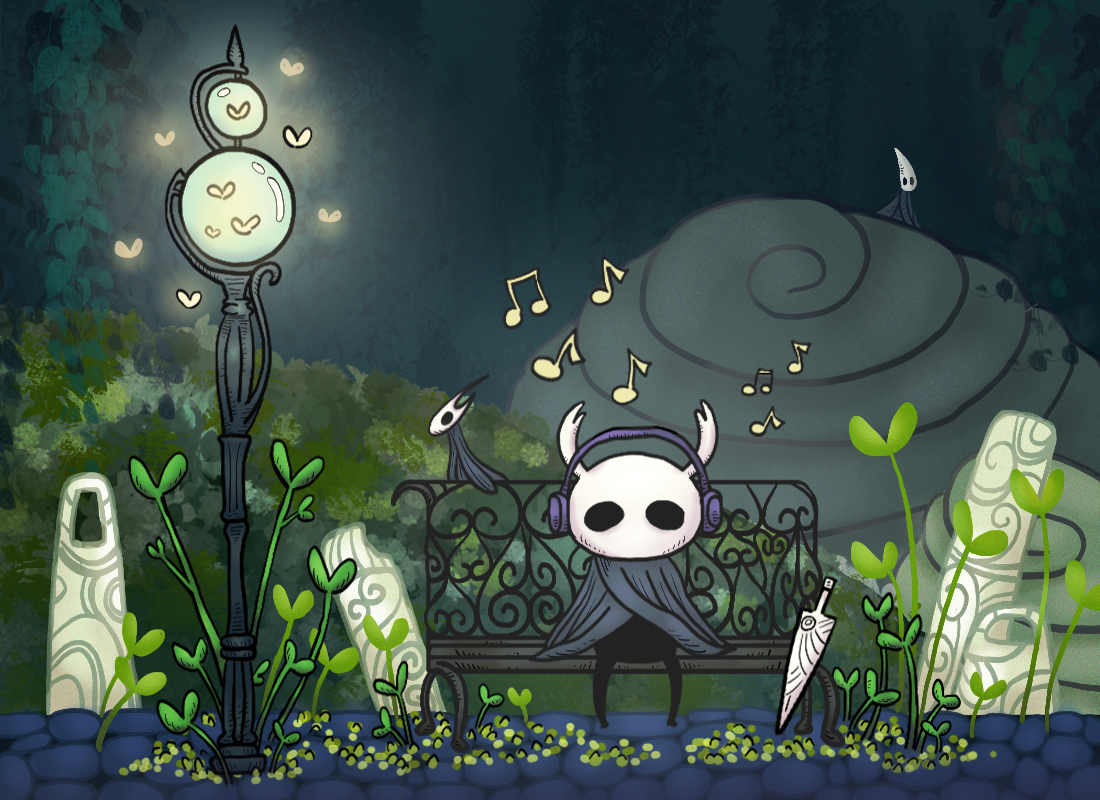
Hollow Knight is a Metroidvania-style adventure game set in the forgotten underground kingdom of Hallownest. The kingdom fell to ruin after a viral blight infected its citizens, transforming them into mindless husks. As a knight in the form of a small beetle wielding a nail, you venture below the surface through a secret entrance in an old well to challenge the mysteries of Hallownest.

The old underground roads are long abandoned, and there are no helpful signs to guide the player through the maze of passages. The necessity of careful exploration as you find your own path forward is one of the primary appeals of Hollow Knight, but it’s easy to lose your way and fall victim to the undead husks or become trapped in the dilapidated infrastructure.

The tiny protagonist’s journey through Hallownest is lonely, but the ruins of the old kingdom are far from empty. Where there were once cities and markets and train stations, dense vegetation now breaks through the paving stones and covers crumbling structures in blankets of flowering plants. Nowhere is this postapocalyptic explosion of nature more apparent than an area called Greenpath, where small birdlike creatures flutter through the underbrush while giant dragonflies glide in lazy circles above bubbling pools of acid water.

Hollow Knight’s soundtrack, written and digitally performed by the Australian composer Christopher Larkin, captures both the loneliness and wonder of the kingdom of Hallownest. I find the background music for Greenpath especially atmospheric and evocative. It begins with bright and gentle strings that suggest the twinkling of fresh dew and the whisper of wind over moss. Soft and airy notes from a flute and xylophone join the song to create a melody reminiscent of the rustling of leaves as you scuttle through the bushes. 

The environmental music in Hollow Knight is adaptive, meaning that it changes according to gameplay. Some of the more challenging sections of Greenpath necessitate precisely timed jumps over deadly beds of tangled thorns, and the song crescendos into string chords as staccato as your character’s footsteps as you rush through the beautiful yet menacing jungle. You feel as though you’re truly exploring overgrown ruins, brushing aside vines as you navigate the twisting stone corridors.

The quietly elegiac environmental songs of the Hollow Knight soundtrack are oddly relaxing and make excellent ambient background music. If you’re in the mood for something more upbeat, the boss fight battle songs are fantastic as well. You can listen to the complete album on Spotify and YouTube, and (this link) will take you directly to the song “Greenpath” on Bandcamp. 

. . . . . . . . . . . .

This essay was published in the “Playlist” issue of the West Philly Dog Bowl Zine, which debuted at the Philly Comics Expo this past weekend. You can download a free digital version of the zine via their Linktree site (here).