In Praise of Moss Disability Zine

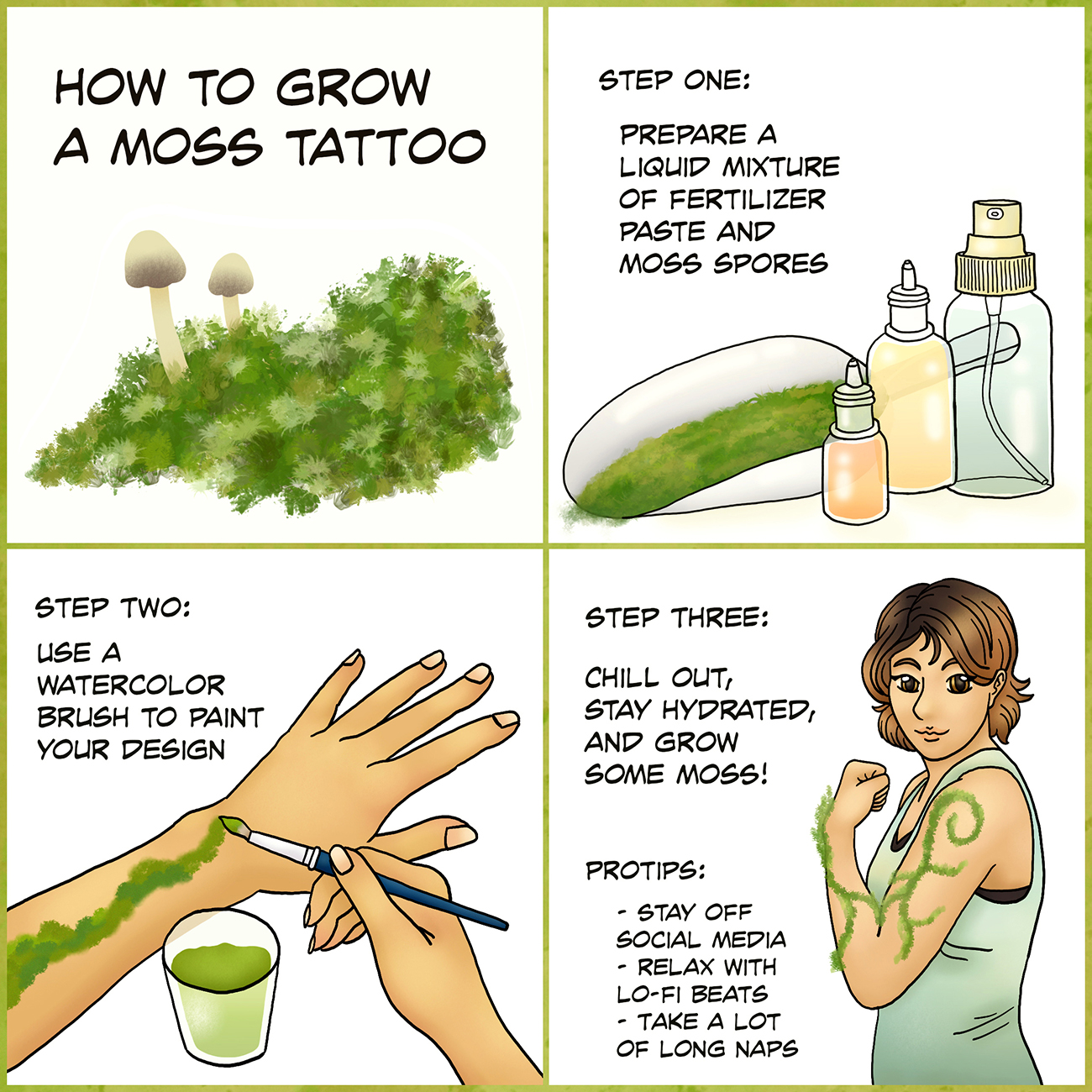
In Praise of Moss is a zine that argues against the myth of productivity while celebrating the value of a diversity of contributions to our culture and communities. Not everyone can be a tree, and that’s okay. Moss is an equally important part of an ecosystem.

I wrote this zine from a perspective that respects people of all abilities, but I think it’s important to acknowledge the more challenging aspects of disability. Disabled people are often expected to “pull their weight,” usually with the assumption that there’s only one way to measure success. In addition, people who live with invisible disabilities are often met with frustration and accusations of laziness when we’re unable to work or behave “normally.”

Moss is a useful metaphor for a recontextualization of what it means for disabled people to be useful to our communities and valued in our relationships. By exploring how moss can support an entire ecosystem, we can craft a model for how disability positivity can benefit society.

In addition, moss is remarkably adept at surviving disaster, which makes it an engaging analogy for resistance against the pressures of self-optimization exerted by neoliberal capitalism. While my focus is on disability, I believe that all readers can benefit from a shift in perspective that encourages us to grow naturally without worrying about productivity. 

When I write about “resisting productivity,” I’m speaking from the position of someone in academia who is directly affected by the myth that hard work will lead to prosperity. I hate the way this myth is weaponized against disabled people in the realm of higher education, and I want to destroy it. Very softly and quietly. Like moss.

While I love the lo-fi DIY aesthetic of many of the disability zines I’ve found on Etsy and in indie bookstores, it was important to me to create an attractively formatted physical object that feels good in my hands and accommodates my own disabilities by being easy to read. I want people who encounter this zine to feel that it’s valuable, and that they’re valuable too. I was fortunate to be able to work with Fireball Printing, a local Philadelphia service that creates gorgeous full-color publications.

If you’re interested, you can order a copy of the zine from Etsy, or you can download a free digital version on Itch.io.

🌿 https://digitalterrarium.itch.io/in-praise-of-moss
🌿 https://www.etsy.com/listing/1881401704/in-praise-of-moss-disability-zine
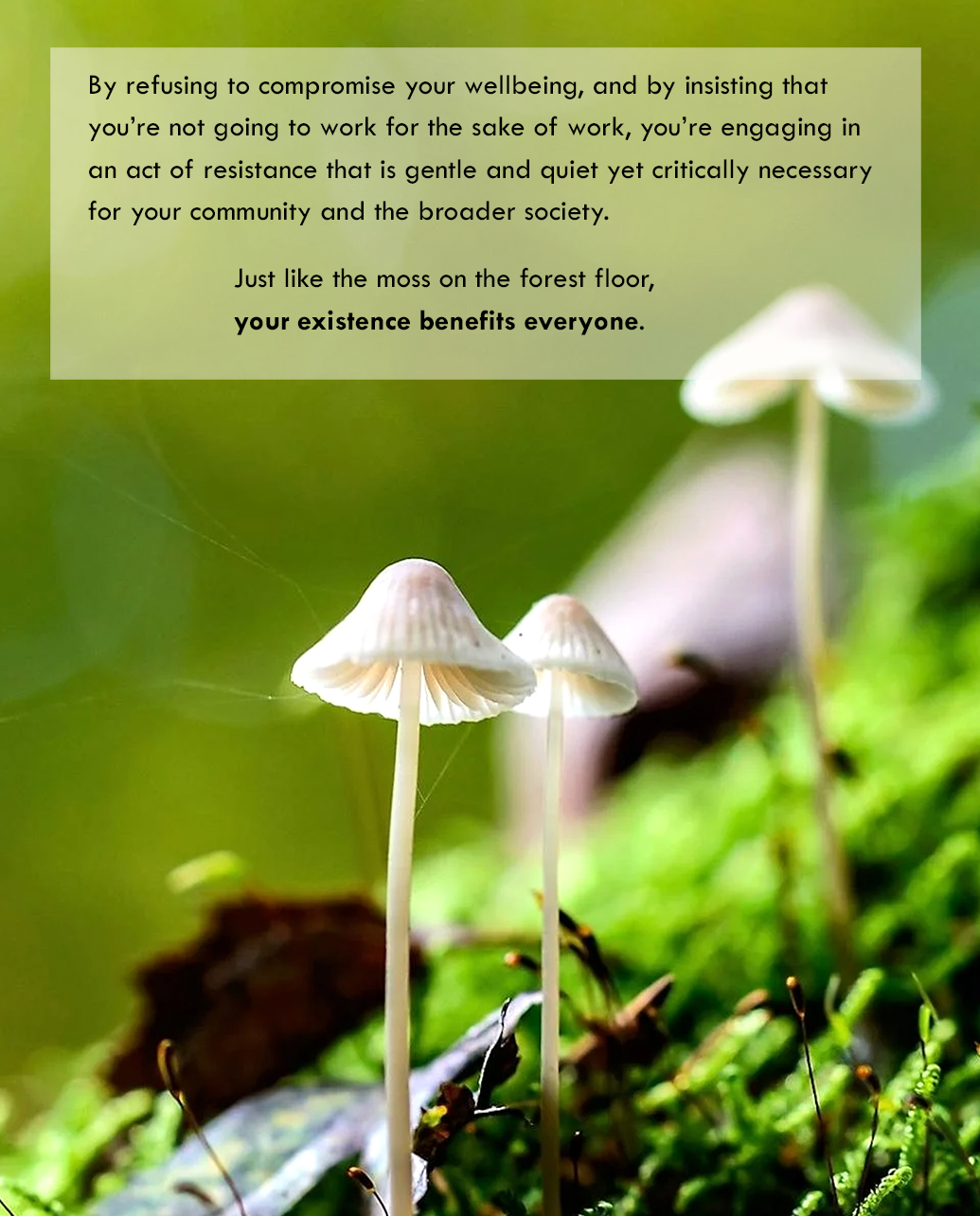
Evil Gardening with Ganondorf

I always seem to find myself in a Wind Waker mood during summer. One of the many things I love about The Wind Waker is how beautiful and green and breezy it is. It’s a joy to spend time in the world of the game, which is filled with all sorts of strange and interesting creatures.

To me, then, it’s always been amusing that the Deku Tree in the Forest Haven blames this state of affairs on Ganondorf. I believe the implication is supposed to be that Ganondorf is so innately evil that his very presence on the Great Sea causes monsters to appear, but that’s extremely silly. Ganondorf may be up to no good, but he’s just a crabby old man.

If Ganondorf is responsible for the appearance of plant monsters, I prefer to think that this is because one of his many old man hobbies is gardening. Evil gardening!!

This comic was drawn by the darkly brilliant Frankiesbugs, whose cute and creepy illustrations and comics can be found on Tumblr (here), on Instagram (here), on Cara (here), and on Redbubble (here). Frankiesbugs is also responsible for the comic art and environment design featured in an upcoming beat-em-up game called V’s Rage. Like Wind Waker, V’s Rage boasts plenty of cute creatures, beautiful sun-soaked landscapes, and ridiculous middle-aged men. You can check out the game and play a substantial free demo on Steam (here).

The Life-Changing Magic of Just Letting Things Break

Solarpunk Is Not About Pretty Aesthetics. It’s About the End of Capitalism.
https://www.vice.com/en/article/wx5aym/solarpunk-is-not-about-pretty-aesthetics-its-about-the-end-of-capitalism

Many solarpunks agree that the “punk” element becomes clear when they go past the movement’s visuals and into the nitty gritty. Solarpunk is radical in that it imagines a society where people and the planet are prioritized over the individual and profit. Of course utopian visions of the future aren’t new and art and technology have long drawn from nature: Just take the example of Belgian architect Luc Schuiten, whose drawings and buildings often employ biomimicry, where the form and function of organic elements influence design. The movement gained traction in progressive circles on early 2010s Tumblr, but as its popularity has bloomed over the past 10 years, early Solarpunks fear capitalist co-option. Flynn calls it “fake Solarpunk urbanism,” luxury condos with a green roof that price out existing communities and might end up doing more environmental damage.

This is a lengthy article with a lot of interesting links, and it’s worth checking out solely for the beautiful embedded video.

I think the emphasis on “radical action” might be somewhat misguided, though. My concern, as always, is the way anti-capitalist movements are embedded within the language of capitalism. Like, we have to be active! And go out and do things! And harness our energy as our best and most productive selves! I think this neoliberal emphasis on individual agency and power strays a bit too far into the territory of ecofacism, which holds that people who don’t have the skills or resources to survive environmental catastrophe deserve to die.

For me, the appeal of solarpunk is that you don’t have to do shit. You don’t have to work. You don’t have to make money. You don’t have to buy things. You don’t have to participate in “community improvement” projects. Instead, leave your job early and turn off your phone. Stay at home and chill out. Sit out on your porch and have a drink with your neighbors. Grass and flowers will grow in the cracks of the concrete without your help. All you have to do is literally nothing.

One of the reasons I enjoy living in Philadelphia is that it’s a very compact but very green city. The great thing is that it’s not green because of city planning or district gardening budgets, but rather the exact opposite. The city just lets plants grow, and nobody who lives here does anything to stop them. The Amish set up farmer’s markets on the weekends, and nobody bothers them. People sell fresh fruits and vegetables out of the backs of U-Haul trucks in parking lots on the weekdays, and nobody cares. Nobody chases away the urban outdoorspeople who plant gardens in the larger public parks. The city is covered in folk art, from Isaiah Zagar’s broken glass murals to the work of street artists whose tags are elaborate illustrations of Studio Ghibli characters. This aesthetic exists because nobody “did” anything to “fix” it, and it makes Philadelphia a comfortable and interesting place to live.

At the same time, a cleaner and more carefully managed solarpunk aesthetic would make much more sense for a place like New York, where “just letting things break” would result in most of Manhattan Island flooding in less than 48 hours. The sea level is rising, and I assume that the flooding is going to happen eventually, but that doesn’t mean you can’t have stylish vertical gardens while the city is still above water. People have to eat, and people have to live somewhere, so your rent might as well pay for community deck gardens and solar panels.

Plant Space

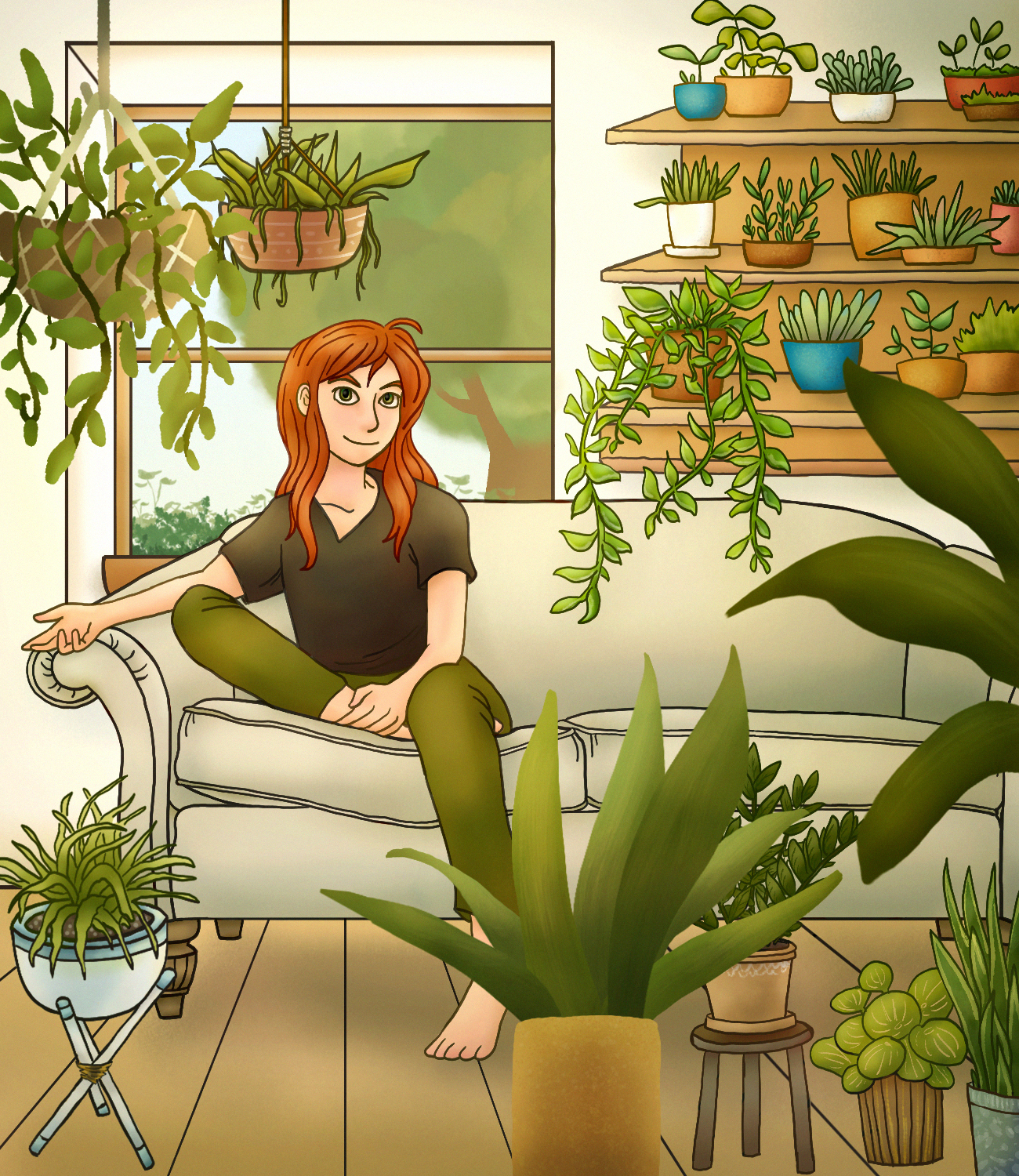
No one in this house is “productive.” 🌿

Inspired by my annual reading of Sarah Ahmed, I drew this as a reminder to myself that there’s room for stillness and silence in the ongoing resistance against systems that seek to exploit our energy and labor. It ended up becoming an unintentional self-portrait. I was thinking, “What sort of person would live in a house like this,” and then I realized, “Oh right, I do.”

A lot of my plants have been all across the United States as I moved from apartment to apartment while chasing jobs in a market that depends on people like me, by which I mean young(ish) people who are willing to cut their connections and uproot their entire lives in order to have a small chance at getting their foot in the door of an unnecessarily competitive industry. Academia especially is built on exploited and largely uncompensated labor, and there’s so much survivor bias that not even the people who have experienced and suffered from this precarity acknowledge how harmful it is to everyone involved.

It’s wild how the vast majority of critiques of capitalism are contained within the logic of capitalism. Capitalism is all about doing things and being productive; and, in exactly the same way, most critiques of capitalism are about doing things and being productive. To give a classic example, Marx says that workers need to utilize the “muscle power” and “vital force” that have been harnessed by capitalism and redirect their energy and labor to overthrow the system. I would argue that not doing things and not being productive is an equally valid means of resisting capitalism. Sarah Ahmed, who has just as fraught of a relationship with academia as I do, has argued the same thing: Don’t allow yourself to become a tool in the hands of people who are intent on breaking you.

After being destroyed by a “dream job” that I almost had to kill myself to stay on top of, I made a firm decision to take it easy and chill out for a bit. Part of this decision is deprogramming my instinct to be “productive,” but a lot of it is simply taking the time to be quiet and listen while creating the space to appreciate the sort of time-consuming writing, scholarship, and art that’s been marginalized and pushed aside by the constant demand for new content. Like my plants, I’m going to sit still and soak in the sun.

………also, I needed an “author photo” for my summer project, a zine about Gothic botanical horror. 💀🌱

My Great Outdoors

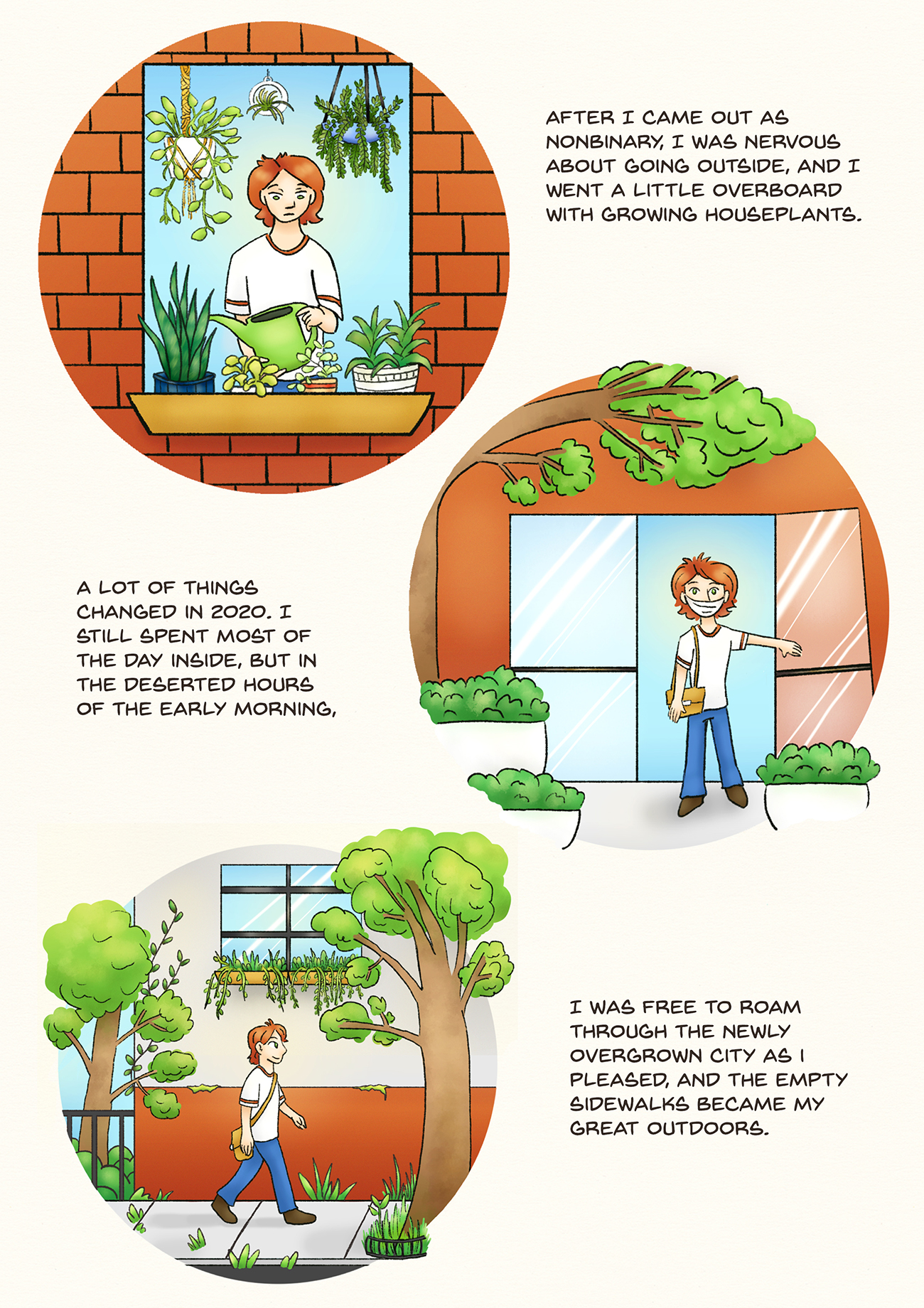
When I moved to West Philadelphia at the beginning of the pandemic, the neighborhood was a mess. The city sanitation workers were on strike (good for them!!), and trash was everywhere. No one had trimmed the vegetation growing along the sidewalks, and there were all sorts of weeds and flowers pushing their way up from underneath the piles of loose rubbish. Most of the university students and faculty had evacuated the city, and no one was walking around outside to begin with, so the crows and opossums had gotten bold. It was quite nice, actually.

I don’t intend to suggest that there was anything “good” about the pandemic, which was and continues to be a nightmare, but I have to admit that it was still a welcome relief to be able to walk around outside while feeling like I was just another part of nature.

. . . . . . . . . . . . . . .

This is a comic I created for the third issue of Nature Held Me Close, a zine about “gender dysphoria and the great outdoors.” Free digital copies of all three issues of the zine are available on its website (here).