Castaway

Castaway is a tribute to Link’s Awakening whose story campaign takes about 35 minutes to play. This campaign functions as a tutorial to the game’s Death Tower, in which you have one life to climb fifty simple and static floors with very few health drops and no permanent upgrades. The Death Tower is not for me, but the story campaign was a pocket of pure and unadulterated joy.

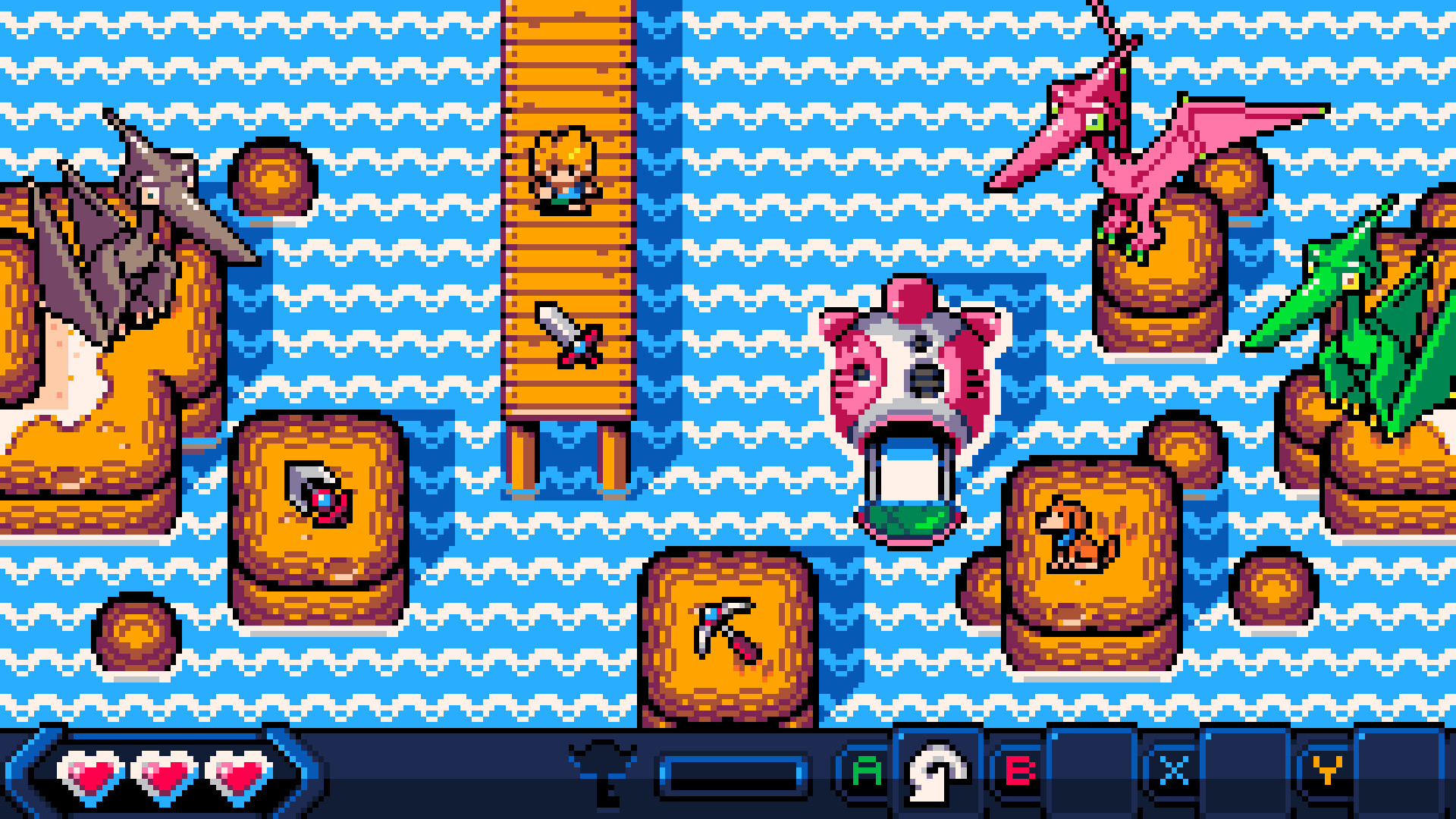
You play as a young boy whose escape pod lands on a deserted island after his spaceship blows up. After the crash, pterodactyls steal the boy’s survival tools and his dog, so it’s up to him to unsheathe his trusty sword and explore the island to get everything back.

The island is very small, as are each of the three dungeons. There’s no one to talk to, and there are only four types of enemies. The only aspects of the environment you can interact with are two types of rocks, so all of the puzzles involve sokoban-style block pushing. The two tools you find in the first two dungeons are a pickaxe that allows you to break rocks and a hookshot that allows you to latch onto rocks to cross gaps. If you use your tools to backtrack, you can collect three additional hearts to bolster your health.

The overworld map and dungeons are all tight and precise. More than a true imitation of a Zelda game, Castaway’s story campaign seems to be a stage for speedrunning, and there’s a special Speedrun Mode that allows you to see the clock onscreen. I tend not to care about such things, but the Speedrun Mode was a nice excuse to give the game a second playthrough with a bit more challenge.

The music and sound effects of Castaway are forgettable, but the graphics manage to achieve the trick of using modern technology to reproduce what you thought Game Boy Color games looked like when you were younger. The pixel art of the opening and closing animations is gorgeous, and the interstitial illustrations are lovely as well.

Whether this tiny game is worth $8 is debatable, especially if you’re not interested in speedruns or gauntlet survival challenges. I love Link’s Awakening beyond all reason, so I was happy to put down the money to support indie developers while spending an hour in nostalgia heaven. Still, it would have been nice if Castaway had more substance.

If you’re interested in the concept of Castaway but don’t want to spend money on something that feels like it should be a free demo of a larger game, please consider the alternative of Ocean’s Heart, a beautiful and robust Zeldalike game that’s honestly better than most actual Zelda games. If you’re interested, you can check out my review of Ocean’s Heart (here).

Games like Echoes of Wisdom

Are you excited about Echoes of Wisdom and can’t wait to play it? Thankfully, there’s a wealth of excellent Zelda-style games with female and nonbinary protagonists made by small studios that you can jump into right now on Nintendo Switch. These are eight of my favorites…

Do you wish Zelda got to fight with a sword?
Check out: Ocean’s Heart

Are you nostalgic for the gameplay and dungeons of A Link to the Past?
Check out: Blossom Tales: The Sleeping King

Are you hungry for more rock-tossing action?
Check out: Lila’s Sky Ark

Are you looking for cute graphics and a nonbinary protagonist?
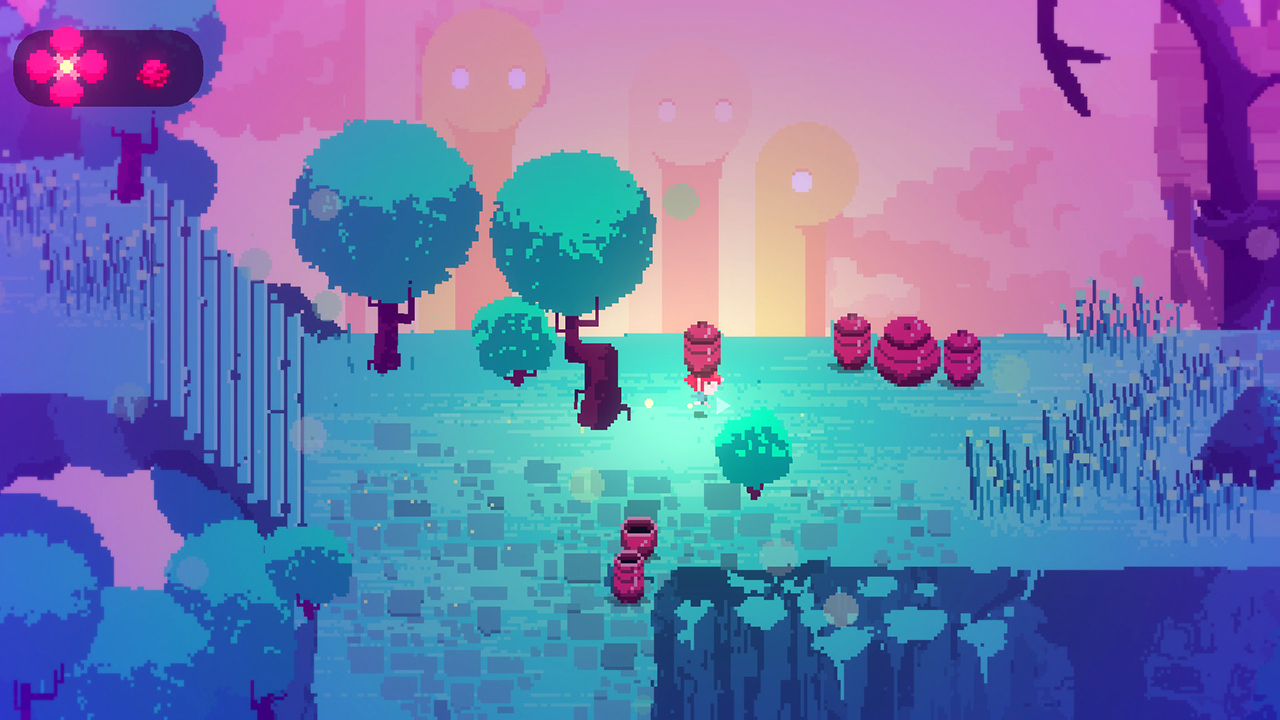
Check out: Frogsong

Would you like a simple and easy game to share with kids?
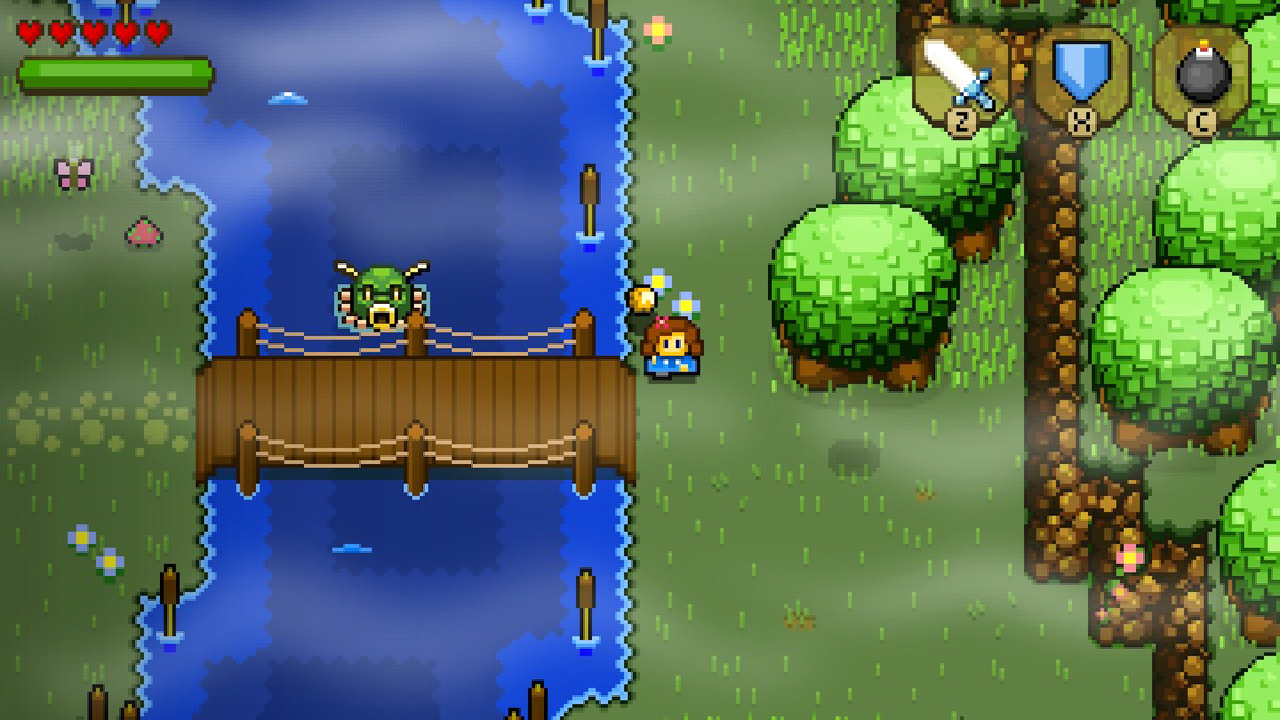
Check out: Arietta of Spirits

Would you like a challenging game with accessibility options?
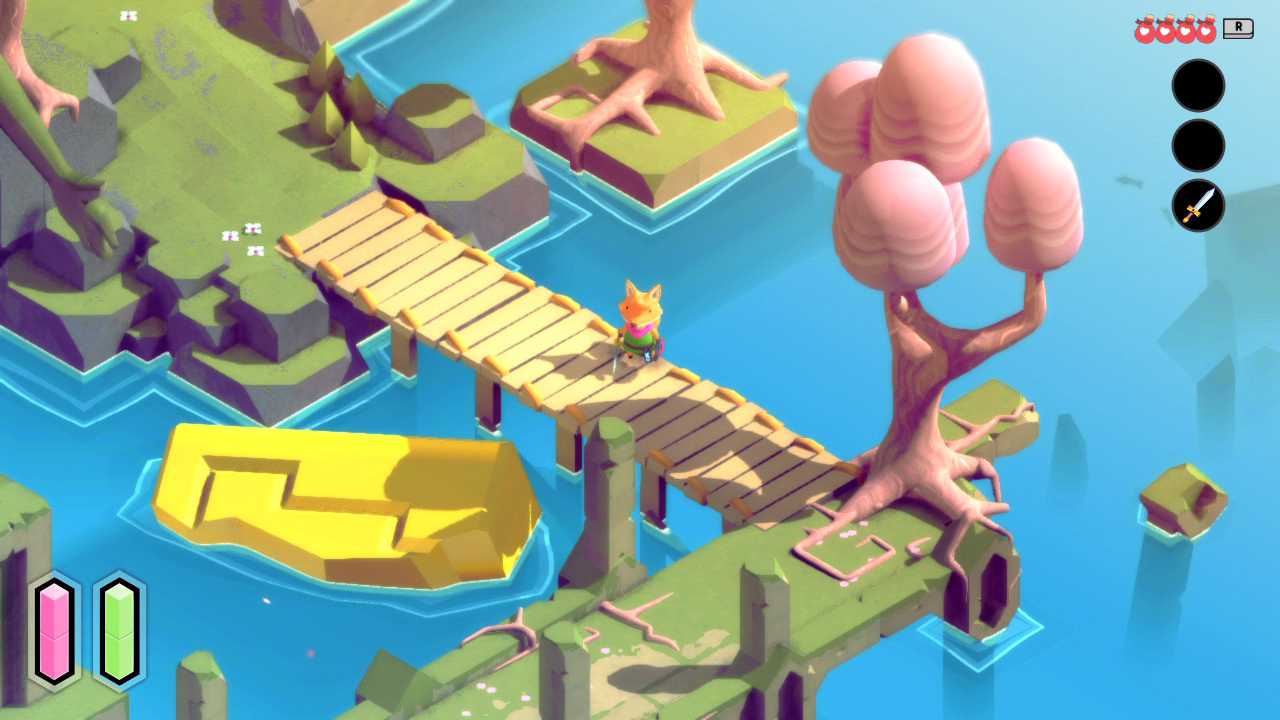
Check out: Tunic

Do you prefer the game to be super difficult and have deep lore?
Check out: Hyper Light Drifter

Do you want your female character to wield both a sword and magic, and will you be satisfied with nothing less than complex and multilayered combat in an exploration-rich dark fantasy world that hides a tragic story about the suffering implicit in the rise and fall of empires? 
Check out, unironically: Dark Souls

Ocean’s Heart

Ocean’s Heart is a top-down 16-bit adventure game in the style of A Link to the Past or The Minish Cap. You play as Tilia, the daughter of a former soldier who manages a tavern on a small island. After the island is attacked by pirates, Tilia’s father sails away to chase them down. He doesn’t return, so Tilia leaves the village to look for him.  

Ocean’s Heart is set on an archipelago of interconnected islands. Most of the map can be navigated on foot, while sailing serves as a form of fast travel. The archipelago is densely populated, with multiple large cities and smaller towns, but it’s also filled with beautiful green spaces. The primary biome of the islands is “forest,” but there’s an incredible amount of diversity within this biome, from alpine pine forests to leafy old-growth oak forests to swampy mangrove forests.

The green spaces of Ocean’s Heart are gorgeous, and the pixel art is a true feast for the eyes.

When I was a kid, I remember being disappointed by the 3D graphics of the N64 and the PlayStation. Now I find the visual style of games like Ocarina of Time and Final Fantasy VII to be charming, but for a long time (until there were better alternatives) I thought the blocky polygons and difficult-to-read environments of “next gen” games looked like garbage. I kept thinking that what I really wanted was for developers to use next-gen technology to make pixel art more polished, intricate, and interactive.

Ocean’s Heart is exactly the sort of game I wanted. Flowers and grass rustle in the wind, falling leaves drift across the screen, and birds take flight as you approach. The overworld map is dense with interaction points, all of which are visually signaled without being obtrusive. The landscape is also dense with scenery that does nothing but add magic and wonder to the environment. Towns and cities are filled with uniquely designed stores and characters, and each center of population has its own distinct visual character.

Even aside from the graphics, Ocean’s Heart is a lovely game. Although it doesn’t disrupt the basic Legend of Zelda gameplay formula, the way Ocean’s Heart structures and populates its world is extremely well executed. Unlike many Zelda-style games, Ocean’s Heart features an excellent balance between gameplay and written text. The dialog offered by the NPCs is substantial, and the player can interact with all manner of books, bookshelves, maps, paintings, documents lying on desks, and so on. Very little of this text is necessary to understanding the game’s story, but it makes the world feel like a living place that exists independently of Tilia and her quest.

The menu screen of Ocean’s Heart offers modern ease-of-use concessions, from the option to save the game at any time to a labeled map to a list of sidequests. Many titles seeking to capture a retro feel – Tunic springs immediately to mind – seem to expect the player to engage with the game through the medium of an online walkthrough, but Ocean’s Heart is entirely self-contained. The player has a great deal of freedom to move across the archipelago, but it’s difficult to become lost. The confidence derived from such a well-curated experience makes exploration all the more enjoyable.

As in any Zelda-style game, Ocean’s Heart contains about half a dozen mandatory dungeons. These dungeons have no maps, but they’re laid out in a way that feels easy to navigate and speaks to thoughtful game design. Careful exploration of the world will reveal another dozen optional dungeons with more specialized themes. My favorite of these optional “dungeons” was an entire Mediterranean-themed island with its own fully populated town of cafés and street musicians and people sitting on terraces while drinking and enjoying the sea breeze.

Ocean’s Heart comes equipped with an optional hard mode that you can trigger early on and reverse any time you want, but the default level of difficulty is well balanced. You don’t have much health at first, and healing items are extremely limited. More than anything else, this early-game difficulty seems intended to keep players on the critical path. As you power up Tilia and her sword through various collectables scattered throughout the world, exploration becomes more comfortable. Many players may have to resign themselves to dying several times at the beginning of Ocean’s Heart, but the difficulty curve balances out about an hour or two into the game’s playtime, which is roughly eight to ten hours.  

I haven’t encountered any discussion of Ocean’s Heart in the Legend of Zelda fan community, so I was surprised to learn that it was originally released in January 2021. I’m amazed that I hadn’t heard of it before I saw it on sale on the Nintendo Switch store, because this game is really good. The gameplay is solid, the writing is fun, and the beautiful pixel art is everything I ever wanted. Ocean’s Heart is also inexpensive and accessible to players of all skill levels, and I’d recommend it to anyone who’s up for a chill and rewarding island adventure.