Legend of Zelda Forest Zine Preorders Open

I’m excited to share the news that preorders are now open for The Whispers of Hyrule, a Legend of Zelda fanzine celebrating Hyrule’s beautiful green spaces and the creatures that make their homes in the trees.

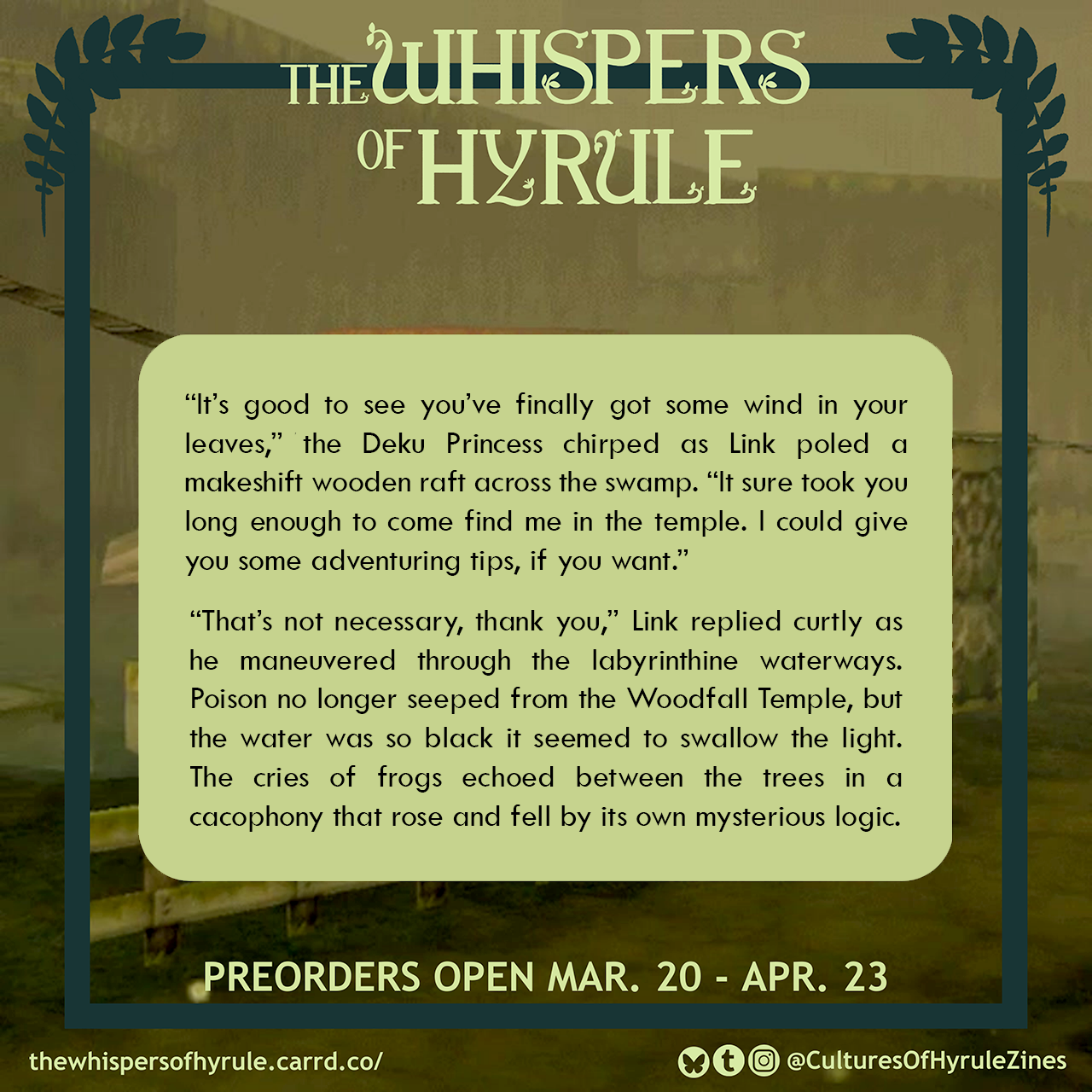
I contributed a short story about Majora’s Mask titled “The Brave Tale of the Heroic Swamp Princess.” My story follows Link and the Deku Princess as they venture through the swamp on their way home from the Woodfall Temple. I did my best to capture the exuberant spirit of the Deku Princess, who helps Link work through the trauma he experienced in Ocarina of Time, as well as the warm atmosphere created by the vibrant plant growth in the swamp.

It’s been a privilege to see the drafts shared by the writers, artists, and musicians who have joined me on this journey. From sunlit meadows to deep forest shadows, everyone has worked hard to convey the wonder and mystery of getting lost in the woods. I know I say this about every fanzine, but this book is going to be gorgeous.

Preorders for the zine are open until April 23, and three stretch goals have already been exceeded. If you’re interested, you can check out the project at the following links:

🌿 https://thewhispersofhyrule.bigcartel.com/
🌿 https://culturesofhyrulezines.tumblr.com/
🌿 https://thewhispersofhyrule.carrd.co/

A Legend of Shadows

When calamity besets his home in the desert, the young prince Ganondorf is forced to journey abroad to seek answers in Hyrule’s ancient sanctuaries. Lost within the shadows of a temple deep in the forest, Ganondorf struggles with a burden he does not yet have the power to bear.

I wrote “A Legend of Shadows” for Hyrule Apocrypha, an illustrated storybook fanzine exploring the myths and lore of the Legend of Zelda series. I consider myself extremely lucky to have been be able to create a story illustration with Peregyr, whose green and magical art can be found on Twitter (here) and on DeviantArt (here). We had a great time imagining Ganondorf’s backstory as a failed hero. This is how the story opens…

What would you do if you weren’t the hero? What if the chosen one were someone else entirely? Would you curse the gods and lament your fate? Would you turn tail and go home? Would you try your luck elsewhere, in a distant land where no one knew your name? Or would you simply lay down your sword and give up? Ganondorf was beginning to suspect that he was no hero, but he was nothing if not stubborn. Giving up was not a choice he was willing to make.

You can read the full story on AO3 (here), and you can check out more of the work featured in the zine on Twitter (here) and on Tumblr (here). Leftover sales, which include some lovely Zelda-themed merch, are now open (here).

When the Moon Didn’t Fall

All the clocks in Clock Town have stopped working, and letters have stopped arriving from the Gerudo in the Great Bay. Both the clock master’s daughter and the swamp witches’ son sense that something is amiss. Slowly they come to understand one another while their world gradually winds itself apart.

When the Moon Didn’t Fall is a short novella that imagines what Zelda and Ganon would look like in the world of Majora’s Mask. According to the Legend of Zelda Encyclopedia, Termina only exists as a dream inside Link’s mind, and it’s interesting to analyze how the events and characters of Majora’s Mask reflect the trauma that Link experienced in Ocarina of Time. I therefore wanted to use Termina as a stage to explore the trauma of Zelda and Ganon, specifically within the context of a dream that’s rapidly fading.

I think it’s fair to admit that I was strongly inspired by Stephen King’s 1990 novella “The Langoliers,” which is a disturbing bit of speculation concerning what happens to the world of the past after the present has already moved on. I tried to capture a similar sense of time (literally) running out, a theme that felt appropriate to the anxiety-inducing atmosphere of Majora’s Mask. Like “The Langoliers,” When the Moon Didn’t Fall has elements of uncanniness and horror, but it’s also about forgiveness, healing, and hope for the future.

I originally wrote this story back in 2018, but it still holds a special place in my heart. I completed a substantial set of edits so that I could include one of the early chapters in my portfolio of writing samples for The Whispers of Hyrule, an upcoming Legend of Zelda fanzine celebrating Hyrule’s forests. I love the swamp forest bordering the open plains of Majora’s Mask, and I enjoyed revisiting the strange green spaces of Termina through this fic.  

You can read the full story on AO3 here:
https://archiveofourown.org/works/14093202/

The story illustration was created by the dangerously talented Thali, whose cool and creepy video game art can be found on Twitter (here), on Instagram (here), and on Tumblr (here).

An Elegy of Earth and Sky

An Elegy of Earth and Sky
https://archiveofourown.org/works/55003288

Long ago, in a time now lost to the ages, Hyrule was a formless void roiling with primal darkness. Seeing potential in this untapped energy, three goddesses descended from the source of light to shape Hyrule according to their will. They bestowed three sacred virtues upon their daughter before leaving her in the land they created, where the god of the earth waited to grant her a gift of his own.

I’ve been intrigued by the mythology of the Legend of Zelda games since I first read the fantastically illustrated story of Hyrule’s creation in the game manual for A Link to the Past, and I’ve enjoyed how games like Ocarina of Time and Skyward Sword have expanded on the divine cosmology of the series. I was frustrated by the lack of any foundational mythology in Tears of the Kingdom, so I decided to write my own version of Hyrule’s origin story. The first half is based on Hesiod’s Theogony, while the second half borrows from one of the stories about Izanami and Izanagi in the Kojiki. Hopefully this short story reflects the poetry of its inspirations!

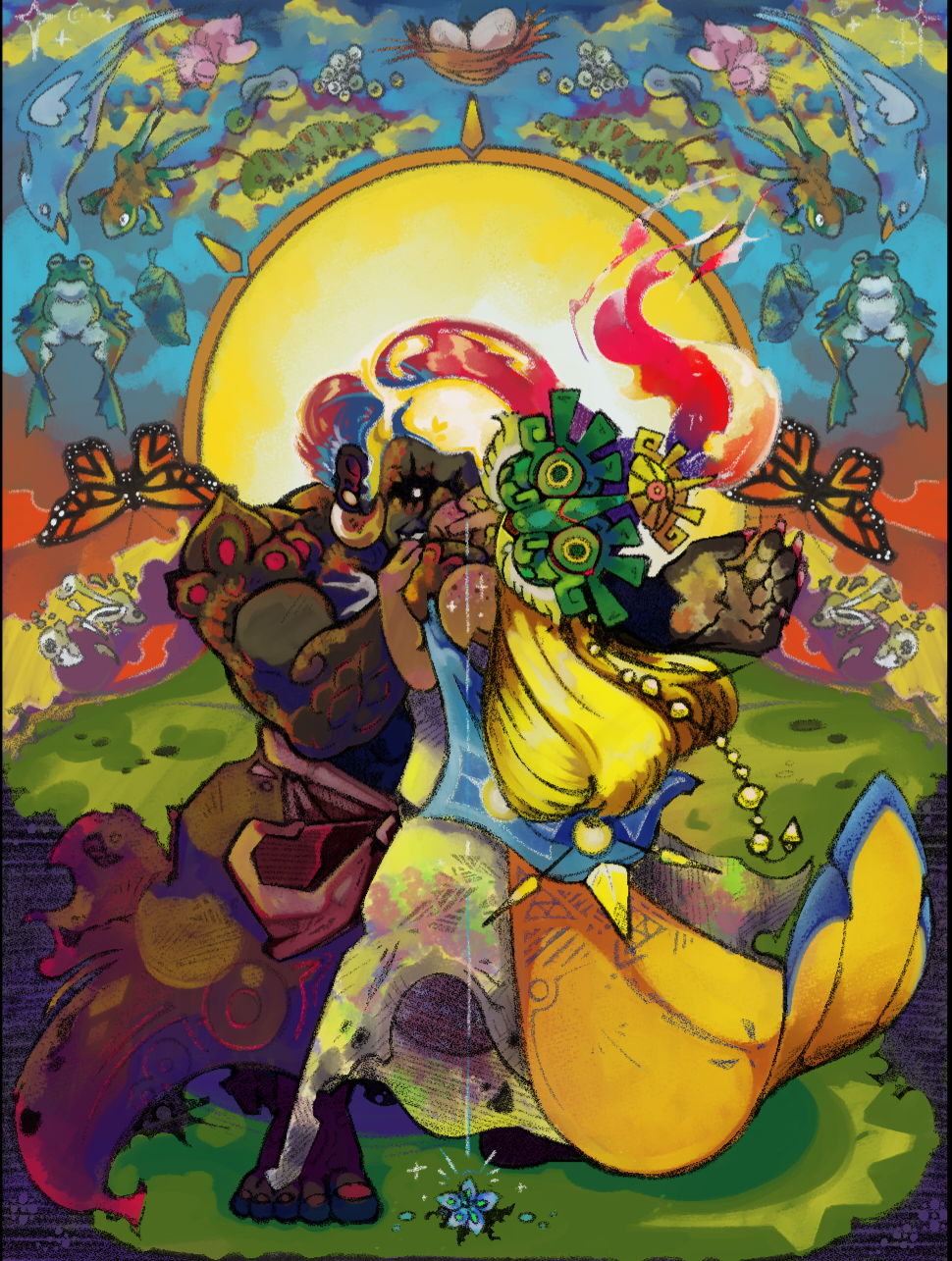
The illustration that accompanies this story was created by Hylias_Disgrace, a purveyor of the strange and divine whose gorgeous character art and intriguing comics can be found on Instagram (here). It was the artist’s decision to use the famous Gustav Klimt painting The Kiss as a way to bring out the parallels between Hyrule’s deities and the myth of Hades and Persephone, and I love how this dynamic illustration celebrates the cycles of the natural world.

The Memory of Stone

I wrote “The Memory of Stone” back in 2020, when the announcement of a sequel to Breath of the Wild encouraged many Legend of Zelda fans to speculate that the game would feature Princess Zelda as a playable character. I returned to this story after finishing my second playthrough of Tears of the Kingdom, which reduces Zelda to a voiceless source of crafting materials. It was a disappointment, to say the least.

One might argue that there are other games with female protagonists, so why insist on playing as Zelda? I would counter this argument with another question: why not play as Zelda? The concept of Zelda as a playable character makes perfect sense within the context of the games’ stories. Link’s journey almost always runs parallel to a journey that Zelda undertakes on her own, after all, and being able to explore Hyrule with a different set of skills (and from a different narrative perspective) would be a lot of fun.

“The Memory of Stone” follows Zelda through each of the temples in Ocarina of Time, and it’s a small attempt to imagine what the eponymous “legend of Zelda” might look like through the eyes of Zelda herself.

You can read the story on AO3 here:
https://archiveofourown.org/works/25230271

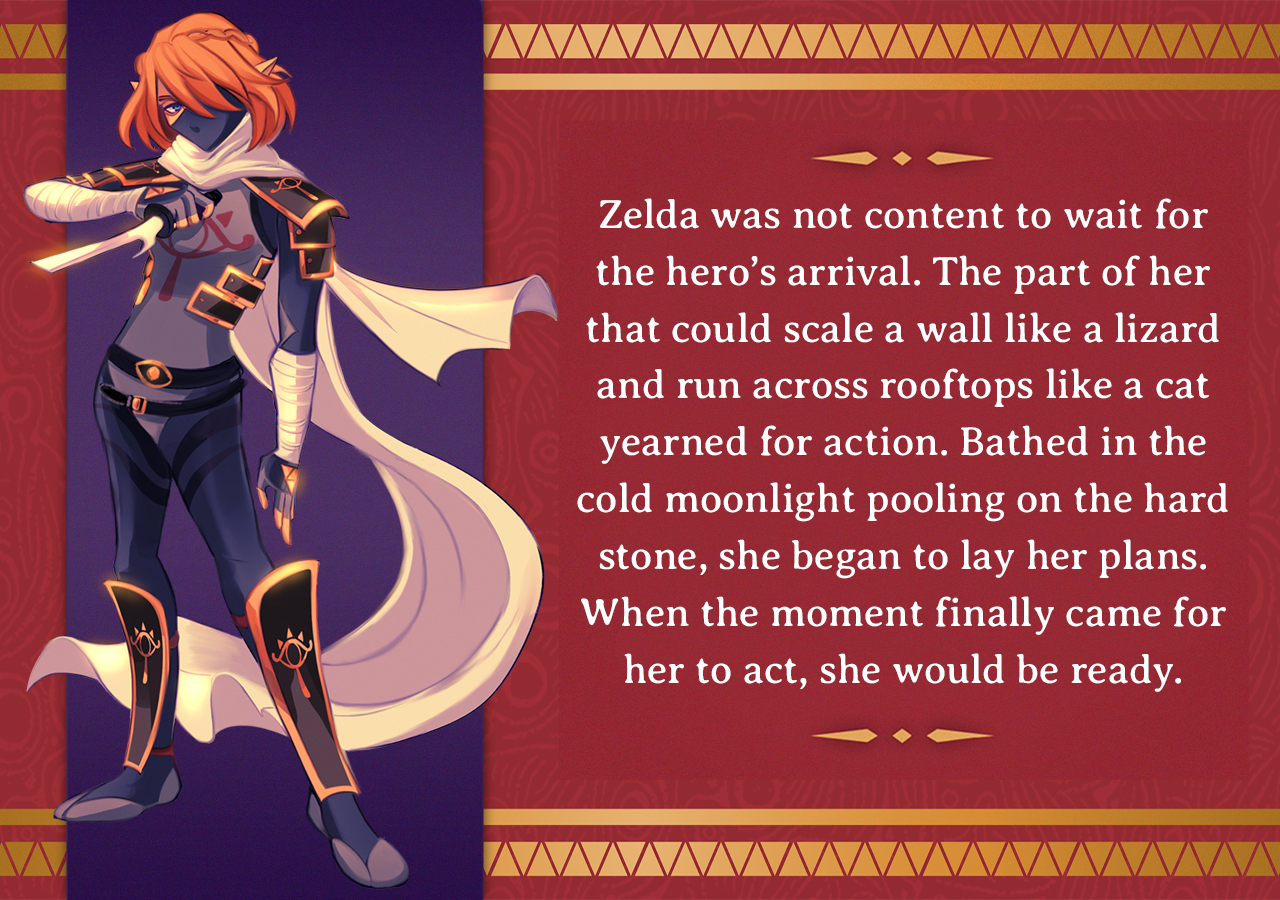
The illustration of Sheik included in the story preview graphic was drawn by the revolutionary Nolvini, a fan of shōjo anime who creates magical character illustrations filled with personality and flare. You can check out her work on Twitter (here), on Instagram (here), and on Tumblr (here), and she also has a shop on Etsy (here).

They Only Come Out at Night

Grog has noticed a number of peculiarities in Kakariko Village. Eerie lights flicker in the mountain valley after dark. Murky black water fills the old stone well that no one uses. Golden spiders spin their webs under the eaves of abandoned buildings. Little does Grog know that the legendary Sheikah of Kakariko still live, and that they are watching.

I’m one of the many children of the 1990s who read Stephen King way too young. I think I must have been ten years old when I first encountered the IT, and I read the novel like it was Harry Potter. I was too young to understand a lot of what was going on, but what I took away from the story was a lifelong fascination with haunted towns.

This is one of the many reasons why I love Kakariko Village in Ocarina of Time. Like Derry, Kakariko seems pleasant and idyllic in the daytime, but all manner of horrors creep through its sewers. Over the course of his journey through Hyrule, Link learns that Kakariko is a Disneyland-style stage setting that covers an underground labyrinth of corpse-choked dungeons. Impa opened the depopulated village to the refugees from the civil war that left Link an orphan, which means many of the people living in Kakariko have no idea what their homes are standing on top of.

I’m curious about the perspective of normal people who live in fantastic worlds, and I’m particularly interested in Grog, the odd young man who greets Link at the entrance to Kakariko after dark. His dialog is iconic: “People are disgusting. My own father and mother are disgusting. You must be disgusting, too!”

When Link returns to Kakariko after seven years, Grog is nowhere in sight. No longer a surly teenager who resents his parents, Grog has gotten himself caught up in some truly strange business. It was only when I played Ocarina of Time as an adult that I was able to put together all the pieces of Grog’s story, which ends with his death (or perhaps suicide) in the Lost Woods.

I think Grog’s unfortunate fate is representative of what happens to people in Hyrule who see too much or ask too many questions. He’s therefore a fun character to use to look at Kakariko from an outsider’s perspective while speculating on what may have happened to the Sheikah. “They Only Come Out at Night” uses some of my favorite Stephen King tropes to tell a story about a deeply haunted village, and I really enjoyed writing it.

If you’re interested in peering into the shadows, the story is on AO3 here:
https://archiveofourown.org/works/51149224

I wrote this piece for The Eyes of Hyrule, a Legend of Zelda fanzine about the mysterious Sheikah clan. The zine will hold leftover sales on Etsy (here) during November, and you can check out more of the work appearing in the zine on Twitter (here) and on Tumblr (here).

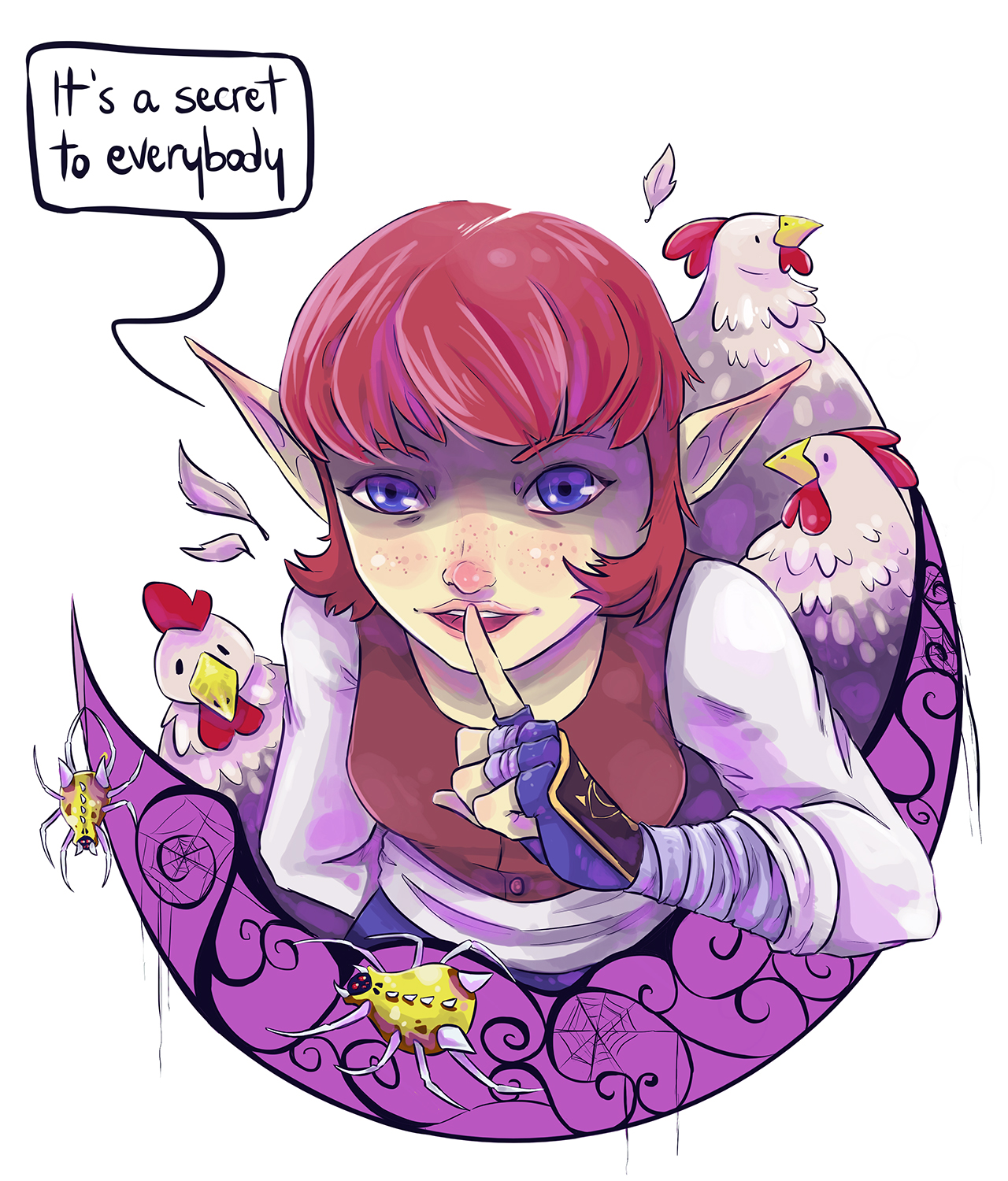
For the story illustration, I was fortunate to be able to join forces with Frankiesbugs, a true master of cute and creepy art. You can follow their work on Instagram (here) and on Tumblr (here). I also recommend checking out their current video game project in development, which is on Steam (here) and on Instagram (here).

A Worthy Successor

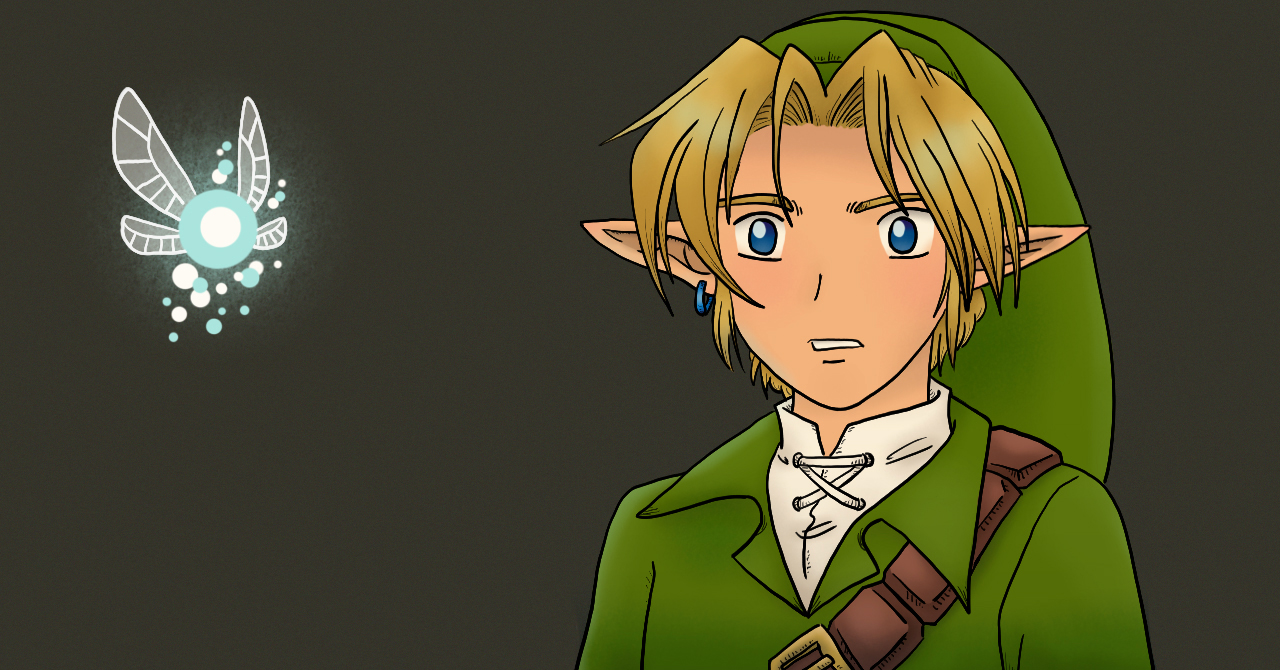
In an eerie castle submerged under cursed waters, Ganondorf tells Tetra about the world that once was. Ganondorf’s story is at its end, but his words inspire Tetra to dream of the world to come.

I recently started playing The Wind Waker in order to do research for a short essay about Koroks. The Wind Waker is a fresh and lovely game, at least at the beginning, and I always forget the emotional impact of the end. The pathos of Ganondorf’s longing for the Hyrule of the past always gets me right in the heart.

I think it’s interesting that, after The Wind Waker, Tetra goes on to establish New Hyrule, the setting of Spirit Tracks. She thereby achieves Ganondorf’s goal of restoring an ancient kingdom blessed by gentle winds. This begs the question – how would Tetra know about Hyrule? Given how much time Tetra spent with Ganondorf under the Great Sea, I think it’s safe to assume that they must have talked to one another.

This story is my attempt to envision what these conversations might have been. I wrote this story a few years ago, but I’m returning to it now because it still resonates with me. The older I get, the more I sympathize with Ganondorf, and the more willing I become to let decaying empires fall to ruin in favor of embracing the winds of change.

You can read the story here:
https://archiveofourown.org/works/35251798

The comic adaptation is by the magical Lightsintheskye, who is:
(on Twitter) + (on Tumblr) + (on Etsy)

The Flower Thief

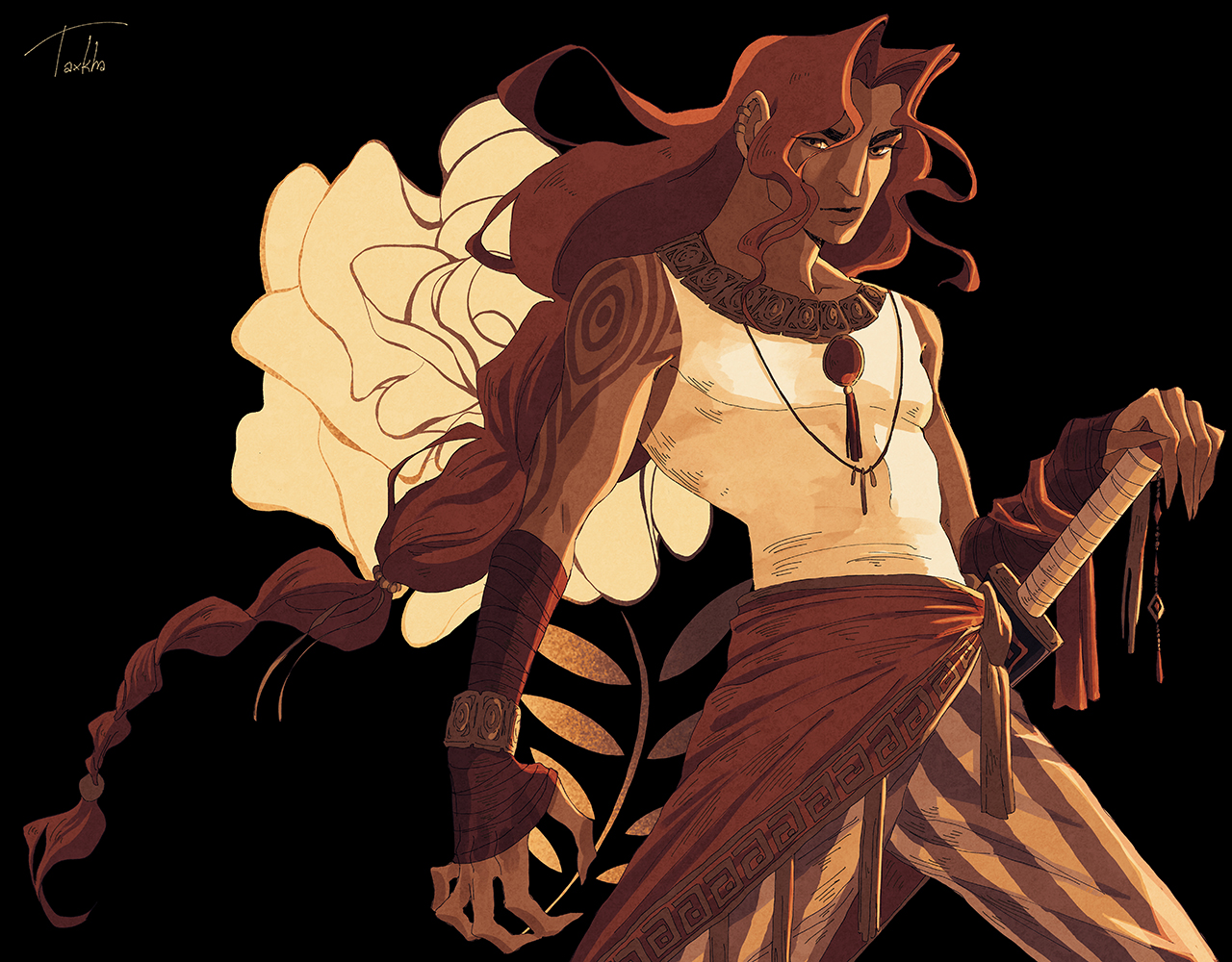
“The Flower Thief” is a story about how Ganondorf visits Hyrule as a child and falls in love with the green and beautiful land, even as he is warned away by the queen who will become Zelda’s mother.

What fascinates me about Ganondorf (at least prior to Tears of the Kingdom) is that he’s a villain whose actions seem far more evil than his character. Given that he’s not necessarily an evil person, what would drive him to such extremes?

In my own experience, evil is boring and mundane. “Evil” is someone who sends hateful messages on social media because they know they can get away with it, or someone who pretends not to see when a colleague is being harassed at work. People who are born into privilege can often be evil without even thinking about it, as the rules that govern the actions of other people don’t apply to them. People in positions of authority are often evil simply because it’s the path of least resistance. So, in most cases, evil is passive; it’s a matter of not challenging the baser impulses of human nature, or not bothering to fix a system that’s become twisted and broken.  

It’s therefore intriguing to me that, when Ganondorf wants “power,” what he’s seeking is the ability to upset the established order. Even if it’s for his own selfish reasons, he aims to transform the world, whether by undoing the mistakes of the past or creating an ideal future. He fails – and he fails miserably – but at least he tries.

I grew up with shōnen adventure manga, and I’m interested in seeing a similar coming-of-age story about someone like Ganondorf, who is talented and works hard but still ends up as the villain. “The Flower Thief” was my attempt to write a story like this for myself, and I think I managed to do a decent job of creating a nice parallel to Link’s first journey to Hyrule Castle in Ocarina of Time.

You can read “The Flower Thief” on AO3 here:
https://archiveofourown.org/works/32033518

This story was written for Ties of Time, an Ocarina of Time and Majora’s Mask fanzine. Ties of Time was published back in 2021, but you can still see the zine’s artwork on Twitter (here), and the zine’s stories have been collected on AO3 (here). The character illustration of teenage Ganondorf is by the bold and daring Taxkha, who shares their art on Tumblr (here) and on Twitter (here).

Hyrule Apocrypha Zine Preorders

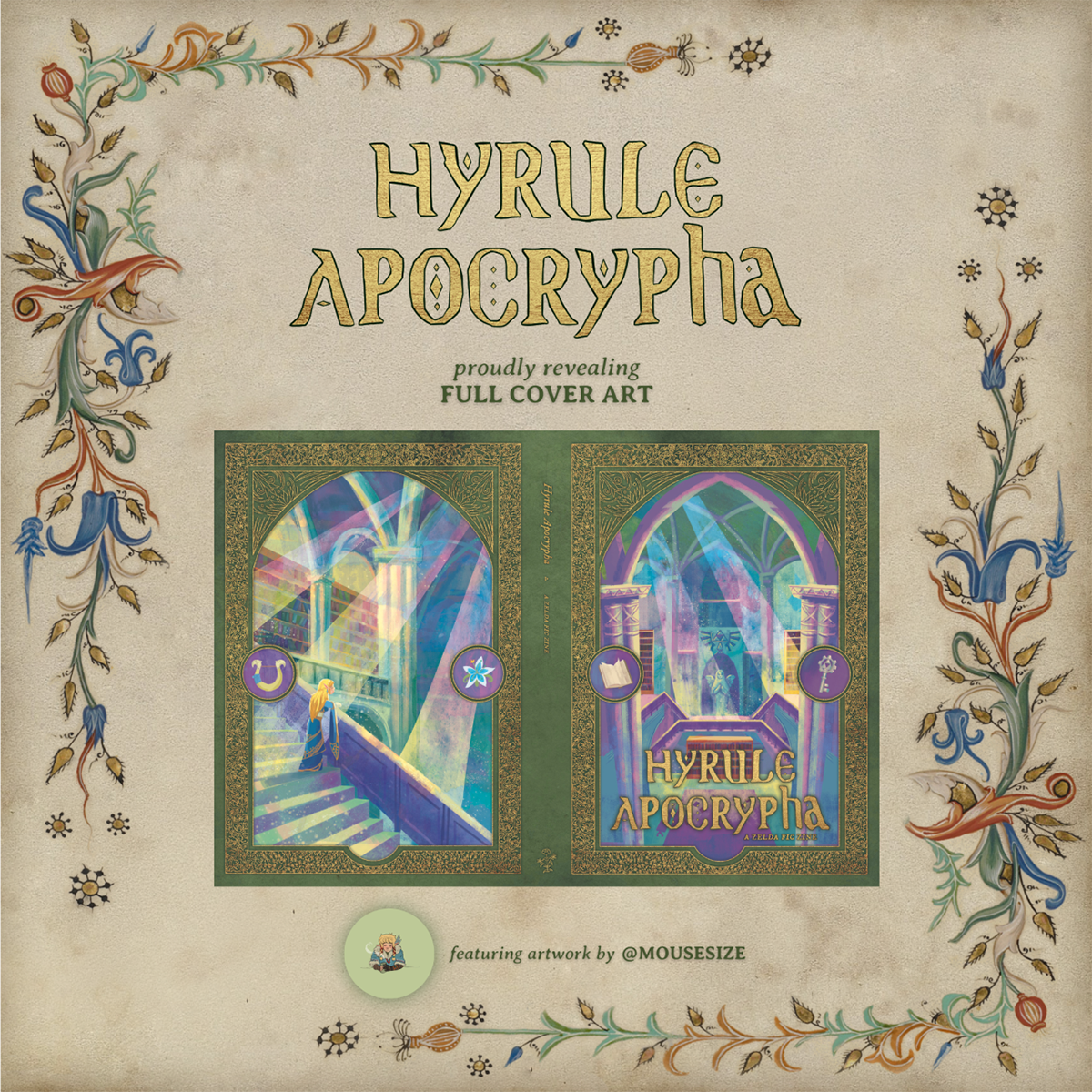
I’m excited to share the premise of the piece I wrote for Hyrule Apocrypha, an illustrated fiction anthology exploring the myth and lore of the Legend of Zelda series. Everyone knows the tale of Hylia’s chosen hero, but myriad other stories hide in the shadows…

Hyrule Apocrypha is a substantial full-color book that weighs in at 120 pages, and preorders are open until June 11.

🌿 Preorder page on BigCartel: https://zeldaficzine.bigcartel.com
🌿 Hyrule Apocrypha on Twitter: https://twitter.com/ZeldaFicZine

The Eyes of Hyrule Zine Preview

I’m excited to announce that preorders are open for The Eyes of Hyrule, a Legend of Zelda fanzine devoted to the Sheikah. The zine’s Carrd is (here), and you can check out more previews on its Twitter account (here).

There’s a lot of talent involved in this project, and the mods have been totally on the ball at keeping everything organized for the zine, which is expected to ship out this summer. It’s always a pleasure to be part of a project where everything clicks and comes together so well. Also, I might be biased, but I think the stories (and comics!) in this zine are especially interesting and unique.  

My own piece, “The Only Come Out at Night,” is a soft horror story about Kakariko Village in Ocarina of Time. It’s narrated from the perspective of Grog, the punk kid who hangs out near the entrance of the village at night. During the trading sequence necessary to acquire Biggoron’s Sword, the player can pick up hints that Grog’s story is much darker and more complicated than his initial appearance would suggest. I therefore wanted to use this character to explore the darker side of the Sheikah through the medium of a Stephen King style “peculiar little town” story. I had a lot of fun writing this piece, and I can’t wait to share it.

If you’re interested, you can preorder a copy of The Eyes of Hyrule via Bigcartel (here).