Blasphemous

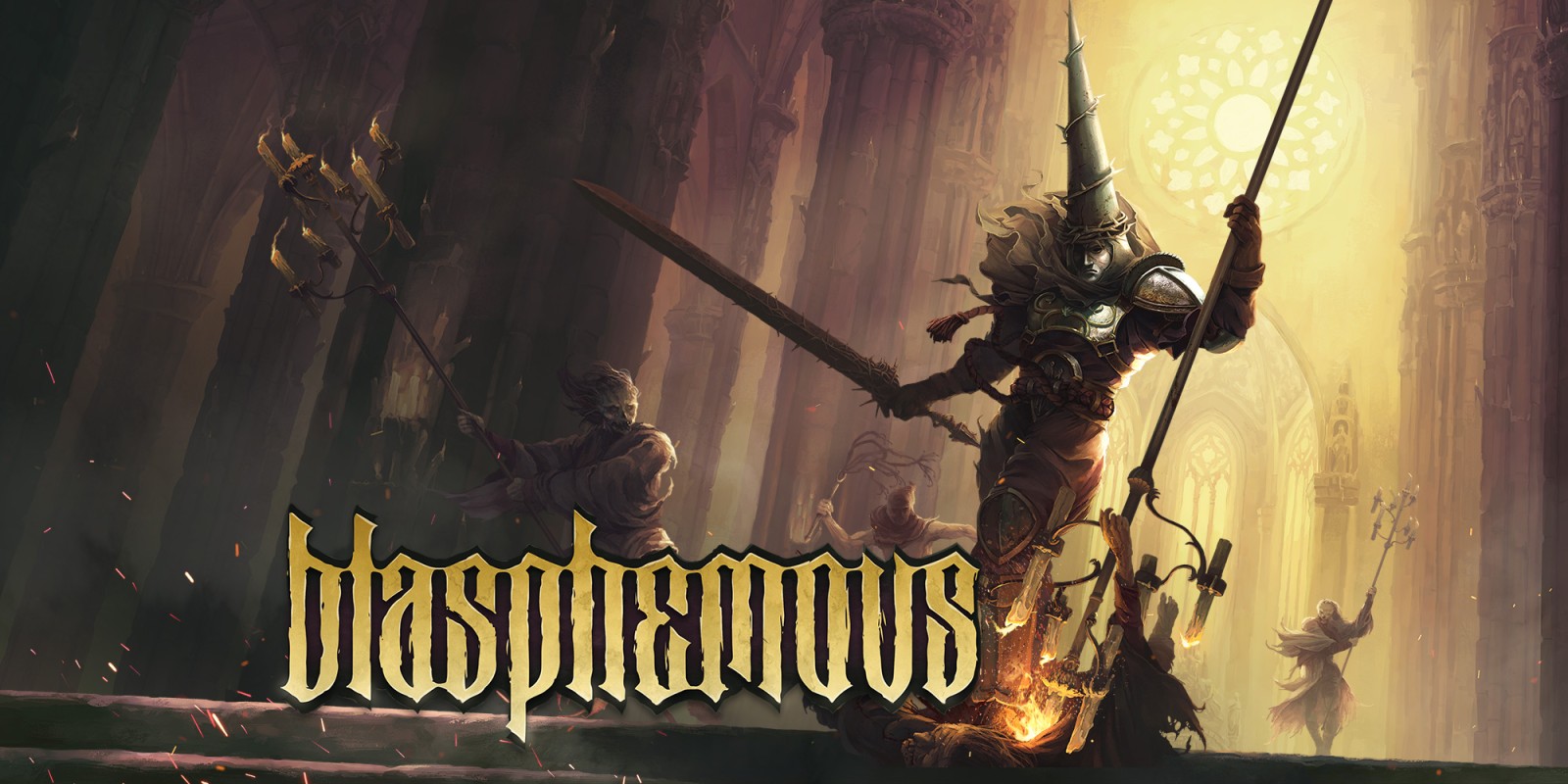
Blasphemous is an ultraviolent 2D Metroidvania with gorgeous 16-bit pixel art and limited but fluid animation. It describes itself as “fast-paced and punishing,” but it’s not really either of those things. The game’s focus is more on strategic combat than on platforming or quick reflexes, and your character moves at a fairly sedate speed. To me at least, the pace feels perfect, both from moment to moment and from one area of the map to the next. In terms of “punishing,” this is how I’d rate Blasphemous on a scale of “this game wants you to feel pain”:

6 – Guacamelee
7 – Blasphemous
8 – Shovel Knight
9 – Hollow Knight
10 – Rain World

In other words, Blasphemous is moderately punishing, but probably not at a level where you’ll give up at the beginning or rage quit in the middle. Granted, Blasphemous makes no attempt to be accessible, and it’s much easier if you use a walkthrough to access the health upgrades in the early part of the game, which are hidden so well (behind unmarked walls, under floors that only break if you jump on a specific spot from a great height, and so on) that you’d never find them unless you already knew where they were. Thankfully, once you get about two hours into the game, you start to understand how it works and don’t really need a walkthrough unless you’re a completionist.

Blasphemous has everything that I love about the Metroidvania genre, and it was worth my time just for the gameplay. The combat is engaging, the area-specific challenges are interesting, and the way in which the areas all eventually connect to each other is on par with Hollow Knight in terms of clever map design. If you enjoy indulging in a bit of exploration and backtracking, it will take about twenty hours to finish Blasphemous with near-perfect completion.

What really got me into Blasphemous is its atmosphere. Everything is compared to Dark Souls these days, but Blasphemous really is Dark Souls in 2D. The level of violence is incredible, and the game gets creative with its brutality. The architecture is similarly brutal and creative. Each area has its own unique character, and the background graphics are beyond fantastic. As for the story, it’s essentially this: You were dead, but now you’re undead for reasons that are unclear; and something bad happened to the world, but we’re not going to tell you what that was. Each collectible item has its own lore, all of which is disturbing.

I never felt as though Blasphemous is just trying to be awful for the sake of shock value, though. As you might guess from the title, it’s based on Spanish Catholicism, and it takes the themes and imagery of Catholicism to their logical extreme. If you’ve ever made a joke about how Catholicism is all about the fetishization of punishment and the worship of death, this game takes that joke seriously. At the same time, it’s so sincere and culturally specific that it never feels disrespectful. I was actually so impressed and curious about the lore and imagery that I looked up a few of the real-world cultural references online, and now I have a greater appreciation for Catholicism. No joke!

( I should say that this game probably isn’t for genuinely religious people, though. It is very literally blasphemous. It also contains all sorts of casual graphic and textual references to real-world torture and hate crimes committed by the church, which perhaps some people might not want to see. Honestly I can’t believe I played this game on a Nintendo console, what a time we live in. )

My favorite part of Blasphemous is its OST, which suits the tone and atmosphere of the game perfectly. About a third of the tracks suffer from dramatic moody bitch disorder, and I can’t remember where they play in the actual game, but most of the OST is mellow acoustic Spanish guitar. Que las Campanas me Doblen is a good representative track, and I really like Y Yo Fuego Te Daré, which manages to be both chill and epic at the same time. A track called Arpegios en Ocre plays in an area called “The Desecrated Cistern,” and it really makes you feel as though you’re exploring a cavernous underground space with a vaulted ceiling. I think the OST holds up well on its own as lo-fi Flamenco beats to chill to, but it’s also a gorgeous backdrop to the game and its ruined world.

Reminiscence in the Night

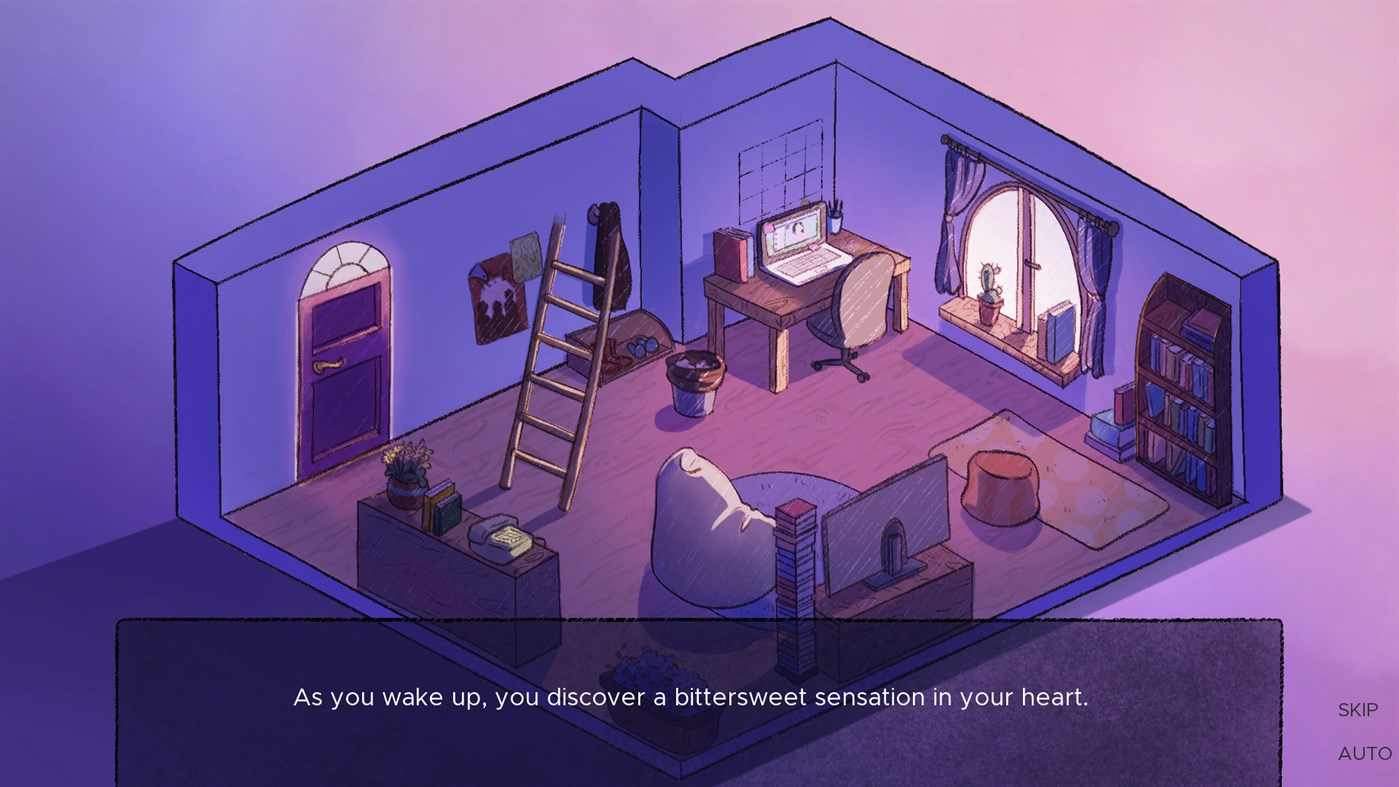
Reminiscence in the Night is a short point-and-click story game that takes place in the two-room apartment of someone with serious depression. It has multiple endings, and it takes about half an hour to play.

At the beginning of the game, your character wakes up in their apartment with no memories, and they can’t (or won’t) go outside. Their only clues to their identity are their mother, who calls on the phone, and their childhood friend Sofia, whom they can video chat with on their computer. Unfortunately, their mother is suffering from a memory disorder, and things are a bit awkward with Sofia.

The controls are simple and easy, but there isn’t much to interact with. The endings aren’t broadcast, and the dialog choices seem arbitrary. Unless you use a walkthrough, you’re probably not getting out of the apartment.

The game’s soft pastel graphics are cute, but its themes are very dark, and there are mild elements of horror. It’s difficult to understand exactly what happens if you get the bad ending, but either a ghost that lives in your mirror attacks and destroys you, or the ghost is metaphorical and you commit suicide.

The good endings are a bit more interesting, but you can only unlock them through an exact series of specific choices. If you happen to choose the “wrong” response to Sofia during your first conversation – which is, again, not broadcast at all – you’re almost certainly going to get the bad ending.

I’m not sure how well this arbitrariness works as a narrative device; but, if you’re willing to accept Reminiscence in the Night as a horror game with a dark ending, it’s an entertaining way to spend half an hour. It’s going for $3 on the Nintendo Switch store, and I’d say it’s worth it.

I’m intrigued by Team SolEtude, the studio that developed Reminiscence in the Night. They’ve got about half a dozen free games up on Itchio, and I’m definitely interested in playing more of their work.

Spirit Hunter: NG

Spirit Hunter: NG is a 2018 visual horror novel about the urban legends that come out after dark in a sleepy Tokyo suburb. You play as Akira Kijima, a 17-year-old delinquent whose young cousin has been captured by a spirit named Kakuya. Kakuya challenges Akira to a game, promising that she will return his cousin if he manages to confront a series of monsters local to the neighborhood of Kissouji.

The overarching story of Kakuya’s game is somewhat silly, as are the protagonist and supporting characters. The stars of the game are the urban legends that form the core of each of the seven chapters. As far as I can tell, these urban legends are all original, and it’s a lot of fun to slowly gather the details of the stories. The monster artwork is very creative and very gruesome, while the scenes depicting the monsters’ victims are horrible, explicit, and intense. There are no jump scares, but I was genuinely shocked by some of the deaths.

The gameplay is simple. You investigate your environment by shining your flashlight on objects embedded in the background artwork, and you collect various odds and ends that you use to solve simple puzzles. You’ll occasionally find yourself in life-or-death encounters with monsters who want to kill you, as well as overzealous police who will end your adventure early by arresting you. During these encounters, you’re presented with a timed series of dialog choices, and you’ll receive an instant “game over” if you select incorrectly.

Unfortunately, you can only save at certain points, meaning that you may have to replay an entire extended encounter sequence if you mess up. It’s possible to speed through previously read text, but I became so frustrated by an early-game confrontation that I started using a walkthrough to help make the gameplay a bit smoother. Although most of the puzzles and dialog choices are self-explanatory, others can feel entirely random. Still, if you don’t mind consulting a walkthrough before you play through the monster encounter sequences, the story flows smoothly, and the exploration elements are enjoyable and fairly intuitive.  

NG has “good,” “bad,” and “normal” endings based on whether you treat the monsters with violence or compassion. Other than that, there don’t seem to be any branching paths, and your choices don’t have anything more than minor cosmetic effects on the story. You can raise the level of affection that the named NPCs feel toward you, but this doesn’t seem to affect anything other than a few throwaway lines of dialog.

The game also includes a few sidequests that involve solving simple riddles to find D-Cards, trading cards that contain information on bonus urban legends with marginal connections to the main plot. These sidequests give the player an opportunity to explore the environment with a greater attention to detail, and the cards showcase some of the most interesting writing in the game. None of this card collecting is mandatory, but it’s nice to have an excuse to walk around the Tokyo suburbs late at night when all the sources of light are artificial and vaguely eerie by default. The atmospheric sound design is excellent as well, and it’s a pleasure to listen to your character’s footsteps echoing on concrete against a backdrop of city traffic, buzzing streetlights, and convenience store chimes.

If you use a walkthrough to progress smoothly through the confrontations with monsters, NG takes about fifteen hours to complete, and it’s easy to get sucked into the story. All of the urban legends are fascinating, and the game has a fairly progressive worldview on corporate violence, corrupt law enforcement, and the ways in which wealth and power facilitate the “othering” of people who are different. NG isn’t misogynistic or gross about its female characters, and there’s no sexual violence or lolicon.

All but one of the urban legend monsters are female, and NG is a treasure trove of themes and imagery to anyone interested in the intersections between gender and horror. The mystery at the core of the overarching story is tied both to real Shintō traditions and to real urban legends about (hopefully fictional) Shintō traditions, so there are a few extra layers of the narrative that players familiar with Japanese religion and folklore will be able to appreciate and enjoy.  

I definitely wouldn’t recommend NG to anyone who can’t handle graphic R-rated horror, but it’s visually striking and thematically satisfying. I respect and admire the game’s creepy demonic women, and I gradually came to sympathize with a few of the monstrous male characters as well. NG is so rich in narrative detail that it would be a fun game to write an in-depth academic research paper about… and who knows, I might even write this paper myself!

World End Syndrome

World End Syndrome is a visual novel about a small seaside town with dark secrets. It’s structured like a dating sim, and you have to romance each of the five datable characters if you want to unlock the “true ending” that answers all the questions about the overarching mystery. Thankfully, the dating sim elements are relatively undemanding. There aren’t a lot of dialog options, and the gameplay mainly involves choosing which location to visit on each day during the month of August.

I know this will be a deal-breaker for some people, so I should say at the beginning that there’s some mandatory incest in this game. But it’s sort of okay because of plot reasons? As far as dating sim incest goes, the relationships in World End Syndrome didn’t particularly creep me out. It’s honestly not that big of a deal, especially not in a game that would be PG-rated were it not for the occasional murder, but your mileage may vary.

As the nameless protagonist, you move to the small seaside town of Mihate to live with your cousin following the death of your sister in a car accident. You and your cousin are in the same class in high school, and your homeroom teacher is a folklore scholar who just published a bestselling YA romance novel. The novel is called World End Syndrome, and it’s based on the Mihate legend of the Yomibito, a dead person who returns to life but doesn’t know they’re dead.

There are strong “Bruce Willis at the end of Sixth Sense” vibes surrounding the protagonist at the beginning, but he turns out to be very much alive – at least until he gets murdered at the end of the prologue. This is the game’s official “worst ending,” and you have to start over from the beginning and make a different choice at a crucial point to progress. In order to avoid being murdered, you have to form an emotional bond one of the girls in your class. Successfully doing so for the first time leads you to an ending that, while satisfying in and of itself, does nothing to explain what the deal is with Mihate and its spooky legends.

It would be tedious to explain the details, but World End Syndrome has an interesting system of unlocking various scenes and dialog choices based on the number of previously completed interactions. Your cumulative progress carries over between saves, even when you’re hopping from one save file to another on the same romance route. What this means is that each playthrough is going to be different, even during repeated scenes. Your first full playthrough will tell a fairly straightforward story about a high school romance that’s sweet despite having hints of darkness, but on subsequent playthroughs you’ll begin to realize that there’s something very weird going on in Mihate. World End Syndrome isn’t really a horror game, as it’s not gruesome and doesn’t go out of its way to be upsetting, but it turns out to be an intriguing supernatural mystery.

The character art of the girls is very cute, the character art of the boys is very over-the-top silly, and the environmental art is absolutely gorgeous. Although there’s nothing special about the writing on a line-by-line basis, the translation is solid and pleasant to read.

What helps World End Syndrome stand out is the voice acting and sound design. I don’t have the vocabulary to describe what makes the audio elements of the game so appealing, save to say that the quality of the recording is excellent. There’s a lovely in-game radio broadcast that allowed me to finally understand the appeal of ASMR, and I think the sound quality is something you can appreciate even without knowledge of Japanese. The game gives you a lot of control over the sound channels, and you can turn down or even mute the voice acting if you prefer.

I was on the fence about World End Syndrome, as I was dubious about a game that wants you to play the same story six or seven times, but I’m glad I gave it a chance. If you’re only interested in one playthrough, that’s perfectly fine. It takes about ten to twelve hours to get from the beginning to the first character-specific “good ending,” which is a respectable length for a visual novel. Even if you don’t have the patience to solve the mysteries of Mihate, it’s a lot of fun to explore the town, attend club activities, and go on dates while there are dead people (and possibly a cult) wandering around and killing people in the background.

Half Past Fate

Half Part Fate is a visual romance novel by an American developer that follows three couples on their journey to their first date. There’s a long list of possible achievements to unlock, but the story itself is entirely linear. Although the characters are adults, the tone is 100% PG, and everything is very sweet and wholesome.

The game is divided into twelve chapters, each of which takes about ten to fifteen minutes to complete depending on how quickly you read and how much you want to explore. You play each chapter as one of the romantic leads in a top-down environment, each of which functions as a small and self-contained stage reminiscent of the “town” sections of a 16-bit JRPG. Your job is to walk around and talk to people, and the gameplay elements are limited: Person A will give you Object B, but only if you trade it for Object C that you get from Person D. There are (mercifully) no puzzles or reflex-based minigames, making Half Past Fate a chill and relaxing experience.

The environments are a lot of fun. The game is set in a romanticized hybrid of Los Angeles and Austin, and there is no crime, poverty, or infrastructural decay. Everything is clean and neat and aesthetically pleasing, and no one is rude or creepy. You can therefore walk around urban environments like coffee shops, public parks, outdoor shopping arcades, and waterfront bars without worrying that someone is going to report you to the police for striking up conversations with strangers. Half Past Fate reminds me a lot of Earthbound in that it offers the player an opportunity to stroll around a contemporary city and read quirky flavor text while catching small glimpses of people’s lives.

The three love stories are just as cute and charming as the pixel art. One couple has been friends since college but never found the right time to confess their feelings, and now they find themselves realizing how much they mean to each other as their artistic careers have started to take off. One couple meets randomly at a tea-themed street fair and has a lovely afternoon together, but then the boy loses the girl’s phone number and has to track her down. The third couple is entangled in a high-stakes game of money and power and deception, and it admittedly takes a willing suspension of disbelief to fit them into the same world as the other characters, but I still liked their story a lot.

The three main couples are straight, but they’re surrounded by representatives of a rainbow of genders and sexualities. Many of the queer side characters are involved in romantic dramas that you can piece together if you take your time exploring, and queerness is so open and omnipresent that the straightness of the main characters doesn’t feel forced.

In addition, the diversity of the cast is taken entirely for granted, which I appreciate. The racial and ethnic identities of the characters are specific and affect more than their family names and physical appearance, but they’re never the sum total of any character’s personality or backstory. Speaking personally, it’s rare to see multiethnic friend groups represented in popular media in a way that doesn’t involve tokenism, but the characters’ networks of relationships felt very real and natural to me.

I picked up Half Past Fate on Nintendo’s online storefront, and I enjoyed playing it as a handheld portable game on the Switch Lite. I’m not sure if the full $10 list price will be worth the three hours of gameplay for everyone, but it definitely was for me (especially considering that paperback novels cost almost $20 these days). Although I would have preferred a bit more bite and tension in the storytelling, the art and graphics are wonderful, and I’m a big fan of this retro JRPG style of structuring a visual novel. I’ve already downloaded the second game in the series, Half Past Fate: Romantic Distancing, and I’m looking forward to sitting down with it the next time I want to spend a relaxing afternoon in a softer and brighter version of reality.

Mad Father

Mad Father is a retro survival horror game about a cute girl named Aya who lives in an isolated mansion with her father. As you might be able to guess from the title, her dad is not 100% sane.

The game was originally designed with RPG Maker and released on Steam in 2012, but it’s been remastered for Nintendo Switch with updated graphics and sound design, as well as a few postgame bonus segments. It takes about three hours to play, and I felt that it was a good value when I bought it on sale on Nintendo’s digital storefront for $5. The horror is ghoulishly cheesy, and the jump scares are a lot of fun.

The opening of the game is nonlinear, as Aya has the run of the entire aboveground portion of the mansion. It’s somewhat difficult to understand what to do at first, and I admit that I had to consult a walkthrough to figure out how to get started. Once you gain access to the family’s sprawling underground murder dungeon, however, the path forward becomes easier to discern. Also, once you figure out how the environmental puzzles are supposed to work, they become much more entertaining.

As you grow accustomed to Mad Father during the first hour of playing, the jump scares become less effective, and the game compensates by leaning hard into camp. I don’t mean to suggest that anime can’t be scary, but Mad Father’s combination of over-the-top character portraits and cute pixel art amps up the carnivalesque elements of the story. By the time the dad starts chasing you with a chainsaw, my main reaction to the various horrors on display was delighted amusement.

There is one genuinely creepy moment toward the beginning of the game involving the father’s (nonsexual) reaction to the distress of a naked preteen girl, and it’s creepy because the game knows this reaction is upsetting but still treats it as perfectly natural. The killer dolls and unquiet ghosts haunting the tunnels of the murder dungeon aren’t actually all that scary, but the “kind” behavior of the father during the sepia-tinted nostalgia flashbacks is super disturbing. Mad Father is officially rated Teen, but it’s definitely not for kids (or adults sensitive to depictions of child abuse).

The basement of this family’s house is truly epic, by the way. The other day I was reading that a lot of families who live in McMansions don’t actually have any furniture in most of the rooms, and that makes sense to me. If you’re not imprisoning people to use as subjects for occult medical experiments, then what are you supposed to do with all that space, exactly? If nothing else, I suppose Aya’s dad is to be commended for his commitment to his interior decorating theme. It’s a shame that this theme is “horrible grotesque murder,” but if he’s paying the property tax on all those rooms then he might as well put them to good use.

Anodyne

After starting and abandoning Anodyne a few times on various platforms, I downloaded it onto my Nintendo Switch. Being able to play this retro-styled adventure game on a handheld console turned out to be just what I needed in order to appreciate the experience, and I got completely sucked into its world. Because of its horror elements, I’m not sure Anodyne is for everyone, but I had a great time working my way through the game while eagerly anticipating what sort of strange and grotesque imagery I would encounter next.

The game has Pokémon Ruby/Sapphire style Game Boy Advance era graphics. The pixel art is by turns allusive and unique, and it’s occasionally genuinely gorgeous or horrifying.

The screen-by-screen dungeon and overworld layouts remind me a lot of the two Legend of Zelda Oracle games, and the gameplay is like what those games could have been if they had focused on their core strengths instead of distracting the player with extraneous marginalia. If you’re willing to explore a bit, you can learn to jump fairly in the game, and it’s a neat ability to incorporate into the Zelda-style gameplay.

Anodyne also gives off strong Yume Nikki vibes. You start off on a fairly generic quest, but it quickly becomes clear that you’re exploring a manifestation of the subconscious mind of the protagonist, who is not doing okay. There are clear references to addition, depression, and suicidal ideation, and each of the dungeons is themed after a specific fear. The first dungeon is about the fear of not being able to see, the second dungeon is about the fear of being born from the bloody entrails of your mother’s body, the third dungeon is about the fear of being generic and unnecessary, and so on.

Anodyne also reminds me of the original The Legend of Zelda in that there’s zero guidance – the game has no interest in telling you where to go or what to do. This is why I abandoned it the first few times I tried to play it, as I arrived at its open field area and became overwhelmed. Once I decided to stick with it and finally figured out the small environmental clues meant to lead the player forward, it was a lot of fun to be able to go anywhere and do anything while unearthing a few secrets along the way.

Anodyne’s structure is balanced between the overworld areas and the dungeons, and each of the dungeons is a perfect puzzle box. Despite the gameplay mechanics being deliberately limited and basic, some of the puzzles are very clever. The controls are a little loose, but it’s not really a combat-heavy game. There’s no real penalty for dying, and I died a good three dozen times out of sheer laziness but didn’t feel frustrated even once.

It took me about six hours to finish Anodyne, and I enjoyed every minute. It seems there’s a lot of postgame content that involves revisiting various locations, talking to important characters again, and using a new ability to access a bonus dungeon. This game is subtly but undeniably disturbing, and I’m looking forward to seeing just how weird it can get after the first “quest” has been completed. Or maybe the player-character finally works through his trauma and gets better? That would be good too. I guess.

To summarize: Anodyne is a 16-bit nightmare adventure for a mature audience, sort of like a re-imagining of Majora’s Mask in which characters are allowed to say fuck. Putting the edginess aside, it’s super fun to play, and the dungeons are ghoulishly creative.

Turnip Boy Commits Tax Evasion

Turnip Boy Commits Tax Evasion is a 16-bit Zelda-style adventure game with cute graphics and meme-heavy writing that takes about two and a half hours to play from start to finish with 100% completion.

Along with a bright and colorful overworld, Turnip Boy Commits Tax Evasion features three formal inside dungeons and two less formal outside dungeons, as well as the usual variety of “go fetch me this thing” sidequests. The game is meant to be accessible to a diversity of players but still presents a range of entertaining challenges. The gameplay isn’t engineered for precision mechanics, which makes the boss fights somewhat more difficult than they perhaps need to be, but you can turn on “god mode” at any time from the menu. Around the middle of the game, Turnip Boy discovers a device that generates portals, and this tool enables are some fun puzzles involving getting bombs and blocks to where they need to be on the map in order to move forward.

Your main goal, as Turnip Boy, is to destroy every single piece of horrible paper you get your (non-existent) hands on. Tax documents? Rip them up. Leases? Rip them up. Receipts? Rip them up. A love letter that the girl you like wants you to deliver to someone who isn’t you, even though she knows you like her? Rip it up right in front of her face. Someone’s uwu anime drawing? Rip that mess up.

It’s very cathartic.

The exploration and puzzles are fun, but what I really enjoyed about Turnip Boy is the dialog, as well as the way your adorable yet feral protagonist’s silence is used for comedic effect. This game uses one of my favorite Earthbound-inspired tropes ever, which is to populate dungeons with people who talk to you, making them feel like towns that happen to be temporarily overrun with monsters. There are also diaries and other documents (that you can rip up!) scattered about in the dungeons that provide lowkey Fallout-style worldbuilding.

So I suppose you could say that Turnip Boy Commits Tax Evasion is a comedy story game that’s set up as a 16-bit Zelda adventure quest. Thankfully, the 16-bit graphics and Zelda-style gameplay elements work really well. The music is super-catchy too.

Is Turnip Boy Commits Tax Evasion worth $15? To me, it definitely was. A team of fifteen people developed this game, and I’m happy to give each of them a dollar. If you’re in the “I want shorter games with worse graphics made by people who are paid more to work less and I’m not kidding” camp, Turnip Boy Commits Tax Evasion is the game for you, especially if you’re in the mood to take an afternoon off and enjoy yourself by exploring a colorful fantasy garden while gleefully smashing capitalism.

Ni No Kuni: Wrath of the White Witch

I’ve been saving Ni No Kuni: Wrath of the White Witch for a rainy day since it came out on the Nintendo Switch in September 2019, and my “rainy day” turned out to be my first winter back in Philadelphia, which has hit me with far more snow than I expected. Wrath of the White Witch is magical and delightful, and it’s the perfect game for cozy days indoors.

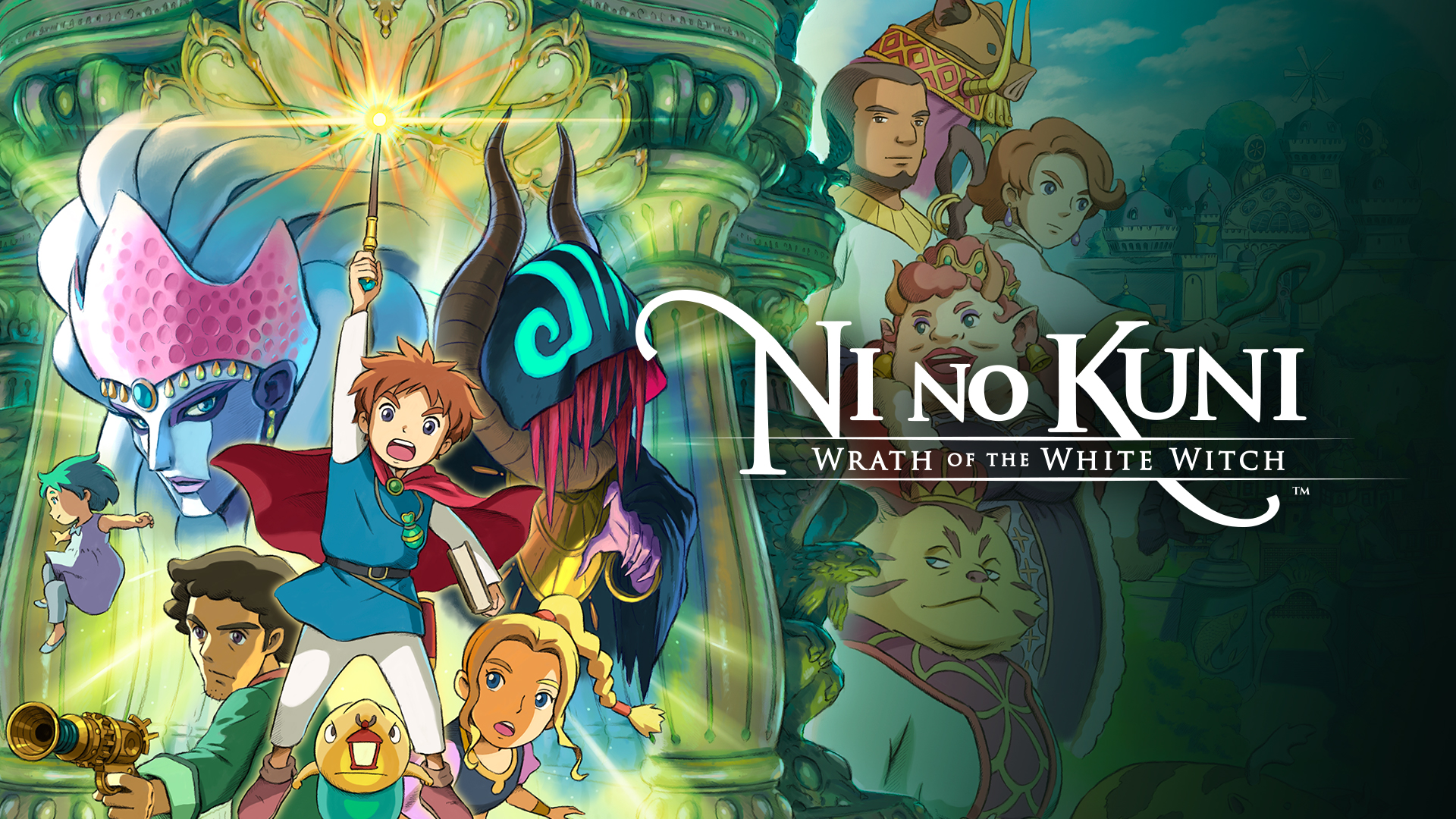
Wrath of the White Witch is a seventy-hour JRPG that’s intended for kids around the same age as the game’s protagonist, who is around ten years old. It was developed in collaboration with Studio Ghibli by Level-5, which makes the Professor Layton and Yo-kai Watch games.

As indicated by the game’s title, it takes place in two closely connected worlds, a high fantasy world of wizards and castles and talking animals and a world loosely based on our own. You play as Oliver, a boy who travels between a suburb of 1950s Detroit and the fantasy world with the intent of finding a way to save his mother, who has recently passed away from an illness. The idea is that Oliver’s mother’s “soulmate” in the fantasy world has gone missing; and, if he can find and rescue her, then this might have an effect on his mother’s fate in his own world.

The game’s combat system is much more complicated to describe than it is to actually play. You have three characters who can move freely across the battlefield while executing commands. You control one, and the others are controlled by AI. The AI is unfortunately not that smart, but almost none of the battles are actually that hard. The classic JRPG strategy of “just be five levels over where you probably need to be” works perfectly every time, and there’s also an Easy Mode that you can switch on and off whenever you like.

Each of your three characters can equip three familiars, which you can catch in the wild and train like pokémon. You’ll use your familiars to fight, but there isn’t any pressing need to balance your team or do research into the strengths or weaknesses of individual creatures. There’s also no pressure to catch new familiars, or even any way to check your progress if “catching them all” is your goal. The familiars are cute and fun to play with, and there’s no drawback to just using the ones you like. You can also feed them adorable status-boosting snacks if you want to.

The combat system is fairly deep, but it took me about five hours of gameplay to start moving beyond a basic sort of “attack by hitting the enemy with your stick” mentality. Wrath of the White Witch originally came out on the PlayStation 3 console in 2011; and, true to that era, it tries to explain everything to you with copious amounts of text. Oliver is accompanied by a companion named Drippy, who’s a little like Fi in Skyward Sword in that he will repeatedly interrupt gameplay to explain mechanics you could easily have figured out for yourself. Thankfully, he eventually backs off, which makes it much easier to experiment and thereby figure out the ins and outs of battle strategies.

There are a few other aspects of Wrath of the White Witch that show the game’s age. To give an example, it reminds me somewhat of Final Fantasy XII in that it forces the player to sit through more than two hours of exposition and pointless tutorial missions before the game actually begins in earnest. I won’t lie – this is horribly tedious, and you just kind of have to sit there and be patient.

Bits and pieces of the game’s story are a little tone-deaf as well, especially given its secondary setting in the United States at the beginning of the Civil Rights Movement.

There is one African-American character in Wrath of the White Witch. His name is Rusty, and he beats his wife. Like, right in front of you. His back is turned to the camera when he does it, but what’s happening is obvious. This is one of the only real instances of the game portraying a negative emotion stronger than mild anger or gentle sadness, and it’s… I mean, this is a poor word choice, but it’s striking.

One of Oliver’s traveling companions in the fantasy world is Esther, a girl from a vaguely Orientalist desert city modeled on Silk Road culture. Her counterpart in Oliver’s world is his best friend’s neighbor, a girl named Myrtle. Oliver has seen Myrtle out of her window, but he’s never spoken to her because she’s ostensibly too sick to leave the house.

It turns out that the Myrtle was sick but has gotten better, and that she doesn’t leave her room because she’s scared of her father. Rusty, a car mechanic, has had to work overtime to pay for her hospital bills, and he’s been taking his frustration out on his wife, which terrifies Myrtle. Since Oliver is a wizard, he can use magic to heal Rusty’s heart, help Myrtle overcome her anxiety, and thus inspire Esther to embrace the courage she needs to go on her own journey.

This is very much a ten-year-old’s wish-fulfillment fantasy, and it makes sense in its own way, but…

Both Myrtle and Esther have straight blond hair, bright blue eyes, and peach-tinted pale skin. It’s weird to call anyone speaking Japanese “white,” but almost everyone in the game is a generic light-skinned anime person. This means that the abusive husband’s racial identity really stands out.

He gets better, of course. After Rusty’s heart is healed, he apologizes to his wife and hugs his daughter, and everything is okay. He helps you out with a sidequest later on in the game in a way that demonstrates his high competence as a mechanic. But still, for there to be only one Black person in Detroit… And for the one Black character in the game to be violent like that… And for both his wife and daughter to be coded as white… I just feel like there’s a lot of racial history at play here that isn’t given sufficient depth for its inclusion in the game to be worthwhile.

I guess what I’m trying to say is that there’s more to American culture than hot dogs and hamburgers and saying hello to your neighbors from across their white-picket fences as you stroll down Main Street. If you’re setting a game in the United States, you should have more than one Black character, and you need to be aware of the historical violence and deep cultural wounds created by stereotypes about Black male violence against white women.

I suppose you could counter this with, “But Wrath of the White Witch is a Japanese game for children that flattens and parodies all of the people and cultures it incorporates into its fantasy world,” and that’s fair. At the same time, I’m happy that Japanese game developers have since figured out that it’s okay to have more than one Black or dark-skinned character in any given game, and that it won’t break anyone’s sense of immersion to have NPCs walking around with a variety of skintones.

(Just as an aside, I want to emphasize that I’m not cherry-picking an example here. There are a few other examples of problematic portrayals of racial and ethnic difference in Wrath of the White Witch, as well as many other examples that could be drawn from JRPGs in general. This is a serious and complicated topic, but addressing it isn’t really the point of this blog post. If you’re interested in pursuing this further, the essay collection The State of Play is a great place to get started.)

So there are elements of Wrath of the White Witch that betray the game’s age, both in terms of gameplay and in terms of its reflection of the then-current state of transnational conversations concerning representation. Still, most of the game is an absolute treasure.

The cel-shaded graphics are amazing and have not aged a day. The animation is spectacular. In particular, the way that the mantle of Oliver’s cape moves is a technological marvel. You really do feel as though you’re walking around in a Studio Ghibli movie, and it’s incredible. The world map is gorgeous, and the towns are intricately detailed and full of life. You can tell that Level-5 and Studio Ghibli put a lot of love and attention into designing the world, and it’s an enormous amount of fun to explore and take on sidequests.

The translation is brilliant, and the voice acting is lovely. The level of detail put into the sound design is pure Studio Ghibli. The score by Joe Hisaishi is everything you’d hope it would be.

I’m not saying that every game needs to have an active fandom, but I wonder why this game is relatively uncelebrated in my circles of social media. There were precious few JRPGs on the PlayStation 3, which was odd after the immense popularity of JRPGs on the PlayStation 2, so you’d think a high-quality game like Wrath of the White Witch would have stood out. Then again, I myself never managed to get into it back when it first came out despite having started it a few times. My guess is that Wrath of the White Witch’s innocent charm and nostalgic JRPG elements help it work well as a pokémon-style portable game on the small screen of the Nintendo Switch.

I know that a sequel, Revenant Kingdom, was released for PlayStation 4 in 2018, but I was too obsessed with Breath of the Wild at the time to pay much attention to it. Revenant Kingdom is partially set in contemporary New York, and I get the sense that it’s intended for an adult audience. I think it might be worth checking out once I finish up the last few postgame sidequests of Wrath of the White Witch just to see how the world of the story (and the worldview of its creators) has changed in the past ten years.

Hades

I’ve spent a lot of time playing Hades during the past two months, and I think it’s fair to say that I enjoy it. I’d like to write about brilliant its storytelling is, but first I have to explain the gameplay.

Hades is an isometric Rougelike action game, which means that the player watches from a bird’s eye view as the character runs around and kills things in randomly generated levels. Like most Rougelike games, the level of difficulty is fairly high, but the game’s optional “God Mode” allows the player-character to become incrementally more resistant to damage with each successive death. Because of the way God Mode eventually allows you to calibrate the game to your exact level of comfort, I would recommend (and have recommended) Hades to anyone who enjoys video games, even if they hate Rougelikes. Hades is a long game with a lot to discover; but, somewhat like Breath of the Wild, you have to commit to around three to four hours of learning how the game works before you get to the good stuff.

You play as Zagreus, the son of Hades, and your goal is to leave the underworld to find your mother, Persephone. You start the game in the House of Hades, where you can talk with various NPCs, buy upgrades, and choose the weapon and status-boosting “keepsake” you’ll use on your next run through the game. A complete run will take you through four levels, each of which are about ten stages long, and a final culminating boss fight. If you die, the River Styx carries you back to the House of Hades to try again from the beginning. You collect various resources during each run that you retain when you die, and you can use them to make your character stronger between runs.

It took me 24 attempts to make it to the end of a run and beat the final boss for the first time. After you finish your first complete run, it takes another 10 successful runs to be able to watch the end credits. The game is only really half-finished after you watch the end credits, however. In order to complete the story, you’re encouraged to work toward an epilogue. It took me a total of 87 runs through the game to trigger the epilogue.

When you first start playing Hades, a full run might take 40 to 50 minutes. Once you become more comfortable with the game’s weapons and start to learn enemy attack patterns, it takes about 20 to 25 minutes to do a full run. If you balance out the longer run times with all the times you die within the first 10 minutes, I’m going to say that an average run takes about half an hour.

What this means is that it will probably take most players about 20 hours to get to the end credits and perhaps around 45 hours to complete the game. In my case, at least, these were 45 hours well spent.

If playing the same four levels over and over and over sounds repetitive, it absolutely is. Hades is a game about trying and failing and gradually getting better. There’s a lot of failure, and a lot of trying new things to figure out what works. If you’ve ever played an action game, whether it’s Super Mario Bros or Super Meat Boy, you’re familiar with how this gameplay cycle operates. What sets Hades apart is just how fun and flashy its combat mechanics are. Hades has the same addictive gameplay everyone loved in Supergiant Games’s debut title Bastion, except now you’re given the opportunity to explore the full range of each level and weapon and ability instead of quickly moving on to the next thing.

Thankfully, the randomly generated Rougelike elements of Hades are programmed to be fair, and the player is never punished by simple bad luck. After playing through the game about two dozen times, you start to get a sense for how its stage creation algorithm works, and the level design and enemy placement no longer feels random at all. Nothing unexpected comes out of left field; and, once you get to a point where you stop dying, you probably won’t die anymore. I know that sounds tautological, but what I mean is that the difficulty curve is well-designed, even for someone such as myself who is embarrassingly bad at action games.

If the sheer enjoyability of the gameplay helps Hades shine, the cleverness of its storytelling raises the game to the level of brilliance.

Hades tells its story through a series of conversations that are spread out across multiple playthroughs. You won’t learn a character’s story by speaking with them once, or even a dozen (or two dozen) times. Because the character interactions are (somewhat) randomly triggered, you have to be patient.

You can earn the trust and affection of most of the game’s primary and secondary characters by giving them rare bottles of nectar and even more rare bottles of ambrosia, and most characters have a “heart meter” that shows the progress of your relationship. Even if you want to focus on developing a relationship with a certain character, however, you can’t guarantee that you’ll encounter them in any given playthrough. You also can’t guarantee that they’ll be willing to accept gifts from you – each character’s heart meter is “locked” at a certain point, and it can only be unlocked by meeting certain conditions, which usually involve having conversations with other characters. There’s been a lot of message board speculation about what the heart meter unlocking conditions are for each character, because they’re not straightforward. I want to emphasize that it’s not difficult to max out each character’s heart meter, necessarily; rather, it requires having the patience to allow each relationship to develop organically and understanding that each character has connections with other people, not just with the player-protagonist.

Hades thereby forces the player to take time between conversations, to develop an understanding of a wider network of social relationships, and to keep returning to each character with additional knowledge and perspective. This type of fragmented storytelling allows for a degree of complication and nuance that a more straightforward story might struggle with. It also encourages the player to develop empathy for characters and situations that are “problematic” – or, as they might be more accurately described, “interesting.”

If you’ve been considering whether you want to play Hades, I hope you’ll be convinced to give it a shot. The rest of this post is filled with spoilers, so you may want to stop reading here.

To summarize what follows: As amazing as the gameplay of Hades is, its storytelling is even better. It’s fun game about fighting with good writing about family, and I can’t recommend it enough.

Okay, spoilers below. . .

As Zagreus, the son of Hades, you begin the game with one objective – to escape the underworld. Your father doesn’t want you to leave, because he’s apparently an asshole, so he sends various monsters and shades of the dead to stop you. You, however, are a badass, and you do what you want. The gods of Olympus have somehow learned of your desire to join them on their mountain, and they send you various power-up “boons” to help you fight your way out of the underworld.

The story becomes more complicated as you play. You learn that, due to an esoteric decree of the Fates, Zagreus was born dead and can’t survive outside of the underworld. His mother Persephone was so traumatized by this that she left Hades, not understanding that Zagreus was still “alive” in his own way. Unfortunately for Persephone, she has nowhere to go, as she had secretly asked Zeus to set up an arranged marriage with Hades because she hated Olympus. Hades is worried that, if Zagreus meets Persephone, the Olympian gods will learn where she’s hiding and force her to return against her will. Your goal therefore becomes to help Persephone and Hades communicate with one another, and then to help Persephone communicate with her extended family.

After the end credits, Persephone returns to the underworld and is reunited with Hades, who has always loved her. During the epilogue, all of the Olympians are invited to a party in the underworld, and Persephone tells them (a version of) the truth. Most of the gods already knew what was going on, but they still appreciate the gesture. There are no hard feelings, and everyone behaves like an adult and has a wonderful time.

Despite the unabashedly happy ending, the point of the story is that everything is more complicated than it seems at first. Characters who seem strong and unyielding have weaknesses, characters who seem like antagonists have their own valid motivations, and characters who seem as if they only live to serve the interests of the player actually have interesting lives and stories of their own.

It’s one thing to read a few sentences stating that these complications exist, but it’s something else entirely to experience these complications for yourself through scattered conversations across 45 hours of gameplay. While running around and killing things, the player has time to process each conversation and reflect on it before the story progresses. Nothing is resolved quickly, so the player has to sit with each new complication while slowly developing a more well-rounded sense of perspective on each character. Some contradictions end up never being resolved – and, by the time you get to the end of the game, you realize that that’s okay.

In particular, the character Hades becomes much more interesting as you get uncover more of the story. Although he’s not supportive of Zagreus in a way that perhaps he should be, Hades is a constant presence in the midst of a shifting cast of characters who come and go as they please. He’s there for his son at the beginning of every run; and, as the final boss, he’s there at the end as well. He checks up on Zagreus at various waypoints and helps him out in small ways. Most players will eventually realize that Hades isn’t too terribly committed to playing the role of an antagonist, which begs the question of why he’s so opposed to Zagreus leaving the underworld in the first place.

This realization is not immediate, however. In the game’s only flashback scene, Hades is having a bad day and takes it out on Zagreus by being needlessly hypercritical. As an adult, I know exactly where Hades is coming from, but I also remember being a teenager and not understanding what was going on when teachers and managers were like this. Hades is tired and overworked and lonely and doing his best, but he doesn’t have the emotional energy to communicate effectively and transposes his frustration at his own behavior onto his son. I’m not trying to suggest that Hades’s behavior in this scene is healthy, of course, and you can understand why he and his son have such a tense relationship. Still, the way the game allows you to gradually develop a broader sense of perspective helps you understand that Hades isn’t just a “villain” or “abusive” or “a bad father.”

This sort of nuance in characterization is present in other types of relationships. Although Hades allows you to romance various characters, it’s not so much a dating sim as it is a “learning to communicate properly before you enter into an intimate relationship” sim.

One of the romanceable characters is Dusa, a disembodied Gorgon head with self-confidence issues. Zagreus can follow the standard gameplay path to romance her, but this romance ends up becoming a romantic friendship. Zagreus’ foster mother Nyx cautions Dusa against talking to him, but her reservations have less to do with class (ie, Dusa is a servant and Zagreus is a prince) than they have to do with Nyx’s concern that Dusa is only exacerbating her issues with self-confidence by engaging with someone whose position makes her nervous about her own role in the household. In other words, Nyx is attempting to encourage Dusa to grow as a person so that she can make a choice about the relationship that stems from her own feelings, not a sense of obligation. Dusa seems to start out as a joke character – she’s a cute anime maid, but also a disembodied monster head! – but her narrative arc is surprisingly touching.

The player watches all of these stories unfold while Zagreus is doing his own thing, fighting and collecting treasure and leveling up weapons and gathering resources to add cosmetic changes to the game’s central hub, most of which do nothing except look pretty and earn irate comments from the comically grumpy Hades. The brilliance of the game’s storytelling is that, while you’re living your life, you come to the realization that other people are living theirs, and they’ve got just as much going on as you do.

Hades is a super fun and stylish game about killing things, but it’s also an empathy game in a way that only a super fun and stylish game about killing things can be. The action-oriented gameplay is a buffer that allows the story to unfold at its own pace, which is slowly and erratically. You can’t make a walking simulator 45 hours long, but the Rougelike gameplay of Hades not only gives you those 45 hours but ensures that you enjoy every single one of them.